Am in Vermont for the month of July, partly to continue my long association with farmers market organizers, NOFA-VT, and related partners around regional food systems. As a summer/fall climate refugee, albeit one who is very privileged to be able to easily move about the US— i also travel seeking a permanent home for the many summer/fall months when my own home is close to unlivable because of climate.
This trip I spent 2 weeks in South Burlington, moved to Royalton for 2, then will be in Montpelier for the last/first week of August before heading to Montreal for the day and then back to Midwest to work on projects in Ohio and PA.
As all readers can surmise, being here for the Vermont Floods last week was alarming, but also increases my respect for this tiny rural state. During the storm, I watched the news closely, stayed awake most of the night, checking social media updates and texting friends more in the path of the storms.
Once the storm passed, the recovery was immediate. That included a rapid declaration of disaster by the White House (at the clear request of the Republican governor) which triggers a great many resources to begin to flow. Radio, television and online sites shared ways to raise funds for those affected and where to find emergency services. Crews were out repairing roads bridges and train trestles the day after the storm. One farmer told me by text: “this is a much more catastrophic storm in comparison to Irene but everyone is organized and willing and able to help this time, it makes it seem so much less mentally daunting.”
The local news today suggested that the department of Ag, known in VT as the Agency of Agriculture, Food, and Markets (often shortened as the “Agency” ) is still waiting for clarity around the declaration of disaster specifically from the USDA to see what else they can offer producers, may of whom have already shared heartbreaking losses (what I have heard are stories such as one farm losing 900 birds, another saw all of their beehives swept away.) And according to a story posted by VT Digger reporter Hannah Cho, all of the new American families who farm at Intervale Center in Burlington and in Winooski lost everything: “For the majority of their 100 farmers, “this is not a hobby [nor] a business,” Laramee said. Most have full-time jobs as janitors, food workers and in hotels. The crops the farmers grow go towards feeding their households throughout the entire year.” (To donate to this effort: https://www.intervale.org/donate)
The state-based entities led NOFA-VT working together as always on regional food and farming are moving very quickly to collect and share resources that often arise from neighbors,Including local businesses.
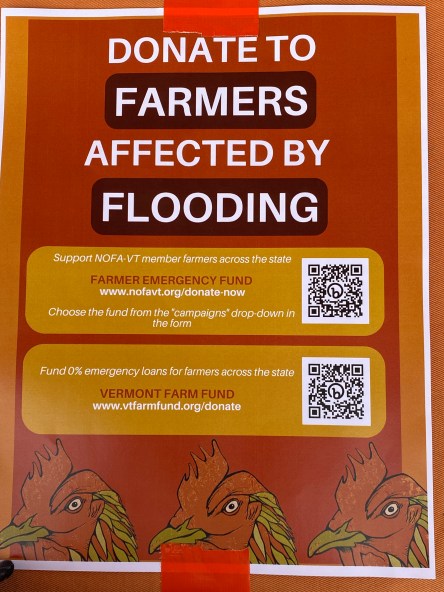
So as Vermonters begin the phases of recovery (community care, priority assessment and property evaluation), most of it will likely happen with overwhelming stress, random fits of exuberance around community, with depression and fear mixed in – and that’s just to get to the rebuilding.
What is not clear yet is how this state will define resilience in the future; what we have learned in the Gulf Coast is that, as disasters come again, many of our systemic recovery phases now require extraordinary personal levels of resilience that are not matched by institutional levels of resilience, leaving more and more of this work up to informal groups of neighbors and resources. Let’s hope Vermont can do better using ours and others examples.
 Helping Farmers Markets Grow