Community size? 150 give or take…

Robin Dunbar
How Many Friends Does One Person Need? Dunbar’s Number and Other Evolutionary Quirks
Harvard University Press, 2010. 312 pp.
excerpt from a review from Los Angeles Review of Books:
Our big brains — in particular our species’ inordinately large neocortex — evolved, Dunbar argues, in lockstep with our ability to manage increasingly large social groups: to read motives, to keep track of who is doing what with whom, of who is a reliable sharer, who a likely freeloader, and so on. Many evolutionary biologists have made this point over the years, of course. Where Dunbar is unique is in having assigned a definite number to what constitutes a stable human group or community. The “Dunbar’s number” of his title is (drum roll…) 150. Extrapolating from the estimated size of Neolithic villages, of Amish and other communities, of companies in most armies, and other such data, Dunbar argues that this number is, more or less, the limit of stable social networks because it represents the limit, more or less, of our cognitive capacities.

The number is highly debatable, but it turns out that, Facebook aside, the average person has about 150 friends — people he or she might actually recognize and be recognized by at a random airport, 150 people he or she might feel comfortable borrowing five dollars from. As for how many friends we have evolved to “need” in a more intimate sense, that is a different matter. According to Dunbar, most of us have, on average, about 3-5 intimate friends whom we speak to at least weekly, and about 10-15 more friends whose deaths would greatly distress us. These circles can include kin; indeed, the more extended family we keep in close touch with, the fewer friends we are likely to have — precisely because our neocortices can only manage so many relationships. What is perhaps most intriguing is the degree to which the inner circles change over time; close friends can drop through the circles of intimacy if we do not spend time with them, and even out of the 150, especially when someone new captures our attention. By contrast, kin have enough staying power that we can visit and expect to be housed by a cousin we have never met or a great-aunt after decades of neglect. In short, while friendships “decay” if not actively cultivated, kin relationships do not. Or so Dunbar claims.
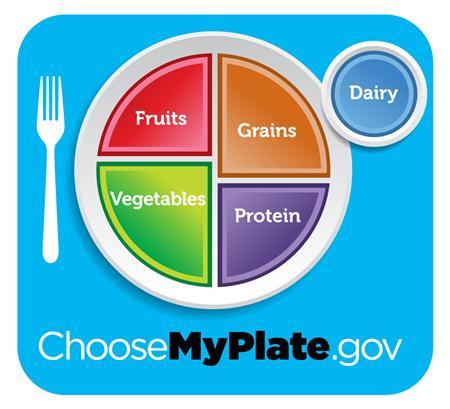
New food plate replaces food pyramid

Useful criticism of the plate from retail analysts:
Hartman

USDA is readying new food “pyramid”

Boy, this issue goes to show the power of the lobbyists and experts that surround the beltway. Over the years, the food pyramid has changed dramatically, and remains a political football to kick back and forth. The first pyramid was adopted in 1992, changed in 2005 and now reports are that the new version will be a plate showing how much of each food group an adult person should eat for healthy weight.
Here are some examples of past pyramids:

Caring for migrant workers

Thanks to Cindy Torres of Colorado Farmers Market Association and Rocky Mountain Farmers Union for providing this link:
Napa story

A good localvore challenge, right here in New Orleans

Chock full of events and ideas, the Nola Localvore Challenge is underway as of tomorrow. One reason I like this version is that it includes movie nights during the Food Justice Film Series and loads of other events to network. I also like that it has levels for those who want to try this idea but maybe not entirely be ready for 100% local just yet. Crescent City Farmers Market has been instrumental with advice as to what is available locally, posting news in their weekly Market Morsel and on their site and allowing the group to table at the markets themselves as well.
The food system keeps growing more branches, making the tree stronger and stronger.

Start a seed saving branch

I have noticed that we have more than a few markets either on library property or within a very short walking distance around the country. This idea seems like a good way to link the two even more closely:

Seed Saving

Corporations pick up on “shared value”

Harvard Business Review recently published an article with some language that sounds an awful lot like the stated “triple bottom line” of Farmers Market Coalition, marketumbrella.org and others in the public market field. Shared value is the new concept to deepen corporate social responsibility to include social progress as a measurement for their company. Seems like markets need to use the language and idea to find ways to connect with Main Street more…
Harvard Business Review

Where do food truck vendors use the bathroom?

Street vendors are interviewed about their culture:

Huff Post article

Food policy-stage center.

As the attendance at Community Food Security Coalition’s (CFSC) conference showed, the healthy/regional food movement is gaining maturity and strength.
Over 600 attendees from every part of the U.S. and Canada came together to discuss, to see Portland’s leadership and to network. (I can personally attest to the networking ability of regional food system people.)
The Coalition always manages lively face to face opportunities and backs it up with good leadership in the sessions themselves. Planners, public health professionals, farmers, market organizers, grassroots activists, city officials were all in attendance.
They also tried to use technology to get real time voting in the Friday plenary which had some bugs (Laurel MacMillan CFSC staff, was a trouper on stage with amazing aplomb and humor to keep it going and people engaged, paired with local leader/market trainer Suzanne Briggs up there with Laurel, typing madly) but since everyone was in good humor after a pleasant breakfast, all was fine by mid-morning.
From Vancouver’s Food Charter poster to the free pear savers (those spun their own debate) to the lively networking sessions (the South/Southeast session was almost drowned out by an insurance conference play acting in the next conference space but valiantly held their space) there was plenty to learn, see and hear. As we know the 2012 Farm Bill is the focus of every food system and CFSC did an admirable job capturing the breadth of issues on the table and tactics that will be needed. The draft of priorities outlined by CFSC included:
Defend and expand Community Food Projects and Farmers Market Promotion Program
Secure support for the infrastructure needed for local and regional food systems.
Increase access to federal nutrition programs participants to food system points of entry.
Work on urban-rural linkages across existing programs.
Require USDA to streamline SNAP redemption and technology.
Promote incentives for fruit and vegetable purchases for federal nutrition program participants.
Call for a USDA report and guidance document on how local government regulations can support access to healthy foods.
Incorporate more local product into DoD Fresh and USDA Foods.
Institutionalize the tracking and evaluation of Farm to School programs.
Of course, those were presented as draft priorities so that CFSC Policy Director Kathy Mulvey and Associate Policy Director Megan Lott can continue to evolve the platform based on the membership needs of CFSC. They were very active throughout the conference as they have been in the listening sessions they have held throughout the year.
As a board member of the Coalition, I was very proud of the program staff and the work done to make the conference happen. As always, Emily Becker our conference planner (and I am sure Aleta and Erika as support) hit another home run for the movement. Doubletree Hotel was a nice location with food sourced locally.

Subway map of food culture

Well this is interesting. Using a subway system, it shows chefs (and one or two activists) who are changing food at the present time and have influenced this current crop (Julia Child, Ruth Reichl). I can believe that this will stir some debate-for example, I know that the one New Orleans chef mentioned here John Besh is probably deserved, but I would say that Donald Link and Stephen Stryjewlski do too for Cochon, Herbsaint and Butcher. And if you are trying to get at the heart of it the local/simple ingredient movement in my city, then Jamie Shannon and/or Susan Spicer need to be mentioned. I am also not sure why Joel Salatin and Will Allen are the only 2 growers that I noticed in here.

Map on Huffington Post

Civil Eats talks about Food Policy

Messages from Food Policy Conference: From Neighborhood to Nation.

I love it when other people make my blogging job easier: here is a very good overview of the Portland conference from Jen Dalton, the editor of Local Eats about what she got out of the conference. Seems right to me…

Portland Food Policy Conference and Market visit

I’ll upload some content from the CFSC Food Policy Conference attendees later this week; it was a great conference with loads of good ideas flowing. I am sure CFSC will release some data from the sessions, especially from the voting session.
Portland hosted beautifully; the regional food community was gracious and inspiring.

– City 145.4 sq mi (376.5 km2)
– Land 134.3 sq mi (347.9 km2)
– Water 11.1 sq mi (28.6 km2)
Elevation 50 ft (15.2 m)
Population (2010)
– City 583,776
– Density 4,288.38/sq mi (1,655.31/km2)
– Metro 2,226,009

Map of flooding effect on farmland

msnbc map

The Mississippi delta and Cajun country of Louisiana are two areas where farmland will be affected quite significantly, but already some Missouri farmers have been flooded in order to save some populated areas. I would think the rural/urban divide is being tested with this crisis and once again, farmers markets may be one of the few bridges that help in the months ahead.

Certifications

The Chicago Green Market is adding a level of transparency to their markets. Starting this month, vendors will show their farm names, where they are located and what certification process they currently have passed. As many of you know, there is a wide selection of programs besides the USDA organic label that farmers can use. The Beyond Organic movement is growing, and it is quite possible that market vendors are more likely than industrial sector farmers to look for alternatives to organic; they have the ability to tell their own story to their shoppers which reduces the need for the complicated long work to get the USDA label.
And here are two points of view from the article that bolster my theory:
“GCM farm forager Dave Rand notes that it’s incredibly difficult, for example, to grow organic peaches in the Midwest because of pest and climate challenges. So a peach grower might opt for Food Alliance certification, which requires integrated pest management strategies that minimize pesticide use but allow it when necessary.”
“Three Sisters farmer Tracey Vowell said that she prefers the Certified Naturally Grown program because inspections are carried out by fellow farmers rather than certification inspectors. She finds this process fosters community and best-practices sharing rather than just requiring farmers to fill out paperwork.”