Food Swap

Another way for small markets to grow their social time might be to encourage a small (member-only) food swap once a month. If controlled well, it could be a boon to community markets that lack the critical mass of shoppers so far.
Food Swap Network

There’s still time…

To join the Farmers Market Coalition’s webinar today at 11 EST, “Markets As Business Incubators: Strategies To Grow Your Vendor Base” with a simple registration on their website.
To register
Young Kim from Fondy Food Center in Milwaukee WI and Peter Marks from Appalachian Sustainable Agriculture Project in Asheville North Carolina will present some case studies and recommendations for markets to increase the benefits for vendors to participate, large or small.
The archives of the webinar will be available to review for FMC members after the call.

Farmers Market run by kids

What a great idea.

Another educational opportunity

Mother Jones has an article about how organic strawberries can come from plants that are not organically started. I insert two of the comments here, one that expounds our point of view, and one that does not:

That’s why farmers’ markets are getting so popular. More and more people want to know where their food is coming from. They don’t want to get sick from nasty bacteria or chemicals. The local market where we shop is busy every week, and the growers accept WIC, SNAP, and Senior Nutrition coupons (thus belying the popular right-wing myth that only rich yuppies go to farmers’ markets.)

Yesterday 03:40 PM in reply to
beware … the farmer’s markets AND roadside stands … ask the question … they are often owned by the BIG scale producers … being in a farmer’s market / road side stand … DOES NOT make it organic.

otherwise … yes … buy local … join the best local COOP or Food Share.

Toxic organic strawberries

Hopefully, our friends in CA farmers markets have their conversational ear ready for this sort of question at their markets. Do you?

Local materials and expertise for farmers market shed

This shed was designed by architectural students at Virginia Tech, School of Architecture + Design seems to meet many of the requirements that open-air farmers markets should have for any facility-simple, properly scaled, used local materials…

Although this next line makes me wonder what fumes they were inhaling from the materials while building:

This market pavilion is the modern expression of timeless agrarian sensibilities.

Hey kids-it’s a roof.

Still, I like it and applaud the collaborative effort. Now, if they could get some farmers…
Shed design

Session proposals for 2012 Main Street conference

2012 National Main Streets Conference: Rediscover Main Street

Over the past year a constant theme heard locally and nationally is the trend of retailers – including “big box” stores –moving away from strip malls and back downtown. Businesses are not alone either. Residents and visitors are also choosing more traditional locations. In Baltimore we will continue to showcase the power of preservation-based economic and community development and to provide education and networking opportunities to help businesses, governments, residents and visitors Rediscover Main Street.

The National Trust Main Street Center is seeking session proposals designed to help inform, inspire ideas, and explore methods and best practices to capitalize on this growing trend and to encourage the rediscovery of what Main Street has known for decades – preservation as economic development works! Read more about submitting a proposal for the 2012 National Main Streets Conference here
Deadline: August 26, 2011

Contact the National Trust Main Street Center:
1785 Massachusetts Avenue, NW, Washington, DC 20036
202.588.6219 | mainstreet@nthp.org | http://www.mainstreet.org/

The National Trust for Historic Preservation is a private, nonprofit membership organization providing leadership, education, advocacy, and resources to save America’s diverse historic places and revitalize our communities.

Markets as safe havens

In the Alley of Straw Sellers:

Afghan market

Brownfields set aside for farmers markets?

Seems like a good idea for someone to study the possibilities of setting aside a small percentage of brownfields for space for markets…

“It is perhaps one of the most cost-effective uses of federal dollars to be found anywhere in the federal government,” said Vernice Miller-Travis, former director of the Environmental Justice Initiative at the Natural Resource Defense Council, who was involved with advising EPA on the brownfields program when it was created. “Whole communities and cities have been brought back from the brink of economic despair because of successful brownfields redevelopment projects.”

Brownfields

Booth Tracker

Once again, going back to the flea market world, I noticed this software offer for flea market organizers. I wonder if the flea market world has some ideas about rent and mapping systems we in the farmers market field need to study?
website

Farmers-The Musical

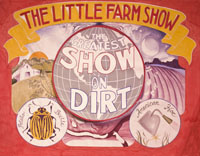
The Greatest Show on Dirt

THE LITTLE FARM SHOW is an original musical theatre performance for all-ages created and performed by Tannis Kowalchuk and Brett Keyser. The actors play “the Amazing MacDonald Twins,” a brother and sister team of side show performers who tour “the greatest show on dirt!” from town to town. Full story

Fleas welcome

Flea markets are fascinating to people watch at and someday we’ll figure out how they and open-air farmers markets are related.Like any public market geek, I follow the flea market news regularly and years ago, set up at a venerable old one in Ohio (Hartville for those of you in Buckeye Land). Wow, was that fascinating…. The pre-dawn culture was even more traditional than any farmers market I have watched. Of course, that market had been running for over 60 years…
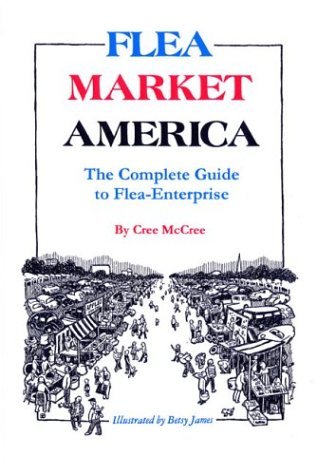
It is also my honor to count among my friends, Cree McCree author of “Flea Market America” and a regular art and flea market maven here in New Orleans. (I call her Cree McCree, Godmother of Flea).

Cree McCree's book. available for purchase everywhere


She was a prized Festivus vendor of mine (when I ran both farmers markets and a holiday fair trade market from 2002-2007 for marketumbrella.org). She is always working to find new venues and ideas to get more street vending out there.
Maybe we’ll even see a true producer-only farmers market and a criteria-based flea market in the same location with the same manager. Why not?
Their missions may be different from farmers markets, but its easy to see some similarities:
1. Many flea markets have rules about products that can be sold.This is often to keep out dangerous goods, but in any case, it speaks to the need for a manager/organizer curating the deal.
2. They have return shoppers and regular vendors.
3. There is a decidedly social air about them.
4. They attract a wide range of shoppers.

Here’s an example of one that works to engineer a total experience:

Uvalde Market Days will be open for shoppers on June 25th, 2011

It is one of the most unique open air markets in southwest Texas
June 15, 2011- Hundreds of dealers showcase their merchandize in tree shaded park. The visitors can enjoy shopping at Uvalde Market Days in the afternoons.
Visitors can enjoy music while they shop. The dealers at the market will be displaying huge variety of arts and crafts, plants, jewelry, wearable, collectibles, home décor, antiques, carpets, kitchen accessories, clothes, hats for men, women & children and lot more.
Uvalde Market Days is open for public on every fourth Saturday of the month.
It is open from 10 am to 5 pm.
It is located at:
Uvalde Plaza
Main Street And North Getty
Uvalde, Texas
Parking and admission is absolutely free.

Getting Real

RIP Chris Bedford, Michigan activist and filmmaker.

Getting Real about Food & the Future from Christopher B. Bedford on Vimeo.

Cheesemonger works to save the essex market

Many of you know Essex Market as the home of Saxelby Cheesemongers, the little stand run by our friend Anne Saxelby and featured in The Greenhorns film. Here’s a note from Anne regarding the future of the market.

“For over 70 years, the Essex Street Market has been feeding the Lower East Side. This dynamic market has evolved with the neighborhood over the years, representing the ever-changing demographics of one of New York’s most vibrant quarters. Now, because of the SPURA redevelopment project, that could all change.

SPURA stands for the Seward Park Urban Renewal Area, and is primarily comprised of a string of empty lots on the south side of Delancey Street between Essex Street and the Williamsburg Bridge. These lots were cleared for development in 1965. For over 40 years, the fate of this land has been hotly contested by city planners and neighborhood residents, with no solution found.

Recently, the community board (CB3) approved a set of guidelines to move the redevelopment process forward. The redevelopment zone now includes all city-owned property in the area, including the Essex Street Market. In their guidelines, the city proposed demolishing the current Essex Market and moving it to a ‘superior location.’ If the Essex Street Market were to move, it would not only lose its historic context, it would lose the soul and spirit of the place, an intangible but real thing created by merchants and customers over the past seven decades. We need your help and support to save the Essex Market!

Built by mayor Fiorello LaGuardia in 1940, the Essex Market was originally intended to get pushcart vendors off the street. The Lower East Side was always a neighborhood of immigrants, a veritable patchwork quilt of different cultures and nationalities all struggling to make a life for their families. To walk the streets in the early 1900′s was to navigate dense arteries of commerce, with merchants setting up shop in pushcarts selling everything from clothing to fresh meat and produce.

The city decided to build a series of indoor markets for these merchants to do business. These markets were built all over the city, but there was a large concentration on the Lower East Side. Their goal was twofold: to give these merchants an opportunity to do business in a proper market with more amenities, and to clear crowded city streets to allow traffic to pass. Of all these markets, only three remain today: Essex Street, La Marqueta in Harlem, and the Moore Street Market in Bushwick, Brooklyn.

These markets are historic places that deserve to be saved. They hearken back to a time when the city built public markets to uphold communities, when the market was considered not just a place to buy food, but a community space to gather and exchange news.

For the vendors these markets also represent an opportunity to start and build a small business, which is a very egalitarian thing indeed, especially in a city like New York.

Since 1940, the Essex Market has seen many different stages of life. The 1940′s through the 1960′s were booming years. The Lower East Side was a thriving shopping district, known for good value and good products. The 1948 film ‘The Naked City’ depicts the Essex Market in its heyday, with throngs of people clamoring to buy fruits, live poultry and live fish from market vendors. In the 1970′s the advent of the supermarket drew shoppers away from the Essex Market, but the vendors persevered through the hard times and continued to do business.

In the past 10 years, the Essex Market has undergone yet another change, with new vendors moving in alongside the old, proving again that the market evolves with the neighborhood. The vendors may change, but the market is still a bastion of community, full of vibrant unique small businesses serving the needs of a diverse clientele… just as Mayor LaGuardia intended it to be.

What can you do to help save the Essex Street Market? Please sign the online petition, or attend the next community board meeting on May 25th at the University Settlement on Eldridge Street to speak your mind. With your support, we can preserve a New York institution, one that I am extremely proud to be a part of!”

online petition
A wild underground market

The forageSF folks are receiving some coverage about their underground market in the New York Times and in other publications. Their mission is about reconnecting the urban SF dweller to their wild foods and the market seems to have grown out of the need to have a place to encourage more knowledge, more new items AND because they could not get in to markets because of the rules about “grow it to sell it”. I wonder, how many markets around the country would have flatly said no to these foragers?
As some of you know, I am fascinated by the relationship between CSAs and public markets, and have noticed that many CSAs end up operating as a type of market, and I am always curious if the opposite is true too. This one seems to be moving more in the direction of the market being more useful for their work as it evolves.

What’s interesting about this is the idea is they seem to rate new vendors highest (based on the quotes in the story.) So, the usual criteria of favoring return vendors is much less useful to them, which tells me they have a very good sense of their 4Ms (mission, management, marketing and measurement).
On top of that, they have a free membership that you need to sign up for to get into the market, as you need to check off their hold harmless as a shopper so it really seems like the are dotting their is and crossing their ts…

So I wonder if this is a new typology of market (in marketumbrella.org’s spectrum of market analysis we are collecting with the Market Portraits).

They are definitely an organization to watch.