It seemed a good time to return to the topic of retail anthropology, a topic for which I have presented to market organizations, have consulted on behalf of new and expanding markets, and have shared written analysis. It is something I have some experience with, as I designed and managed chains of retail stores in a previous life, and have also worked for 3 decades as a mystery shopper across the US.
As important as it is to be conscious of the work markets do as community gathering spaces, as farmer advocates and as partners to those programs that support a wide range of activities, it is equally important to consider its role as a retail space.
I subscribe to a few retail newsletters that offer analysis from high paid consultants and notice when they align with the retail of our open-air, collective model which has happened again recently.
A few trends that consultants are noting:
-chains are focusing on the “store experience” and in becoming “destination worthy”.
obviously this is something that many markets already do, and it may even be true that the market sector can lay claim to influencing grocery in this way. If you are seeing added seating in the alcove of your stores, better information centers, it may very well be that your market has had a hand in better shopping in your area. Feel free to pat yourself on the back in analysis you do on your impacts! And more importantly, don’t let grocery entirely co-opt this message and idea from markets. Remember to highlight the 50 year role farmers (and public) markets play in adding social benefits to the experience of family table shopping.
-interest in capturing the sometime shopper. Grocery’s share of loyal shoppers (only shopping that chain) is down to 1% of shoppers. As a result, grocery is thinking more about seasonal shoppers, first time shopper etc, and focusing on categories, focusing depth of products and operational excellence. For markets, it would be helpful to note that marketing.
Beyond seeking out analysis, it is also helpful to take some time to walk around retail space in your town or area. The culture of shopping can have a specific look and messaging which markets can adopt or can counter.
Do you see a lot of barren shopping spaces? Then make sure your entrances and mid spaces are lively and colorful.
Conversely, maybe there there a lot of high end, carefully-displayed tiny stores that may seem off-putting (if you have wealthy sections of town). If so, highlight the small family farm vibe and welcome booth of your market and how it is open to all.
And finally, walk your market at least once or twice a year with a retail eye. What would a customer see when they come in the main entrance or when you enter through one of those desire paths* between 2 vendors?
What type of product stands out in terms of display skills among your vendors?
Do you notice a boomerang effect of shoppers not making it all the way through the market?
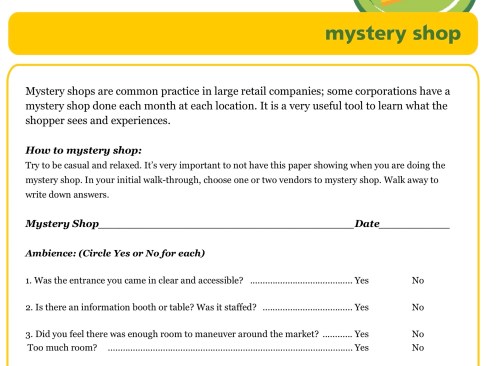
This resource is the original I made for markets over 25 years ago, and even though I would love to make some new ones for market types, it still is effective to assign a volunteer or a friend to fill out.
I’ll add a few more posts on retailing your market in the coming months. Feel free to reach out to me at darwolnik at gmail if you have specific areas you are interested in, or ideas you want to share.

