Pittsburgh’s Kevin Sousa on His Record-Breaking Kickstarter and New Restaurant

“We could have done any number of things, a nice farmers’ market or a convenience store. But my background is in restaurants and so that was the base of my idea. I was trying to wrap my brain around what kind of restaurant could work and help the community.

I became more familiar with Braddock and all these beautiful things that already existed. For example, Braddock Farms, which is a subsidiary of Grow Pittsburgh, has been there for years. It’s this beautiful two-acre urban farm in a beautiful post-industrial backdrop [with] a beautiful award-winning apiary that makes delicious honey that I’ve used in all of my restaurants. We have chickens down there that are producing tons of eggs. We have a rooftop 1,000-square foot greenhouse that happened to come with the building [and] 4,000 square feet of a raised bed garden on the roof of the building. We have a convent that has been restored to a beautiful hostel, and we’re going to be able to use it for free housing for our staff and interns and students. All these things, it’s like they were there already.

I had experience doing volunteer work in the Summer with the Braddock Youth Project. There are all these young people who are passionate about food and farming and Braddock, but odds are that they wouldn’t be given the opportunity to pursue that after high school. So John and I started to put together this idea, well, how do we incorporate a culinary/farming training program? We work directly with Braddock Redux, which is the nonprofit that does job training in neighboring areas, so we would have people that are educators. All these resources exist already, so we just felt the last piece of the puzzle was a delivery system. And we felt that the best way to show all of these beautiful things to the world would be through a restaurant.”
Pittsburgh's Kevin Sousa on His Record-Breaking Kickstarter and New Restaurant – Eater Interviews – Eater National.

Audio of Moscow (Idaho) public meeting about farmers market rules

A fascinating view of the internal life of a market community.
The FM rule discussion starts on the audio at 15:00 minutes into the recording:

link to audio

Definition of local (100-mile limit discussion)

Definition of market vendor

Mission statement discussion

Competition discussion

Too many rules?

Radio Free Moscow is a nonprofit organization dedicated to the progressive values of peace, justice, democracy, human rights, multiculturalism, environmentalism, and freedom of expression.

Radio Free Moscow operates KRFP, a listener-supported community radio station serving Moscow, Idaho and surrounding areas. KRFP reflects Radio Free Moscow’s values by broadcasting news and opinions, civic affairs, diverse music and multi-cultural programming seldom heard from mainstream media outlets. KRFP strives to develop and disseminate programming that fosters our community’s ethical, social, and intellectual awareness while advocating education, the arts, and cultural diversity. KRFP nurtures our community’s capacity to think independently, skillfully, and critically.

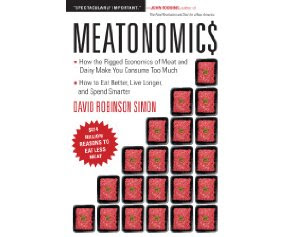
Meatonomics

unnamed

Meatonomics is the first book to add up the huge “externalized” costs that the animal food system imposes on taxpayers, animals and the environment, and it finds these costs total about $414 billion yearly. With yearly retail sales of around $250 billion, that means that for every $1 of product they sell, meat and dairy producers impose almost $2 in hidden costs on the rest of us. But if producers were forced to internalize these costs, a $4 Big Mac would cost about $11.

amazon

Report shows that direct farm sales increase local economies in many regions

(talk about needing more research like this!)

Using county-level data from the 2002 and 2007 U.S. Census of Agriculture, the team analyzed the link between direct farm sales — sales made directly from farmer to consumer — and total farm sales. When they examined the data on a national basis, they found a positive but not statistically significant relationship between the two. Goetz said that a different picture emerged when they looked at the data by region, as defined by the U.S. Bureau of Economic Analysis. In some regions, direct sales seemed to complement total farm sales. For example, in New England, a $1 increase from the 2002 level of direct farm sales was associated with a $5 increase in total farm sales. That same $1 increase was associated with a $9 increase in overall farm sales in the Mid-Atlantic states of Delaware, Maryland, New Jersey, New York and Pennsylvania. Yet, in other regions, local food sales appear to compete with total farm sales. In Southeastern U.S. counties, for example, direct sales were associated with a reduction in total farm sales. Next, to measure the impact of all agricultural sales on economic growth, the researchers used a statistical model to analyze how changes in farm sales per capita influenced changes in real personal income per capita — an indicator of economic growth. Again, the team performed this analysis using county-level data from 2002 to 2007.
Goetz said that by establishing that direct sales have a positive effect on total agricultural sales, which in turn have an effect on income growth, this study demonstrates that direct sales do indeed expand local economies at least in the Northeast U.S. He added that these results came as a bit of a surprise.
“When we set out to measure the economic impact of local food sales, we frankly didn’t expect to find one,” said Goetz. He explained that economists are generally skeptical that local sales can have impacts because such sales tend to recirculate money within a community rather than inject new money. “Injection of new money — money from outside of the community — is what many economic development practitioners think of as the fuel for economic growth. But to me, these findings provide quite robust evidence that even direct sales do have an effect on growth, in the Northeast U.S.”

Science Daily