Props to a seed carrier

….In the heart of the feminine nature of Seed Carriers lives the instinctual calling to be intentionally aware of the essence and influence of every thought and emotion, of each spoken word and action taken. Our personal and collective future – all that comes to be – grows out of our here and now choice-making.

So what do you want to be seeding…
…in your life?
…on the earth?
…for the generations to come?

Copyright © 2011 JoAnne Dodgson


A friend left us this week. True to her life, the news was quietly passed from friend to friend with everyone wishing they could talk with her just once more and could smile at her, thereby passing joy back to her. We were all flabbergasted that she was the one who was taken, as she was a healer with a very strong life force.  But as sherecently said  in her gentle way:

We’re all going to get something.

I don’t have to be the impervious, always healthy Tai Chi teacher.

I am simply a human being.

That illness should not define her – even her passing –  so I won’t focus on it except to say she handled it with courage and grace and love and used it to share her very personal but teachable moment to us all.

Marilyn Yank. That is her name. I always liked her name. It suited her: a bit formal yet graceful with a strong old-world finish.

Marilyn_Yank_003-dc45c11e.jpeg

Photo by Cheryl Gerber for Gambit

I met Marilyn when she moved to New Orleans with her partner, Anna Maria Signorelli. Anna Maria was a New Orleanian and they moved here partly because all New Orleanians are unhappy when away from here, and partly because Marilyn had taken over the care of her ailing father and the Signorelli family was here to depend on. And the weather was warm and sunny and moist most of the time and the two of them were deeply dedicated to farming the land. Maybe there were other reasons too that I am unaware of that mattered. They had come from Austin where Anna Maria had taken the helm of the Sustainable Food Center after its dynamic founder had moved to policy work. Marilyn was working on the La Cochina Alegre project there and a team was born. I remember Marilyn told me they lived in a tent together while learning sustainable farming in Santa Cruz and once they made it through that, she knew they were partners.

Once back here, Anna Maria was immediately in her element.  I assume that she was like that when they were in Austin too cuz she is a powerhouse especially (as Marilyn always observed) when she has a team around her. Marilyn took it slow, marveling aloud as only she could about the intricacies of life here and her partner’s large Sicilian family’s wonderful togetherness. We met because a mutual friend, the thoughtful Max Elliot for those of you in urban agriculture here, in Austin, or in Shreveport, helped them put together a small group of activists to talk about building a network for food and farming in New Orleans.

We had a few meetings in Marilyn and Anna Maria’s meditation center, AMMA, so named for their combined names and the word for nurse or spiritual mother. We sat cross-legged in a circle and talked about our visions and beliefs and then after a few meetings, a few of us got a little antsy and asked if we could meet in a more active space. I remember Marilyn being fascinated and bemused by the request as her activism was rooted in her quietness and centeredness. Her movement work was also illustrated by a story she told me of the people in an Asian country who had firmly and publicly set the goal that they would become a society totally absent of violence – in 1000 years. The point was that every tiny and personal step they made towards that goal now  was meaningful, and to expect total success in one’s lifetime laughable.

I also remember  when Marilyn asked me to coffee at the fair trade coffeehouse after those first few meetings and said to me with what I came to know was her very direct but gentle way of asking a question: ” I have been wondering about you since we met. Do you mind?”

I did not mind and we bonded. Turns out she was originally from Detroit. I thought I recognized the steel backbone of a fellow rust belter under her beloved Southeastern desert style. Unlike many here, it didn’t really matter where she was from as her presence came from her embrace of the small shared whatever right in front of her – the moment, garden, food item, gesture, idea, linking it easily to the gigantic: her quiet assessment and acceptance of humanity’s and the natural world’s pace.

Her Little Sparrow urban farm was a turning point in the city, both in its description of the vision she had for it right there on the board on front and its urban market box program, the first of its kind around town.  There was an open invitation for people to carefully pluck food from its constant profusion of well-tended food and beauty although she encouraged some wildness to flourish on its edges too. The tropical climate got the best of her at times as a farmer and she was justly impressed by her dear friend Macon’s skill in growing food in this brutal climate, constantly championing  his patience and knowledge as a grower to anyone who would listen. Many growers directly owe their experience to her willingness to share hers as she would always credit her teachers like Macon’s willingness to share theirs.

With a group of around a dozen others (the aforementioned Max as the nucleus), she and Anna Maria built a lasting network of food and farming leaders, myself and Macon included. The work to grow this network of activists took years and could take pages here to recount my personal observations of her and Anna Maria’s resolve to see it happen. Sooner or later, just about everyone else involved in the founding either gave up or moved on to other work, except for Marilyn. She stayed in it as long as she was needed and as long as she thought she had something to offer.  In some form, that entire group owes most of its interconnectedness to Marilyn directly. Most of those founders are still honored colleagues of mine and some are also close friends, but all of us certainly remain fellow travelers who gladly remember those days  when we meet up again. I’d like to thank her again for her dedication to the group and the idea.

Even after I moved away from assisting directly with the work of the New Orleans Food and Farming Network that our little group had realized, she and I reconnected regularly and when we did, her stories were always of a lesson learned or a description of the path of a karmic connection that had been experienced since I had seen her last. Some were very personal and painful. I found that I easily shared more of my deepest thoughts and fears than I did with most others, maybe because of her reciprocity or because of her abilities to see without judgement, or at least to recognize the judgement and to self-correct. Or maybe because she expected kernels of truth and revelation as the unspoken agreement of friendship.

One of the best times I had with her and Anna Maria was recent: during the Louisiana floods of 2016, I wrote them because I knew they had moved to that farming area affected away from the city. She immediately wrote me back, telling me their house and property were indeed in the path of the rising water, so they were in the city until they heard. Would I have dinner with them? I did and we laughed and shared updates and drank glasses of wine and laughed some more. As we parted, the text came from their neighbors that the water had stopped rising only a few inches from the top step of their raised home so they were going to be okay. After sharing their relief, I thought about how they had been totally present and joyful all evening, never seeming to worry about their looming crisis.

As soon as I heard the news this week, I had a strong impulse to go out to a quiet green space and find a dandelion clock to blow its blossoms to the wind.  It struck me as I explored that thought that the dandelion is a flower, but a tough little one, with healing properties carried by the wind to the most unlikely places. Marilyn, you went far and wide and added much nourishment; carry on. I certainly will, using as much empathy and humor as I can muster, in honor of Marilyn.

stock-photo-112240169.jpg

Bring your food waste to the library for composting

Food waste collection programs are being phased in at New Orleans public libraries.

I’m glad they also mention Greenmarket and their innovative compost collection program. What is significant about the NYC market program is that Greenmarket does not occupy their market spaces constantly, so managing programs like composting require added logistics for the staff.

In data collection terms for markets, this program can be measured for its ecological, economic, social and intellectual capital benefits.

Bring your food waste to the library for composting: Yes, really | NOLA.com

Patron saints of food, Mardi Gras style

Monday the 27th and Tuesday the 28th of February are the final days of two months of Carnival in New Orleans this year, which means it has been a particularly  long season! The season always begins on the Feast of the Epiphany, January 6th and ends the day before Ash Wednesday, known as “Fat Tuesday” or in French as Mardi Gras. This is because New Orleans essentially remains a Catholic city and takes Lent (more or less) seriously. Lent of course is the religious season to prepare for Easter.  The date of Easter changes because it is literally a “moveable feast ” (feast meaning religious observance, not food party!), linked to Passover which changes based on when the Passover (Paschal) full moon falls. (Wonderful to  see how many religious and secular traditions are based on the natural world’s rhythms..)

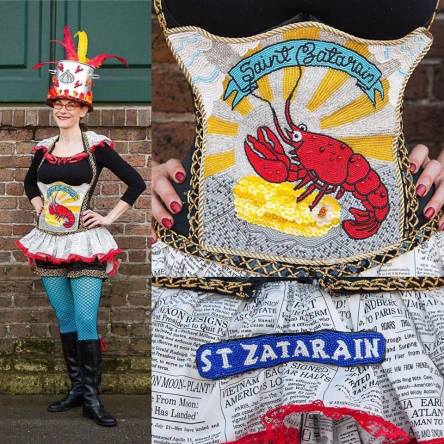
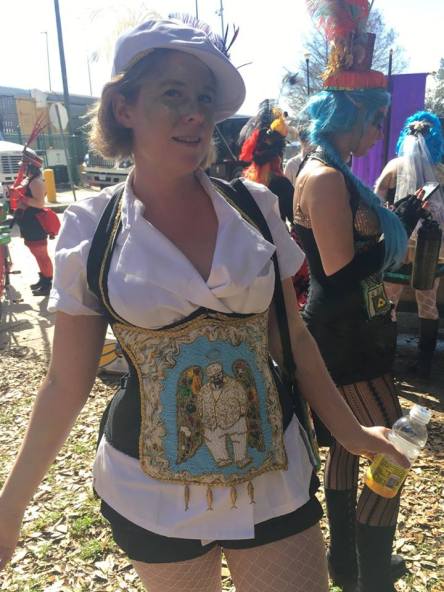
Today,  I am highlighting the local work of Dames de Perlage (Women of Beadwork) who used the theme of “Patron Saints of New Orleans” for their 2017 krewe. Each member spend their nights and “off-time” throughout the year designing and beading a new beaded corset and headdress and making the relevant costume based on the theme they choose after the previous Carnival. Each corset takes 150 or so more hours to make each.  This krewe marches with brass bands in a few parades and are a delight to see in person.

Great podcast with one of their krewe members describing the work they do and how parading works for those unfamiliar with them. Many of the riders and marching groups craft their throws and costume work in community get-togethers over the year. Pride in handmade items remains a vital part of the New Orleans culture as does the tradition of handing down skills.

These are some of the “saints” beadwork that I chose because of the connection to food and farming:

unnamed-2

Dan Gill, our longtime Extension Agent for Orleans Parish (county) and now a writer and radio host. answering everyone’s horticulture questions.

16831069_1258086530926946_2376355837903722700_n

This is amazing beadwork and costuming highlighting a Carnival/spring tradition: crawfish boils!

unnamed

The great chef Leah Chase is honored for her many contributions to New Orleans food and 7th ward culture. That is an excellent likeness of this great woman.

unnamed-1

This is my favorite one, and just coincidentally made by my pal Rachel. This is St. Satsuma which honors the citrus we see at markets starting in October and ending this week or next.

16830699_10208536597954412_5970393066501924615_n

16807049_10154507338621795_7552535683466588009_n

16807213_10208536596834384_6269194852156135913_n

Chef Paul Prudhomme, patron saint of jambalaya!

Crescent City Farmers Market programs give free food to mothers 

My home market organization continues to pilot new ways to include at-risk populations into their community. The staff shared with me that they studied the Sustainable Food Center’s work in Austin TX with CVB to design their pilot. This mock program will lead the state into seeing how WIC families benefit from markets in terms of social and intellectual capital as well as increasing their regular access to healthy food.

(The article seems to state that CCFM has been doing SNAP redemptions since 2008; actually it has been accepting EBT cards to redeem SNAP benefits since 2005 and doing market matches on different programs since before then, including a seafood bucks program and a FMNP reward program for seniors to spend once they spent their FMNP coupons. The incentive added to SNAP has been a program in existence at the market since around 2008.)

Market Umbrella deserves credit for its continued innovation and the staff and board’s willingness to constantly explore ways to increase their markets’ reach.

Crescent City Farmers Market programs give free food to mothers | NOLA.com

Helen Hill

Today is the sad anniversary of organizer/writer/filmmaker Helen Hill’s murder. New Orleanians, Canadians, South Carolinians, Californians and a slew of other oddballs and creative types are thinking of our dear Helen today.

Helen was daughter, sister,  mother, wife, friend. Her murder sent shock waves through dozens of communities that many will never recover from, partly because there was not a more loving or angelic human (although with a sensible streak of mischief when needed) than Helen. Partly because in true New Orleans fashion, the police never even turned up a suspect. Partly because her work was stopped, work so important that it has since been added to the Library of Congress’ National Film Registry.

Helen and her husband Paul came to me because of food, so that’s why this is here. I became active in the local Food Not Bombs actions which they had helped to “organize” or more appropriately, to encourage.  I had many fascinating conversations with them about tactics we might employ to be able to wrest food scraps from stores, including from Whole Foods. That conversation was ongoing because I worked there part-time, along with my other then part-time job at the farmers market. (That’s not as odd as it seems now because that WF location’s beginning actually predates the Austin behemeth’s ownership, back when it had been a New Orleans-only coop called Whole Foods Company. Even after the corporation bought it, it remained a funky local treasure, so my working there and at the market at the same time for a short time was not that farfetched.)

Their vegan potlucks were legendary, as were her vegan tea parties. Paul and Helen also knew my market boss, fellow vegetarian activist Richard McCarthy, and through him had begun to bring their pig Rosie to our market events. I remember once Helen called me before a scheduled visit to ask details as to where Rosie would be set up; turns out she was worried that Rosie would be within sight of meat vendors and would be distressed. I was at first amused, thinking she was slightly joking, but of course she was not. Sobering up, I assured her that every precaution would be taken for Rosie to be happy and comfortable that day. Forever after, Helen treated me as Rosie’s protector.

I was thrilled like many others when news came of their return to New Orleans after Katrina. Helen had asked many to send postcards to Paul to convince him to return. Happily, he did; sadly, that return was so very short.

This link is to a film Helen made for Rosie about her genealogy. This one is about the life of chickens, a motif  she often used  in her art.

From her award-winning film Scratch and Crow:

HelenHillDustyAngels.png

There are dozens and dozens of tributes to Helen, but viewing her films and hearing about her Poppy growing up under the wise and gentle hand of his father is the tribute she’d like  most of all. So please enjoy and share her lovely films whenever possible.


Thanks, 700 Magazine Street

New Orleans-In 2016, Crescent City Farmers Market announced that the flagship Saturday morning farmers market – held at the corner of Magazine and Girod since 1995 – would need to find a new home by fall. As the new market era at Julia and Carondelet begins, one-time market staff and long-time shopper Dar Wolnik looks back on the muraled parking lot.


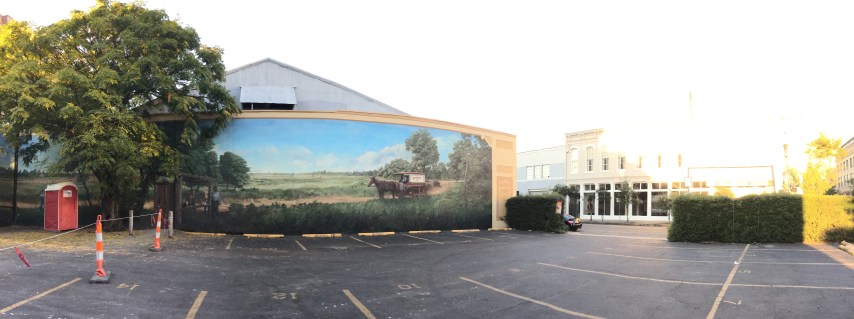
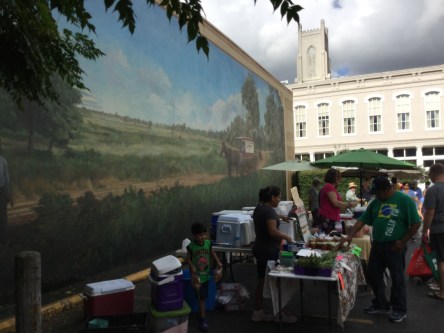
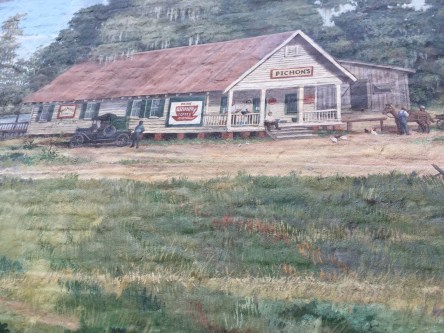
The circa 1991 mural of a coffee wagon heading to a small town store and Reily Foods’  prized chinaberry tree set this parking lot apart from others in the CBD.

IMG_2164.jpg

The original mural. This part has since been destroyed by the developers.

Why a market?

In 1995, two of the Crescent City Farmers Market (CCFM) founders – the late, sorely missed Sharon Litwin, and the geographically departed, sorely missed, but still kicking Richard McCarthy – realized its potential as the home for their upcoming market, and arranged to meet with the Reily Foods patriarch. Richard often shared the story of how when he completed his pitch, Boatner asked how much money he was requesting. Richard replied, “I don’t want your money, I want your parking lot Saturday mornings.” Reily was reportedly charmed by the request and gratified that his new mural and the carefully tended tree would serve as the host for this idea. Their handshake agreement between CCFM and Reily lasted for 21 years until Boatner’s passing.

IMG_2166 (1)

The garage mural and the garage as seen from Girod Street. The Magazine Street entrance to the parking lot is to the middle right of the photo. There is also a mural on the wall to the left of this photo, some of which was preserved by the developers.

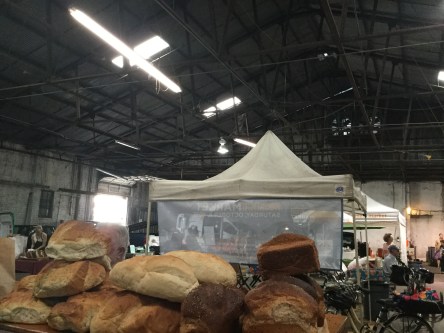
The warehouse district used to be full of buildings just like it, but just like this one’s fate in the very near future, they were torn down for shiny, much taller buildings. The garage behind the mural served as the parking for weekday Reily employees and became where the rainy day markets were held, with storage rooms around its edges and an off-limits parking area at the back.

img_1745

Inside the garage

img_1743

The flower ladies stop for a quick discussion on an “inside” market day.

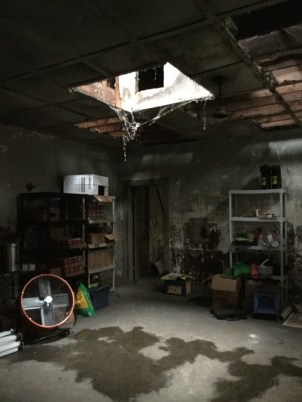
The inside garage was affectionately nicknamed “Little Calcutta” for the humidity and humanity it contains when used by the market.  One of the larger garage doors hadn’t opened since early 2005; after a while, the track became rusted and trash-filled and the market vendors learned to avoid market staff when we went to get help to open or to close it.  Certain spots in the roof would drip during heavy rains and vendors learned to set up just to the right or left. We actually marked the floor to make it easier to avoid water falling on one’s products or head, until finally, the roof was repaired. We used to dream of spiffing up the garage by whitewashing the walls and adding murals or posters, but as we say here, then Katrina happened. No other explanation should be needed.I think actual lights were added recently, which made it seem like Santa Claus had finally stopped by to reward our good behavior. Or maybe it was that the market just got around to asking the owners for those things. Sometimes it’s hard to know what and when to ask for when a place is offered free of charge and comes with donated cans of coffee too.


img_1696

This was the newer storage space.

The storage room used by the market was a loose description of a room at all, and had a lock on the door that probably could have been broken by an excited dog jumping at it. It also came with an air shaft/skylight in the middle of the room that supplied the only light in there. Sometimes it was better to work in the dark so that whatever critters who lived in the gloom could not be seen. I still shudder thinking about it. The current staff doesn’t believe me when I tell them that this storage space was a step up from the previous one that we finally had to evacuate. Let’s just say the less said about it, the better. And that once out of the old space, I don’t believe anyone has ever entered it again.

The outdoor lot was the true home of the CCFM though. The Girod side was open to the sidewalk with only some yellow parking barriers between. When the market was at its largest size (summer 2004-2005) vendors had to set up facing the sidewalk on that side. We found that asking farmers to squeeze into spaces with their tables touching or almost touching their fellow vendors tables was a tricky and delicate undertaking. I am sure that is no surprise to any market manager.

img_1873

SV-AS10 ImageData

Market Umbrella Executive Director Kate Parker talks about the late, legendary Diana Pinckley and her impact. That is founder Sharon Litwin in the peach shirt, who was always great about showing up for important occasions. Still miss seeing her around town.   Both are now memorialized on the wooden tokens used by the market.                                                                    R.I.P. Diana and Sharon.


IMG_20150926_084352

Isabel and Miguel Mendez and kids, 15 years

img_1693img_1687img_1685

In pictures, the mural offered an unrealistic sense of the size of the market and I often saw visitors who came to pay homage a little disappointed at the size of the actual market. I’d approach them and introduce myself and almost invariably get the “It’s…smaller than I thought it would be.” The mural could also be a point of tension as the market organization was tasked with its protection during market hours, leading to constant reminders to vendors who liked to lean things against it. The wall made the spaces right below shady for some hours, which was welcome in the summer but not in the winter. Funny to watch people congregate in different places in the market depending on the season, just like cats searching for that spot with the perfect amount of warm sun or cool shade.

18893169_1509312512447236_1239313476098707934_n.jpg

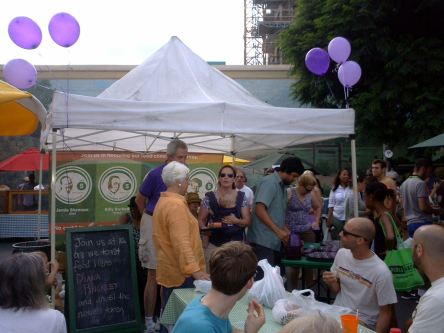
The small size of the lot meant that vendors had to “offload” their products, using the ancient, creaky Reily hand trucks or by carrying items from the vehicle one armful at a time to their tables outside. In the early days, everyone used umbrellas and one of the green, handmade tables supplied by the market making the overall site colorful and human-scaled. Once 10’ x 10” pop-up tents became available, vendors began to use those instead and a sea of white became the dominant sight. That is until the number of vendors increased and led to fights about tent poles intruding on the neighboring space and as a result, vendor tents had to be done away with although the market itself still used them for their activities. Umbrellas returned, the mural was front and center again and vendors spent many successive mornings constantly readjusting them to maximize the shade and to secure them from gusts or from wildly gesturing shoppers. I know that Richard was secretly pleased by the loss of tents, as he was always obsessed with the visuals of what we were presenting. He found umbrellas so inviting that he even renamed the organization Market Umbrella when we left Loyola University and our ECOnomics Institute name behind in 2008.

At its maximum in those years, the market welcomed a few thousand shoppers during its four hours of sales that offer a stage for successive casts of characters. Like most long-standing markets, the opening hour of 8 a.m. was for those seasoned shoppers who knew where to park, what they wanted to buy and how to get the heck outta there before the perusers came at 9 a.m. Those second-hour folks liked to chat, stick around a while and usually bought what was most appealing on that day or recommended to them right then by their friends or their favorite farmers. They grumbled about parking a great deal. After that group headed to the next cultural outing of the day, the service workers and other late-nighters slowly showed up. The number of bikes locked on all available posts and groups of bleary-eyed socializers squeezing into any available seating were good indicators of the 10 o’clock hour starting. In the last hour 11-12, one saw some tourists, those new to markets as well as a few hard-core regulars who like many New Orleanians simply do not get out of the house until around the lunch hour.

Many more subgroups, special guests, and even some “bad pennies,” all of whom made that space sparkle and hum every Saturday morning for 21 years, could be studied there as the sum of the social capital created by the market. We market staff often took the time to do just that, either from the vantage point of the low Reily building roof across Girod or while standing across the street on Magazine.

We valued that space so much that, as we began to design our fair trade/handmade market in 2002 that we called “Festivus, the Holiday Market For the Rest of Us,” we never questioned setting it up there, in the middle of Girod Street in years 1 and 2 and then on December Sundays in the same parking lot for years 3, 4 and 5 of Festivus’ run. Festivus was meant to drive sales to our farmers market during slow December and to allow our organization to move the dial a little more on the artisanal/entrepreneurial movement around us. Using the same lot for a new seasonal market meant we had freedom to design it differently and to include more wacky ideas than we could squeeze into our regular market. Many people still stop me to reminisce about the Office of Homeland Serenity, the Grievance Pole, and the Flattery Booth or some of the other moments of the 2003-2007 era of Festivus.

I consider it my great honor to have played a part in Market Umbrella’s history at that location, to have worked with the Reily Company staff and to now to be one of the local keepers of the stories about Sharon and Richard and John and the vendors and shoppers of those first days and of that space. The space itself is owed many thanks and so don’t be alarmed if at the first light on a Saturday, you notice a small group there with a bottle and glasses toasting the good fortune of having 700 Magazine as our flagship home for all of those years.

img_2202

New location at Julia and Carondelet, on the streetcar line as of 2016.

img_2233

 I was the Deputy Director of Market Umbrella and then its Marketshare Director during 2001-2011. Since then, I continue to work as a national consultant for public markets and also as the senior researcher at Farmers Market Coalition, the national farmers market advocacy organization.

Louisiana Update #9: A post-flood visit with a market farmer

Spent Wednesday morning tagging along with Copper Alvarez on her BREADA Small Farm Fund site visit to Lucy Capdeboscq’s home and farm near Amite. Copper has been crisscrossing the state seeing farmers who are reporting losses from this month’s floods. It’s important to note that BREADA is not focused only on their market farmers needs, but doing their best to get funds to any market farmer across the state.  Although one of Lucy’s daughters had been one of Red Stick market vendors in the past, Lucy sells only at the Saturday Crescent City Farmers Markets down in New Orleans. As a result, she was surprised when Copper contacted her by phone, asked if she had damage and then offered an evaluation visit in case BREADA’s fund might be able to help.

IMG_1795.jpg

Of course, no decisions or promises are made during the visits about any support, but as Lucy commented, the contact and visit were very welcome. Crescent City Farmers Market is also reactivating their Crescent Fund and has already had Lucy fill out their short form to receive assistance. The Crescent Fund is hoping to raise enough money to handle the 8 or so CCFM market farmers who have indicated losses, by quickly offering up to $1,500 for their farm needs.

To get to Lucy’s place, one turns off the main road at the permanent sign indicating it is also the direction to the legendary Liuzza strawberry farm. Although their famous berries are still a few weeks from being planted, other products like cucumbers could be seen in some of their fields. When you know that Lucy is a Liuzza by birth , it is clear why she lives amid those fields, (just off Jack Liuzza Lane) on the land deeded her by her parents. She and her late husband Allen raised their children here and kept their land productive even when they took on other professional occupations.

Allen and Lucy joined the Crescent City Farmers Market shortly after it opened. The Caps (as their farm name is known) were a huge hit immediately due to  Lucy’s charming customer service and Allen’s practical sense for growing their traditional yet innovative items. Lucy’s arrangements of zinnias and lilies with her decorative okra, hibiscus buds and her legendary sunflowers have remained market favorites since those early days.  As Poppy Tooker wrote in the 2009 Crescent City Farmers Market cookbook: “Lucy and Al have built a reputation for forward thinking innovation. They were the first to try early harvested rapini and green garlic made so popular in California.”

IMG_1794 (1).jpg

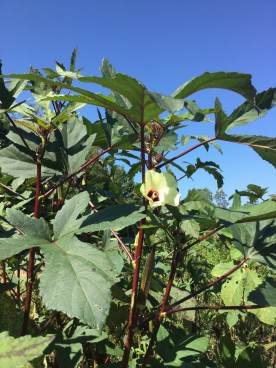
Lucy’s okra, used for her bouquets.

To me, the Caps are a quintessential market vendor type: growing traditional and newer South Louisiana products on a small piece of land behind their home within sight of other family members also still farming. As a matter of fact, on one of my visits to the farm years ago, Lucy told me how much she was looking forward to letting a shopper know that next Saturday that their favorite item had been planted that week and would soon be back at market. That deep awareness of specific customer likes seemed to me then (and still) to be the best illustration of the personal touch of direct marketing farming that I have come across in my site visits.

Continue reading

Taste, sip, learn: Farm to Table Experience

What: A three-day event, with tastings, talks, hands-on workshops, receptions and meals sponsored by the National Farm to Table Alliance, the Louisiana Department of Agriculture and Forestry and the New Orleans Convention Center, which promotes sustainable local farms, food safety as well as supports communication between home cooks, brewers and wine makers as well as chefs and other food professionals and policy makers.

Where: New Orleans Ernest N. Morial Convention Center, 900 Convention Center Blvd.

When: Aug. 18-20.

Ticket price: Half-day registration is $49, full-day $79, two-day $129 and full conference $169. Separate tickets are required for the food and drinks events: The Garden & Glass reception on Aug. 18, $69; the bistro lunches each day, $29; the Lunch & Learn session, Aug. 19 and 20, $49; and the Chefs Taste Challenge Dinner on Aug. 19, start at $129.

F2T website


To register: For all events, except the Chefs Tasting Challenge, visit f2texperience.com, call 504.582.3072 or send an email to info@f2te.com. To register for the Chefs Tasting Challenge, visit chefstastechallenge.com.


Downtown development leaves Crescent City Farmers Market searching for new home new

The Saturday morning market has been at Magazine and Girod streets for 20 years but is being displaced by a new development.

Unfortunately,this sort of situation is happening across the US, even with markets that have been diligent about making the case for their space. Here is some of the anecdotal background I learned when I joined the organization in 2001 and some that I experienced in my decade there.

When this location was chosen more than 20 years ago, the neighborhood was somnolent and even slightly sketchy. Some of the supporters were concerned about the supposed danger and even advocated for security to be on site every Saturday. Yet, the lack of attention is partly why the founders chose the location. That underused space would allow them to grow as needed in the first few years without too much intrusion on residential areas and could illustrate how markets were social spaces as well as economic drivers for the community. The use of the inside parking area made it especially appealing and allowed for the market to be bustling even when raining.  And of course, security staff was never needed.

As the market grew in size and attention, the founders made another decision: instead of expanding the space into the street or searching for larger spaces to host the Saturday market, the organization opened other markets in other locations, determined to serve as many neighborhoods as possible.  In the spring of 2000, Market Umbrella opened the Tuesday market Uptown which drew weekday shoppers who rarely made the Saturday market. That Uptown market also allowed senior centers and community centers to become partners as they could shuttle their clients to a regular market while they had staff to drive them and could use their new FMNP coupons (the market started around the time when the Senior FMNP began in Louisiana). The Saturday market however, continued to draw residents from across the city and was packed from end to end from the opening bell at 8 am ’til the closing bell at 12 noon.The owners of the lot even built a small permanent toilet for the market and repaired the roof of the indoor space.

In 2003, Market Umbrella added “Festivus, the Holiday Market for the Rest of Us” a fair-trade locally made craft market, held for three days every December next to the Saturday market.  Market Umbrella offered this non-food, pop up market as another way to animate the location and as a way to increase sales at the usually quiet December farmers market. Festivus was a success, drawing 2000 or more shoppers on most of its days, many of whom had never made it to the Saturday market before Festivus.

Even in 2005, Festivus was held for one post-Katrina day on December 10th; that highly successful market day also brought a never-ending succession of long-time CCFM shoppers asking when the market would return to the location. (CCFM was open as of November 22, 2005 but only at the Tuesday location uptown. The original location would return in March of 2006.)

Four or five years after the market opened,  the neighborhood added a major amenity: the D-Day museum opened down the street and quickly grew in size. That museum has added a series of regular weekend events and significant tourism to the corridor (and is now named the National World War 2 Museum) which has had both a positive and a negative affect on the market. It has been joined by  the Ogden Museum, and in the last few years, significant residential  development as well as blocks of retail and even a full-sized grocery store have been added to this old warehouse and office building area.

With all of that new activity, the reality may be that the market should have expected it would need a new location and begin to plan for it long ago. In other words, open-air farmers markets that operate on a handshake and disappear from sight as soon as the bell rings at the end of the market may need to seek out new underused space once enough permanent development becomes attracted to the space originally animated by the market. Or,  it may mean that flagship markets that are determined to stay in their original space may have to do a capital campaign to build some sort of permanent infrastructure and still may expect they have to negotiate for parking, event space and attention, which would require added staff savvy in lobbying and in working with neighborhood groups and developers. Either way, it seems to show the need for strategic planning and constant communication about location at a very early stage of market development.

CCFM has started to search for its new location and hopes to stay near to the original area. However it may not be possible, given the new demand. Either way, Market Umbrella has a new future in store.


What may also be helpful is for markets to do a location scan every five years,  checking in on the changes in the market area and maintaining an eye out for other locations. Source: Downtown development leaves Crescent City Farmers Market searching for new home | NOLA.com

NOLa ‘food port’ Roux Carré opened Nov. 27 

I’m a big fan of the entity that operates this project in Central City. What is interesting on a sytem level is that, just like another neighborhood in town, there are actually two different projects focused on food access there. (In the other neighborhood you can view St. Roch Market and Mardi Gras Zone to see what I mean. And compare the NOLA Food Coop for good measure, as all three are within 8-9 blocks of each other.)

On OCH, the Roux Carre project shares the street with another project that I wrote of recently, the Dryades Public Market. On paper, it might seem that these two have a lot in common, but in reality I think how they were formed, and by whom and what items they sell are quite different. I plan on spending some time there this month to check them both out and will post some pictures.

And how do you like the term “food port”?

Caribbean, Latin and Southern-inspired food court on Oretha Castle Haley Boulevard

Each vendor has a 175-square-foot “pod” to set up its operation, and a retractable window opens into the space from where they can sell their food. A large, industrial-size communal kitchen includes ovens, a flat grill, stoves and prep space and storage.

By getting low-cost and low-overhead entry, aspiring restaurant owners are able to build a following for their food while receiving training in food service, retailing, accounting and payroll. There is no limit to how long a vendor may stay at the location, although Cassidy suspects most want to take off on their own eventually.

“It’s really an incubator for these small businesses,” Cassidy says. “They’re all really good cooks; we want them to learn how to really run a restaurant, so, if they want, they can leave here and do that.”

Source: Central City ‘food port’ Roux Carré opens Nov. 27 | Blog of New Orleans | Gambit – New Orleans News and Entertainment

Carnival food 101

The post below was from 2014 but is reposted for the kickoff today of Carnival 2016 in New Orleans. Our holiday season really begins today and runs through the first weekend of May when JazzFest ends.  It includes St. Patrick’s Day and St. Joseph’s Day in mid March so it is a ongoing parade route season! What that means is friends visiting, parties at various homes and listening to music and dancing and eating are on our schedule for the next few months. Don’t be fooled by the media’s focus on Bourbon Street or on bead-throwers: Carnival is a street celebration that allows citizens the chance to gather and offer satirical pokes at the powers that be. It even includes a demand by Rex on Mardi Gras Day that the city cease functions on its day:

“I do hereby ordain decree the following,” Rex says, “that during the great celebration all commercial endeavors be suspended. That the children of the realm be freed from their studies and be permitted to participate in the pageantry.”
And to the city’s political leaders, he adds:
“That the mayor and City Council cease and desist from governance.”

The mayor responds: “We will fulfill the will of the people and turn over the key to the city to you, so that tomorrow in New Orleans will be a day of abandon; Happy Mardi Gras.”

The Carnival season ends on Mardi Gras Day, February 9,  which is a very early end to Carnival this year.

We have officially begun the 2014 Carnival season in Louisiana. The season starts on the Feast of the Epiphany, Jan 6th and runs through Fat Tuesday, the day before Ash Wednesday,

Interestingly, January 6th is also the birthday of the Maid of Orleans, Joan of Arc who is honored in New Orleans with a startlingly gold statue and her own lovely parade today. That parade along with the Phunny Phorty Phellows parade held on the St. Charles streetcar line tonight are the first parades of our season. As you probably can tell, all of this is closely linked to the Catholic tradition deeply embedded in French Louisiana.

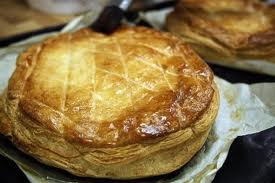
The link to the video shows how a commercial king cake is made, which is the cake we eat throughout the season. The tradition is explained well in the video, so I’ll just add that with the surge in local and artisanal foods, many more types of king cake are now available in the area. Whole wheat cakes, french-style Galette des Rois cakes and more can be found at markets, at stores and bakeries. Happy Carnival!

The best ones ( I think) are made of brioche and have a cinnamon flavor, but there are so many kinds to choose from these days

The best ones ( I think) are made of brioche and have a cinnamon flavor, but there are so many kinds to choose from these days

Yes that is a plastic baby in there- If you get that in your piece of cake, you buy the next.

Yes that is a plastic baby in there- If you get that in your piece of cake, you buy the next.

Galete des Rois

Galete des Rois

How a king cake is made

Wrapping up 2015 with Backyard Gardeners Network

Okay, I said that I would post two stories of organizations doing great work that help direct marketing producers and markets, but I decided I should support one organization in my own city too, so now it is three.
I chose this organization because it has quietly shared resources and space to anyone wishing to grow food, to work at a garden or increase food sovereignty in the Lower 9 or across New Orleans. I first met BGN’s E.D. Jenga Mwendo about 10 years ago and was able to spend some time with her then and have kept an eye on her organizing since. I am impressed with her enthusiasm for honest grassroots work and her willingness to partner with larger entities whenever necessary, and yet not allow her community to be swallowed up by their intentions. In other words, in a very turf-y area of organizing here in New Orleans (no pun really intended), she does her level best to rise above all of that and do what is good and nurturing.

BGN-Annual-Update-201513

Source: ANNUAL UPDATE | Backyard Gardeners Network

Baker shutting the door on markets


I had written about this baker giving up the weekday market almost exactly 2 years ago and now via his wonderfully written email newsletter excerpted and linked at the bottom of this post, I see that he is about to give up the remaining farmers market that he attends.

I have certainly heard a wide range of reasons given by producers about why markets no longer work for them, and thanks to my long ago human resources training, I learned to ask myself and my market peers what I used to ask of my staff about departing or failing employees:

Did we do all that we could do to help this person succeed? Did we offer the same resources and attention that we could offer or do offer to others? What else should we offer (if anything) to help situations like this not happen as often in the future? Or are there just circumstances out of anyone’s control that made this inevitable?

When I post this news on my personal FB page, I guarantee you I’ll hear  responses from market shopping friends as well as non-market shopping friends telling me their opinion of his products and his stall, both good and bad, a few who will blame the market and still others who will shrug and say it goes with the territory.

I also guarantee you that when I go and talk to him directly about this email, he will be fair (he always is) to the market management but also specifically critical about markets. He will suggest marketing ideas to me, some of which might very well work for this market and some that have been tried and not worked in the past, all of which may or may not have helped his business. I expect that we will find ourselves in somewhat of a standoff, although I will agree with him that markets should be reactive to the needs of their anchor and to their specialty vendors. I’m not saying that this market was not – I cannot know what the recent relationship is-  but wearing my hat of a market strategist for a minute, any and all markets should constantly fine tune their management and marketing based on their measurement of positive and negative impacts, and that does include measuring a spectrum of individual stall activity across the market.

The trick is to measure within the context of each business’ set of goals and true interest in being at markets long-term.

As a specialty item vendor (he’d  disagree with that description I am guessing, but his breads are unique enough for purchase that they have to be seen as specialty rather than staple goods still), finding his customers can be slightly more tricky than it is for the market to find the anchor vendors customers. And to further confuse matters, in some markets, once in a while the specialty vendors ARE the anchor vendors.

Continue reading

As oyster season revs up, new type of Gulf oyster turning heads in New Orleans 

When ecological concerns force new ideas, direct relationships make those ideas able to be introduced and tested in a simple and effective way:

Local awareness of off-bottom oysters got a boost in July when the Crescent City Farmers Market hosted a special event with a new producer, Grand Isle Sea Farm, which dished out sample crates of its harvest to local chefs.

Source: As oyster season revs up, new type of Gulf oyster turning heads in New Orleans