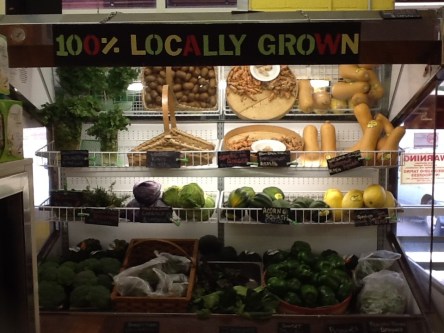
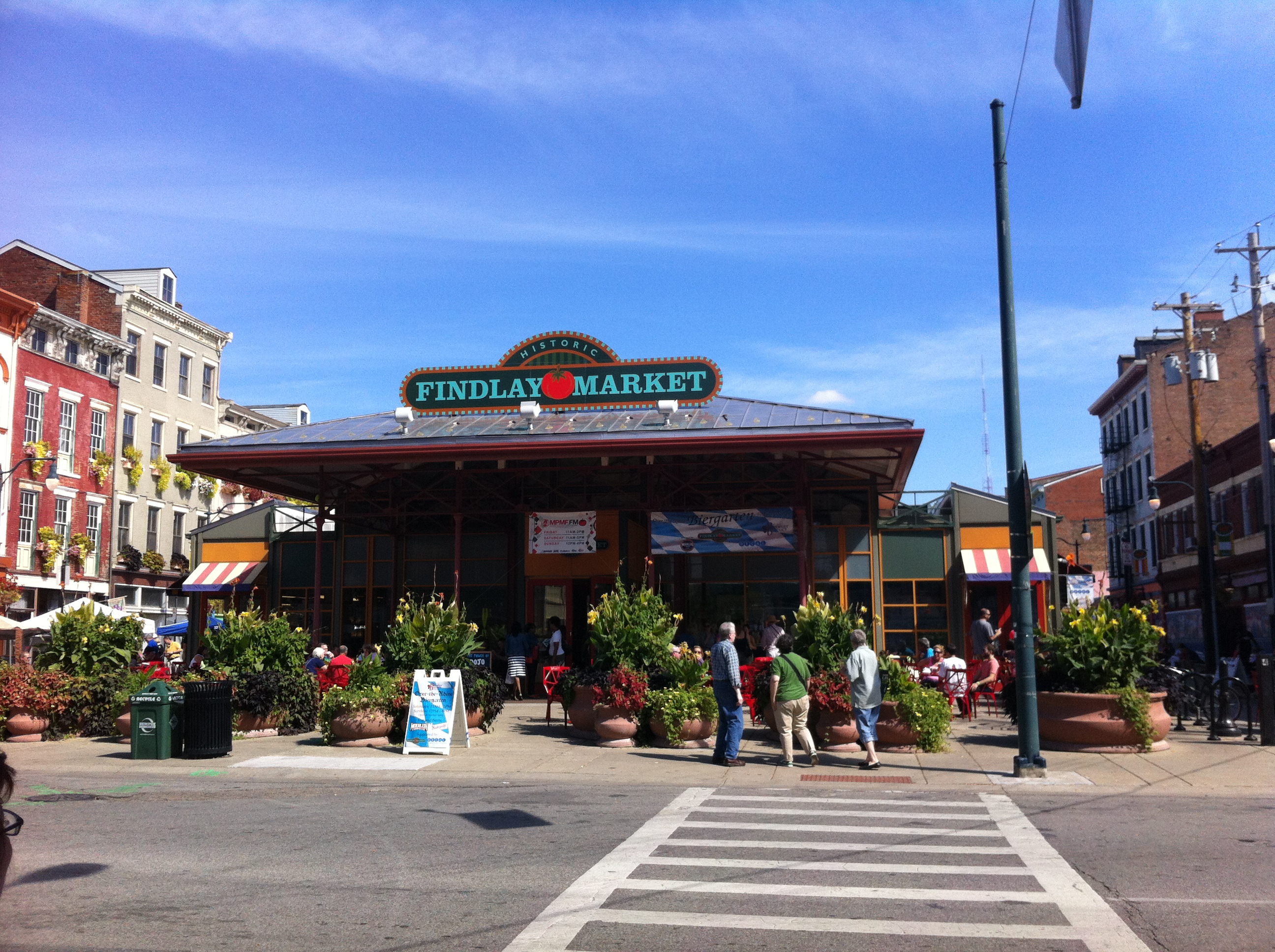
The first of three public markets that I will be visiting this week across Ohio.http://www.findlaymarket.org/

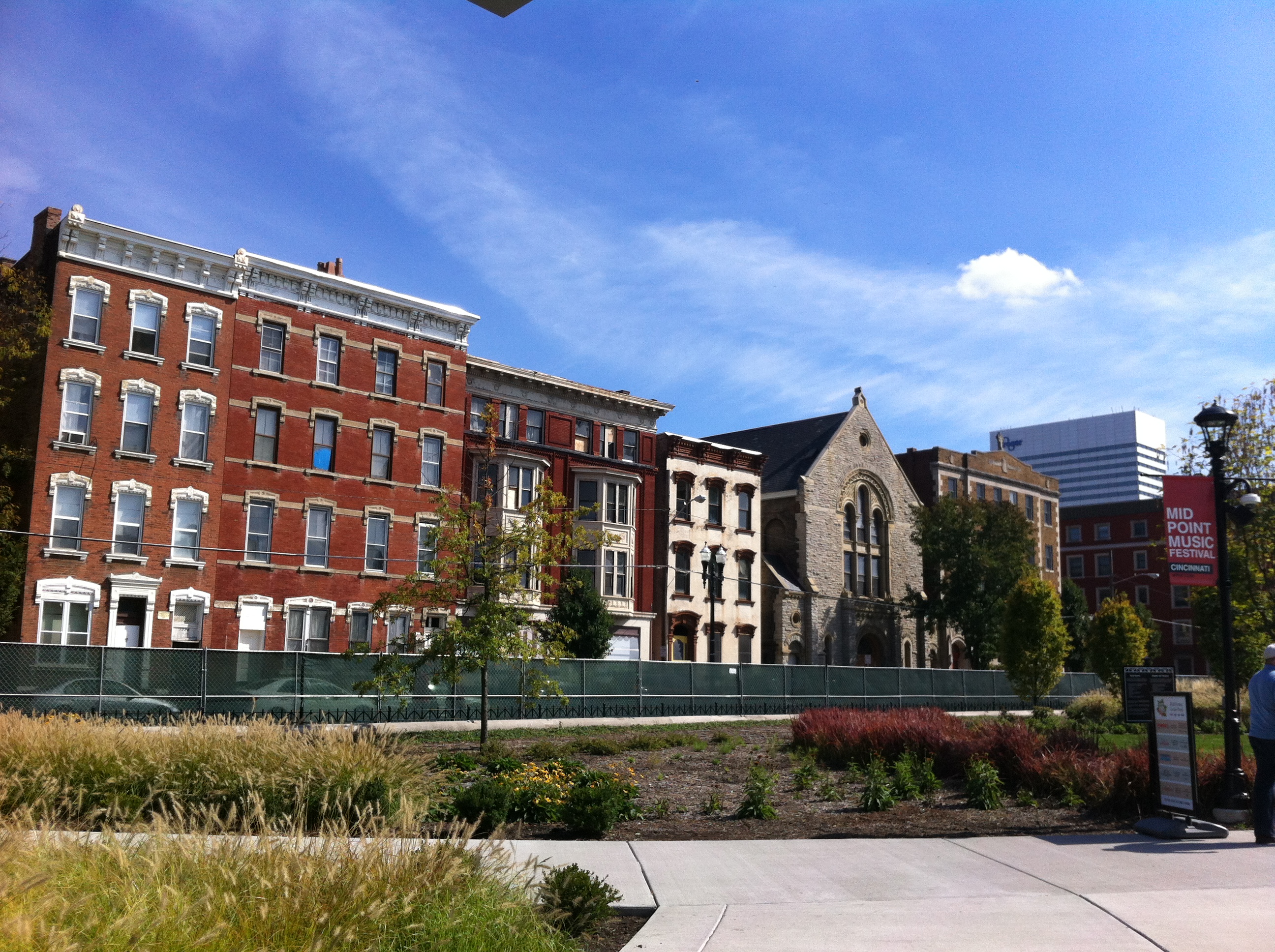
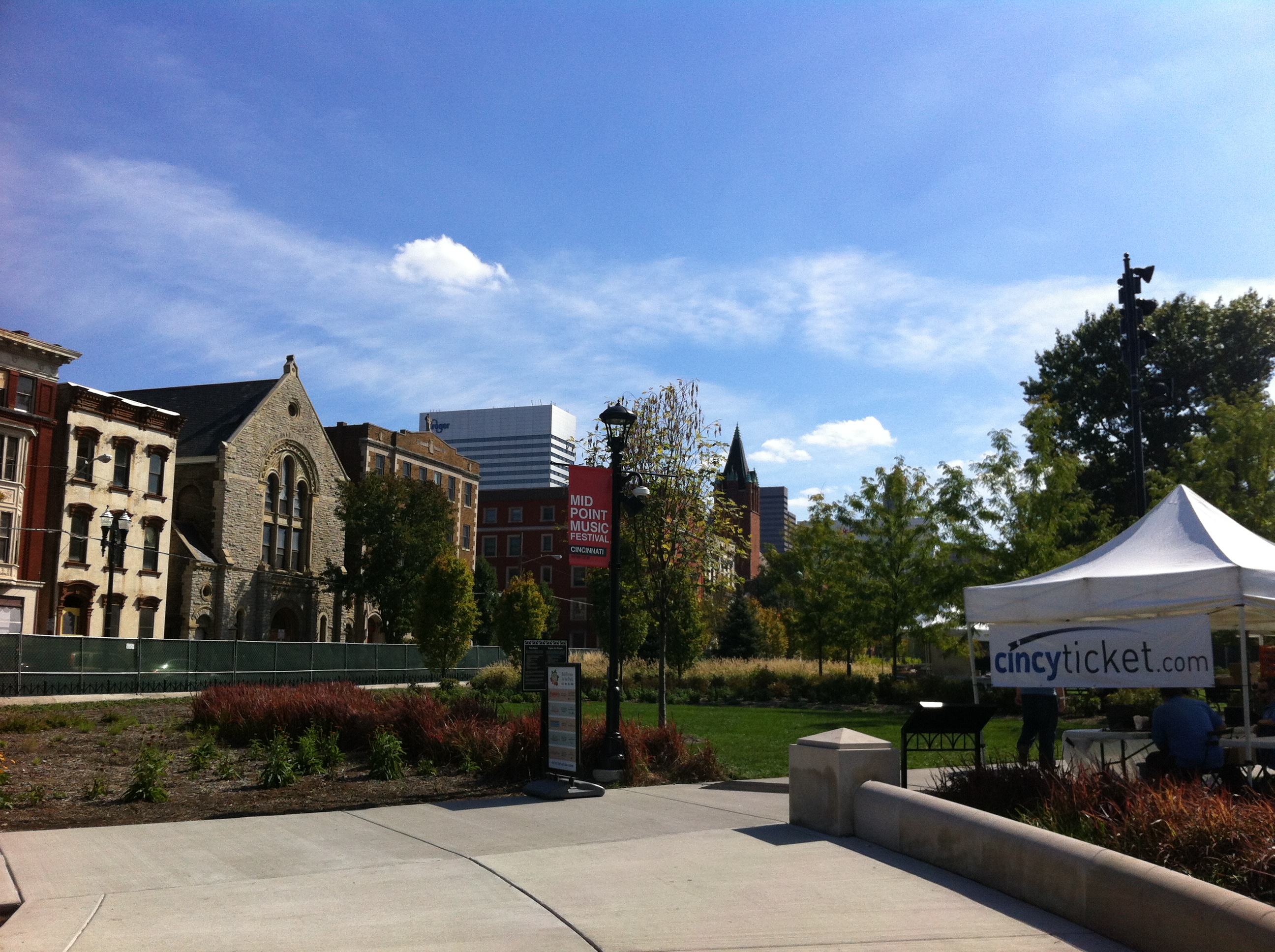
Lovely Over-the-Rhine neighborhood in Cincinnati, the largest collection of Italianate buildings in the US.

The first of three public markets that I will be visiting this week across Ohio.http://www.findlaymarket.org/

Lovely Over-the-Rhine neighborhood in Cincinnati, the largest collection of Italianate buildings in the US.

Below, is a link to an interview with a New Orleans chef who has embedded local purchasing into the very DNA of her kitchen.
The day I met Kristen was the day (2002? 2003?) that she interviewed to be our Crescent City Farmers Market (CCFM) Tuesday/Thursday market manager. She came to the interview with a slate of ideas and opinions backed up with a vitality that could not be denied. We were surprised that someone with her fine dining experience (and obvious ambition) wanted to work for our little organization, but she explained that she wanted to know all facets of the food system.
During her tenure, she can be credited with building our Green Plate Special program, which allows restaurants to come for a full month of Tuesdays to sell plate lunches to the shoppers at the CCFM and, of course, allows those chefs to understand the farmers and fishers better and to have long stretches to watch market vending in person.
As a chef, she came with a “shoot from the hip” framework and never stopped running the entire time she worked with us. Like anyone who has worked on the line at top restaurants, she was intimidating to some but we knew that she always led with what was in the best interest of our farmers and fishers. Through her, we understood the psyche of the chef better and started to realize that we should get to know the sous chefs and line cooks that were more often at the market and were on their way to the top position. Many of those have now become leaders of their own restaurant (why, like our friend Kristen Essig!) and almost all have become fierce supporters of those markets.
“As a line cook, you develop a relationship with vendors as they come in the back door, but actually working with the vendors at the market was a totally different thing. You’re working, really, with 20 small businesses, and they’re all trying to make certain quotas, and they all have certain amounts of product that they have to move. You develop strong relationships with these people—you learn that they have bills to pay, whose kid needs braces, etc.”
On Being a Boss: Kristen Essig Takes Over at Sainte Marie – Eater Interviews – Eater NOLA.
I know many markets are using food trucks as a way to get more traffic to markets, especially weekday and evening markets. Based on this and other articles that I run across, it sounds like food trucks should be specifically written into market rules to head off this sort of unwelcome publicity.
In New Orleans, we added a “Green Plate Special” many years ago so a restaurant could come and sell for a month of Tuesdays at one of our tents (it was a 10 am-2 pm market then, now it’s 9-1), as long as they had entrees under 10 bucks, sourced from the vendors when possible and followed the specific risk and vendor rules for serving prepared food.
This added amenity was to help us to draw office lunch traffic and it has done that and much more over the years, although I have to admit it killed off a lot of the prepared food items that the other vendors were selling, but maybe that was a blessing in disguise after all. It made those vendors concentrate on their fruits and veg staples and to stop trying to corner the sandwich business at the market.
And even though it was a difficult start (can I tell you the number of restaurants and chefs that I haunted in those early years?) 99% of those that participated over the years that I ran the markets asked to be able to return.
We wrote guidelines for that spot and asked them to pay double what our regular vendors paid which was still a bargain for what they received: shoppers already amassing needing food and meals, in a market with seating and local producers willing to sell items for the menu. So I recommend that markets think about how to include caterers, restaurants and food trucks into their market, but to do it without upsetting the balance of the market too much.
By the way, this article seems to suggest that this is not a “true” farmers market as most of us across the U.S. define that term, but is more of a food and artisan market. I know Florida has many of those and they seem to be an appropriate market type and serve their shoppers and vendors well in many case but maybe we need a type to describe the market that offers prepared food as its main offering. As I often say to markets when they ask me if a rule is “okay,” it’s only important that the market can defend and explain their rules to their community. If they can, if people around there understand and most agree, then I say full steam ahead.
Okay, one story about the Green Plate. When we developed the idea, we would talk about how we wanted restaurants like Commander’s Palace to do this (often rated as the #1 fine dining restaurant in New Orleans) and although we asked them in the beginning, they quickly sent their regrets (as they are very polite folks). We were seen as a quirky little food event and hadn’t moved to “beloved institution” phase at that point…
After the levee breaks of Katrina 2005, this 100 year old+ restaurant had some damage, needed time to repair and to the great sadness of many New Orleanians, did not reopen that year. However, in 2006, they asked us if they could come to do the GPS, brought their A-team and spread the word that they would sell quarts of their famous turtle soup and a few beloved entrees. So that first day (right after we ring the bell to open the market) we hear a cheer from their tent and see the celebrated chef and owner holding a ten dollar bill over their heads while saying with great emotion, “Our first sale since Katrina!”
The next week, they brought their Maitre d’to manage the line that went out of the market.
So I’ll never forget how our little market helped this great establishment and how our original dream came true all at once. All because we always thought: “what if…”
Anti-Food Truck Meddling Ends Up Ruining Miami Farmer’s Market – Hit & Run : Reason.com.
An article about a mobile market starting up in Massachusetts is attached. After reading it (well even before reading it) I must confess I was just not sure about mobile markets as the method for adding healthy food to a community.
The purpose of the farmers market is to allow civic engagement to happen at such a regular interval that behavior change can also happen. Farmers can slowly build their business to meet their face to face customer needs, shoppers can watch others shop and compare notes and learn the seasonality of their region among other things and the neighbors get an amenity that encourages a more vibrant area. All of these things take time and sustained effort and even with the best of intentions may still fail but if it does all work, it can lead to a powerful change in a community. That is the promise of a farmers market, and it also allows everyone to be part of the decision making.
And may I add, the use of the term “market” in its title also troubles me as I think it implies a system that resembles a farmers market and yet we share almost no characteristics with mobile food initiatives.
And as someone who helps build and expand public markets, let me say this: I don’t believe that we have done enough with it yet. I think the type of market that we see in most cases is a “flagship” or “neighborhood niche” (some typology terms that are evolving in the market field) which may not fit the goals of some communities. I believe that there are many types of market types for communities that are organizing themselves. For example, there is a type of farmers market for food deserts (food security market type) that we have yet to fully understand or what the uses of those other types could be.
What worries me about people jumping completely to to the next bandwagon is that I wonder if the mobile market is actually a barrier to communities ever getting a full-fledged farmers market. Adding to that, I think farmers markets are part of a spectrum that can ultimately get communities other food retail options, including at times, full-scaled grocery stores. Can mobile markets lead to that? I’m just not sure.
However, I do see that mobile markets can offer some short termed food access answers and also gather some data about choices that a neighborhood wants. Also, that the mobile market can help some small farmers get prepared for farmers markets among other things.
I also appreciate the nimbleness of the mobile option. I did some research for a potential mobile market while working at MarketUmbrella in New Orleans after Hurricane Katrina and still believe that there is a use for it in disaster-struck communities. And having talked with the good people of Toronto FoodShare and others who are thinking about the mobile market role, I suggest that it might be a useful bridge to offer healthy prepared foods that could arrive in a neighborhood throughout dinner time and by using local fruits and vegetables in their simple recipes (meals under 4.00 for families and less than 15-20 minutes prep time perhaps?) still support local growers.
So I wonder if how communities deploy farmers markets and mobile markets separately and together could be analyzed using similar measurement (Oh I may find the time to do this myself soon!) and where there has been a successful model of a mobile market, that some in-depth research can be done of this option as an answer to food system needs.
By the way, this quote from the article struck me as a perfect example of the lack of awareness of what farmers markets do and how they do it:
“Traditional farmers’ markets, the pair argue, are often time- and labor-intensive, and have the downside of being stationary.”
Changing behavior takes time and a regular commitment and even though the idea of a moving truck sounds good as a way to get to more people, it also takes the chance away of establishing a haven that can become the start of a neighborhood getting long term amenities.
BUT I lay part of the blame on public market advocates: in order for food system organizers to know what farmers markets can do, we have to share data about what they do.
And find ways to encourage a full spectrum of answers that should well include mobile food.
A mobile farmers’ market revs up – Food Features.
Also, a link to the Greenpaper that I wrote while at MarketUmbrella:
Greenpaper
What a treat I had yesterday. Sarah of the Carrboro Farmers Market has been patiently squiring me around the area, meeting to meeting, meal to meal. Hopefully, all of you have made it to this area of North Carolina and had some of their amazing food, centered by the pork, chicken -well, all meat- that they love and know how to cook in so many interesting ways.
Yesterday, Sarah took me a few miles out of Carrboro to a little town called Saxapahaw (pronounced sax-paw the Carrboro native says) for lunch and for a quick meeting. That meeting easily became an afternoon, because of the fascinating Saxapahaw General Store.
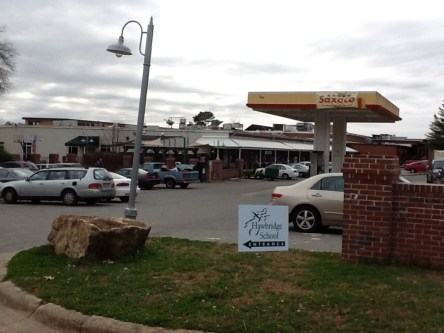
Here is what their website says about their beginnings:
The Saxapahaw General Store as it now exists began in June 2008 when Jeff Barney, butcher and self-taught cook, and Cameron Ratliff, teacher and self-taught biscuit maker, worked with former owner Mac Jordan to begin a new life for the convenience store and gas station that had served the community for several years. They imagined a spot where a village could gather for refreshments, meals, and basic home provisions, run by folks whose varied backgrounds have each taught them they can influence their world by collaborating with their neighbors. They hoped to serve the residents of Saxapahaw with a range of products that could allow everyone to feel welcome. They decided to become stewards of local foods, good wine and beer, nutritious snacks, and eco-conscious dry goods.
What I saw was a business model that looked right. Once I met the dynamo farmer Suzanne, I became even more sure. Suzanne took us across the street to the pastures after our lunch
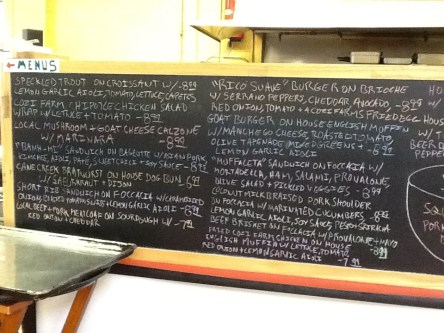
(the picture below shows what is available for lunch-all of the meat is local and much of the produce too)
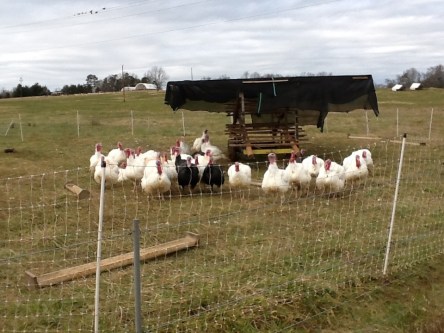
The turkeys were the last of the year, with these destined for ground turkey in the next week or so.
Much of the poultry production is done herself alongside Saxapahaw neighbors and coworkers; the humane treatment of her animals at the end of their lives is so important to this farmer that she told us she would not use many of the processing plants available to her. And that if that was the only way that they could be processed that she wouldn’t raise animals for food.
She pointed out the ducks that they had only begun to raise for food and the vegetable garden, also beginning. At this point, the store is buying from the very talented growers that surround the area thanks to the Carrboro Farmers Market and its younger sister markets, but the emporia is going to grow some of its own produce across the street. The composting is carefully monitored before being shared with their animals, so as to not waste any of the precious produce.
The store is set up to roam and shop after one has put their order in at the counter. Coca-cola products are lined up near pure ginger root drinks, homemade baked goods and local preserves near the small candy area. Hunting gear and motor oil can also be picked up as well along with some biodiesel or gas for your truck.
The store is both a throwback and a nod to the future. Suzanne talked extensively about the ongoing need for more equipment as well as sharing individual stories of the staff and their talents. Throughout our time there, people of varying ages and backgrounds came and went, bought food, drink and dry goods.
As public health and regional planners look for store models that can offer dignity and inclusion to food producers as an encouragement to sell there (just as the farmers market world has done) this store should become a Mecca. Using around 1500 square feet to offer as many culturally appropriate items as possible (Suzanne dreams of the day she can put out her gizzards and turkey necks next to the stock already offered) and real food choices next to convenience items still necessary to the real world, the Saxapahaw General Store is a food organizer’s dream come true.
Hopefully, many of you are planning on heading to the Midwest for the PPS September International Public Market Conference on September 21-23, 2012. If you do, it might be worth an extra few days to drive or take the train to Chicago and see their growing local food presence. Every time I go, I find another sustainable project or food system piece to check out. It certainly has to do with the current federal administration’s own interest (and connection to the new mayor) in their home city, and probably also has to do with the last mayor’s interest in greening the city; Daley was the one who put the rooftop garden on city hall after all.
The cart approach that Mayor Emmanuel is offering in the press release attached here has its supporters and detractors. I, for one think before we use these less balanced fixes to try to address food insecurity and sovereignty issues, the farmers market movement needs to be better at knowing how to identify the types of markets that work in these different situations. Or, at least, make sure that the powers that be have farmers needs in mind and have time to build food producers’ long range direct marketing plans. Those types of markets would be collected using the research that myself and others are working on: identifying characteristics, indicators to get typology of markets. My project, using the acronym Market CITY, will be bringing together researchers, practioners and stakeholders to start to build the typology framework. More on that later.
But, do start to plan your Midwestern fact-finding trip and I hope you can find time to seek out these regional farming initiatives when you travel.
Chicago Outdoor Produce Stands Serving Underserved Areas Approved By City Council.
I think it’s important that market managers remember what sole proprietors/entrepreneurs go through to open (or open and close, open and close, open and close in this case) their business. Markets can take some of the edge and lonely learning curve time away from some of these folks, or at least invite them in for a spell to find some inspiration or camaraderie.
I admire these folks in a different way but just as much as that farmer with the gorgeous hothouse tomatoes- they’re both a little nuts and a lot dedicated to the health of their community, whether social or nutritional.
Taggie, a smartphone app developed by recent Dutch design school graduate Niels van Hoof, allows users to direct a smartphone camera at the barcode of food items to learn about their origin, growth process, and different varieties. After recognizing the scanned barcode, Taggie launches a 3D augmented reality animation to engage children with a short, fun lesson about the food.Van Hoof developed the app as a graduation project for the Design Academy in Eindhoven, Netherlands after being inspired by Jamie Oliver’s Food Revolution. “He went to schools and tried to find out if kids know where food comes from,” van Hoof says. Perhaps needless to say, most of them didn’t—which set van Hoof’s wheels in motion. Van Hoof hopes that by using the app, children will “discover more about fruits and vegetables and [will not be] afraid of the product anymore, which results in living healthier.”
Untitled from Niels van hoof on Vimeo.
The McDonald’s restaurant on South Claiborne Avenue in New Orleans is utilizing a token system for customers who need to use the latrine….
The bathroom door now has a token meter for which customers will have to request to use the facilities. The token is free upon request.
You know, maybe I’m thick-headed; how is giving a token out to use their bathroom going to reduce trash or encourage good behavior?
Using law students to create a framework of smart guidelines is the right thing to do in this case. If we want to encourage small businesses to flourish once again in the US, then we need to allow tiers for different types of businesses. I know most markets are not skirting laws, but wouldn’t it be smart to connect with law students in every region to assist markets too?
I recently posted a story about Seattle’s new food truck laws. This msnbc story covers that in detail and also adds some of other cities that are just trying to figure it out. Nice to see cities paying attention to start ups, but will we see McDonald’s carts in the future too?
Food trucks
Many cities are feeling the pressure from both the entrepreneurs who want to start new businesses and from the restaurants and coffeehouses that see these mobile vendors as competition that are allowed to live without the hassle of the rules of a storefront.
Interesting that Seattle is expanding the area for these trucks, not restricting them.