Land & Power, Cultivating Food Justice

Panel at MSAN Ag Revival meeting

Ben Burkett Indian Springs Farmer, Federation of Southern Cooperatives leader

“Without owning land, we cannot have much justice. Yet, so many barriers to using that land remain.”

I was in a room recently with the Cargill boss and others like him. They think they make the wheels turn, but we make the wheels turn.”

Rukia Lumumba  Lawyer, back in state after being in NYC working with incarcerated youth. Daughter of late mayor of Jackson MS.  Leader of Cooperation Jackson. 

“The food justice movement cannot be separated from mass incarceration movement.We need good food to retain information, to think critically.”

If you eat healthier, you act healthier.”

“Question the fear we have for people of color, for poor people.”

Nia Umoja  Registered nurse by training. Leader of Cooperative Community of Near West Jackson

“If we are what we eat, what are you?”

We all have a equal right to a healthy diet. (We need a) backyard garden at every home.

I just want gardens everywhere.”

Patricia Cipolitti and Lupe Gonzalo, Coalition of Immokalee Workers

Most here are talking about small farming, but the part of the food business we work in is the huge agri-businesses part. We don’t even have access to land to grow food for ourselves.  We live with modern day slavery in the fields of Florida.We began to organize in the 1990s to force growers to take responsibility for the abuses we faced as farmworkers. To show growers that we had power. Yet, growers were saying that they had no power to change the conditions; therefore the organizing changed in 2000 to call on huge retailers who purchased those goods to make these changes. Taco Bell was the first retailer called on; many ridiculed our efforts, but the organizing grew and helped consumers understand their role in building power and making real changes in the lives of farmworkers. We now know we have the power of people, especially when collaborating with others like consumers.

We had 3 demands:

pay a penny more a pound for tomatoes to get more money back to farmworkers;

respect a human rights  code of conduct for farmworkers;

that the voice of workers would be respected in the field and retaliation against those who spoke out would not be allowed.

Fair Food agreement: 14 corporations are now on board; 90% of the Florida tomatoes picked are now part of that agreement.

Ricardo Salvador, Union of Concerned Scientists

500,000 members who advocate for the issues you have heard this morning. My team is 15 people and works in coalition to have impact on the research we do. (We call that the the Inside DC game.)

The outside DC game is  embodied in out HEAL Food Alliance, a social justice initiative.

We operate on the idea that there is a “Not a lack of food; there is a lack of democracy” (Lappe)

Lappe also points out that one can get lost in argument of which is more effective: To give a man to fish or teach a man to fish when the real issue is who owns the damn pond.

“US History is based on the destruction of the people who were here. The founders were hoping to establish a nice economic niche based on the extraction of resources. That is what we are facing today that use of someone else’s land and someone else’s labor to create wealth for only a few, rather than something for all of us.”

Facilitator: When we fight power, power changes and adapts. If we’re not vigilant, we will miss that adaptation. Be aware.

No Piece of the Pie

From ACORN International organizer Wade Rathke:

The Food Chain Workers’ Alliance released an updated state of the industry report entitled “No Piece of the Pie,” and it’s not just sobering, it’s depressing, because even as employment is soaring in this critical industry, the workers are falling farther and farther behind. There is no way to separate the precariousness of the workforce from any final conclusions about food quality and safety.

The report’s executive summary speaks for itself and includes the following findings:

· Fourteen percent of the nation’s workforce is employed in the food chain, over one in seven of all workers in the U.S. The number of food chain workers grew by 13 percent from 2010 to 2016.
· The food chain pays the lowest hourly median wage to frontline workers compared to workers in all other industries. The annual median wage for food chain workers is $16,000 and the hourly median wage is $10, well below the median wages across all industries of $36,468 and $17.53.
· Thirteen percent of all food workers, nearly 2.8 million workers, relied on Supplemental Nutrition Assistance Program benefits (food stamps) to feed their household in 2016.
· Eight-two percent of food chain workers are in frontline positions with few opportunities at the top.
· For every dollar earned by white men working in the food chain, Latino men earn 76 cents, Black men 60 cents, Asian men 81 cents, and Native men 44 cents.1 White women earn less than half of their white male counterparts, at 47 cents to every dollar. Women of color face both a racial and a gender penalty: Black women earn 42 cents, Latina women 45 cents, Asian women 58 cents, and Native women 36 cents for every dollar earned by white men.
· Injuries are up and union protection is down.


The work continues

Dear fellow activists and entrepreneurs.

If you read this blog, you are actively engaged in the growth of the alternative food system either by interest or by work. It means that you know the reality of small businesses and the struggle for long-term success by those businesses. It also means you are aware of the divide between rural and urban, of small and large population centers  in terms of access to resources and in understanding by the media or policy makers. Hopefully, everyone who reads this blog also agrees on the need for more places to discuss and work on those issues and others.

For me, the first place is public markets. That is because it is the best place to offer small businesses space, face-to-face peer time, and access to a wide variety of people to grow their ideas to fruition. Issues like resource depletion, social isolation and economic sovereignty are also on the minds of those who use markets as organizing tools.

As for those visitors, no purchase is necessary to attend a market. No one will be required to fill out an online database request to read our market materials or have to sign up for a time-share condo to have access to our market experts. Education is constant and it is offered to anyone who asks and offered not only by those with a long group of letters after their name. In markets, experience is seen as a better teacher.

Those principles were given to us by the founders of our movement, based on their strong conviction that the only way to rescue family farming and public space was to put them together. Those ideas have been exposed to the air of thousands of places since the rebirth of the farmers market movement in the 1970s and successfully connected unlikely collaborators, created safe space for diversity and championed innovation.

We have done amazing things with our markets in the last 40+ years. Thousands of pilots have shown the way to finding new businesses to vend their products, engaging people through inclusive outreach, marketing open-air or shed market culture to shoppers unfamiliar with them, and adding new appropriate technology when necessary. Yet, we are all aware that we still have a lot to do. That we had only reached a tiny percentage. That as more places are hollowed out economically, our work becomes ever more important and even more difficult.

So, no matter which candidate was yours, my hope is that you remain committed to the goals we have worked on together. That we agree that the combative nature of a national campaign cannot continue indefinitely or it will be absorbed by its citizens and become the culture of the times. Division is the enemy, because our work relies on finding the best way to include each person as and when they enter, whether they are a newly arrived resident, a suburbanite, a small town grandmother, a rural father or an urbanite. Therefore, we need to redouble our efforts to make markets the civic centers for everyone. Let’s make a pact to double the number of markets in all areas, extend seasonal markets to year-round (and if your response to that is we can’t grow year-round in our area, do remember that your region used to do just that) and triple the number of small producers by the time of the next election. In order to do that, we will need to lose more of the assumptions that we all make about those different from us and to work harder to find common ground. I’m more than ready to continue this work during this new administration and will be open to participating in any conversation in which I can be helpful. I look forward to hearing from many of you about how your work will evolve and grow. And I’ll see you at the market.

Thanks, 700 Magazine Street

New Orleans-In 2016, Crescent City Farmers Market announced that the flagship Saturday morning farmers market – held at the corner of Magazine and Girod since 1995 – would need to find a new home by fall. As the new market era at Julia and Carondelet begins, one-time market staff and long-time shopper Dar Wolnik looks back on the muraled parking lot.


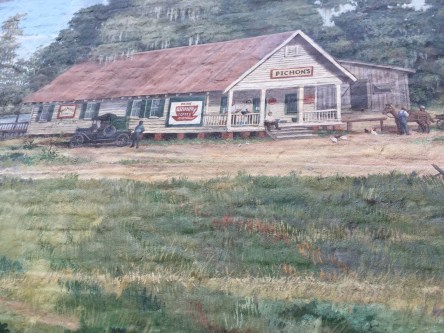
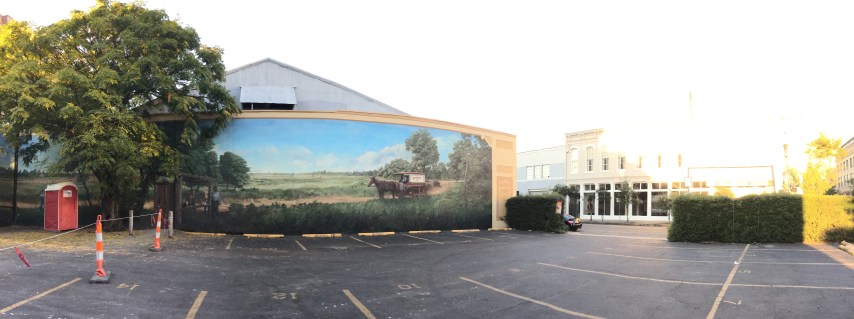
The circa 1991 mural of a coffee wagon heading to a small town store and Reily Foods’  prized chinaberry tree set this parking lot apart from others in the CBD.

IMG_2164.jpg

The original mural. This part has since been destroyed by the developers.

Why a market?

In 1995, two of the Crescent City Farmers Market (CCFM) founders – the late, sorely missed Sharon Litwin, and the geographically departed, sorely missed, but still kicking Richard McCarthy – realized its potential as the home for their upcoming market, and arranged to meet with the Reily Foods patriarch. Richard often shared the story of how when he completed his pitch, Boatner asked how much money he was requesting. Richard replied, “I don’t want your money, I want your parking lot Saturday mornings.” Reily was reportedly charmed by the request and gratified that his new mural and the carefully tended tree would serve as the host for this idea. Their handshake agreement between CCFM and Reily lasted for 21 years until Boatner’s passing.
IMG_2166 (1)

The garage mural and the garage as seen from Girod Street. The Magazine Street entrance to the parking lot is to the middle right of the photo. There is also a mural on the wall to the left of this photo, some of which was preserved by the developers.

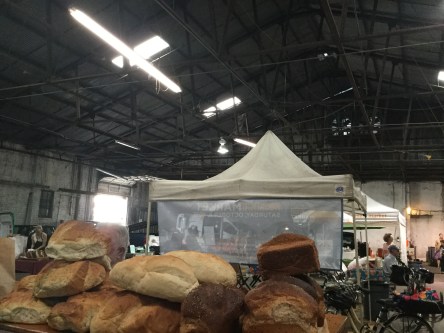
The warehouse district used to be full of buildings just like it, but just like this one’s fate in the very near future, they were torn down for shiny, much taller buildings. The garage behind the mural served as the parking for weekday Reily employees and became where the rainy day markets were held, with storage rooms around its edges and an off-limits parking area at the back.
img_1745

Inside the garage

img_1743

The flower ladies stop for a quick discussion on an “inside” market day.

The inside garage was affectionately nicknamed “Little Calcutta” for the humidity and humanity it contains when used by the market.  One of the larger garage doors hadn’t opened since early 2005; after a while, the track became rusted and trash-filled and the market vendors learned to avoid market staff when we went to get help to open or to close it.  Certain spots in the roof would drip during heavy rains and vendors learned to set up just to the right or left. We actually marked the floor to make it easier to avoid water falling on one’s products or head, until finally, the roof was repaired. We used to dream of spiffing up the garage by whitewashing the walls and adding murals or posters, but as we say here, then Katrina happened. No other explanation should be needed.I think actual lights were added recently, which made it seem like Santa Claus had finally stopped by to reward our good behavior. Or maybe it was that the market just got around to asking the owners for those things. Sometimes it’s hard to know what and when to ask for when a place is offered free of charge and comes with donated cans of coffee too.
 

img_1696

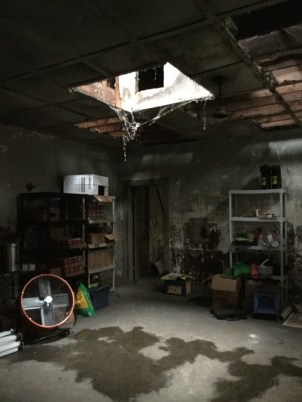
This was the newer storage space.

The storage room used by the market was a loose description of a room at all, and had a lock on the door that probably could have been broken by an excited dog jumping at it. It also came with an air shaft/skylight in the middle of the room that supplied the only light in there. Sometimes it was better to work in the dark so that whatever critters who lived in the gloom could not be seen. I still shudder thinking about it. The current staff doesn’t believe me when I tell them that this storage space was a step up from the previous one that we finally had to evacuate. Let’s just say the less said about it, the better. And that once out of the old space, I don’t believe anyone has ever entered it again.

The outdoor lot was the true home of the CCFM though. The Girod side was open to the sidewalk with only some yellow parking barriers between. When the market was at its largest size (summer 2004-2005) vendors had to set up facing the sidewalk on that side. We found that asking farmers to squeeze into spaces with their tables touching or almost touching their fellow vendors tables was a tricky and delicate undertaking. I am sure that is no surprise to any market manager.
img_1873

SV-AS10 ImageData

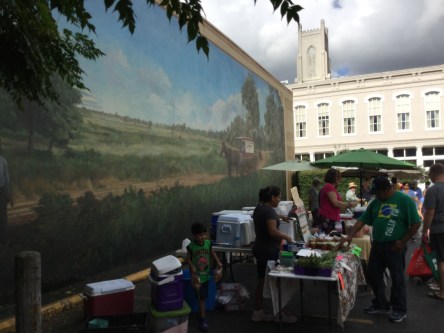
Market Umbrella Executive Director Kate Parker talks about the late, legendary Diana Pinckley and her impact. That is founder Sharon Litwin in the peach shirt, who was always great about showing up for important occasions. Still miss seeing her around town.   Both are now memorialized on the wooden tokens used by the market.                                                                    R.I.P. Diana and Sharon.


IMG_20150926_084352

Isabel and Miguel Mendez and kids, 15 years

img_1693img_1687img_1685

In pictures, the mural offered an unrealistic sense of the size of the market and I often saw visitors who came to pay homage a little disappointed at the size of the actual market. I’d approach them and introduce myself and almost invariably get the “It’s…smaller than I thought it would be.” The mural could also be a point of tension as the market organization was tasked with its protection during market hours, leading to constant reminders to vendors who liked to lean things against it. The wall made the spaces right below shady for some hours, which was welcome in the summer but not in the winter. Funny to watch people congregate in different places in the market depending on the season, just like cats searching for that spot with the perfect amount of warm sun or cool shade.

18893169_1509312512447236_1239313476098707934_n.jpg

The small size of the lot meant that vendors had to “offload” their products, using the ancient, creaky Reily hand trucks or by carrying items from the vehicle one armful at a time to their tables outside. In the early days, everyone used umbrellas and one of the green, handmade tables supplied by the market making the overall site colorful and human-scaled. Once 10’ x 10” pop-up tents became available, vendors began to use those instead and a sea of white became the dominant sight. That is until the number of vendors increased and led to fights about tent poles intruding on the neighboring space and as a result, vendor tents had to be done away with although the market itself still used them for their activities. Umbrellas returned, the mural was front and center again and vendors spent many successive mornings constantly readjusting them to maximize the shade and to secure them from gusts or from wildly gesturing shoppers. I know that Richard was secretly pleased by the loss of tents, as he was always obsessed with the visuals of what we were presenting. He found umbrellas so inviting that he even renamed the organization Market Umbrella when we left Loyola University and our ECOnomics Institute name behind in 2008.

At its maximum in those years, the market welcomed a few thousand shoppers during its four hours of sales that offer a stage for successive casts of characters. Like most long-standing markets, the opening hour of 8 a.m. was for those seasoned shoppers who knew where to park, what they wanted to buy and how to get the heck outta there before the perusers came at 9 a.m. Those second-hour folks liked to chat, stick around a while and usually bought what was most appealing on that day or recommended to them right then by their friends or their favorite farmers. They grumbled about parking a great deal. After that group headed to the next cultural outing of the day, the service workers and other late-nighters slowly showed up. The number of bikes locked on all available posts and groups of bleary-eyed socializers squeezing into any available seating were good indicators of the 10 o’clock hour starting. In the last hour 11-12, one saw some tourists, those new to markets as well as a few hard-core regulars who like many New Orleanians simply do not get out of the house until around the lunch hour.

Many more subgroups, special guests, and even some “bad pennies,” all of whom made that space sparkle and hum every Saturday morning for 21 years, could be studied there as the sum of the social capital created by the market. We market staff often took the time to do just that, either from the vantage point of the low Reily building roof across Girod or while standing across the street on Magazine.

We valued that space so much that, as we began to design our fair trade/handmade market in 2002 that we called “Festivus, the Holiday Market For the Rest of Us,” we never questioned setting it up there, in the middle of Girod Street in years 1 and 2 and then on December Sundays in the same parking lot for years 3, 4 and 5 of Festivus’ run. Festivus was meant to drive sales to our farmers market during slow December and to allow our organization to move the dial a little more on the artisanal/entrepreneurial movement around us. Using the same lot for a new seasonal market meant we had freedom to design it differently and to include more wacky ideas than we could squeeze into our regular market. Many people still stop me to reminisce about the Office of Homeland Serenity, the Grievance Pole, and the Flattery Booth or some of the other moments of the 2003-2007 era of Festivus.

I consider it my great honor to have played a part in Market Umbrella’s history at that location, to have worked with the Reily Company staff and to now to be one of the local keepers of the stories about Sharon and Richard and John and the vendors and shoppers of those first days and of that space. The space itself is owed many thanks and so don’t be alarmed if at the first light on a Saturday, you notice a small group there with a bottle and glasses toasting the good fortune of having 700 Magazine as our flagship home for all of those years.

img_2202

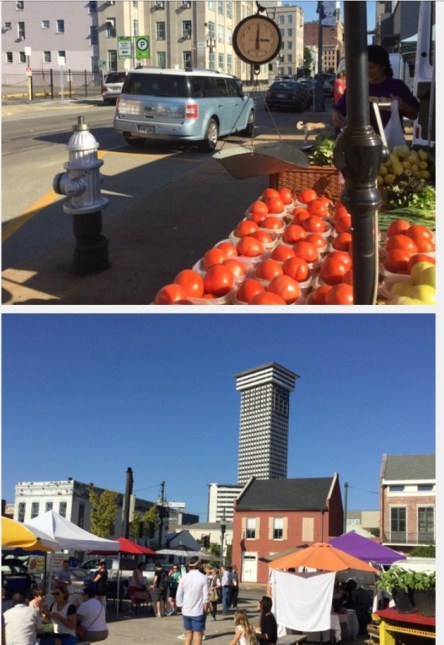
New location at Julia and Carondelet, on the streetcar line as of 2016.
img_2233

 I was the Deputy Director of Market Umbrella and then its Marketshare Director during 2001-2011. Since then, I continue to work as a national consultant for public markets and also as the senior researcher at Farmers Market Coalition, the national farmers market advocacy organization.
Designing Better Shopping Experiences

Using a variety  of research methods, students with disabilities and conventional students at San Francisco State University studied “how the principles of Inclusive Universal Design practice can promote equity with respect to access and use of the physical environment.” Their findings can certainly assist market organizers and their methods should influence how we gather data.

The Symposium & Workshop sought to orient and prepare students with disabilities to educational and professional career opportunities in the design disciplines. There were three primary goals and collaborative interfaces.

(1) To introduce inclusive human-centered design applications in the design curriculum at SFSU that will orientate students, both the students with disabilities and conventional university design students to the holistic benefits of design education and practice that go beyond the exclusive and limited convention of mainstream design applications.

(2) Exposing students to inclusive participatory design empathy methodology.

(3) Identifying and creating design concepts for the product environment and interior space that facilitates one’s ability to access and manipulate the active learning and recreational environment at home, or at school.

This approach to data collection and design is available to busy and to “under-resourced” food organizers through resources and trainings available for purchase, and in online and in-person individual and group trainings.  The two companies that I usually send people to are Luma Institute for their wonderful resources on how to use this process (I also took their in-person course, thanks to FMC and the Knight Foundation) and Ideo, which has influenced some food system funders, like Ford Foundation. Both offer online individual and group courses.

I would suggest that this sort of professional development is exactly what can be included in grants or even sponsored by neighboring businesses of a market to undertake as a team. This approach is similar to the methods that are either included (or will be) in the Farmers Market Metrics program,  in tools such as the Marketshare section of Market Umbrella’s site and in the Farmers Market Toolkit instruments on the British Columbia Farmers Market site.

The final newsletter  includes  findings from these two projects:

Students Design Shopping Cart for Elderly Community

Supermarket carts are solid enough to lean on, but collapsible “granny carts” often used at urban farmer’s markets do not provide appropriate support for people with mobility issues, Fisher explained. “The idea of a cart is not exotic, but (it’s) important to my life,” Fisher said.

After conducting multiple interviews in the aging community, Lopez and Renard realized the need for a supportive personal cart is widespread. Renard said existing carts are generally constructed with weak materials with little attention to aesthetic.

“People put a little bit of thought and design into (portable carts), but they just paint (them) that nasty old-person beige,” Renard said. “Just because people are aging, they don’t want ugly products. They want something that fits their needs but is also stylish – (a product) they aren’t embarrassed to use.”

They credit their inspiration to Dr. June Fisher, an 82-year-old occupational health physician and Bay Area product design lecturer who worked closely with the duo throughout production.

She said she looks forward to having a CityCart of her own, something supportive enough to navigate a farmers market and pick up a few heirloom veggies without relying on someone else.

“The design came from a particular person’s need – my need,” Fisher said.

Designing a Better Shopping Experience with a Holistic Approach to Aging in Place

Several methods were employed such as group and individual in-depth interviews, immersive observations, shadowing and experience mapping session. By means of these methods it was conceived that elderly face several physical challenges while shopping.

These challenges are mostly due to their physical decline, are mainly coherent with the existing literature most of which have not been responded for many years. The main areas of concern were the large size of food packages, standing in long checkout lines, reading the labels, using the carts and baskets, size and layout of stores, shelves and location of products.

The study showed a very social aspect to shopping experience. Participants found shopping to be an experience than can be fun and social. The nostalgia from old ages and existing cultures around the world were two main sources of comparison for the elders. Elders showed to be very perceptive of personal social interactions of them as customers with the seller or store staff. They desired to personally know the staff and be known by them. They liked the staff to remember them and their preferences. They looked for a personal relationship with the staff; one that helps building trust in both parties. They also liked to make conversations and take advice from them on which food to buy or how to cook a special dish with the food and more. Talking of advice was always hand in hand with ‘trust’.

Findings showed that the seniors associated the personal familiarity with the seller and making regular conversations with him to sense of trust towards the seller. The general view of shopping environment was an environment for shopping, having fun and social interactions. They were specifically enthusiastic about communicating with the younger generation and truly appreciated the young people’s patience when they needed more time to learn.

The participants liked to be specially treated, not in a manner  that suggests they are not capable of doing it themselves or that they are old, but a special care based on friendly relationships,

One of the prominent findings of the research was elders’ discomfort when standing in long lines. Some had to physically strain while standing, finding leaning on the carts to be the only option to alleviate the hardship. Also, over the course of study a few times people brought up the idea of a resting area where they could sit for a while and take a breath. The combination of these findings led the researcher to design a service to address the mentioned issues. The service is called, “Valet Checkout”.

These methods can reduce the learning curve for markets and increase the likelihood of success in the final design.


A Social Practice Cooking Experience in the Homes of NYC Immigrants

What a great idea:

Artist Lisa Gross, who founded the League of Kitchens, acknowledges that each of its workshops starts off a bit awkwardly, as six participants enter an unfamiliar neighborhood and step into a stranger’s home. Yet after five and a half hours of cooking and eating together, all led by an immigrant instructor based on her home country’s traditions, there’s a dynamic cross-cultural experience.

How it works

Two Loops

Two Loops

Two Loops

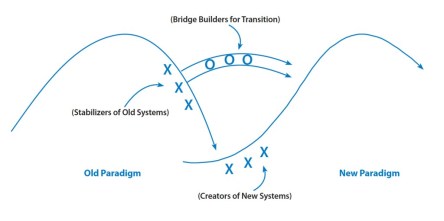
Some of you have seen this image within one of my presentations. I first saw it myself at Kellogg Foundation’s 2008 Food and Society meeting. The idea was shared by Deborah Frieze, one of its creators as a way for organizers to understand networks and system change and not just focus on their silos of work. In essence, when you are changing a system, there are many places to intervene, from stabilizing the old system (think of school lunch programs working with the old rules even while pushing the envelope to build new systems), to bridge builders (writers like Michael Pollan and entities like Wholesome Wave) to the creators of new systems (those early market leaders in the 1970s up to and including networks like Detroit Black Community Food Security Network)

I know that when I brought it back to Market Umbrella, it helped us to understand how to expand our work.

The key to making this 2 loop graphic dynamic are the connections. As is explained in the videos and text accompanying this image, system change only happens at the network level. Individual efforts can galvanize,  name and/or define the changes needed, but they need to work collectively to make it happen.
I believe the sooner that farmers markets see and act as networks and not only as stand along organizations, the better. This doesn’t mean that markets cannot protect their assets as  incorporated organizations, but rather that every chance that they can act as a network or think as a network, the stronger they will grow and be able to respond to pressures and to opportunities. .
It also means that every project and idea connects more people back to the market world. And producers are able to stabilize and grow their businesses carefully to ensure they are still here decades later.

The quotes below are from the Two Loops site and are very helpful for food organizers to see how it relates to our work.

There were no rules or guidebooks. They had to start. They had to do what they could see and learn as fast as they could. For a time, everyone was working separately. But…people began to connect with each other. They began to form networks.
These initial networks were important. People just started sharing with each other. They worked in many different colors or themes, and they had a lot to share. Often it was just talking with each other about what they were doing and about the changes that were happening inside of themselves. This kind of initial connection is essential. It helps us remember that we are not alone. What people started seeing more and more was that this networking alone wasn’t enough. But what else is needed? The people who are working on the same themes started to reach out to each other, connecting within communities and between communities. I think of this as the beginning stages of forming communities of practice:

Some people say can this actually happen? Yes, it can. It takes time. It is a long road. But we can, I believe create ways or living in a new paradigm. Let me give one example:
Back in the 70s in the US some people started “going back to the land.” They went to grow their own food and, like most innovators and entrepreneurs, at first most of them failed. Some got discouraged and quit. Others kept learning. Back in 1974 I invited poet and farmer Wendell Berry to speak at the EXPO ’74 Environmental Symposium Series in Spokane. He said it was not only possible, but necessary to find more ways of producing food locally. His remarks led to the formation of Tilth[ (see note at end of page), an early community of practitioners committed to local food production. People both practice and started talking about what else was needed now. Eventually, among other things, they started working with people in urban areas to create Farmers Markets. I remember co-founding the Farmers Market in my hometown of Spokane in the early nineties – it was a new and exciting addition to the community.
Now, almost 40 years after this local foods movement began, most supermarkets have local foods sections. Costco has a reputation for selling local foods whenever possible. People buy local foods now because it just makes sense to them.
Part of what’s happened is that it became possible for people who knew nothing about local foods to easily buy them. They didn’t go through any sort of systemic analysis of the benefits of eating local food – it just made sense. New choices had been illuminated, building a bridge so people could easily cross to the new.


Source: Two Loops

Dominion wants to put a pipeline through farmland designated for conservation

On Thursday, the Southern Environmental Law Center filed a motion with the Federal Energy Regulatory Commission (FERC), asking the body to reject Dominion Virginia Power’s permit application for the Atlantic Coast Pipeline, a 600-mile natural gas pipeline from West Virginia to North Carolina.
According to the motion, Dominion’s proposed route goes through at least 10 properties that owners have placed into a Virginia conservation program intended to prevent future development.

“Dominion has proposed the largest conversion of conservation easement land ever undertaken in Virginia,” the motion says. “If allowed, it would seriously undermine public trust in the state’s conservation easement program and jeopardize the continued vitality of this critically important tool for open-space land protection.”

Source: Dominion

How the First Farmers Changed History 

Theory that the early farmers’ need for expanded trade routes caused humans to finally mingle genetically is included in this fascinating article that covers some new findings on our early farmers:

The new research also shows that even after agriculture was established across the Fertile Crescent, people remained genetically isolated for thousands of years.

“If they were talking to each other, they weren’t intermarrying,” said Garrett Hellenthal, a geneticist at University College London who collaborated with the Gutenberg University researchers.

But the DNA research also shows that this long period of isolation came to a sudden and spectacular end.
About 8,000 years ago, the barriers between peoples in the Fertile Crescent fell away, and genes began to flow across the entire region. The Near East became one homogeneous mix of people.

Why? Dr. Reich speculated that growing populations of farmers began linking to one another via trade networks. People moved along those routes and began to intermarry and have children together. Genes did not just flow across the Fertile Crescent — they also rippled outward. The scientists have detected DNA from the first farmers in living people on three continents.

Source: How the First Farmers Changed History – The New York Times

Bob Dylan and Contract Theory

As excited as many are about an American folk/rock singer composer winning the Nobel Prize for Literature, the economic prize is also worthy of mention here. First though, my favorite song lyrics of Mr. Dylan:

I ain’t gonna work on Maggie’s farm no more
No, I ain’t gonna work on Maggie’s farm no more
Well, I wake in the morning
Fold my hands and pray for rain
I got a head full of ideas
That are drivin’ me insane
It’s a shame the way she makes me scrub the floor
I ain’t gonna work on Maggie’s farm no more

I ain’t gonna work for Maggie’s brother no more
No, I ain’t gonna work for Maggie’s brother no more
Well, he hands you a nickel
He hands you a dime
He asks you with a grin
If you’re havin’ a good time
Then he fines you every time you slam the door
I ain’t gonna work for Maggie’s brother no more

I ain’t gonna work for Maggie’s pa no more
No, I ain’t gonna work for Maggie’s pa no more
Well, he puts his cigar
Out in your face just for kicks
His bedroom window
It is made out of bricks
The National Guard stands around his door
Ah, I ain’t gonna work for Maggie’s pa no more

I ain’t gonna work for Maggie’s ma no more
No, I ain’t gonna work for Maggie’s ma no more
Well, she talks to all the servants
About man and God and law
Everybody says
She’s the brains behind Pa
She’s sixty eight, but she says she’s fifty four
I ain’t gonna work for Maggie’s ma no more

Many of Dylan’s interpreters suggest this is a criticism of capitalism or of the military industrial complex. That actually leads us to a chat about the economic prize this year, given to Oliver Hart and Bengt Holmström for their contributions to contract theory. (Disclaimer: not only am I not an economist or a lawyer, my understanding of these theories is very casual and centered on my community organizing work. I may over or understate many of these theories and will always edit when better information comes my way. Feel free to add to my knowledge via email as needed.)

Contract theory focuses on the relationship between the parties in a contract, especially those which are asymmetrical in terms of how much information each side has access. The world contains scads of examples of information asymmetry: citizens and media, citizens and police or the military, employees-employers, consumers and technology providers etc. When one party has access to more information than the other, the fairness of the contract should be questioned. The other contract issue relevant to markets and farmers is what are called incomplete contracts. This covers the likelihood that a contract in present time cannot always cover every possible outcome and so often must be renegotiated at some time; in th, t case it is possible that renegotiation can go off the rails because of lack of trust.

In many ways, these scenarios describe much of what drove farmers and their advocates to the creation of the alternative food and farming movement.  The desire for fairness and trust for both producers and for eaters led to transparency being one our chief indicators of success and in keeping the heart of our movement in direct marketing channels which offer simple ways to create fairness. But even within those models, there can be an information asymmetry. For example, some farmers markets have created systems where information only flows from vendor to market and not the other way around. In others, vendors cling to systems that ask little of them as far as information sharing with the market. One way to gauge whether this is an unequal contract is at the time that the agreement is being changed.

Still, the very nature of the mutual dependency and face to face nature of farmers markets and their vendors can usually correct these small imbalances. Same goes for other type of direct marketing contracts, especially CSAs which began as simple contractual relationships between producers and eaters for a single season and a single farm. More recently, some CSA relationships have become imbalanced: like when a farmer offers a member a credit for a bad season, even though the contract in a CSA explicitly states that the shopper loses their investment if the crop fails. Or, when a CSA farmer begins to morph into an aggregator of goods from nearby farms and cottage industry producers without creating a updated contract with their shoppers that outlines the new rules of bringing those goods to the shopper.

However, the concern over unfair contracts really “scales up”  when systems move into intermediate (back door or bin sales) and wholesale (middle-man or pallet sales) contracts. Here, I’ll focus on intermediate sales, as wholesale sales are a whole other kettle of fish and in most cases, are beyond the capacity or interest of small family farms. (The reason for that is that few of those systems have really changed anything about their purchasing policies or their regulations for small farms, and so the costs and risk are all on the side of the farmer still.)

The hope is still that restaurant owners and wholesale buyers will build contracts with producers with the same transparency and information sharing as those in the direct marketing sector, but often that has not been the case. The key to mutually beneficial agreements on all levels of our food work relies on building contextual contracts and incentivizing them for all  involved. What are the main benefits for a producer to sell at a  lower cost to a chef? Well, two might be consecutive, consistent sales and the ease in delivery (meaning the farmer can deliver when most convenient to him or her and get quick payment), and yet rarely are these benefits described in agreements for most of our producers when they sell at these levels. What is the main benefit for the buyer? Often it is the quality of the product or the name recognition of the producer attached to the goods and yet rarely are those benefits understood and outlined in these agreements.

One way to incentivize the fairness of the contract in these situation may be to create a shared asset owned by all of the parties, such as a mutually owned cold truck or even branding. Another way to make them contextual might be to have an external party monitoring the agreement. Maybe this is where farmers market leaders can grow their influence?

And of course, markets managing transactions through card technology has led  to lopsided contracts with processors. Markets scramble to understand these complex agreements which exist over different eras of management and open markets  to many new layers of liability.  Another issue is that the energy that markets must reserve for reaching and encouraging benefit program shoppers is often wasted by the lack of good information about the client lists from local or federal government authorities. Too many markets I talk to have no idea how and where to reach these shoppers in their area and when you take in the short time that the majority of these shoppers remain on these programs at any one time (also not shared by most government entities), successful outreach becomes even more unlikely. The market vendor in this situation is also underrepresented in a fair contract, as most markets – or the processors working directly with farmers – use boilerplate agreements about card processing with their vendors.

So, one can see from just these few examples that center around direct marketing and intermediate farmers how many contract issues arise. So maybe before the alternative food system becomes another one of Maggie’s farms, let’s spend some time on increasing transparency and incentives for everyone’s benefit.

Economic Assessment Toolkit-USDA

I recently attended a two day workshop on the new toolkit, conveniently held in New Orleans during the Food Distribution Research Society’s  2016 Conference: Exploring Linkages in Food Market Innovations. FDRS has a very sensible membership rate for anyone interested in research on food systems, which should be just about everyone reading my blog.

The first part of the workshop provided a general overview of the purpose and the layout of the online toolkit with time for a round of introductions from the attendees.  The gathered group (SRO by the way!) was a wonderful cross section of municipal projects, regional assessments and some feasibility/benchmark needs for newly emerging initiatives. 32 states were represented among the attendees which meant lots of networking happened in the hallways.


unnamed.jpg

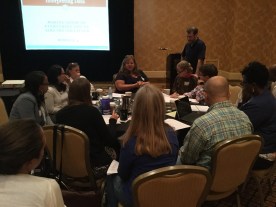
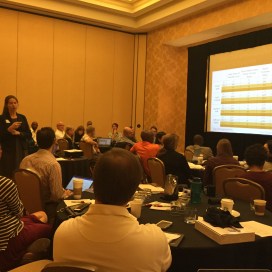
Day 1 breakout, facilitated by toolkit team member Dr. Todd Schmit of Cornell University


IMG_1990.jpg

Day 1 breakout, facilitated by Dr. Dawn Thilmany the coordinator of the toolkit project.


The next day, one could choose either of the tracks to learn more detailed information. True to my usual m.o., I traveled between  both rooms depending on the topic being discussed.

Track A: Advanced Economic Impact Assessment

  • Review of Economic Development Principles
  • Modelling Issues to Consider in Economic Impact Analyses
  • Hands-on Customization of IMPLAN data for Analysis
  • Assessing your Community’s Efforts

Track B: Integrating Benchmarks into Your Local Food Assessment

  • Food System Typology
  • Economic Benchmarks across the Typology
  • Mapping the Range of Economic Multipliers


IMG_2029.jpg

The two days contained amazing detail on unpacking data for analysis when using secondary dbs such as the Ag Census. The researchers also did a great job discussing (in layperson terms)  how to think about economics within the food system as a whole and across connected sectors as well as frank discussions on sorting out long-held assumptions that one might have about data ( I find markets need this reality check as much if not more than other project leaders so do take note).

If this workshop comes to your town, I’d recommend that you invite your Extension partners and any market planning on conducting in-depth research on their own. They may even be offering some travel scholarships as they did to this one.

I am gratified to see that the work the FMC team has done for the last 5 years or so to research and adapt existing tools into the still-in-development Farmers Market Metrics training and pilot materials closely follow the same framework used by this very smart group. I think FMM will be the market-focused portion of data collection and data use that toolkits like this rely on existing in local communities that make their work easier.

With all of this attention being paid to collecting and discussing data, it is becoming more evident that practioners and researchers will have many ways to share dynamic and disciplined ideas on the impacts that local and regional food systems have on their communities. Join in, won’t you?

In case you haven’t heard of this yet, I urge you to check it out online:

USDA-AMS’ The Economics of Local Food Systems: A Toolkit to Guide Community Discussions, Assessments and Choices

DIY vendor cart

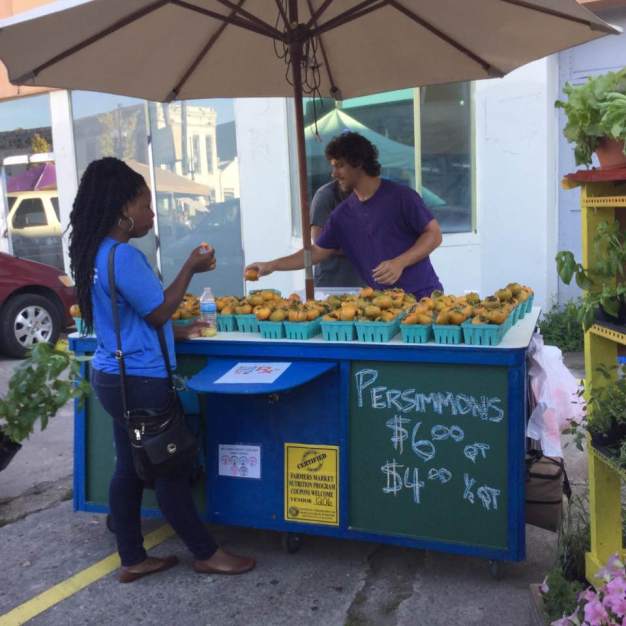
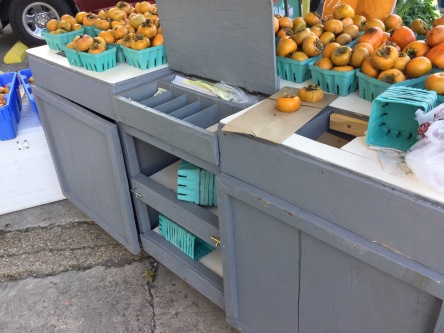
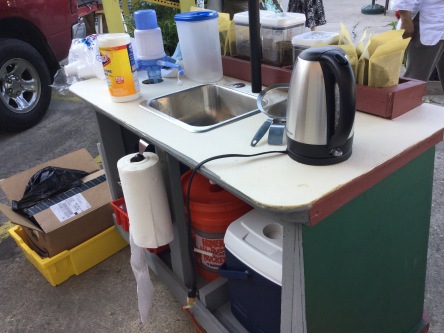
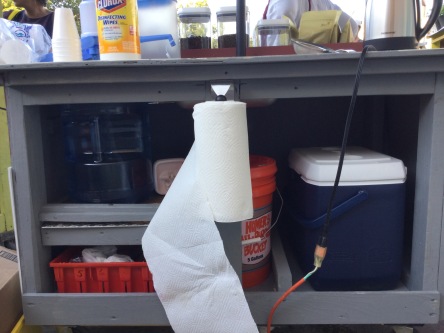
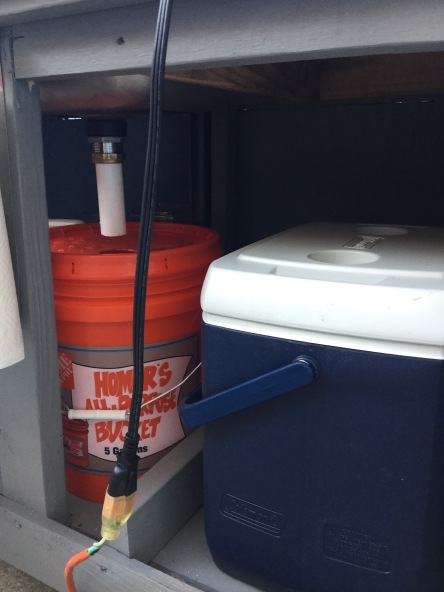
JD Farms in Mississippi has innovated another direct marketing idea while vending at the Crescent City Farmers Market. They have built free-standing carts to better present their goods and offer some flexibility in how they set up their stall. They have two of these with a third fixture being the yellow plant stand that can be just seen to the right in the picture.

What I like about this cart is how they incorporate customer needs like the waist-level display area, the middle shelf seen to the right of the shopper in the pic (which folds down), and the chalkboards on the bottom. The vendor side has recessed spaces for bags and a place for the cash box. Obviously, the umbrella slots into the middle of the display.

They can use a pallet jack to load these into their van and will be continuing to update the design of these.I have encouraged Don and Jeff to build then for others, or at least sell plans for making them. Feel free to join me in urging this side business for this talented duo.

vendor cart.jpg

IMG_2177.jpgIMG_2180.jpgIMG_2181.jpgIMG_2182.jpg

Motion Card newest card technology to stem fraud

Motion Code to the rescue

At first glance these cards don’t look any different from the ones you carry around today, but they’re hiding some technological wizardry.

The three digits on the back of this card will change, every hour, for three years.ezgif-com-crop

Trader Joes shoppers and farmers markets: will they come?

As my colleagues wished me a happy birthday last week, they asked me what fun thing I had to do on my birthday: I told them that one of them was to go to the opening of the first Trader Joe’s in the area, which opened in the suburbs of New Orleans that very day. I am sure some that the choice of viewing a retail store was odd, but not only is grocery store obsession a very New Orleans thing, it is most certainly one of my favorite “busman’s holidays.” (I also went to the inaugural fried chicken festival on Sunday so don’t worry about me too much.)

Now, speaking as a farmers market consultant…

I think knowing who the core shoppers are for the stores around a market is very helpful. In many cases, research is available on the chains or a visit to the local store (at both its peak and at its slow time) can usually tell you about that store’s demographic.

To give an illustration, I have included some global demographic info from Whole Foods and Trader Joes as well as a few market shopper personas. Forgive the errors and the oversimplifications. The data on the stores comes from retail research available online. The market data comes from the many surveys and data collection reports I have either participated on or read. Do be aware that there are many subgroups within each of these to be explored.

Grocery store shoppers

Whole Foods:”Decentralized” systems: regional management, store team approach and “localized” inventory management

  • Whole Foods focuses on the per capita population that has college degrees. The key customer for the average Whole Foods location is a working parent that is between the age of 30 and 50.
  • From the Yougov site: The typical Whole Foods customer is a female between the ages of 25 and 39 with more than $1,000 in discretionary monthly income. She likely works in architecture or interior design. She doesn’t mind paying more for organic food and she tries to buy fair-trade products where available. Her interests include writing, exercising, and cooking. She would describe herself as ethical, sensitive, and communicative, but also admits to occasionally acting like a self-absorbed and demanding daydreamer. Her favorite foods are sushi and tea and she probably drives a Mercedes-Benz.

Trader Joe’s: Centralized, secretive inventory management, mostly direct from manufacturers and a detailed screening process for hiring.

  • Most research shows that the TJ shopper is the most likely chain in the U.S.  to be brand loyal and to recommend the store to others.
  • TJ Culture dips into the health food movement, the gourmet food, wine and booze craze, and the ever-popular discount ideal. But all in moderation. “Our favorite customers are out-of-work college professors,” says Tony Hales, captain of the store in Silver Lake. “Well-read, well-traveled, appreciates a good value.” The chain focuses on singles, small families looking for small package sizes.
  • 50% have college degrees. Almost half havean household income of 100,000.
  • Stores carry 2-3,000 SKUS versus 30,000 -50,000 in a normal supermarket. 80% of their items are private label.

Continue reading