Just visited the website dedicated to The Cooking Room program to teach food literacy in classroom. Not trying to be picky, but it took me a while to figure out where this program was (In NYC it seems) and I’d still like to know how it evaluates success. I know how hard the Edible Schoolyard in New Orleans has worked over the last 5 years to make this stuff meaningful, so with a serious tip of the hat to all who try, I wish good luck to this program.
The Cooking Room
esynola.org
Author: D.W.
Cookbook LA
I know Echo Park because of the fine weekday evening market that is run by SEE-LA, which also runs many others in L.A. including the iconic Hollywood Farmers Market. When I worked at marketumbrella.org, they conducted a pilot of their NEED tool (meant to measure social capital) at that location and at SEE-LA’s other markets. I visited during the survey days and was very impressed at the location and vibrancy of it and their other “food security” and “neighborhood/niche” types of markets.
This Green Grocer was not around in 2007, so I have to believe that part of the credit for its birth must go to the Echo Park Farmers Market and the SEE-LA organizers.
Cookbook LA
Civic Sites program
This interview comes from the Federal Reserve of Atlanta’s website which has many fascinating economic development podcasts and transcripts. This particular one is with Tony Cipollone, vice president for Civic Sites and Initiatives with the Annie E. Casey Foundation. Casey Foundation’s Civic Sites program is an initiative that marries neighborhood-based community development with economic development.
Landraces and their places
Great interview with Glen Rice, CEO of Anson Mills and president of the Carolina Gold Rice Foundation on the role of landraces, especially grains.
This interview is found on Common-place, a wonderful and wondrous site on Early American life, especially food. The site is sponsored by the American Antiquarian Society in association with the University of Oklahoma and would be enjoyable to many audiences.
Landraces are pre-industrial domesticated plants and animals that are maintained by agricultural methods, rather than scientific methods.
Common-place
Diversity is the key
Once again, the social construct of our larger state or nation can reflect the work we are doing in our market communities. The question of why we have seen a reduction in crime is studied in this article. Recently I read (from Freakonomics author Steven Levitt and others) that when crime rates first began to fall in the 1990s, they pointed to the passing of Roe V Wade as causality, believing that children not growing up unwanted and without resources reduced later criminal behavior. This piece is pointed out in the article, along with other theories.
However, this article adds the argument that increasing diversity through the encouragement of a more varied ethnic, racial and demographic population in our cities and towns is the more direct cause of crime reduction.
The diversity issue is key for markets too, although probably not through the tabulation of crime stats! Still, if we add trust and encourage everyone to come to our markets, we’re bound to make more dynamic places that thrive.
The Atlantic
Top 10 Things You Should Know About The Farm Bill | Environmental Working Group
Or it’s all about corn, cotton, rice, wheat and soybeans.
Top 10 Things You Should Know About The Farm Bill | Environmental Working Group.
Eric Cantor’s You Cut includes SNAP incentives
On the House Majority Leader’s “You Cut” site, there was a “vote” on the Supplemental Nutrition Assistance Program (SNAP) fruit and vegetable incentive program (Healthy Incentives Pilot), and urges taxpayers to “not have to be bribed (emphasis added) with additional cash benefits to make nutritious food choices.” That is certainly contrary to the thoughts of USDA Secretary Tom Vilsack last summer, who stated that, “This pilot project will empower low-income Americans to eat more nutritious food and has the potential to strengthen the SNAP program that serves as a critical safety net to the most vulnerable in our society. Increased consumption of fruits and vegetables, especially in the place of higher calorie foods, can help move America towards healthier lifestyles and a healthier future.” See it here
You Cut
Booth Tracker
Once again, going back to the flea market world, I noticed this software offer for flea market organizers. I wonder if the flea market world has some ideas about rent and mapping systems we in the farmers market field need to study?
website
Rent-a-sheep
I just had the great fortune to tour Shelburne Farms last week with NOFA organizer Jean Hamilton, who was able to entice Program Director Megan Camp out of her office for a few minutes to show off her amazing educational/working farm. Megan seems to be one of those inspirational leaders who make it look so easy. She and NOFA Executive Director Enid Wonnacott share that attitude; because of women like this creating a food system for people’s health and community (rather than massive corporate profit) seems doable.
Now I read Shelburne Farms has another project going; sharing the sheep (not shearing) with the University of Vermont campus. As long as the sheep don’t have to costume in period sheep’s clothing to participate in the re-enactments during the historical tours….
VT sheep
A simple way a market can help
The Crescent City Farmers Market in New Orleans has had a disaster this week; their iconic dairy farmers, Warren And Sandra Smith of Smith Creamery in Mount Hermann, LA had a huge explosion on the farm. Luckily, no one was hurt including the cows) but the damage to the processing plant is massive and will take months to repair.
Besides being the conduit for information for the community, the market staff is collecting donations and getting signatures on a card for the Smiths. The table is manned by community advisory and board members of the market, and if someone gets there early enough, they can also have a free I (heart) Creole Cream Cheese t-shirt (which was being phased out of the market merchandise and so has come in handy!).
The important thing is the channels of communication are kept open by the market and any media or support requests can be channeled through or facilitated by the skilled staff on behalf of the farmers. Therefore, the time the Smiths spend answering the phone, explaining their plan and deciding how and when to accept donations is reduced and instead they can spend their time rebuilding.
Once again, a market, its shoppers and farmers share a social contract that is not written down but it understood and expanded when needed.
Smith Creamery Facebook page
Farmers-The Musical
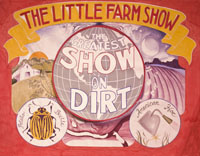
THE LITTLE FARM SHOW is an original musical theatre performance for all-ages created and performed by Tannis Kowalchuk and Brett Keyser. The actors play “the Amazing MacDonald Twins,” a brother and sister team of side show performers who tour “the greatest show on dirt!” from town to town. Full story
“First ever food desert conversation about how to make this work”
Chicago- After the meeting, the mayor sat down for an exclusive interview with ABC 7 political reporter Charles Thomas. The mayor said his meeting with the chief executive officers of six of the nation’s largest food/grocery chains was historic.
“Never anywhere in the country. First-ever conference with a mayor, first-ever discussion about the food desert. First-ever discussion with anybody about how to make this work,” said Emanuel.”
First ever?
with anyone?
are you sure Mayor?
and why no mom and pop stores at that historic table?
or farmers?
These incentives- is this the new word for short-term subsidies aka tax breaks?