Designing Better Shopping Experiences

Using a variety  of research methods, students with disabilities and conventional students at San Francisco State University studied “how the principles of Inclusive Universal Design practice can promote equity with respect to access and use of the physical environment.” Their findings can certainly assist market organizers and their methods should influence how we gather data.

The Symposium & Workshop sought to orient and prepare students with disabilities to educational and professional career opportunities in the design disciplines. There were three primary goals and collaborative interfaces.

(1) To introduce inclusive human-centered design applications in the design curriculum at SFSU that will orientate students, both the students with disabilities and conventional university design students to the holistic benefits of design education and practice that go beyond the exclusive and limited convention of mainstream design applications.

(2) Exposing students to inclusive participatory design empathy methodology.

(3) Identifying and creating design concepts for the product environment and interior space that facilitates one’s ability to access and manipulate the active learning and recreational environment at home, or at school.

This approach to data collection and design is available to busy and to “under-resourced” food organizers through resources and trainings available for purchase, and in online and in-person individual and group trainings.  The two companies that I usually send people to are Luma Institute for their wonderful resources on how to use this process (I also took their in-person course, thanks to FMC and the Knight Foundation) and Ideo, which has influenced some food system funders, like Ford Foundation. Both offer online individual and group courses.

I would suggest that this sort of professional development is exactly what can be included in grants or even sponsored by neighboring businesses of a market to undertake as a team. This approach is similar to the methods that are either included (or will be) in the Farmers Market Metrics program,  in tools such as the Marketshare section of Market Umbrella’s site and in the Farmers Market Toolkit instruments on the British Columbia Farmers Market site.

The final newsletter  includes  findings from these two projects:

Students Design Shopping Cart for Elderly Community

Supermarket carts are solid enough to lean on, but collapsible “granny carts” often used at urban farmer’s markets do not provide appropriate support for people with mobility issues, Fisher explained. “The idea of a cart is not exotic, but (it’s) important to my life,” Fisher said.

After conducting multiple interviews in the aging community, Lopez and Renard realized the need for a supportive personal cart is widespread. Renard said existing carts are generally constructed with weak materials with little attention to aesthetic.

“People put a little bit of thought and design into (portable carts), but they just paint (them) that nasty old-person beige,” Renard said. “Just because people are aging, they don’t want ugly products. They want something that fits their needs but is also stylish – (a product) they aren’t embarrassed to use.”

They credit their inspiration to Dr. June Fisher, an 82-year-old occupational health physician and Bay Area product design lecturer who worked closely with the duo throughout production.

She said she looks forward to having a CityCart of her own, something supportive enough to navigate a farmers market and pick up a few heirloom veggies without relying on someone else.

“The design came from a particular person’s need – my need,” Fisher said.

Designing a Better Shopping Experience with a Holistic Approach to Aging in Place

Several methods were employed such as group and individual in-depth interviews, immersive observations, shadowing and experience mapping session. By means of these methods it was conceived that elderly face several physical challenges while shopping.

These challenges are mostly due to their physical decline, are mainly coherent with the existing literature most of which have not been responded for many years. The main areas of concern were the large size of food packages, standing in long checkout lines, reading the labels, using the carts and baskets, size and layout of stores, shelves and location of products.

The study showed a very social aspect to shopping experience. Participants found shopping to be an experience than can be fun and social. The nostalgia from old ages and existing cultures around the world were two main sources of comparison for the elders. Elders showed to be very perceptive of personal social interactions of them as customers with the seller or store staff. They desired to personally know the staff and be known by them. They liked the staff to remember them and their preferences. They looked for a personal relationship with the staff; one that helps building trust in both parties. They also liked to make conversations and take advice from them on which food to buy or how to cook a special dish with the food and more. Talking of advice was always hand in hand with ‘trust’.

Findings showed that the seniors associated the personal familiarity with the seller and making regular conversations with him to sense of trust towards the seller. The general view of shopping environment was an environment for shopping, having fun and social interactions. They were specifically enthusiastic about communicating with the younger generation and truly appreciated the young people’s patience when they needed more time to learn.

The participants liked to be specially treated, not in a manner  that suggests they are not capable of doing it themselves or that they are old, but a special care based on friendly relationships,

One of the prominent findings of the research was elders’ discomfort when standing in long lines. Some had to physically strain while standing, finding leaning on the carts to be the only option to alleviate the hardship. Also, over the course of study a few times people brought up the idea of a resting area where they could sit for a while and take a breath. The combination of these findings led the researcher to design a service to address the mentioned issues. The service is called, “Valet Checkout”.

These methods can reduce the learning curve for markets and increase the likelihood of success in the final design.


A Social Practice Cooking Experience in the Homes of NYC Immigrants

What a great idea:

Artist Lisa Gross, who founded the League of Kitchens, acknowledges that each of its workshops starts off a bit awkwardly, as six participants enter an unfamiliar neighborhood and step into a stranger’s home. Yet after five and a half hours of cooking and eating together, all led by an immigrant instructor based on her home country’s traditions, there’s a dynamic cross-cultural experience.

How it works

Two Loops

Two Loops

Two Loops

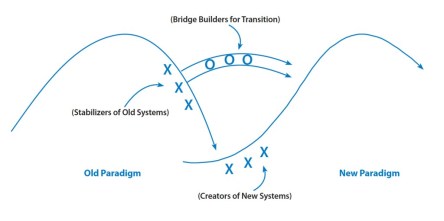
Some of you have seen this image within one of my presentations. I first saw it myself at Kellogg Foundation’s 2008 Food and Society meeting. The idea was shared by Deborah Frieze, one of its creators as a way for organizers to understand networks and system change and not just focus on their silos of work. In essence, when you are changing a system, there are many places to intervene, from stabilizing the old system (think of school lunch programs working with the old rules even while pushing the envelope to build new systems), to bridge builders (writers like Michael Pollan and entities like Wholesome Wave) to the creators of new systems (those early market leaders in the 1970s up to and including networks like Detroit Black Community Food Security Network)

I know that when I brought it back to Market Umbrella, it helped us to understand how to expand our work.

The key to making this 2 loop graphic dynamic are the connections. As is explained in the videos and text accompanying this image, system change only happens at the network level. Individual efforts can galvanize,  name and/or define the changes needed, but they need to work collectively to make it happen.
I believe the sooner that farmers markets see and act as networks and not only as stand along organizations, the better. This doesn’t mean that markets cannot protect their assets as  incorporated organizations, but rather that every chance that they can act as a network or think as a network, the stronger they will grow and be able to respond to pressures and to opportunities. .
It also means that every project and idea connects more people back to the market world. And producers are able to stabilize and grow their businesses carefully to ensure they are still here decades later.

The quotes below are from the Two Loops site and are very helpful for food organizers to see how it relates to our work.

There were no rules or guidebooks. They had to start. They had to do what they could see and learn as fast as they could. For a time, everyone was working separately. But…people began to connect with each other. They began to form networks.
These initial networks were important. People just started sharing with each other. They worked in many different colors or themes, and they had a lot to share. Often it was just talking with each other about what they were doing and about the changes that were happening inside of themselves. This kind of initial connection is essential. It helps us remember that we are not alone. What people started seeing more and more was that this networking alone wasn’t enough. But what else is needed? The people who are working on the same themes started to reach out to each other, connecting within communities and between communities. I think of this as the beginning stages of forming communities of practice:

Some people say can this actually happen? Yes, it can. It takes time. It is a long road. But we can, I believe create ways or living in a new paradigm. Let me give one example:
Back in the 70s in the US some people started “going back to the land.” They went to grow their own food and, like most innovators and entrepreneurs, at first most of them failed. Some got discouraged and quit. Others kept learning. Back in 1974 I invited poet and farmer Wendell Berry to speak at the EXPO ’74 Environmental Symposium Series in Spokane. He said it was not only possible, but necessary to find more ways of producing food locally. His remarks led to the formation of Tilth[ (see note at end of page), an early community of practitioners committed to local food production. People both practice and started talking about what else was needed now. Eventually, among other things, they started working with people in urban areas to create Farmers Markets. I remember co-founding the Farmers Market in my hometown of Spokane in the early nineties – it was a new and exciting addition to the community.
Now, almost 40 years after this local foods movement began, most supermarkets have local foods sections. Costco has a reputation for selling local foods whenever possible. People buy local foods now because it just makes sense to them.
Part of what’s happened is that it became possible for people who knew nothing about local foods to easily buy them. They didn’t go through any sort of systemic analysis of the benefits of eating local food – it just made sense. New choices had been illuminated, building a bridge so people could easily cross to the new.


Source: Two Loops

How the First Farmers Changed History 

Theory that the early farmers’ need for expanded trade routes caused humans to finally mingle genetically is included in this fascinating article that covers some new findings on our early farmers:

The new research also shows that even after agriculture was established across the Fertile Crescent, people remained genetically isolated for thousands of years.

“If they were talking to each other, they weren’t intermarrying,” said Garrett Hellenthal, a geneticist at University College London who collaborated with the Gutenberg University researchers.

But the DNA research also shows that this long period of isolation came to a sudden and spectacular end.
About 8,000 years ago, the barriers between peoples in the Fertile Crescent fell away, and genes began to flow across the entire region. The Near East became one homogeneous mix of people.

Why? Dr. Reich speculated that growing populations of farmers began linking to one another via trade networks. People moved along those routes and began to intermarry and have children together. Genes did not just flow across the Fertile Crescent — they also rippled outward. The scientists have detected DNA from the first farmers in living people on three continents.

Source: How the First Farmers Changed History – The New York Times

Bob Dylan and Contract Theory

As excited as many are about an American folk/rock singer composer winning the Nobel Prize for Literature, the economic prize is also worthy of mention here. First though, my favorite song lyrics of Mr. Dylan:

I ain’t gonna work on Maggie’s farm no more
No, I ain’t gonna work on Maggie’s farm no more
Well, I wake in the morning
Fold my hands and pray for rain
I got a head full of ideas
That are drivin’ me insane
It’s a shame the way she makes me scrub the floor
I ain’t gonna work on Maggie’s farm no more

I ain’t gonna work for Maggie’s brother no more
No, I ain’t gonna work for Maggie’s brother no more
Well, he hands you a nickel
He hands you a dime
He asks you with a grin
If you’re havin’ a good time
Then he fines you every time you slam the door
I ain’t gonna work for Maggie’s brother no more

I ain’t gonna work for Maggie’s pa no more
No, I ain’t gonna work for Maggie’s pa no more
Well, he puts his cigar
Out in your face just for kicks
His bedroom window
It is made out of bricks
The National Guard stands around his door
Ah, I ain’t gonna work for Maggie’s pa no more

I ain’t gonna work for Maggie’s ma no more
No, I ain’t gonna work for Maggie’s ma no more
Well, she talks to all the servants
About man and God and law
Everybody says
She’s the brains behind Pa
She’s sixty eight, but she says she’s fifty four
I ain’t gonna work for Maggie’s ma no more

Many of Dylan’s interpreters suggest this is a criticism of capitalism or of the military industrial complex. That actually leads us to a chat about the economic prize this year, given to Oliver Hart and Bengt Holmström for their contributions to contract theory. (Disclaimer: not only am I not an economist or a lawyer, my understanding of these theories is very casual and centered on my community organizing work. I may over or understate many of these theories and will always edit when better information comes my way. Feel free to add to my knowledge via email as needed.)

Contract theory focuses on the relationship between the parties in a contract, especially those which are asymmetrical in terms of how much information each side has access. The world contains scads of examples of information asymmetry: citizens and media, citizens and police or the military, employees-employers, consumers and technology providers etc. When one party has access to more information than the other, the fairness of the contract should be questioned. The other contract issue relevant to markets and farmers is what are called incomplete contracts. This covers the likelihood that a contract in present time cannot always cover every possible outcome and so often must be renegotiated at some time; in th, t case it is possible that renegotiation can go off the rails because of lack of trust.

In many ways, these scenarios describe much of what drove farmers and their advocates to the creation of the alternative food and farming movement.  The desire for fairness and trust for both producers and for eaters led to transparency being one our chief indicators of success and in keeping the heart of our movement in direct marketing channels which offer simple ways to create fairness. But even within those models, there can be an information asymmetry. For example, some farmers markets have created systems where information only flows from vendor to market and not the other way around. In others, vendors cling to systems that ask little of them as far as information sharing with the market. One way to gauge whether this is an unequal contract is at the time that the agreement is being changed.

Still, the very nature of the mutual dependency and face to face nature of farmers markets and their vendors can usually correct these small imbalances. Same goes for other type of direct marketing contracts, especially CSAs which began as simple contractual relationships between producers and eaters for a single season and a single farm. More recently, some CSA relationships have become imbalanced: like when a farmer offers a member a credit for a bad season, even though the contract in a CSA explicitly states that the shopper loses their investment if the crop fails. Or, when a CSA farmer begins to morph into an aggregator of goods from nearby farms and cottage industry producers without creating a updated contract with their shoppers that outlines the new rules of bringing those goods to the shopper.

However, the concern over unfair contracts really “scales up”  when systems move into intermediate (back door or bin sales) and wholesale (middle-man or pallet sales) contracts. Here, I’ll focus on intermediate sales, as wholesale sales are a whole other kettle of fish and in most cases, are beyond the capacity or interest of small family farms. (The reason for that is that few of those systems have really changed anything about their purchasing policies or their regulations for small farms, and so the costs and risk are all on the side of the farmer still.)

The hope is still that restaurant owners and wholesale buyers will build contracts with producers with the same transparency and information sharing as those in the direct marketing sector, but often that has not been the case. The key to mutually beneficial agreements on all levels of our food work relies on building contextual contracts and incentivizing them for all  involved. What are the main benefits for a producer to sell at a  lower cost to a chef? Well, two might be consecutive, consistent sales and the ease in delivery (meaning the farmer can deliver when most convenient to him or her and get quick payment), and yet rarely are these benefits described in agreements for most of our producers when they sell at these levels. What is the main benefit for the buyer? Often it is the quality of the product or the name recognition of the producer attached to the goods and yet rarely are those benefits understood and outlined in these agreements.

One way to incentivize the fairness of the contract in these situation may be to create a shared asset owned by all of the parties, such as a mutually owned cold truck or even branding. Another way to make them contextual might be to have an external party monitoring the agreement. Maybe this is where farmers market leaders can grow their influence?

And of course, markets managing transactions through card technology has led  to lopsided contracts with processors. Markets scramble to understand these complex agreements which exist over different eras of management and open markets  to many new layers of liability.  Another issue is that the energy that markets must reserve for reaching and encouraging benefit program shoppers is often wasted by the lack of good information about the client lists from local or federal government authorities. Too many markets I talk to have no idea how and where to reach these shoppers in their area and when you take in the short time that the majority of these shoppers remain on these programs at any one time (also not shared by most government entities), successful outreach becomes even more unlikely. The market vendor in this situation is also underrepresented in a fair contract, as most markets – or the processors working directly with farmers – use boilerplate agreements about card processing with their vendors.

So, one can see from just these few examples that center around direct marketing and intermediate farmers how many contract issues arise. So maybe before the alternative food system becomes another one of Maggie’s farms, let’s spend some time on increasing transparency and incentives for everyone’s benefit.

Economic Assessment Toolkit-USDA

I recently attended a two day workshop on the new toolkit, conveniently held in New Orleans during the Food Distribution Research Society’s  2016 Conference: Exploring Linkages in Food Market Innovations. FDRS has a very sensible membership rate for anyone interested in research on food systems, which should be just about everyone reading my blog.

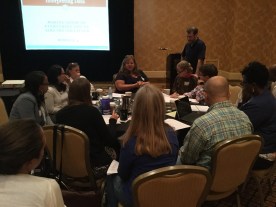
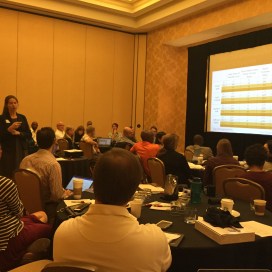
The first part of the workshop provided a general overview of the purpose and the layout of the online toolkit with time for a round of introductions from the attendees.  The gathered group (SRO by the way!) was a wonderful cross section of municipal projects, regional assessments and some feasibility/benchmark needs for newly emerging initiatives. 32 states were represented among the attendees which meant lots of networking happened in the hallways.


unnamed.jpg

Day 1 breakout, facilitated by toolkit team member Dr. Todd Schmit of Cornell University


IMG_1990.jpg

Day 1 breakout, facilitated by Dr. Dawn Thilmany the coordinator of the toolkit project.


The next day, one could choose either of the tracks to learn more detailed information. True to my usual m.o., I traveled between  both rooms depending on the topic being discussed.

Track A: Advanced Economic Impact Assessment

  • Review of Economic Development Principles
  • Modelling Issues to Consider in Economic Impact Analyses
  • Hands-on Customization of IMPLAN data for Analysis
  • Assessing your Community’s Efforts

Track B: Integrating Benchmarks into Your Local Food Assessment

  • Food System Typology
  • Economic Benchmarks across the Typology
  • Mapping the Range of Economic Multipliers


IMG_2029.jpg

The two days contained amazing detail on unpacking data for analysis when using secondary dbs such as the Ag Census. The researchers also did a great job discussing (in layperson terms)  how to think about economics within the food system as a whole and across connected sectors as well as frank discussions on sorting out long-held assumptions that one might have about data ( I find markets need this reality check as much if not more than other project leaders so do take note).

If this workshop comes to your town, I’d recommend that you invite your Extension partners and any market planning on conducting in-depth research on their own. They may even be offering some travel scholarships as they did to this one.

I am gratified to see that the work the FMC team has done for the last 5 years or so to research and adapt existing tools into the still-in-development Farmers Market Metrics training and pilot materials closely follow the same framework used by this very smart group. I think FMM will be the market-focused portion of data collection and data use that toolkits like this rely on existing in local communities that make their work easier.

With all of this attention being paid to collecting and discussing data, it is becoming more evident that practioners and researchers will have many ways to share dynamic and disciplined ideas on the impacts that local and regional food systems have on their communities. Join in, won’t you?

In case you haven’t heard of this yet, I urge you to check it out online:

USDA-AMS’ The Economics of Local Food Systems: A Toolkit to Guide Community Discussions, Assessments and Choices

DIY vendor cart

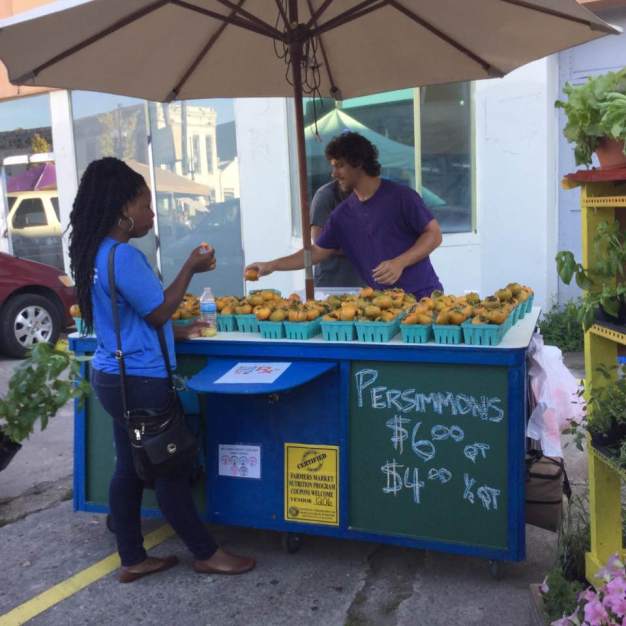
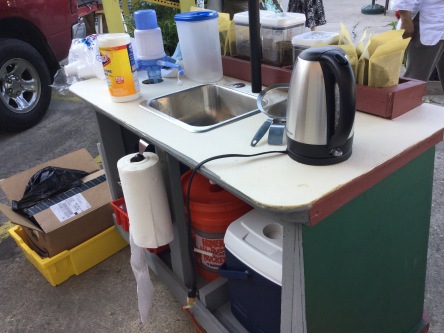
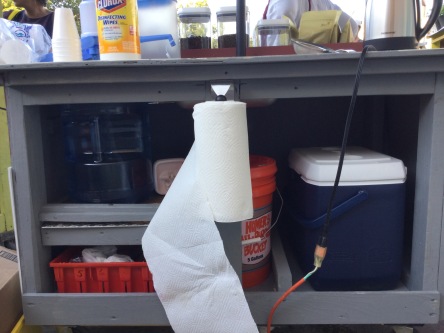
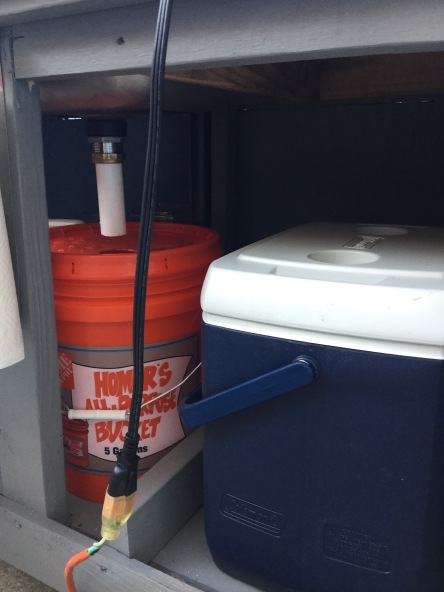
JD Farms in Mississippi has innovated another direct marketing idea while vending at the Crescent City Farmers Market. They have built free-standing carts to better present their goods and offer some flexibility in how they set up their stall. They have two of these with a third fixture being the yellow plant stand that can be just seen to the right in the picture.

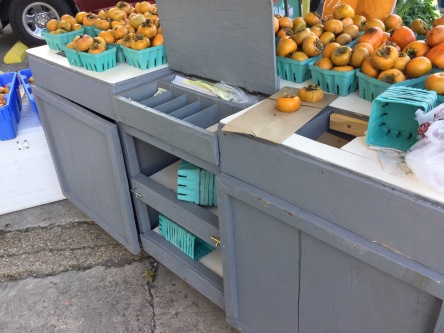
What I like about this cart is how they incorporate customer needs like the waist-level display area, the middle shelf seen to the right of the shopper in the pic (which folds down), and the chalkboards on the bottom. The vendor side has recessed spaces for bags and a place for the cash box. Obviously, the umbrella slots into the middle of the display.

They can use a pallet jack to load these into their van and will be continuing to update the design of these.I have encouraged Don and Jeff to build then for others, or at least sell plans for making them. Feel free to join me in urging this side business for this talented duo.

vendor cart.jpg

IMG_2177.jpgIMG_2180.jpgIMG_2181.jpgIMG_2182.jpg

Trader Joes shoppers and farmers markets: will they come?

As my colleagues wished me a happy birthday last week, they asked me what fun thing I had to do on my birthday: I told them that one of them was to go to the opening of the first Trader Joe’s in the area, which opened in the suburbs of New Orleans that very day. I am sure some that the choice of viewing a retail store was odd, but not only is grocery store obsession a very New Orleans thing, it is most certainly one of my favorite “busman’s holidays.” (I also went to the inaugural fried chicken festival on Sunday so don’t worry about me too much.)

Now, speaking as a farmers market consultant…

I think knowing who the core shoppers are for the stores around a market is very helpful. In many cases, research is available on the chains or a visit to the local store (at both its peak and at its slow time) can usually tell you about that store’s demographic.

To give an illustration, I have included some global demographic info from Whole Foods and Trader Joes as well as a few market shopper personas. Forgive the errors and the oversimplifications. The data on the stores comes from retail research available online. The market data comes from the many surveys and data collection reports I have either participated on or read. Do be aware that there are many subgroups within each of these to be explored.

Grocery store shoppers

Whole Foods:”Decentralized” systems: regional management, store team approach and “localized” inventory management

  • Whole Foods focuses on the per capita population that has college degrees. The key customer for the average Whole Foods location is a working parent that is between the age of 30 and 50.
  • From the Yougov site: The typical Whole Foods customer is a female between the ages of 25 and 39 with more than $1,000 in discretionary monthly income. She likely works in architecture or interior design. She doesn’t mind paying more for organic food and she tries to buy fair-trade products where available. Her interests include writing, exercising, and cooking. She would describe herself as ethical, sensitive, and communicative, but also admits to occasionally acting like a self-absorbed and demanding daydreamer. Her favorite foods are sushi and tea and she probably drives a Mercedes-Benz.

Trader Joe’s: Centralized, secretive inventory management, mostly direct from manufacturers and a detailed screening process for hiring.

  • Most research shows that the TJ shopper is the most likely chain in the U.S.  to be brand loyal and to recommend the store to others.
  • TJ Culture dips into the health food movement, the gourmet food, wine and booze craze, and the ever-popular discount ideal. But all in moderation. “Our favorite customers are out-of-work college professors,” says Tony Hales, captain of the store in Silver Lake. “Well-read, well-traveled, appreciates a good value.” The chain focuses on singles, small families looking for small package sizes.
  • 50% have college degrees. Almost half havean household income of 100,000.
  • Stores carry 2-3,000 SKUS versus 30,000 -50,000 in a normal supermarket. 80% of their items are private label.

Continue reading

Don’t Fear the Logic Model

A few times a year, I take advantage of online courses available on edX. I just began a new one: “Making Sense Of Social Impact: Acumen’s Building Blocks For Impact Analysis” which may be a little heavy on company promotion but is still helpful to learn more about linking non-financial impacts to the usual $ ones, ultimately encouraging more investment and partnerships for non-traditional initiatives.

One of the helpful documents* used in the course  so far is below and of course I thought of the FMPP/LFPP grantees who call me in frustration when attempting to create a logic model for their proposal. Simply put, a logic model offers an “if such and such resource is used to do such and such, these will be the results, both directly and indirectly” outline to those assessing what is being proposed:

Input Output Outcome Impact
what resources go into a program what activities the program undertakes what is produced through those activities the changes or benefits that result from the program

What is also helpful in the Acumen graphic below is that you can see how you will measure inputs internally and then measure the “customers” (stakeholders) for the rest. In other words, Market A uses these resources and staff time (input) to create this many events and materials (output), resulting in #  of attendees taking # materials, which also added # of potential new shoppers to the market db (outcomes). Vendors reported they saw new shoppers who were knowledgeable on those issues; also, local media reported on the market as an educational resource for those searching for info on healthy food in this period (impact).

Impact is the one area I find markets struggle with the most; one of the best ways to decide what impact to choose for your project is to look at the market’s mission or vision statement and use those. Or ask your project partners to offer a single impact that they are hoping to see: for SNAP projects, often stakeholders goal is for increased access to healthy foods among their client base or added business stability among market vendors from adding regular shoppers. At a network level, increased collaboration is an important impact.

When markets are  still stymied by this process,  I suggest they start on the right with the impacts and work their way back to inputs, step-by-step, rather than starting there.This may also help another problem I often notice which is too many inputs proposed for relatively simple projects. After all, the goal of most funders is to see longterm impact within the market or a system level impact, not to see dozens of activities that result in little effect so it’s important to keep going back to the impacts.

Lastly, funding should be used strategically whenever possible (are there other supporters who are offering volunteers or resources that can be listed as in-kind?), resulting in a clear plan with room to alter it as lessons are learned or the situation changes.


I also recommend that folks take a look at Whole Measures framework to find descriptive and inclusive levels of impacts for food systems.

Screen Shot 2016-09-08 at 9.31.08 AM.png


*Because they use Creative Commons licensing, their materials are available to share once credited as long as adaptations are not made or the share is for non-commercial use.


Inside Aleppo: the tale of the flower-seller

I swear this story was already set up to go live this week long before Libertarian Party  Gary Johnson’s fail this week. Okay maybe it was due to go live next Monday and I sped it up a little.

This incredibly moving and tragic story is a glimpse at how some people share beauty and kindness even in the face of ugliness and despair. We must honor this level of selflessness and belief in the power of community, anywhere and anytime that it happens. And remember.


(For another view of life in Aleppo click here)

Louisiana Update #9: A post-flood visit with a market farmer

Spent Wednesday morning tagging along with Copper Alvarez on her BREADA Small Farm Fund site visit to Lucy Capdeboscq’s home and farm near Amite. Copper has been crisscrossing the state seeing farmers who are reporting losses from this month’s floods. It’s important to note that BREADA is not focused only on their market farmers needs, but doing their best to get funds to any market farmer across the state.  Although one of Lucy’s daughters had been one of Red Stick market vendors in the past, Lucy sells only at the Saturday Crescent City Farmers Markets down in New Orleans. As a result, she was surprised when Copper contacted her by phone, asked if she had damage and then offered an evaluation visit in case BREADA’s fund might be able to help.

IMG_1795.jpg

Of course, no decisions or promises are made during the visits about any support, but as Lucy commented, the contact and visit were very welcome. Crescent City Farmers Market is also reactivating their Crescent Fund and has already had Lucy fill out their short form to receive assistance. The Crescent Fund is hoping to raise enough money to handle the 8 or so CCFM market farmers who have indicated losses, by quickly offering up to $1,500 for their farm needs.

To get to Lucy’s place, one turns off the main road at the permanent sign indicating it is also the direction to the legendary Liuzza strawberry farm. Although their famous berries are still a few weeks from being planted, other products like cucumbers could be seen in some of their fields. When you know that Lucy is a Liuzza by birth , it is clear why she lives amid those fields, (just off Jack Liuzza Lane) on the land deeded her by her parents. She and her late husband Allen raised their children here and kept their land productive even when they took on other professional occupations.

Allen and Lucy joined the Crescent City Farmers Market shortly after it opened. The Caps (as their farm name is known) were a huge hit immediately due to  Lucy’s charming customer service and Allen’s practical sense for growing their traditional yet innovative items. Lucy’s arrangements of zinnias and lilies with her decorative okra, hibiscus buds and her legendary sunflowers have remained market favorites since those early days.  As Poppy Tooker wrote in the 2009 Crescent City Farmers Market cookbook: “Lucy and Al have built a reputation for forward thinking innovation. They were the first to try early harvested rapini and green garlic made so popular in California.”

IMG_1794 (1).jpg

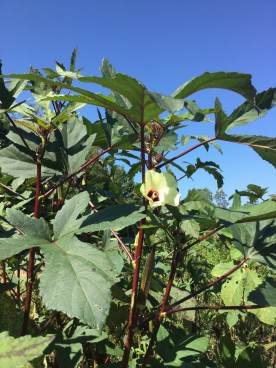
Lucy’s okra, used for her bouquets.

To me, the Caps are a quintessential market vendor type: growing traditional and newer South Louisiana products on a small piece of land behind their home within sight of other family members also still farming. As a matter of fact, on one of my visits to the farm years ago, Lucy told me how much she was looking forward to letting a shopper know that next Saturday that their favorite item had been planted that week and would soon be back at market. That deep awareness of specific customer likes seemed to me then (and still) to be the best illustration of the personal touch of direct marketing farming that I have come across in my site visits.

Continue reading

Louisiana Update # 8: The natural cost


14079492_10153806953867060_6009672677636791922_n.jpg

The flood leaves a watermark stain on the tree’s leaves as U.S. Geological Survey surveyor Scott Hedgecock works to survey the water levels along the Tangipahoa River along Highway 190 just west of Robert, Louisiana. (Photo by Ted Jackson NOLA.com )

Climate change is not entirely accepted, even by those for whom it should be obvious possibly because it is not entirely understood.  People don’t feel its effects as they move in comfort from their air-conditioned personal vehicle to living amid a span of concrete around their glass-enclosed home away from coasts or forests, getting most of their information through a thumbnail headline or from friends who work and live in the very same setting. In other words, industrialized countries.

Another culprit may be the environmental work done in the 1970s and 1980s, which often used unfamiliar phrases that lacked relevancy such as global warming (or even the term used at the beginning of this post, climate change) and focused mostly on national policy changes or in shaming users of resources without compelling evidence of the effect of that reduction. Environmentalists were seen as “do-gooders” who meant well but lacked realistic goals (this was actual feedback from focus groups at an organization I worked at in the 1980s.)

The strong pushback showed the fallacy of engaging ordinary citizens using lofty or scientific terms and  led to many turning to food as an organizing tool. After all, what could be better as an impetus to understanding and sharing the repair of the natural world but food?

Yet in the roll call of environmentalists circa 2016, food system organizers are usually in the middle of the pack. Most can certainly outline the issues involved with food production that both imperil and reboot Mother Nature, but are rarely working directly on those issues in concert with environmental organizations. Farmers markets have done an admirable job on promoting entrepreneurial activity and improving access, but efforts to highlight the stewardship of the natural world by market farmers has fallen a little behind.

I hear our great writer Wendell Berry exhorting us to remember the farmers:

“Good farmers, who take seriously their duties as stewards of Creation and of their land’s inheritors, contribute to the welfare of society in more ways than society usually acknowledges, or even knows. These farmers produce valuable goods, of course; but they also conserve soil, they conserve water, they conserve wildlife, they conserve open space, they conserve scenery.”

The  “eyes to acres” ratio suggested by Berry and Wes Jackson needs to be included in regional planning theory and in the metrics that assess our work. Within the framework of disaster, the acknowledgment of the need for that ratio could mean”deputizing” farmers to supply immediate indicators of the level of destruction.

Disasters point out the fragility of a place and at the same time remind us of the strength of human ties and the resolve of communities. Following that line of thinking, deeper knowledge of local and regional systems would help knit everyone more closely together, allow for rescue and recovery to happen faster even as it is offering a narrative with more relevancy to those in far-off but similarly sized food systems.  If the watershed or the regional system for food production were one such way to describe the need among those participating in food initiatives, assistance could be met one farm, one family or even one small town at a time.

Continue reading

Louisiana Update #7: Online support

One of the innovations I have seen in the decentralized recovery efforts (and we have moved from rescue to recovery, with rebuilding as the next step to come) is the idea of aligned organizations in New Orleans using Amazon and other online sites and their direct shipping to buy supplies for their sister organization in one of the flooded zones. Or, create or use accounts for those registered with them and send them items needed directly to the households the next day!

What we learned here in years past is that sending funds to a general account can delay support as it means that checks have to be deposited or  those knee-deep in flooded homes have to manage the funds away from recovery work, wherever internet connections and computers can be found.

This method allows friends outside of the flooded zone to upload the list of items and then those items to be purchased and sent directly to those in need.

Here are 3 of those; the first one in the Baton Rouge area and the second in the Acadiana area:

Together Baton Rouge

Blessings For New Iberia             Their Facebook site

The third may require a little added explanation: Many folks across the U.S. see Mardi Gras only as a time of debauchery, but in reality, it is a celebratory Lenten public event with deep community attachments. Most of the “krewes” that parade are actually social aid clubs that give back to the community throughout the year. The list of their good works is too long to list, but here is one of my favorite walking clubs that will use the direct donation process to help with recovery. They have a list of folks to send the items directly to via the online purchases made by the organization.

Dames de Perlage

I have encouraged some of the farmers in the Acadiana parishes to do this as well, as there are few if any food or farming organizations in the area to collect support on their behalf. As I receive those, I’ll post them in future updates.

For those farmers in the Baton Rouge areas, BREADA has had an active small farms fund for over a decade that will help many such farmers. I saw a sign at the New Orleans farmers market suggesting that Market Umbrella will also be setting up a farm recovery fund that will support their farmers on the North Shore hit hard by this event. More on that later as I get more information.

Truly the recovery has been managed most ably by on the ground organizations, tied together to others via word of mouth, social media or texting. The larger organizations are working as well, but seemingly unable to process real-time innovations or absorb local help very well. This is the new reality of disaster zones:  two separate efforts working at the same time, rarely transecting and with different expectations. Sounds a lot like the food system.