CSAs: We Have a Problem

A thoughtful post about CSAs from Small Farm Central’s Simon Huntley is excerpted and linked below. His questions mirror some of the same that are being asked in the farmers market field about sales levels and how to build a regular, return shopper out of an occasional user or even some (of the majority) non-users. I am interested in his CSA research as the relationship between CSAs and farmers markets has yet to be studied in order to more fully understand farmers markets. The market box programs that he mentions are one great example of the shared characteristics that CSAs and farmers markets have that need to be better understood. I remember seeing this for the first time a few years back at the Lakewood Ohio LEAF market that used a CSA vendor as the anchor market vendor. That vendor had signs for their CSA members (how much of an item to take per share) but also a price for walk up non-CSA shoppers with a barter table at the end for CSA members to trade in items they didn’t want. The other vendors benefited greatly from this farmer being on site at this tiny weekday evening market. The last time I was there, the CSA/market vendor was only doing CSA shares (still managed by the volunteer market leadership) as the demand was high enough and other producers had been added to take care of market sales of produce. The whole thing was extremely well-managed, with a lot of opportunities for interactions for shoppers and vendors.
That is an example of a local organization using strategic thinking to build a market appropriately sized and structured for its growers and its shoppers. That thinking led to the organizers using the right type of place, products, people and procedures for their intention.
If only we had a list of the characteristics and projects for each type, we could shorten the learning curve and assist more partners interested in using markets as part of their program goals, and help producers by giving them better information on the outlets they can choose from, able to position themselves better to create the right business plan for those outlets.
As those who read here know, I am devoting my time to assisting FMC in building the Farmers Market Metrics program in order to gather data from the markets themselves that can help all of us find those answers. Certainly, the same framework can be used for CSAs and other direct marketing outlets to allow us to share the impacts on producers, shoppers and the larger community.

Exactly 30 years from the founding season of CSA in the United States, I think we are at an inflection point. Anecdotally, many farms are reporting declining CSA sales, though I should note that this decline has not yet shown up in our data.

Will CSA exist in its current form in 5 or 10 years? I honestly don’t know. I think it could easily go either way: CSA could grow substantially or membership may continue to shrivel…

I believe we need “CSA 2.0” for CSA to thrive over the next 10 years. There likely will continue to be room for traditional CSAs in the marketplace, but to grow the number of families that participate in CSA, we need to become more customer focused. We need to serve eaters better because that is what makes happy members, keeps them coming back, and recommending CSA to their social circles. I know change is hard, but I hope to be a part of modernizing CSA and helping you be profitable with your CSA.

My research leads me to believe that it is fundamentally about providing more choice to members about what is in their box. There are many models out there already that provide that already.

.

Source: CSA: We Have a Problem

Louisiana Update #6: Food for everyone

Local-girl-made-good Fleurty Girl CEO Lauren LeBlanc’s FB update shows how the Louisiana culture of food and community comes together when needed. Everyone who was in the Gulf Coast from 2005-2008 remembers how a good meal after hours of tearing out drywall made it possible to come back the next day, and since eating red beans together outside in some tailgating/parade chair is a familiar practice here, normalizing.

Some of our busiest and most celebrated restaurant chefs have been the first to get food out in the worst areas after various disasters.  Just like in 2005, John Besh and his fellow chefs were set up feeding first responders in flooded areas within a few days. 

Free food/hot meals on Saturday, August 20th:

DENHAM SPRINGS:

-Chef Alon Shaya (!!!), of Shaya restaurant in New Orleans, will be cooking red beans and rice with the John Besh Foundation in the Ryan’s parking lot at 916 S. Range Ave in front of the Wal Mart at noon tomorrow.

-The Louisiana Farm Bureau Federation will be grilling burgers in the New Covenant Baptist Church parking lot at 215 Florida Ave (next to James’ Grill) starting serving at 11am.

-A group of NOLA friends will be grilling 1,000 burgers behind the Whitney Bank on Florida Ave in Denham Springs. They’ll also have 800 cookies from Moonshine Bake Shoppe.

-Christ’s Community Church will be setting up out front and serving 6000-8000 hot meals for lunch and dinner at 26574 Juban Road.

ALBANY
– Located at 30057 N. Cafeline Rd. Sat. August 20, starting at 11am, Red Beans, Smoked Sausage over Rice, bread & Cake

GONZALES
-Truckload of non-perishable food will be distributed at The Christian Assembly at 41258 Hwy 941 in Gonzales starting at 2pm.

-Hot meals for lunch and dinner served in the parking lot of Fellowship Church at 10757 Airline Hwy.

PRAIRIEVILLE
-Hot meals for lunch and dinner served in the parking lot of Fellowship Church at 14363 Hwy 73 in Prairieville.

ST. AMANT
-Hot meals at The Church in St. Amant at 13423 Hwy 431 in St. Amant, LA 70769.

ROBERT
-free food and misc supplies in the parking lot across from Robert Supermarket. Should get started at 11am.

Whether you’re cleaning your own home or helping someone with theirs, you’re gonna eat GOOD Saturday! ❤️❤️❤️

10,500 hot meals from @OpBBQRelief distributed at Denham Springs at Sams Club Sunday. Will be doing it again Monday.CqajnEtUsAAe27J.jpg

Louisiana Update #5: Flood victims encouraged to preregister for DSNAP benefits 

DSNAP is being activated for the August 2016 Louisiana Flood and means that rural markets should be prepared to see a influx of folks new to SNAP benefits. Unfortunately, many of our smaller, volunteer-led markets are still deciding whether to become SNAP authorized.
Here are the markets in Louisiana currently authorized as SNAP retailers (of course, some farm stands may also be authorized and are not included in this list):
Abita Springs Farmer’s Market Abita Springs
Cane River Green Market Natchitoches
Capstone Farmers Market 5007 New Orleans
Common Ground Health Clinic-Farmers Market New Orleans
Creole Market New Iberia
Crescent City Farmers Market New Orleans (4 locations)
Inglewood Harvest Barn Alexandria
Lafayette Farmers And Artisans Market Lafayette
Leesville Main Street Market Leesville
Market On LaSalle New Orleans
Marketplace at Armstrong Park New Orleans
Ruston Farmers Market Ruston
Oberlin Farmers’ Market Oberlin
Pearl River Farmers Market Pearl River
Red Stick Farmers Market Baton Rouge (2 locations plus mobile market)
Sankofa Farmers Market New Orleans
Shreveport Farmers’ Market Shreveport
Winn Farmers Market Winnfield

This list contains a few that my information indicates are not currently active and a few of these (9 of the 22) are in New Orleans which is  not near enough to the flooded zone to help most folks.
Since the state has about 80 farmers markets listed in various places, the above list shows how ill-prepared the state’s markets are to absorb these new shoppers.

Of course, some of the markets in Mississippi can also serve this clientele as many of the parishes hit hard are close to the state line; that is, if the benefit users are aware of the rules and where the markets are in MS and if those markets are prepared to accept those temporary SNAP users.

My experience as Deputy Director of Market Umbrella before and after Hurricanes Katrina/Rita (and on staff still during the BP oil spill) showed how much markets can do during disasters to offer solace, community and healthy choices to people under enormous stress. We were one of the few places in New Orleans up and running in 2005 (we reopened November 22) with EBT access, working with our fellow markets* across the area to help producers recover and doing our best to help other outlets open in our city.

From the very beginning in 1995, the founders of our markets had hoped to attract a significant number of at-risk shoppers, but as they opened in the era of EBT, the market was on the wrong side of technology for many years. As a result though, our 2004/2005 SNAP pilot strategy was relatively well thought out and predicated on the reality that our markets had not yet attracted their share of low-income shoppers but had the potential to serve that group as well as the cash shoppers we had attracted. Our token pilot led to the visit in the summer of 2005 of Bill Ludwig and the Southwest Regional FNS staff with then Under Secretary of Agriculture Eric Bost in tow to see and celebrate our early SNAP token and incentive work. Interestingly, Ludwig remarked during the visit on how helpful a token system might be during disasters. As we wrote a few years later, we remembered that comment later in 2005 and reflected on prescient he had been.
That long preparation meant we had outreach and materials to use when the levee breaks and oil spills and floods came (yeah we’re getting used to it) and the staff trained to make it happen.
So what we now know is the ability to support the citizens of towns and cities to recover from a major disaster requires organizational sophistication and preparation, which most of our newly emerging markets across the state are still working to achieve.

It is time for the national market field to create a toolkit for disaster planning, both for its vendors but also for its market organizers in order to be prepared when (not if) a situation like the one unfolding in Louisiana hits their area. USDA and FNS can be very helpful in this planning with needed policy changes such as lifting the requirement of location-specific SNAP licensing/transactions, loosening the ban on on-site hot food again (as was done in past disasters). It would also be helpful for funders like the innovative Wholesome Wave to increase their incentive work for disaster-hit areas along the lines of the incentive we created together for the Gulf Coast fishers in 2010.

Let’s get ready, folks.

How DSNAP works:
If you already receive SNAP benefits and are eligible for disaster benefits, you do not need to pre-register, as benefits will be added to your benefit card automatically.

Pre-registering does not guarantee benefits. DSNAP is only administered after a federally declared disaster and after the state receives approval from the United States Department of Agriculture, Food and Nutrition Services to activate DSNAP services.After a disaster is declared, residents who have pre-registered only need to visit a DSNAP issuance site to verify their information and identity, determine final eligibility and receive their benefit cards. Eligibility requirements and DSNAP locations will be announced at the time of a disaster.

You may name an Authorized Representative to go to a DSNAP site on your behalf. Accommodations will be made for the elderly and those with disabilities to reduce on-site wait times.The Louisiana Department of Children and Family Services  is encouraging those who have experienced loss or damage in the severe storms and flooding to preregister for benefits under the Disaster Supplemental Nutrition Assistance Program (DSNAP).

DSNAP benefits are issued for one month, but they can be used for up to 365 days.  You will get your card when you go to the site, they will be loaded on the card within 3 days.
What amount will I receive in DSNAP benefits?

Household Size DSNAP Allotment
1 $194
2 $357
3 $511
4 $649
5 $771
6 $925
7 $1022
8 $1169
Each Additional Member  +$146

Source: Flood victims in Louisiana encouraged to preregister for DSNAP benefits | New Orleans – WDSU Home

http://www.katc.com/story/32814032/what-you-need-to-know-about-dsnap-food-stamps-benefits


*Deep appreciation for our colleagues at the Red Stick, Covington and Gretna farmers markets who, in 2005, were incredibly helpful to Market Umbrella and offered temporary spots to our vendors and help to our staff as needed.

Know Your Farmer, Know Your USDA

Excellent interview with USDA/AMS Administrator, Elanor Starmer.


She shares the success to date and paints a picture of invigoration that includes Know Your Farmer Know your Food, Farm To School, Urban Agriculture and a wide spectrum of programs and citizen initiatives that is reaching millions.


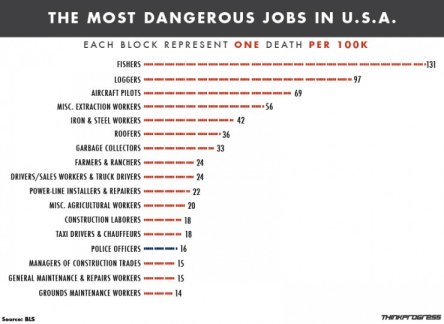
Who has the most dangerous job in the US?

Cp1EedzXYAQejLM.jpg

Indigenous food

I love this article.  I have learned so much about organizing from Native American leaders, about honoring the skills and traditions of the community. Even though some of the most brutal colonialism on the planet has been directed at those on Turtle Island  who have been here for millennia, they continue to offer love and protection to our planet.


As the brilliant Bill McKibben said in his recent piece, The Axis Of Destruction And Hope:

 So in North Dakota, as in the tar sands of Alberta, and at the proposed Cherry point coal port in Washington, and on the pipeline routes in British Columbia, indigenous people are leading the fight against the planet’s destruction. It’s not hyperbole to say that the most important force in the fight for the planet’s survival has been the recognition of native leadership, in North America and elsewhere, in the last five years. The Keystone pipeline would never have been stopped without native organizing, nor plans for the world’s largest coal mine in Australia. The earth’s oldest people are — maybe just in the nick of time — being recognized as its most important protectors. And they need us to stand behind them.


In the NYT article linked below, Sean Sherman’s goals to reclaim First People’s food traditions and share them are outlined:

They were also composed without wheat flour, sugar or dairy — the government-issued commodities that replaced many native foods on reservations more than a century ago. Mr. Sherman avoids them.

This means he does not cook fry bread, the simple deep-fried dough familiar to every tribe in the country. Fry bread was born as a food of survival, developed by ingenious cooks who needed to make the most of flour and lard, and it later became the base of the Indian taco: fry bread under ground beef and toppings like shredded cheese and sour cream….

But Mr. Sherman’s ambitions go beyond dinner service. He hopes his new restaurant can bring jobs into Native American communities, and start careers in the industry. He wants to create a larger demand for Native American-owned food businesses. (He already buys walleye from Red Lake Fishery, and the wild rice he uses is harvested by tribes who live around the lakes of Northern Minnesota.)

In time, Mr. Sherman and Ms. Thompson plan to open a culinary center and school focused on indigenous food systems.

Board recruitment tips

As you’re nominating people for your board, how many times have you heard this advice: “Recruit individuals with fundraising experience.”

Or maybe, “We need people who’ve raised money before.”

Good suggestion, right? Well, maybe not.
From a trainer’s perspective, it’s WAY more productive to work with open minds.

When Recruiting Board Members, Look for a Willingness to Learn

Louisiana Update #4: Telethon for Second Harvest Food Bank: donate at www.no-hunger.org

Louisiana Update #2

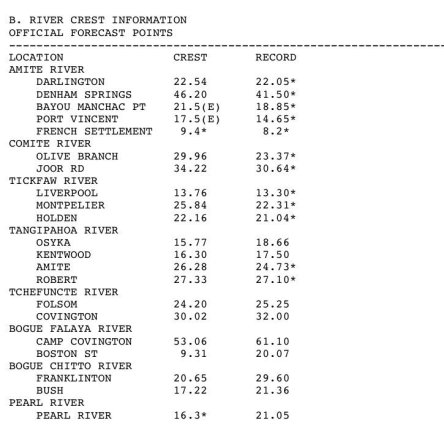
Current crest level and the previous record levels of the rivers in our watershed:Cp6brbwVUAAjtEz.jpg

Mississippi Floods; Update #1

JACKSON, Miss. —The Mississippi Emergency Management Agency said damage reports are coming in on the flooding in southern Mississippi

Greg Flynn, an agency spokesman, said Wilkinson County Emergency Management reported 71 homes damaged by flooding, primarily in the towns of Crosby and Centreville.

Flynn said there are 67 people in a shelter opened in Natchez on Saturday. The Mississippi Department of Human Services and American Red Cross are managing the shelter.

Officials in Amite, Harrison and Pike counties report several roads damaged by the floodwaters.

Flynn said damage assessments conducted by MEMA and local officials are scheduled to begin Monday.

The National Weather Service said southwest Mississippi received over 14 inches of rain late Thursday and Friday.

Louisiana Floods, Update #1

Sunday update from Copper Alvarez, BREADA Executive Director:

Checking in with our Red Stick farmers and Main Street Market folks today — A lot of fields under water but most homes are okay…Keeping Louisiana and the Baton Rouge region in our prayers! 

Support the farms of Louisiana by donating to the BREADA Small Farms Fund.

—————————————————————–

Sunday update from Hammond Farmers Market:
Hello all, from what we’ve heard all of our market family is safe and sound! We hope everyone else is faring well through this crazy time.

Our farmers are all safe, although fields, fences, and feed did not fare so well…If anyone is looking to help out, we are asking for livestock/chicken feed as one of our farms lost everything in the storm.

If you’re interested in donating feed to help our farmers out, please email us at hammondmarket@gmail.com or message us on or FB page.

Everything, no matter how small is appreciated.

-Ashton


—————————————–

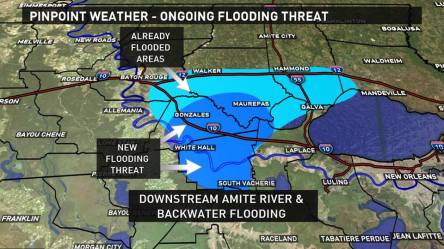
UPDATED: Darker blue shade shows areas that have a new flooding threat from back water off the Amite

14054113_10207271734854784_4775183861359430274_n.jpg


Dear Baton Rouge, New Orleans has your back


Food Price Monitors Needed for First Nations Study

LONGMONT, CO–(Marketwired – August 04, 2016) – First Nations Development Institute (First Nations) is seeking up to 75 people or organizations — located on or near Indian reservations across the U.S. — to monitor and report food prices on a monthly basis over a 12-month period.

Participants each will be paid $500 at the end of the study. Applications are due by 5 p.m. Mountain Time on Thursday, September 8, 2016.

The participants will collect prices on a list of food products sold in Native communities by monitoring their community/reservation grocery outlet, and then report the prices via an online database. First Nations will use the information to update and significantly expand its initial 2015 report titled Indian Country Food Price Index: Exploring Variation in Food Pricing Across Native Communities (a PDF of the report can be downloaded athttp://www.firstnations.org/knowledge-center).

Most reservation consumers believe they pay more for food products than consumers in urban areas, but there is little data on food prices in Native communities to fully substantiate the claim. In 2015, First Nations piloted an attempt to collect food prices in Native communities, and an overview of that effort was documented in the initial Food Price Indexreport mentioned above. That report found that, on average, many food products were more expensive with the exception of some junk foods. Building on this initial effort, First Nations is seeking individuals, organizations or tribes to collect monthly prices in their local community’s retail outlet.

Monthly food prices will be collected on the following food items:

  • Loaf of white bread
  • One pound of ground beef
  • Whole chicken (price per pound)
  • One dozen large eggs
  • One gallon of whole, fortified milk
  • Red delicious apples (price per pound)
  • Pound of tomatoes
  • Coffee (ground, cost per pound) of a common brand such as Folger’s
    • Regular
    • Decaffeinated

Project participants will enter their monthly collected prices into an online database provided by First Nations by the 15th of each month. This data will be analyzed and shared with all project participants. Moreover, at the end of the 12 months, the information will be shared with Indian Country at large via the revised Indian Country Food Price Index report.

The project will begin as soon as all of the participants are selected.

To apply to participate, individuals, organizations or tribes must complete a short online application at this link: https://www.grantrequest.com/SID_1243?SA=SNA&FID=35135. Please note that not everyone who applies will necessarily be selected. The selection process will involve consideration of geographic locations, retail outlets to be monitored and other factors. The online application will ask for information such as name, physical address, tribal affiliation, email address, distance to nearest grocery story, whether the store in located on a reservation, if it’s a tribally-owned outlet, and other similar questions. Reliability and accuracy are highly desired traits in those who will be selected. Applications are due by 5 p.m. Mountain Time on Thursday, September 8, 2016.

About First Nations Development Institute

For 36 years, using a three-pronged strategy of educating grassroots practitioners, advocating for systemic change, and capitalizing Indian communities, First Nations has been working to restore Native American control and culturally-compatible stewardship of the assets they own – be they land, human potential, cultural heritage or natural resources – and to establish new assets for ensuring the long-term vitality of Native American communities. First Nations serves Native American communities throughout the United States. For more information about First Nations, visit www.firstnations.org.

Image Available:http://www.marketwire.com/library/MwGo/2016/8/4/11G109314/Images/Food_Price_Cover_large_500-b61d945bdaab9229896530f92708d1ad.jpg

CONTACT INFORMATION

  • PROGRAM CONTACT:
    Raymond Foxworth, First Nations Vice President of Grantmaking, Development & Communications
    rfoxworth@firstnations.org or (303) 774-7836 x207

    MEDIA CONTACT:
    Randy Blauvelt, First Nations Senior Communications Officer
    rblauvelt@firstnations.org or (303) 774-7836 x213

Timeline: The Most Common Job In Every State

When you see the most common (general category) job in most states now, those of us working on food equity will not be surprised at all.

The jobs picture has changed profoundly since the 1970s. This map shows how those changes played out across the country.

Map: The Most Common* Job In Every State : Planet Money

SNAP videos

Simple, clear and appealing videos on using benefits at markets that can be shared with community centers, sent to targeted social media users and can be used as a banner on news sites too. Bravo Urbana and Fond du Lac!

More about the market

And from Fond du Lac Wisconsin:

More on this market