10 Best School Lunches in America (Slideshow)

A bow to the hardworking people working on school lunch programs across America that made this top 10: Chef Ann Cooper, Alice Waters/Edible Schoolyard Project,and my pal Donna Cavato (along with April Neujean!) who fought mightily to create the New Orleans version right after Katrina, and the many other unsung heroes working to reconfigure this beast in systems large and small, public and private.

10 Best School Lunches in America (Slideshow) | Slideshow | The Daily Meal.

The Agrarian Standard | Wendell Berry

Recently, I was working on a piece for The Nature of Cities blog, and wanted to re-read something that Wendell Berry had said about the agrarian culture; I found the 2002 Orion Magazine essay in which he reflects on the 25th year of publication of The Unsettling of America. I think the paragraph below is enormously descriptive of the tension that those of us involved in creating an alternative agrarian world work and live in:
To the corporate and political and academic servants of global industrialism, the small family farm and the small farming community are not known, not imaginable, and therefore unthinkable, except as damaging stereotypes. The people of “the cutting edge” in science, business, education, and politics have no patience with the local love, local loyalty, and local knowledge that make people truly native to their places and therefore good caretakers of their places. This is why one of the primary principles in industrialism has always been to get the worker away from home. From the beginning it has been destructive of home employment and home economies. The economic function of the household has been increasingly the consumption of purchased goods. Under industrialism, the farm too has become increasingly consumptive, and farms fail as the costs of consumption overpower the income from production.

The Agrarian Standard | Wendell Berry | Orion Magazine.

Innovation through your people

Read a recent article on innovation, and I think the point about how to keep innovation alive, even with departing staff (or board) is crucial for market and food organizations to think about.

“Organizations really need to reexamine their management attitudes and practices within a new and more sophisticated framework of innovation. It is important that everyone actively seek out and support the human agents of innovation through, not only the best practices of good management, but also creative initiatives aimed toward innovation at all levels of the business. Assuming a degree of mutual trust and respect has been properly developed, when good people get ready to leave, organizations need to step up their efforts to maintain some sort of ongoing relationship.

A much broader, more human-centered framework for innovation may take on many forms, but could include a range of opportunities to have departing talent on the hook as speakers or mentors within a group. There should also be incentives to build joint ventures with the most entrepreneurial of the bunch, including seed money for new enterprises that feed into market niches of the organization’s endeavors.”

And if you missed this free workshop offer in an earlier post, here it is again:

https://darlenewolnik.com/2014/03/10/free-human-centered-design-workshop-offered/

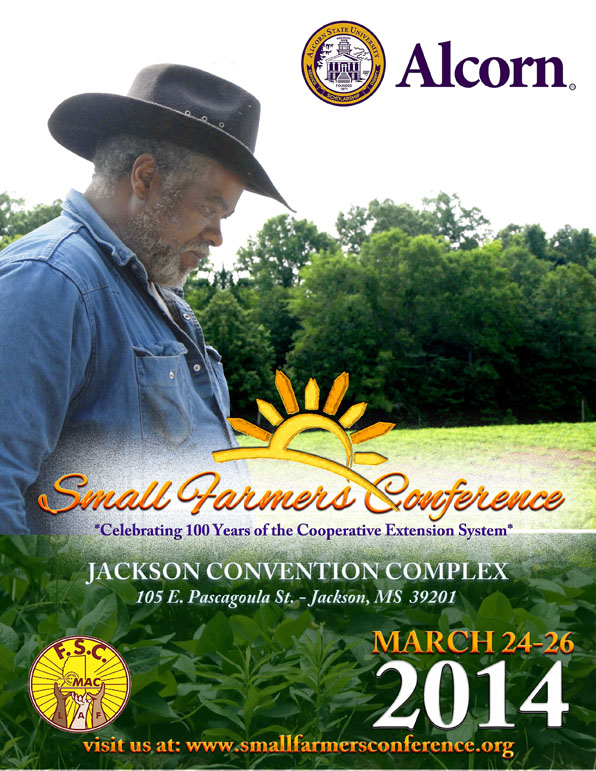
2014 Small Farmers Conference in Jackson MS

The 23rd annual Alcorn State University Extension Program (ASUEP) Small Farmers Conference, slated for March 24-26, 2014, will be held at the Jackson Convention Complex, 105 E. Pascagoula St., Jackson, Miss.
“Using Smarter Innovations to Strengthen Agriculture” is this year’s conference theme. The event is co-sponsored by ASUEP and the Mississippi Association of Cooperatives (MAC).
2014 SFC Web Registration

The evolution of fresh food — Back to the land — or at least to the farmers’ market :: by Amy Halloran :: Culinate

A well done piece by a former farmers market manager and constant supporter of farms about the evolution of markets and healthy food alternatives.

The evolution of fresh food — Back to the land — or at least to the farmers' market :: by Amy Halloran :: Culinate.

As Farm to Plate movement blooms, Vermont food and farm jobs help drive economy

In January 2011, when the Farm to Plate Strategic Plan was released, an economic analysis indicated that with every five percent increase in food production in the state, 1,700 new jobs would be created. Goal #1 of the Farm to Plate Strategic Plan is to increase Vermonters’ local food consumption from five to ten percent over ten years.

As Farm to Plate movement blooms, Vermont food and farm jobs help drive economy – Burlington Sustainable Agriculture | Examiner.com.

On-Farm Slaughter May Be Legal, But It’s Complicated

H-515, the Agency of Agriculture, Food and Markets housekeeping bill, made it legal for farmers to facilitate on-farm slaughter, but not conduct it themselves. The limitations – and wording – of the rule are causing some frustration and confusion.

On-Farm Slaughter May Be Legal, But It's Complicated | Vermont Public Radio.

Audio of Moscow (Idaho) public meeting about farmers market rules

A fascinating view of the internal life of a market community.
The FM rule discussion starts on the audio at 15:00 minutes into the recording:

link to audio

Definition of local (100-mile limit discussion)

Definition of market vendor

Mission statement discussion

Competition discussion

Too many rules?

Radio Free Moscow is a nonprofit organization dedicated to the progressive values of peace, justice, democracy, human rights, multiculturalism, environmentalism, and freedom of expression.

Radio Free Moscow operates KRFP, a listener-supported community radio station serving Moscow, Idaho and surrounding areas. KRFP reflects Radio Free Moscow’s values by broadcasting news and opinions, civic affairs, diverse music and multi-cultural programming seldom heard from mainstream media outlets. KRFP strives to develop and disseminate programming that fosters our community’s ethical, social, and intellectual awareness while advocating education, the arts, and cultural diversity. KRFP nurtures our community’s capacity to think independently, skillfully, and critically.

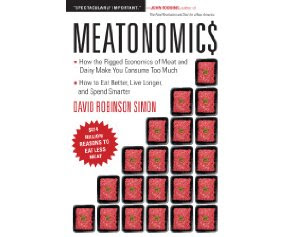
Meatonomics

unnamed

Meatonomics is the first book to add up the huge “externalized” costs that the animal food system imposes on taxpayers, animals and the environment, and it finds these costs total about $414 billion yearly. With yearly retail sales of around $250 billion, that means that for every $1 of product they sell, meat and dairy producers impose almost $2 in hidden costs on the rest of us. But if producers were forced to internalize these costs, a $4 Big Mac would cost about $11.

amazon

Regional food sez Real Pickles

Sustainability is the balance of the positive and negative environmental, social and economic demands in any sector and across sectors. In the food work we do, regional systems have a better chance to address them together and yet we spend little time defining those demands. In that framework, local food systems by themselves can grow overly ‘muscular” and crowd out others nearby or focus on demand more than supply (or vice versa) or spend too much energy fighting to build systems for every process that could be shared instead.
In that important work, this blogger wrote a very good piece about the regional and sustainable approach to food that is worthwhile to share:

Those of us in rural areas – rich in agricultural resources – thus have an inescapable responsibility. As we do the necessary work of helping to overhaul the food system, we must consider what part we can play in feeding the populations of places like Boston, New York, and Philadelphia. While it is surely tempting (and so much simpler) to focus inwardly and exclusively on how to feed merely ourselves, that is not, in the end, the way to build a better food system. It is essential to be actively promoting and supporting our local farm economies – and, at the same, we need to thinking more broadly.

Resiliency
There’s another strong reason why we need to think regionally as well as locally, one that undermines the notion that it would even be possible for any one town or small state to securely depend on its own agricultural resources. It has to do with things like weather and pests – those unavoidable factors that make farming inevitably risky and unpredictable. Factors which also threaten to make farming even more unpredictable as a result of climate change.

Regional food

Report shows that direct farm sales increase local economies in many regions

(talk about needing more research like this!)

Using county-level data from the 2002 and 2007 U.S. Census of Agriculture, the team analyzed the link between direct farm sales — sales made directly from farmer to consumer — and total farm sales. When they examined the data on a national basis, they found a positive but not statistically significant relationship between the two. Goetz said that a different picture emerged when they looked at the data by region, as defined by the U.S. Bureau of Economic Analysis. In some regions, direct sales seemed to complement total farm sales. For example, in New England, a $1 increase from the 2002 level of direct farm sales was associated with a $5 increase in total farm sales. That same $1 increase was associated with a $9 increase in overall farm sales in the Mid-Atlantic states of Delaware, Maryland, New Jersey, New York and Pennsylvania. Yet, in other regions, local food sales appear to compete with total farm sales. In Southeastern U.S. counties, for example, direct sales were associated with a reduction in total farm sales. Next, to measure the impact of all agricultural sales on economic growth, the researchers used a statistical model to analyze how changes in farm sales per capita influenced changes in real personal income per capita — an indicator of economic growth. Again, the team performed this analysis using county-level data from 2002 to 2007.
Goetz said that by establishing that direct sales have a positive effect on total agricultural sales, which in turn have an effect on income growth, this study demonstrates that direct sales do indeed expand local economies at least in the Northeast U.S. He added that these results came as a bit of a surprise.
“When we set out to measure the economic impact of local food sales, we frankly didn’t expect to find one,” said Goetz. He explained that economists are generally skeptical that local sales can have impacts because such sales tend to recirculate money within a community rather than inject new money. “Injection of new money — money from outside of the community — is what many economic development practitioners think of as the fuel for economic growth. But to me, these findings provide quite robust evidence that even direct sales do have an effect on growth, in the Northeast U.S.”

Science Daily

What I Learned from a Week on Food Stamps: Paul Ryan Couldn’t Be Any More Wrong

A surprisingly well done article, even though it springs from what I consider an overdone and less than useful premise that I’ve seen before: a reporter using SNAP for a week. However, this one is has decent information and connects this issue to some larger issues, partially thanks to Daniel Bowman Simon.

The average amount that a family on food stamps gets per month is $133. That is $133 for 93 meals. For three meals a day, $133 breaks down to less than $1.50 per meal.

Luckily, the New York City Department of Human Resources’ website has guides available for SNAP participants, including a one that explains how to “Cut the Junk” and another with recipes for healthy and cheap meals on it. (Most of these are bean/chili based….)

———————————————————————————————————————————–
Daniel Bowman Simon is deep into SNAP, which is the focal point of his research at New York University’s Food Studies program. And he is frustrated. Seated in the Food Studies program’s fifth-floor conference room, he ticks off a list of grievances relating to the SNAP program and the Farm Bill, as well as the media’s coverage of the issue — framed as a contest between farm subsidies and SNAP benefits….

————————————————————————————————————————————-

My mom posed a simple question: “Sarah, does SNAP feed people?”

“Yes,” I responded, “and it’s actually really efficient.” It’s true: SNAP has less than a 4 percent error rate, according to Riley — and sometimes that error is because of people who received less money than they should have. The program also has very low rates of fraud. The USDA just released a report saying that only 2.77 percent of errors in the programwere in the form of overpayment, which includes fraudulent applications.

“Food is one of the most cost effective forms of prevention,” Sarah Franklin explains. Obesity, cognitive abilities, and heart disease are all linked to eating habits. “Making sure that people have access to food is, in my mind, one of the most important and no-brainer policies,” she says. “The food stamp program, even though it’s not the perfect program — to make cuts to that program is idiotic.”

What I Learned from a Week on Food Stamps: Paul Ryan Couldn’t Be Any More Wrong | Alternet.

A Koi-Fueled Nursery in New Orleans Yields Tasty Profits

Thanks to Sanjay for sharing this; I have followed VEGGI’s emergence and believe that their efforts are one of the best examples of entrepreneurial farming combined with technology solutions and will benefit many farmers, rural and urban alike. The VEGGI cooperative and cooperatives like it are one of the best ways that small lot farmers can truly become economically sustainable and avoid the burnout of a one-farmer endeavor and how urban initiatives can learn quickly enough to benefit the region.

A Koi-Fueled Nursery in New Orleans Yields Tasty Profits – Wired Science.