10 Year Anniversary

I don’t want to dwell on August 29, 2005, because

a) the disaster here was much longer than that one day with the levee breaks flooding the city for days and weeks after, followed by  decade-long paternalistic and corporate disaster capitalism that defies easy description that we are still battling and

b) the decade so far of work to rebuild has been alternatively so exuberant and dismal that it cannot be remembered without sudden and troubling mood changes.

My old Market Umbrella boss wrote a 3-part piece on it for National Geographic , which may be useful for many to see what the market did to recover, although I find the outline of his recollections different enough from mine as to not represent my reality entirely. Still, he traces the decision-making that he and the Board had to do (for the systems and tactics he and I then designed and that I managed on the ground) so very well and offers some first-rate political and social perspective which is no surprise to those who know him.

The video we made as part of the Go Fish series that I produced and edited for Market Umbrella and is a small visual slice of that exuberant return. Since the market world represents the town square for most of us, it is no surprise that it served that purpose admirably well even in those dark days of 2005.
I watched this video again a few years back when showing it in Toronto for my farmers market colleagues and was surprised at the overwhelming emotion that welled up even then. I remembered the preparation for the market return as an exhausting month of work but a sweet one; one with a lot of heartbreak behind it and still in front of us to go through. Still, I love this video and all of the Go Fish/Go Market series on YT and hope you do too.
The disaster our region suffered was more widespread than usually reported, and so I ask that you reach out to any Mississippians or coastal Louisiana folks that you know and remember them as well this week. The destruction of the Gulf Coast was directly related to the hurricane and so this day is particularly difficult for them, even more than for most New Orleanians as our big disaster really started on Monday. Their recovery was not reported on by many or funded by Hollywood stars or rock musicians or held together by hundreds of thousands of volunteers as ours has been; additionally, the rebuilding there was delayed by the impact of the 2010 BP oil spill which was as devastating to the communities bound by coastal waters as any storm. Those of us in New Orleans love and admire our coastal communities and remain ready to do whatever needs must be done to repair all of it, not just our city streets and homes.

Lastly, let me say thank you once again to my food and farming friends and colleagues who have offered every kind of support over the last 10 years. As our founding Slow Food Leader and food maven Poppy Tooker told us then,”By being part of the food community, you are guaranteed help.” She was so right.

Vending for a day

My regular Saturday market stop two weeks ago ended with my pal and one of my favorite vendors, Norma Jean of Norma Jean’s Cuisine asking me to assist her the next week by managing her table while she handled a demo nearby.
So, this week I packed my bag for a 3-5 hour market trip which meant adding a gallon of water, bandanna, Florida water and my watch.
Since leaving Market Umbrella in 2011, I haven’t spent more than 2 hours behind a table as a manager or a vendor; I do help my pals Rob and Susie sell their baked goods when the line backs up since I often sit behind their table with them anyway, chatting about a million subjects, so stepping up to take the money or to bag items is the least I can do.

When I do consulting work with a market, I am there for a full day sometimes, but it is definitely a different vibe than managing or vending.This day, I was responsible for all of the sales at Norma’s table; no wandering off when I saw something to eat or see. Knowing the products well enough to answer questions easily and not in a rushed manner, keeping money straight, all had to be managed on my own.
I think every market manager and board member should step in and run a vendor table for an hour or two. It is important to watch the traffic, gauge the body language, note the questions of visitors and to get the vibe from that point of view.

Some thoughts from today:

1. It’s fascinating to me how many people were thrown by not seeing Norma.  The products by themselves are not always enough to signal the same vendor. I think that is a great thing- the relationships between the shoppers and the vendors are meaningful and so the person-to-person connections are as important as we assert they are.

2. The number of new people, always: I think vendors and managers forget how many people are at the market for the first time. When I sensed someone new to the market by what they asked or how they moved through the market, I would ask them if they were a regular shopper and so heard from many first-timers. It shows how a market and its vendors need must be prepared to introduce their items and the system over and over and over again and not to assume that everyone knows their stuff or about the market. And this is a rural/suburban market and not an urban market and still has lots of newcomers.

3. Body language: Norma had left me a chair to sit in (I don’t think I’ve ever seen her sit in it actually) but I didn’t dare, having been trained at Market Umbrella that sitting at market for staff or volunteers was a no-no. It’s not that sometimes it isn’t okay; if the market is a tailgate market and right up against the table it can work (and look) well for a moment or two. However, those deep camp chairs that allow someone to sink down, I say no.  But standing in place for so long was difficult for me; as a market manager, I had rarely stood in place for more than 5 minutes at a time and even had a rule to not engage in any conversation for more than 10 minutes. If needed,I would ask that person if I could call them to finish talking on Monday. Today, I found because I had to stand still so long, I had my hands on my hips regularly and so began to put them on the table or in my pockets or add busy work to stop doing it.

4. Even though many shoppers and all of the vendors know me and I am well acquainted with Norma’s products, I am even more of a true believer that employees are never going to equal with having the producer or their family standing there. The confidence in the products and the awareness of every step of the process is not at the same level. Add to that, how unlikely it is that any small feedback offered by shoppers or visitors will translate into action if it is given to an employee. Or, if slow sales of any one item is due to the lack of interest from shoppers or lack of sales technique of the employee. So even if markets allow employees to sell (which is quite necessary for most), I recommend that they add a rule that the producer has to sell at least once every month or two.

5. I love watching and being part of the barter of the market. As many of us know, many vendors barter their goods rather than exchange currency and to see the regular versions of that; Norma gets gluten-free bread for the vegan pesto samples in exchange for her items, and to be “paid” in those goods too helps remind me that we still are not measuring the true number of transactions at a market. Norma also has a barter system with one customer who has a credit slip at her booth-no one else is afforded that system, but I certainly have seen other vendors do that with some of their skilled neighbors as well.

6. How necessary it is for market staff or volunteers to roam the market regularly. So often, vendors get too busy to take a bathroom break or get change or need something and are stuck until someone happens by to assist. Lucky for me, Norma was within eyeshot as needed, and the sister managers Jan and Ann rolled by and connected with me once or twice. Checking in with your vendors can elevate the trust and raise the spirits of a market struggling in other ways.

7. When Norma finished her demo and sales earlier than expected, she cleaned up there and took over at her table, sending me on my way with warm thanks and gifts of food. As I got in my truck, I thought of how I get to finish my day there and then and not continue to sell, to then have to pack up/clean up, count the money to see if any profit has been made, and to make decisions for next week, next month etc. That long day and the added worry when the day is mediocre or bad has to be frightening and/or demoralizing to even the most confident producer. For many of our vendors, they have work for mid-week markets to start by mid-afternoon after market or the next morning or for some, to get a little rest for their other full-time job come Monday morning. My hat is off to those who believe enough in artisanal food or products to spend their life producing them for us.

8. What an enjoyable day.
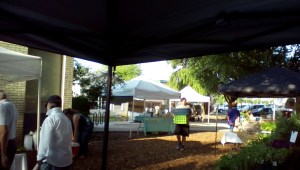
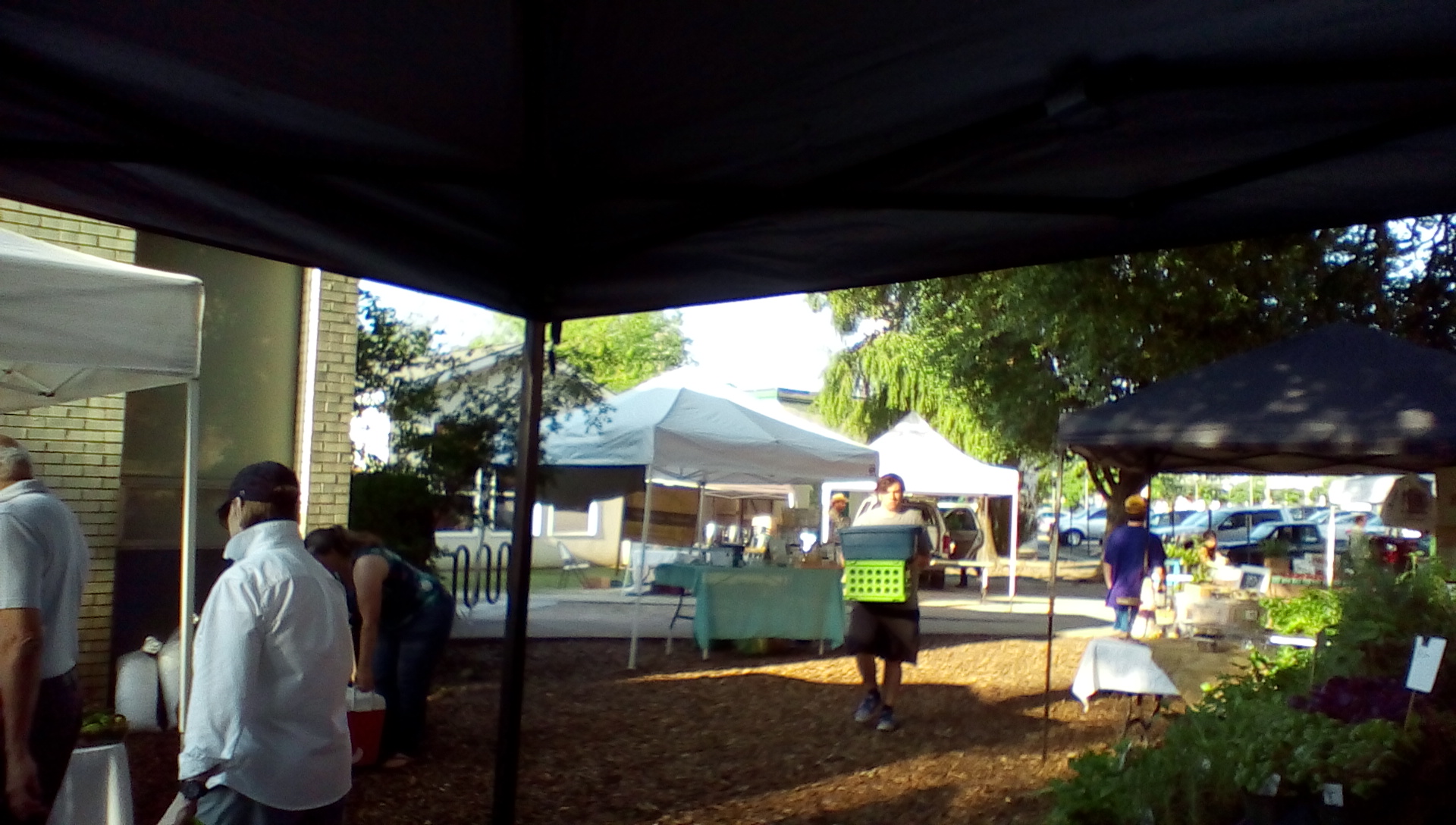
Vendors walking their items in

Vendors walking their items in

Vendors getting tents up

Vendors getting tents up

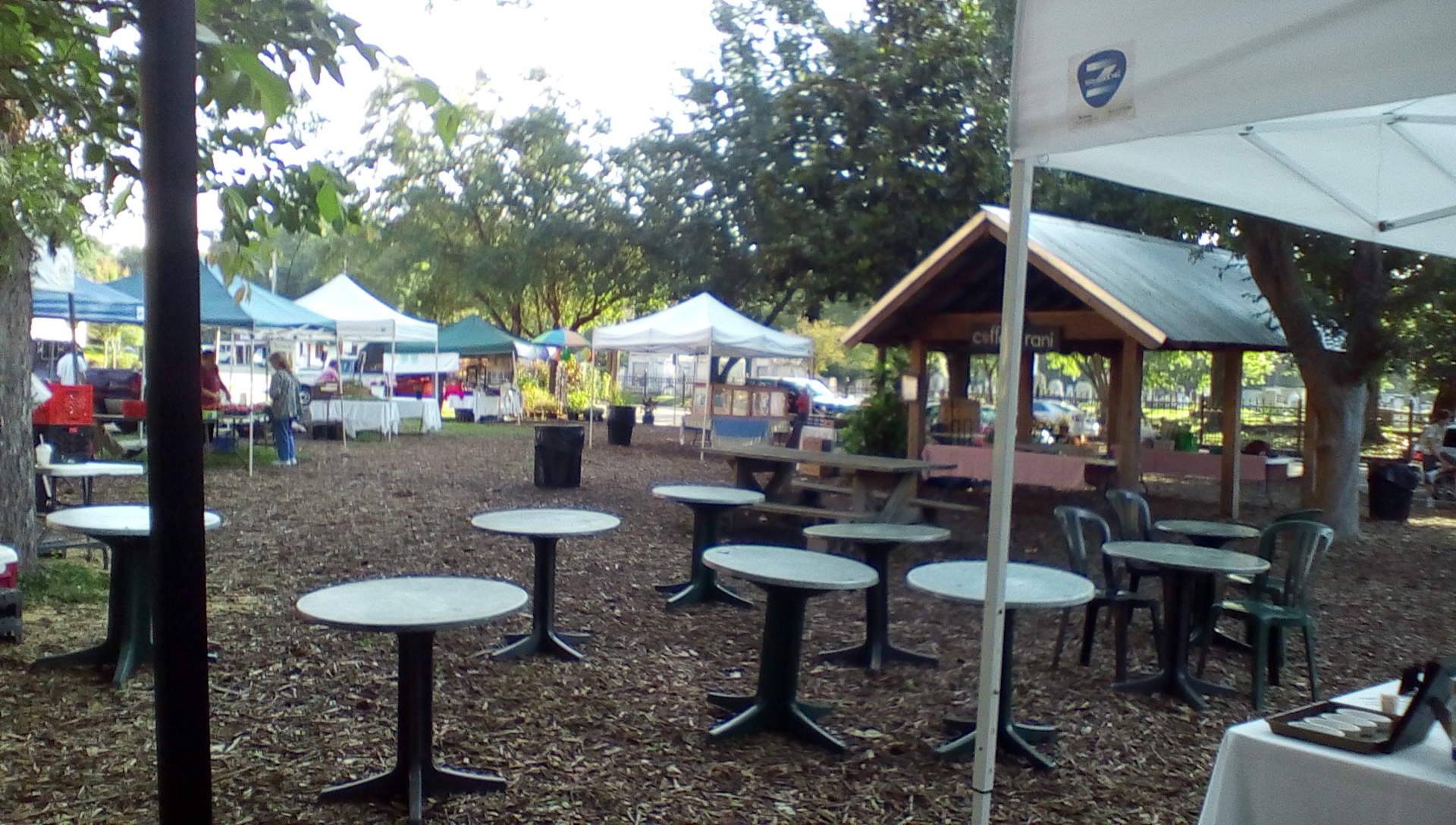
The seating before the market opens

The seating before the market opens

Norma Jean's cold area

Norma Jean’s cold area

Norma Jean is all set up and ready for me to sell for her

Norma Jean is all set up and ready for me to sell for her

This is what she was demoing and selling at the other booth. Really nice version of Salad Nicoise, without the tuna.

This is what she was demoing and selling at the other booth. Really nice version of Salad Nicoise, without the tuna.

What the market looks like when the musicians are playing midday
What the market looks like when the musicians are playing midday
The American Scholar: Local Fare

Here is a piece in The American Scholar from a New Orleans writer on the argument over what constitutes local when it coms to restaurant fare. I do think his “gated community” comment seems misplaced and overwrought, since the French Quarter remains the most dynamic and constantly evolving neighborhoods in town. However, his suggestion that we need to maintain some perspective is apt:

…But when you take the long view, that alarm may be misplaced. After all, much of the city’s most beloved fare today resulted from an invasion followed by hybridization. New Orleans loves to talk about food, and after considerable argument, many newcomer dishes are eventually given a seat at the table. Restaurants that serve “red gravy,” like Pascal Manale’s and Mandina’s, are artifacts of a Sicilian influx in the latter half of the 19th century. What’s today considered classic Cajun (itself imported from western Louisiana) emerged when African fare favored by slaves met Acadian French. Even the city’s vaunted Creole dishes emerged out of a cultural meeting ground once populated by French, Spanish, Caribbean islanders, Africans and their descendants, and Native Americans.

Clearly, what we mean by local is elastic and that elasticity is a big part of what confuses the eaters who don’t read the blogs or follow producers by name on social media or talk regularly with them at markets. That confusions seems magnified as an active value in the restaurant field, so describing what is indigenous/native versus what is inspired by the cultural mores of the place seems to need better words to describe the steps in the chain. Maybe market organizations can write some grants to create a “brand” that can be shared by those restaurants that truly support local producers and harvesters and help to define what it means to be serving local fare versus locally sourced.
The American Scholar: Local Fare – Wayne Curtis.

Farm Shares | Grow Dat Youth Farm

A recent success story in New Orleans for urban farming and school-aged youth, Grow Dat has sold their produce through at their City Park farmstand, at farmers markets, through online ordering/home delivery services and now with this CSA method. GDYF is a well-regarded project that has produced very real outcomes in a challenging funding and food environment. The success of Grow Dat’s project work along with their constant advocacy for urban farmers has truly risen all boats.

Farm Shares | Grow Dat Youth Farm.

The Crescent City Farmers Market Regains Its Pre-Katrina Footprint

As of this week, markets in my city are once again open four days per week with local farmers and fishers selling directly to family-table shoppers and to restaurant buyers. That is important to note as it was the weekend before the federal levee breaks of August 2005 that it was last true.
On that long-ago weekend, CCFM closed its Saturday market early and told its community that most of the next week of markets would also be cancelled, meaning the Tuesday, Wednesday and Thursday markets. Our lead market staff was away so I was directly supervising the market that Saturday. I remember well sadly hugging my vendors as they packed up and knowing some would not immediately return, depending on where the storm would hit. Little did we know that it would be the market locations and the market shoppers that would be its victims and we would not reopen a market at all until November 22, 2005* which at the time seemed like forever but now seems unbelievably speedy.
Hard to believe that it has been nine years since the entire slate of markets were open. Much has happened within the market organization and to the region in those nine years, an almost dizzying amount of changes really. What is gratifying as a market shopper, as a French Quarter resident and as a market advocate is that the new leadership of the organization has decreed that we must return to that weekly market schedule.
Huzzah and pass the satsumas.

The Wednesday market opened originally at the French Market on Wednesday March 19, 2003 which coincided with St. Joseph’s Day and therefore with a beautiful display and event coordinated (as usual) by Poppy Tooker, then our regional Slow Food Leader and now a noted cookbook author and tv/radio personality. Like all of the markets we opened (and that includes a short-lived one at Loyola University in 2001 as well as 5-years of Festivus, our fair trade market and our many White Boot Brigades (thanks again Poppy), we had to create a new set of circumstances for the Wednesday market to exist and to thrive in. In fact, in the two years that market was open, until the aftermath of Katrina shut it down we rebuilt it almost entirely just as we had with in the early days of the Tuesday and Thursday markets.

Here's what I learned from this market's opening that may be replicable to other markets, especially those with a similar chronology:
1. Be sure that you can handle all of the markets with the staff size that you have and can handle. That seems obvious, but running four markets suddenly required new or greatly expanded systems and not just another market bag and tent! Three markets from two was not that different as there was still a day in between and some vendors could do three markets per week but four was a very different matter. And since the systems we had set up for three markets expected our very hardworking staff for a least a half day of market planning and a half day of post-production per market (that is, without the large events which we were known for back then) it meant that two managers or two on-site coordinators were now absolutely necessary to do it right and that meant a very different organization, especially one within a slow-moving university system as we were then.

2. Every market needs anchor vendors. Those anchor vendors have to view that market as key to their weekly business (not a secondary market in other words) and commit to making it work for a period of time. This was definitely a problem on and off in our region as businesses with the skills and products to really anchor a market are not that easy to come by and so end up anchoring way too many at once, and then dropping markets rather quickly. Learn who your anchor vendors are (hint-it’s not always the biggest or even only farm goods!) and build the market initially on their strengths and for their shoppers.

3. Know the similarities and difference of your market neighborhoods and demographics. The third and fourth markets opened in downtown neighborhoods of the city, which has a very different demographic than the neighborhoods in which the first two operate. They also were physically smaller in potential size (could fit about half of the vendors of the first two markets) and had little or no parking available, which was also not true of the first two markets. Shoppers downtown were less likely to shop our other markets (as we learned from surveys) and more likely to want value-added goods which meant a different market vibe and outreach plan.

4. Acknowledge the barriers that truly exist. The French Market was and is hallowed ground for any New Orleanian, but also ground spoiled by long time bureaucracy (which by the way, turned out to be more intractable that even we thought). That long memory among residents made our work difficult, especially without any other changes in the existing market behind us. People insisted on telling us everything that had been wrong with the French Market, and their resentment was felt by our farmers and fishers, who since they also felt the same were easily deflated and dejected at market. If we had recognized that barrier was insurmountable to many of our long time farmers market shoppers (which is why they were so loyal to us in the earliest days!) and to some of our vendors, we could have spent more time working to build new shoppers and vendors. The shoppers we began to attract the last 6 months included new residents without the attachment to the FM history, seniors who loved the hours and the downtown location and the ease of shuttle delivery and pickup, the waiters and bartenders and second-shift workers, the French Quarter denizens who love to see and be seen, the chefs who believed in the market no matter where it was and so on. The vendors who began to do well loved their new enthusiasm and were able to refine their product lists to suit those new shoppers. Those who did not or could not adapt packed up or in some cases, stayed to try to make it and fumed at us and sometimes at the shoppers, knowing there were not enough yet and often too new to markets to purchase enough to sustain their extensive business needs. If we had started with that strategy, we would have wasted less of our and less of our vendors valuable time that first years and a half.

5. Something I knew before opening that market but we needed to make more clear to everyone: it takes 2-3 years for a market to stabilize. Don’t sweat the ups and downs of the first few years, just learn quickly and build for the day that it does thrive. And don’t punish the first group of shoppers by changing everything within six months to attract “better”shoppers-ask questions, survey those that come and keep on adding appropriate amenities and products to attract more of that community, to have them spend more and to add other like-minded shoppers.

With all of that in mind, I believe the market organization as it exists today has the embedded institutional skills and the partners (like the new leadership at the French Market) to regain the food system primacy that dissipated in those dark months and years of rebuilding, dissipated partly because of circumstances such as the need to reorganize the organization (2008), the BP spill (2010), Hurricane Isaac (2012), the end of the “Katrina economy” (2013-2014) and maybe most of all, the development of the “new New Orleanians” (2010-). From my view, the organization’s interest in finding the right answers for local farmers and fishers for the next iteration of New Orleans has rightly began with the organization’s original farmers market blueprint. However, I hope that they will also push past that history to make an even bigger and better future for themselves and their market community and when it comes, they know I’ll be there with tokens in hand.

Link to the Crescent City Farmers Market’s excellent website

*here is a glimpse of that first day back, November 22, 2005:

The Goldring Center for Culinary Medicine-New Orleans

One of the most exciting developments in food and health is happening in my own town of New Orleans and right in my neighborhood. Very proud of this work being done by “Dr. Gourmet” (who happens to be my mom’s doctor), Tulane University and the good people of Broad Community Connections.

The Goldring Center for Culinary Medicine is a first-of-its kind center dedicated to comprehensively integrating nutrition and dietary intervention strategies into medical school curriculum,” said Dr. Benjamin Sachs, senior vice president and dean of Tulane University School of Medicine. “The goal is to train doctors not only how food choices affect health and disease progression but also how to translate this information in practical ways that empower patients to lead healthier lives.”

Inside Tulane Med.

Louisiana Eats on seafood issues

Slow Food maven, radio host and author Poppy Tooker did a great show on seafood on Louisiana Eats: Gerard Maras (a giant among chefs in New Orleans) shared his boiling technique, Tenney Flynn who is still the best seafood chef in the French Quarter, talked about fish handling and finally Poppy and her guests discussed the ecological issues facing the harvesting community. Seafood is something Poppy knows a great deal about-she is a fisherwoman herself and one of the champions of fishing families in Louisiana and across North America.

Can you remember to mark “listen to Louisiana Eats” to your Saturday calendar? I’d recommend it.

The Ebb And Flow Of Louisiana Seafood | WWNO.

Diana Pinckley remembered

The event listed below is to happen this week and was excerpted from my home Crescent City Farmers Market “morsel” as they call their weekly email:
Diana Pinckley passed away in 2012; she was an irreplaceable member of our community and one sorely missed for her leadership and her friendship, both always given easily to so many.
The regard for her found on any market day in New Orleans can and should be multiplied in the thousands to stand in for all of the many initiatives or events that she supported across our region. The people I know through her represent her well: willing to give their time and talent and always remembering to be joyful.
Thanks, Pinckley. I’m honored to raise a glass for you this weekend and pleased to represent farmers markets where we remember and honor our people.

Raise a Glass to Pinckley with CCFM! |
FRESH & LOCAL
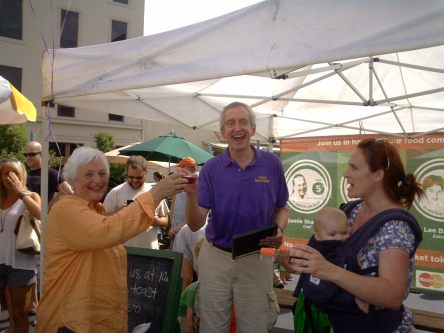
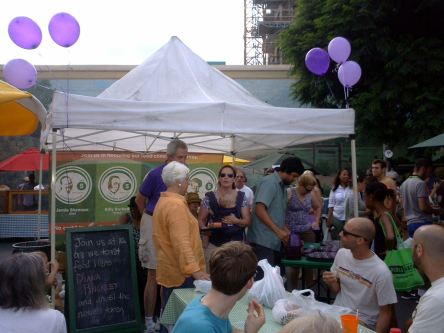
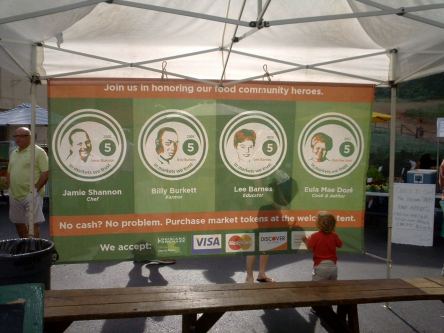
Each year we choose one of our local food heroes – a farmer, chef, culinary educator, devoted farmers market shopper or local food system champion – to be the face of our market tokens. This Saturday, we’ll unveil our 2014 market token and celebrate the life of long-time CCFM shopper and supporter, community activist and mentor to so many working to rebuild New Orleans and the Gulf Coast, Diana Pinckley. “Pinckley”, as she was known to close friends, loved mystery novels, bluegrass and the color purple. In addition to her work as a public relations executive, communications strategist and book reviewer, Pinckley shared her time and talent with many New Orleans civic organizations. She was a member of “Women of the Storm” and one of CityBusiness‘s Women of the Year in 2006. She served on the New Orleans Council for Young Children, the Committee of 21, the board of the Foundation for Science and Mathematics Education, the Edible Schoolyard New Orleans task force and was chairwoman of the board of the CCFM. She raised money for WWNO-FM and was an active volunteer at WWOZ-FM. She passed away in September 2012. New Orleans is a better place because of Diana Pinckley. Please join us, her husband John Pope and friends to raise a glass at 10am, tap your toes to the music of Lost in the Holler and celebrate the life of one of the CCFM’s most cherished friends. Purple attire encouraged.

Fat Tuesday food

Today is a holiday in my city and region, combining the best parts of tradition and public spectacle, and food is an important part of the tradition of Carnival. Our own Poppy Tooker talked about it on NPR last week.
Happy Mardi Gras everyone.

Rex decrees:
“I do hereby ordain decree the following…that during the great celebration all commercial endeavors be suspended. That the children of the realm be freed from their studies and be permitted to participate in the pageantry.”
And to the city’s political leaders, he added:
“That the mayor and City Council cease and desist from governance.
“We will fulfill the will of the people and turn over the key to the city to you, so that tomorrow in New Orleans will be a day of abandon,” Mayor Landrieu said. “Happy Mardi Gras.”

all to eat on a Mardi Gras day…

10 New Orleans chefs share their culinary hopes for the 2014 New Orleans restaurant scene

More ethnic, more niche and available in every neighborhood and supportive of farmers and producers:

10 New Orleans chefs share their culinary hopes for the 2014 New Orleans restaurant scene | NOLA.com.

A Koi-Fueled Nursery in New Orleans Yields Tasty Profits

Thanks to Sanjay for sharing this; I have followed VEGGI’s emergence and believe that their efforts are one of the best examples of entrepreneurial farming combined with technology solutions and will benefit many farmers, rural and urban alike. The VEGGI cooperative and cooperatives like it are one of the best ways that small lot farmers can truly become economically sustainable and avoid the burnout of a one-farmer endeavor and how urban initiatives can learn quickly enough to benefit the region.

A Koi-Fueled Nursery in New Orleans Yields Tasty Profits – Wired Science.