I am amazed at how many markets have never done a price comparison or used this idea and bought fast food and then compared it to the cost of a farmers market meal.
Try it, it’s a great way to bridge your market to new people. Or just use this link on your site:
public health
Getting Real
RIP Chris Bedford, Michigan activist and filmmaker.
Getting Real about Food & the Future from Christopher B. Bedford on Vimeo.
Michael Pollan explains food chains
A great video to embed on your market websites or in your email newsletters. Simply explained for many audiences.
Map of shrinking food deserts in Pittsburgh
this map shows smaller food deserts in the summer, when farmers markets are open. I find the new graduate student focus on farmers markets fascinating. It seems since so many probably grew up with the latest iterations, they assume their longevity. Glad of that.
Not sure its news that food deserts shrink when markets are open. Although, if it helps officialdom realize that we open farmers markets where they are needed, it could help.
I do prefer the Diego Rose (Louisiana Public Health Institute) definition of “food swamps” rather than food deserts to be more descriptive usually. Meaning areas swamped with bad food, rather than no food.
Super Cooperators
Am reading a new book by Martin A. Nowak titled “Super Cooperators” which explores the ways and reasons humans cooperate. I picked this up because it seemed to correlate to the work I was involved with when at marketumbrella.org, measuring social capital with their NEED tool. NEED (still in pilot but I believe getting closer to an online tool like SEED) measures the quality and quantity of transactions within market communities (included neighbors who feel its impact) to get at levels of trust. Trust is a proxy for social capital. Adding social capital to markets is important because it means behavior change is possible.
So, in markets, engineering cooperation is the main activity used to add trust. The market organization is essentially using direct reciprocity, indirect reciprocity, and spatial laws to add levels of cooperation-all terms learned from this book.
I like the author’s definition of cooperation:
The willingness to give something up in order for someone else to receive a benefit.
In a sentence, this may describe the positive transactional nature of markets rather than a roadside stand or a storefront. The multiplicity of vendors often directly competing yet cooperating, shows a sophisticated awareness of the need to offer choice to shoppers and on another level, cooperating as a community to add innovation or programs lead markets to a more successful future.
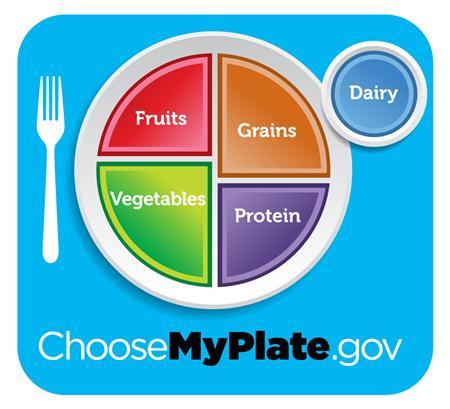
New food plate replaces food pyramid
Useful criticism of the plate from retail analysts:
Hartman
USDA is readying new food “pyramid”
Boy, this issue goes to show the power of the lobbyists and experts that surround the beltway. Over the years, the food pyramid has changed dramatically, and remains a political football to kick back and forth. The first pyramid was adopted in 1992, changed in 2005 and now reports are that the new version will be a plate showing how much of each food group an adult person should eat for healthy weight.
Here are some examples of past pyramids:
Food policy-stage center.
As the attendance at Community Food Security Coalition’s (CFSC) conference showed, the healthy/regional food movement is gaining maturity and strength.
Over 600 attendees from every part of the U.S. and Canada came together to discuss, to see Portland’s leadership and to network. (I can personally attest to the networking ability of regional food system people.)
The Coalition always manages lively face to face opportunities and backs it up with good leadership in the sessions themselves. Planners, public health professionals, farmers, market organizers, grassroots activists, city officials were all in attendance.
They also tried to use technology to get real time voting in the Friday plenary which had some bugs (Laurel MacMillan CFSC staff, was a trouper on stage with amazing aplomb and humor to keep it going and people engaged, paired with local leader/market trainer Suzanne Briggs up there with Laurel, typing madly) but since everyone was in good humor after a pleasant breakfast, all was fine by mid-morning.
From Vancouver’s Food Charter poster to the free pear savers (those spun their own debate) to the lively networking sessions (the South/Southeast session was almost drowned out by an insurance conference play acting in the next conference space but valiantly held their space) there was plenty to learn, see and hear. As we know the 2012 Farm Bill is the focus of every food system and CFSC did an admirable job capturing the breadth of issues on the table and tactics that will be needed. The draft of priorities outlined by CFSC included:
Defend and expand Community Food Projects and Farmers Market Promotion Program
Secure support for the infrastructure needed for local and regional food systems.
Increase access to federal nutrition programs participants to food system points of entry.
Work on urban-rural linkages across existing programs.
Require USDA to streamline SNAP redemption and technology.
Promote incentives for fruit and vegetable purchases for federal nutrition program participants.
Call for a USDA report and guidance document on how local government regulations can support access to healthy foods.
Incorporate more local product into DoD Fresh and USDA Foods.
Institutionalize the tracking and evaluation of Farm to School programs.
Of course, those were presented as draft priorities so that CFSC Policy Director Kathy Mulvey and Associate Policy Director Megan Lott can continue to evolve the platform based on the membership needs of CFSC. They were very active throughout the conference as they have been in the listening sessions they have held throughout the year.
As a board member of the Coalition, I was very proud of the program staff and the work done to make the conference happen. As always, Emily Becker our conference planner (and I am sure Aleta and Erika as support) hit another home run for the movement. Doubletree Hotel was a nice location with food sourced locally.
More data on social capital
As many of you know, the organization that I have been associated for the last 9 years, marketumbrella.org has been doing some very interesting data collection and measurement on markets in this area. Using trust as a proxy, NEED (Neighborhood Exchange Evaluation Device) has been measuring the quantity and quality of transactions and hopes to get an online tool (like the free SEED tool) up very soon.
When we started this project almost 4 years ago, only a handful of stakeholders understood why we were interested in this. Now of course, interest in bridging and bonding has grown exponentially, as has the interest in markets ability to manage that effort.
This article is another in a long line of studies of social cohesion, but is a good primer for anyone in your world who needs to understand how this can be seen as healthy behavior.
In a now-classic study of 6,928 adults living in Alameda County, Calif., conducted by Harvard researcher Lisa Berkman, PhD, and University of California, Berkeley, researcher S. Leonard Syme, PhD., people with few social ties were two to three times more likely to die of all causes than people with wider and closer relationships.
School Scavenger Hunt/Incentive Project underway in New Orleans
This is one of our newest projects and builds on the last few years of our Meet Me at the Market (MM@TM) work. I wanted to share the early days of the project, although we are not ready to talk about measurable outcomes-since it’s only the first full week-and our market staff is running everywhere (not walking) these days to accomplish their to-dos on their calendar!
The Meet Me at the Market has been marketumbrella.org’s project for the last 4 years in which we travel to schools and community centers, do some activity with the attendees and then invite the organizers to visit on a selected day where we have a tent set up and a staff or volunteer person ready to assist the group. The purpose of the MM@TM (and targeted incentives) is we believe that once we build the relationship with the shoppers that goes beyond a passive chance visit to the market, we make long-term market community members, especially when there are barriers such as transportation issues, lack of knowledge about how to use open-air markets, or past purchase barriers (food stamps as an example) to overcome. The more barriers, the stronger the incentives.
Therefore we work to find ways to get our groups back as soon as possible, as often as possible. This has been an excellent way to introduce our Senior FMNP incentive; that incentive is where we offer a matching 24 dollars after they complete their FMNP booklet (to spend on other non-FMNP foods.) Those seniors stretch out the tokens as they did the coupons, coming in cooler months with family members to buy dairy or seafood with their tokens. Of course, they also know our market staff and interact with them more often throughout the year which builds trust and more knowledge transfer.

It has been harder to find some measurable outcome from the schools that have visited in the past years, as not all are using the market to teach the same lesson. So for 2011, we came up with a project we hope will do that and introduce more food-vulnerable children to the benefits of the market community.
This project has targeted a handful of schools that have a 50% +1 free and reduced meal enrollment, and are in zip codes near to one of our markets. The staff goes to the school, does a quick pre-Market visit tutorial in the classroom. This is where we measure their local food knowledge with our Bean Survey tool. Soon after, they attend the Market with their school in order to a) observe and participate in commercial and social transactions, b) attend a cooking and tasting lesson, and c) bring home from the Market sample specialty crops and an invitation to join the Market’s summer Marketeer events. The Marketeer events are held on Saturdays; kids of every background receive a postcard in the mail in the month of their birthday, which they can bring to the market to get a 5.00 token to spend and also come on the first Saturday of every month for a Marketeer event. The goodie bag the 2011 schoolkids will receive in their initial visit also contains an incentive for the parent to receive tokens when they come with their child to the Marketeer event.
We can measure the success in a number of ways:
1. The change in their knowledge from the Bean Survey (questions like have you ever met a farmer? have you ever tasted a Louisiana strawberry?) to after their market visit.
2. The number of bags we hand out with a pint of strawberries and the information.
3. The number that join our Marketeers club.
4. The number of parental incentives used.
This is a Department of Agriculture and Forestry grant through their Specialty Crop Grants; we are lucky to have such great partners that are interested in using their department to add knowledge about Louisiana specialty crops to the next generation of shoppers.
These are early days for this project so very little as far as outcomes can be shared yet. I will be updating its success here and am happy to talk via email (please direct questions to me so our market staff do not have more work from my sharing!)
How exciting to share my colleagues excellent work.
Shopping more often may increase longevity
This story could be useful to cite when writing grants to public health organizations for your market:
Shopping regularly can help people live longer.
That’s the suggestion from a study that found older people in Taiwan who shopped frequently tended to outlive those who went less often – even when other factors were taken into account.
Those who shopped every day were 27 per cent less likely to die within the 10-year study period compared with those who never shopped, or who went shopping less than once a week.
.
Study on health for community or allotment gardeners
From the Netherlands:
Background
The potential contribution of allotment gardens to a healthy and active life-style is increasingly recognized, especially for elderly populations. However, few studies have empirically examined beneficial effects of allotment gardening. In the present study the health, well-being and physical activity of older and younger allotment gardeners was compared to that of controls without an allotment.