Love these maps; However, wouldn’t it be great if we could change the US map to something less destructive and harder to convert to sugar? Or is that just wishful thinking?
Childhood hunger
Link to a NBC news story about kids who only eat in school; this is an epidemic problem within the industrial food system that those of us working to build an alternative system must address in our initiatives. We can assist those working on school food issues by using our place and products to offer comfort and good food with just a little incentive…
How about markets offering a case of free fruit near the end of the day so kids have it for later in the day or offering a market incentive for high marks (think 5.00 token to the A students)? That token, along with bus tokens and all offered during SNAP incentive seasons could allow families to expand their time together and expand their meals.
http://www.nbcnews.com/nightly-news/invisible-problem-kids-who-only-eat-school-n55111
Tomorrow is another holiday in the New Orleans area and in many other Italian-American areas- St. Joseph’s Day. St. Joseph is the patron saint of the island of Sicily and it’s said during the famines of the Middle Ages, residents prayed to St. Joseph to deliver them, and the altars are built in thanks on his feast day, March 19.In the late 19th century, New Orleans was a major port of immigration for Italians from Sicily. Many settled in the French Quarter, nicknamed “Little Palermo” at the time. Devout Catholics promise altars for answered prayers and favors granted, such as healing or safe delivery.The food on an altar is supposed to be donated, or “begged.” Countless people work on the altars: Altar societies, church members, Catholic and non-Catholic spend untold hours, starting at the beginning of the year. Many New Orleaniains try to make a “pilgrimage” to a number of altars on the feast day, to churches, store and even to private homes.
and for those of you looking, those who secretly steal a lemon from a St. Joseph’s Day altar will get a husband. For those not in the search, you can just ask for a fava bean: Legend has it that you will never be broke as long as you carry a fava bean.
Keeping Agricultural Land Prices Affordable for Farmers in the UK
“The idea goes back to 2005, when members of various groups involved in ecological land management and cooperative development got to talking. Inspired by a vision for what would become the Ecological Land Cooperative (ELC), they sketched out a plan to buy degraded agricultural land and lease it to people with the desire and skill—but not enough cash—to start small-scale farms with regenerative practices (think permaculture and agro-forestry).”
Keeping Agricultural Land Prices Affordable for Farmers – Economy – Utne Reader.
Be a sign up genius
Whenever I get to farmers market conferences, I learn a few new things: this time, I learned about signupgenius.com from Jaime Moore, Columbus area market manager, Ohio Farmers Market Management Network Board member AND “Central Ohio’s Agricultural Queen” with farm Wayward Seed.
Jaime uses it to manage her three area farmers markets volunteers and based on her to-do list, she needs it…
It looks like a great tool to use (and is free) for market organizations of many sizes and types.
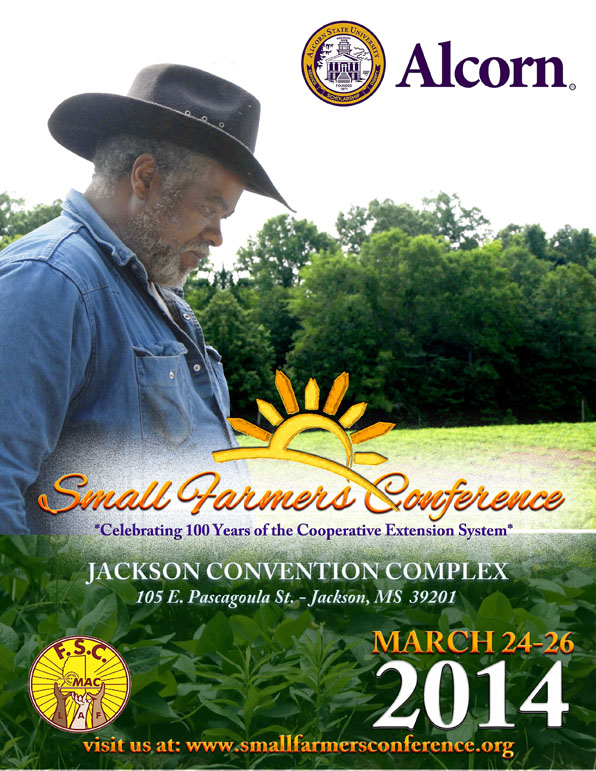
2014 Small Farmers Conference in Jackson MS
The 23rd annual Alcorn State University Extension Program (ASUEP) Small Farmers Conference, slated for March 24-26, 2014, will be held at the Jackson Convention Complex, 105 E. Pascagoula St., Jackson, Miss.
“Using Smarter Innovations to Strengthen Agriculture” is this year’s conference theme. The event is co-sponsored by ASUEP and the Mississippi Association of Cooperatives (MAC).

5 Small Town Stories of Lighter, Quicker, Cheaper Community Action | Citizens’ Institute on Rural Design
I might recommend that some of you utilize these suggestions within your market or grassroots food community efforts. Often, these type of collaborative public space efforts can extend the food community vibe into new arenas and into becoming a “beloved institution” beyond the hours of the bell or the garden fence.
Free Human-Centered Design Workshop Offered
IDEO.org is happy to announce the second iteration of Human-Centered Design for Social Innovation, a course that we’ve created in conjunction with Acumen. This seven-week course will get you started using the human-centered design process to create innovative, effective, and sustainable solutions for social change in your community. Last year, we had over 13,000 people sign up for this course. They formed over 4,200 design teams bringing human-centered design to 134 countries. Want to learn more? Watch this short video.
How does the course work? This course is designed with a group-guided learning structure. This means that in order to participate, you’ll need to form a team of between two and six people. Once you have your team, you’ll meet each week to learn the human-centered design process via the readings and workshop materials that we’ve created for you. Along the way, you’ll also tackle a social sector design challenge in your own community.
How much does the course cost? The course is free.
When does the course start and how long does it last? The course begins on March 31, 2014 and is designed to be conducted over a minimum of seven weeks. However, you can also choose to do the course over a longer period of time if a different pace is right for your team.
Do I need to be a designer to sign-up for the course? This course is open to all and does NOT require any prior design experience.
What if I’ve taken the course already? We’ve created a bonus chapter for those who want to scope their own design challenge. Even if you learned with us last summer, please consider furthering your knowledge of human-centered design by joining us again!
Who else is taking the course? You’ll join teams from around the world taking this course as part of the leadership classes offered by Acumen. Last year, many participants found it valuable to take the course with their coworkers and explore how human-centered design can add new perspectives to their work–whether it be applied to nonprofits, social enterprises, educational institutions, or international aid organizations. In addition, you’ll have the opportunity to share your learnings, ask questions, and get to know other course participants from around the world via an online Google+ community.
Interested in signing up? Register by March 30th at: http://plusacumen.org/courses/hcd-for-social-innovation/.
More information? +Acumen course ambassadors are holding precourse Meetups in cities around the world. Attend a Meetup to learn more and to meet other human-centered designers interested in taking the course. More questions? Email HCDCourse@IDEO.org
Pass the Virginia Food Freedom Act
Hey Virginians (or friends of Virginians): Please sign or forward this to those who can help influence the legislature to enact a cottage industry law that other states including my own Louisiana and nearby Mississippi passed recently.
Fat Tuesday food
Today is a holiday in my city and region, combining the best parts of tradition and public spectacle, and food is an important part of the tradition of Carnival. Our own Poppy Tooker talked about it on NPR last week.
Happy Mardi Gras everyone.
Rex decrees:
“I do hereby ordain decree the following…that during the great celebration all commercial endeavors be suspended. That the children of the realm be freed from their studies and be permitted to participate in the pageantry.”
And to the city’s political leaders, he added:
“That the mayor and City Council cease and desist from governance.
“We will fulfill the will of the people and turn over the key to the city to you, so that tomorrow in New Orleans will be a day of abandon,” Mayor Landrieu said. “Happy Mardi Gras.”
The evolution of fresh food — Back to the land — or at least to the farmers’ market :: by Amy Halloran :: Culinate
A well done piece by a former farmers market manager and constant supporter of farms about the evolution of markets and healthy food alternatives.
As Farm to Plate movement blooms, Vermont food and farm jobs help drive economy
In January 2011, when the Farm to Plate Strategic Plan was released, an economic analysis indicated that with every five percent increase in food production in the state, 1,700 new jobs would be created. Goal #1 of the Farm to Plate Strategic Plan is to increase Vermonters’ local food consumption from five to ten percent over ten years.
Giving Business the Incentive to Promote Healthy Lifestyles
Love the article linked below; it’s an overview of incentives given to business to encourage healthy behaviors. For those of you that have heard my spiel on how the 1970s emergence of the farmers markets movement has focused on incentivizing behavior changes of all kinds with buying rewards (frequent shopper cards, raffles/giveaways), added social interaction (music or entertainment), knowledge increase (cooking demos) and so on you might see how the most recent addition of cash incentives for low-income citizens to find their way to us is simply another example of that strategy.
This article shows that many businesses are using the same strategy when adding benefits to their community and therefore, markets should see that they stand proudly as innovative leaders in incentivizing good health and wealth. AND markets should use this strategy in as many ways as they can to continue to increase everyone’s changes, including vendors, neighbors, and shoppers in every socioeconomic strata.
Giving Business the Incentive to Promote Healthy Lifestyles | Community Commons.