“…the report cites key studies, which show a positive relationship between agriculture and poverty reduction. For instance, one study has shown that for every 10 per cent increase in farm yields, there was a seven per cent reduction in poverty in Africa. In contrast, growth in manufacturing and services has not shown comparable impact on poverty.”
Author: D.W.
Four Questions You Should Never Ask at a Farmers Market | Civil Eats
I agree with 3 of the 4. I think it’s okay to ask if you can buy something early-the market should have a way to answer that question, and sometimes it’s allowed. And yes, sometimes stores do let customers in early.
I also think when someone asks about a farmer’s life (like when do you get up?) it is only to learn and to connect. If it doesn’t offend you, you can use the moment to teach other people about the life of a farmer. But dear shopper, do beware the grumpy (tired) farmer!
Four Questions You Should Never Ask at a Farmers Market | Civil Eats.
Vermont Law School Helps Farmers Markets and CSAs
Good overview of the new Center for Agriculture and Food Systems at Vermont Law School that Laurie Ristino is heading. I am honored to be part of one of their first grants to help markets, written in partnership with NOFA-VT. If the proposal is successful, legal resources will be written for markets and for CSAs over the next few years.
As Cost of Importing Food Soars, Jamaica Turns to the Earth – NYTimes.com
…officials across the region say more young people are getting involved, partly because food prices have soared, but also because governments have promised that agriculture means steady work, and not just in the fields.
The Bahamas is building a gleaming food science university to emphasize agricultural best practices.
Haiti, which experienced food riots in 2008, recently broke ground on a series of silos for a “strategic food reserve,” while Jamaica is considering investments in juicing and food preservation start-ups.
“We have idle hands and arable land,” Mr. Clarke said. “We are trying to see how we can bring those two together.”
As Cost of Importing Food Soars, Jamaica Turns to the Earth – NYTimes.com.
Regulating the life out of community food systems
A link to an excellent opinion piece by Stacy Miller, project director at Farmers Market Coalition where the deep crisis of regulatory burden on small family farms is addressed. No question that the lack of clarity among cities, states and the federal government to write and administer common-sense regulation is one of the most important areas that all food system organizers and practioners need to work together to solve.
Fishing for answers
Kevin M. Bailey, a senior scientist at the Alaska Fisheries Science Center and affiliate professor at the University of Washington has written a detailed explanation of the economic, scientific and political underpinnings surrounding the Alaskan pollock in his new book, Billion Dollar Fish. This is the product that makes up much of the school cafeteria/fish stick/filet o’fish market and therefore its demise or success has a far-reaching impact on commercial fishing policies. The study of fishing systems is helpful to anyone that is thinking of growing food systems into complete systems. In studying fishing/harvesting, other subjects such as pollution from industries such as agriculture, game fishers, border issues and the aftermath of disasters must be considered even as most Western citizens have grown deeply unaware of their waterways with the advent of the highway and railroad systems.
Ocean communities are complex. The fates of species are braided with feedback systems, complicated interactions, and co-dependencies. We don’t understand much about marine fishes because our ability to observe what really goes on in the ocean is limited, and because the lives of fishes are so foreign to our own existence. An incomplete understanding is not a good foundation for engineering solutions. Yet in harvesting them, we try to manipulate the productivity of fish stocks by setting harvests levels as close to the bone as we can cut.
111 Low-Cost or Free Online Tools for Nonprofits
This is an excellent list of tools of which many would be quite helpful for markets and other non-profit food system organizations.
I especially like
2, 3, 4, 14, 25, 29, 34, 44, 46, 50, 58, 71, 78, 84, 104, 110
Cleaver & Co. New Orleans
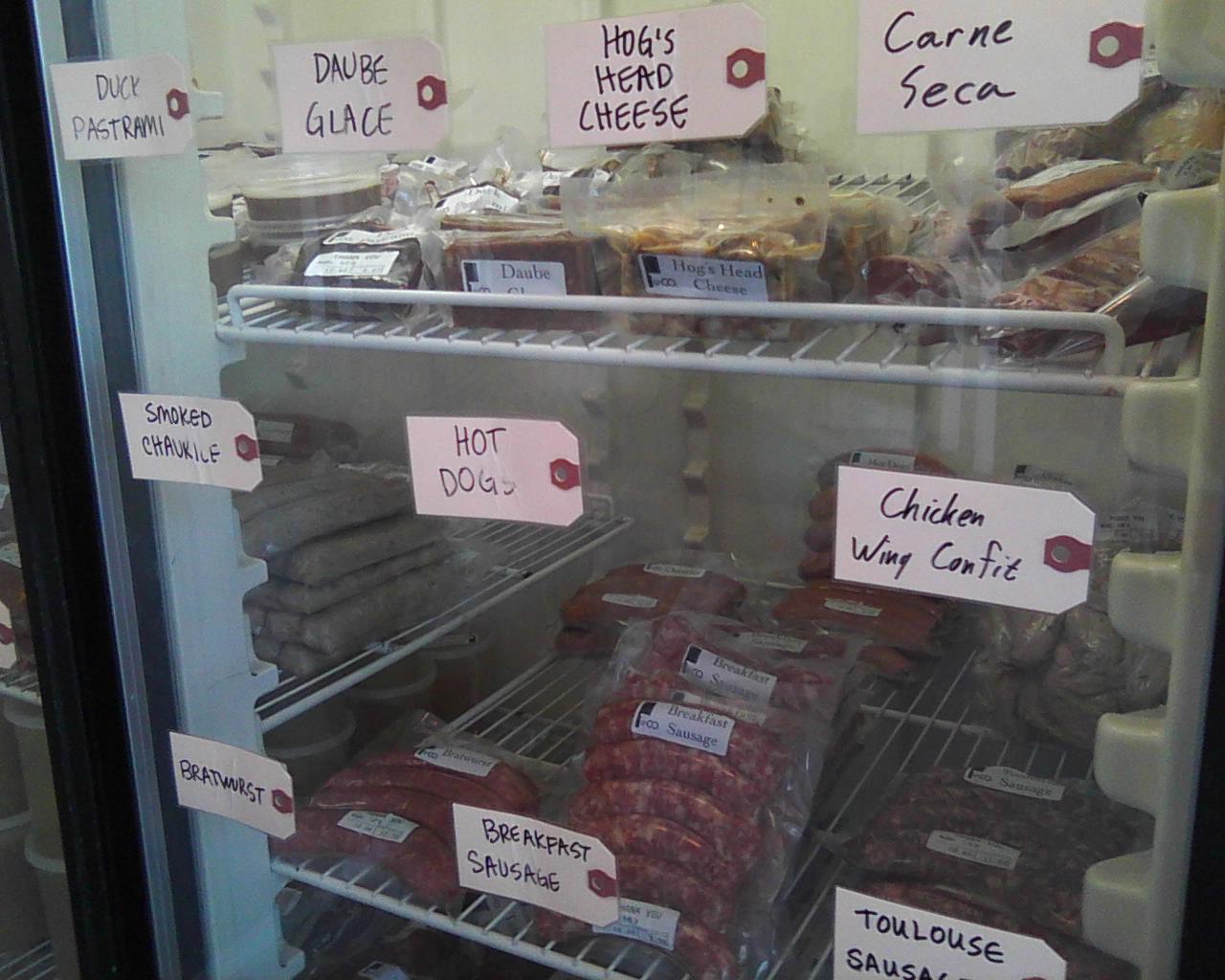
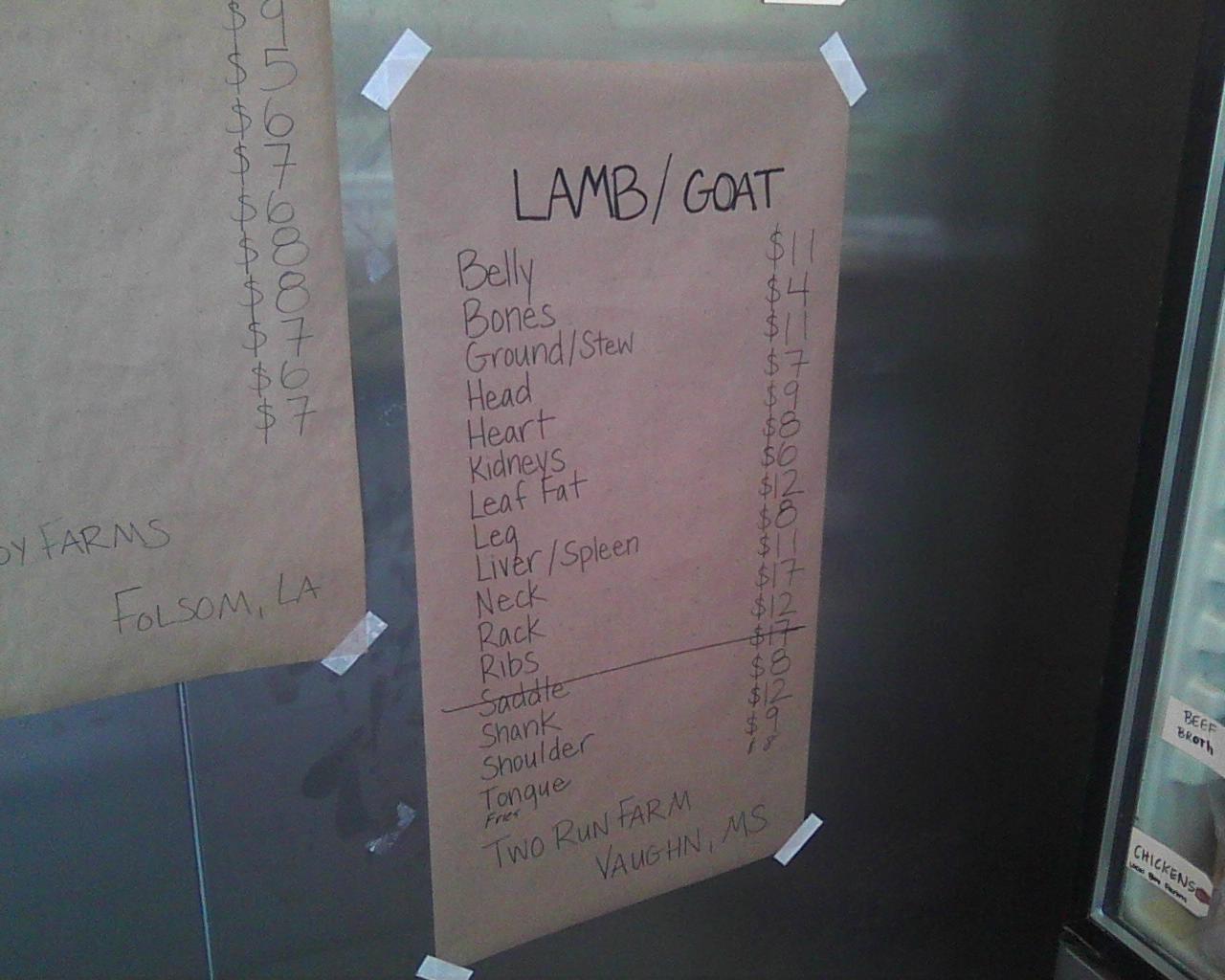
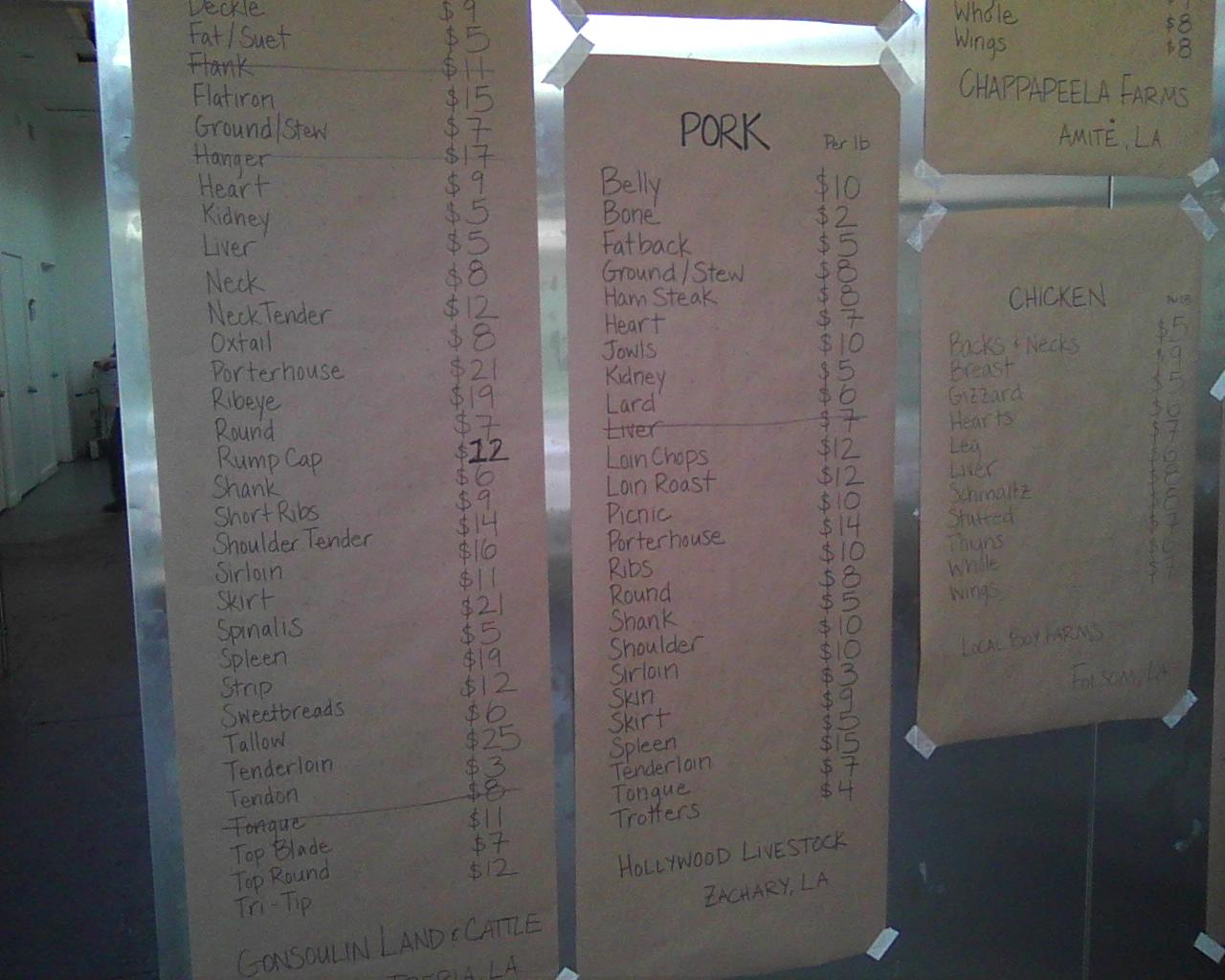
I just visited the newest member of the New Orleans localvore family, Cleaver & Co. a no-frills, full-service butcher shop. The posted educational information at this store is easily understood but when necessary, the staff is quite knowledgeable when it comes to more in-depth questions. It makes me think about how we communicate livestock issues and value within farmers markets; has the consumer education gone as deeply as it has for fruit and vegetable production? Should market managers explain the regulation and production issues in more detail than we have? Really, how much do market managers actually know about what unique issues these producers face, such as amount of land needed for grazing, treating animal illnesses naturally, finding healthy feed, selecting the right USDA processor when applicable and so on…
10 Surprising social media statistics that might make you rethink your social strategy – The Buffer Blog
here’s a sneak peek at one of those stats:
YouTube reaches more U.S. adults aged 18–34 than any cable network
Maryland Food System Map | Center for a Livable Future
This is one of my favorite food system sites . Wouldn’t it be great if each state and every regional projects collected and shared this type of visual data?

A screen shot of the Maryland Food System Map circa July 2013.
Note from the organizers:
Map updates include expanded Nutrition Assistance data and updated points of interest for Maryland.
Nutrition Assistance – new and updated data about federal nutrition assistance programs.
SNAP usage by Zip Code
Schools with 50% or more children who are eligible for free and reduced cost meals
Afterschool Meal Program Sites
WIC office locations
NOTE: The following existing data layers have been moved to this category:
SNAP Participation by County
SNAP Retailers
WIC Retailers
Points of Interest – updated points of interest note changes in addresses and expand lists statewide.
Institutional sites in this list – schools and hospitals – will be expanded further this year, as we gather data and statistics about how these institutions are using local food. Here are the layers currently updated:
Hospitals
Public schools
Recreation centers
Senior centers
Celebrate Farmers Market Week with FMC
Farmers Market Coalition
It’s officially NATIONAL FARMERS MARKET WEEK. Use hashtag #FarmMktWeek to share your markets’ happenings, and use #FMCFUN and #FMCCookingDemo to take part in FMC’s Instagram Challenges this week.
How Fracking Affects Your Farmers Market
“As fracking expands into areas that are home to some of the most productive farmland in the world, questions need to be raised regarding the long-term safety for the agricultural industry.”
Read more: http://www.care2.com/greenliving/how-fracking-affects-your-farmers-market.html#ixzz2b0f0EWi3
How Fracking Affects Your Farmer's Market | Care2 Healthy Living.
The Crop Hop: Celebrating Family Farmers & Supporting Farm Advocacy
The Rural Advancement Foundation International-USA’s mission is to cultivate markets, policies, and communities that sustain thriving, socially just, and environmentally sound family farms. RAFI works nationally and internationally, focusing on North Carolina and the southeastern United States. RAFI is a 501(c)(3) nonprofit organization based in Pittsboro, North Carolina and incorporated in 1990.
Learned about this excellent organization on my last visit to Carrboro North Carolina while I was there working with my colleague Sarah Blacklin, (she late of the Carrboro Farmers Market and now working on statewide analysis of meat production); RAFI’s excellent deep work with farmers is one of the reasons that North Carolina are seeing entrepreneurial farming in larger numbers, and I am sure that they are more than willing to share that credit with a host of other NGOs and universities as well.
This fundraiser idea is a great one and no matter where you are in the US, you might want to look into it and support their work more closely.
The Crop Hop: Celebrating Family Farmers & Supporting Farm Advocacy.
As some of you know, I believe that the era of mission-driven farmers markets has just begun and that how we view our work needs to expand to help the farmers and buyers that we work with. In that mindset, we should begin to examine the idea of public markets entirely devoted to restaurant/grocer (then wholesale) sales of local goods, curated with the same intention and mission by those of us that currently manage retail farmers markets.
In order to do that, we should learn from wholesale terminals such as this one in Canada. I found a couple of things within this article about the Ontario Terminal fascinating. My notes are in italics.
In less than 40 seconds, DiLiso has placed his order: cabbage, cipollini onions, bean sprouts and bok choy. Na enters the data on a hand-held digital device then, with a mutual nod, moves on to another client, leaving DiLiso to gather up his vegetables.
That’s how deals are done at The Ontario Food Terminal, the giant U-shaped building on 16 hectares off the Queensway in west Toronto: friendly, no-nonsense, fast.
(Notice the ability to enter sales on a hand held device?)
———————————–
DiLiso and his small crew criss-cross the market to find sellers they trust who have the best deals on vegetables.
“It’s all about relationships,” DiLiso says.
(I dunno- it sounds like it is as much about price?)
 Helping Farmers Markets Grow