Findlay Market pictures

The first of three public markets that I will be visiting this week across Ohio.http://www.findlaymarket.org/

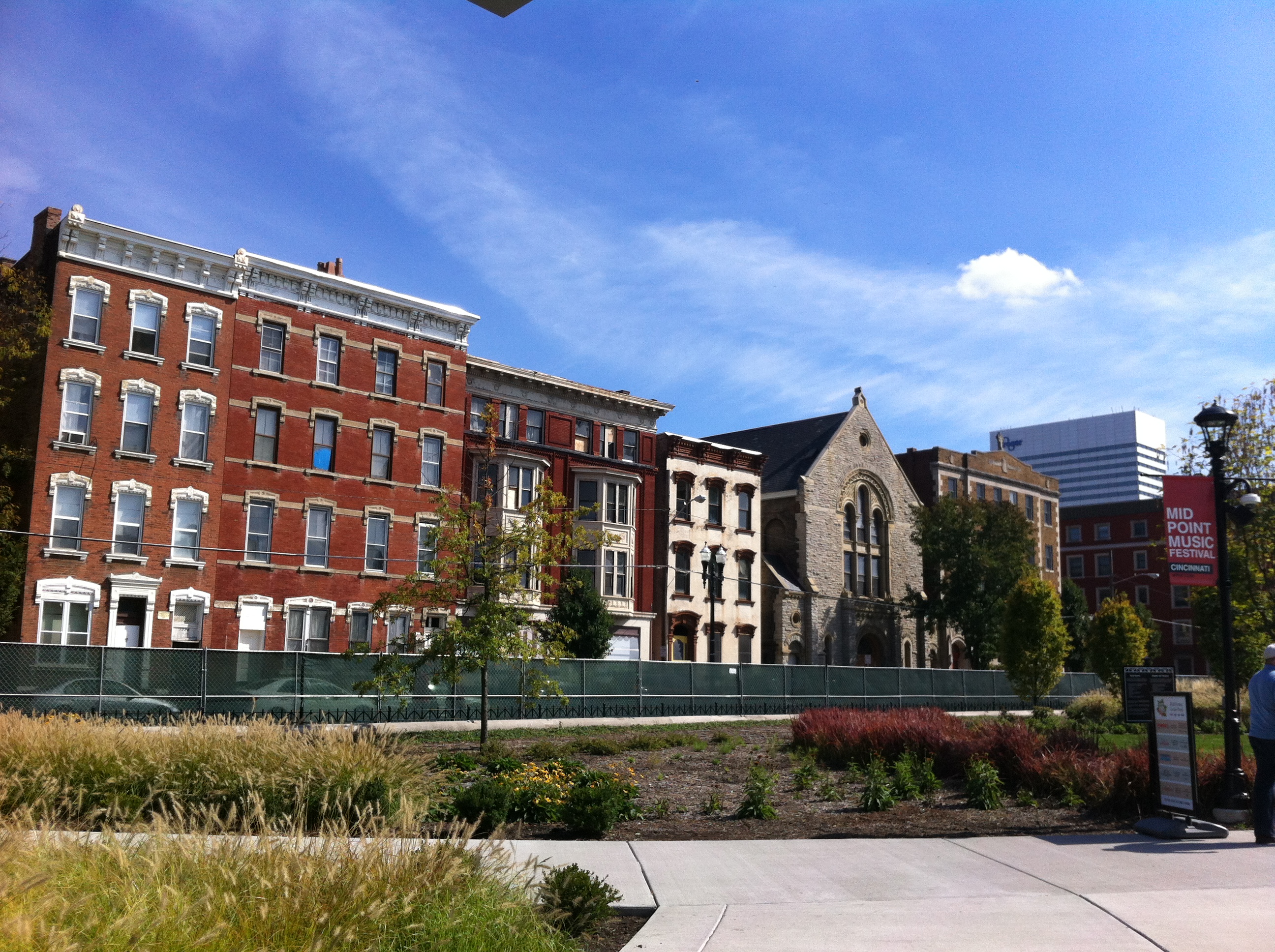
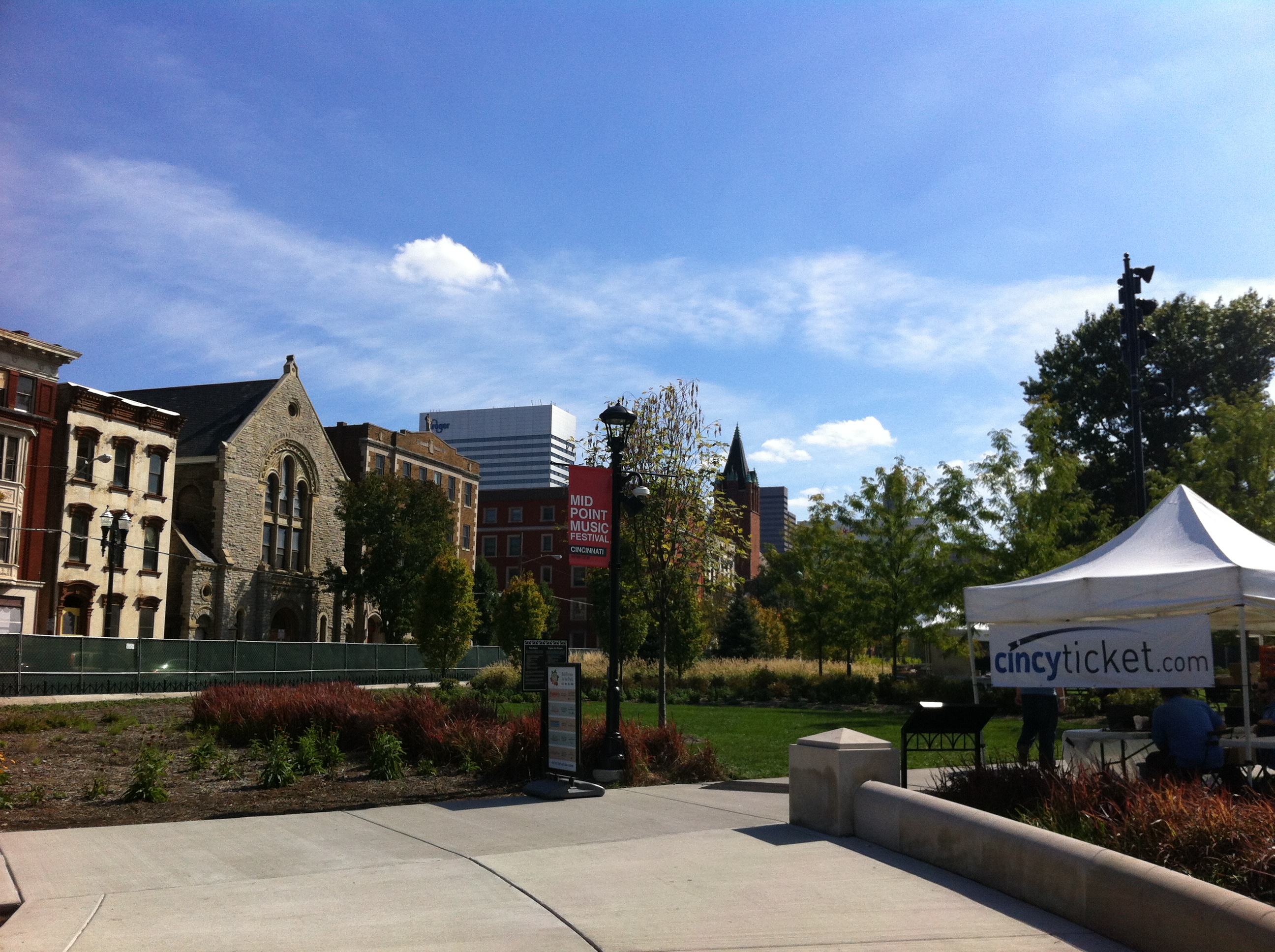
Lovely Over-the-Rhine neighborhood in Cincinnati, the largest collection of Italianate buildings in the US.

Lovely Over-the-Rhine neighborhood in Cincinnati, the largest collection of Italianate buildings in the US.

Belgian brunch restaurant in O-t-R neighborhood, close to the Findlay Market.

brunch restaurant in Over-the-Rhine neighborhood, close to Findlay Market.

O-t-R
Seating at Findlay Market

Seating at Findlay Market

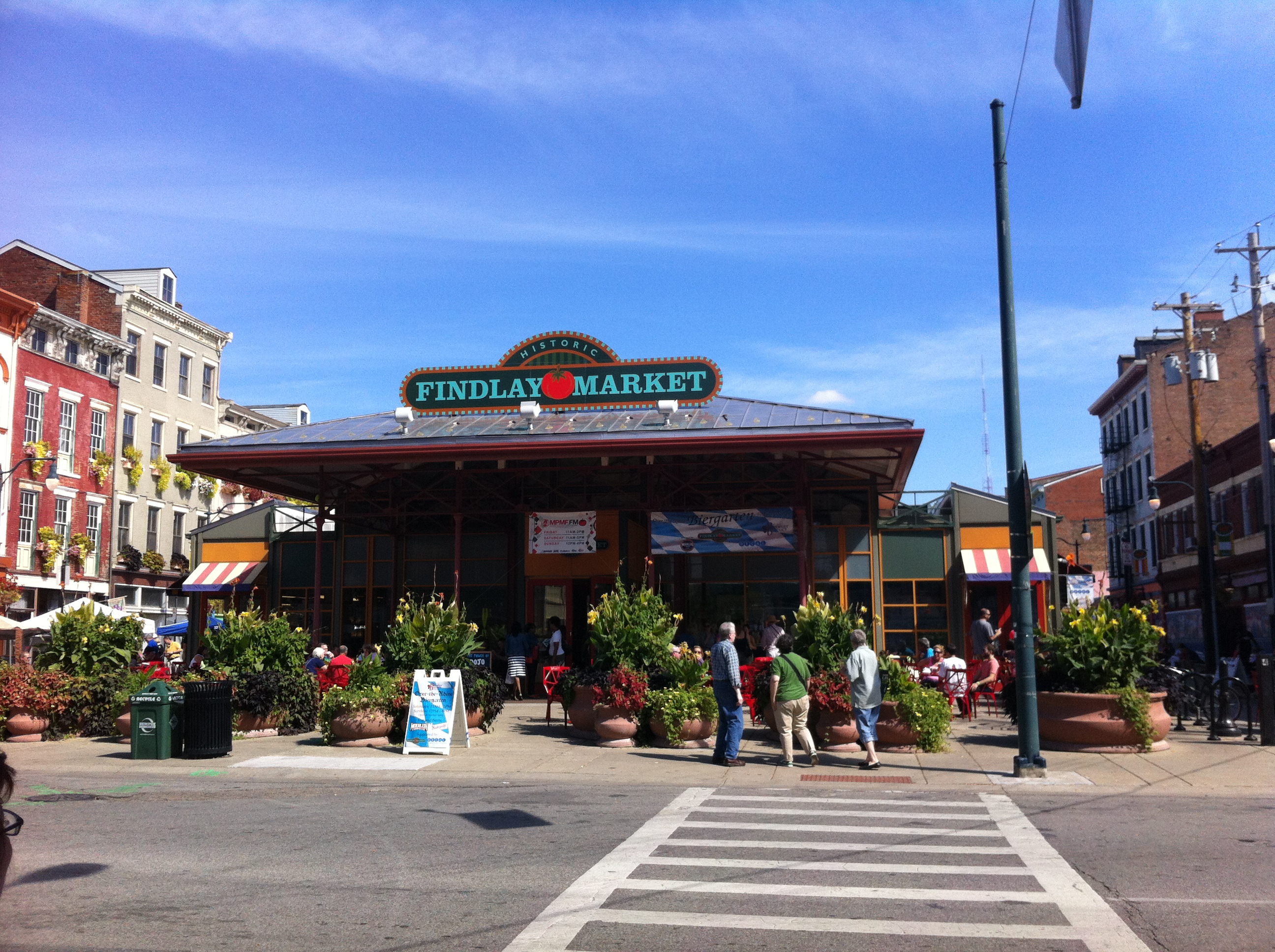
Welcome to Findlay, Ohio's oldest public market.

Welcome to Findlay, Ohio’s oldest public market.

Around the corner from the Findlay Market, Cincinnati's Public Market

Around the corner from the market


Mural at the Findlay Market

Mural at the Market

News & Events | VEGGI Farmer’s Cooperative

This is a new Vietnamese-led growers initiative in New Orleans. I hope we begin to see more production cooperatives among farmers, especially urban and peri-urban farmers.

News & Events | VEGGI Farmer's Cooperative.

Building a Racially Just Food Movement | IATP Food and Community Fellows

“Undoing racism in the food system requires more than good intentions. We must act, employing thoughtful strategies to attack polices and practices that uphold systemic racism. Additionally, and equally importantly, ridding ourselves of the internalized thinking associated with racism is a lifelong and intergenerational work. It requires a systematic process for learning about the social construct we call race, its history and various manifestations. Organizations in the food movement should hold mandatory, frequent, on-going anti-racism trainings. There are many good anti-racist trainers throughout the United States including DR Works, The People’s Institute for Survival and Beyond, and Crossroads.

Finally, food movement organizations must do things differently. All organizations planning food security, food justice and food sovereignty conferences should include a track that addresses racism in the food system. Major national conferences should have several workshop offerings in the track.”

Building a Racially Just Food Movement | IATP Food and Community Fellows.

North American Urban Agricultural Survey

We are very excited to invite you to participate in a Portland State University survey of organizations and businesses across the US and Canada involved in urban agriculture projects.

Urban agriculture is growing rapidly throughout North America, and we are interested to learn about the experiences of the organizations involved, as well as any obstacles they face. Municipalities have begun to craft new policies and regulations related to urban agriculture, and we hope that the information obtained from this study will help guide city planners and policymakers as they develop policies and programs that effectively meet the needs of practitioners.

This survey is intended for organizations and businesses, big or small, formal or informal, that are engaged in urban agriculture on any scale. The survey should take about 20 minutes to complete. Feel free to email us (urbanagsurvey@pdx.edu) or call Nathan McClintock at 503-725-4064 if you have any questions about the study.

We appreciate your time and interest. We’d also be grateful if you could forward this widely to your urban agriculture networks throughout the US and Canada – we know that there are many exciting urban agriculture initiatives that do not have a web presence, and we would like to hear from all the organizations that are doing this great work. Apologies in advance for cross-postings.

Follow this link to the Survey:
http://survey.qualtrics.com/WRQualtricsSurveyEngine/?SID=SV_9TOXJEPPQKIUSqx&_=1

If children lose contact with nature they won’t fight for it

Good language in here for project proposals that involve taking student groups to farms and gardens. That the number of children involved in creative outdoor activities fell so quickly is shocking and can be addressed by activities that markets organize. Also, how access to nature can be a creative stimulant for later learning could also be the basis of your project for your targeted market day activities.

The remarkable collapse of children’s engagement with nature – which is even faster than the collapse of the natural world – is recorded in Richard Louv’s book Last Child in the Woods, and in a report published recently by the National Trust. Since the 1970s the area in which children may roam without supervision has decreased by almost 90%. In one generation the proportion of children regularly playing in wild places in the UK has fallen from more than half to fewer than one in 10. In the US, in just six years (1997-2003) children with particular outdoor hobbies fell by half. Eleven- to 15-year-olds in Britain now spend, on average, half their waking day in front of a screen.

In her famous essay the Ecology of Imagination in Childhood, Edith Cobb proposed that contact with nature stimulates creativity. Reviewing the biographies of 300 “geniuses”, she exposed a common theme: intense experiences of the natural world in the middle age of childhood (between five and 12). Animals and plants, she contended, are among “the figures of speech in the rhetoric of play … which the genius in particular of later life seems to recall”.

Studies in several nations show that children’s games are more creative in green places than in concrete playgrounds. Natural spaces encourage fantasy and roleplay, reasoning and observation. The social standing of children there depends less on physical dominance, more on inventiveness and language skills. Perhaps forcing children to study so much, rather than running wild in the woods and fields, is counter-productive.

UTNE Altwire – If children lose contact with nature they won't fight for it.

Growing gardens

I am fascinated by the evolving role of urban ag in the community food system movement. It certainly has changed since its splashy beginnings in the 1980s and 1990s but what this story in the Sunday’s NYT points out is what I have also noticed: the belief that a large number of urban citizens want to grow their own food – and grow it every year – is not proven. I think the successful versions found anywhere are to scale and appropriate for the climate and demographic nearby. This might mean gardeners have a fallow season or maybe even a full year to recover and plan for the next planting or use their land for fruit trees. Here in New Orleans, we have a year-round growing culture with the most brutal weather in the summer: therefore, the idea of cover crops and soil solarization should be encouraged during June-September which gives people time to think and prepare for the fall planting.

The article quotes John Ameroso, who they interestingly call the “Johnny Appleseed of NY gardens” as someone who has that evolving view, he:

espouses more of what he calls an “urban agriculture” model: a food garden with a dedicated farmers’ market or a C.S.A. These amenities make stakeholders out of neighbors who may not like dirt under their nails and rural farmers who drive in every weekend.

“The urban-agriculture ones are flourishing,” he said. “There’s a lot of excitement. They’re active eight days a week.” But “community gardens, as such, where people come in to take care of their own boxes — those are not flourishing.”

It’s almost a cliché to point out that this new green model seems to have attracted tillers with a different skin tone. “Back then,” Mr. Ameroso said of his earlier career, “when we worked in Bronx or Bed-Stuy, it was mostly communities of color. Now when we talk about the urban agriculture stuff, it’s white people in their 30s.”

Production is the purpose of commercial agriculture and even for a community garden, it should be the goal. That production could be for a single home, or for donation or for income, but in every case a plan to produce food or plants should be required each year for every community garden space.

NYT growing growers


Here is a link to the excellent 5 Boroughs work to outline inclusive evaluation and strategic planning for projects.

Reclaiming Our Food book review

Reclaiming Our Food: How the Grassroots Food Movement Is Changing the Way We EatReclaiming Our Food: How the Grassroots Food Movement Is Changing the Way We Eat by Tanya Cobb Denckla
My rating: 5 of 5 stars

Useful book that shows a multitude of approaches to building food system pieces, especially garden projects. The stories are well written and best of all, they are followed by a description of the organizing techniques each used for their project.
Easy to pick up and read a profile and then put aside and get something done yourself. Highly recommended for food organizers and city activists.

View all my reviews