A Load of Guac

As a citizen of the host city for Super Bowl 2013, I find the scale of this thing fascinating. In some ways, this event surpasses the festivities of Thanksgiving among some demographics. And of course, the two days are both about food and football and screaming (okay maybe that’s only some families)…

This article talks about the history of guacamole at Super Bowl festivities and how it is tied to the explosion of avocados grown and marketed in California starting in the 1980s according to the author:

In the 1980s, California saw a boom in avocado farm start-ups — a small-scale “green gold” rush, news outlets joked; easy avocado trees were the perfect crop for the gentleman farmer. More avocado farms meant a greater — and cheaper — avocado supply for the end user. This bounty, combined with the establishment of commissions to promote avocados and protect grower interests, triggered the classic feedback loop that mainstreams “exotic” food into American culture: The more visible and widely distributed a food becomes, the less strange it seems; the less strange it seems, the more widespread it becomes. You can see this cultural shift in a couple of banner years between the middle and end of the last century: A mid-summer bumper crop in 1960, two years before Jackie Kennedy served an avocado and crabmeat salad at a formal state dinner, cause the price per avocado to drop to 15 to 30 cents — roughly equivalent to $1.17 to $2.33 today, which we’d consider a bit high for a record low. In 1987, when Californians had been slicing avocado onto every burger and sandwich for about a decade, a similar surplus crop allowed New Yorkers to buy at 30 to 50 cents apiece (60 cents to $1 today).

So fascinating to think that for the next Super Bowl in New Orleans the state ag folks could start planning for a bumper crop of pecans and work to add roasted pecans, pecan pie to become the next tradition for Super Bowl Sunday.
The Smart Set: A Load of Guac – January 30, 2013.

34 States Shut out of Organic Farm Program by Congress and White House – NSAC

This is the kind of action alert that farmers and ranchers miss when there is no substantial statewide sustainable agricultural organization on which to rely. Again, to take it back to the market organizations-how can we help build the advocacy organizations for our farmers so they have access to programs to grow a better earth?

34 States Shut out of Organic Farm Program by Congress and White House – NSAC.

If you build it….

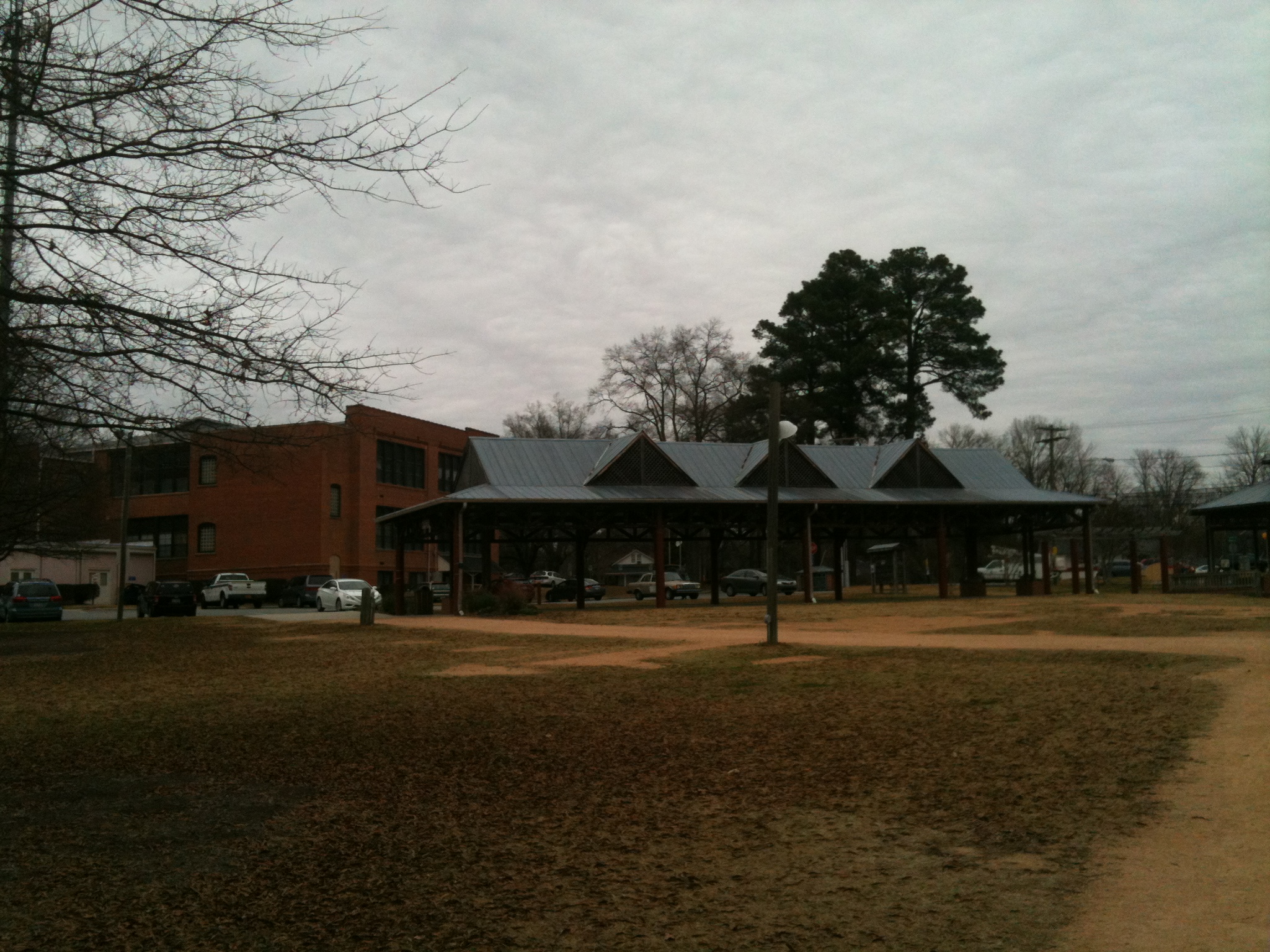
Carrboro North Carolina’s iconic farmers market has led the region in another way: In 1996, they secured a permanent location and an overhang over part of their market with electricity and drains available.Image

The Carrboro Farmers Markets is an incorporated vendor-run entity, operating twice a week in the summer and on Saturdays year-round. The Board is elected by their vendor membership and the board oversees the market staff and the market’s finances.

Recently, I asked Sarah Blacklin, Carrboro Market Manager to share some facts about their market history and structure:

1. When was the structure built? The structure secured funding from the General Assembly in 1993.  The structure was completed and built by 1996

2. Who paid for it and who maintains it? Paid for by G.A. (the Market worked with the Senator to secure that funding).  The Town of Carrboro Public Works maintains it since it’s used for other events all other times throughout the week.  Technically the Market just “rents” the space on Saturdays and Wednesdays.

3. How many vendors use the structure and how many are outside of it? (on average of course) On average, there are 32 spaces under shelter.  For Wednesdays, that’s 32 vendors and for Saturdays (since some have double spaces), that’s about 20 vendors. Out of the shelter, we’re looking at about 46.

4.  Can the vendors use the outlets for electricity? Are there drains? Some vendors have access to electricity. There are electric outlets at every other space, so some folks run an extension cord or don’t use it at all if it’s not close to them.  Yes, there are drains outside but there are some overall drainage issues in the outfield which is why we’re addressing these issues with a fundraiser project.

5.  Is it ever used for other events? Yes, it’s commonly used for other events.  The Town’s 4th of July and Halloween celebration, “Carrboro Day”, music festival, and anything in between, music festival, and anything in between.

Image

Carrboro's shed for storage and electricity.

Carrboro’s shed for storage and electricity.

Games people play

Although it might be better for the Chinese government to spend more time thinking about the environmental degradation of their country than sport, the idea of a “farmers games” does have its provocative side.
It sort of harkens back to county fairs with log rolling and bale tossing games. Games that show a different set of skill and worthiness.
It would just be nice if 4F activities were valued again…

http://usat.ly/TaHO6h

Congress will likely go on recess without any resolution on farm bill

Grist article

INTERVIEW: Zoning for Food Access in New York Neighborhoods – Next American City

A must read for any food organizer. Understanding how cities are using zoning and tax incentives to encourage businesses to sell food is important. And it’s important to remember that city governments work with a “broad brush” when it comes to encouraging growth so that the most innovative entrepreneurial initiatives will most likely come from other stakeholders in food systems.
In other words, its up to us to define food system sustainability and success and for cities to remove barriers for us to do that.

INTERVIEW: Zoning for Food Access in New York Neighborhoods – Next American City.

Federal Reserve Bank of Atlanta podcast about microenterprises

Connie Evans of the Association of Enterprise Opportunity is interviewed about her non-profit’s work to encourage microenterprises. Facinating data about the definition of microenterprises, how they get started and how lenders support these businesses.


Small Things Really Matter: The Important Role of Microenterprise in Job Creation

No “Fundamental Right to Produce and Consume Foods”

In case you forget, food system organizers live and work in a parallel universe of food sovereignty . That other world is held in trust for the corporations who get to feed off our innovations and human-scaled ideas.

New Amer

Next American City » Columns » Tea Partiers See a Global Conspiracy in Local Planning Efforts

Next American City » Columns » Tea Partiers See a Global Conspiracy in Local Planning Efforts.