Protestors rally in support of Golden Gate farmers market

FYI- this is Florida and not northern California..

A few issues that I would like more information about from this story: one, if the market and the county had communicated in the past and two, how many local people think that flea market goods have too much room at this market and if they agree that a farmers market should not contain those goods. I’m not advocating for flea market goods at markets (my own markets were very strict about any non-food goods) but whether it is true that flea market goods are taking up most of the space in this market and whether those flea market goods have a place in farmers markets should be up to the local community, which certainly includes the municipality in question, but doesn’t mean the commissioners should decide these issues alone. It is important to note that in many cases across the Americas, staple markets have a place in many communities and can be a very useful type of market for small rural communities or for immigrant communities.

Lastly, the rule to only allow open-air markets to operate only 28 days per year seems awfully restrictive. I wonder when that was passed in Florida and how many counties have that rule? And is it to restrict flea markets but ends up restricting farmers markets too? I do know from my pals in farmers markets in Florida that the use of the term farmers market is all over the place across the state; resellers use the term in normal practice and of course, in a state like Florida that has massive agricultural exports, small farms and direct marketing are not likely to be valued as highly as in other states. Of course, California does have a thriving farmers market system, but also has a very different political climate and history.

For all of these issues, this is why I advocate for formal rules that allow for constant transparency and clarity in market governance. Rules that explain why, when, how and for whom a market operates can help reduce these issues before they get to crisis stage. In addition, this is also why I hope Farmers Market Coalition and their partners are successful in building a simple and usable data collection system; If all markets could gather a few comparable metrics each year, these issues might be more easily diverted or at least, add facts to lessen a charged situation.

The controversy started when Collier County commissioner Tom Henning used the word “gypsy” to describe vendors at the Golden Gate Community Center market. Commissioner Henning wanted to protect a business that complained the farmers market shoppers were taking up his parking spots….
While county commission retracted their initial vote to shut the market down, their problems aren’t over.

County laws say open-air markets can only operate 28 days a year. But vendors at the farmers market want to stay open all year. A petition with 1,300 signatures will be presented at a county commission meeting on Tuesday.
this from another
Taylor said the county’s issue is that it’s not a farmer’s market, but more of a flea market and it appears to be disrupting local businesses.

Protestors rally in support of Golden Gate farmers market – NBC-2.com WBBH News for Fort Myers, Cape Coral & Naples, Florida.

Are Farmers Market Sales Peaking? (Cuz NPR likes to say so)

Let me say first that I have only begun to read the report cited and that the authors have done some excellent research. The issue is really that outlets like NPR offer snappy headlines and a sound bite or two rather than the entire story. However, it is important that food system organizers communicate more data than that to their market community.

I’ll begin with one of the conclusions from the report:
• It is difficult to draw conclusions about the local economic impact of local foods systems because the existing literature has narrow geographic and market scope, making comparing studies complicated. Data necessary to conduct economic impact analyses are costly to obtain, and researchers have yet to agree on a standard way of accounting for the opportunity costs involved when local foods are produced and purchased or on a standard set of economic modeling assumptions. Many questions surrounding the economic impact of local foods remain unanswered and could be addressed by future research (e.g., Are local food systems good for the rural economy? Might the economic benefits of expanding local food systems be unevenly distributed?)
(The authors do mention that case studies are helpful in local food system research because of the chance for context, but warn that makes generalities difficult.)

here are some other facts from the report:

Farms selling local food through DTC marketing channels were more likely to remain in business over 2007-12 than all farms not using DTC marketing channels, according to census of agriculture data.


•The significance of local food sales totaling an estimated $6.1 billion in 2012.

For organizers (markets, CSAs, farm stands) the takeaway is clear:

1. We need to collect data and work with those researchers that also want to collect it to paint a more nuanced story of the positive impacts of these channels than were able to be included in the report. Those are not limited to: new product testing, constant cycles of introduction for eaters and producers, the opportunity for attempting small (often risky) pilots for increasing access, educational resources for youth, urban/rural connections and more.

2. That data has to be on the multiple impacts of markets, not just on direct sales. Do farmers meet other buyers (intermediate) at the market? Are other outlets dependent on the market for pick up of their goods? Is it a important way for family members to start working for the farm? What about access to shoppers using benefit program dollars-is this an area of new customer sales that DTC farmers have captured almost entirely (and influenced recent national policy?)

3. A dip in the number of new markets opening or DTC sales flattening for a time (if that is indeed the case) may mean something quite different than the implicit assertion that consumers and farmers are choosing other outlets. Factors may include weather issues, or regulatory pressures (see the fee hike suggested by King County in this story as an example) or farmers unable or unwilling to separate sales outlets when reporting data.

4. An example of how market organizers could help researchers is by gathering anecdotal info for future studies to see if DTC farmers choose autonomy and non-economic benefits over higher incomes as was suggested in the report:

The lower total household income suggests that farmers with direct sales may have had less favorable off-farm income opportunities. If true, this could provide them with an incentive to remain in business even if they have less ability or opportunity to expand production.
Higher survival rates and slower growth for those with direct sales might also be explained by different attitudes toward farm versus nonfarm work. Researchers have found evidence that nonpecuniary benefits from self-employment explain why small business owners remain in business despite earning less income (Hamilton, 2000). There is also evidence that the non-pecuniary benefits to farming (e.g., greater autonomy, independence, and lifestyle factors) are substantial (Key and Roberts, 2009). It is possible that farmers who sell directly to consumers derive greater nonpecuniary benefits from their work—perhaps they enjoy interacting with their customers. This would provide a greater incentive for them to remain in business even with lower business expansion possibilities.

    Positive impacts

•The economic benefits of farmers’ markets may also extend beyond multiplier effects, which measure short-term impacts. Lev et al. (2003), for example, found that businesses near farmers’ markets reported higher sales on market days. Not only were these additional sales found to directly support the businesses themselves, but they also generated extra tax revenue for the communities in which the markets were located. Brown (2002) found some evidence that farmers’ markets increase property values in the market district.

•Additionally, farmers’ markets can function as business incubators by providing the infrastructure necessary to build skills and gain business experience (Feenstra et al., 2003; Gillespie et al., 2007). Regular interactions can “generate and circulate knowledge that vendors might use to develop new products and creative ways of marketing them” (Hinrichs et al., 2004: 32-33). Feenstra et al. (2003), for example, explored New York, Iowa, and California farmers’ market contributions to the development of vendors’ capacity as entrepreneurs and found that 66 percent of vendors expanded an existing product line, 50 percent added a new product category, and 40 percent made new business contacts. Sales income may be less important than the skills and business experience developed through participation in farmers’ markets (Brown et al., 2007).

Direct marketing was also associated with higher survival rates among beginning farmers (columns 3 and 4, table 5). On average, beginning farmers who marketed directly to consumers had a 54.3-percent survival rate, compared to 47.4 percent for those who marketed their goods through traditional channels.
What is it about DTC sales that seem to enhance farmers’ chances of maintaining positive sales? One advantage might stem from the fact that, for a given level of sales, farmers with direct marketing purchased less machinery and land than did those with traditional marketing. According to the 2012 Census of Agriculture data, farmers who marketed directly owned $20.82 worth of machinery per dollar of sales, compared to $31.10 for those who marketed through conventional channels. Farmers selling directly to consumers also owned less land: $240 worth of land per dollar of sales, compared to $309 per dollar of sales for other farmers. Because they did not need to purchase as much machinery and land to achieve a certain level of sales, farmers with direct sales did not need to leverage as much of their wealth to obtain financing. This is confirmed by the census data, which show that farmers with direct sales had annual interest payments of only $7.85 per $1,000 of owned assets, compared to $10.55 for those with no direct sales. A lower debt-to-asset ratio should indicate a better ability to repay loans and has been shown to reduce the risk of small business failure (Tveteras and Eide, 2000; Strotmann, 2007; Fotopoulos and Louri, 2000).


Are Farmers Market Sales Peaking? That Might Be Good For Farmers : The Salt : NPR.

the actual USDA report

Millennials’ hunger for fresh foods eats into food giants’ profits

Wojchik said he gravitates to the coolers and produce displays on the supermarket’s periphery, not the center aisles. “My wife has actually said to me, ‘Don’t shop in the center of the store, most of the healthy stuff is on the perimeter.’ ”

The fresh produce boom has even hurt sales of frozen vegetables, including General Mills’ Green Giant offerings, analysts say.

The frozen category is still a big one, and it’s not declining significantly, said General Mills’ Harmening. Still, he said, “people are going more to fresh.”

A report by analyst Howard showed that fresh produce was one of only three supermarket food categories — out of 13 surveyed — that registered an increase in consumer consumption over the past five years.

“It seems that we have recently hit some sort of tipping point, whereby demand for heavily processed foods is tapering off, while demand for healthier and simpler products is picking up,” according to Howard
Millennials' hunger for fresh foods eats into food giants' profits | Star Tribune.

Farmers Market Metrics Vendor Metrics Released

Farmers Market Impact Metrics Released for First Season of Testing
Research project addresses the need for consistent measurement of farmers market impacts nationwide.

Researchers at the University of Wisconsin-Madison and the national nonprofit, the Farmers Market Coalition (FMC) released metrics this week that will allow markets and their partners to gather data on vendor and customer activities. The data will assist market organizers in constructing targeted marketing and advocacy plans and will offer farmers and other producers specific information on building their business goals.
The project is funded by the USDA’s Agriculture, Food, and Research Initiative (AFRI) and will allow nine markets across the U.S. to test data collection and reporting techniques in 2015 and 2016. The project team gathered known metrics used over the last decade in farmers markets and food system research and prioritized those that could be easily gathered by the market community itself. The metrics were grouped into one or more of four types of benefit they provide:
economic (i.e. sales or job creation), ecological (land stewardship), social (new relationships) and human (skills gained or knowledge transferred).
The research project’s principal investigator Alfonso Morales, Assistant Professor at University of Wisconsin-Madison said, “We believe that it is vital that grassroots markets have the tools and embedded skills to gather data on behavior for their own needs, not only on shopper activity but also on the small businesses that depend on these markets for their family’s income.”
From the list of 90 metrics identified, the team focused its initial efforts into refining 38 of those metrics for immediate use by the nine pilot markets chosen for the project. Participating markets selected those metrics that are most useful to their current work and will begin to gather data in late spring 2015. The data will be analyzed by the project team and final reports shared with the markets later in the year. The team will conduct another round of data collection at the same pilot
markets in 2016.
The first round of metrics sent to the markets focus on collecting vendor data through questions embedded into vendor applications or through direct surveys or observation at market of vendors. Later rounds of metrics will allow visitor data to be collected using the same methods, while future metrics are likely to focus on the “placemaking” skills of the market and the internal workings of the organization running the market.
Vendor metrics for this project include acres in production for markets, distance traveled from production to market, sales data, and the number of women-owned businesses. Jen Cheek, Executive Director of Farmers Market Coalition affirmed, “Many markets are not sure what to collect and when; others already collect some of this data but are unsure of how to use it once collected. These measurement projects that FMC is taking on with the University of Wisconsin will offer shared language and common-sense guidelines for reporting, while allowing markets and
their vendors the freedom to define what success means to their market and community.”
Find the vendor metrics here and a template letter for vendors here and a glossary of terms and vendor tree here.
#
The Farmers Market Coalition (FMC) is a 501(c)(3) nonprofit dedicated to strengthening farmers markets for the benefit of farmers, consumers, and communities. For more information about the Farmers Market Coalition, including Farmers Market Metrics please visit their website at http://www.farmersmarketcoalition.org.

Big data and little farmers markets, Part 1

Recently, I have been reading a few books and articles on the new world looming over the next bend. This new world is called many things and includes shiny named ideas and tools to make it so. Here are some of those titles in case anyone needs some bedside reading:

•Collaborative Commons (Rifkin, (The Zero Marginal Costs Society)
•Disruption (Next City 2012, Fortune 2014 “Next up for disruption: The grocery business”, Urbanophile 2014, Disrupting the Disruptors )
•Flattened economy (Friedman The World Is Flat: A Brief History of the Twenty-First Century 2005)
•Spiky Economy (Florida, “The World Is Spiky” 2005)
•Alternative Economics, Community-Supported Industry (Anderberg 2012, Schumacher Center for New Economics)
•Social impact bonds (Jacobin Magazine Issue 15–16 “Friendly Fire”)
•Placemaking/Livable Places (PPS, Tactical Urbanism, CityLab)
•Human-Centered Design (LUMA, Ideo)

and then bunches on how to measure this stuff:
•Measuring Urban Design: Metrics for Livable Places (Ewing, Clemente 2013)
•3 Keys To Better Data-Driven Decisions (Technology Evaluation Centers)
•Five Borough Farm II: Growing the Benefits of Urban Agriculture in NYC (Design Trust for Public Space 2014)
•Data Infoactive (Chiasson, Gregory 2013)
•Disruption Index (Next City 2012)
•Livability Index (livability.com 2014)

and so on. (and please feel free to send me any that you find useful).

Much of this discussion of the new economy and its infrastructure centers around the use of technology to allow data (usually known as Big Data) produced by every system, sensor, and mobile device to be shared across sectors and users – aka the Internet of Things (IoT). Big Data and IoT are representative of what is both good and bad about the new world; they pressure public entities to adopt private sector characteristics and measures, and conversely, ask private entities to add public sector transparency as a mode of operating in this new world. Additionally, both sectors must respond immediately to any trends or innovations. This can be good and bad.
 (The intersection of public and private is what the non-profit sector is supposed to exist and, increasingly how it participates in Big Data, is a measure of its ability to do just that. I’ll come back to that very idea later in this series.)

Examples of Big Data:
Think of how that grocery store loyalty card transmits information about what, when and where customers purchase goods. Or citizen used tools to measure and report pollution, or how that electronic parking card tells the city the peak parking hours, letting planners know the need for more (or less) parking facilities. Or, the sensors that are timed to go off for irrigation to start for food production.
For food system advocates, the connection to data sharing is mostly through the public health sector at this point, but the planning and design sector of governments will be wanting data from us too and then, you can expect the line to form from other sectors after that.

Social media is not the center of Big Data, but it’s already helping to study the behavior of its millions of users. In the interdisciplinary Cornell University course entitled “Networks, Crowds and Markets” taught by professors David Easley, Jon Kleinberg, and Éva Tardos, they use data from online networks to talk about “strong and weak ties” and “bridges” and to map the patterns of why, how and when connections are made and what impact those connections have in the fields of economics, social sciences, and public health, among others. Since social media is mostly networking, informal updates, and chatter, (constant and sometimes as cheerfully mindless as an acquaintance’s wave from across the street), it may seem without value, but it is certainly changing the way that we communicate.
Social media can also power revolutions, allow for professional development and offer small businesses appealingly designed, low-cost online faces for their already-developed customer base. This blog you are reading is part of social media and as such, is written to be ephemeral and chatty opinion with links to other information sources rather than hosting peer-reviewed reports.

Recently, I had the good fortune (thanks to the Farmers Market Coalition) to be invited to a Knight Foundation technology gathering of social entrepreneurs and so heard many ideas for leashing the power of Twitter and other social media platforms to better aggregate data or reorganize news feeds. No doubt as new platforms are built on top of the first tier, there will be more usability and versatility, but for now, many people view it as a multi-platform address book to keep track of friends, colleagues, and friends of friends.

The ease of using social media is what was beguiling to many at first but the gossamer veil of privacy means that if not careful, one’s identity may be stolen or become the target of a bully. At that point, that once-enticing open entry can drive plenty away and that very fact is what is being argued about sites like Airbnb and Uber: 1) that the lack of regulation at city halls or public agencies allows for exemption of rules that their counterparts with physical outlets are not able to sidestep and 2) since there is often no face to face meeting between buyer and user, the perceived opportunity for criminal activity increases. My feeling is that the regulation needed for the IoT and online sites must be a new system rather than asking for adherence to the old since the old grey mare of city hall or the federal government is not suited for managing these (which sounds like what the community food system has been saying for the last few decades!)
The European Commission has already published a report outlined some best practices for architectural, ethics and governance of the IoT, highlighting social justice, privacy and opting out concerns (“consent activities” in designer language). Their early conclusions encourage better credential exchange systems and a deeper awareness of “reliance versus trust” parameters. In short, make sure most online relationships include a requirement for sharing some sort of identification and create some active boundaries between systems. Maybe the U.S. community food system can jump on these ideas, thereby leaping ahead in confidence levels to be able to share useful data more rapidly than other sectors.

Yet, even with the perception of these systems as being hackable, an increasing number of people in the Western world still participate regularly even while others hoot it down while they cling to their wall phone and postal stamps as their talismans against the new world of constant updates. Those folks are not likely to let us forget that social media is just a part of the communication sector and only the ephemeral part of it. We still read newspapers and books, meet people face to face and still have postal carriers and grocery store corkboards with lists of apartments to rent.
Therefore, how we use social media within community food systems has to be balanced far better than we early adopters have done so far. Plenty of markets and other food system initiatives use social media brilliantly within its limited use, but others often ignore traditional media entirely by not factoring in that those reached with social media are only a tiny portion of the audience that might be found. Or conversely for the Luddites among us, the need to adapt their thinking to understand that social media has worth for a low-capacity, face-to-face entity like a Saturday morning market.
What I have noticed is that social media helps drive farmers market or CSA sales for a single or a few products on a single day extremely well. It also does a passable to good job reminding its users that they are members of a larger community of doers and thinkers, which can extend the social and human capital of a market. It can connect producers to shoppers on non-market days (although I think less well than promised) and can do something akin to the Dot Survey method pioneered at market by Stephenson, Brewer and Lev: allow for an easy mood of the day give and take between market organizers and users. It also is that friendly wave from across the street that in our sped up world can stand in for reminder of community on a bad day and add a layer of connection. Let’s just not build our world entirely on chance meetings or depend on a small number of tools.

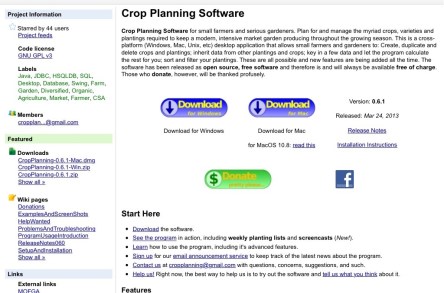
update This morning, I am sitting in a farmer workshop at Southern SSAWG conference listening to a 5th generation farmer talk about the open source free crop planning software system, sensors, and apps that he uses to run his direct marketing farm business; clearly, for some, the IoT is already here.

Coming Soon
Part 2 The minefield of analyzing Big Data
Part 3 Connecting farmers markets and food systems to Big Data
Part 4 Managing face to face and online communities in farmers markets
20150116-091953.jpg
Coming Soon
Part 2 The minefield of analyzing Big Data
Part 3 Connecting farmers markets and food systems to Big Data
Part 4 Managing face to face and online communities in farmers markets

The 2014 Local Food Awareness Report for Gulfport MS

In cooperation with their educational partner Real Food Gulf Coast (RFGC), the year-round open-air markets in Long Beach and in Ocean Springs are actively increasing local food accessibility and affordability in South Mississippi. Inspired by their success, the City of Gulfport opened a market in 2013 to accelerate access to regionally grown, healthful foods for their citizens, including those living in the areas defined as “food deserts.” In September 2014, RFGC released a report on the challenges of local food awareness in the Gulfport area in order to assist direct marketing farmers and area farmers markets in addressing those barriers. The report is the result of surveys conducted with existing market shoppers and farmers at the Long Beach and Ocean Springs Farmers Markets and surveys with residents and farmers not currently using farmers markets.

The Gulfport, Long Beach and Ocean Springs markets are all managed with volunteer labor, supported by South Mississippi Farmers Market Association. 

Click here to read the report and to view the survey forms.

The Crescent City Farmers Market Regains Its Pre-Katrina Footprint

As of this week, markets in my city are once again open four days per week with local farmers and fishers selling directly to family-table shoppers and to restaurant buyers. That is important to note as it was the weekend before the federal levee breaks of August 2005 that it was last true.
On that long-ago weekend, CCFM closed its Saturday market early and told its community that most of the next week of markets would also be cancelled, meaning the Tuesday, Wednesday and Thursday markets. Our lead market staff was away so I was directly supervising the market that Saturday. I remember well sadly hugging my vendors as they packed up and knowing some would not immediately return, depending on where the storm would hit. Little did we know that it would be the market locations and the market shoppers that would be its victims and we would not reopen a market at all until November 22, 2005* which at the time seemed like forever but now seems unbelievably speedy.
Hard to believe that it has been nine years since the entire slate of markets were open. Much has happened within the market organization and to the region in those nine years, an almost dizzying amount of changes really. What is gratifying as a market shopper, as a French Quarter resident and as a market advocate is that the new leadership of the organization has decreed that we must return to that weekly market schedule.
Huzzah and pass the satsumas.

The Wednesday market opened originally at the French Market on Wednesday March 19, 2003 which coincided with St. Joseph’s Day and therefore with a beautiful display and event coordinated (as usual) by Poppy Tooker, then our regional Slow Food Leader and now a noted cookbook author and tv/radio personality. Like all of the markets we opened (and that includes a short-lived one at Loyola University in 2001 as well as 5-years of Festivus, our fair trade market and our many White Boot Brigades (thanks again Poppy), we had to create a new set of circumstances for the Wednesday market to exist and to thrive in. In fact, in the two years that market was open, until the aftermath of Katrina shut it down we rebuilt it almost entirely just as we had with in the early days of the Tuesday and Thursday markets.

Here's what I learned from this market's opening that may be replicable to other markets, especially those with a similar chronology:
1. Be sure that you can handle all of the markets with the staff size that you have and can handle. That seems obvious, but running four markets suddenly required new or greatly expanded systems and not just another market bag and tent! Three markets from two was not that different as there was still a day in between and some vendors could do three markets per week but four was a very different matter. And since the systems we had set up for three markets expected our very hardworking staff for a least a half day of market planning and a half day of post-production per market (that is, without the large events which we were known for back then) it meant that two managers or two on-site coordinators were now absolutely necessary to do it right and that meant a very different organization, especially one within a slow-moving university system as we were then.

2. Every market needs anchor vendors. Those anchor vendors have to view that market as key to their weekly business (not a secondary market in other words) and commit to making it work for a period of time. This was definitely a problem on and off in our region as businesses with the skills and products to really anchor a market are not that easy to come by and so end up anchoring way too many at once, and then dropping markets rather quickly. Learn who your anchor vendors are (hint-it’s not always the biggest or even only farm goods!) and build the market initially on their strengths and for their shoppers.

3. Know the similarities and difference of your market neighborhoods and demographics. The third and fourth markets opened in downtown neighborhoods of the city, which has a very different demographic than the neighborhoods in which the first two operate. They also were physically smaller in potential size (could fit about half of the vendors of the first two markets) and had little or no parking available, which was also not true of the first two markets. Shoppers downtown were less likely to shop our other markets (as we learned from surveys) and more likely to want value-added goods which meant a different market vibe and outreach plan.

4. Acknowledge the barriers that truly exist. The French Market was and is hallowed ground for any New Orleanian, but also ground spoiled by long time bureaucracy (which by the way, turned out to be more intractable that even we thought). That long memory among residents made our work difficult, especially without any other changes in the existing market behind us. People insisted on telling us everything that had been wrong with the French Market, and their resentment was felt by our farmers and fishers, who since they also felt the same were easily deflated and dejected at market. If we had recognized that barrier was insurmountable to many of our long time farmers market shoppers (which is why they were so loyal to us in the earliest days!) and to some of our vendors, we could have spent more time working to build new shoppers and vendors. The shoppers we began to attract the last 6 months included new residents without the attachment to the FM history, seniors who loved the hours and the downtown location and the ease of shuttle delivery and pickup, the waiters and bartenders and second-shift workers, the French Quarter denizens who love to see and be seen, the chefs who believed in the market no matter where it was and so on. The vendors who began to do well loved their new enthusiasm and were able to refine their product lists to suit those new shoppers. Those who did not or could not adapt packed up or in some cases, stayed to try to make it and fumed at us and sometimes at the shoppers, knowing there were not enough yet and often too new to markets to purchase enough to sustain their extensive business needs. If we had started with that strategy, we would have wasted less of our and less of our vendors valuable time that first years and a half.

5. Something I knew before opening that market but we needed to make more clear to everyone: it takes 2-3 years for a market to stabilize. Don’t sweat the ups and downs of the first few years, just learn quickly and build for the day that it does thrive. And don’t punish the first group of shoppers by changing everything within six months to attract “better”shoppers-ask questions, survey those that come and keep on adding appropriate amenities and products to attract more of that community, to have them spend more and to add other like-minded shoppers.

With all of that in mind, I believe the market organization as it exists today has the embedded institutional skills and the partners (like the new leadership at the French Market) to regain the food system primacy that dissipated in those dark months and years of rebuilding, dissipated partly because of circumstances such as the need to reorganize the organization (2008), the BP spill (2010), Hurricane Isaac (2012), the end of the “Katrina economy” (2013-2014) and maybe most of all, the development of the “new New Orleanians” (2010-). From my view, the organization’s interest in finding the right answers for local farmers and fishers for the next iteration of New Orleans has rightly began with the organization’s original farmers market blueprint. However, I hope that they will also push past that history to make an even bigger and better future for themselves and their market community and when it comes, they know I’ll be there with tokens in hand.

Link to the Crescent City Farmers Market’s excellent website

*here is a glimpse of that first day back, November 22, 2005:

Graphic and misleading title: “Local food might not be as ‘local’ as you think”

An example of how the media reports unfairly on farmers markets; the idea that each market community decides its own definition of local is clear in the graphic, but the headline is misleading. It would be better and more appropriate if the story was titled:
Each community decides local for itself
Graphic: Local food might not be as 'local' as you think.

Can the lexicon of local make a global impact? Book review by Stacy Miller

LOCALLexiconBk

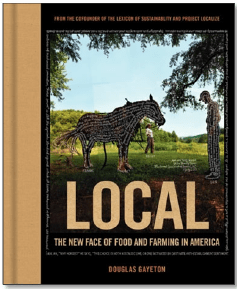
You may want to check out the Journal of Agriculture, Food Systems, and Community Development’s (JAFSCD) “Book Nook”, which contains in-depth reviews of current books on food systems. The link at the end of this post directs you to a review of a new book on the language of sustainability: Local: The New Face of Food and Farming in America, by Douglas Gayeton. The review is by Stacy Miller, who many readers will know as the Farmers Market Coalition’s founding Executive Director. Stacy is now working as an independent consultant and as a FMC Program Advisor and also spends some of her time valiantly untangling my words by serving as an editor or by offering some spot analysis for many of the reports that I am doing for markets and their advocates.

Finding the appropriate bright and brave words to describe the energetic nature of a farmers market as well as the larger food system work happening is something we both think about in this work that we do and she probably had to think about daily as the FMC director. I can remember a day in her kitchen when we wrote down and discussed lots of words to describe what became the skeleton of the Farmers Market Metrics project at FMC and how we had to leave it unfinished when I left town a day later, promising to return to it. We did, and still do good-naturedly debate (alongside our colleagues at FMC and University of Wisconsin) for and against the use of different words and definitions within that metrics work.
So, to expand her thinking to this lovely book on the entire realm of sustainability language in our farming and food world seems mighty appropriate. Here are a few of my favorite passages from her review, linked below:

“The idea that language is fundamental to social movements is nothing new. The power to bestow names on objects, people, places, and philosophies is undervalued, so we hardly notice when it gets abused. Noam Chomsky famously observed that
destructive paradigms thrive because they impose on people “the feeling that they really are incompetent to deal with complex and important issues: they’d better leave it to the captain” (Chomsky,1987, p. 42).”

“I give a lot of credit to a former film director who can find a compelling poster child for, and condense the complexities of, expansive terms like economies of community (see Figure 1), soil food web, GMO, or traceability.”

“The hypothesis behind the Lexicon of​ ​ Sustainability is compelling… We tune​ ​out vocabulary we don’t understand, avoid dialogue ​ ​or questions that make us feel ill-informed or​ ​hopeless, and thereby enable a cycle of peripheral ​ ​awareness that looks dangerously like apathy. And​ ​the corporate food monopolies take advantage of ​ ​this whenever they can — on packaging, in advertising,​ ​and in lobbying efforts designed to “protect ​ ​us” from too much information.”

I will pass this review to many of my colleagues and will also get this book based on her review and pass that around too. What better can be said?

An Introduction to MarketLink: Are you eligible to receive a free SNAP/EBT system for your market?

Farmers Market Coalition and Wholesome Wave are co-hosting a FREE webinar:

Wednesday August 13, 2014 3:00pm-4:30pm EST

The U.S. Department of Agriculture’s Food and Nutrition Service (FNS) launched MarketLink, a website that provides farmers markets and direct-marketing farmers with a one-stop-shop to become an authorized SNAP vendor and take advantage of USDA funding to obtain free or low-cost equipment and wireless services. Up to $4 million in grants for SNAP/EBT technology solutions will be available through this program for eligible markets through September 30, 2014. The quickly approaching deadline means that eligible farmers and market managers are making this important decision right now. Wholesome Wave and Farmers Market Coalition are co-hosting this free webinar to address your unanswered questions about MarketLink. Through this webinar, you will:
understand the USDA’s funding stream for enhanced SNAP benefits at markets
learn who is eligible to access USDA funding through MarketLink
learn about MarketLink, an iPhone-based EBT system that taps into $4 million in USDA funding to help new markets become SNAP/EBT accessible
hear an on-the-ground perspective on applying through MarketLink and implementing EBT
Panelists:

Rogelio Carrasco of the USDA’s Food And Nutrition Service will present an overview of the USDA’s funding for improved access to SNAP benefits at markets and the history of Marketlink
Amy Crone of NAFMNP and the Maryland Farmers Market Association will present the MarketLink program and provide an in-depth description of eligibility and application process
Sara Berney, Executive Director of Wholesome Wave Georgia, will discuss her experience applying for funds through MarketLink and recommendations for others

To register to for this webinar, please click here.

Please contact Liz at FMC at liz@farmersmarketcoalition.org, with any questions on the webinar.

Counterfeit Money at Our Markets

Here is a great post from Brian F. Moyer, Program Assistant Penn State Extension – Lehigh County:

There are many reasons we chose to sell our products at farmers markets. Some of these may include helping the public understand where there food comes from and who produces it. Another might be to capture more of the “food dollar” to keep our farms viable so the last thing we might be expecting is for someone at our markets to hand us a counterfeit bill.

Recently I received an email from a market manager who told me that their market was hit for about $600 in counterfeit $100 dollar bills. I proceeded to get the word out to as many contacts as I have so other markets in the region would be aware. What I got back surprised me. I heard from managers and vendors throughout the mid-Atlantic and the Northeast that this has happened to their markets. So, what are we to do?

Markets are very busy places and we do our best to take care of the customer as fast as we can so how are we supposed to do that AND check the money they hand us to make sure the currency is legitimate? Farmers markets are also supposed to build community so there is also a level of trust that is broken when something like this occurs. How can we as a community use that trust to strengthen our markets and prevent these types of incidents from occurring?

The market manager who contacted me said that the counterfeit bills that the vendors received were bleached five dollar bills that were reprinted to look like one hundred dollar bills so the water marks were intact and they could pass the pen test so it was very difficult for a vendor to detect even if they were being vigilant. The U.S. Secret Service is the agency responsible for investigating counterfeit currency. The following is from the U.S. Secret Services’ website http://www.secretservice.gov on some things you can look for when receiving paper currency.

How To Detect Counterfeit Money

The public has a role in maintaining the integrity of U.S. currency. You can help guard against the threat from counterfeiters by becoming more familiar with United States currency.

Look at the money you receive. Compare a suspect note with a genuine note of the same denomination and series, paying attention to the quality of printing and paper characteristics. Look for differences, not similarities.

Portrait

kym_49
kym_48

The genuine portrait appears lifelike and stands out distinctly from the background. The counterfeit portrait is usually lifeless and flat. Details merge into the background which is often too dark or mottled.

Federal Reserve and Treasury Seals

On a genuine bill, the saw-tooth points of the Federal Reserve and Treasury seals are clear, distinct, and sharp. The counterfeit seals may have uneven, blunt, or broken saw-tooth points.

kym_51
kym_50

Border

The fine lines in the border of a genuine bill are clear and unbroken. On the counterfeit, the lines in the outer margin and scrollwork may be blurred and indistinct.

kym_53
kym_52

Genuine serial numbers have a distinctive style and are evenly spaced. The serial numbers are printed in the same ink color as the Treasury Seal. On a counterfeit, the serial numbers may differ in color or shade of ink from the Treasury seal. The numbers may not be uniformly spaced or aligned.

kym_55
kym_54

Paper

Genuine currency paper has tiny red and blue fibers embedded throughout.
Often counterfeiters try to simulate these fibers by printing tiny red and blue
lines on their paper. Close inspection reveals, however, that on the counterfeit note the lines are printed on the surface, not embedded in the paper. It is illegal to reproduce the distinctive paper used in the manufacturing of United States currency.

kym_57

kym_56

Since markets usually have a focus on community, perhaps we can have a discussion as a community on how we can prevent incidents like this from occurring. Some markets have local banks as sponsors. What role can they play in helping to protect the market? What about the local law enforcement? Can we train our volunteers to help vendors with checking the money they are receiving? What message can we send that lets anyone who comes to the market know that there is zero tolerance for this type of activity?

This is perhaps a larger problem that could be affecting the surrounding small businesses and not just the market so it will take more than just the managers and vendors to prevent these types of incidents.
billimage2

billimage1

Welcome Midsummer’s Eve

What kind of public market author would I be if I didn’t mention midsummer? I wish more food organizations would use the old holidays to remind us all of the ebb and flow of life ruled by the sun and the plant…
In 2008, back when we were designing the new iteration of Market Umbrella, the E.D. and I attempted to add two holidays to the employees schedule that represented farming and justice: Harvest Day and May Day. Unfortunately, the staff did not agree since they had to give up two other holidays that their family and friends celebrated, Labor Day and MLK Day; silly us-we thought community organizers might want to work on MLK Day to honor him!
We should have celebrated another way, possibly with a special lunch or an educational outing. In any case, I hope everyone celebrates June 21 with their own outing to a farmers market and a special lunch….

From the Encyclopaedia Britannica:


Midsummer’s Eve, Swedish Midsommar, Finnish Juhannus, Danish Sankt Hans Aften, NorwegianSankhansaften,  holiday celebrating the longest day of the year in the Northern Hemisphere, thesummer solstice (June 21). Midsummer’s Eve is observed in several countries. It is a national holiday in Sweden and Finland, and the official holiday is typically observed on the third Friday in June to allow a three-day weekend. During this time many Scandinavians travel to rural parts of the country. Midsummer’s Eve activities in Sweden include gathering around a flower-festooned maypole(majstång) to sing and dance, an ancient custom probably related to fertility rites. Before the holiday Scandinavians thoroughly clean their houses and decorate them with flowers and other greenery. In Denmark holiday traditions include singing “Vi elsker vort land” (“We Love Our Land”) and building a bonfire where a symbolic straw witch is sacrificed in remembrance of church-sanctioned witch burnings in the 16th and 17th centuries. Traditional foods, such as pickled herring, smoked fish, new potatoes, and strawberries, are served, along with beer and schnapps.

The celebration predates Christianity and is likely related to ancient fertility practices and ceremonies performed to ensure a successful harvest. The holiday was later rededicated to honour St. John the Baptist in Christian times. Although the meaning of the holiday has changed, some pagan customs still persist, such as the bonfires, which originally were believed to ward off evil spirits, and the focus on nature, which harkens back to when plants and water were thought to have magical healing powers on Midsummer’s Eve.


from Orion magazine:


“no such event is complete without aquavit, herring, or Små grodorna, a dancing game in which people sing this about frogs while dancing around the Midsummer pole:

The little frogs, the little frogs are funny to observe.
No ears, no ears, no tails do they possess.

Kou ack ack ack, kou ack ack ack,
kou ack ack ack ack kaa.”

What Ruins A Performance Review?

As a human resources manager in a previous work life, I can tell you that this post linked below has some excellent points to consider. As more and more markets add staff (and I mean staff and not independent contractors!), those organizations must add the skills necessary to manage that staff; if the organization is run entirely by a volunteer board, then a handbook on staff management or completing a short course should be required for the Executive Committee or at least the president of each term. If there is a paid director, then certainly basic human resources training available online or possibly through local community colleges or non-profit training centers should be required.
Over and over, I hear from market managers that most of them don’t get an annual review at all or if they do, don’t feel the review is in-depth enough or fair or designed to allow for improvement; they often report that the review contains criticism of issues that were beyond their control or their work is measured in ways that is news to the staff person. All of those are no-nos.
It does seem odd that people management skills are often lacking in non-profits and community initiatives, since that is exactly what they rely on to get the job done.

What Ruins A Performance Review? | LinkedIn.

Chef gives back Louisiana farming community – CSMonitor.com

(Another story about a New Orleans chef!)
Huge fan of John Besh and his amazing team. There is no question he has put his money back in the community and has done amazing work.
I will say (and certainly not meant as criticism to Chef Besh and his team) that even with this excellent help, many farmers here still lack the full resources to increase their capacity. Since sustainable agriculture advocates are few and support for sales outside of the city are quite limited, many still falter with the expansion of their business. Business assistance must be matched with policy changes on production and regional connections that diversify each farm appropriately, since it is important that every farmer is not led only to intermediate and wholesale sales as their big expansion opportunity.
Still, there is no question that his foundation is a huge step in the right directional our region’s producers.

CSM Story and link:

The Foundation’s most recent initiative selects local farmers to provide with financial loans, while also delivering valuable training in marketing and business strategy. Many regional farmers have delicious products, the Foundation shares, but lack the finances or business knowledge to market those products to a wider audience. Working with Hope Credit Union, the Foundation evaluates loan applications and designs customized repayment plans. Then, MBA candidates from Tulane University’s Net Impact business advisory program, support loan recipients in setting goals and creating a long-term business plan.

Loans ranging from US$1,000 to US$20,000 are available to farmers within a 200-mile radius of New Orleans. Acknowledging the challenges farmers face in acquiring loans from traditional sources, Besh has yet to set a limit on the number of recipients. “The more we lend the better it is for these guys and gals out working to produce all the wonderful products that make my life wonderful,” Besh said. “We hope to do as many as possible.”

Chef gives back Louisiana farming community – CSMonitor.com.