Washington farmers are dumping unprofitable apples

When local food systems are derided for their lack of efficiency, the attached story is the type of reporting that we need to counter with. After all, efficient can be the enemy of sensible. The longterm unequal distribution of resources is one of the main reasons for the necessity for our work, painstaking and incremental as it is. It is also important to note that as the story is written, it will lead some to blame the producers or port workers rather than the industrial system that discourages local distribution for this food.

I might also suggest that this book should be required reading for any local system actor; Princen’s description of the history of the overuse of the term efficiency is provocative and he makes a fascinating case for inserting sufficiency rather than efficiency into formulas for production especially as related to finite (such as natural) resources and labor.

Washington farmers are dumping unprofitable apples | NOLA.com.

Reclaiming, Relocalizing, Reconnecting: The Power of Taking Back Local Food Systems

A rare Wednesday post on the 45th anniversary of Earth Day.
A new report by Friends of the Earth Europe looks at five examples of European communities successfully taking on the challenge of creating new systems that honor wise stewardship, local wealth and health and civic engagement. Its an inspiring report; share it widely.

.

Farmers and Food Hubs: NFGN webinar April 16

Growers’ Experiences Selling  Crops Through Food Hubs

Thursday, April 16
3:30 – 4:45pm ET (12:30 – 1:45 PT)

Free! Register Now

What is it like to sell to or through a food hub? What are the benefits … and what is not so good? Learn directly from seasoned farmers!

We have assembled farmers representing a wide variety of experiences – different geographies (CA, MT, MI, and MA), different sizes (from 8 to 400 ac.), different products (vegetables, animals, and mixed) … who sell into different kinds of food hubs (non-profit, for profit, growers co-op) asking different services from them (simple transport, sell-through, and selling to the hub).

Each of these farms has different reasons to work with their local food hub. What works for them? What doesn’t work so well? How do they choose what to sell through the hub? We’ve asked these farmers to share their unedited experiences and advice with their fellow farmers across the country who might now be considering a relationship with a food hub.

Learn how they chose to start selling to the hub, why, what the hub demands of them, what they get in return, how they are managing risks, and how their business’ bottom line has been affected.

Considering selling through a hub? Learn from the experience of your peers. Advise farmers? Enrich the service you can provide.

Reserve your spot – click here

CSA FARMS CELEBRATE NATIONAL CSA SIGN-UP DAY FEBRUARY 28

(By the way, brilliant marketing idea to explain that this CSA “event” is scheduled on what has been the most popular CSA sign up day of the year in the past. What similar idea could the farmers market field adopt I wonder?)

PITTSBURGH, PA (February 23, 2015): Farms from around the country are celebrating National CSA Sign-Up Day on February 28. The day encourages food consumers to buy a share of their local farm’s harvest for the 2015 season, a buying model known as Community Supported Agriculture, or CSA.

CSA has become an important model to support local agriculture since it was introduced to the United States in the 1980s and since grown to over 6,000 farms across the country. To join a CSA, members buy a share of the harvest in the Winter and Spring and then get a box of local produce each week throughout the growing season.

“CSAs are the most authentic connection between a farmer and eater available. CSA members get the freshest, high quality, seasonal local produce, but they also get a direct connection to their farmer. This model is economically important to farmers, especially small and beginning farmers, because they can grow with confidence knowing that they have a market for their produce ahead of time.”, says Simon Huntley from Small Farm Central, a technology company that works with CSA farms across the country, and the creator of National CSA Sign-up Day.

February 28th was chosen as National CSA Sign-up Day because this day is the most popular day to sign up for CSA shares according to the 2014 CSA Farming Report. Buying a CSA share in late winter is important because farmers are making the capital investments for this year’s harvest now and the CSA model means they do not need to finance these costs with costly credit.

“The CSA model was what allowed me to start my own farm business at age 23. Without the sale of CSA shares, I would not have been able to buy seeds, potting soil, fertilizer, or anything else. Six years later, my business is still going strong, and it’s because of the CSA. Access to capital in the off-season; the meaningful connections between farmers and CSA members; the sense of ownership and pride members feel about their CSA farms–all these things add up to healthy farms, businesses, and communities. The CSA model is good for everybody,” says Laura Olive Sackton, owner of First Root Farm in Concord, Massachusetts.

For eaters looking to join a CSA, a searchable database of CSA farms is available at localharvest.org.

To learn more about National CSA Sign-Up Day and the CSA model, visit http://www.csasignupday.com.

For more information, please contact:

Small Farm Central
Simon Huntley
simon@smallfarmcentral.com
http://www.smallfarmcentral.com
412-567-3864

###

Pine pollen powder-newest product at my farmers market

My regular sprout guy Sam has really stepped up his game with more sprouts, coconut chips (amazing snack) and soon, tree pollen. This is pine country and so the amount of pine pollen that can be gathered is tremendous; Sam tells me he bags the branches and shakes away….Pine pollen powder is the most concentrated whole food source of testosterone.. Maybe he’ll soon bring other pine products too.

images.duckduckgo
The opportunity for constant expansion of creative seasonality among local entrepreneurs is one of the reasons farmers markets remain crucial to local food systems. Go tell it on the mountain folks.

Recognizing Workers in the Food System panel at #FoodTankSummit

Moderator: Diane Brady, Bloomberg, @dianebrady, @Bloomberg

Baldemar Velasquez, Farm Labor Organizing Committee, @SupportFLOC

Jose Oliva, Food Chain Workers Alliance, @foodandlabor, @foodchainworker

Melissa Perry, The George Washington University (GWU), @GWTweets

Mia Dell, United Food and Commercial Workers, @UFCW

Jeremiah Lowery, ROC United DC, @jeremiahlowery1, @ROCDC

Patty Lovera, Food & Water Watch, @foodandwater

Great panel at The Food Tank Summit held in DC and via live stream. The day started with Saru Jayaraman, Restaurant Opportunities Centers (ROC) United (“Is it corporations or is it people?), and then Liz Shuler, National AFL-CIO (there should be “no separation between good food and good jobs) both who gave great 10-minute speeches on the need for food system organizers to join with the worker rights movements in the food industry. Notes below

Berry pickers story to begin the panel from Baldemar Velasquez:
6 am without breakfast mosquitos everywhere, swamp-like conditions and within 15 minutes, you are soaked up to your knees with bites everywhere. Being told “faster faster” by crew leaders constantly.
That berry you have in your hand (or fridge) connects you to that worker.

Jose Oliva:
Grow more of of our own food-great. But we can’t grow it all, the global food system is not going to go away by wishing it away. We do need to build a system to grow more of our own food, but we need to address the corporations that are making the exploitation of human beings and destroying the environment. Food system is addressing the issues of health and environment, but what about the labor? That is why Food Chain Workers Alliance was begun.
They have a certification initiative: HEAL Health Environment Agriculture And Labor

Melissa Perry:
Many years studying the effects of pesticides on farm labor, started with Vermont farmers. Data exists mostly on small family farms, since farmworkers are not studied very often. Meatpacking can be changed to much safer; it just needs the will, attention and funding.

Mia Dell
Represent 1.3 million workers
Had been a bit cynical about how rarely meat production worker safety is on the minds of local food advocates or farm advocates. Has since seen advocates rising up for worker safety around line speed waiver for poultry inspection.

Jeremiah Lowery
Be aware: Cafeteria workers being laid off on this campus by their corporate company
Building a massive movement in DC. Anti-GMO marches are going on yet they have not contacted worker movement organizers in DC. Let’s engage across silos.

Patty Lovera
Not representing workers, but we are in that coalition of poultry inspection rule change that Mia talked about. Making a ruckus about that issue did make a difference.
Lobbyists are writing the rules-don’t give more opportunity for these big players to get bigger. Merger Monday: seemed every Monday food companies announced merger which reduces choice and they control more of the decision making.
Fight trade agreements-we can make a difference in our local and state governments-Deregulation means companies that we can’t reach, attacking US rules on workers rights and health regulations.

(Panelists) What should we do?

•Work together on supply chain agreements (tomato campaign at Campbell Soup)
•Tobacco (and other specialty crops) workers in North Carolina-40,000 workers are fighting for right to organize.FLOC website
•Collective bargaining agreements are not just about conditions and wages; its an opening for all of us to have better food.
•Work on procurement policies everywhere. Los Angeles using HEAL metrics. Chicago and NYC are working on that, other cities are talking about this idea.
•Fund public health research along with worker health and safety research.
•Make it less convenient for consumers to ignore chemicals in food and gaps in worker safety.
•Know about products that are produced by prisoners and child slave labor: asian shrimp, cashews are two examples of use of slaves and prisoners for production- we know what products are produced this way, let’s share that.
•Cities need funding for more food policy councils which then need a component on labor, homeless, women’s rights etc.
•Diners Guides-ROC has one (print or app) to let consumers know which restaurants treat their workers well.
•We’re doing it wrong at the government level-The effects of the food companies are not being studied and laws on the books enforced well or at all. Telling the Walmarts of the world-“You’re too damn big”
Consumers cannot be the enforcer of the laws- we’re lied to too often.
Q&A piece (these are some of the answers from panel, questions not recorded)
•Lots of reports that show that higher wages will not result in higher food prices. Check out one: Dime a Day-Food service study on minimum wage and others.
•Protein consumption reports show that protein consumption has leveled out. So can we start to make changes to make that protein safer?
•We can find other ways to get protein besides meat (as it is not the best way for humans to get protein)
•Pesticides may be sprayed at lower levels on GMO crops which may protect farmworkers- but the pesticide is inserted into the seed itself which means comparable issues in eater’s health and the environment.
•Regulatory framework is controlled by the GMO companies that sell the product. Remember, biotech companies started as pesticide companies-the regulatory world is not equipped to handle current or rising scientific claims.
EFI Equitable Food Initiative-migrant workers and consumer protection joining to certify labor intensive products. Costco is signing on to this certification, still in pilot stage.

What the Frack? Beginning Farmers’ Energy and Pollution Dilemma – Hobby Farms

An important post for markets to share with their farmers.
What the Frack? Beginning Farmers’ Energy and Pollution Dilemma – Hobby Farms.

A bittersweet thanks from a market vendor

One of the great market bakers over the last many years in New Orleans wrote the letter below telling of his decision to leave the Tuesday market in New Orleans to his customers via Facebook and his website. (He remains at their Saturday market still.) This vendor is an extremely creative and dedicated artisan and one with diversified marketing and product ideas. Unfortunately in his estimation, the potential for sales are diminishing, especially at the weekday markets. That view is not his alone; it is shared by some other vendors. This is the first comment after his Facebook post and happened to be from another past market baker: “This is sad to hear for me because this is why I had to stop being a farmer’s market baker full time 5 years ago. I miss my CCFM family and wish everyone the best.”

When markets go through this, it can be a painful and messy break up or it can be a mature parting with lessons learned for all. Everyone has to agree to be careful with their language (spoken, written and body) and to be intentionally fair as the weeks and months go on.

I think this letter does a great job not to assign any blame and offers some good starting points for talking this through with shoppers, other vendors and the staff of the market organization. This is a volatile time for markets in New Orleans and the small businesses contained within feel the brunt of that ebb and flow.  I also well remember the pressure of being a market organizer, remembering every minute that good men and women and their families and employees rely on your estimations of the numbers of happy return shoppers, where to find inquisitive new shoppers, devising events that work and don’t detract from sales, outreach and marketing dollars spent well, locations remaining stable, partnerships adding value and so on while trying to calm fears and add excitement among the vendors while you do it.

As a market advocate and a member of this community, I worry along with all of them and show up at every market and event that I can and share information freely to help everyone move forward. Because our purpose in building a community food system is to offer new opportunities that offer sustained value and multiple types of benefits along every step of the chain, and honor the producers who are building this on their backs and with their many talents, supported by the hard work and talent of market and other food system organizers. Let’s all keep momentum moving forward to reduce the quantity of these type of letters.

==================================================================

25 November 2014

Dear Farmers Market Customers:

It is with a heavy heart that we are announcing our departure from Tuesday’s Crescent City Farmers Market (CCFM). Due to a sustained erosion of sales over the course of the past eights months, and to the unpredictably of future markets, we are forced to withdraw our booth from this cherished market. Our last TUESDAY market will be the 25th of November.

Although Bellegarde Bakery, in its original gestation as “Babcia Kubiak’s Breads”, began at CCFM five years ago, we have found that the current status of public markets in New Orleans is extremely volatile. There is an overwhelming consensus among vendors at CCFM that “business is not what it used to be”: due to the nature of Bellegarde’s craft, and our commitment to quality, we do not have a “product” which we can freeze, store, or transfer once market is over. We make fresh bread, day in and day out, in heat and in cold, on weekends and on holidays, so that our customers can understand the integrity of fresh food.

We are extremely vulnerable—physically and financially—to capricious weather, shopping habits, and other food ‘trends’ that degrade the quality and consistency of farmers markets. Vendors at farmers markets are at the bottom of the proverbial food chain: we do all the sowing and receive little of the harvest. The current food economy of America is such that money, respect, and stability trickle down from celebrity chefs, supermarkets, and restaurants to the bottom of the pool—fishermen, beekeepers, bakers, farmers: the people that actually make food have trouble making a living at their primary venue of sales: the farmers market. Without any institutional or municipal support through grants, press, mentorship, or subsidy, we vendors suffer the modern whims of that most basic human gesture: the eating and sharing food.

By the vendors, for the vendors: it’s a motto we still live by. We have an implacable commitment to rebuilding the edible architecture of New Orleans through grains and breads. We will remain at our SATURDAY booth and you can find us in a litany of retail locations—from Rouses and Whole Foods to St James Cheese and Faubourg Wines. Please follow the “retail” tab on our website, bellegardebakery.com, or call the shop with any questions about where to find our bread. Thank you, sincerely, for your continued support and faith.

Chef gives back Louisiana farming community – CSMonitor.com

(Another story about a New Orleans chef!)
Huge fan of John Besh and his amazing team. There is no question he has put his money back in the community and has done amazing work.
I will say (and certainly not meant as criticism to Chef Besh and his team) that even with this excellent help, many farmers here still lack the full resources to increase their capacity. Since sustainable agriculture advocates are few and support for sales outside of the city are quite limited, many still falter with the expansion of their business. Business assistance must be matched with policy changes on production and regional connections that diversify each farm appropriately, since it is important that every farmer is not led only to intermediate and wholesale sales as their big expansion opportunity.
Still, there is no question that his foundation is a huge step in the right directional our region’s producers.

CSM Story and link:

The Foundation’s most recent initiative selects local farmers to provide with financial loans, while also delivering valuable training in marketing and business strategy. Many regional farmers have delicious products, the Foundation shares, but lack the finances or business knowledge to market those products to a wider audience. Working with Hope Credit Union, the Foundation evaluates loan applications and designs customized repayment plans. Then, MBA candidates from Tulane University’s Net Impact business advisory program, support loan recipients in setting goals and creating a long-term business plan.

Loans ranging from US$1,000 to US$20,000 are available to farmers within a 200-mile radius of New Orleans. Acknowledging the challenges farmers face in acquiring loans from traditional sources, Besh has yet to set a limit on the number of recipients. “The more we lend the better it is for these guys and gals out working to produce all the wonderful products that make my life wonderful,” Besh said. “We hope to do as many as possible.”

Chef gives back Louisiana farming community – CSMonitor.com.

What Farm-to-Table Got Wrong – NYTimes.com

Thanks to Richard McCarthy, our Slow Food USA leader for sharing this opinion piece from Dan Barber, the chef and co-owner of Blue Hill at Stone Barns. Stone Barns Center just outside of NYC proper, is easily one of the most important sites we have for learning and piloting good agricultural stewardship in the US: Read more here about their work. In this piece, Chef Barber talks about buyers needing to be more aware of the possible when working with growers, rather than just aware of the obvious. His identification of labels like Farm to Table as being limiting (and maybe even industrial) seems right on to me.

…Diversifying our diet to include more local grains and legumes is a delicious first step to improving our food system. Millet and rye are an easy substitute for rice or pasta. But that addresses only the low-hanging fruit of Klaas’s farm. More challenging is to think about how to honor the other underutilized parts of his rotations — classic cover crops like cowpeas and mustard, which fertilize the soil to ensure healthy harvests in the future.

Today, the best farmers are tying up valuable real estate for long periods of time (in an agonizingly short growing season) simply to benefit their soil. Imagine if Macy’s reserved half of its shelf space at Christmas for charitable donations. A noble idea. But profitable? Not so much. By creating a market for these crops, we can provide more value for the farmer and for our own diets, while supporting the long-term health of the land.

In Klaas’s field, I bent down and ripped off a green shoot of Austrian winter peas. I took a bite. Inedible? No, delicious! Thirty acres of the most tender and sweet pea shoots I’d ever tasted. (Harvesting the leaves would somewhat reduce the amount plowed back into the soil, but the plant’s soil benefits would remain.) In the distance I could make out a field of mustards. Klaas plants Tilney mustard, similar to the spicy green you find in a mesclun mix. I realized I wasn’t just looking at a cover crop. I was looking at a salad bowl.

What Farm-to-Table Got Wrong – NYTimes.com.

Four young farmers start Stone Soup Farm Co-op, on front of worker-owned farm trend | GazetteNet.com

As a supporter of the US Federation of Worker Cooperatives, I hope that the expansion of worker cooperatives is as wide as the marketing cooperatives were in an earlier time among farmers. I would like to see market organizations spend some of their time searching for funding to add new farmers and especially encourage new cooperatives. Cooperatives might be especially useful within certain types of markets, like food security markets.

“Each person manages a specific part of the farm. Barnett is in charge of the harvest and what gets included in the CSA shares, as well as some aspects of crop production such as irrigation. DiLorenzo does the bookkeeping, office work, and creates daily and weekly plans to make sure production is on track. Harro oversees the greenhouse production and seeding, and Man takes care of the chickens, maintains the equipment and oversees the apprentices.The four worker-owners, who all live in Hadley, receive equal monthly stipends as pay and if there are any profits at the end of the year, they will get dividends. They declined to say how much their stipends are.”

Four young farmers start Stone Soup Farm Co-op, on front of worker-owned farm trend | GazetteNet.com.

Experience helps restaurant managers stick with local foods

In a study of the cost and benefits of purchasing local foods in restaurants, managers and chefs indicated that certain actions of local food producers stand out as reasons why they continue to buy local foods. For instance, managers said that a local farmer’s or producer’s response time — the time it took a business to respond and process an order — was more important than delivery time — how long it takes to actually receive the goods — as a factor when they considered buying local food products.
Managers did not seem to think food safety was an issue with handling local food.
Clear labeling is another selling point for restaurant managers who are purchasing foods in grocery stores and markets. The labels should be accurate and easy to read, containing specifications including weight, date and product details, for example, according to Sharma, who worked with Joonho Moon, doctoral student in hospitality management, Penn State, and Catherine Strohbehn, state extension specialist and adjunct professor in apparel, events and hospitality management, Iowa State University.

Amit Sharma, Joonho Moon, Catherine Strohbehn. Restaurant’s decision to purchase local foods: Influence of value chain activities. International Journal of Hospitality Management, 2014; 39: 130 DOI: 10.1016/j.ijhm.2014.01.009

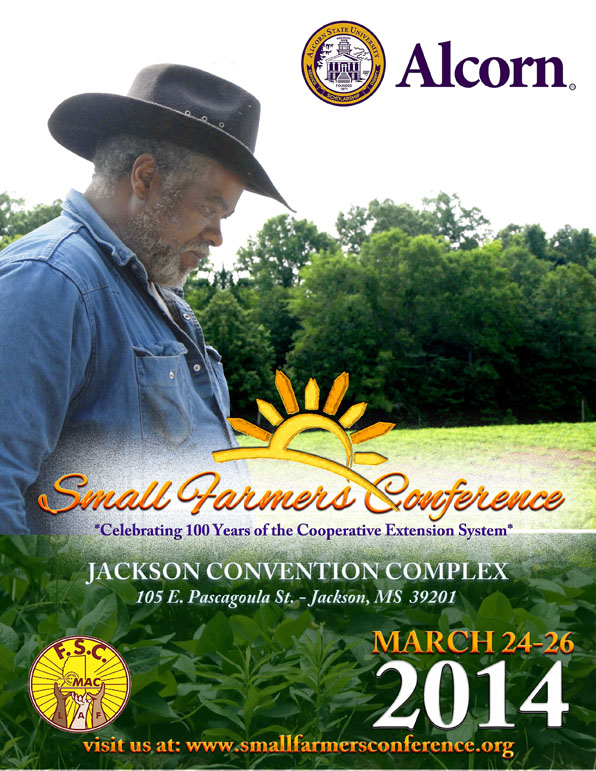
2014 Small Farmers Conference in Jackson MS

The 23rd annual Alcorn State University Extension Program (ASUEP) Small Farmers Conference, slated for March 24-26, 2014, will be held at the Jackson Convention Complex, 105 E. Pascagoula St., Jackson, Miss.
“Using Smarter Innovations to Strengthen Agriculture” is this year’s conference theme. The event is co-sponsored by ASUEP and the Mississippi Association of Cooperatives (MAC).
2014 SFC Web Registration