Isn’t it great that the best way to celebrate this is to visit a farmers market?

National Farmers Market Week: August 2-8, 2015
0 CommentsLeave a comment
Isn’t it great that the best way to celebrate this is to visit a farmers market?
Since many people have written to me with congratulations on accepting a staff job with FMC (see below), while others emailed with surprise because they thought I was already on staff, I thought I’d post something about the news, but really more about my feelings about FMC, as I have had a unique vantage point to observe its evolution.
But first the news here: after many years in an outside support role with FMC, I arrived at the conclusion that the opportunity to work daily on the Farmers Market Metrics and other resource development for markets could be best done as an employee when offered that opportunity by Jen Cheek, our able Executive Director.
I also felt that the organization was at a key moment in its growth and being included in that work was right for my skills to assist and to learn. And since I am going to keep my consulting for markets going, it becomes even simpler for me to share news and ideas and looming issues heard from markets with my FMC team and then even easier to dream up or seek solutions.
What made the personal decision become an employee relatively easy was that I know first hand how thoughtfully and carefully FMC has been built by its two Executive Directors, first Stacy Miller and then Jen, supported and led by its talented and committed volunteer board. To illustrate how committed, I remember how the early versions of the board (made up of market leaders) were so vigilant about designing it in such a way to ensure its continued stability and relevancy for serving the independent market community that they even jettisoned a few early passes at it until it seemed right.
Back in the first days of being the first staff hired, Stacy asked a lot of questions (well she still does that), and I observed her as she gladly checked in with anyone and everyone who was open to talking or working with FMC on farmers market advocacy. That sort of openness to building relationships is crucial for an organization, especially one that hopes to represent a wide range of members. Out of those informal one-on-one conversations and early collaborations, she (later with membership and outreach coordinator Liz Comiskey) slowly built a respected young organization, one with some discipline and good relationships.
(I wonder how many remember those early days when the necessity of having a national organization for markets was not shared by everyone and how, when many of us would discuss the idea with outside stakeholders, we would often be politely rebuffed. How (in some circles) markets were often seen as an anachronism or at least as having found their highest level already and therefore any talk of ongoing support to expand them was largely met with indifference. That tide was turned by the valiant push to expand EBT and access to underserved populations and by constantly stretching the reach of markets as fulcrums of food systems and civic engagement. That work was done by the markets themselves with tiny funds and with a whole bunch of sharing between those early leaders and continues to this day.)
One of Stacy’s regular activities was working closely with the state and network leaders who were building resources, analyzing trends and expanding pilots within markets. It was in that part of her work that I got to know her as we both crisscrossed the US appearing at conferences or working in groups like the Wallace Center Farmers Market Working Group or supporting efforts like Projects For Public Spaces’ Farmers Market Mini-Grant program. Back then, my job at Market Umbrella was to pilot the imaginative set of regional ideas our founder had written into grants and to strategize with him and our advisors how to build the field of markets through replicating those ideas or extracting lessons or analysis. And after I became a consultant, she stayed in touch, hired me and was one of the few people back then who agreed that the Farmers Market Metrics work was necessary, letting me talk incessantly about it (well I still do that), relentlessly questioning me when needed.
When she told me of her decision to step down in preparation for the birth of her son, I was a bit deflated, knowing how hard it would be to maintain the supportive energy that FMC was beginning to take advantage of to grow its funded activities. Lucky for us, the right person found FMC next and kept the momentum going, and expanding its reach and depth rather quickly. Whether the timing was just right or Jen visualized it all, she did a speedy job adding the right components while listening to those with opinions or ideas about markets and now, with opinions about FMC itself. And that is a crucial point to make: each ED had a very different primary challenge to overcome and Jen’s was to exponentially grow the income and programs at the same pace as the number of members and partners, while managing the expectations of an emerging organization with its own personality and inertia. All of which is harder to do than it may seem. Far too often, organizations have too many programs at once and members can feel left out, or not enough money for non-project staff and therefore calls and issues are not handled in real time. Having served more than three decades in non-profits, I have seen more entities fail than succeed at being true membership organizations, not guarding against duplicating what is better done by the members or partners, or losing sight as of the issues and remaining barriers that must be addressed at the grassroots level.
Well long story short (although, as my friend Roger would say, it’s too late for that), FMC has ably managed its core purpose without failing its membership on any critical tasks and has important long-term programs in place to support partners and ideas big and small, all the while tirelessly advocating from the seat next to, not in front of markets. Jen also grasped the potential of the Farmers Market Metrics and asked clear questions of Stacy and I (and our early measurement advisors like Paul Freedman of University of Virginia and Alfonso Morales at University of Wisconsin-Madison) and led us in thinking through our plan and kept fundraising to get the ball truly rolling.
Add to that, she had a plan and the skills for staffing with first-rate minds and caring individuals in order to manage its work while asking everyone to remain available for a call or email from a market in need of a reality check or a solution. She also had the maturity and tact to keep Stacy on to assist with analysis and resource writing and Stacy reciprocated with the same and so FMC has had the benefit of her continued presence in crucial ways.
So, when I tell you that I am grateful and honored to be on staff at FMC, I think you can see why. Market Umbrella under Richard McCarthy’s leadership was a tough act to follow and I think somewhere in my mind, I always suspected that FMC might welcome me sooner or later for a spell. Of course, I will remain a roving and critical eye in the market field, offering comfort and strategy to any market or food system that needs my help, but for now, expect that the FMC resource and capacity building work that I gladly get to do these days for (at least) half of my time will continue without interruption for the foreseeable future.
And welcome to my fellow FMC newbie, Honesta.
|
The United States Department of Agriculture (USDA) Food and Nutrition Service (FNS) has partnered with the Farmers Market Coalition (FMC) to provide eligible farmers markets and direct marketing farmers with electronic benefit transfer (EBT) equipment necessary to process Supplemental Nutrition Assistance Program (SNAP) benefits.
WHAT
FMC will cover the costs of purchasing or renting SNAP EBT equipment and services (set-up costs, monthly service fees, and wireless fees) for up to three years. After their application has been approved, eligible farmers and farmers markets will choose their own SNAP EBT service provider from a list of participating companies. Transaction fees (for SNAP EBT, credit, and debit payments) will not be covered.
WHEN
The application is now open. This is a first-come, first-serve opportunity, which will be over when all the funds have been allocated.
WHO
SNAP-authorized farmers markets and direct marketing farmers (who sell at one or more farmers markets) are eligible for funding if they became authorized before Nov. 18, 2011, AND fall into one of the following categories:
They do not currently possess functioning EBT equipment;
OR They currently possess functioning EBT equipment, but received that equipment before May 2, 2012.
Wondering what qualifies as ‘not currently possessing functioning EBT equipment?’ Markets and farmers do not currently possess functioning EBT equipment if:
They currently rely on manual/paper vouchers to accept SNAP,
They do not currently accept SNAP and have never possessed functioning SNAP EBT equipment,
-OR-
They do not currently accept SNAP because their EBT equipment is :
Damaged beyond repair.
Non-operational because their SNAP EBT service provider no longer offers SNAP EBT processing in their state.
Stolen or lost.
For more information on the program, including frequently asked questions, an eligibility chart, background information and application instructions, visit HERE.
I wish everyone good luck with their proposals and hope that my readers know if I can be of assistance to markets to strategize their proposals or to help to embed metrics for evaluation, feel free to email me.
This report that Farmers Market Coalition did with Market Umbrella in 2013 may be very useful for markets to review to see what other markets have done with their funding and to extract grant writing language used successfully by other markets and food systems.
Also, I am linking the report that I assisted the Real Food Gulf Coast folks with last year. They wanted to collect some simple data on how eaters and producers perceive markets (both those that use markets and don’t use them); the recommendations and marketing strategies will be piloted this year in Mississippi.
Please don’t be afraid to attempt a small grant if you have an idea to build capacity for a market or many markets. The assortment of grant opportunities is wider than ever before and can be the difference between struggling to stay relevant and moving a local food system to the next level.
AND please create an account on grants.gov sooner rather than later; this is the site you use for any federal grant so it takes a step from your later work when uploading a proposal as it takes some time to be approved for an account on grants dot gov.

View from the conference dining room
Just got back from a great farmers market association meeting in Olympia WA with what I hear was around 200 participants but seemed like double that with the ideas and networking flying around. Karen Kinney, WSFMA’s impressive Executive Director could be seen everywhere, adding content to their market bootcamp, introducing sessions, setting up table displays, and making time to chat with anyone who stopped her, like Farmers Market Coalition Executive Director Jen Cheek, or even a random consultant from New Orleans…
 Jen and Karen
In many ways, Washington represents the apex of the U.S. market work right now because of the serious attention paid to building the capacity of market organizations themselves and their work on regional and national issues that benefit all markets and their communities. (California has to be exempted from any comparison as it is always is a decade or so ahead of the rest of us.)
I have found that meeting long time and full-time market professionals in Washington is not unusual, nor is finding stable and expansive market organizations across the state that offer their communities tons of resources and spend time to increase the connections between direct marketing producers and shoppers in their region. One of the indicators for the flagship market typology is the ability of the market to look “outward” and assist the larger food system or other market organizations. Flagship markets seem to abound in Washington.
There is no doubt that the WSFMA is considered one of the top (flagship?) associations in the country by most market advocates and partners with Massachusetts, Michigan, New Mexico, New York thought to be in that same tier too.
In recent years, the level of sharing that Michigan and Washington especially have done on programs such as Washington’s benefit program pilots/card technology research, its data collection and policy work and Michigan’s respected manager certification program really stand out. Pennsylvania’s PASA, although not specifically a market association, should be mentioned for its excellent service for markets in their very large state. I can also tell you that in all of my work with markets in any state, I go back to these folks time and time again for input or to ask them to share their analysis and they always deliver.
Many younger or all-volunteer associations are coming right behind in the level of resources or strategy they are offering in their state to increase market professionalism – some of the ones I am asked about regularly are Illinois, Maryland, Minnesota, Ohio, Oregon, Vermont and West Virginia. Sorry if I left any out, that was just off the top of my head…

The Vancouver Farmers Market’s gorgeous literature and materials on display
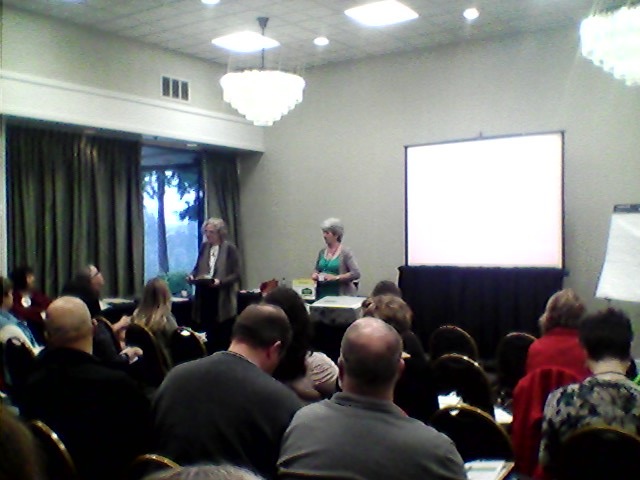
The WSFMA market half-day bootcamp run by WSFMA board member Ann Foster and WSFMA staff member Jennifer Brown and assorted speakers.
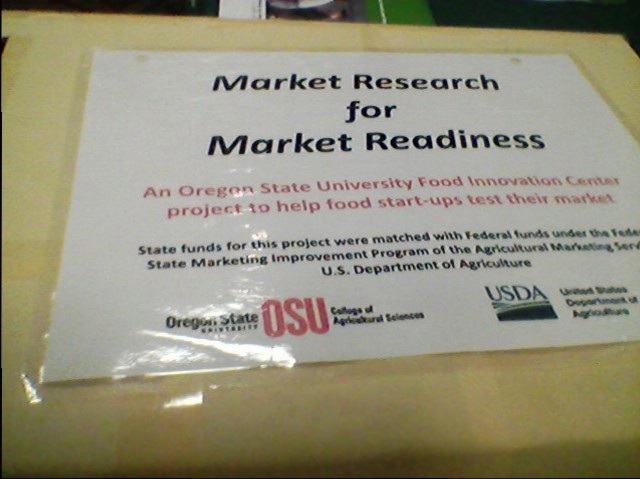
great display of a project to help start ups test food products. They have a program at OSU to conduct surveys for producers and help them figure out the products to get the best niche.
I saw a bunch of great resources, a few workshops and had dozens of conversations about some fascinating market projects.
Here are some:
List of Washington’s Top 10 most frequently purchased minimally processed F&V
Details on the pilot project for procurement of unprocessed f&v
WA Cottage Food Operations Permit
Loads of information on both MarketLink‘s new and improved services and FMC’s new replacement technology program. Amy Crone of MarketLink and Jen Cheek of FMC presented together and were ably assisted by Suzanne Briggs.
I also learned about the Moscow Idaho market, Gorge Grown’s interesting mobile market, discussed data collection with a trio of rural Oregon markets, and heard a RIVETING presentation by Washington State University Small Farms Coordinator Colleen Donovan. Colleen used her time to lead a spirited discussion with the entire room of farmers and market leaders about her survey data collected in Washington State on farm and market farmer characteristics. Donovan is an advisor to the Farmers Market Metrics work and did a great 2013 workshop for FMC that can be heard and seen on FMC’s YouTube channel. Check out her work; even though it is for Washington, her methods and analysis are vital for any and all markets to see. I left thinking (and saying): every state needs a Colleen Donovan.
So, now I’m back home with some time to experience our holidays here (Mardi Gras is Tuesday February 17 this year, and no, it’s probably not what you imagine it is…) and then to read all of those reports and keep on working inspired by the new connections and knowledge gained in Olympia.
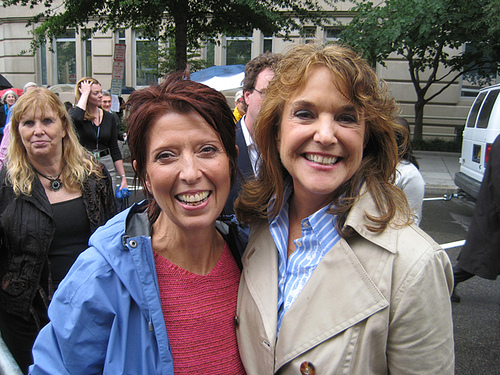
Back when I began working at Market Umbrella, our founder, Richard McCarthy gave me the names of a few people that he held in high esteem on market issues that I might check in with regularly. Interestingly, many of these folks led the “town square” phase of markets that Market Umbrella belongs with as well (eras that some of you have heard me talk about over the years.) Some of those names include:
Donita Anderson North Union Farmers Market, Cleveland OH
Chris Curtis, Seattle Neighborhood Farmers Markets, Seattle WA
Pam Roy (Farm to Table New Mexico)
Greenmarket NYC (many, many staff on that list. back then, Gabrielle Langholtz and Kelly Verel nee Williams, now of PPS, come to mind.)
NY leaders Diane Eggert and Bob Lewis
Massachusetts leader Jeff Cole
and two he always spoke of with great affection: Bernie Prince and Ann Yonkers at Fresh Farm in DC. I met Ann first at a Dallas TX farmers market meeting where we were both invited to speak. Ann was (and is) a woman of great style and well-formed opinions and those qualities along with her belief in markets and food systems led the energy in that room and, I am sure many others. Every time I came to DC, she and Bernie took the time out of their incredibly busy schedules to sit and talk with me. I remember once driving around MD and DC with Ann as she generously showed me her markets and we talked of mobile markets, organic farming and market logistics for most of the afternoon. In many ways, she always reminded me of Richard-both lead with their charisma and their strength of character but can also discourse on dozens of subjects easily. You leave their presence with clarity of purpose and gratitude to have leaders like this around.
On to Bernie…I didn’t know her as well in those early days, but then I began to talk more with her when she joined the Farmers Market Coalition board (and ultimately led it as its President) during its transition from its founding board and then the transition from its founding Executive Director through its present days of more staff and more advocacy. Slowly, I realized that she was a indefatigable worker and a champion strategist who would always take the time to share what she knew with her peers when asked. Whenever I visited her markets, she was picking up trash or chalking a kids game on the ground or most of the time, introducing people to a vendor through a very detailed and empathetic outline of their business history, both in and out of the market. Then, we’d often have a chat about plans she and Ann had to add markets or to raise funds or to build capacity and I’d leave sort of stunned by what they had and would continue to accomplish. I have had the privilege of hearing Bernie present more than a few times over the years and have always enjoyed basking in her energy and passion during the talk and then watching her afterwards with the newer market leaders who crowd around her, soaking up her advice and support. Her warmth and her great joy are so part of her regular personality that as soon as I just hear her voice, my mood is elevated.
As for FMC, I know how much she has personally given in time and talent and I always appreciated her constant support of the staff and the board. In my estimation, FMC owes its survival to two people more than any other: Stacy Miller and Bernie Prince, and their deep affection and respect for each other made that survival possible and set the tone for FMC as a whole. The story linked below promises that Bernie may very well stay on at FMC, which I fervently hope happens. (FYI-Sharon Yeago, Liz Comiskey and Jen O’Brien Cheek are sitting very close behind those two in credit due at FMC….)
Ann and Bernie have done so much with the food system and farmers markets in DC, Maryland and Virginia that (as I wrote on FMC’s Facebook page) it cannot be properly calculated. I will leave it to their peers at Fresh Farm and I assume civic and food leaders across the area who will take the time to honor them. I hope all of you will have the chance to meet these two giants before they hand over their market bell(s) and to thank them for all that they have given to us and will give to us in their next leadership role in our food and farming system.
Some extremely important advocacy has been done by NSAC and FMC on the need for more edits to the FSMA in order for family farms and small business producers to be able to survive and thrive. Their recommendations include needed edits to the rules for farmers markets to be able to manage risk and yet to be allowed to encourage innovation to happen. Please read their updates and analysis on the FSMA and get your comments in by December 15.
Food Safety Modernization Act (FSMA) | Farmers Market Coalition.
Great post by Dr. Morales on some of his current project work, including his perspective on the Indicators for Impacts AFRI-funded project that we both are working on through 2016.
Food Systems for Healthy Places | BEPHC | Georgia Institute of Technology | Atlanta, GA.
The Farmers Market Coalition (FMC) has been awarded a USDA contract to assist in improving and expanding the Supplemental Nutrition Assistance Program (SNAP) at farmers markets nationwide. Through the contract, FMC will collaborate with the USDA Food and Nutrition Service (FNS) to administer $4 million in grants for SNAP programming needs and replacement wireless electronic benefit transfer (EBT) equipment.
Over the next twelve months, FMC will complete the following objectives in collaboration with FNS: (1) establish a process that FNS will use to award support grants to eligible farmers markets, and (2) establish and implement a process to provide replacement SNAP EBT equipment and services to farmers markets and direct-marketing farmers that are operating SNAP programs in situations of hardship.
The funds will be used to provide markets and farmers with various types of support. FNS has identified the most commonly requested types of assistance, in descending order:
Needs numbered 1, 2, and 3 above will be addressed in the form of support grants for eligible farmers markets, while number 4, the need for replacement equipment, will be addressed separately. It is expected that of the total $4 million, approximately $3.3 million will be used for support grants, while the remaining $700,000 will be spent on replacement equipment.
FMC is eager to assist USDA FNS in fulfilling their goal of supporting local food systems by expanding access to healthy foods for SNAP participants. FMC Executive Director Jen Cheek shared, “SNAP redemptions at farmers markets have risen dramatically over the past five years, but they still represent a extremely small percentage of total SNAP benefit spending. This support from USDA will help markets and farmers build strong SNAP programs – getting more fresh, locally farmed food to the Americans who need it most.”
Writing your conclusion first is just like proposing a hypothesis for a science experiment.
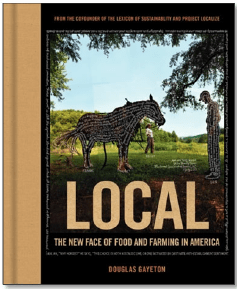
You may want to check out the Journal of Agriculture, Food Systems, and Community Development’s (JAFSCD) “Book Nook”, which contains in-depth reviews of current books on food systems. The link at the end of this post directs you to a review of a new book on the language of sustainability: Local: The New Face of Food and Farming in America, by Douglas Gayeton. The review is by Stacy Miller, who many readers will know as the Farmers Market Coalition’s founding Executive Director. Stacy is now working as an independent consultant and as a FMC Program Advisor and also spends some of her time valiantly untangling my words by serving as an editor or by offering some spot analysis for many of the reports that I am doing for markets and their advocates.
Finding the appropriate bright and brave words to describe the energetic nature of a farmers market as well as the larger food system work happening is something we both think about in this work that we do and she probably had to think about daily as the FMC director. I can remember a day in her kitchen when we wrote down and discussed lots of words to describe what became the skeleton of the Farmers Market Metrics project at FMC and how we had to leave it unfinished when I left town a day later, promising to return to it. We did, and still do good-naturedly debate (alongside our colleagues at FMC and University of Wisconsin) for and against the use of different words and definitions within that metrics work.
So, to expand her thinking to this lovely book on the entire realm of sustainability language in our farming and food world seems mighty appropriate. Here are a few of my favorite passages from her review, linked below:
“The idea that language is fundamental to social movements is nothing new. The power to bestow names on objects, people, places, and philosophies is undervalued, so we hardly notice when it gets abused. Noam Chomsky famously observed that
destructive paradigms thrive because they impose on people “the feeling that they really are incompetent to deal with complex and important issues: they’d better leave it to the captain” (Chomsky,1987, p. 42).”
“I give a lot of credit to a former film director who can find a compelling poster child for, and condense the complexities of, expansive terms like economies of community (see Figure 1), soil food web, GMO, or traceability.”
“The hypothesis behind the Lexicon of Sustainability is compelling… We tune out vocabulary we don’t understand, avoid dialogue or questions that make us feel ill-informed or hopeless, and thereby enable a cycle of peripheral awareness that looks dangerously like apathy. And the corporate food monopolies take advantage of this whenever they can — on packaging, in advertising, and in lobbying efforts designed to “protect us” from too much information.”
I will pass this review to many of my colleagues and will also get this book based on her review and pass that around too. What better can be said?
These are excellent audio snippets from Colleen Donovan, Washington Small Farms Program Research Coordinator at WSU about some benefits of farmers markets.
Community Impact of Farmers Markets
These are so well crafted that anyone could embed them into their website to show the impact of markets and market farmers, no matter where they are located.
What is most useful about Washington’s work is that it uses the context of organizational capacity to gauge if and how those multiple benefits are being forwarded to shoppers, farmers and the larger community. For reports that offer data without explaining that a volunteer-led effort managed it or that markets are often doing complex projects with part-time labor, I recommend to them that they consider adding it to any future analysis or funder report. The Farmers Market Metrics work we are doing at FMC and University of Wisconsin right now will add that piece into any resources or templates that we design, I promise you that!
In any case, associations in Washington and Michigan are truly the leaders right now in doing excellent analysis and resource development and then spending time sharing as well. (And if it was up to me, I’d give Illinois the rising new star award.)
Colleen did a webinar with FMC in fall of 2013 on the results of this report which is found on FMC’s YouTube site. Yes that is me (talking too low) introducing Colleen:
Link to YT recorded webinar


 Helping Farmers Markets Grow