Crew Members Sample Leafy Greens Grown on Space Station | NASA

NASA is maturing Veggie technology aboard the space station to provide future pioneers with a sustainable food supplement – a critical part of NASA’s Journey to Mars. As NASA moves toward long-duration exploration missions farther into the solar system, Veggie will be a resource for crew food growth and consumption. It also could be used by astronauts for recreational gardening activities during deep space missions.

…Having something green and growing–a little piece of Earth–to take care of when living and working in an extreme and stressful environment could have tremendous value and impact.

“The farther and longer humans go away from Earth, the greater the need to be able to grow plants for food, atmosphere recycling and psychological benefits. I think that plant systems will become important components of any long-duration exploration scenario,” Massa saidCrew Members Sample Leafy Greens Grown on Space Station | NASA.

Responsive Web Design for Non-Profits’ Customers

The average person worldwide has five social media accounts and spends an average of 1 hour and 40 minutes browsing these networks every day on any number of devices. Therefore using what is termed “responsive web design” is vital. It means that the information is optimized for whatever device it is being seen on with a minimum of scrolling or resizing.
The site Non-Profit Tech picked three sites offered by non-profits that they think are especially good at this and I think additionally that one of the three, Pittsburghkids.org, is just a very useful site for markets to view. Simply designed and easily navigated, it offers a lot for those new to the site and yet has easy-to-find shortcuts to get into the site if you are a return visitor.
Nice to hear in the original story that non-profits were the pioneers of the use of social media, adding content and varied ways for their community to see and reach them long before businesses bought into the idea.

“…the pesadilla of the American dream”

“I acknowledged that farm workers were seldom given the spotlight, I saw this as an opportunity to honor the hard work of my parents, and farm workers all over the country,” Gonzalez told ATTN:. “They are the hardest working people in the world, and hardly ever are given the dignity and respect they deserve. I needed them to see, this wasn’t simply my success, this was a success of 22 years in the fields, this was all them.”

parents

These Incredible Photos Prove What the American Dream Really Looks Like – attn:.

National Farmers Market Week: August 2-8, 2015

Isn’t it great that the best way to celebrate this is to visit a farmers market?
unnamed

Farm to Fable – San Diego Magazine – July 2015 – San Diego, California

well. This article linked below is a shot over the bow to those using the farm to table purely as marketing, and in some cases, using farmers names without having a regular relationship with them. The lack of clarity as to what Farm To Table means is one issue that local activists should shoulder; it should not be a single definition globally, but the rules for level of transparency in that process should be the same everywhere.

Farm to Fable – San Diego Magazine – July 2015 – San Diego, California.

A Taste of Plastic

A recent study found that people ingest as many as 11,000 plastic particles per year in their food, and that those who eat a lot of seafood may be consuming much more than that.
Orion Magazine writer Jourdan Imani Keith is a playwright, naturalist, educator, and storyteller whose work blends the textures of political, personal and natural landscapes to offer voices from the margins of American lives. In the latest issue of Orion Magazine she gives a personal view about ingesting particles of man-made items in seafood:

My tongue has not yet been able to discern cosmetics in my curried mussels or plastic pearls in my oysters, but in 2013 researchers in Belgium at Ghent University found that microplastics are present in food consumed by humans. The study showed that some Europeans eat as many as eleven thousand plastic particles per year. Coastal Salish tribes, Asians, and Asian Pacific Islanders in Washington State, and all who eat lots of fish and seafood, like I do, may also be consuming more microplastics than others. The potential risks for human health have not been studied. We don’t tend to think of plastics as part of our diet, but by the time they make it to our plates, it’s hard to say they haven’t become part of our food web.

A Taste of Plastic

“Creative placemaking? What is it that you do?”

Great article linked below along with a salient excerpt about placemaking which is something all market organizations should know a little about.

We essentially believe that a creative placemaking project needs to have four basic parts:

First, the work needs to be ultimately place-based, meaning that there is a group of people who live and work in the same place. It can be a block, a neighborhood, a town, a city, or a region, but you need to be able to draw a circle around it on a map.

Next, you need to talk about the community conditions for all of the people who live in that place and identify some community development change that that group of people would like to see: a problem with housing that needs to be fixed; an opportunity with a new transportation infrastructure that needs to be seized; a problematic narrative around public safety that needs to be changed. (There are ten categories of community development changes that we currently track.)

Third is when the “creative” comes into play: how can artists, arts organizations, or arts activity help achieve the change that has been articulated for this group of people?

And, finally, since these are projects that explicitly set out to make a change, there needs to be a way of knowing whether the change has happened. Some people call this “project evaluation.” We simply say it is important to know when you can stop doing something, cross it off your list, and move on to the next thing.

"Creative placemaking? What is it that you do?" | ArtPlace.

Local Food Research & Development marketing specialist (research) posting; SHORT deadline!

Here is the link to the USDA jobs vacancy announcement for up to 3 agricultural marketing specialists (research) that was published this morning and closes next Thursday.  In addition, please note that applications are being capped after the first 40 received!!
https://www.usajobs.gov/GetJob/ViewDetails/410631100

July Market Data Collection: Athens (OH) Chillicothe (OH) and New Orleans

Since 2002 or so, my public market focus has really been two-fold: designing grassroots markets and creating replicable ways to measure and share their success. Both are necessary in order for markets to remain at the fulcrum of viable and equitable food systems. And THAT means that the desire for programs and funding to create long-term stability and build professional skills must be integral to the field (which includes markets partners), which is far from the case as of yet.

One way we will get there is by capturing data that explains shared success measures while still illustrating innovative and unique approaches in each place. I am honored to be the eyes and ears for Farmers Market Coalition (FMC) and its partners on their Farmers Market Metrics work which we hope will serve those ends. I am in the middle of a summer of travel to sites to observe actual data collection at markets using the University of Wisconsin-Madison’s data collection protocols in the Indicators for Impacts AFRI-funded project shared with FMC and whenever possible, to stop at other markets to view their data collection too.

One of the big bugaboos seems to be in doing direct data collection with visitors or vendors; on a side note, it occurs to me as I write this how rarely I see Dot Surveys (or as we redefined them, Bean Polls!) any longer. Seemed to me that markets did them constantly in years past, but they may have began to decline for the same reasons I made the Bean Poll; vagaries of weather, managing blow-y pieces of paper and light-as-air easels outside, keeping track of previous hours responses etc. Let me stop for a minute to be clear: Bean Polls can only be used in very specific instances as described in the link above. Don’t think I mean that they can be used to collect sensitive data or replace intercept surveys-they cannot. But they can introduce the community to  regular data collection and offer a mood of the day response about possible trends. I wonder if the lack of Dot Survey I see is an indicator of something retreating in data collection at market level, or if I just show up at the wrong time…

And counting visitors- I don’t think I’ve ever suggested to a market that they should count their visitors regularly without them telling me it was near to or outright impossible. Okay, that maybe an overstatement, but I have heard that exact phrase quite often! I respect the low-capacity efficiency of markets, but I do think every market can do good Counting Days and I continue to dream up new ways that counting can be done without a slew of volunteers or paid staff. If anyone is up for trying them out, contact me at dar wolnik at gmail; but do know, it’ll require some planning…

In any case, what I see out there already are some very good systems for data collection that will probably work for small and large markets and everyone in between. As soon as those systems are tested and able to be replicated you’ll hear about it.

The Farmers Market Coalition website hosts the resources and updates  for all the Farmers Market Metrics work, so do check in there for more information.

And if you missed it, here is an account to my first market visit: Hernando Mississippi.

Next: Ruston LA, Williamsburg VA and Takoma Park MD (Crossroads)

Please click on the first photo to view the gallery. My apologies to my Facebook followers who have seen most if not all of these pictures.

Waterloo, Louisiana: An Open Letter to New Orleans – Antigravity Magazine

The published letter linked below was written by one of our region’s most innovative direct marketing bakers, and (obviously) one with a great deal of sensitivity and wisdom. Graison has struggled with getting the ends to meet in his tiny business (even while he is unquestionably the region’s preeminent bread baker), much less in it pulling him to the place he dreams his business should be.
He and I have talked a few times about the lack of support for small producers in our region and I can assure you that he is ready to talk with or work with anyone willing to further the needs of he and his peers, but to little avail.
I recommend that people read his essay and also read between the lines of what would drive a full-time baker to spend his time writing and publishing this. If you want my response now, it is because he knows what is at stake is his entire future and the future of the healthy food revolution that may never reach maturity unless we deal with the issues that small businesses face everyday: the lack of infrastructure support, duplicative regulations, half-hearted allegiance to local ingredient sourcing among shoppers, refusal by many (most?) to address vital environmental concerns in food work, commodity-type products taking most of the shelf space-if and when local is even invited, the lack of skilled workers available, necessary policy changes not handled by organizers of food initiatives and so on.
So ask yourself-are you doing everything you can as often as you can for your anchor vendors?
Waterloo, Louisiana: An Open Letter to New Orleans – Antigravity Magazine.

Hernando Farmers Market Data Collection Day

I kicked off my summer of market travel in northern Mississippi this year, which is one of my favorite places to work and to visit in the U.S.

Hernando is in DeSoto County (someone had to point out to me the appropriate alignment of the names of the city & county, honoring the first European known to cross the Mississippi) and it ranks highest in most indicators for good health in Mississippi, but is next door to a slew of counties that are at the very bottom of that same list, in what is called the Delta.

I first got to to know the Hernando Market when I was doing research a few years back for a report for The Wallace Center on existing challenges for direct and intermediate marketing farmers in Mississippi. Everyone told me to go talk to this market to see what impressive work was being done there. And so I went up and met with Shelly Johnstone, who founded and ran the market while working as the Community Development Director of the city. The market had been running for only a few years by the time of my visit but already was one of the largest and most productive in economic terms for area producers. I remember well what she told me about being Hernando as a  regional leader during that visit: “We’re grateful to be leading the state in healthy behavior but we know we need to assist our fellow counties and get those folks in the same situation. It won’t be enough to fix Hernando.”

She invited me back up to see the kickoff for her weekday local food market box program called 4Rivers, created in partnership with the Northwest Mississippi Community Foundation, which has done a great deal in food and active living projects for the area. She also discussed her work to provide technical assistance to neighboring markets and to support the expansion of organic/sustainable farmers through the Mississippi Sustainable Agriculture Network. All of this and more happened because of the leadership of Mayor Chip Johnson, who remains a strong proponent of the weekly farmers market.

I left impressed with the mayor and Shelly’s connections and drive, looking forward to many years of their leadership. Of course, news came to me within a year that she was retiring from the city and her post(s), but would stay involved with the efforts in her area. Unfortunately, circumstances have not allowed her to be as visible as she would probably have liked, but the good news is that her successor at the city, Gia Matheny, has the same drive and empathy for her fellow citizens. Of course, coming into the market some years after its founding has meant some catch up for Matheny, but luckily, she has deep skills, an open personality and is willing to ask about what she doesn’t know.

So when the request was sent out by Farmers Market Coalition for markets in MS to become a pilot site of the Farmers Market Metrics work, I was pleased when this market asked to be considered as one of the sites. The 3-year data collection project would teach the research team at University of Wisconsin-Madison a great deal about the unique qualities of markets and regions and so having this strong market in the mix for Mississippi was going to be beneficial for everyone.

Hernando (like the other 8 pilot markets) was instructed to choose metrics that best represented the current impact that the market was having on its vendors, its visitors/shoppers, its neighbors and the larger community.

Here are their choices:

Dollars spent at neighboring businesses by market shoppers on market days

Percent of customers who were first time visitors

Average number of SNAP transactions per year

Total dollar amount of Senior FMNP redeemed annually

Number of different fruit and vegetable crops available for sale annually

Percentage of shoppers walking,bicycling, carpooling, driving or taking

public transportation to the market (estimated annually)

Percentage of shoppers from represented zip codes (estimated

annually)

Additionally, all 9 markets were asked to collect the same data on these metrics (called the Common Metrics):

Average number of visitors per market day:

Total annual vendor sales at market

Average distance in miles traveled from product origin to market

Acres in agricultural production by market vendors

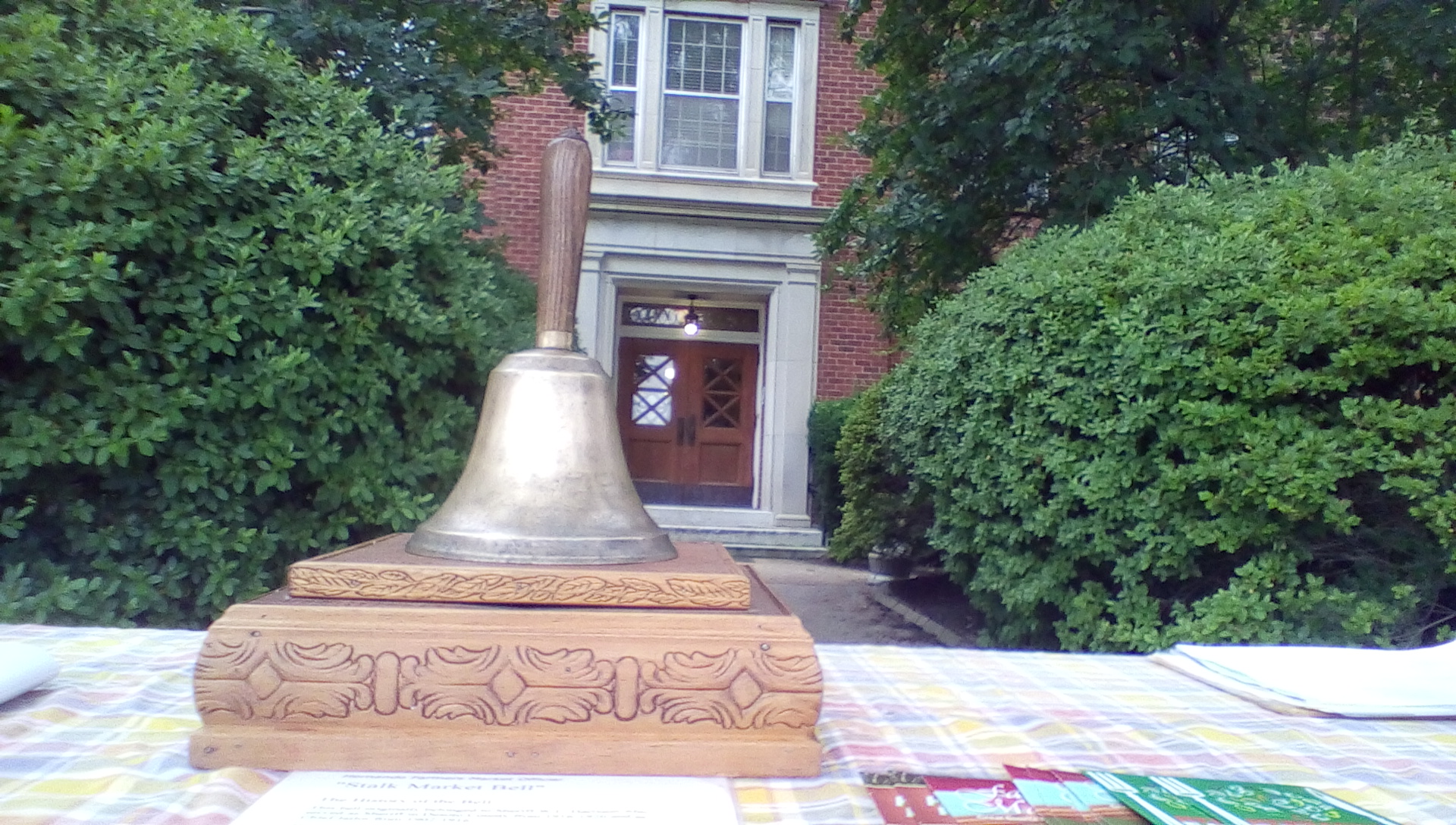
Once the metrics were selected in the fall of 2014, the UW research team created a unique Data Collection Package (DCP) for each market detailing how and when they would collect the data for each metric. Each market then chose their collection days for the summer/fall of 2015 and searched for and scheduled volunteers accordingly. June 13th was one of Hernando’s four scheduled dates for visitor surveys and visitor counts and so I drove up to observe the day and offer any assistance I could. I was also lucky enough to be asked to ring their 100-year old market bell to open the market:

The 100-year old Hernando Market bell

The 100-year old Hernando Market bell

FMC FB post of the video of me ringing the bell

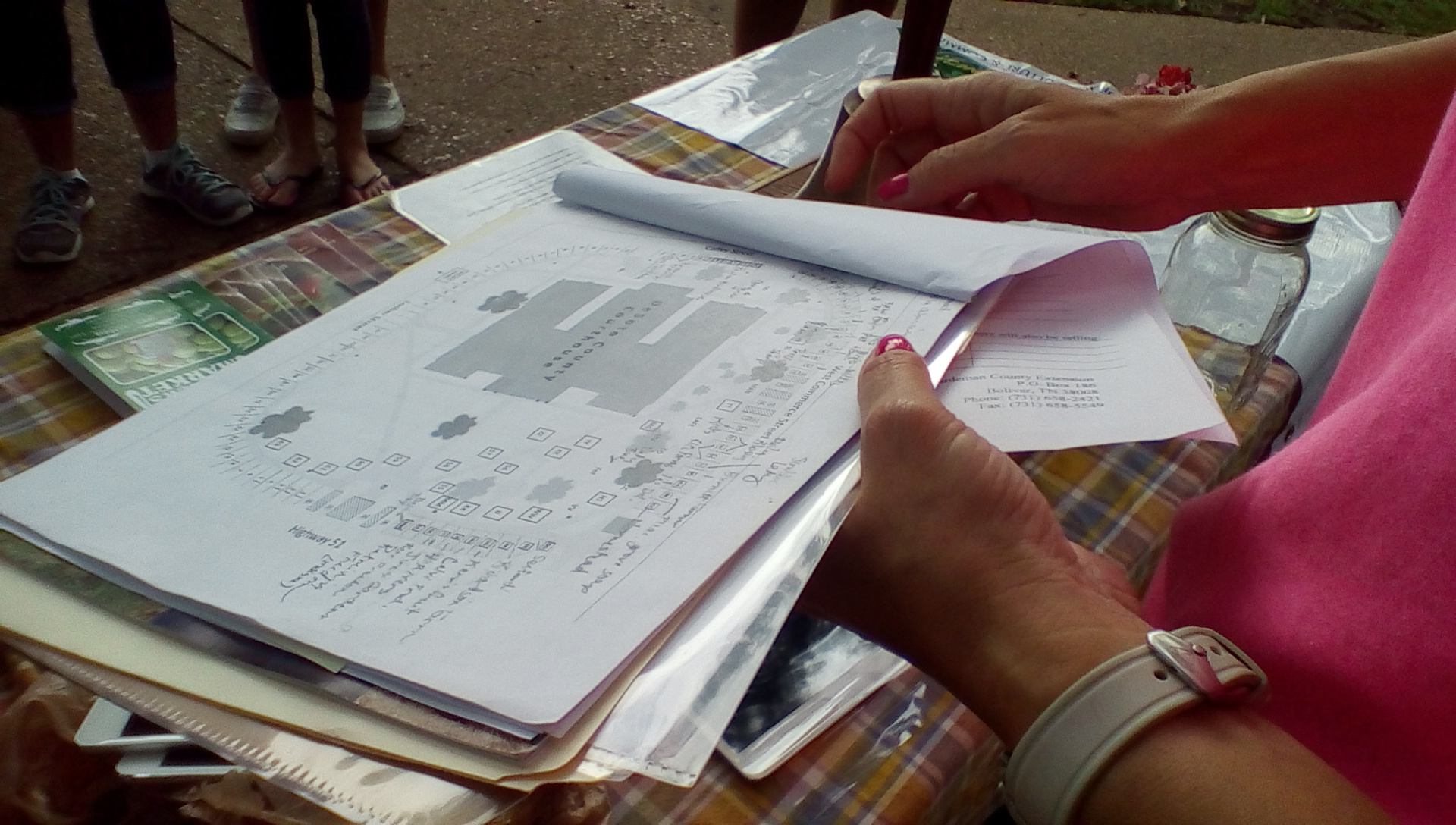
Gia mapping out the day

Gia mapping out the day

GiaMHernCollectors

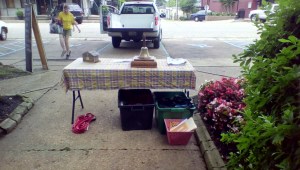
The Hernando Market Welcome Table

The Hernando Market Welcome Table

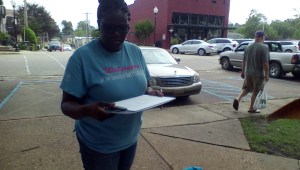
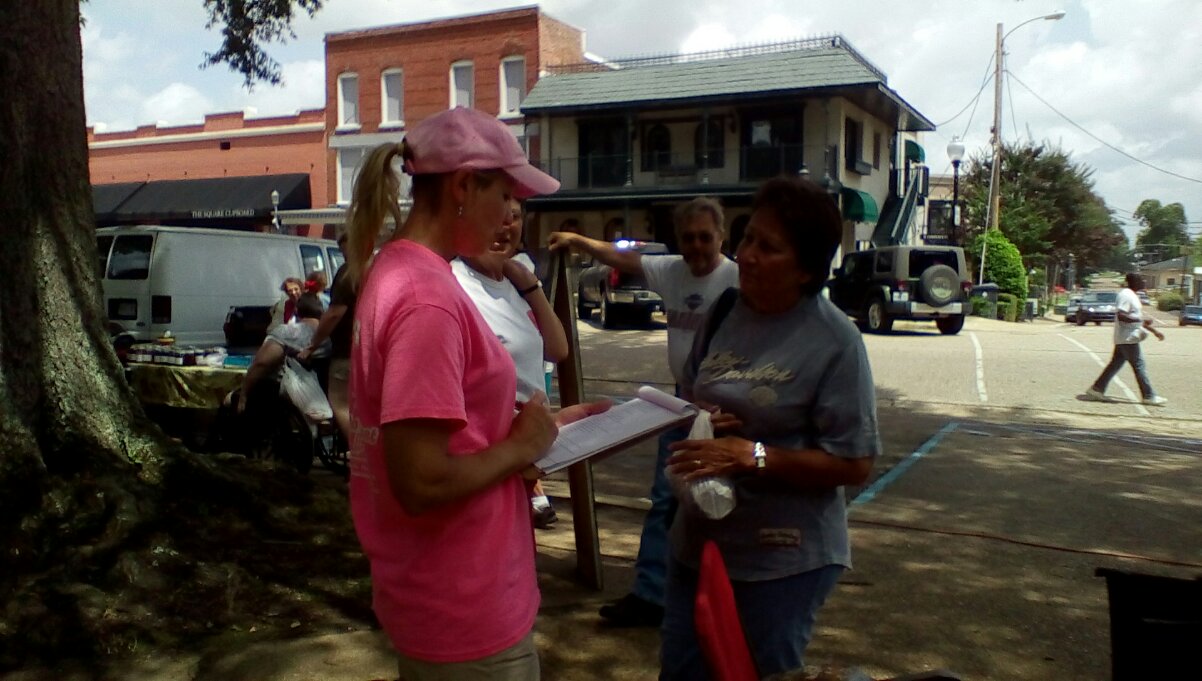
One of the two team members that would be doing the visitor surveys
One of the two team members that would be doing the visitor surveys

The other member of the team conducting the visitor surveys- yes that is an iPad which was being tested for use in doing surveys; unfortunately, the WiFi signal was not strong enough to use and so paper surveys were used instead.

The other member of the team conducting the visitor surveys- yes that is an iPad which was being tested for use in doing surveys; unfortunately, the WiFi signal was not strong enough to use and so paper surveys were used instead.

The set of clickers to be used for Counting Day
The set of clickers to be used for Counting Day

Gia doing a survey

Gia doing a survey

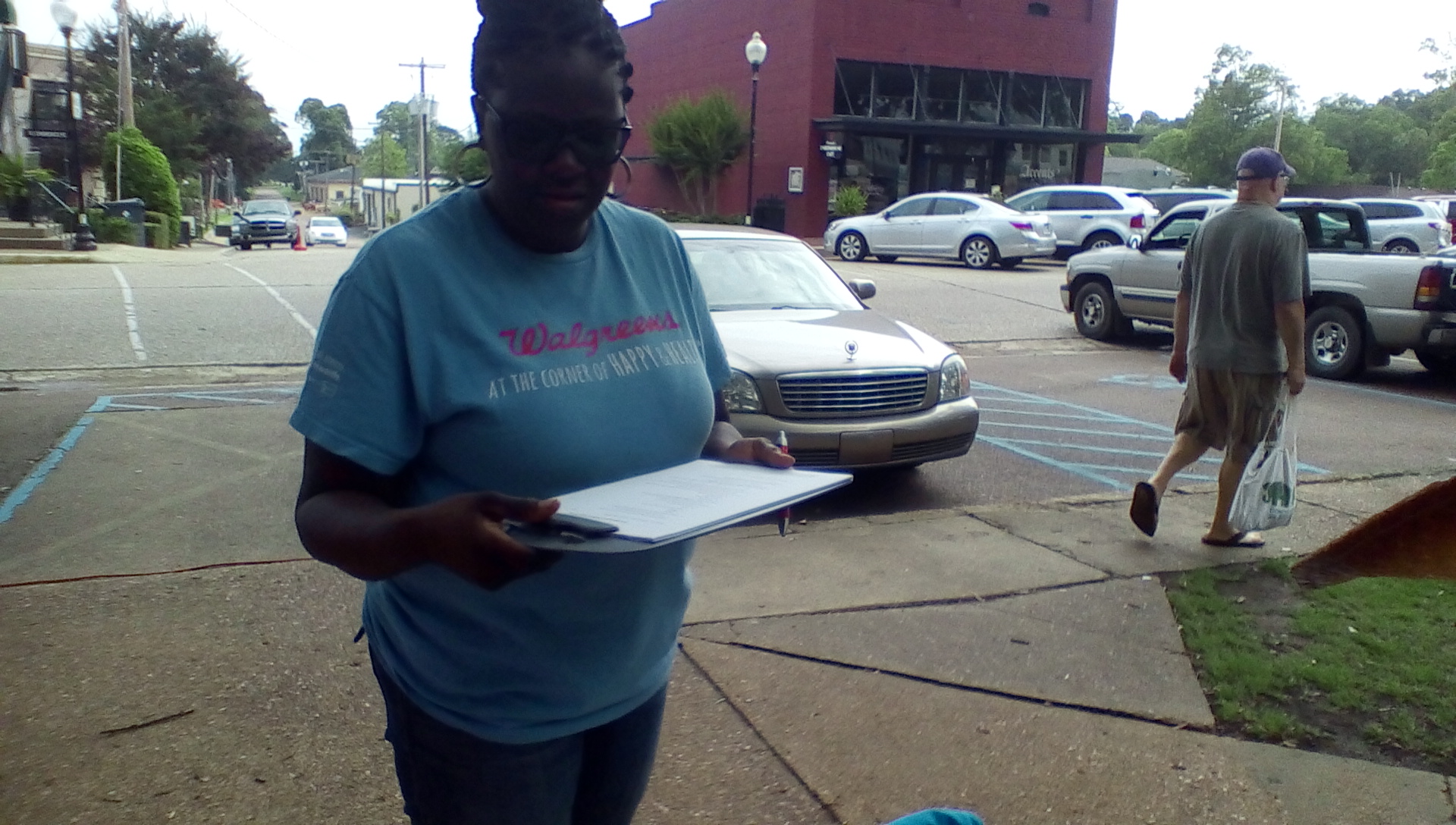
Some of the team were assigned at advantageous locations to count the visitors, while others were to complete visitor surveys. The volunteers were a mix of folks, from corporate volunteers (Walgreens corporate office staff for this Saturday) arranged through Volunteer NW Mississippi, to a city youth leader and Gia’s daughter and her friend. They picked up on the tasks easily and (and something that is not unusual in my experience) offered good feedback throughout the day and even gladly volunteered to take on more data collection tasks when necessary.

Overall, the data collection went extremely well and the immediate and ongoing analysis of it will mean an even smoother day for the next round for  the market leaders. It was impressive to see how many city officials, visitors and vendors wanted to know more about the pilot and and were eager to discuss the market in measurement terms with me.

Next up: Chillicothe and Athens OH