Food Systems for Healthy Places

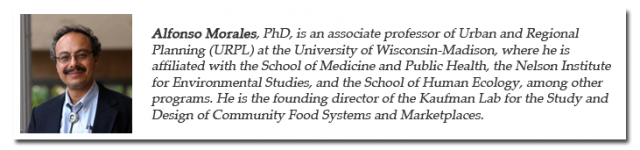
Great post by Dr. Morales on some of his current project work, including his perspective on the Indicators for Impacts AFRI-funded project that we both are working on through 2016.
morales.vertical

Food Systems for Healthy Places | BEPHC | Georgia Institute of Technology | Atlanta, GA.

Echoing Green Fellowship

Successful applicants not only present an innovative way of addressing social issues, but also explain why they as individuals have what it takes to succeed. Echoing Green is not a grant-making organization. We are a fellowship program because we believe in the importance of the individual social entrepreneur as well as his/her project. As such, we look at both the applicant and the applicant’s idea.

A successful applicant to the Echoing Green Fellowship not only presents an innovative way of addressing a social issue but also explains why they have what it takes to create change. Download our Selection Criteria Guide and visit echoinggreen.org/apply to learn more about what we look for when we review applications.

Remember, the 2015 Echoing Green Fellowship application opens on Tuesday, December 2, 2014! Make sure you’re ready: download our Short Answer Question Help Guide to start preparing your answers now.

A bittersweet thanks from a market vendor

One of the great market bakers over the last many years in New Orleans wrote the letter below telling of his decision to leave the Tuesday market in New Orleans to his customers via Facebook and his website. (He remains at their Saturday market still.) This vendor is an extremely creative and dedicated artisan and one with diversified marketing and product ideas. Unfortunately in his estimation, the potential for sales are diminishing, especially at the weekday markets. That view is not his alone; it is shared by some other vendors. This is the first comment after his Facebook post and happened to be from another past market baker: “This is sad to hear for me because this is why I had to stop being a farmer’s market baker full time 5 years ago. I miss my CCFM family and wish everyone the best.”

When markets go through this, it can be a painful and messy break up or it can be a mature parting with lessons learned for all. Everyone has to agree to be careful with their language (spoken, written and body) and to be intentionally fair as the weeks and months go on.

I think this letter does a great job not to assign any blame and offers some good starting points for talking this through with shoppers, other vendors and the staff of the market organization. This is a volatile time for markets in New Orleans and the small businesses contained within feel the brunt of that ebb and flow.  I also well remember the pressure of being a market organizer, remembering every minute that good men and women and their families and employees rely on your estimations of the numbers of happy return shoppers, where to find inquisitive new shoppers, devising events that work and don’t detract from sales, outreach and marketing dollars spent well, locations remaining stable, partnerships adding value and so on while trying to calm fears and add excitement among the vendors while you do it.

As a market advocate and a member of this community, I worry along with all of them and show up at every market and event that I can and share information freely to help everyone move forward. Because our purpose in building a community food system is to offer new opportunities that offer sustained value and multiple types of benefits along every step of the chain, and honor the producers who are building this on their backs and with their many talents, supported by the hard work and talent of market and other food system organizers. Let’s all keep momentum moving forward to reduce the quantity of these type of letters.

==================================================================

25 November 2014

Dear Farmers Market Customers:

It is with a heavy heart that we are announcing our departure from Tuesday’s Crescent City Farmers Market (CCFM). Due to a sustained erosion of sales over the course of the past eights months, and to the unpredictably of future markets, we are forced to withdraw our booth from this cherished market. Our last TUESDAY market will be the 25th of November.

Although Bellegarde Bakery, in its original gestation as “Babcia Kubiak’s Breads”, began at CCFM five years ago, we have found that the current status of public markets in New Orleans is extremely volatile. There is an overwhelming consensus among vendors at CCFM that “business is not what it used to be”: due to the nature of Bellegarde’s craft, and our commitment to quality, we do not have a “product” which we can freeze, store, or transfer once market is over. We make fresh bread, day in and day out, in heat and in cold, on weekends and on holidays, so that our customers can understand the integrity of fresh food.

We are extremely vulnerable—physically and financially—to capricious weather, shopping habits, and other food ‘trends’ that degrade the quality and consistency of farmers markets. Vendors at farmers markets are at the bottom of the proverbial food chain: we do all the sowing and receive little of the harvest. The current food economy of America is such that money, respect, and stability trickle down from celebrity chefs, supermarkets, and restaurants to the bottom of the pool—fishermen, beekeepers, bakers, farmers: the people that actually make food have trouble making a living at their primary venue of sales: the farmers market. Without any institutional or municipal support through grants, press, mentorship, or subsidy, we vendors suffer the modern whims of that most basic human gesture: the eating and sharing food.

By the vendors, for the vendors: it’s a motto we still live by. We have an implacable commitment to rebuilding the edible architecture of New Orleans through grains and breads. We will remain at our SATURDAY booth and you can find us in a litany of retail locations—from Rouses and Whole Foods to St James Cheese and Faubourg Wines. Please follow the “retail” tab on our website, bellegardebakery.com, or call the shop with any questions about where to find our bread. Thank you, sincerely, for your continued support and faith.
Project for Public Spaces | Apply Now for Free Technical Assistance

Is your community working to become more livable and sustainable? Are you running into barriers in achieving these goals?

Project for Public Spaces is excited to announce free technical assistance (through January 9, 2015) to address these challenges. Livability Solutions partners, which include the nation’s leading experts in creating sustainable communities, will lead one- and two-day targeted workshops in communities around the U.S. Communities will learn how to use PPS’ tools or workshop approaches, such as walkability audits, green infrastructure valuation guides, shared use agreements, and community image surveys, that can help achieve goals of enhancing livability, creating lasting economic and environmental improvements, and improving residents’ public and social health. A short report will be prepared for each community following the technical assistance. Eight to ten communities will be selected to receive technical assistance this year.Link to application and more information.

Farmers Market Coalition helping SNAP at markets through USDA contract

The Farmers Market Coalition (FMC) has been awarded a USDA contract to assist in improving and expanding the Supplemental Nutrition Assistance Program (SNAP) at farmers markets nationwide.  Through the contract, FMC will collaborate with the USDA Food and Nutrition Service (FNS) to administer $4 million in grants for SNAP programming needs and replacement wireless electronic benefit transfer (EBT) equipment.

Over the next twelve months, FMC will complete the following objectives in collaboration with FNS: (1) establish a process that FNS will use to award support grants to eligible farmers markets, and (2) establish and implement a process to provide replacement SNAP EBT equipment and services to farmers markets and direct-marketing farmers that are operating SNAP programs in situations of hardship.

The funds will be used to provide markets and farmers with various types of support. FNS has identified the most commonly requested types of assistance, in descending order:

  1. Personnel costs to operate farmers markets;
  2. Materials to materials to inform SNAP participants of their ability to use their benefits at farmers markets;
  3. Miscellaneous equipment, such as scrip, and technology infrastructure (wifi hotspots, phone lines, electrical lines, etc.);
  4. Replacement equipment and for existing markets and farmers that are in situations of hardship.

Needs numbered 1, 2, and 3 above will be addressed in the form of support grants for eligible farmers markets, while number 4, the need for replacement equipment, will be addressed separately.  It is expected that of the total $4 million, approximately $3.3 million will be used for support grants, while the remaining $700,000 will be spent on replacement equipment.

FMC is eager to assist USDA FNS in fulfilling their goal of supporting local food systems by expanding access to healthy foods for SNAP participants. FMC Executive Director Jen Cheek shared, “SNAP redemptions at farmers markets have risen dramatically over the past five years, but they still represent a extremely small percentage of total SNAP benefit spending.  This support from USDA will help markets and farmers build strong SNAP programs – getting more fresh, locally farmed food to the Americans who need it most.”

Truth & Transparency: Farm Audits for Producer-Only Integrity | Farmers Market Coalition

An excellent webinar today from Farmers Market Coalition on one of California’s farm audit programs. Impressive how much our low-capacity markets are doing to safeguard their mission and values and to protect producers.

Find the recording here.

Employment with Farmers Market Coalition

Two great 40-hour/wk job postings with Farmers Market Coalition are being offered: an EBT Program Associate and an Education Program Associate. The programs for these positions have enormous potential to become pillars of FMC’s national work for many years to come, so please spread the word to as many corners of the community food system to allow them the opportunity to get the best staff possible. I can personally vouch that this organization has an excellent work environment staffed with dedicated and delightful folks.
Link to FMC website

In Head-Hunting, Big Data May Not Be Such a Big Deal – NYTimes.com

In the geeky world of data and analysis of markets that I live in most of the time, the article linked below was like candy. And it reminds me that sometimes data tells you to just trust your own knowledge about people.
The upshot  of this relies on an old adage that a seriously smart boss told me 35 years ago: “hire attitude, train skill.” That means so many things, but at its most basic means don’t waste your time trying to find indicators of later success by asking for tales of past success or levels of education among applicants (if not crucial to the work at hand), but instead know what the right attitude is for the job. For example, if it requires managing a market with a wide age span among vendors, then knowing how that person feels about people older or younger than them is key. Using behavioral questions can bring you closer to finding the set of skills that you need for your market or business.

Give us an example of a time you learned something from a coworker or colleague who was younger than you.

What would be your response if someone you worked with told you they never read emails or allow texts?

And that for leadership, the best measures are how consistent and fair the person is. Not how smart or hard-working or even fun that person is, but how fairly they treat everyone. This is true of a manager of staff and it is true of a manager of a market.

And on the employee side, it is crucial that the employees of a market are consistently and fairly evaluated on a regular basis. Everyone needs feedback on their work.


In Head-Hunting, Big Data May Not Be Such a Big Deal – NYTimes.com.

General Search – Policy Database | Growing Food Connections

A well-designed database that every market and food system needs to bookmark and credit in their research.
General Search – Policy Database | Growing Food Connections.

Jaime Lerner’s “Pinpricks of Change 

“good acupuncture is about drawing people out to the streets and creating meeting places. Mainly, it is about helping the city become a catalyst of interactions between people.”

“street peddlers represent an institution as old as the city itself. Think of open-air markets. At a given hour, in a given neighborhood, street merchants go to work — often hours before the lights go on in traditional storefronts — and then vanish along with their wares and jerry-built booths, leaving hardly a trace.” Commerce is then kept alive day and night, which also makes streets feel safer.

Link to book

Open Data Kit – Smartphone data collection and aggregation

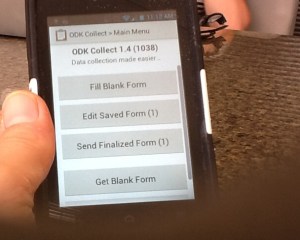
I was able to attend a workshop on Friday at Tulane School of Public Health in New Orleans on Open Data Kit (ODK) which is an open-source suite of tools that helps organizations author, field, and manage mobile data collection solutions.

The data is hosted for free on the ODK server (well for now since no one is ever sure of the evolution of these companies) but the data can easily be hosted on a different server and can be downloaded and saved offline as well. It works with simple excel spreadsheet surveys downloaded from a site like Formhub to android phones with a user friendly format (see pic).
photo
It allows for safeguards like reviewing data collectors work and yet it does not require expensive data plans for smart phones. The data can be collected offline and can be transferred using USBs (although that adds extra steps).
There are also proprietary systems and tools available using this process to take community organizations to the same place, if they feel more comfortable in pursuing a company to help them with a mobile system.
ODK has the possibility to capture data in many more formats than typical surveys relying on paper forms (i.e. text, numbers or single/multiple choice)

Pictures and videos

Capture (e.g. household survey with follow-up)

Display (show picture and ask people to identify / reflect on them

Capture signature (Consent forms)

Bar and QR Code (Anonymous identification)

The 2014 Local Food Awareness Report for Gulfport MS

In cooperation with their educational partner Real Food Gulf Coast (RFGC), the year-round open-air markets in Long Beach and in Ocean Springs are actively increasing local food accessibility and affordability in South Mississippi. Inspired by their success, the City of Gulfport opened a market in 2013 to accelerate access to regionally grown, healthful foods for their citizens, including those living in the areas defined as “food deserts.” In September 2014, RFGC released a report on the challenges of local food awareness in the Gulfport area in order to assist direct marketing farmers and area farmers markets in addressing those barriers. The report is the result of surveys conducted with existing market shoppers and farmers at the Long Beach and Ocean Springs Farmers Markets and surveys with residents and farmers not currently using farmers markets.

The Gulfport, Long Beach and Ocean Springs markets are all managed with volunteer labor, supported by South Mississippi Farmers Market Association. 

Click here to read the report and to view the survey forms.