Request for Makers, Hackers and Healers

Growing Power Inc and Growing Food and Justice for All Initiative (GFJI).

Growing Power’s Urban and Small Farms Conference Committee is excited to announce a request for Makers, Hackers and Healers. As part of Growing Food and Justice for All Initiative’s (GFJI) strategic work in reconnecting Food, Culture and Spirit, we are creating a ‘Marketplace’ for skill sharing in a variety of formats.

We also hope that healers who practice Reiki, energy work and other traditional practices offer opportunities to share their craft and practices.

This years conference theme “Building a Fair Food Economy to Grow Healthy People” will truly be activated in the Makers Marketplace. The space will cultivate the spirit of sharing, arts and culture.

We are looking for people to curate hands on learning and sharing activities

1) 90 minute workshop demos- (offered concurrently with conference workshop breakout sessions) to provide in depth opportunities for learning/sharing and making within the conference format.

2) 20 minute demos- (offered in the Maker Marketplace through out the conference) to provide quick learning experiences, information sharing, recipe demos and tastings. You may opt for multiple demo times to highlight your work

3) Three Hour long maker or tech skill share intensive- (Sunday, 11/9 from 1pm to 4pm) this is an opportunity to share your craft, skill or trade and for participants to have the opportunity to learn from presenters in a longer format. We also hope seed savers, artisanal food makers, permaculturistas, policy initiators and activist/makers use this time to broaden and strengthen our movement. Please designate the maximum number of people that you can accommodate and a materials cost if applicable.

Healing arts and culture sharing space in this “Market Place” will be made available through out the conference for people to grow, share, and heal.

Interested?

Apply using our Google Form here

7 Things You Need To Know About The Toxin That’s Poisoned Ohio’s Drinking Water

link to article.

“Experts say one of the biggest reasons for the severity of this algal bloom is excess phosphorus runoff from urban and industrial agricultural lands, as well as from waste water from sewage treatment plants. NOAA notes that this increased runoff into the lake is largely due to poor farming practices, such as high use of fertilizers and presence of livestock near water supplies. Pesticides also impact the blooms, NOAA says.”

An Introduction to MarketLink: Are you eligible to receive a free SNAP/EBT system for your market?

Farmers Market Coalition and Wholesome Wave are co-hosting a FREE webinar:

Wednesday August 13, 2014 3:00pm-4:30pm EST

The U.S. Department of Agriculture’s Food and Nutrition Service (FNS) launched MarketLink, a website that provides farmers markets and direct-marketing farmers with a one-stop-shop to become an authorized SNAP vendor and take advantage of USDA funding to obtain free or low-cost equipment and wireless services. Up to $4 million in grants for SNAP/EBT technology solutions will be available through this program for eligible markets through September 30, 2014. The quickly approaching deadline means that eligible farmers and market managers are making this important decision right now. Wholesome Wave and Farmers Market Coalition are co-hosting this free webinar to address your unanswered questions about MarketLink. Through this webinar, you will:
understand the USDA’s funding stream for enhanced SNAP benefits at markets
learn who is eligible to access USDA funding through MarketLink
learn about MarketLink, an iPhone-based EBT system that taps into $4 million in USDA funding to help new markets become SNAP/EBT accessible
hear an on-the-ground perspective on applying through MarketLink and implementing EBT
Panelists:

Rogelio Carrasco of the USDA’s Food And Nutrition Service will present an overview of the USDA’s funding for improved access to SNAP benefits at markets and the history of Marketlink
Amy Crone of NAFMNP and the Maryland Farmers Market Association will present the MarketLink program and provide an in-depth description of eligibility and application process
Sara Berney, Executive Director of Wholesome Wave Georgia, will discuss her experience applying for funds through MarketLink and recommendations for others

To register to for this webinar, please click here.

Please contact Liz at FMC at liz@farmersmarketcoalition.org, with any questions on the webinar.

Counterfeit Money at Our Markets

Here is a great post from Brian F. Moyer, Program Assistant Penn State Extension – Lehigh County:

There are many reasons we chose to sell our products at farmers markets. Some of these may include helping the public understand where there food comes from and who produces it. Another might be to capture more of the “food dollar” to keep our farms viable so the last thing we might be expecting is for someone at our markets to hand us a counterfeit bill.

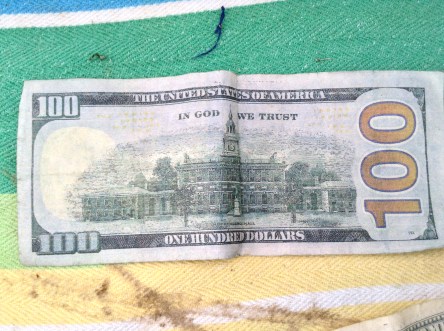
Recently I received an email from a market manager who told me that their market was hit for about $600 in counterfeit $100 dollar bills. I proceeded to get the word out to as many contacts as I have so other markets in the region would be aware. What I got back surprised me. I heard from managers and vendors throughout the mid-Atlantic and the Northeast that this has happened to their markets. So, what are we to do?

Markets are very busy places and we do our best to take care of the customer as fast as we can so how are we supposed to do that AND check the money they hand us to make sure the currency is legitimate? Farmers markets are also supposed to build community so there is also a level of trust that is broken when something like this occurs. How can we as a community use that trust to strengthen our markets and prevent these types of incidents from occurring?

The market manager who contacted me said that the counterfeit bills that the vendors received were bleached five dollar bills that were reprinted to look like one hundred dollar bills so the water marks were intact and they could pass the pen test so it was very difficult for a vendor to detect even if they were being vigilant. The U.S. Secret Service is the agency responsible for investigating counterfeit currency. The following is from the U.S. Secret Services’ website http://www.secretservice.gov on some things you can look for when receiving paper currency.

How To Detect Counterfeit Money

The public has a role in maintaining the integrity of U.S. currency. You can help guard against the threat from counterfeiters by becoming more familiar with United States currency.

Look at the money you receive. Compare a suspect note with a genuine note of the same denomination and series, paying attention to the quality of printing and paper characteristics. Look for differences, not similarities.

Portrait

kym_49
kym_48

The genuine portrait appears lifelike and stands out distinctly from the background. The counterfeit portrait is usually lifeless and flat. Details merge into the background which is often too dark or mottled.

Federal Reserve and Treasury Seals

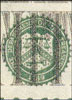
On a genuine bill, the saw-tooth points of the Federal Reserve and Treasury seals are clear, distinct, and sharp. The counterfeit seals may have uneven, blunt, or broken saw-tooth points.

kym_51
kym_50

Border

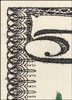
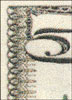
The fine lines in the border of a genuine bill are clear and unbroken. On the counterfeit, the lines in the outer margin and scrollwork may be blurred and indistinct.

kym_53
kym_52

Genuine serial numbers have a distinctive style and are evenly spaced. The serial numbers are printed in the same ink color as the Treasury Seal. On a counterfeit, the serial numbers may differ in color or shade of ink from the Treasury seal. The numbers may not be uniformly spaced or aligned.

kym_55
kym_54

Paper

Genuine currency paper has tiny red and blue fibers embedded throughout.
Often counterfeiters try to simulate these fibers by printing tiny red and blue
lines on their paper. Close inspection reveals, however, that on the counterfeit note the lines are printed on the surface, not embedded in the paper. It is illegal to reproduce the distinctive paper used in the manufacturing of United States currency.

kym_57

kym_56

Since markets usually have a focus on community, perhaps we can have a discussion as a community on how we can prevent incidents like this from occurring. Some markets have local banks as sponsors. What role can they play in helping to protect the market? What about the local law enforcement? Can we train our volunteers to help vendors with checking the money they are receiving? What message can we send that lets anyone who comes to the market know that there is zero tolerance for this type of activity?

This is perhaps a larger problem that could be affecting the surrounding small businesses and not just the market so it will take more than just the managers and vendors to prevent these types of incidents.
billimage2

billimage1

Burt minus the bees

The NYT reminds us that the documentary about the founder of Burt’s Bees who lives a pretty simple life in Maine these days is available for
download.

“When a cadre of screaming fans in fake beards and bee costumes greet Burt at a Taiwan airport, it’s impossible not to marvel at his strange existence.” – Abby Garnett, Village Voice, Jun 3, 2014

“I’ve got 40 acres. And it’s good and sufficient and it takes good care of me. There’s no noise. There’s no children screaming. There’s no people getting up at 5 o’clock in the morning and trying to start their car and raising hell. Everybody has their own idea of what a good place to be is, and this is mine.”

NYT article

Restaurant Day

Restaurant Day enthusiasts sell food that they have prepared themselves in locations as creative as the fare they serve up – in parks, on street corners, in courtyards, or in their kitchens. The foodfest takes place roughly every three months. It offers anyone the opportunity to set up a restaurant, coffee shop or bar, for just one day, without having to apply for official permits – as long as alcohol is not on the drinks list.

Facts

Restaurant Day is the world’s biggest food carnival and happens worldwide four times a year. All together 9600+ one-day restaurants by estimated 38 500+ restaurateurs have catered for estimated 1 060 000+ customers in the past Restaurant Days.

21 May 2011: 45 restaurants, 13 cities
18 August 2011: 190 restaurants, 30+ cities, 4 countries
19 November 2011: 287 restaurants, 40+ cities, 2 countries
4 February 2012: 304 restaurants, 50+ cities, 12 countries
19 May 2012: 711 restaurants, 90+ cities, 19 countries
19 August 2012: 784 restaurants, 100+ cities, 17 countries
17 November 2012: 702 restaurants, 130+ cities, 25 countries
17 February 2013: 629 restaurants, 130+ cities, 31 countries
18 May 2013: 1701 restaurants, 200+ cities, 30 countries
18 August 2013: 1683 restaurants, 220 cities, 35 countries
16 November 2013: 1383 restaurants, 190 cities, 31 countries
16 February 2014: 1210 restaurants, 27 countries
One-day restaurants have so far popped up in 56 different countries including Argentina, Aruba, Australia, Austria, Bangladesh, Belgium, Brazil, Bulgaria, Canada, China, Colombia, Czech Republic, Denmark, England, Ecuador, Estonia, Finland, France, French Polynesia, Germany, Greece, Guyana, Hungary, Iceland, Israel, Italy, Japan, Kazakhstan, Latvia, Lithuania, Malta, Mexico, Mozambique, Nepal, Netherlands, New Zealand, Nicaragua, Norway, Poland, Portugal, Romania, Russia, Rwanda, Singapore, Slovakia, Slovenia, Spain, Sweden, Switzerland, Tanzania, Thailand, Turkey, Ukraine, Venezuela, USA and Uzbekistan.
Please note that all restaurants with a clearly commercial, political or religious aim, or restaurants linked to existing commercial brands, or advertising a commercial space or a business, will be removed from the service.

Restaurant Day Map

http://yle.fi/uutiset/restaurant_day_celebrates_finlands_growing_culinary_diversity/6648419

The Zero Marginal Cost Society: The Internet of Things, the Collaborative Commons, and the Eclipse of Capitalism -Review

The Zero Marginal Cost Society: The Internet of Things, the Collaborative Commons, and the Eclipse of CapitalismThe Zero Marginal Cost Society: The Internet of Things, the Collaborative Commons, and the Eclipse of Capitalism by Jeremy Rifkin

My rating: 3 of 5 stars

First, I agree with other reviews that suggest author Rifkin often has a “Gatling” approach to supplying facts and theories, and a tendency to offer the same theory over and over in his writing which can be tiresome after a bit-all true.
Even so, his contribution here that pure capitalism is in a transition to a hybrid economy made up of part capitalism and part collaborative commons is valid and worthwhile enough to pick this up.
He reminds us that the feudal system transitioned to the market economy starting in the ninth century and then with The Great Enclosure Movement of the 16th-19th centuries, built a legal system that protected private property just as the Industrial Revolution began in earnest. Now, he predicts that another shift is happening: capitalism has begun to share the global stage with one that uses collaborative data, has free or almost free goods and services available (because the cost of producing more goods is zero online) and allows for more efficient (or sufficient) use of natural systems.
How businesses will make profit in this future economy is certainly undecided and just as economists from Keynes to Marx wondered about it too. In other words, there are some scary unplanned moments ahead.
It’s also important to discuss how the collection of data (which is almost always used as a negative in popular media) has allowed the emergence of shared information for distribution systems, food production, human health, social revolutions and of course communication and is allowing for more interdisciplinary scholarship and maybe most importantly a reduction in ecological impact.

All of this should be interesting to anyone who hears the argument against the collaborative commons almost daily. My experience is that people’s concern is based on the legal implications of (in Rifkin’s words) how we are “moving from exclusive ownership to conditional rights.” His statement that “markets are giving way to networks and ownership is less important than access” is beguiling language for any community activist and as a farmers market partisan, I already believe in the power of the commons and see every week how informal relationships can build a new economy. I also regularly see fear and mistrust of this type of collaborative production or virtual distribution as many believe it impairs adding or improving necessary infrastructure. I might argue that we need to reduce our dependence on that as our main economic driver in municipal or civic systems anyway.
Do I worry about loss of privacy from all of this new activity? Some, but less so from my neighbors and fellow citizens who are bound by networks of social capital or because of the lack of shared networks with me, I am warned against sharing information or goods. Anyway, these virtual networks are less important than my existing (more important) physical networks and maybe that is one of the lessons of community food systems too.

Rifkin’s theory is that this will not be a total eclipse, but only a partial one and will allow for more diverse relationships and systems in other sectors while still retaining some capitalist characteristics when valid, like maybe in local food production. It may also reduce the possibility of monopolies or at least reduce their length, since technological innovation is harder to stifle in collaborative systems.
As for Rifkin himself, I like his quirky way on these subjects, but he should never be your only theorist on economic systems. If you are interested in reading someone who expands his thinking and has long embraced the need to address the ecological impacts of modern life, you need to read this.

View all my reviews

Swamp Savior: Can a 72-Year-Old Inventor Rescue The Sinking Bayou?

Louisianians like this are my heroes:

“Pierce, however, would argue that swamp ingenuity is nothing new…
‘It’s in my nature to invent things,” say Pierce, a white eyebrow raised playfully as he explains that he’s never had any formal training as an engineer. “It runs through my blood.”

Beard Foundation Presents Leadership Awards

From the NYT:
“Ben Burkett is still farming a parcel of land in Mississippi that his great-grandfather homesteaded in 1889, about two decades after slavery ended. He grows 16 vegetables, including okra and soybeans, on 320 acres, but he is also active in several organizations that promote local food production for local consumption.“Our work is to bring awareness to the plight of the true family farm,” Mr. Burkett, 62, said over the phone from his farm in Petal, in Southern Mississippi. Mr. Burkett is one of five winners of the James Beard Leadership Awards, which recognize visionaries in the world of food politics and sustainable agriculture.”

Ben Burkett-farmer and activist

Ben Burkett-farmer and activist

Great news. I have learned a great deal from working with the folks at Indian Springs, the Mississippi Association of Cooperatives and truly, from Ben himself (and for the last few years, his daughter Darnella too.) This past Saturday, he accepted congratulations from his peers and shoppers at the New Orleans farmers market where he showed up to sell his products, just as he has every season since 1995 even with the grueling schedule he keeps assisting with initiatives near and far to expand local wealth and health for communities. No one deserved this award more this year.

and congrats to his fellow winners, all of whom also richly deserve the honor:
“… include Karen Washington, the former president of the New York City Community Garden Coalition and an urban farmer; Michael Pollan, the writer and journalist who has written extensively about food and food politics; Navina Khanna, a fellow at the Movement Strategy Center who has worked to create awareness and action around food justice issues; and Mark Bittman, an author and food writer for The New York Times.”

Beard Foundation Presents Leadership Awards – NYTimes.com.

Farmers Market Metrics Prototype Released

The story about the completion of the FMC Prototype Report project done from January to June with 8 markets can be found here:

FMM Prototype story

A new Wisconsin NPR story about the AFRI-funded research for the Farmers Market Metrics work:

NPR story

Great infographic

20140709-152410.jpg

Can your organization become a B Corp?

When food and civic organizations start to think about how they might incorporate, they often stop as soon as they get their company registered in their state which for many, may be enough protection and structure.
Some also immediately apply for a 501 (c) federal tax status, some to specifically to get 501(c) 3 status, knowing it will become more likely to be a foundation-funded organization and to offer tax-deductible donation options. On listserves, there are many stories of farmers markets and organizations being denied a 501 (c) 3 status. My impression is that people think there is a “moratorium” on new 501 (c) 3 awards or that the IRS has redlined farmers markets which, based on the amount that continue to get that status, seems unlikely. I think instead that many organizations expect that the embedded “educational” benefits of markets make 501 (c)3 status likely when really, a much higher rate of proactive educational activities must be offered to achieve it and maintain it! Many other markets have successfully received 501(c) 6 status, (as articulated in the comments section by Oregon market leader Rebecca Landis.)
From the IRS website:
To be tax-exempt under section 501(c)(3) of the Internal Revenue Code, an organization must be organized and operated exclusively for exempt purposes set forth in section 501(c)(3), and none of its earnings may inure to any private shareholder or individual. In addition, it may not be an action organization, i.e., it may not attempt to influence legislation as a substantial part of its activities and it may not participate in any campaign activity for or against political candidates. Organizations described in section 501(c)(3) are commonly referred to as charitable organizations.
The organization must not be organized or operated for the benefit of private interests, and no part of a section 501(c)(3) organization’s net earnings may inure to the benefit of any private shareholder or individual. If the organization engages in an excess benefit transaction with a person having substantial influence over the organization, an excise tax may be imposed on the person and any organization managers agreeing to the transaction. Section 501(c)(3) organizations are restricted in how much political and legislative (lobbying) activities they may conduct. For a detailed discussion, see Political and Lobbying Activities. For more information about lobbying activities by charities, see the article Lobbying Issues; for more information about political activities of charities, see the FY-2002 CPE topic Election Year Issues.

So, I won’t advocate for or against any particular incorporation (especially since I am not equipped to offer legal or financial services) but will just say that all markets should do their due diligence to find the appropriate level of protection and status needed for their situation. However each organization gets there, it’s just important that the officers of the company have some cover from personal liability and that the status chosen is not too time consuming or complicated to manage. And when doing their research, to look at new incorporation methods and added layers of social good designation that may help clarify and safeguard the future. B Corp is one of those designations, but be careful-it can be confusing. The value of the B Corp certification is access to resources and an added level of clarity about the company or organization’s mission in regards to social good.

This is from the B Lab website:

Benefit Corporations and Certified B Corporations are often, and understandably, confused. Both are sometimes called B Corps. They share much in common and have a few important differences.

Certified B Corporation is a certification conferred by the nonprofit B Lab. Benefit corporation is a legal status administered by the state.

Benefit corporations do NOT need to be certified. Certified B Corporations have been certified as having met a high standard of overall social and environmental performance, and as a result have access to a portfolio of services and support from B Lab that benefit corporations do not.

The value of meeting the legal requirement for B Corp certification is that it bakes sustainability into the DNA of your company as it grows, brings in outside capital, or plans succession, ensuring that your mission can better survive new management, new investors, or even new ownership.

The benefits of the B Corp legal requirement:

1. Give legal protection to directors and officers to consider the interests of all stakeholders, not just shareholders, when making decisions

2. Create additional rights for shareholders to hold directors and officers accountable to consider these interests

3. Limit these expanded rights to shareholders exclusively

B corp site

Here is an example of a market organization that has been listed as certified as a B Corp: Down to earth markets

And a story about how the process can be assessed as to the public good offered by that company: students use b impact assessment

The Internal Revenue Service today introduced a new, shorter application form to help small charities apply for 501(c)(3) tax-exempt status more easily.
“This is a common-sense approach that will help reduce lengthy processing delays for small tax-exempt groups and ultimately larger organizations as well,” said IRS Commissioner John Koskinen. “The change cuts paperwork for these charitable groups and speeds application processing so they can focus on their important work.”
The new Form 1023-EZ, available today on IRS.gov, is three pages long, compared with the standard 26-page Form 1023. Most small organizations, including as many as 70 percent of all applicants, qualify to use the new streamlined form. Most organizations with gross receipts of $50,000 or less and assets of $250,000 or less are eligible.

Instructions for new form

Grocery shopping in 2014: diversified and fragmented, says FMI

Thanks to Wayne Roberts for bringing this report to our attention, which shows that shoppers are moving back to the multiple outlet shopping experience and away from supercenters; 9% of those surveyed do not even identify a primary store where they do their shopping. That may not seem like much, but that number seems to be climbing and is statistically significant for our purposes of encouraging shoppers to add farmers market to that multiple outlet list.
I think there are a few other important points in this study such as that shoppers seek out tandem claims. In other words, if they search for low calories, they look also for low sugar. Those that look for high fiber foods also seek out whole grains.
And here’s an exciting number: 90% of those surveyed said they buy local at least occasionally and that they believe that those goods are better quality and 61% think they offer better taste.
40% of the substantial grocery shopping is now done by men.
The details of how millennials shop is also useful:
•25% of twenty somethings’ meals included items purchased that same day.
•they create their shopping lists right before leaving, which will help those markets that use Facebook, Twitter and email campaigns.

2116 people were surveyed between the ages of 18-74 and supplemented by data from the US Census and the USDA and from 2013/2014 Hartman Group ethnographic research into eating and shopping.
—————–

By Maggie Hennessy, 17-Jun-2014
Not only are today’s consumers less likely to rely on a primary store for food shopping, but they’re sharing shopping duties and planning for specific meals rather than stocking up on food, according to the Food Marketing Institute (FMI)’s annual analysis of U.S. Grocery Shopper Trends, done in collaboration with the Hartman Group.
Link to story

High Performers vs. Workaholics

“I’m a recovering workaholic,” admits Jullien Gordon, a nationally recognized speaker and founding partner of New Higher, in a recent LinkedIn post.

Workaholism, he says, looks similar to high performance on the outside — but they’re actually nothing alike.

Gordon has spent the last year doing research and conducting experiments on himself to understand the difference between workaholism and high performance. He found that while they both look like hard work, “the big difference is how the individual feels on the inside about who they are in relationships to their work,” he explains.

A high performer works hard in “healthy sustainable ways and feels happy and inspired,” he says. Meanwhile, a workaholic “works hard in unhealthy unsustainable ways and feels unhappy and burned out.”

The No. 1 goal of a workaholic is to be busy at all times — as they believe that the busier they are (or appear), the more important they must be.

“Workaholics fill any space in time with busy work because they feel insecure doing nothing,” Gordon explains. “The insecurity comes from not knowing their value.”
entire LinkedIn post