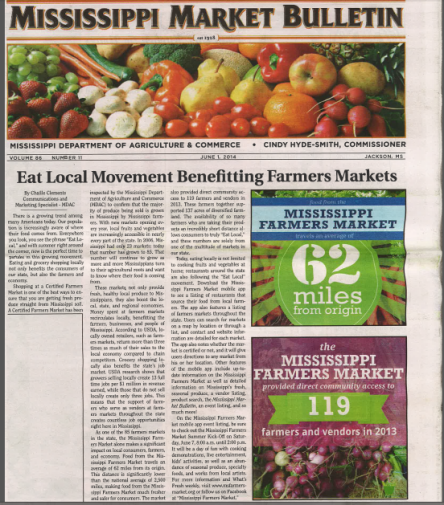
Growing the Farm – Feeding Mississippi by Beaverdam Fresh Farms — Kickstarter

When I read quotes like this from a farmer, I know that the community food revolution is in full swing and in good hands:

We hope that our building of this processing facility, moving forward with obtaining a permit, and completing inspections will create a replicable model for others and will increase the number of small pasture rotation farms in the South. We know that this next step is a big one, not only for us, but for the future of sustainable farming in Mississippi and the health of its families.

Community food system farmers are not simply working to revive the old way of business but cooperating and communicating on so many levels with their shoppers, peers and policy makers. Show your support if you can for these Mississippi farmers leading the way in sustainability.

Growing the Farm – Feeding Mississippi by Beaverdam Fresh Farms — Kickstarter.

The Goldring Center for Culinary Medicine-New Orleans

One of the most exciting developments in food and health is happening in my own town of New Orleans and right in my neighborhood. Very proud of this work being done by “Dr. Gourmet” (who happens to be my mom’s doctor), Tulane University and the good people of Broad Community Connections.

The Goldring Center for Culinary Medicine is a first-of-its kind center dedicated to comprehensively integrating nutrition and dietary intervention strategies into medical school curriculum,” said Dr. Benjamin Sachs, senior vice president and dean of Tulane University School of Medicine. “The goal is to train doctors not only how food choices affect health and disease progression but also how to translate this information in practical ways that empower patients to lead healthier lives.”

Inside Tulane Med.

Louisiana Eats on seafood issues

Slow Food maven, radio host and author Poppy Tooker did a great show on seafood on Louisiana Eats: Gerard Maras (a giant among chefs in New Orleans) shared his boiling technique, Tenney Flynn who is still the best seafood chef in the French Quarter, talked about fish handling and finally Poppy and her guests discussed the ecological issues facing the harvesting community. Seafood is something Poppy knows a great deal about-she is a fisherwoman herself and one of the champions of fishing families in Louisiana and across North America.

Can you remember to mark “listen to Louisiana Eats” to your Saturday calendar? I’d recommend it.

The Ebb And Flow Of Louisiana Seafood | WWNO.

Welcome Midsummer’s Eve

What kind of public market author would I be if I didn’t mention midsummer? I wish more food organizations would use the old holidays to remind us all of the ebb and flow of life ruled by the sun and the plant…
In 2008, back when we were designing the new iteration of Market Umbrella, the E.D. and I attempted to add two holidays to the employees schedule that represented farming and justice: Harvest Day and May Day. Unfortunately, the staff did not agree since they had to give up two other holidays that their family and friends celebrated, Labor Day and MLK Day; silly us-we thought community organizers might want to work on MLK Day to honor him!
We should have celebrated another way, possibly with a special lunch or an educational outing. In any case, I hope everyone celebrates June 21 with their own outing to a farmers market and a special lunch….

From the Encyclopaedia Britannica:


Midsummer’s Eve, Swedish Midsommar, Finnish Juhannus, Danish Sankt Hans Aften, NorwegianSankhansaften,  holiday celebrating the longest day of the year in the Northern Hemisphere, thesummer solstice (June 21). Midsummer’s Eve is observed in several countries. It is a national holiday in Sweden and Finland, and the official holiday is typically observed on the third Friday in June to allow a three-day weekend. During this time many Scandinavians travel to rural parts of the country. Midsummer’s Eve activities in Sweden include gathering around a flower-festooned maypole(majstång) to sing and dance, an ancient custom probably related to fertility rites. Before the holiday Scandinavians thoroughly clean their houses and decorate them with flowers and other greenery. In Denmark holiday traditions include singing “Vi elsker vort land” (“We Love Our Land”) and building a bonfire where a symbolic straw witch is sacrificed in remembrance of church-sanctioned witch burnings in the 16th and 17th centuries. Traditional foods, such as pickled herring, smoked fish, new potatoes, and strawberries, are served, along with beer and schnapps.

The celebration predates Christianity and is likely related to ancient fertility practices and ceremonies performed to ensure a successful harvest. The holiday was later rededicated to honour St. John the Baptist in Christian times. Although the meaning of the holiday has changed, some pagan customs still persist, such as the bonfires, which originally were believed to ward off evil spirits, and the focus on nature, which harkens back to when plants and water were thought to have magical healing powers on Midsummer’s Eve.


from Orion magazine:


“no such event is complete without aquavit, herring, or Små grodorna, a dancing game in which people sing this about frogs while dancing around the Midsummer pole:

The little frogs, the little frogs are funny to observe.
No ears, no ears, no tails do they possess.

Kou ack ack ack, kou ack ack ack,
kou ack ack ack ack kaa.”
Monsanto Visits Local School for 47 Minute Propaganda Presentation

“Monsanto told children at his school that they created jobs for people and that they helped to feed the world…
Monsanto also told a fable to children about how one farmer tried to get rid of Monsanto seed and the stuff they spray on their crops and that it caused him great trouble. Additionally, the company warned against saving heirloom, organic seed, though this particular term wasn’t used.
When this child’s parent tried to contact the school about the uncanny way in which the Monsanto Corporation was trying to brainwash his child, he was referred to his child’s handbook. It turns out that the school’s principal was actually the one who set up permission for Monsanto to speak to the children.”

Monsanto Visits Local School for 47 Minute Propaganda Presentation | NationofChange.

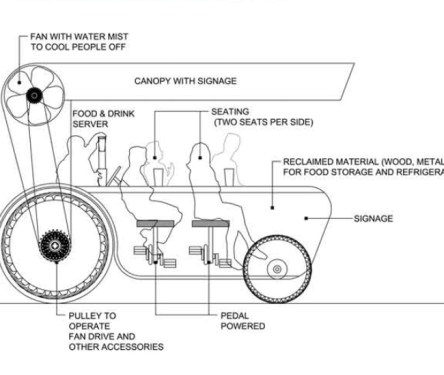
Designlines judges food cart design at The Stop’s Night Market

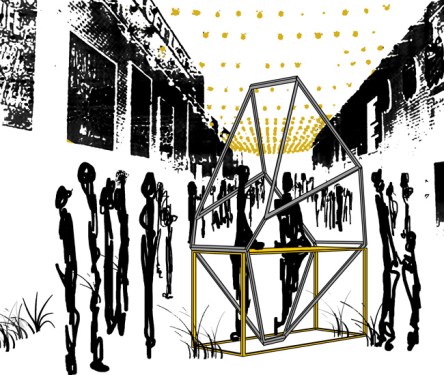
Toronto: More than a charitable event for gourmands, the Night Market is a true mesh of the design and food communities: each of the chef’s carts is crafted from upcycled materials by a mix of established and burgeoning designers. So impressive are these carts that The Stop invited Designlines to judge them for design excellence, creativity and effective representation of The Stop’s mission.

Pumped

Lemon

Falco

HokPinata

Deconstruct

BikeSauce

What Ruins A Performance Review?

As a human resources manager in a previous work life, I can tell you that this post linked below has some excellent points to consider. As more and more markets add staff (and I mean staff and not independent contractors!), those organizations must add the skills necessary to manage that staff; if the organization is run entirely by a volunteer board, then a handbook on staff management or completing a short course should be required for the Executive Committee or at least the president of each term. If there is a paid director, then certainly basic human resources training available online or possibly through local community colleges or non-profit training centers should be required.
Over and over, I hear from market managers that most of them don’t get an annual review at all or if they do, don’t feel the review is in-depth enough or fair or designed to allow for improvement; they often report that the review contains criticism of issues that were beyond their control or their work is measured in ways that is news to the staff person. All of those are no-nos.
It does seem odd that people management skills are often lacking in non-profits and community initiatives, since that is exactly what they rely on to get the job done.

What Ruins A Performance Review? | LinkedIn.

Connecting Students and Farmers—Still Trying | FoodAnthropology

This campaign (just down the road from me) has already done amazing work to get the conversation and the organizing started for regional products to be used in the Southeastern Louisiana University campus purchasing process; FYI-this university sits within a very active farming community and many of its farmers sell to nearby New Orleans outlets. The campus student group Reconnect and their academic advisor Dr. David Burley continue to offer as much information and to open as many communication channels as they can to assist Aramark in understanding what the campus wants, but to no avail. In response Aramark has deliberately undermined their efforts with their embargo against meetings and their”food giveaway” tactic! Using markets as organizing wedges can be the best way to keep the pressure on head-in-the-sand institutions; big props to the Reconnect students and to Dr. Burley for keeping these efforts going year after year. If you have any resources or ideas to assist their efforts to put pressure on Aramark, feel free to email them.

Connecting Students and Farmers—Still Trying | FoodAnthropology.

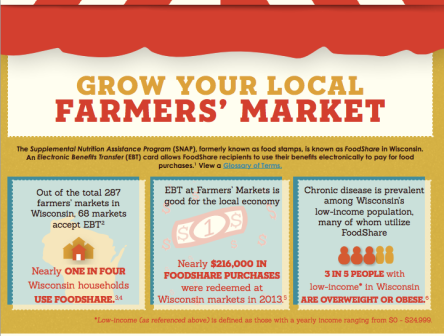
Wisconsin farmers market graphic on benefit program usage

Professor Alfonso Morales, principal investigator to the Indicators for Impact project sent this interesting graphic to the project team last week:
PDF

here is the top part for those unable to see the PDF:

WISNAP_graphictop

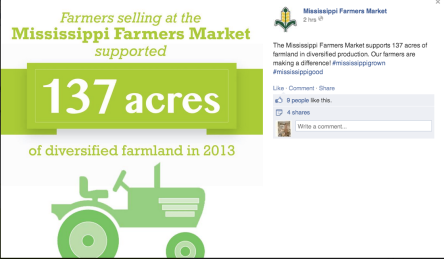
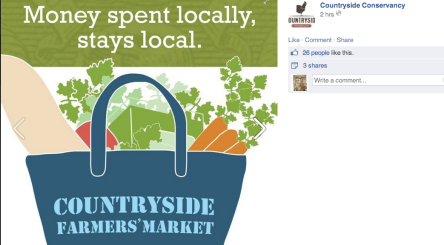
Using infographics to tell a story about multiple benefits is rapidly growing throughout the farmers market field and the Farmers Market Coalition Farmers Market Metrics project (including the Indicators for Impact research) has already devised prototypes of reports and graphics for markets which will continue to be refined. Here are some examples of how some of the FMM/FMC prototype markets have already used the graphics on FB and in print too:

JacksonFB1

AkronFB1

Jackson_print1

Chef gives back Louisiana farming community – CSMonitor.com

(Another story about a New Orleans chef!)
Huge fan of John Besh and his amazing team. There is no question he has put his money back in the community and has done amazing work.
I will say (and certainly not meant as criticism to Chef Besh and his team) that even with this excellent help, many farmers here still lack the full resources to increase their capacity. Since sustainable agriculture advocates are few and support for sales outside of the city are quite limited, many still falter with the expansion of their business. Business assistance must be matched with policy changes on production and regional connections that diversify each farm appropriately, since it is important that every farmer is not led only to intermediate and wholesale sales as their big expansion opportunity.
Still, there is no question that his foundation is a huge step in the right directional our region’s producers.

CSM Story and link:

The Foundation’s most recent initiative selects local farmers to provide with financial loans, while also delivering valuable training in marketing and business strategy. Many regional farmers have delicious products, the Foundation shares, but lack the finances or business knowledge to market those products to a wider audience. Working with Hope Credit Union, the Foundation evaluates loan applications and designs customized repayment plans. Then, MBA candidates from Tulane University’s Net Impact business advisory program, support loan recipients in setting goals and creating a long-term business plan.

Loans ranging from US$1,000 to US$20,000 are available to farmers within a 200-mile radius of New Orleans. Acknowledging the challenges farmers face in acquiring loans from traditional sources, Besh has yet to set a limit on the number of recipients. “The more we lend the better it is for these guys and gals out working to produce all the wonderful products that make my life wonderful,” Besh said. “We hope to do as many as possible.”

Chef gives back Louisiana farming community – CSMonitor.com.

Oxford Canteen

My pal Corbin Evans has made his way (going the long way from New Orleans to Philly to Brooklyn and maybe a few other stops in there since) to Oxford, Mississippi. His new lunch place there with seasonal locally sourced products is a hit this summer, which is no surprise as he is an award-winning chef and a well-liked guy everywhere he goes. He served as the Board President of Market Umbrella in New Orleans after the federal levee breaks and did tons of other unheralded support work around town to build food producers and so I was able to work with him throughout all of his New Orleans years. Chefs like Corbin are willing to give support to farmers markets in many ways and should be invited to assist whenever possible.
I think of him as a little brother while at the same time, as a teacher and leader in sustainable regional food production. This is a lovely film from the great Southern Foodways Alliance detailing his latest effort. Do take a road trip to Oxford and the Delta to see it for yourself anyway and make sure to stop and see Corbin in his alley. You’ll like him.

Oxford Canteen from Southern Foodways on Vimeo.

The Cooperative Economy | Orion Magazine

I’m returning to the idea of worker ownership and cooperatives on this blog again after reading the excellent interview in the most recent Orion Magazine shared with me by Stacy Miller, freelance researcher and project advisor at Farmers Market Coalition. I believe that the future of community food systems depends on us rescuing traditional work and community structures and creating some new ones too. We cannot expect the small businesses we work with to thrive when being asked to return to the industrial production or delivery systems of the mid 20th century that bankrupted them and helped to isolate all of us before.
Cleveland Ohio was my original home and so I follow the exciting news from there on issues like Evergreen Cooperatives, as well as the many, many other worker-owner hubs across the state (like Athens). I also appreciate that the author points out the battle for local ownership of energy grids in Colorado which has been happening in Ohio for decades, along with the expansion of aggregation for buyers to band together to purchase electricity at the community level. Those kinds of policies are allowing consumers more knowledge of real energy costs and to be actively engaged on issues of expanding renewables. All of these issues in the article show the need for citizen engagement to go beyond the voting booth and cooperatives of all kinds accelerate that action.
So as we discuss the needs for food work in our communities, let’s research and include ideas like cooperatives and worker-ownership right up front.

The Cooperative Economy | Orion Magazine.