Helping Farmers Markets Grow

Skip to content
  • About

civic engagement

Report says that access alone is no solution

Therefore, the goal for food organizations cannot only be to spend the efforts on getting people to the healthy food, but shows the need to engage them more directly and through many types of interventions to change their behavior.
I love this thought from the article: A change in perception is not necessarily a change in behavior.

Lead author Dr Steven Cummins, Professor of Population Health at the London School of Hygiene & Tropical Medicine, said: “US policymakers have implemented policies and interventions that encourage the location of supermarkets and grocery stores to improve diet and reduce diet-related diseases such as obesity and diabetes. Such policies form a central part of many US government schemes such as Michelle Obama’s Lets Move Childhood Obesity programme, and are high on the policy agenda in many other nations. However we don’t know whether these kinds of policies are effective in improving diet.
“Though these interventions are plausible and well-meaning, this study suggests that they are only effective in taking us part of the way in changing dietary behaviour — in order to realise their full potential we need to better understand how to translate changes in perception to changes in behaviours.”

Link

Share this:

  • Click to email a link to a friend (Opens in new window) Email
  • Click to print (Opens in new window) Print
  • Click to share on Reddit (Opens in new window) Reddit
  • Click to share on Facebook (Opens in new window) Facebook
  • Click to share on X (Opens in new window) X
  • Click to share on Pinterest (Opens in new window) Pinterest
  • Click to share on LinkedIn (Opens in new window) LinkedIn
  • Click to share on Pocket (Opens in new window) Pocket
  • Click to share on Tumblr (Opens in new window) Tumblr
Like Loading...
0 CommentsLeave a comment
02/10/2014
DW
articles, case studies/research, civic engagement, food deserts, food policy, national food system work, public health
food access, food security, fresh food retail initiatives

How Did Toast Become the Latest Artisanal Food Craze? The Science of Society

A well-written piece on “third places” and comfort: yes, in the form of artisanal toast.

WHEN I TOLD FRIENDS back East about the craze for fancy toast that was sweeping across the Bay Area, they laughed and laughed. (How silly; how twee; how San Francisco.) But my bet is that artisanal toast is going national. I’ve already heard reports of sightings in the West Village.

If the spread of toast is a social contagion, then Carrelli was its perfect vector. Most of us dedicate the bulk of our attention to a handful of relationships: with a significant other, children, parents, a few close friends. Social scientists call these “strong ties.” But Carrelli can’t rely on such a small set of intimates. Strong ties have a history of failing her, of buckling under the weight of her illness. So she has adapted by forming as many relationships—as many weak ties—as she possibly can. And webs of weak ties are what allow ideas to spread.

In a city whose economy is increasingly built on digital social networks—but where simple eye contact is at a premium—Giulietta Carrelli’s latticework of small connections is old-fashioned and analog. It is built not for self-presentation, but for self-preservation. And the spread of toast is only one of the things that has arisen from it.

How Did Toast Become the Latest Artisanal Food Craze? – Pacific Standard: The Science of Society.

Share this:

  • Click to email a link to a friend (Opens in new window) Email
  • Click to print (Opens in new window) Print
  • Click to share on Reddit (Opens in new window) Reddit
  • Click to share on Facebook (Opens in new window) Facebook
  • Click to share on X (Opens in new window) X
  • Click to share on Pinterest (Opens in new window) Pinterest
  • Click to share on LinkedIn (Opens in new window) LinkedIn
  • Click to share on Pocket (Opens in new window) Pocket
  • Click to share on Tumblr (Opens in new window) Tumblr
Like Loading...
0 CommentsLeave a comment
01/20/2014
D.W.
civic engagement, social cohesion
Giulietta Carrelli, Pacific and Standard, San Fransciso, third places, Trouble cafe

the seeds we didn’t know the soil held

The title of this piece was included in an end of year TomDispatch commentary, written by one of my favorite writers, Rebecca Solnit:
…Many seeds stay dormant far longer than that before some disturbance makes them germinate. Some trees bear fruit long after the people who have planted them have died, and one Massachusetts pear tree, planted by a Puritan in 1630, is still bearing fruit far sweeter than most of what those fundamentalists brought to this continent. Sometimes cause and effect are centuries apart; sometimes Martin Luther King’s arc of the moral universe that bends toward justice is so long few see its curve; sometimes hope lies not in looking forward but backward to study the line of that arc.
and near the end of her piece, this:
I don’t know what’s coming. I do know that, whatever it is, some of it will be terrible, but some of it will be miraculous, that term we reserve for the utterly unanticipated, the seeds we didn’t know the soil held….

I am going to adopt this as my new mantra (my friends and colleagues should get ready to hear it often) for the work that we are all doing in food, in recalibrating what health and wealth means in our communities and in demanding a civic (public) life that breeds empathy and justice.
Writer/activist/teacher Michael Harrington who used the metaphor of being a “long-distance runner” for community organizing and movement work would also say this in lectures:
“…you must recognize that the social vision to which you are committing yourself will never be fulfilled in your lifetime.”

Some of Harrington’s writing and the majority of Solnit’s is about how successful movements-when pulled apart and examined-are made up from a series of direct action moments and negotiations finally coming to fruition around a shared narrative of big or even scary ideas that will lead to societal transformation.
Yet Solnit’s content is most often written about the individual or about small groups using meandering/karmic ways to create this change, outside of the broken or simply too large formal structures that stopped responding to individual plights a long time ago. And that when it happens the right way, collectively and with heart-thumping goals attached (let’s say during the American Revolution or with the 18th and 19th century abolitionists or with the woman’s suffrage movement) it starts slowly with small groups of citizens and spreads to those governing us, not the other way around. And that it takes a while.

All of that is all very nice I hear some of you say. But what does this matter to my never-ending project list and non-stop funding crunch?

What I ask is while you take the time to read this, do examine your own way of working and ask yourself now (and later on too) if you are also caring for the seeds yet unseen. If you have the maturity to manage your or your organization’s relationships in your work like a long-distance runner does with his/her energy and time.

I don’t expect you to remember this post every time that you sit at your desk or head out to the community to work on food and justice. Just remember the title of this piece and remember my teacher Michael Harrington, pacing himself as best he could. He died long before he saw what he defined as success but I believe that he was genuinely glad the work outlived him. Not the injustice certainly but the connections and the ideas.
How could any of us expect to get it all done in our lifetime? My god, I hope many of the seeds and saplings that I have planted bear fruit 300 years after my passing, just like that long ago pear planter.

However you find your pace, I hope we can all find the energy and patience to stay on for the long seasons ahead, some with cloudy dusks with fallow ground and others with sunny days full of trees bearing fruit as far as the eye can see. If not, if you only want a win, to bring in a single crop, then throw it all in now by all means. We need those too. I suspect you will find more work to stick around, but if not, I will still salute your effort and your time. And I’ll come get you when the green shoots takes hold.

Solnit gets the last word:
A decade ago I began writing about hope, an orientation that has nothing to do with optimism. Optimism says that everything will be fine no matter what, just as pessimism says that it will be dismal no matter what. Hope is a sense of the grand mystery of it all, the knowledge that we don’t know how it will turn out, that anything is possible.

Share this:

  • Click to email a link to a friend (Opens in new window) Email
  • Click to print (Opens in new window) Print
  • Click to share on Reddit (Opens in new window) Reddit
  • Click to share on Facebook (Opens in new window) Facebook
  • Click to share on X (Opens in new window) X
  • Click to share on Pinterest (Opens in new window) Pinterest
  • Click to share on LinkedIn (Opens in new window) LinkedIn
  • Click to share on Pocket (Opens in new window) Pocket
  • Click to share on Tumblr (Opens in new window) Tumblr
Like Loading...
0 CommentsLeave a comment
12/31/2013
D.W.
civic engagement, fair trade, Farm To School, farmers markets, farmers/farming information, fishers, global organizing, governments, national food system work, other sectors, public health, public markets, racial equity, social cohesion
food and farming, Harrington, movements, Solnit

The Spread of Obesity in a Large Social Network over 32 Years — NEJM

Once again, the link between social influence and obesity is identified. Markets could conceivably use this more powerfully in “bring a friend” campaigns or by keeping healthy recipes at trusted vendor tables rather than at generic tables or maybe with “2 for 1” specials for SNAP incentives….

The spread of obesity in social networks appears to be a factor in the obesity epidemic. Yet the relevance of social influence also suggests that it may be possible to harness this same force to slow the spread of obesity. Network phenomena might be exploited to spread positive health behaviors,34-36 in part because people’s perceptions of their own risk of illness may depend on the people around them.37 Smoking- and alcohol-cessation programs and weight-loss interventions that provide peer support — that is, that modify the person’s social network — are more successful than those that do not.34,35,38,39 People are connected, and so their health is connected.40,41 Consequently, medical and public health interventions might be more cost-effective than initially supposed, since health improvements in one person might spread to others.42 The observation that people are embedded in social networks suggests that both bad and good behaviors might spread over a range of social ties. This highlights the necessity of approaching obesity not only as a clinical problem but also as a public health problem.

The Spread of Obesity in a Large Social Network over 32 Years — NEJM.

Share this:

  • Click to email a link to a friend (Opens in new window) Email
  • Click to print (Opens in new window) Print
  • Click to share on Reddit (Opens in new window) Reddit
  • Click to share on Facebook (Opens in new window) Facebook
  • Click to share on X (Opens in new window) X
  • Click to share on Pinterest (Opens in new window) Pinterest
  • Click to share on LinkedIn (Opens in new window) LinkedIn
  • Click to share on Pocket (Opens in new window) Pocket
  • Click to share on Tumblr (Opens in new window) Tumblr
Like Loading...
0 CommentsLeave a comment
12/30/2013
D.W.
case studies/research, civic engagement, farmers markets, public health, public markets, retail anthropology/science of shopping, social cohesion
adult obesity, farmers markets and public health, public health, social networks, trust

Article 89 outlines Boston’s zoning changes for food

Article 89 of the zoning code will create clarity and predictability for anyone interested in growing commercial food and creating farms in Boston. The development of Article 89 was made possible through the exploration of six research modules which were studied and discussed in depth throughout 2012 during monthly public Working Group meetings:
Soil safety, pesticides and fertilizers, and composting
Growing of produce and accessory structures
Rooftop and vertical agriculture
Hydroponics and aquaculture
Keeping of animals and bees
Farmers markets, winter markets, farm stands, and sales
The existing Boston zoning code does not address many types of agricultural activities. If an activity is not identified, it is considered a forbidden use and requires an appeal process through the City’s Zoning Board of Appeals (ZBA). Article 89 will identify urban agricultural activities to improve Boston’s direct access to locally produced fresh food.

Why Urban Agriculture is Good for Boston:
Community based farms can bring people together, increasing cooperation, collaboration, and neighborhood building.
Urban agriculture improves access to affordable, fresh, and healthy food.
Urban farming provides an opportunity for Bostonians to learn how to grow food and empowers entrepreneurs to operate a farm right in the City.
Local farming can be an effective tool for empowering youth by teaching young people how to grow food and run a business.
Urban farming teaches us about using land wisely, which helps us grow our neighborhoods and communities in a positive and healthy way.
Farming in the city is good for the environment because it can reduce transportation costs and carbon emissions on the buyer and grower’s end.
Urban farming is a great way to get Bostonians excited about sustainability and “greenovation,” so that we can make this a cleaner, healthier city.
Urban Agriculture – Article 89 Quick Facts_tcm3-38477

Share this:

  • Click to email a link to a friend (Opens in new window) Email
  • Click to print (Opens in new window) Print
  • Click to share on Reddit (Opens in new window) Reddit
  • Click to share on Facebook (Opens in new window) Facebook
  • Click to share on X (Opens in new window) X
  • Click to share on Pinterest (Opens in new window) Pinterest
  • Click to share on LinkedIn (Opens in new window) LinkedIn
  • Click to share on Pocket (Opens in new window) Pocket
  • Click to share on Tumblr (Opens in new window) Tumblr
Like Loading...
0 CommentsLeave a comment
12/19/2013
D.W.
articles, civic engagement, community gardens, economic development issues, farmers markets, farmers/farming information, food policy, governments, national food system work, zoning for food
Boston, farmers markets, urban ag

From weight loss to fundraising, ‘ironic effects’ can sabotage our best-laid plans | News | theguardian.com

So for food system organizers this idea may be seen best through the lens of using civic engagement (activities and education) to encourage deeper changes than will occur in just one visit to the market or in one school trip to a community garden.

In short: if you’re trying to change behavior or beliefs – your own, or other people’s – don’t assume that the most direct, vigorous or effortful route is necessarily the most effective one. The human mind is much, much more perverse and annoying than that.

From weight loss to fundraising, 'ironic effects' can sabotage our best-laid plans | News | theguardian.com.

Share this:

  • Click to email a link to a friend (Opens in new window) Email
  • Click to print (Opens in new window) Print
  • Click to share on Reddit (Opens in new window) Reddit
  • Click to share on Facebook (Opens in new window) Facebook
  • Click to share on X (Opens in new window) X
  • Click to share on Pinterest (Opens in new window) Pinterest
  • Click to share on LinkedIn (Opens in new window) LinkedIn
  • Click to share on Pocket (Opens in new window) Pocket
  • Click to share on Tumblr (Opens in new window) Tumblr
Like Loading...
0 CommentsLeave a comment
12/16/2013
D.W.
civic engagement, public health

LUMA Institute | We Equip People to Accelerate Innovation

I was just at their 2-day workshop (in lovely Pittsburgh-really!) and learned a great deal about human-centered design options. That group of concepts is uniquely equipped to help food system organizers with their short and long-term planning and if you have no way to raise the money to get to their workshop, I would still encourage you to look at their resources (their book is very useful) and purchase those to help you implement new collaborative ways to design your best world.

LUMA Institute | We Equip People to Accelerate Innovation.

Share this:

  • Click to email a link to a friend (Opens in new window) Email
  • Click to print (Opens in new window) Print
  • Click to share on Reddit (Opens in new window) Reddit
  • Click to share on Facebook (Opens in new window) Facebook
  • Click to share on X (Opens in new window) X
  • Click to share on Pinterest (Opens in new window) Pinterest
  • Click to share on LinkedIn (Opens in new window) LinkedIn
  • Click to share on Pocket (Opens in new window) Pocket
  • Click to share on Tumblr (Opens in new window) Tumblr
Like Loading...
0 CommentsLeave a comment
12/09/2013
D.W.
civic engagement, evaluation, farmers markets, Where's Dar now?
Luma Institute

“Granular Resilience”

This excellent essay by my friend Mary Rowe, Managing Director of the Municipal Art Society of New York, gives some excellent language for communities to consider and adopt when talking about their own recovery or just their own plans for a human-scaled future for their food system. Just replace “New Orleans” with farmers markets or food systems and see how well it adapts.
“In post-Katrina New Orleans, informal, improvised approaches became the new normal. Part of the fragility in New Orleans continues to be how to support a transition to more reliably funded and scaled approaches, while still protecting the vibrant and informal, and not stifling new approaches with the rules of formality. The process of building urban resilience, like the cities in which it is being cultivated, is an organic, dynamic one, dependent on the creativity and resourcefulness of the people that live it.

PopTech : e4 Mary Rowe.

Share this:

  • Click to email a link to a friend (Opens in new window) Email
  • Click to print (Opens in new window) Print
  • Click to share on Reddit (Opens in new window) Reddit
  • Click to share on Facebook (Opens in new window) Facebook
  • Click to share on X (Opens in new window) X
  • Click to share on Pinterest (Opens in new window) Pinterest
  • Click to share on LinkedIn (Opens in new window) LinkedIn
  • Click to share on Pocket (Opens in new window) Pocket
  • Click to share on Tumblr (Opens in new window) Tumblr
Like Loading...
0 CommentsLeave a comment
11/04/2013
D.W.
civic engagement, disaster planning, New Orleans food, social cohesion
Mary Rowe, New Orleans

Make room for all of it.

Orion Magazine published a piece in this month’s issue by author Rowan Jacobsen that extols the virtues of the emerging food hub as the next welcome part of our movement.
Much of what is in this piece is spot on and well crafted to explain why the addition of local infrastructure and aggregation is quite necessary for many farmers and vital to the goal of building regional food systems. However, calling farmers markets “window dressing” as was done in this article shows an extremely abbreviated view of the role that grassroots, low-capital farmers markets play in this still-emerging food system.

When we talk about building more farms from an idea to full production, farmers markets are still the best place to give those new farmers the space and time to build their businesses while they watch their peers and learn from them, from shoppers and from other leaders that stop by. When attempting small amounts of new products that are not yet clear winners in the marketplace, where better to test those varieties but with diverse, ever-changing weekly populations such as those found in a market? When a local community wants to have healthier citizens, where else than a place that allows everyone to enter it just as they are and allows each participant time to get to their own version of local food awareness and civic engagement?
Achieving the moment where communities truly value local food production is a long strange trip and takes many seasons and a multitude of different organizing attempts to build even enough of those “early adopters” much less the early majority that will surely need to at least pass through tents on more than a few sunny days to begin to change their habits.
In case we have forgotten what the different market eras have done already:
The earliest markets that started in the 1970s brought small family growers and eager buyers together (mostly organized by farmers themselves) and did so using very little infrastructure or investment from outsiders. Many of those markets began because farmers were stymied by indirect buyers, even those buyers that worked on behalf of natural food stores and locally owned supermarkets. “Grow it to sell it” was a very powerful statement and maybe even a revolutionary one back then.
That era was followed by neighborhood leaders adding markets designed to invite a whole new group of community members (for example, senior citizens), and THAT was followed by small rural communities using farmers markets to revive their Main Streets and hold on to their towns.
Last but certainly not least, the public health community invited by markets to help bridge serious food access issues and pilot innovative programs has brought new energy to every market over the last decade and built partnerships that work tirelessly together in the halls of Congress and with other policymakers to show what local food can do, can accomplish where hospitals on wheels by themselves cannot. Each of these eras added an important piece to the food system movement and is still needed to curate it and don’t doubt it, future market eras will do more in areas not yet imagined. To paint the farmers market as “one size and one goal fits all” misses the continued evolution of this efficient and elegant mechanism.
To accomplish the big goals of behavior change for everyone (farmers, shoppers, policy makers etc), farmers markets have invited every food system idea into their midst, allowing never-ending tests in the only place that they were all really possible: the democratic town squares of food where personal yet collective transformation happens.

Can all farmers and buyers fit into markets? Of course not, nor were they meant to. But to speak anecdotally about sales at markets declining and there being “over saturation” when the entire community food system has reached (by most estimates) one to four percent of the population is shortsighted at best. Have sales declined for some farmers? Certainly. Maybe because serious infrastructure or rule changes were needed or maybe because markets needed some help along the way to manage their multiplying productions, help that mostly never came.
Let’s put it this way: the need for infrastructure is an argument that markets themselves have been making for a few decades, and in some cases, actually made happen for their farmers. It is not counter to the idea of the tented market in any way and when community infrastructure is added all producers will benefit. The need for capacity is also an argument that has been made by market organizers for decades; however, if it only comes at the sight of shiny new buildings and asking farmers to scale up-without eradicating the barriers that still exist for some of them-then has capacity help for them truly arrived?
The core truth is that the entire community food system remains immature. It is immature because it has not connected its networks and built collaborative communities of practice everywhere (using the terms of Meg Wheatley and Deb Frieze’s Emergence Theory)
All systems need appropriate stages of improvement to lift all in its rising tide. In order to work on economic, cultural and environmental levels, new leaders must be allowed to emerge and to connect. New ideas have to be allowed in alongside of those already present. Markets have needed help to make their case to newer and larger audiences for some time and see that food hubs can help make that happen. The business baseline of good food hubs is one that markets can learn from while sharing their community-building lessons in return.
Therefore, to style the farmers market field as a static anachronism is a dangerous idea to the health of the entire food system, without even recalling the very deep work done by its direct marketing sister-CSAs, which have certainly pushed forward the economic boundaries for intermediate farmers and allowed their infrastructure to grow.

Let me state it clearly: for farmers market communities, food hubs are welcome. (I wonder if the opposite is also true? And if not, why not?)
Food hubs will not replace the need for farmers markets in the case of many farmers and for many eaters; they will expand the idea for some of those farmers ready and willing to negotiate with wholesale concerns and most likely attract the farmers who were never deeply interested in retail sales or in introductory relationships with constantly changing buyers. The true hubs will stand alongside of markets and CSAs to share the responsibility of changing the way that all producers are valued. They will help encourage and expand needed investments and updates in food handling that do not ask small family farms to hand over their farm to large corporate interests.
The need to change the power structure and allow farmers to LEAD the negotiations over what price, product and types of appropriate growth that each farm needs is the goal for farmers markets, for CSAs and for food hubs too. With all respect to a favored author of mine, to separate us into what was and what is next is very wrong.

Share this:

  • Click to email a link to a friend (Opens in new window) Email
  • Click to print (Opens in new window) Print
  • Click to share on Reddit (Opens in new window) Reddit
  • Click to share on Facebook (Opens in new window) Facebook
  • Click to share on X (Opens in new window) X
  • Click to share on Pinterest (Opens in new window) Pinterest
  • Click to share on LinkedIn (Opens in new window) LinkedIn
  • Click to share on Pocket (Opens in new window) Pocket
  • Click to share on Tumblr (Opens in new window) Tumblr
Like Loading...
1 CommentLeave a comment
10/30/2013
D.W.
articles, civic engagement, economic development issues, entrepreneurs, environmental issues, Farm To School, farmers markets, farmers/farming information, food policy, food safety/rules and regs at markets, indirect sales, market vendors, national food system work, seniors, SNAP, social cohesion
farmers markets, food hubs, Orion Magazine, Rowan Jacobsen

Face Of Poverty Increasingly Suburban

Increasingly,suburbia must be considered when food system organizers consider locations for projects: Not only are we seeing an increase in the diversity of those living there but unfortunately also an increase in levels of poverty in suburbia:

From 2000 to 2012 Kneebone says, “The number of poor residents living in suburban communities in major metros grew by 65 percent. That was more than twice the pace of growth in the major cities that anchor those regions, and with that rapid change we actually passed a tipping point for the first time. There are now more poor residents in suburbs than in cities.”

The possibilities for markets to bring healthy food to more people increase if we pay attention to this shift and utilize not only our cities and rural communities for markets but suburbs too.

Face Of Poverty In New Orleans Increasingly Suburban | WWNO.

Immigrants in suburbia

Share this:

  • Click to email a link to a friend (Opens in new window) Email
  • Click to print (Opens in new window) Print
  • Click to share on Reddit (Opens in new window) Reddit
  • Click to share on Facebook (Opens in new window) Facebook
  • Click to share on X (Opens in new window) X
  • Click to share on Pinterest (Opens in new window) Pinterest
  • Click to share on LinkedIn (Opens in new window) LinkedIn
  • Click to share on Pocket (Opens in new window) Pocket
  • Click to share on Tumblr (Opens in new window) Tumblr
Like Loading...
0 CommentsLeave a comment
10/14/2013
D.W.
civic engagement, farmers markets, farmers/farming information, food insecurity, immigrant issues
farmers markets, food insecurity, immigrants, Poverty

Connecting Markets to Other Civic Activity

 Image

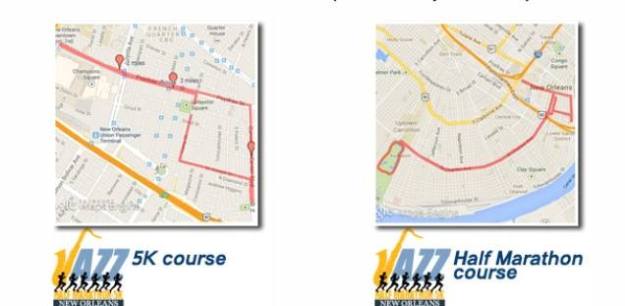
Take a look at the pic on the left-see the red square? Within that square, the 18-year old Crescent City Farmers Market sets up every Saturday from 8-12, rain or shine. I can personally attest to the traffic snarl this morning before 10 am on the streets around there, with most people unaware that their usual leisurely drive to this mostly Monday-Friday neighborhood would be upended by another superimposed civic activity, namely this race which has been run for only the last five years. No up-to-date information is shared with the market organization more than a day or two prior to this race being run (and that is only found through media sites posting it), which limits the market’s ability to tell its vendors or shoppers ahead of time about what to expect. Yet interestingly, the race supports an extremely worthy cause- The Children’s Hospital in New Orleans.

Since this race begins at 7 am (with fast runners, then slower runners and finally walkers) it’s over mostly by 10:30 am. Therefore, it might be sensible to move the start time of the market for just this week. The market does change its hours for the last Saturday of the Carnival Season, as much of that day’s activities are centered a few blocks away and so the market closes early to allow its vendors to make it out before the nearby streets are closed for hours of parades.

Or, it might be sensible for the race organizers to simply move the beginning of the race from the long street along the top of the course map that is Poydras and instead run it along the river over there on the right. Or maybe run it on Sundays. There may be other answers to this annual conundrum that should be discussed since there are other events that often impede traffic to this 4-hour market.

The main issue is that the race organizers, the city and the business district do nothing to accommodate the market at this point and ignore its very long and important economic, social and civic role. Why?

Why indeed. Certainly this market organization is adept at working with its city and neighborhoods; MarketUmbrella is a recognized leader in making the case for why farmers and markets are important. So why the cold shoulder when it comes to events?

The issue may very well be in its actual history. This market sits in this area partly because when the founders searched for the best location, this area was not yet a defined neighborhood. The founders have often shared the fact that they chose it for the first of their four (post Katrina, 3) weekly markets partly to not have neighborhood opposition back in those early days of the mid 1990s, when markets were much less understood and so they expected some pushback on a weekly event from other potential areas.

It may also be within the way that the organization has worked with its city-very cordially and with some transparency-but since all of the markets have always operated on private property, with some distance between them.

It may have nothing to do at all with the market’s willingness to work with the civic leaders, but an inability in the city to understand the importance of this weekly activity and to see its role as encouraging it to grow and to sustain itself.

My gut tells me it is a bit of all of these, but maybe a lot of the last. Well maybe its more than just my gut, since I served this market as Deputy Director for a number of years and then as its Marketshare Director. Here’s what I know.

Making the case for your market is a full time job and will be on the to-do list for as long as your market exists. New events will pop up in previously barren areas, new mayors and other leaders will decide to ask for parking fees on Saturdays, developers will build grocery stores and restaurants next to your market and assume that using your empty lot for parking is their right. How markets become “beloved institutions” in their community has something to do with how well they play with others. How they deal with external pressures also says a great deal about market organizations’ resilience and professionalism. The way that you can accomplish that goal is varied. You may create a feedback loop so as to activate your shopping base to be constantly making your case for you, or you may begin to work more closely with your elected officials over time to help them understand why they need you or you might simply move to another location that needs your market to anchor that area’s renaissance. In all these and more possible scenarios, the main actor should be the entity that runs the market since its the one that must handle situations like these in a way that allows sales to continue and mitigates the uncertainty for its community. By the way, I have written about markets and municipalities before here.

Share this:

  • Click to email a link to a friend (Opens in new window) Email
  • Click to print (Opens in new window) Print
  • Click to share on Reddit (Opens in new window) Reddit
  • Click to share on Facebook (Opens in new window) Facebook
  • Click to share on X (Opens in new window) X
  • Click to share on Pinterest (Opens in new window) Pinterest
  • Click to share on LinkedIn (Opens in new window) LinkedIn
  • Click to share on Pocket (Opens in new window) Pocket
  • Click to share on Tumblr (Opens in new window) Tumblr
Like Loading...
0 CommentsLeave a comment
10/14/2013
D.W.
civic engagement, evaluation, farmers markets, farmers/farming information, Main Street
Crescent City Farmers Market, farmers markets, New Orleans

How I became aware of sustainability

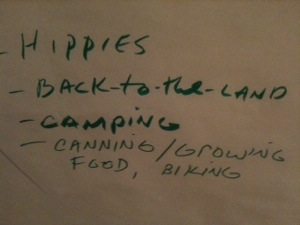
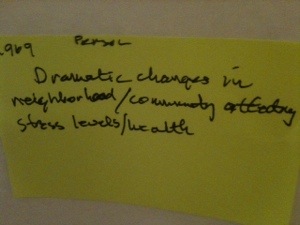
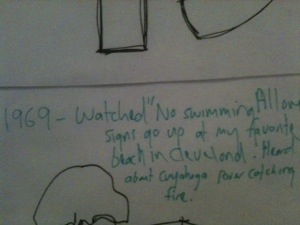
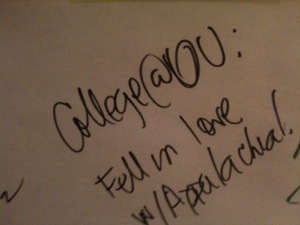
One of the activities that the group has done at the Sustainability Conference in Cleveland is to tell the story of both personal and municipal transformation through moments lived and remembered. This is the earliest time period (1969-1989) on the personal transformation wall. This is another idea that food organizers may want to use when working with communities. How wonderful to ask them to think about how and and when healthy regional food became important to them.

20131003-115907.jpg

20131003-115924.jpg

20131003-115935.jpg

20131003-115942.jpg

20131003-115948.jpg

20131003-155115.jpg

20131003-155120.jpg

20131003-155125.jpg

Share this:

  • Click to email a link to a friend (Opens in new window) Email
  • Click to print (Opens in new window) Print
  • Click to share on Reddit (Opens in new window) Reddit
  • Click to share on Facebook (Opens in new window) Facebook
  • Click to share on X (Opens in new window) X
  • Click to share on Pinterest (Opens in new window) Pinterest
  • Click to share on LinkedIn (Opens in new window) LinkedIn
  • Click to share on Pocket (Opens in new window) Pocket
  • Click to share on Tumblr (Opens in new window) Tumblr
Like Loading...
0 CommentsLeave a comment
10/03/2013
D.W.
civic engagement, community gardens, conferences, diversity/racial justice, economic development issues, entrepreneurs, environmental issues, farmers markets, farmers/farming information, global organizing
Cleveland

Marketplace by Hugh Masekela

Just a musical moment for my readers.

Market Place
The consumer, they call us, we’re the people that buy
While everyone else is out to sell, some kind of merchandise
We run to the boss and tell him, we need a bit more gold
Some tax deductions later, and we still wind up in the hole.

Chorus:
Oh, yes we are the people running in the race,
Buying up the bargains in the old marketplace,
Another sale on something, we’ll buy it while it’s hot
And save a lot of money spending money we don’t got.

The consumer they call us, we always get a fair shake
We buy a fridge that doesn’t freeze, and a stove that doesn’t bake
We can’t buy nothing lasting ‘les we get that raise in pay
And they’d only charge more for the things that cost us less today

The consumer, they call us, we’re fussy what we eat.
We look at the price of the T-bone steak, and buy hamburg meat-
In all those fancy packages they take down from the shelf-
They’re always full of good fresh air when they’re not full of nothing else.
Chorus:

The consumer they call us, when the man comes in the door
To give us a deal on the vacuum, if we buy a rug for the floor
And how do we pay to finance? When the monthly bills arrive?
They just send down the bailiff to repossess the car we drive…

The consumer is what they call us, we’re always deep in debt.
From buyin’ drawers in discount stores to fixin the T.V.set.
We go to the bank for the money, and sign for another loan,
And pray the Lord doesn’t see us stop in the tavern half-way home.

Chorus: repeat:

Share this:

  • Click to email a link to a friend (Opens in new window) Email
  • Click to print (Opens in new window) Print
  • Click to share on Reddit (Opens in new window) Reddit
  • Click to share on Facebook (Opens in new window) Facebook
  • Click to share on X (Opens in new window) X
  • Click to share on Pinterest (Opens in new window) Pinterest
  • Click to share on LinkedIn (Opens in new window) LinkedIn
  • Click to share on Pocket (Opens in new window) Pocket
  • Click to share on Tumblr (Opens in new window) Tumblr
Like Loading...
0 CommentsLeave a comment
09/26/2013
D.W.
civic engagement, farmers markets, general, global organizing
Farmers market, Masekela, music

2013 Sustainable Cleveland Summit

As a food system organizer and researcher, I try to find events to attend that draw together many different sectors and initiatives. Last year, this sustainability conference focused on Local Foods and was held in conjunction with the Projects For Public Spaces International Public Market Conference. I attended the PPS conference and as a result, saw a few of Cleveland’s excellent food initiatives and met the local folks working on the same things that many PPS attendees are working on in their areas. This year, I am going back to follow up on what I saw in that food system work in Northeast Ohio and also to sit and work with the folks who are at this conference to hear about their 2013 focus: their renewable energy and climate change work.

Cleveland’s “conscious capitalism” and renewable industries strategy is impressive and needs a deeper look. As someone who did consumer and environmental campaigns in that area in the 1980s and early 1990s, I want to see what has changed since my organizing days and how the food system work really fits in.

         Summit 2013       

Together, We’re Building a Thriving Green City on a Blue Lake


The 5th Annual Sustainable Cleveland 2019 Summit will be October 3-4 at Cleveland Public Auditorium in Downtown Cleveland.  As we approach the halfway milestone of this ten-year initiative, we are charged with taking stock of our accomplishments and outcomes, gauging our progress, honoring the work of many, and charting the course for the next five years.


Summit Focus:

Summit 2013 will focus on the Year of Advanced and Renewable Energy and implementing Cleveland’s Climate Action Plan.  

Keynote Speakers: The City of Cleveland is pleased to announce two dynamic keynote presenters during the Summit on the topics of Advanced and Renewable Energy, Climate Change and Conscious Capitalism.

John Montgomery, Author of Great from the Start, is a frequent speaker on sustainable business, benefit corporations and venture capital at such forums as the Future Salon, TEDx, and Stanford University’s Graduate School of Business. John transforms public and private corporations for success in the new economic paradigm where corporations not only optimize profits for shareholders but also provide a material positive impact on society and the environment. 

Chuck Kutscher, 
National Renewable Energy Lab, is a Principal Engineer and G
roup Manager in the Center for Electricity, Resources, and Building Systems Integration. His projects have included the design and construction of a solar cooling test laboratory; production of NREL’s solar industrial process heat design handbook; modeling of advanced power cycles and cooling systems for geothermal power plants; and development of transpired solar air collectors, which won an R&D 100 Award and a Popular Science “Best of What’s New” award. He is editor of the 200-page ASES report, Tackling Climate Change in the U.S., and writes a monthly column on climate change for SOLAR TODAY magazine.  He recently received the 2008 Colorado Governor’s Excellence in Renewable Energy Individual Award. 

2013 Sustainable Cleveland Summit Tickets, Cleveland – Eventbrite.

Share this:

  • Click to email a link to a friend (Opens in new window) Email
  • Click to print (Opens in new window) Print
  • Click to share on Reddit (Opens in new window) Reddit
  • Click to share on Facebook (Opens in new window) Facebook
  • Click to share on X (Opens in new window) X
  • Click to share on Pinterest (Opens in new window) Pinterest
  • Click to share on LinkedIn (Opens in new window) LinkedIn
  • Click to share on Pocket (Opens in new window) Pocket
  • Click to share on Tumblr (Opens in new window) Tumblr
Like Loading...
0 CommentsLeave a comment
09/16/2013
D.W.
civic engagement, conferences, cooperatives, diversity/racial justice, economic development issues, environmental issues, governments, national food system work, other sectors, public health, Where's Dar now?
alternative food systems, Cleveland Sustainability Summit 2013

Post navigation

Older posts
Newer posts

Search this blog

Tags

alternative food systems BALLE big data book reviews California Canada CCFM chefs Chicago Cleveland climate change conferences cooperatives cottage food laws Covington Crescent City Farmers Market Detroit EBT evaluation farm bill farmers Farmers market Farmers Market Coalition Farmers Market Metrics farmers markets farming farm to table FMC FMC Farmers Market Metrics FMPP FNS Food food hubs food systems food system work Food Tank healthy food incentives La Via Campesina local food local food systems Los Angeles Louisiana markets Market Umbrella market vendors Mississippi New Orleans NOFA-VT North Carolina NSAC NYT Ohio Oregon oysters Poppy Tooker Power of Produce (POP) PPS Richard McCarthy Slow Food SNAP social capital social media SSAWG St. Joseph's Day Stacy Miller sustainability technology Toronto USDA Vermont Wallace Center webinars wendell berry Wolnik webinars

Enter your email address to subscribe to this blog and receive notifications of new posts by email.

Join 598 other subscribers

Helping Public Markets Grow 2011-2021

Independent Researcher and Analyst list of contracts (In November 2019 began full-time role as FMC’s Program Director)

•AMS TA project: Mentor for national technical assistance project for current FMLFPP grantees led by the Northeast Regional Center for Rural Development at Penn State University.
•Brooklyn NYC: Assisted BDPHO with developing farmers market technical assistance programs.
•Report on BDPHO’s 5-year market capacity project.
•Farmers Market Coalition Senior Research Associate for Farmers Market Metrics project creation (2015-)

• Farmers Market Coalition’s Senior Advisor, focusing on technical assistance for markets and networks (2015-)
•Illinois: Worked with ILFMA on evaluation plan for integration and upgrade of statewide fms and DTC information on integrated platforms.
•Louisiana: Assisted students at Southeastern University in Hammond with food system research and farmers market strategy.
•Louisiana: Assisted ReFresh Market and Garden with evaluation plan (2017)
•Louisiana: Working with Ruston Farmers Market on outreach strategy for new location

• Helping to craft resources and training for 2019 Fresh Central Certified Institute for Central Louisiana markets and producers with CLEDA.

•Louisiana: Organized first statewide farmers market conference for LSU Ag Center archives found at: lafarmersmarkets dot blogspot dot com

•Maine: Researched farmers market job descriptions found at www.helpingpublicmarketsgrow.com

• Mississippi: Providing research and analysis for City of Hernando MS 3-year project to grow flagship market

•Mississippi: Assisted Gulf Coast markets with FMPP project on analyzing access to markets for Gulfport resident and farmers. 2014 Local Food Awareness Report for Gulfport MS, found at www.helpingpublicmarketsgrow.com

•Vermont: Providing analysis and resource development for NOFA-VT’s annual data on farmers markets.

•Supporting markets creating their Legacy Binders
•Vermont: Researched and wrote report on SNAP, FMNP technology and policy answers for VT farmers markets in collaboration with NOFA-VT and VAAFM, 2013 Vermont Market Currency Feasibility Report found at www.helpingpublicmarketsgrow.com
•Vermont: Working with Vermont Law School on legal resources for farmers and market organizations.

•Vermont: Assisting with 3 year project to build capacity for direct marketing farmers and outlets through DIY data collection and use.

Wallace Center: Moderator of FSLN, advisory to the 2020 NGFN Conference to be held in New Orleans in March of 2020

•Why Hunger: Created online toolkit for grassroots communities.

Feel free to contact me at my name at gmail dot com if I might be able to help your market or business.
Thanks
Dar Wolnik

Posts by category

Create a free website or blog at WordPress.com.
Helping Farmers Markets Grow
Create a free website or blog at WordPress.com.
Privacy & Cookies: This site uses cookies. By continuing to use this website, you agree to their use.
To find out more, including how to control cookies, see here: Cookie Policy
  • Subscribe Subscribed
    • Helping Farmers Markets Grow
    • Join 246 other subscribers
    • Already have a WordPress.com account? Log in now.
    • Helping Farmers Markets Grow
    • Subscribe Subscribed
    • Sign up
    • Log in
    • Report this content
    • View site in Reader
    • Manage subscriptions
    • Collapse this bar
 

Loading Comments...
 

You must be logged in to post a comment.

    %d