Reclaiming, Relocalizing, Reconnecting: The Power of Taking Back Local Food Systems

A rare Wednesday post on the 45th anniversary of Earth Day.
A new report by Friends of the Earth Europe looks at five examples of European communities successfully taking on the challenge of creating new systems that honor wise stewardship, local wealth and health and civic engagement. Its an inspiring report; share it widely.

.

What the Frack? Beginning Farmers’ Energy and Pollution Dilemma – Hobby Farms

An important post for markets to share with their farmers.
What the Frack? Beginning Farmers’ Energy and Pollution Dilemma – Hobby Farms.

Turkey Creek

In case some of us forget from time to time that what we are fighting for is local sovereignty in order to save, rebuild or create our own healthy systems, and that environmental justice MUST be included into our scope of work, this may help:

COME HELL OR HIGH WATER: The Battle for Turkey Creek – TRAILER (1 MIN.) from Leah on Vimeo.

Derrick often recites a warning that his mother gave him when he began fighting to protect his community of Turkey Creek: “There might not be any bottom to this.” A dozen years later, her words hold special meaning for both of us. My film documents what seems like an unrelenting assault on this historic African American community on Mississippi’s Gulf Coast, and it continues to this day. When I began filming, the precious place of Derrick’s childhood memories and family oral history was being overrun by urban sprawl, and then came Hurricane Katrina, and then the BP oil disaster.

SIGN UP to host a screening on April 29th or within 30 days following the premiere broadcast.
ACCESS THE FILM by finding your broadcast on a local station, or watch when it streams for free online through American ReFramed. If you are streaming it online, be sure to test your connection.

Keeping Agricultural Land Prices Affordable for Farmers in the UK

“The idea goes back to 2005, when members of various groups involved in ecological land management and cooperative development got to talking. Inspired by a vision for what would become the Ecological Land Cooperative (ELC), they sketched out a plan to buy degraded agricultural land and lease it to people with the desire and skill—but not enough cash—to start small-scale farms with regenerative practices (think permaculture and agro-forestry).”

Keeping Agricultural Land Prices Affordable for Farmers – Economy – Utne Reader.

2014 resolution: Let’s work seriously on erasing the divide

As we move into another year of organizing around regional food and public health in the US, we are facing opposition that has become stronger and more agile at pointing out our weaknesses and adding barriers to those that we already have to erase. That opposition can be found in our towns, at the state legislature, in Congress and even among our fellow citizens who haven’t seen the benefits of healthy local food for themselves yet.

That opposition uses arguments of affordability without measuring that fairly against seasonality or production costs, adds up the energy to get food to local markets while ignoring the huge benefits of farming small plots sustainably, shrugs its shoulders at stories of small victories, pointing past them to large stores taking up space next to off ramps and asks isn’t bigger better for everyone?
Why the opposition to local producers offering their goods to their neighbors, their schools and stores? What would happen to the society as a whole if our projects were allowed to exist and to flourish alongside of the larger industrial system?
I would suggest that very little would change, at least at first. Later on-if we continue to grow our work-it may be another matter and this fear of later is at the core of the opposition. That fear has to do with the day that democratic systems become the norm and necessary information is in the hands of eaters, farmers and organizers. And so we need to address and keep on addressing the divide that keeps that from happening.

The truth that we all know is that there is already two systems-one for the top percent and another for the rest. Writer George Packer gave his framework for this very argument in an eloquent essay written in 2011 called “The Broken Contract.” Packer argues that the divide in America began to take hold in 1978 with the passage of new laws that allowed organized money to influence elected officials in ways not seen before.
Packer points out that the access to Congress meant that labor and owners were not sitting down and working together any longer. That large corporations stopped caring about being good citizens and of supporting the social institutions and turned their entire attention to buying access in Congress and growing their profits and systems beyond any normal levels.

“The surface of life has greatly improved, at least for educated, reasonably comfortable people—say, the top 20 percent, socioeconomically. Yet the deeper structures, the institutions that underpin a healthy democratic society, have fallen into a state of decadence. We have all the information in the universe at our fingertips, while our most basic problems go unsolved year after year: climate change, income inequality, wage stagnation, national debt, immigration, falling educational achievement, deteriorating infrastructure, declining news standards. All around, we see dazzling technological change, but no progress…
…We can upgrade our iPhones, but we can’t fix our roads and bridges. We invented broadband, but we can’t extend it to 35 percent of the public. We can get 300 television channels on the iPad, but in the past decade 20 newspapers closed down all their foreign bureaus. We have touch-screen voting machines, but last year just 40 percent of registered voters turned out, and our political system is more polarized, more choked with its own bile, than at any time since the Civil War.
…when did this start to happen? Any time frame has an element of arbitrariness, and also contains the beginning of a theory. Mine goes back to that shabby, forgettable year of 1978. It is surprising to say that in or around 1978, American life changed—and changed dramatically. It was, like this moment, a time of widespread pessimism—high inflation, high unemployment, high gas prices. And the country reacted to its sense of decline by moving away from the social arrangement that had been in place since the 1930s and 1940s.
What was that arrangement? It is sometimes called “the mixed economy”; the term I prefer is “middle-class democracy.” It was an unwritten social contract among labor, business, and government— between the elites and the masses. It guaranteed that the benefits of the economic growth following World War II were distributed more widely, and with more shared prosperity, than at any time in human history…

…The persistence of this trend toward greater inequality over the past 30 years suggests a kind of feedback loop that cannot be broken by the usual political means. The more wealth accumulates in a few hands at the top, the more influence and favor the well-connected rich acquire, which makes it easier for them and their political allies to cast off restraint without paying a social price. That, in turn, frees them up to amass more money, until cause and effect become impossible to distinguish. Nothing seems to slow this process down—not wars, not technology, not a recession, not a historic election.

The economic divide and the lack of information about it hurts our movement since many still see us as either too small or too elitist and so delays our work getting to more people that need it. I urge everyone to find a copy of this entire essay and share it and discuss it widely.

Getting milk to market requires a village- an Afghanistan village

“It’s a small thing, in light of Afghanistan’s many ailments. But what makes this dairy shop truly remarkable is that it is part of an operation that comprises all elements of Afghan society—communists, commanders, shopkeepers, everyday citizens, and yes, even the Taliban. That’s an incredibly rare thing in this war-torn country. But when it comes to fresh milk and butter, Afghans have found something worth not fighting over.”
Afghan milk story

Food Day

Check out the “Big Easy Peel” event, a satsuma-peeling event starting at 11:30am on Oct. 24th at the Washington Artillery Park across from Jackson Square! Dr. DeSalvo, the health commissioner of New Orleans, will be there to speak and endorse Food Day. There’s more information about the event here: We’re looking to invite as many people as possible, so please spread the word!

Events Calendar | Nola Food Day.

Under the heading: Things I bet your market has not dealt with yet

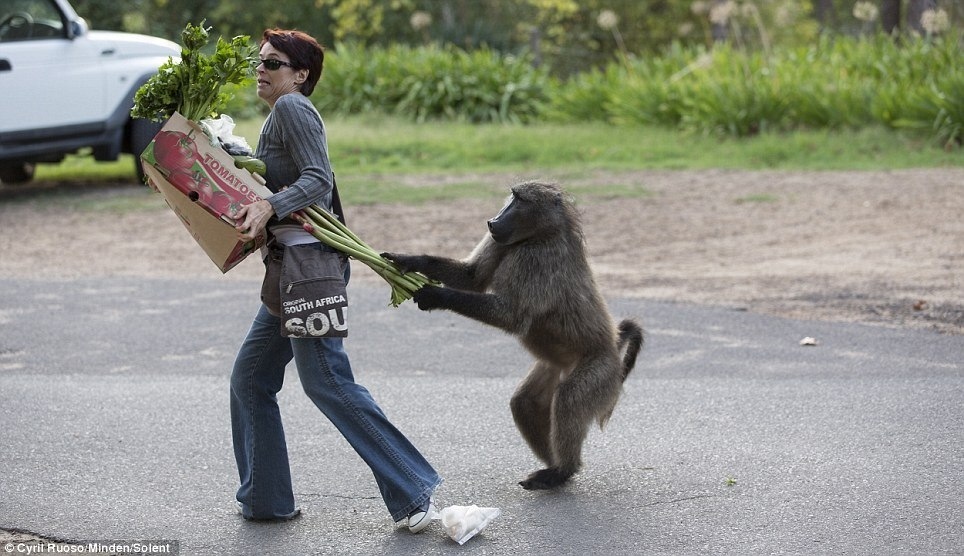
Baboon ambushes woman at Cape Town farmers’ market

The baboon sat and waited patiently for an easy target leaving a farmers’ market in Cape Town, South Africa.
He then made his move, and boldly strode up to a shopper and robbed her in broad daylight of her rhubarb.
Unimpressed with his haul, he then went back a second time, this time stealing an avocado.
The protected species is a growing problem for Cape Town citizens, some even raid their homes.
There are now 500 baboons living in the city and their food gathering tactics are getting more daring. The chacma baboon patiently waits for people to leave the farmers’ market where fresh vegetables are on sale.

20130920-215719.jpg

Lifecycle of Emergence

For those organizing networks this theory can be very helpful, to have a strategy that allows for both short and long term. Cooperation and communication must happen at the precise moment(s) that networks are ready to emerge and to grow. For organizers, that means practicing patience and fortitude.

From The Berkana Institute:

…the lifecycle of emergence: how living systems begin as networks, shift to intentional communities of practice, and evolve into powerful systems capable of global influence.

This system of influence possesses qualities and capacities that were unknown in the individuals. It isn’t that they were hidden; they simply don’t exist until the system emerges. They are properties of the system, not the individual, but once there, individuals possess them. And the system that emerges always possesses greater power and influence than is possible through planned, incremental change. Emergence is how Life creates radical change and takes things to scale.

Lifecycle of Emergence.

the two loops visual is one that many of you have probably seen me try to draw (badly); here it is done well:

Theory of Change

Small-Scale Farmers Are Key To Economy

“…the report cites key studies, which show a positive relationship between agriculture and poverty reduction. For instance, one study has shown that for every 10 per cent increase in farm yields, there was a seven per cent reduction in poverty in Africa. In contrast, growth in manufacturing and services has not shown comparable impact on poverty.”

Small-Scale Farmers Are Key To Economy | The Star.