Sustainable Ag Trainings in the Deep South

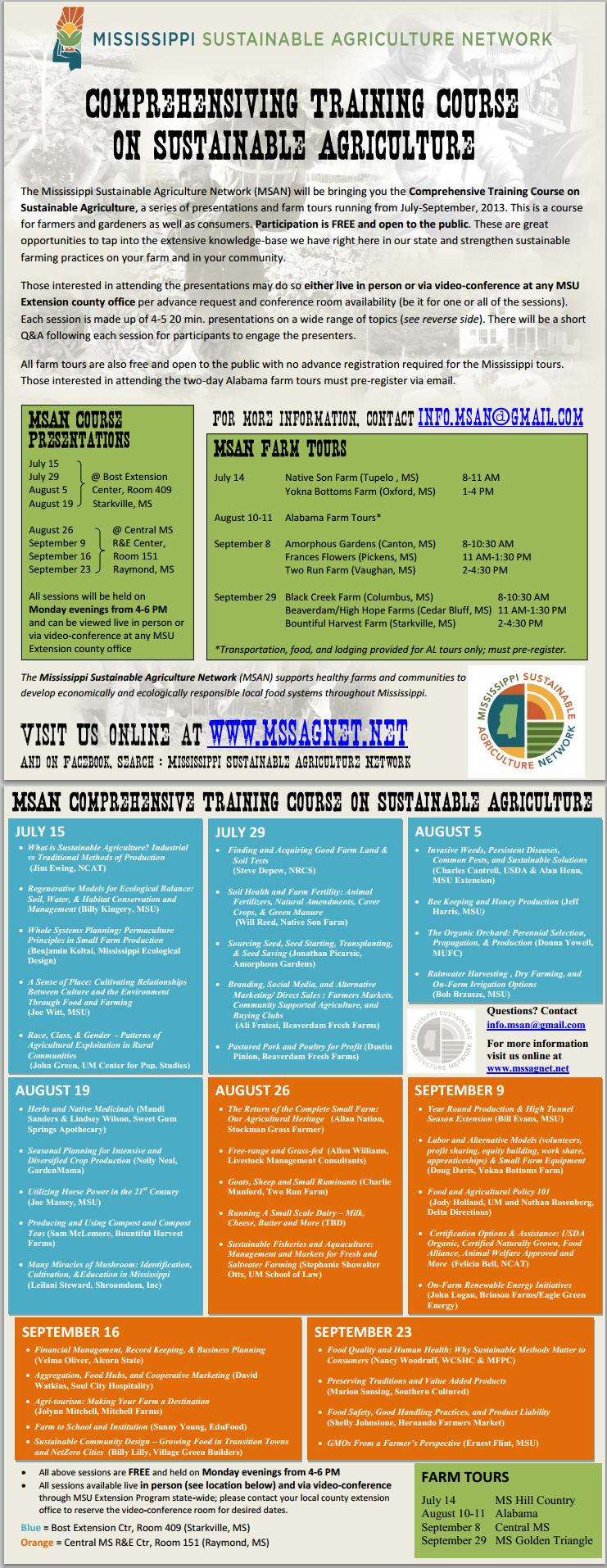
Mississippi Sustainable Agriculture Network's trainings-2013

Mississippi Sustainable Agriculture Network’s trainings-2013

Louisiana – New Cottage Food Law (August 2013)

Sales are limited to $20,000 per year

Cottage food operations don’t need to get a license from their health department, but they do need to check with their county to see if any zoning requirements apply to them.

Operations do not need to collect any state sales tax, but they may need to collect local sales taxes (it is different for each city and county).

Only food items in these categories are allowed:

Cakes, Cookies, Honey, Jams & jellies -Preserves.

Unlike most states, Louisiana allows custard and cream-filled bakery products.

Louisiana – Cottage Food Law.

Rules are varied

I think most if not all managers of markets understand that other markets have different rules than theirs, but do your shoppers know? And have you ever updated them, in cooperation with your vendors?
Nearby markets should share rules so that they do not make their farmers follow different sets of rules for little reason. It’s amazing how many markets don’t even attempt to compare rules which makes it quite hard for vendors to remember which of their markets has rules against packing up early or who allows foraged items and who doesn’t. One of the main areas of contention among farmers is the amount of liability insurance that they are required to carry (when a market requires it); a farmer told me about three different levels of insurance that he was asked to carry, all of the markets within a few miles of each other.

http://www.twincities.com/stpaul/ci_24036424/farmers-markets-not-all-follow-same-rules

On Being a Boss: Kristen Essig Takes Over at Sainte Marie – Eater Interviews – Eater NOLA

Below, is a link to an interview with a New Orleans chef who has embedded local purchasing into the very DNA of her kitchen.

The day I met Kristen was the day (2002? 2003?) that she interviewed to be our Crescent City Farmers Market (CCFM) Tuesday/Thursday market manager. She came to the interview with a slate of ideas and opinions backed up with a vitality that could not be denied. We were surprised that someone with her fine dining experience (and obvious ambition) wanted to work for our little organization, but she explained that she wanted to know all facets of the food system.
During her tenure, she can be credited with building our Green Plate Special program, which allows restaurants to come for a full month of Tuesdays to sell plate lunches to the shoppers at the CCFM and, of course, allows those chefs to understand the farmers and fishers better and to have long stretches to watch market vending in person.

As a chef, she came with a “shoot from the hip” framework and never stopped running the entire time she worked with us. Like anyone who has worked on the line at top restaurants, she was intimidating to some but we knew that she always led with what was in the best interest of our farmers and fishers. Through her, we understood the psyche of the chef better and started to realize that we should get to know the sous chefs and line cooks that were more often at the market and were on their way to the top position. Many of those have now become leaders of their own restaurant (why, like our friend Kristen Essig!) and almost all have become fierce supporters of those markets.

“As a line cook, you develop a relationship with vendors as they come in the back door, but actually working with the vendors at the market was a totally different thing. You’re working, really, with 20 small businesses, and they’re all trying to make certain quotas, and they all have certain amounts of product that they have to move. You develop strong relationships with these people—you learn that they have bills to pay, whose kid needs braces, etc.”

On Being a Boss: Kristen Essig Takes Over at Sainte Marie – Eater Interviews – Eater NOLA.

Ask away…

To follow up on Monday’s post on excellent questions NEVER to ask farmers at a market, here is a great site full of questions once SHOULD ask a farmer. I can envision these on a laminated card at the Welcome Booth or maybe on Facebook with a few listed weekly. Questions for farmers

Vermont Law School Helps Farmers Markets and CSAs

Good overview of the new Center for Agriculture and Food Systems at Vermont Law School that Laurie Ristino is heading. I am honored to be part of one of their first grants to help markets, written in partnership with NOFA-VT. If the proposal is successful, legal resources will be written for markets and for CSAs over the next few years.

VT Law

Cleaver & Co. New Orleans

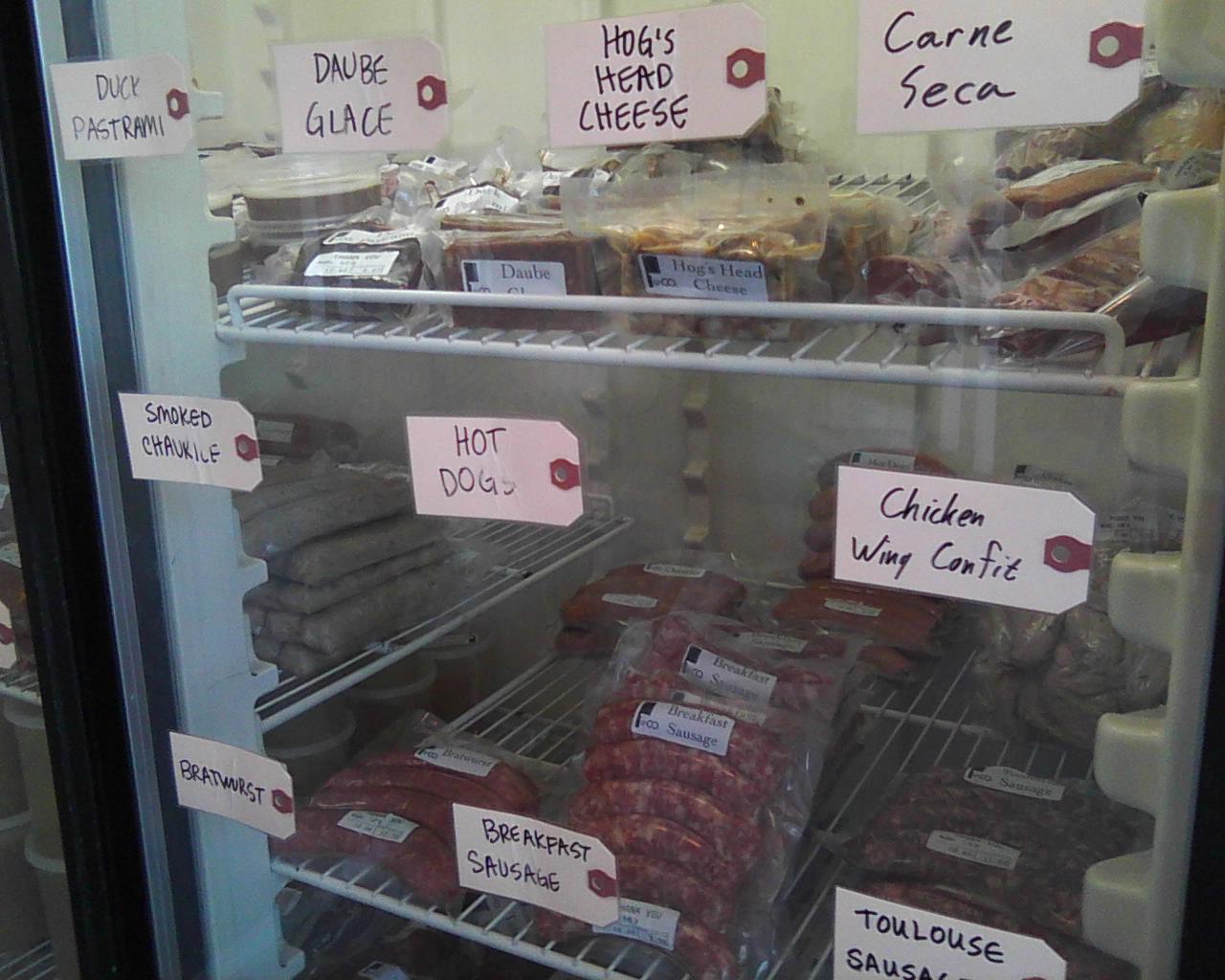
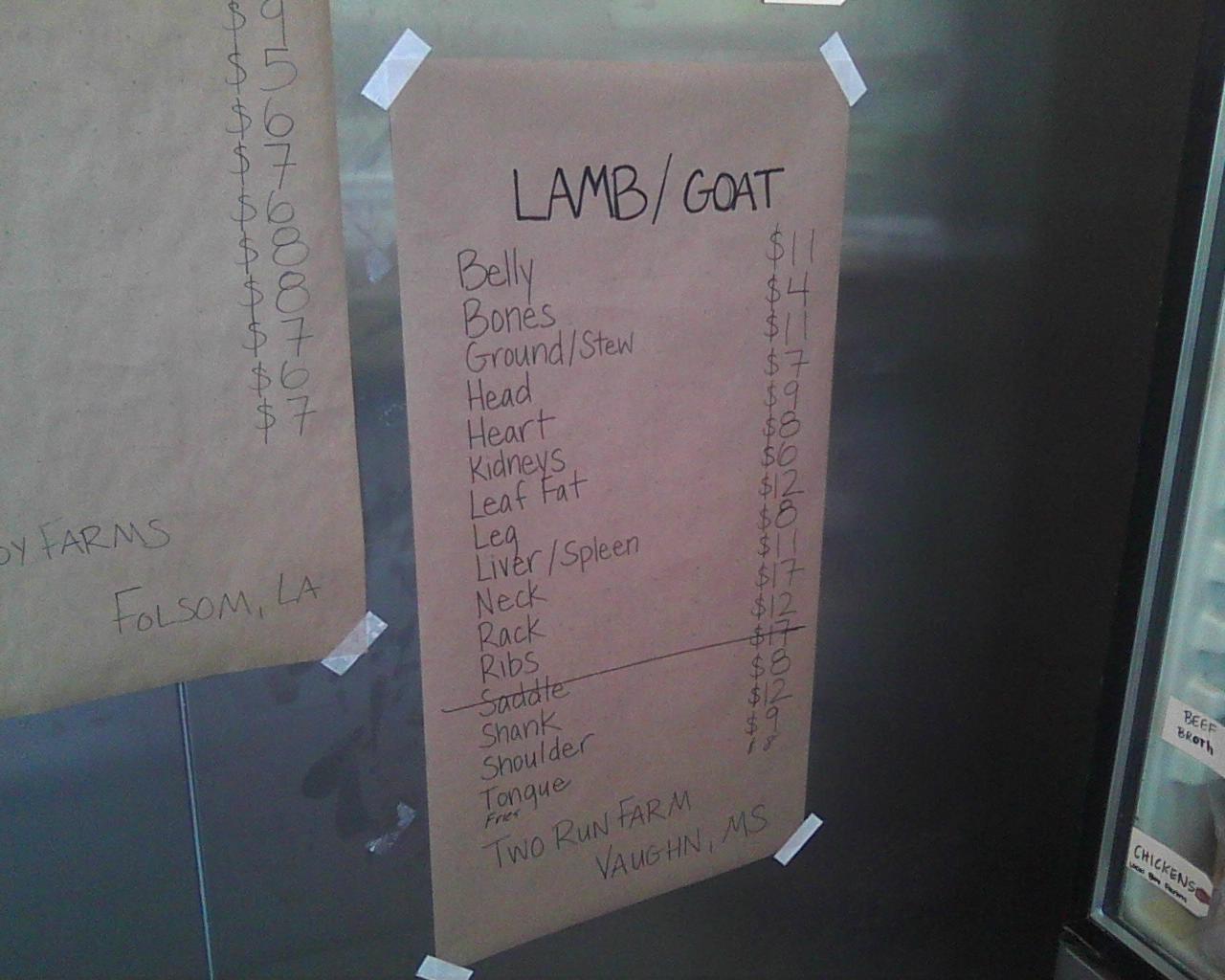
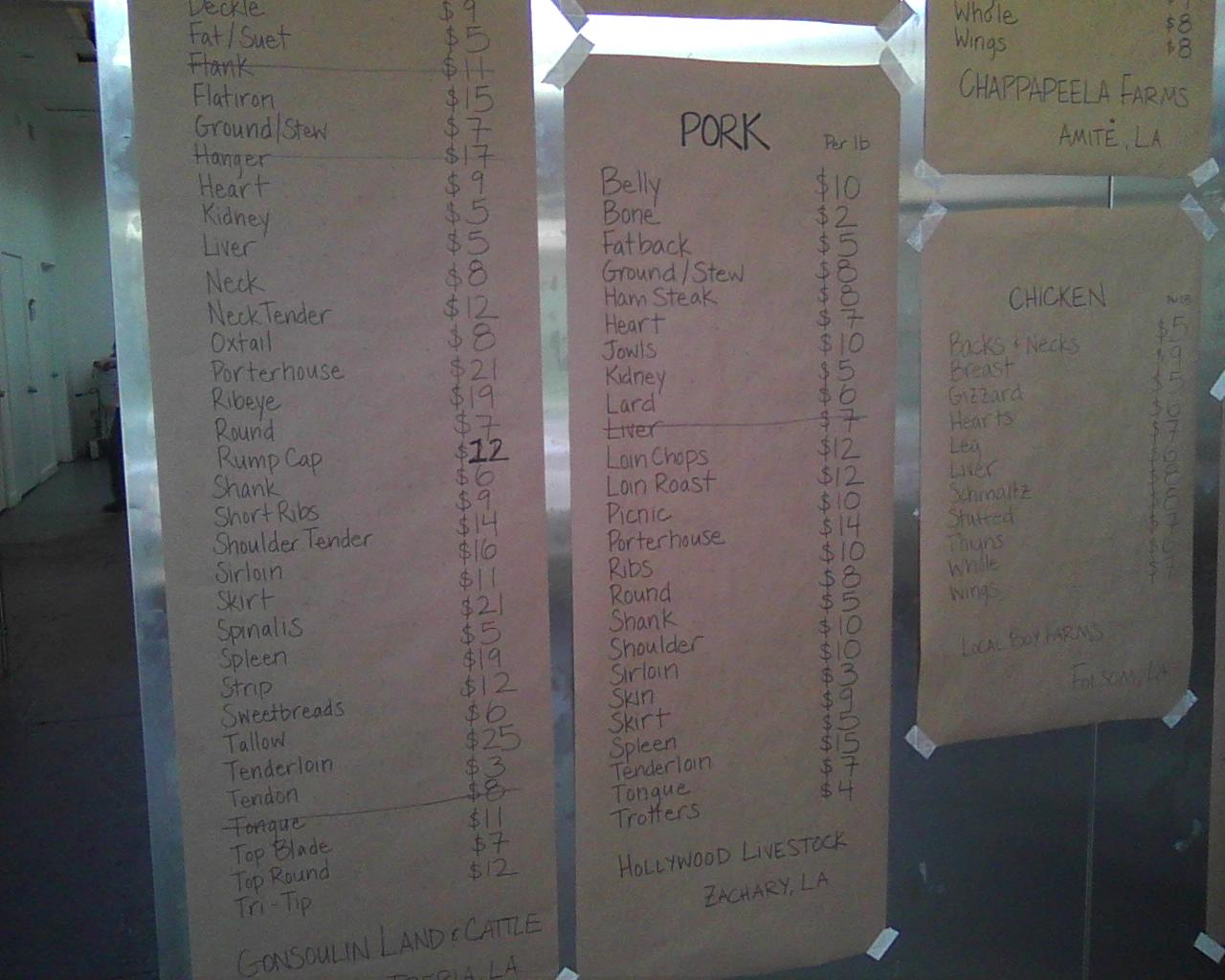
I just visited the newest member of the New Orleans localvore family, Cleaver & Co. a no-frills, full-service butcher shop. The posted educational information at this store is easily understood but when necessary, the staff is quite knowledgeable when it comes to more in-depth questions. It makes me think about how we communicate livestock issues and value within farmers markets; has the consumer education gone as deeply as it has for fruit and vegetable production? Should market managers explain the regulation and production issues in more detail than we have? Really, how much do market managers actually know about what unique issues these producers face, such as amount of land needed for grazing, treating animal illnesses naturally, finding healthy feed, selecting the right USDA processor when applicable and so on…


130803_0002

130803_0003

130803_0004 (1)

Indicating health

Windowsill Pies, New Orleans LA pie makers

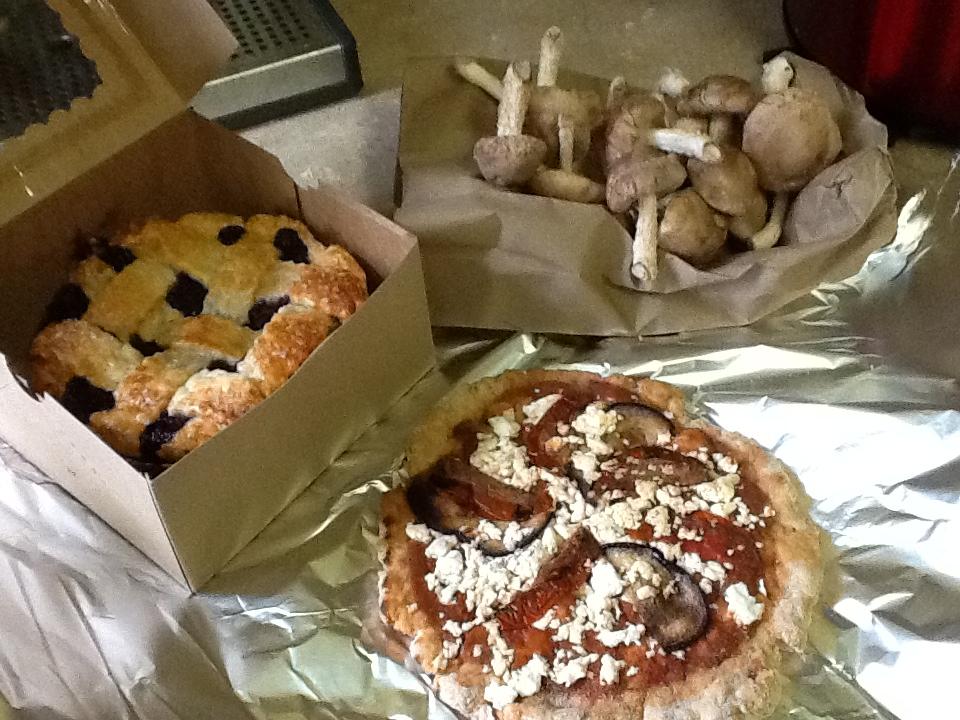
Blueberry pie from Windowsill Pies and gluten-free pizza and shrooms from the Rue family, all from Covington Farmers Market..

Take a long look at that picture. To many, it may only show another dang food picture that was posted online but to me it represents something else entirely.
All of those goods came from the Covington Farmers Market, which is a parish (to most of you outside of Louisiana, parish=county) seat market located 40 miles from downtown New Orleans and across Lake Pontchartrain in an area of what used to be called the Ozone Belt for its pine tree greenery.
The gluten-free pizza was sold to me by a teen who was selling them on behalf of her family business and could tell me what was in their pizzas and why, could take my money and offer change with a genuine smile and good wishes. The mushrooms were on their table too and collected as a side option to their prepared food sales, as well as used in their goods.

The pie was sold to me by 2 entrepreneurs that buy their ingredients locally as often as possible (literally pointing to the honey seller that provided the basis of this pie’s lack of refined sugar). This vendor’s artistic tendencies suit their product list well, all of the way to the windowed boxes for their pies and their oil cloth tablecloth and vintage aprons presentation.
What is important to me as a shopper about this picture is that it represents a (still) unusual way of buying food; I can ask each of them exactly what is in their goods and how they were made. They are working to replace industrial ingredients with natural and closer-to-home versions that offer more taste. And of course, not only did I get a chance to talk directly with the makers of these goods and to encourage them further, but that I was able to buy from young women, all just beginning farmers market sales. All of the made goods were delicious and will be bought many times again. I may buy them for myself on a week in which I know I am just not going to feel like cooking or they may be used to share with friends when they come to spend the day at the pool or may even be brought to a party I am invited to as my gift.

Market managers know that farmers markets are THE incubator for businesses that are not ready for or do not want storefronts. The chance to take a small idea and grow it slowly and carefully is a necessary step for any entrepreneur, yet the places one can do this are so limited that markets are among the only ones that regularly offer that opportunity. Many experienced market shoppers know that when they see new goods at markets that are advanced in their ingredients and presentation, they must immediately support them vigorously and talk them up to their friends. In turn, market managers need to monitor these vendors and introduce them to those shoppers (as this market’s manager did to me) as well as search for those vendors’ new shoppers, who may not already be present.
In other words, these vendors often represent a new age in a market. Its important to remember that young vendors trying items that can only be sold at farmers markets are who we want to see more of in markets. These folks cannot (or do not) sell their goods to Whole Foods or ship them worldwide; they design products for the type of person who stops and asks about their ingredients and their process. Therefore, they are an indicator species, which is defined beautifully in the Encyclopædia Brittanica as an organism that serves as a measure of the environmental conditions that exist in a given locale.

If indicator species show the health of an environment, then their low activity can alert to danger in a market’s health or when increasing, can show vitality. Encouragement of diversity of products, gender, age, ethnicity and business goals is exactly what each market must be setting as a goal daily, weekly, monthly and so on. To me, the presence of these indicator vendors and others at this little market show its emerging strength. And offers some damn tasty research at the same time.

Creamery settles dispute with feds

“Randy and Karen Sowers will forfeit $29,500 to the government. U.S. Attorney Rod Rosenstein accused the couple in mid-April of violating federal currency reporting requirements — known as structuring — by depositing money in increments of less than $10,000 so they would not have to fill out forms required under the Bank Secrecy Act. The statutes are meant to curtail money laundering.
The Sowerses have owned a farm off Bolivar Road in Middletown for more than three decades and have operated it as the South Mountain Creamery since 2001. They have maintained their innocence and said they learned what structuring was only when Treasury Department officials showed up at the farm in late February to question them about the deposits.
The couple deal with a lot of cash at farmers markets, they said, and the deposits totaled similar amounts every time.”

Creamery settles dispute with feds – The Frederick News-Post : Archive.

Vermont Feasibility Report

Very proud to release the Vermont Feasibility Market Currency Report this week. I was contracted last fall to do this work by Vermont Agency of Agriculture, Food and Marketing (VAAFM) in partnership with Northeast Organic Farming Association of Vermont (NOFA-VT).

The focus was whether there were opportunities to merge the coupon (FMNP and incentives) and SNAP programs into a universal currency for all of Vermont’s farmers markets (and also ultimately assist CSAs and other direct marketing outlets) in order to streamline the systems now being used.
The final report covers technology issues, market capacity, costs and outreach for the Vermont farmers markets and offers recommendations for streamlining through pilots and policy and further analysis.

This link takes you to my website where the report is listed.

I am happy to talk about the report or to answer any questions.
Dar

Report

Market visits

One of my ideas for building the movement is for network leaders to think about how to alternate or expand manager trainings. For experienced managers that have attended (and maybe even presented?) at their own state conference, maybe there is way to save some of that funding for those managers to be able to go visit another market instead. There are markets operating year round in every region now and so finding the appropriate market for these managers to learn from has become much easier.
For example, here in Southeastern Louisiana this early spring, we are in the middle of one of our best seasons already; strawberries, citrus, greens and generally full tables since mid January.
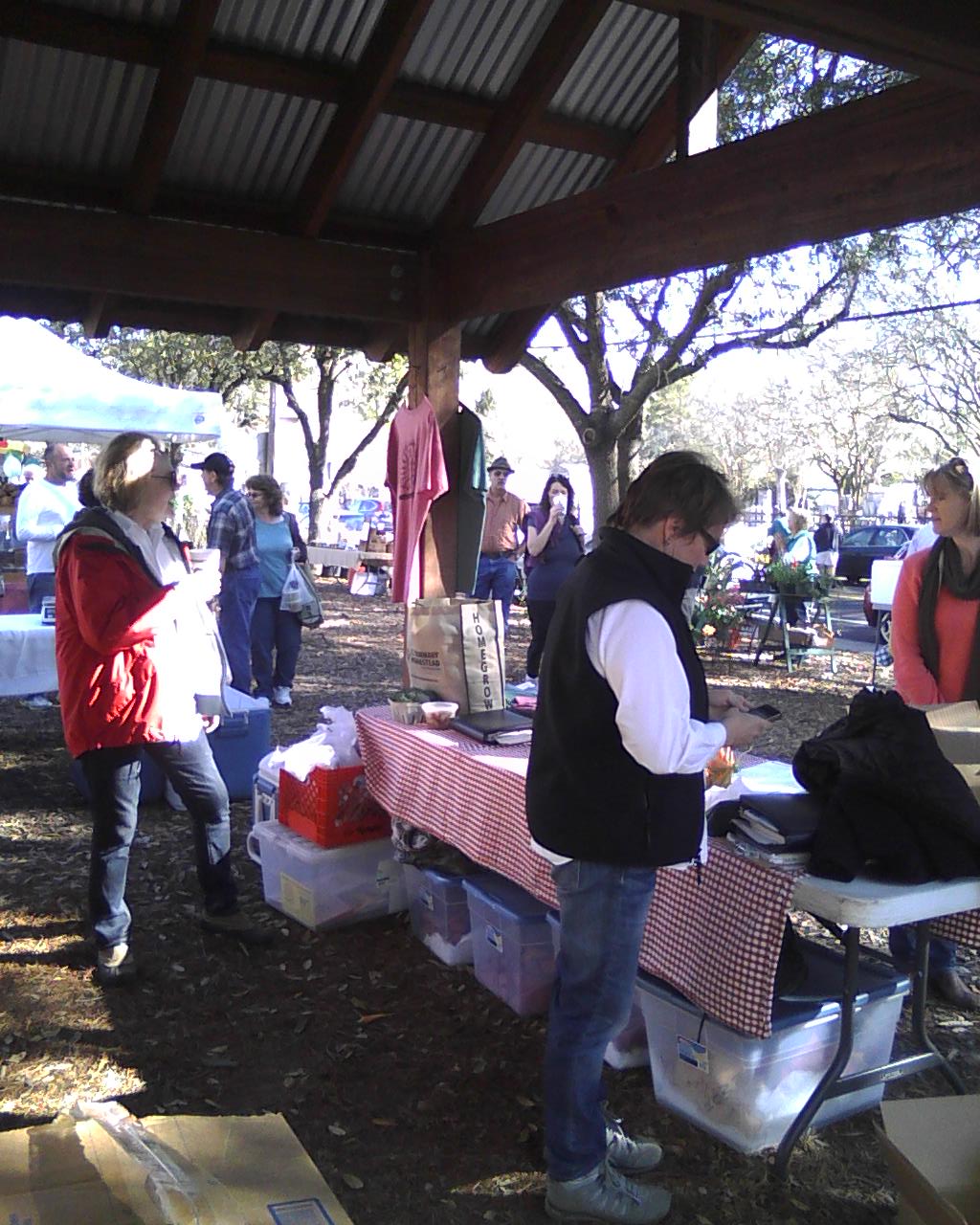
Covington Louisiana market this last weekend; 40 miles from New Orleans, this is a classic rural neighborhood-style market. They have about 35 vendors all of which live within 30 miles of the market. The market is held in a green space downtown in the city that is the parish (county) seat which allows plenty of parking nearby on Saturday morning; the market does almost no paid marketing and has no plans to offer credit, debit or EBT sales at all. The vendors can send their teenagers to sell or bring their toddlers because they are more comfortable with its small town air than they would be in the city. All in all, this would be a very good market to visit for a manager of a similar rural area.

Covington Louisiana, 40 miles from New Orleans. This Saturday market has thrived in recent years.

Covington Louisiana, 40 miles from New Orleans. This Saturday market has thrived in recent years.

Jan in vest is the long time market manager and has a great attitude about her rural parish seat farmers market. Her sister Ann (in the red jacket) helps with logistics and announcements.

Jan (in vest) is the long time market manager and has a great attitude about her rural parish seat farmers market. Her sister Ann (in the red jacket) helps with logistics and announcements.

a few of the vendors at the St. Paddy's weekend farmers market in Covington LA.

a few of the vendors at the St. Paddy’s weekend farmers market in Covington LA.

Products increasing at farmers markets

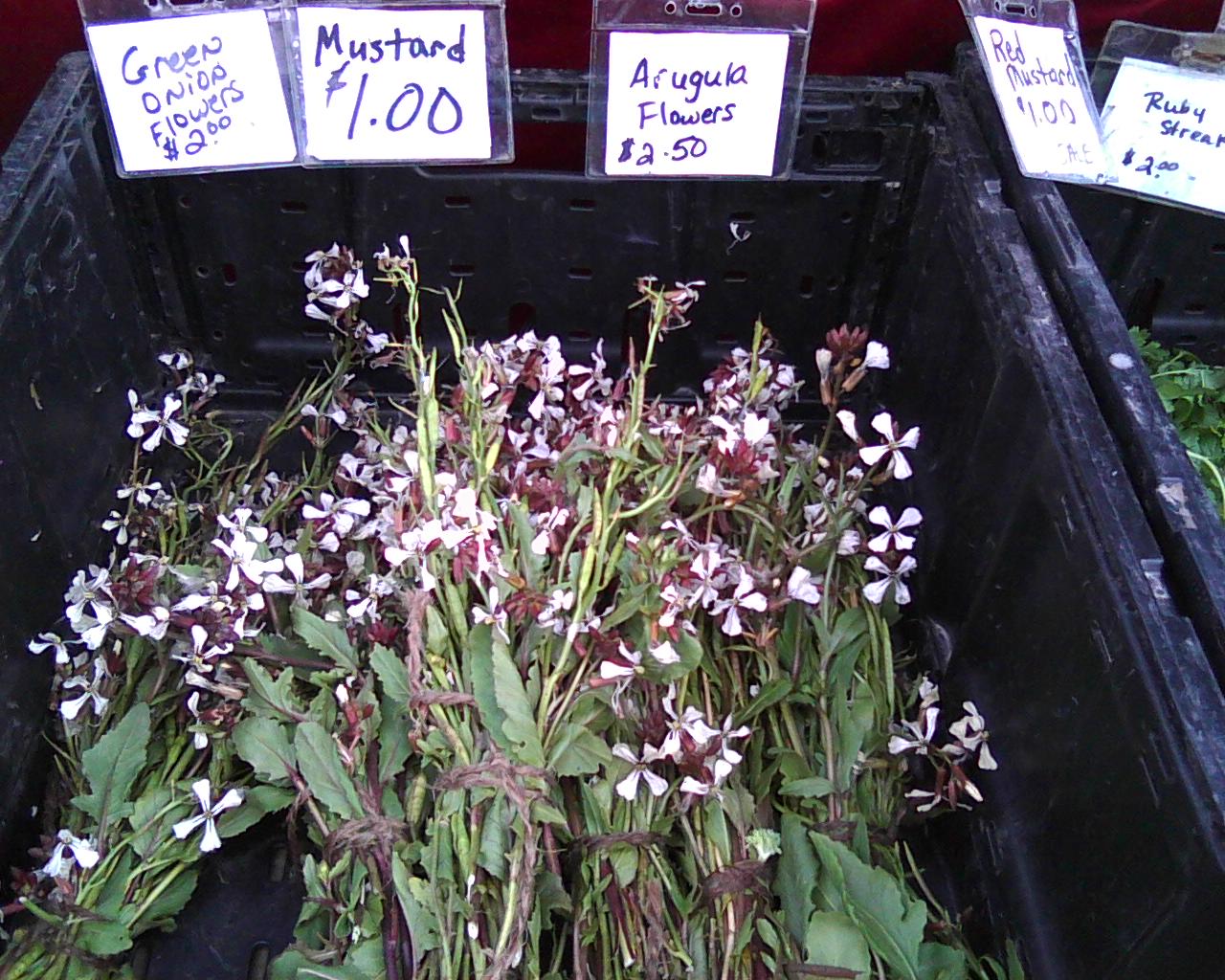
The Monica family, who have been Crescent City Farmers Market vendors for more than a dozen years, continue to add new products derived from the markets products already grown and offered.
Their evolution as savvy and leading market vendors has been remarkable and a pleasure to watch.

Arugula flowers

Arugula flowers

Review of “The Town That Food Saved”

The Town That Food Saved: How One Community Found Vitality in Local FoodThe Town That Food Saved: How One Community Found Vitality in Local Food by Ben Hewitt
My rating: 4 of 5 stars

While in Burlington, VT for a series of meetings and the NOFA-VT Winter Conference, I stopped at the Crow Bookstore to see what I could pick up for background on Vermont’s agricultural movement to understand its emergence as a “direct marketing” flag bearer for the alternative food community.

The book is focused on Hardwick, Vermont a small town (3200 pop.) 30 miles from the capitol of Montpelier and an hour or so from Burlington.
Hewitt starts slowly with the idea of exploring Hardwick’s reputation as a “National Alternative Agricultural Star”, which he acknowledges has been made so by outside media, including Hewitt himself and The New York Times among others.
The book profiles a few of the Hardwick’s ag economy’s “leading citizens” including Tom Stearns of High Mowing Seeds, Pete Johnson of Pete’s Greens (at the time, the state’s largest CSA, along with mucho wholesale and farmers market sales), Andrew Meyer of Vermont Soy Company, and assorted others like Jasper Hills Farms, Tom Gilbert of Highfields Center For Composting, North Hardwick Dairy, Claire’s Restaurant, Buffalo Mountain Coop, Center For an Agricultural Economy, and a few individual farmers and neighbors who take the time to give their opinion on the state of things in Vermont. He lets those interviewed tell him the pros and cons of what they and their neighbors are creating. He finds a couple of schools of thought although all sides seem to agree that this is a revolution of one type or another. Some offer their analysis of the Hardwick story from the point of view of a small, committed group building new components for achieving wealth and knowledge to share while the others believe they show it through their independent but community-connected lifestyle that doesn’t want to “win” over the other guys and exists as the opposite of what American capitalism has weakly offered most places.

This book was helpful to me. I spend my life thinking about alternative food systems and most of that time working among the disciples of it rather than those not yet sure that it serves them. To his credit, that Hewitt includes a few voices critical of this system like Steve Gorelick and Suzanna Jones in Walden is incredibly useful and incredibly rare in books of this kind. Their argument is one that I hear less often but one that I actually agree with: the new system cannot be built on the industrial model: either from its economics, its scale or its terminology. Suzanna points out her loathing of terms like entrepreneurs and food security and gave me the first laugh of the book: “People are always doing stupid things in the name of groovy ag movements.”

Hewitt makes the fair point that much of what is being touted as local food is actually being exported or simply out of the reach for the cash-restricted Hardwick citizen. Those participating will agree but make the point that they are preparing the way for the next wave of farmers and entrepreneurs and boldly testing systems and new relationships.
He also considers the hard work and commitment that these new ag leaders are putting into building their projects. All of them are thinking about how to spread their worth and influence while showcasing their (often dazzling) project success to investors and policymakers.
I found Tom Gilbert to be a particularly effective champion for both sides of the argument, probably in part because he seems to see the holes that yet exist in it.
“We have not created a new system in Hardwick; we’re just rebuilding and utilizing the infrastructure that was already here. I think we let the media get ahead of us. People read all of this amazing stuff was happening and it put everyone’s expectations on steroids…This is a building process, and we’re not ready to put the roof on, because we haven’t put the walls up yet.”
Hewitt also includes one of the most elegant, simple descriptions of local systems that I have seen in recent years in the book. It’s on Page 172 and I could write it out (because I copied it!) but I think everyone should read it within context of the arguments made.
The question of how to measure these systems is also touched upon and since that questions is so near and dear to my own heart, I wish more time had been spent discussing that with the members of the community.
Near the end, Hewitt attempts to unravel the issue of scale, which also proves that he has done his homework because it seems to me to be the Kryptonite of alternative food systems. A comment from Tom Stearns near the end shows the complicated relationship that this community has with the issue: “There is the assumption that big is bad, but maybe it’s just that big is only bad when doing bad things.”
I can only imagine what Suzanna Jones thought about THAT statement.

The Town That Food Saved as the title seems to me to be one of the only under thought-out ideas in this book. Hardwick seems saved by its size, its wealth of shared intellectual capital (sorry Suzanna!) and by being in a state that offers a safety net to all and yet seems to try to leave its citizens alone.
As for food systems, Hewitt hits on the reason why alternative food systems are growing so quickly in Vermont when he talks about the editorial that the Hardwick Gazette printed, linking food system skills to participation in democratic systems, and he himself does it on the aforementioned page 172: the idea of being responsible for your own and your neighbors’ (read community in 21st century speak) quality of life has never gone out of fashion in Vermont.
To finish that argument, my go-to guy in this story (Tom Gilbert) said it very well: ‘One of my missions is to equip people with the tools for community health and sovereignty. I‘m most interested in how whole systems can be used to combat other forms of oppression.”
Amen brother. And pass the local cider.

View all my reviews