How Columbus Is Using Smart Cities Challenge and Transit to Reduce High Infant Mortality Rate 

A very important story that illustrates how the social determinants can undermine any desire by individuals to access healthy living strategies. As many enterprising organizers have learned, simply adding a farmers market deep within  a food desert does not solve all of the nutritional problems faced by those residents. Additionally, the fact that markets do well when sitting on the “edge” of two or more communities (even with one being a food desert) and can therefore encourage bridging among the many residents has not been tested enough by planners or food system leaders.
As someone who was a community organizer in Columbus many years ago, I lived and worked in some of the very underserved areas described in this article and saw the effect on my neighbors and even on myself in those years. No doubt in my mind that the “mobile” in the term mobile markets in some cases should be focused on adding public transportation and shuttles from agencies to functioning markets that can offer a wide group of amenities to those new shoppers.

Finally, anyone who has heard my presentation on the “eras” of farmers markets which concludes with me asking those attending what the next era will be focused on will understand how gratified I am to see planners and regional governments include farmers markets in their strategies. Maybe this is the start of a beautiful friendship…

Crucially, Columbus wants to offer universal transit cards, which riders could use to pay for public transit as well as taxis, ride-hailing and car-sharing options. Kiosks would be installed at key locations, which would allow riders with (or without) credit cards or smartphones to add funds, call rides, and access real-time transit information. The city may also subsidize trips by private service providers like Uber and Car2Go. (A report released this week by the Center for American Progress highlighted this approach as a boon for low-income riders.) This could go a long way to address gaps in first mile/last mile connections, which can be a huge hurdle to low-income citizens getting the services they need.

The city is hoping a new BRT line and smarter technology can help families access crucial services.

Source: How Columbus Is Using Smart Cities Challenge and Transit to Reduce High Infant Mortality Rate – CityLab

The Link Between Food Insecurity and the Great Recession 

A report from the Hamilton Project highlights the lingering effects of the Great Recession on food insecurity…

There’s considerable state-by-state variation in food insecurity levels across the country, demonstrating once again that geography matters if you’re poor.

Here’s what Vilsack had to say about some states’ approach to the Supplemental Nutrition Assistance Program, and whether SNAP should be eliminated in favor of a block grant (as House Speaker Paul Ryan has proposed):

I’m leery about block grants, just simply because I haven’t seen governors step up.
I alluded earlier, when we came in in 2009, there were states where a little over 50 percent of eligible people were actually receiving SNAP because that particular governor, that particular administration, did not care enough to make sure that people knew about these benefits, did not care enough to make sure that their bureaucracy was getting information out in languages that people could understand, did not care enough to simplify the process, so I’m skeptical.

The Obama administration has successfully increased overall SNAP participation levels to 85 percent, but Vilsack’s comments illustrate how seemingly minor local political decisions around SNAP education and outreach can affect enrollment in a program that effectively reduces food insecurity.

The Link Between Food Insecurity and the Great Recession — Pacific Standard

Local currency helps communities decide “Who tells your story”

This story is from one of my mentor think tanks,  the Schumacher Center for a New Economics on their community’s robust currency system:

On Wednesday, Treasury Secretary Jack Lew announced a plan to redesign the $5, $10, and $20 to be more inclusive. Too bad we have to wait until 2020 to start spending money that reflects the diversity of our country… or do we? Residents of the Berkshire region of Western Massachusetts can already walk around with a diverse history of their region in their pockets – the local currency BerkShares celebrate some of the most important figures associated with the area.

One fan of BerkShares was inspired by the opening song from Hamilton to write his own introduction, in verse, for the woman that we celebrate on the 10! Thanks to Scott Grimm-Lyon for sharing his version of the story of Robyn Van En:

The ten BerkShare female farmer with just a prayer,
saw land controlled by the millionaire,
considered the general welfare,
knew food should not be grown elsewhere,
went into the town square,
preached against local laissez-faire,
and started the world’s first farm share.

Source: Local currency helps communities decide “Who tells your story”

A Pissed-Off Tampa Chef Explains The “Farm To Fable” Controversy

Greg Baker, chef-owner of the Refinery in Tampa, Florida, is a 20-year kitchen veteran, having worked in Portland, Oregon, and Austin before opening his James Beard–nominated restaurant in 2010.

So does local matter? Yes, but that begs clarification. I buy produce from a variety of local farms, some certified organic, some with organic practices but not certified and some that are conventional but utilize best management practices. As different as they all are, I know that I am buying produce that is fresh and nutrient-dense because of the short trip from farm to my cooler, and grown in a manner that doesn’t harm the environment. This is where “sustainably grown” comes into play. Organic doesn’t mean a damn thing to me if it refers to a lemon that was organically grown in Israel and traveled halfway around the world to get to me. Nor do I give a rat’s ass if something is labeled organic but grown in a monoculture. I’ve toured Big Ag tomato farms a couple of hours south of me while visiting with the Coalition of Imokkalee Workers; the type that Barry Estabrook wrote about in Tomatoland. I found myself in what was essentially a desert of tomatoes — no border land, no birds in the sky to be seen. I asked the meaning of a segregated tomato desert and was told “that’s our organic section.” So local doesn’t necessarily imply sustainability. That doesn’t mean that sustainability doesn’t exist locally to you, but you’re probably not going to find it in Big Ag growing operations.

…So for anyone who is still with me, you’re probably wondering why I’m so fucking angry. It’s because there are real-world economic consequences to lying about sourcing. Not for the liars of course, who got caught lying and have lied more to cover their own asses. I’ve been scratching by for six years on very narrow margins, living up to what I claim, while others have rolled it in by lying to their customers. That’s one thing. But people saying that they’re okay with being lied to?

Source: A Pissed-Off Tampa Chef Explains The “Farm To Fable” Controversy – Food Republic

Sustainable Cities and Social Capital

Any reader of this blog has seen a bit about social capital and markets. Many of the issues that we struggle with in the U.S. have to do with the lack of a shared social fabric and healthy living opportunities for all;  markets (and their surrounding food and civic systems) can alleviate some of those. As for their placement, when social capital is properly understood, the host cities would support markets getting long-term space in Main Street corridors or in historic downtowns. Finally, when markets struggle with adding benefit programs or attracting users of their other educational programming, it can be often traced back to the type or quantity of social capital present in their market. This study linked below has descriptions of how this works.

It was clear from presenters and participants alike that it is very difficult to make progress on aspirations and change when the social fabric is thin or doesn’t exist. When we don’t have sufficient trust or relational connection as individuals or organizations (among and across our differences), we become preoccupied with identifying who (other than us) is responsible for our various messes. If you are a municipality, it’s the province or the federal government. If you’re a business owner, it’s all of government. If you’re a citizen, it’s business and government, and so on. We do need greater clarity on responsibility and with it, more effective ways of identifying if we have the resources to deliver what we’ve been asked to shoulder. Without that, frustration will increase as the dreams of the future get bigger.

Source: Sustainable Cities and Social Capital: Common Dilemmas and Hopes | Cardus Blog


This story in NYT today about how the Parisian government is attempting to fix the place where Les Halles once was illustrates this as well.

In a morbid spasm of 1970s urban renewal, the soaring 19th-century, Liberty-style, glass-and-steel food market — once the pulsating heart of the city — gave way to a claustrophobic underground shopping mall and flimsy street-level pavilions….

…Three weeks after the anxious official unveiling — “we had to fix this broken place,” Mayor Anne Hidalgo of Paris said — and five years after construction began, the appraisal of skeptical Parisians, it seems, is like the face the city presents to the world: reserved and critical, but not unwelcoming.


SaveTheFood.com

Check out the new NRDC food waste campaign with lots of “assets” for organizers to  share on different platform. It’ll be seen via The Ad Councils strategy (which means millions of views at least), uses music from Disney’s UP movie and is a  charming and engaging take on this issue:

New Louisiana governor installs chicken coop at mansion

Edwards said he installed the coop to “get back to a sense of normalcy.”
“It’s extremely nice,” Edwards said of the new coop, which was built by professionals (paid for entirely out of the Governor’s pocket, according to WWLTV reporter Eric Paulsen) and matches the color scheme of the Governor’s Mansion. Upon returning home from a day’s work, he said, he makes sure to check in on his chickens. .

(Paulsen FB post): Governor John Bel Edwards said he wanted chickens at the Governors Mansion and he now has them. This is his chicken coop behind the Mansion. He has 16 chicks that he hopes will soon be supplying fresh eggs for his family and friends. I guess these are Louisiana’s “first chickens”.

12985587_1020208721388544_5990847717357139272_n

Source: Gov. Edwards’ chicken coop sparks ‘firestorm’ on Facebook

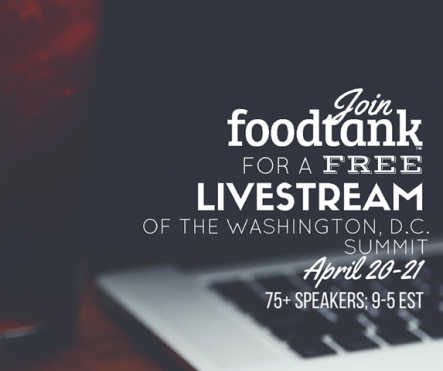
Sign up for Food Tank’s live stream Summit

I’m a big fan of Food Tank and thought last year’s summit was thought-provoking and lively. I kept the live stream on all day while I worked to be able to stop and take notes when necessary.

Program found here


CgR_csiWsAEJrDQ.png

USDA: Local Food Marketing Practices Survey

Data is crucial for any well functioning market. Producers, investors and consumers need to understand market trends and dynamics in order to make sound business decisions. This is as true for farmers and ranchers as it is for Wall Street executives. However, despite being an over $12 billion a year industry, the local and regional food sector has been hampered by a lack of useful data and metrics.

The near total absence of data on local and regional food economies has likely limited, or at least slowed the sectors’ potential growth. In fact, farmers and entrepreneurs routinely encounter challenges when applying for loans and accessing credit or risk management tools because they are unable to provide the necessary data about their sector’s markets and prices and the growth of their types of businesses.

New Survey

Fortunately, things are finally poised to change. The United States Department of Agriculture’s (USDA) National Agricultural Statistics Service (NASS) is launching a first-of-its-kind Local Food Marketing Practices Survey that will collect benchmark data on the production, marketing and sales of local food and farm products. In order to provide farmers with the data they need to launch and grow successful businesses, however, NASS first needs farmer input.

NASS has mailed the survey to a random sample of 44,300 producers across the country who are engaged in local production and marketing. The survey will ask producers questions on the value of local food sales conducted through specific marketing channels, such as farmers markets, community supported agriculture (CSA), institutions (schools, hospitals or restaurants) and food hubs. Additional questions on the value of crop and livestock sales, farm expenses, and federal farm program participation will provide key benchmark figures to inform federal funding for local food programs. Data collected from the sample will be used to generate benchmark figures for the entire population of farmers engaged in local and regional food systems.

The National Sustainable Agriculture Coalition (NSAC) strongly encourages all farmers who receive the survey to fill it out. Survey recipients have until May 2, 2016 to return the completed form by mail, or to complete the survey online.

After May 2, NASS may follow up directly with survey recipients in order to ensure thorough data collection. All responses to the survey will be kept confidential.

Results from the survey will be released in December 2016.

We also encourage sustainable food and farming organizations to share this story and opportunity with their farmer members and help get the word out. NSAC has long supported the creation of tools that would provide much-needed economic data to local farmers and producers, and we know that data is best when it is informed by as many farmer voices as possible.

The Local Food Survey, created as part of the Know Your Farmer, Know Your Food Initiative, will provide valuable information and insight into the impact that USDA programs have had in bolstering the burgeoning local and regional food sector. The survey will also provide much-needed data to state and local agencies that promote local food markets, as well as non-governmental farmer/agricultural organizations that are working to build marketing strategies around the growing interest in local food production.


Amid Climate-Fueled Food Crisis, Filipino Forces Open Fire on Starving Farmers 

Police and army forces shot at about 6,000 starving farmers and Lumad Indigenous people demonstrating for drought relief in the Philippines on Friday, ultimately killing 10.


On Monday, local farmer Noralyn Laus gave Democracy Now! a firsthand account of the disaster:

“Why we came down here is not to make trouble. We just want to demand for rice, because of the situation of El Niño is leaving our tribes hungry. What happened yesterday, we didn’t start it. They started it by beating us. We wouldn’t be angry if we weren’t beaten up or attacked. We’re having a crisis. We don’t have anything to eat or harvest. Our plants wilted. Even our water has dried up.”

“Our farmers—the country’s food producers—are battered the hardest and are left in poverty and hunger,” Rapollo said. “Civil disobedience will continue to escalate until the government stops playing deaf and blind to the genuine cry of the people.”

Source: Amid Climate-Fueled Food Crisis, Filipino Forces Open Fire on Starving Farmers | Common Dreams | Breaking News & Views for the Progressive Community

POP your market in 2016

Last year, the Farmers Market Coalition teamed up with Chipotle Mexican Grill to give 30 farmers markets across the country the opportunity to meet their educational missions through the POP Club: Power of Produce! FMC is excited to announce that POP will continue at those markets for an additional year, AND will expand the program to include 20 MORE FMC member markets for the 2016 season!

POP Club began in 2011 at the Oregon City Farmers Market. The program’s success attracted the attention of, and quickly spread to, markets across the country. POP Club empowers children to make healthy food choices by engaging them in educational activities at the farmers market and putting buying power directly into their hands. The program gives children $5 in market currency (vouchers) to spend on fresh produce when they participate in a POP Club activity. POP Club provides a fun opportunity for children to participate in the local food system through conversations directly with farmers, educational games and demonstrations, and exposure to new fruits and vegetables. You can learn more about the POP Club here.

The Chipotle Mexican Grill sponsorship will provide 50 FMC members with activity supplies and promotional materials needed to run the program, and $2,000 in farmers market vouchers for POP Club participants! While the Chipotle sponsorship opportunity is open to a limited number of markets, the POP Club tools, guides, templates and promotional materials are available for download by all FMC members.
Sponsored markets will receive:

  • $2,000 in farmers market vouchers
  • A POP Club Banner
  • Grow Pots (flower pots with seeds and info on growing your own veggies)
  • Activity Books (Games and activities that also teach kids about growing food and eating healthy)
  • Farmers Market Scavenger Hunt cards
  • Salsa recipe cards
  • Temporary Tattoos
  • Templates for social media graphics, fliers, and POP Club Passports

The sponsored markets will be required to offer POP Club programming on 4 market days, between June and August.  However, markets are free to offer POP Club more often if desired.  Sponsored markets will be required to submit two brief progress reports on their POP Club activities. The POP Club events and final report must be completed by August 15th.

Does this sound like a great program for your market? Apply today! The online application takes about 15 minutes, and is due by Friday April 29th at 11:59 EST.  If you have any questions about the program, please contact Liz Comiskey atliz@farmersmarketcoalition.org.

Apply Today!
________________________________________

A Hidden Cost to Giving Kids Their Vegetables – The New York Times

A really fascinating article that markets should read. Programs like Power of Produce (POP), cooking demos and packaging some smaller amounts may help with this issue.

But the poor parents I followed had little leeway to ignore waste. One mother strove to provide healthy food on a budget. She cooked rice and beans or pasta with bruised vegetables bought at a discount. These meals cost relatively little — if they’re eaten. But when her children rejected them, an affordable dish became a financial burden. Grudgingly, this mother resorted to the frozen burritos and chicken nuggets that her family preferred.

To consume a variety of nutritious foods, children need to acquire new tastes. This is an opportunity that many families cannot provide. Schools can familiarize children with nourishing foods through gardening, experience-based nutrition education and healthy school meals. Because many schools lack the funding to expose children to varied, wholesome foods, it is essential to expand the promising programs that have begun to address this problem.

Pediatricians and nutrition educators can also suggest how to reduce waste. Recommendations could include offering foods that are shelf-stable and easily divisible, like frozen fruits and vegetables, so parents can offer small amounts repeatedly without generating excessive waste.

Source: A Hidden Cost to Giving Kids Their Vegetables – The New York Times

Impact of climate change on agriculture may be underestimated — ScienceDaily

“The changes in cropping that we quantified with remotely sensed data were stunning,” Mustard said. “We can use those satellite data to better understand what’s happening from a climate, economic, and sociological standpoint.”

The study showed that temperature increases of 1 degree Celsius were associated with substantial decreases in both total crop area and double cropping. In fact, those decreases accounted for 70 percent of the overall loss in production found in the study. Only the remaining 30 percent was attributable to crop yield.

“Had we looked at yield alone, as most studies do, we would have missed the production losses associated with these other variables,” VanWey said.

Taken together, the results suggest that traditional studies “may be underestimating the magnitude of the link between climate and agricultural production,” Cohn said.

That’s especially true in places like Brazil, where agricultural subsidies are scarce compared with places like the U.S.

“This is an agricultural frontier in the tropics in a middle-income country,” VanWey said. “This is where the vast majority of agricultural development is going to happen in the next 30 to 50 years. So understanding how people respond in this kind of environment is going to be really important.”

VanWey said a next step for this line of research might be to repeat it in the U.S. to see if increased subsidies or insurance help to guard against these kinds of shocks. If so, it might inform policy decisions in emerging agricultural regions like Mato Grosso.

Source: Impact of climate change on agriculture may be underestimated — ScienceDaily

Vt Farmers Market Conference


This slideshow requires JavaScript.