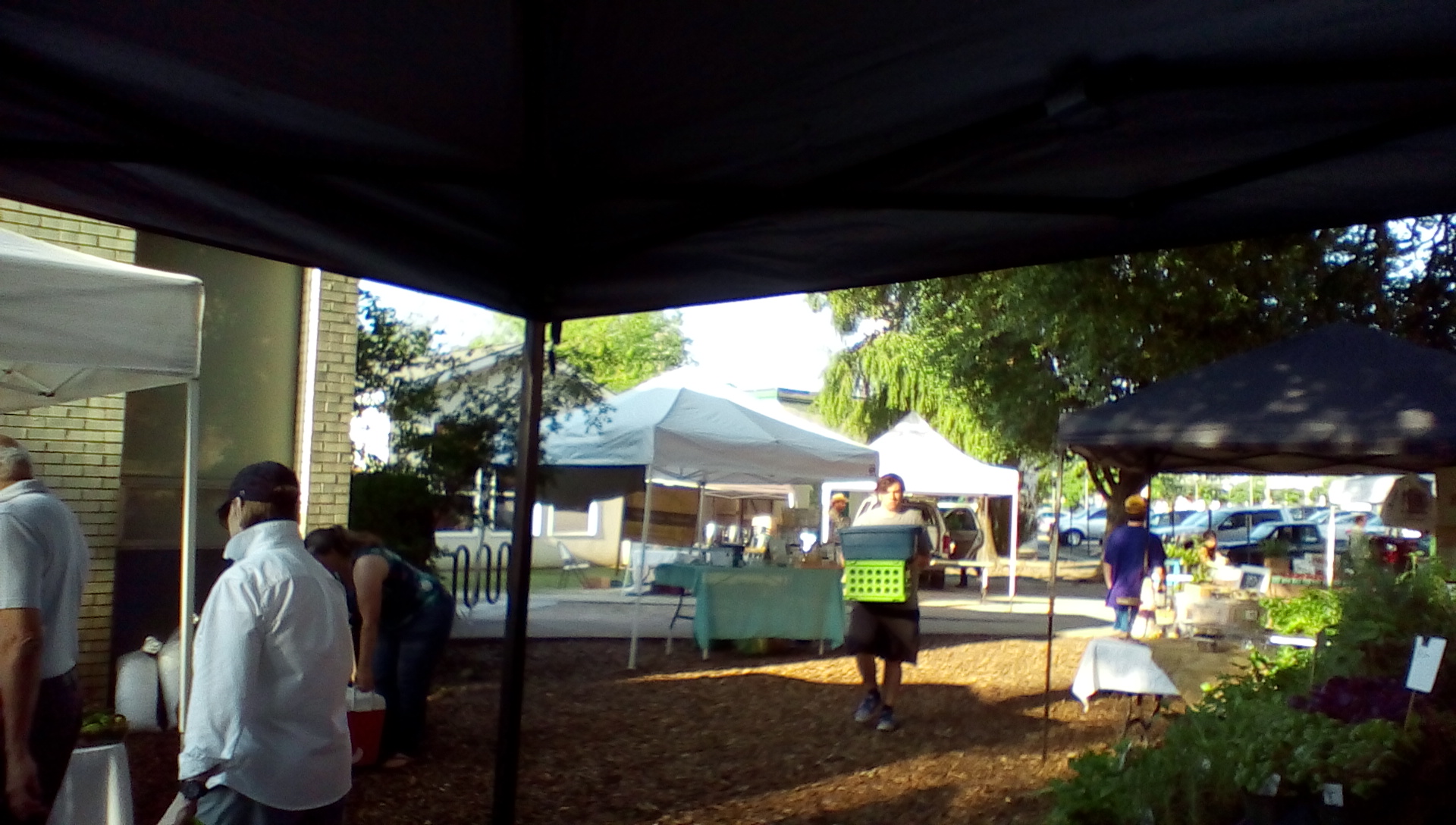
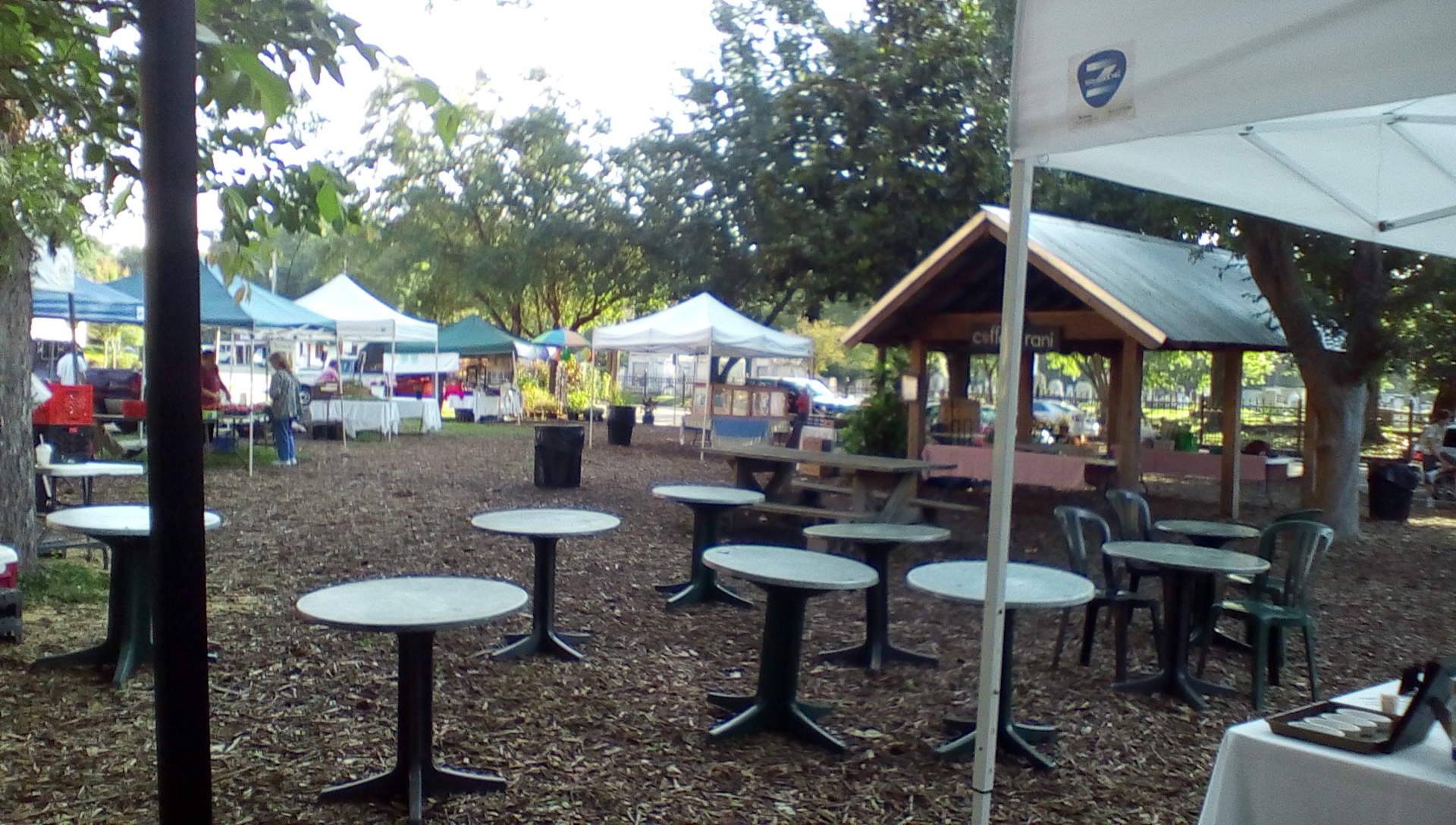
Hernando Farmers Market Data Collection Day

I kicked off my summer of market travel in northern Mississippi this year, which is one of my favorite places to work and to visit in the U.S.

Hernando is in DeSoto County (someone had to point out to me the appropriate alignment of the names of the city & county, honoring the first European known to cross the Mississippi) and it ranks highest in most indicators for good health in Mississippi, but is next door to a slew of counties that are at the very bottom of that same list, in what is called the Delta.

I first got to to know the Hernando Market when I was doing research a few years back for a report for The Wallace Center on existing challenges for direct and intermediate marketing farmers in Mississippi. Everyone told me to go talk to this market to see what impressive work was being done there. And so I went up and met with Shelly Johnstone, who founded and ran the market while working as the Community Development Director of the city. The market had been running for only a few years by the time of my visit but already was one of the largest and most productive in economic terms for area producers. I remember well what she told me about being Hernando as a  regional leader during that visit: “We’re grateful to be leading the state in healthy behavior but we know we need to assist our fellow counties and get those folks in the same situation. It won’t be enough to fix Hernando.”

She invited me back up to see the kickoff for her weekday local food market box program called 4Rivers, created in partnership with the Northwest Mississippi Community Foundation, which has done a great deal in food and active living projects for the area. She also discussed her work to provide technical assistance to neighboring markets and to support the expansion of organic/sustainable farmers through the Mississippi Sustainable Agriculture Network. All of this and more happened because of the leadership of Mayor Chip Johnson, who remains a strong proponent of the weekly farmers market.

I left impressed with the mayor and Shelly’s connections and drive, looking forward to many years of their leadership. Of course, news came to me within a year that she was retiring from the city and her post(s), but would stay involved with the efforts in her area. Unfortunately, circumstances have not allowed her to be as visible as she would probably have liked, but the good news is that her successor at the city, Gia Matheny, has the same drive and empathy for her fellow citizens. Of course, coming into the market some years after its founding has meant some catch up for Matheny, but luckily, she has deep skills, an open personality and is willing to ask about what she doesn’t know.

So when the request was sent out by Farmers Market Coalition for markets in MS to become a pilot site of the Farmers Market Metrics work, I was pleased when this market asked to be considered as one of the sites. The 3-year data collection project would teach the research team at University of Wisconsin-Madison a great deal about the unique qualities of markets and regions and so having this strong market in the mix for Mississippi was going to be beneficial for everyone.

Hernando (like the other 8 pilot markets) was instructed to choose metrics that best represented the current impact that the market was having on its vendors, its visitors/shoppers, its neighbors and the larger community.

Here are their choices:

Dollars spent at neighboring businesses by market shoppers on market days

Percent of customers who were first time visitors

Average number of SNAP transactions per year

Total dollar amount of Senior FMNP redeemed annually

Number of different fruit and vegetable crops available for sale annually

Percentage of shoppers walking,bicycling, carpooling, driving or taking

public transportation to the market (estimated annually)

Percentage of shoppers from represented zip codes (estimated

annually)

Additionally, all 9 markets were asked to collect the same data on these metrics (called the Common Metrics):

Average number of visitors per market day:

Total annual vendor sales at market

Average distance in miles traveled from product origin to market

Acres in agricultural production by market vendors

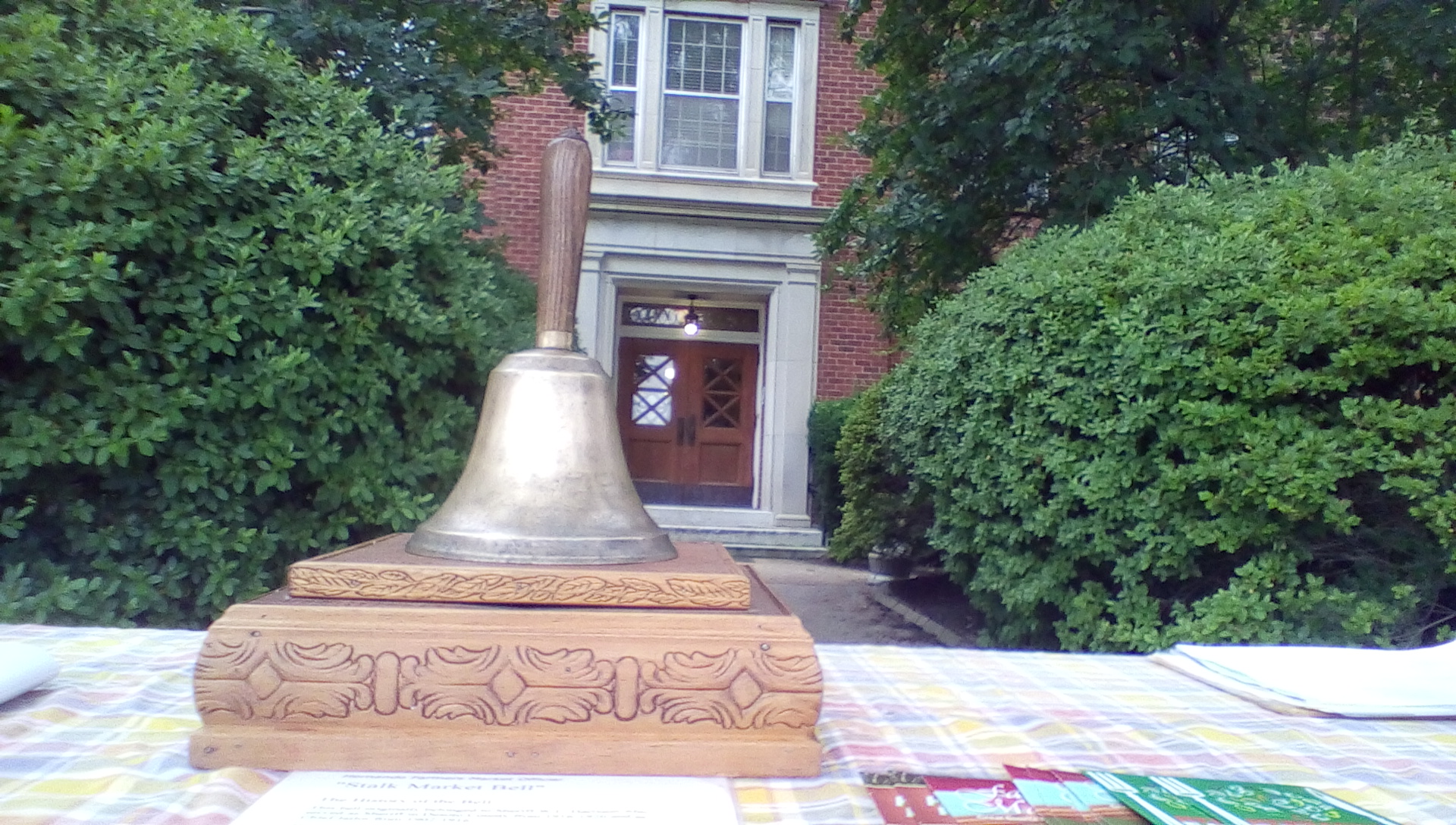
Once the metrics were selected in the fall of 2014, the UW research team created a unique Data Collection Package (DCP) for each market detailing how and when they would collect the data for each metric. Each market then chose their collection days for the summer/fall of 2015 and searched for and scheduled volunteers accordingly. June 13th was one of Hernando’s four scheduled dates for visitor surveys and visitor counts and so I drove up to observe the day and offer any assistance I could. I was also lucky enough to be asked to ring their 100-year old market bell to open the market:

The 100-year old Hernando Market bell

The 100-year old Hernando Market bell

FMC FB post of the video of me ringing the bell

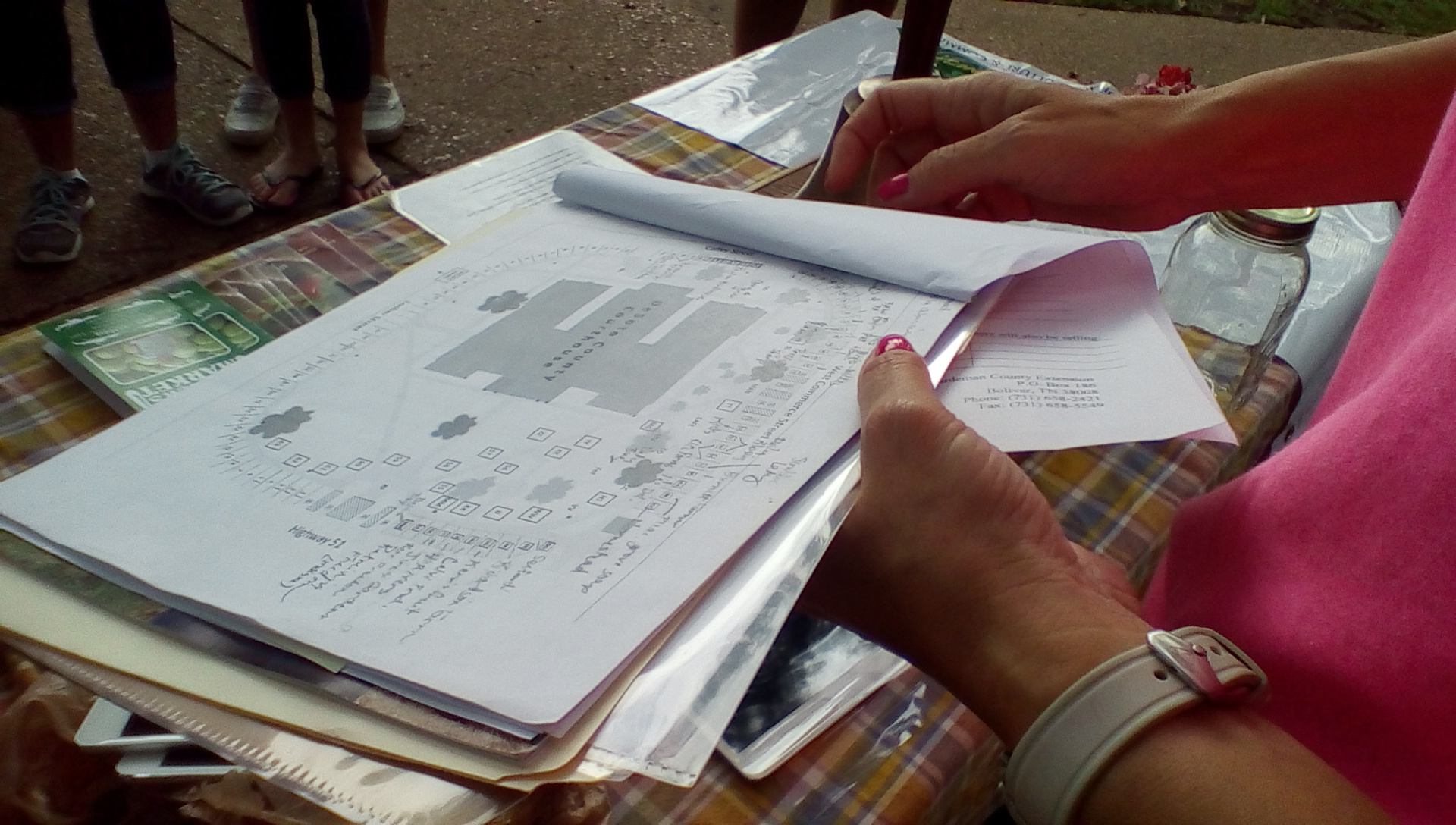
Gia mapping out the day

Gia mapping out the day

GiaMHernCollectors

The Hernando Market Welcome Table

The Hernando Market Welcome Table

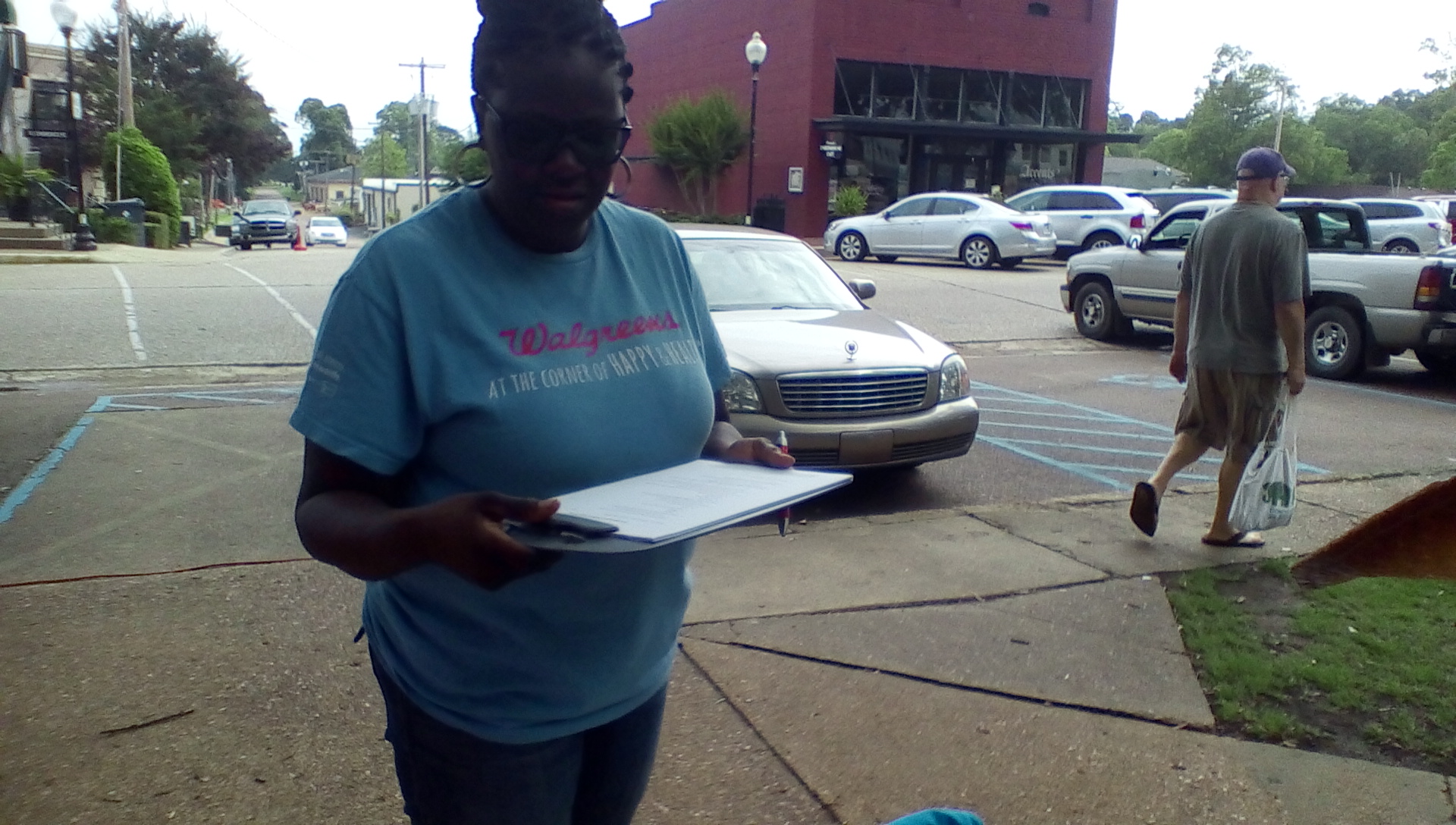
One of the two team members that would be doing the visitor surveys

One of the two team members that would be doing the visitor surveys

The other member of the team conducting the visitor surveys- yes that is an iPad which was being tested for use in doing surveys; unfortunately, the WiFi signal was not strong enough to use and so paper surveys were used instead.

The other member of the team conducting the visitor surveys- yes that is an iPad which was being tested for use in doing surveys; unfortunately, the WiFi signal was not strong enough to use and so paper surveys were used instead.

The set of clickers to be used for Counting Day

The set of clickers to be used for Counting Day

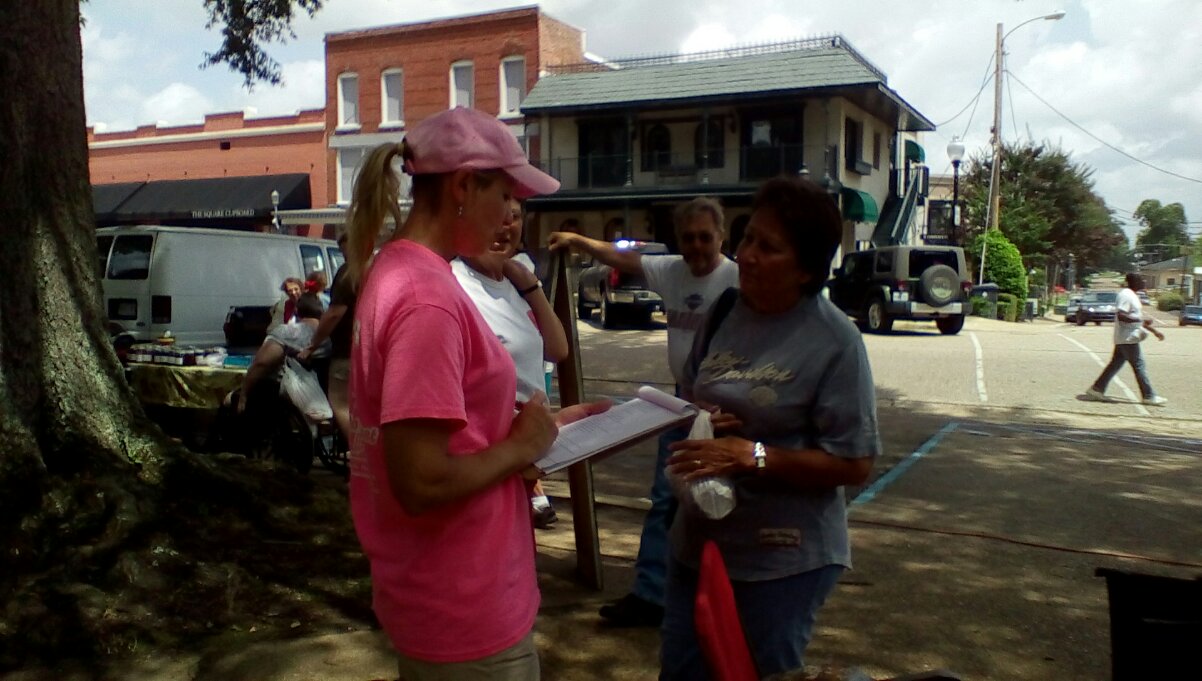
Gia doing a survey

Gia doing a survey

Some of the team were assigned at advantageous locations to count the visitors, while others were to complete visitor surveys. The volunteers were a mix of folks, from corporate volunteers (Walgreens corporate office staff for this Saturday) arranged through Volunteer NW Mississippi, to a city youth leader and Gia’s daughter and her friend. They picked up on the tasks easily and (and something that is not unusual in my experience) offered good feedback throughout the day and even gladly volunteered to take on more data collection tasks when necessary.

Overall, the data collection went extremely well and the immediate and ongoing analysis of it will mean an even smoother day for the next round for  the market leaders. It was impressive to see how many city officials, visitors and vendors wanted to know more about the pilot and and were eager to discuss the market in measurement terms with me.

Next up: Chillicothe and Athens OH

2015 Growing Food and Justice for All Chicago 9/25-9/27

Growing Food and Justice for All Initiative

Friday, September 25, 2015 at 1:00 PM – Sunday, September 27, 2015 at 4:00 PM (CDT)

Chicago, IL

The Growing Food and Justice for All Initiative is excited to announce that registration is now open for the 2015 Gathering:
They have a limited number of scholarships available this year that are available on a first come first serve basis. Please see the eventbrite page for more details.
See you in Chicago!

The Law of Seeds

The Law of Seeds” is a Bill of Rights for seeds, created by Beth Grossman. She scribed these rights with a quill pen on eleven vintage seed bags that are also painted with images of the stages of germinating corn from seed to mature plant. This traveling art exhibit evokes an appreciation of the wonders of seeds and the importance of protecting this precious source of our food chain. Brisbane, CA was the first U.S. city to adopt this Law of Seeds as a Proclamation. As the exhibit travels, the artist hopes to encourage other cities to develop, adopt and enforce rights of nature.

Blue Apron

Many market organizers and vendors have seen the market box concept in action in their region, where a non-profit or an entrepreneur picks up goods from participating producers and sells them as a package or allows for individual selections, packed and delivered. In my area, Good Eggs has the corner on the regional ingredient delivery system right now. Their delivery van is seen at most markets first thing picking up orders from individual market vendors.

Another version of the delivery service of “fresh” but not necessarily local is Blue Apron which delivers the precise ingredients for meals to your door, and adds seasonal recipes and detailed instructions. Hello Fresh is another well-known company using the same model, but Blue Apron is seen as the industry leader and just raised 135 million dollars so is now “valued” at 2 billion dollars.

So do these services help local food?
The truth is that many eaters will never become regular market shoppers but many can be introduced to the joys of seasonal whole foods through these services and so market organizers should at least be aware of them and do their best to work along if it does not impair the direct sales of the market’s vendors. However, we need to be vigilant about communicating the benefits of markets even more in these crowded times.

Blue Apron charges approximately $10 per meal, and makes over 3 million meals every month. Blue Apron now operates two distribution centers with over 1,800 employees, and thousands of customers.
Other facts from their site:
Recipes never repeated in the same year
Meals are 500-700 calories per serving and take 35 minutes to prepare
Ingredients are perfectly pre-measured so there’s no waste
Cook with seasonal ingredients that are fresher than the supermarket
Discover specialty products that are hard to find on your own
Convenient Delivery
Free delivery nationwide
Choose a delivery day that best fits your schedule
Ingredients arrive in a refrigerated box so food stays fresh even if you’re not home

What it’s like to use Blue Apron – Business Insider.

Organic Farmers Object to Whole Foods Rating System

Matt Rogers, associate global produce coordinator at Whole Foods, said the program was an attempt to help consumers make choices, and he noted that by forbidding some if not all pesticides and awarding points for conservation and reduced water use, Whole Foods is raising the bar for conventional suppliers and inching them closer to organic standards.

“Organic is an incredibly deep standard, and at Whole Foods we celebrate that in very consistent, long-term ways,” said Mr. Rogers, who worked for more than three years to put the program together. “But the organic standard does not cover water, waste, energy, farmworker welfare, and all of these topics are really important, too.”

That means, however, the conventionally grown produce may end up with a higher rating. For instance, photos taken at a Whole Foods store in Capitola, Calif., and included with the farmers’ letter show a heap of conventionally grown asparagus from Mexico that is rated “best” for $4.99. Yet another photo, taken at a Whole Foods some 30 miles north in Cupertino, shows a pile of organic asparagus from Durst Organic Growers that is rated “good,” the lowest Responsibly Grown rating, for $7.99.

“This program is our reaction to a fast-moving marketplace that gives us an opportunity to engage on these issues with our supply chain in a way we haven’t been able to before,” Mr. Rogers said.

Supply chain? oh he means farmers and harvesters.

Organic Farmers Object to Whole Foods Rating System – NYTimes.com.

Louisiana updates its cottage law on labels for raw honey, state sales tax

June 2015: The update means no label is required to sell raw honey and deletes the earlier need for registering at the state for sales tax collection. However, if there is local (parish or municipality) sales tax registration and collection  required, it does not lift that requirement.

The following foods were specifically listed:

  • Baked goods, including breads, cakes, cookies and pies
  • Candies
  • Dried mixes
  • Honey and honeycomb products
  • Jams, jellies, and preserves
  • Pickles and acidified foods
  • Sauces and syrups
  • Spices

My original post on the subject in 2013

2014 revisions to cottage food law

New for 2015: no label required for sales of raw honey


Good site for the cottage food community which includes some interpretation of laws.

More detail from the sales tax issue. The original article from TP overstates the sales tax issue a bit. I asked for a clarification from the sponsor and this is what I was sent:

The pertinent information is in the bill itself on page 1, line 19 through page 2, line 5 of HB 79 Enrolled – which provides as follows:

“No individual who prepares low-risk foods in the home shall sell such foods unless he is registered to collect any local sales and use taxes that are applicable to the sale of such foods, as evidenced by a current sales tax certificate issued to the seller by the sales and use tax collector for the parish in which the sales occur.”

This means that if any local sales taxes are applicable to the sale of the food, then the seller must be registered to collect that tax in order to sell his home-produced food legally. If no local sales taxes are applicable to the sale of the food, then the seller doesn’t need to be registered to collect taxes on the sale of the food.

The main purpose of this particular amendment that HB 79 makes to the cottage law is to strike the reference requiring sellers to register to collect state sales tax. This correction was necessary as state sales tax does not apply to food for home consumption

Hope this helps,

Brandy Pearce
Legislative Assistant to
Representative Richard Burford


The Association of State and Territorial Health Officials on cottage food laws

Vending for a day

My regular Saturday market stop two weeks ago ended with my pal and one of my favorite vendors, Norma Jean of Norma Jean’s Cuisine asking me to assist her the next week by managing her table while she handled a demo nearby.
So, this week I packed my bag for a 3-5 hour market trip which meant adding a gallon of water, bandanna, Florida water and my watch.
Since leaving Market Umbrella in 2011, I haven’t spent more than 2 hours behind a table as a manager or a vendor; I do help my pals Rob and Susie sell their baked goods when the line backs up since I often sit behind their table with them anyway, chatting about a million subjects, so stepping up to take the money or to bag items is the least I can do.

When I do consulting work with a market, I am there for a full day sometimes, but it is definitely a different vibe than managing or vending.This day, I was responsible for all of the sales at Norma’s table; no wandering off when I saw something to eat or see. Knowing the products well enough to answer questions easily and not in a rushed manner, keeping money straight, all had to be managed on my own.
I think every market manager and board member should step in and run a vendor table for an hour or two. It is important to watch the traffic, gauge the body language, note the questions of visitors and to get the vibe from that point of view.

Some thoughts from today:

1. It’s fascinating to me how many people were thrown by not seeing Norma.  The products by themselves are not always enough to signal the same vendor. I think that is a great thing- the relationships between the shoppers and the vendors are meaningful and so the person-to-person connections are as important as we assert they are.

2. The number of new people, always: I think vendors and managers forget how many people are at the market for the first time. When I sensed someone new to the market by what they asked or how they moved through the market, I would ask them if they were a regular shopper and so heard from many first-timers. It shows how a market and its vendors need must be prepared to introduce their items and the system over and over and over again and not to assume that everyone knows their stuff or about the market. And this is a rural/suburban market and not an urban market and still has lots of newcomers.

3. Body language: Norma had left me a chair to sit in (I don’t think I’ve ever seen her sit in it actually) but I didn’t dare, having been trained at Market Umbrella that sitting at market for staff or volunteers was a no-no. It’s not that sometimes it isn’t okay; if the market is a tailgate market and right up against the table it can work (and look) well for a moment or two. However, those deep camp chairs that allow someone to sink down, I say no.  But standing in place for so long was difficult for me; as a market manager, I had rarely stood in place for more than 5 minutes at a time and even had a rule to not engage in any conversation for more than 10 minutes. If needed,I would ask that person if I could call them to finish talking on Monday. Today, I found because I had to stand still so long, I had my hands on my hips regularly and so began to put them on the table or in my pockets or add busy work to stop doing it.

4. Even though many shoppers and all of the vendors know me and I am well acquainted with Norma’s products, I am even more of a true believer that employees are never going to equal with having the producer or their family standing there. The confidence in the products and the awareness of every step of the process is not at the same level. Add to that, how unlikely it is that any small feedback offered by shoppers or visitors will translate into action if it is given to an employee. Or, if slow sales of any one item is due to the lack of interest from shoppers or lack of sales technique of the employee. So even if markets allow employees to sell (which is quite necessary for most), I recommend that they add a rule that the producer has to sell at least once every month or two.

5. I love watching and being part of the barter of the market. As many of us know, many vendors barter their goods rather than exchange currency and to see the regular versions of that; Norma gets gluten-free bread for the vegan pesto samples in exchange for her items, and to be “paid” in those goods too helps remind me that we still are not measuring the true number of transactions at a market. Norma also has a barter system with one customer who has a credit slip at her booth-no one else is afforded that system, but I certainly have seen other vendors do that with some of their skilled neighbors as well.

6. How necessary it is for market staff or volunteers to roam the market regularly. So often, vendors get too busy to take a bathroom break or get change or need something and are stuck until someone happens by to assist. Lucky for me, Norma was within eyeshot as needed, and the sister managers Jan and Ann rolled by and connected with me once or twice. Checking in with your vendors can elevate the trust and raise the spirits of a market struggling in other ways.

7. When Norma finished her demo and sales earlier than expected, she cleaned up there and took over at her table, sending me on my way with warm thanks and gifts of food. As I got in my truck, I thought of how I get to finish my day there and then and not continue to sell, to then have to pack up/clean up, count the money to see if any profit has been made, and to make decisions for next week, next month etc. That long day and the added worry when the day is mediocre or bad has to be frightening and/or demoralizing to even the most confident producer. For many of our vendors, they have work for mid-week markets to start by mid-afternoon after market or the next morning or for some, to get a little rest for their other full-time job come Monday morning. My hat is off to those who believe enough in artisanal food or products to spend their life producing them for us.

8. What an enjoyable day.

Vendors walking their items in

Vendors walking their items in

Vendors getting tents up

Vendors getting tents up

The seating before the market opens

The seating before the market opens

Norma Jean's cold area

Norma Jean’s cold area

Norma Jean is all set up and ready for me to sell for her

Norma Jean is all set up and ready for me to sell for her

This is what she was demoing and selling at the other booth. Really nice version of Salad Nicoise, without the tuna.

This is what she was demoing and selling at the other booth. Really nice version of Salad Nicoise, without the tuna.

What the market looks like when the musicians are playing midday

What the market looks like when the musicians are playing midday

NOLA Vietnamese Farmers on the Beeb

I’ve written about the Vietnamese community in New Orleans in this blog as well as in my New Orleans blog and so am always glad when I see a news story on it, especially one on an international site.

http://bbc.in/1SOnYd0

Some background about our Vietnamese neighbors: the community was settled by the Catholic archdiocese and was made up of (originally) two North Vietnamese fishing villages. The land they settled was largely unused and is in the east along the waterways, where fishers have long made their living. The community kept to itself almost entirely until Katrina when their activist priest Father Vien challenged the city of New Orleans to rebuild as quickly as they wanted.

The Vietnamese fishers were active in the fight to get restitution after Hurricanes Katrina and Rita and even more so after the 2010 BP oil spill. It is important to note that for fishers, one of the biggest barriers they have for making a living is the massive amount of seafood imported into the US; the standards that local fishers follow, especially those family fishers that largely operate in the “inside waters,” are not expected of those corporations that operate in China and elsewhere. The inside waters fishing seasons are opened and closed based on the size and quality of the catch and so limit overfishing. It is also important to note that many of the fleets operating in the Gulf in the federally-controlled waters are not primarily family or one-boat fishers but instead large companies scooping up your Red Lobster all-you-can-eat buffet items.

The Viet farming community in the East had been less visible pre-2005 with most of the elders growing food only for themselves and for their small Saturday morning farmers market, held from 6 am to 8:30 am or so on Alcee Fortier Blvd. After 2005, the community began to organize efforts and had grand plans to build a community/cooperative farm along the levee, but had some bad counsel and finally, government agencies as well as some cultural barriers (communication style with funders, generational politics etc)  stalled those efforts.

The Veggi Coop is a wonderful initiative and deserves lots of attention; to be clear, cooperative farming initiatives had been in the works there for some years and farming cooperatives like Mississippi Association of Cooperatives have led the way since the 1970s. So, for the focus of the BBC story to be on socialist or communist fears as the barrier seems like a red herring compared to the real concerns farmers and fishers have about organizing with their competitors, no matter from where they hail.

I don’t want to denigrate this story as I appreciate the attention, but the issues for small-scale farmers whether urban, suburban or rural, is profit, not just sales and long term infrastructure support, not just access to markets. What is exciting to see publicized is the cooperative itself; the addition of another cooperative is extremely welcome and in my mind, creating more of them is necessary in order to grow more regional food systems.

What coops like this have done admirably well is to reduce the costs of marketing; my hope is that these fine folks can gain support to next tackle infrastructure and policy issues and to connect their efforts to the rural farmers and fishers across the Lake Pontchartrain watershed. The Veggi Cooperative is one of the few outright success stories in urban agriculture since Katrina (along with Grow Dat Youth Farm) and both should be celebrated for making it in a very turbulent and uncertain time.

*Here is one of the Go Fish/Go Market/Go Farm films of the 30 or so that I made for Market Umbrella with Kellogg funding. This one was about the Vietnamese community:

See all of the films made in that series here.

Great Places Awards, Fayetteville 2030: Food City Scenario

Big fan of the Fayetteville food work I have seen and heard about.

The EDRA 2015 Place Planning Award recipient, “Fayetteville 2030: Food City Scenario,” asks the question, What if Fayetteville’s projected growth enabled the city to sustain its food budget through a local urban agriculture network? And what kind of infrastructure would a city have to develop if it cultivated a local food system? While the large metropolis sponsors the most efficient carbon footprint per capita, moderate scale cities like Fayetteville are better equipped to evolve resilient food-secure environments given the interconnectedness and metabolic alignment among their natural ecosystems, infrastructure, and urban fabrics. Food City’s transferable set of planning tools, established by the University of Arkansas Community Design Center, not only assists to embed high-quality food production into American urbanism, but shows how urban infrastructure can also deliver important ecosystem services.

All of the 2015 Environmental Design Research Association awards here

Washington farmers are dumping unprofitable apples

When local food systems are derided for their lack of efficiency, the attached story is the type of reporting that we need to counter with. After all, efficient can be the enemy of sensible. The longterm unequal distribution of resources is one of the main reasons for the necessity for our work, painstaking and incremental as it is. It is also important to note that as the story is written, it will lead some to blame the producers or port workers rather than the industrial system that discourages local distribution for this food.

I might also suggest that this book should be required reading for any local system actor; Princen’s description of the history of the overuse of the term efficiency is provocative and he makes a fascinating case for inserting sufficiency rather than efficiency into formulas for production especially as related to finite (such as natural) resources and labor.

Washington farmers are dumping unprofitable apples | NOLA.com.

The Edible South-Book Review

21888002
While checking out the local/regional shelves at Lemuria Books in Jackson MS (yes you need to stop in there if you are a booklover. And if you live around Jackson, I might even suggest a nice trip one hot weekend to spend a half day in the bookstore, some time in the Fondren co-op and maybe a stroll through Eudora Welty’s garden), I spotted this large book facing out, published last year but one that I had not heard of previously. The title was underwhelming, but the subtitle did intrigue me, as did the identification of it being the same author as Matzoh Ball Gumbo, which I had read and appreciated.

The book is broken into 3 sections: antebellum and post antebellum Southern food (“Plantation South”), late 19th c/ early 20th c (“New South”) and post 1950 (“modern South”), which is a very useful way to think about food and folkways in any American region actually. Each section has fascinating information about growing food or cuisine and uses scads of citations from prior research and popular books to showcase each.

The author, Marcie Cohen Ferris is a professor of American studies at UNC Chapel Hill and is well known among local food activists across the South. She has taken a wide view of Southern food since Jamestown days, using a great many of our most respected scholars work to weave a compelling and absorbing narrative. What is tricky about the long history here is the need to address earlier inaccuracies and overt racism embedded in some of that scholarship. The author does a deft job addressing those shortcomings without deleting what is useful from her predecessors’ work.

The Plantation South section was less comprehensive than I had hoped, especially knowing the beginnings of my own region around New Orleans as a tobacco company for the French, which has led to a commodity and export agricultural system that extends to this day. I had hoped for more about that era and more details of the enslaved and forced labor system of the Southern agriculture system, but it is quite likely that the scholarship was just not there to use.

The New South section should be required reading for any researcher or embedded activist working in the South. The founding of the Extension Service, of the home economics and demonstration movement and the research into healthy foods to reduce diet-based illnesses across the impoverished South are examples of the rich tapestry Cohen Ferris does explore and, for my money, is the best part of the book. Many times, I found myself referring to the notes and bibliography to record the name of the book she refers to in the section. Additionally, I much appreciated the section on Old Southern Tearooms and the account of the deliberate development at the turn of the 20th c of the myth of the genteel South, where a “southern narrative of abundance, skilled black cooks, loyal servants and generous hospitality of gracious planters and their wives” was displayed at places like Colonial Williamsburg, Charleston and of course New Orleans and as a result was completely accepted as the true story of a much more complicated and less romantic time. I certainly hope that her detailed work here separating fact from fiction may help put these embellished or completely fabricated stories of the “old South” in their proper place.

The Modern South section adds history on civil rights (how does it relate to food you say? lunch counter sit-ins, men’s-only lunch rooms anyone?), and history on federal programs like national school lunch program which are thoughtfully offered. The pieces on organizing natural food coops and buying clubs were so very welcome as little is available in popular research about how important these efforts were to the beginnings of the current local food/farmers markets) movement happening today. That leads to my main disappointment with the book – the scarce information on the farmers market/community garden movement of the 1970s-1990s, much less over the last 25 years which has been a dizzying and somewhat gratifying time for food sovereignty work. I can understand how the author was able to extract more from the researchers and writers of the Southern food system who focused on home cooking rather than to the (largely) nameless and transient activists and ideas of those same systems, but still, much has been written in the last 45 years not covered here. I can only hope for another book from this author that has the same level of detail, covering the last era from a grassroots or even a policy point of view. In any case, as I told a market leader in one of those vibrant places of local food in the South, this book is definitely a keeper and one destined to be used extensively among researchers, activists and policy makers.
View all my reviews