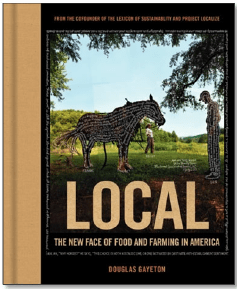
Can the lexicon of local make a global impact? Book review by Stacy Miller

LOCALLexiconBk

You may want to check out the Journal of Agriculture, Food Systems, and Community Development’s (JAFSCD) “Book Nook”, which contains in-depth reviews of current books on food systems. The link at the end of this post directs you to a review of a new book on the language of sustainability: Local: The New Face of Food and Farming in America, by Douglas Gayeton. The review is by Stacy Miller, who many readers will know as the Farmers Market Coalition’s founding Executive Director. Stacy is now working as an independent consultant and as a FMC Program Advisor and also spends some of her time valiantly untangling my words by serving as an editor or by offering some spot analysis for many of the reports that I am doing for markets and their advocates.

Finding the appropriate bright and brave words to describe the energetic nature of a farmers market as well as the larger food system work happening is something we both think about in this work that we do and she probably had to think about daily as the FMC director. I can remember a day in her kitchen when we wrote down and discussed lots of words to describe what became the skeleton of the Farmers Market Metrics project at FMC and how we had to leave it unfinished when I left town a day later, promising to return to it. We did, and still do good-naturedly debate (alongside our colleagues at FMC and University of Wisconsin) for and against the use of different words and definitions within that metrics work.
So, to expand her thinking to this lovely book on the entire realm of sustainability language in our farming and food world seems mighty appropriate. Here are a few of my favorite passages from her review, linked below:

“The idea that language is fundamental to social movements is nothing new. The power to bestow names on objects, people, places, and philosophies is undervalued, so we hardly notice when it gets abused. Noam Chomsky famously observed that
destructive paradigms thrive because they impose on people “the feeling that they really are incompetent to deal with complex and important issues: they’d better leave it to the captain” (Chomsky,1987, p. 42).”

“I give a lot of credit to a former film director who can find a compelling poster child for, and condense the complexities of, expansive terms like economies of community (see Figure 1), soil food web, GMO, or traceability.”

“The hypothesis behind the Lexicon of​ ​ Sustainability is compelling… We tune​ ​out vocabulary we don’t understand, avoid dialogue ​ ​or questions that make us feel ill-informed or​ ​hopeless, and thereby enable a cycle of peripheral ​ ​awareness that looks dangerously like apathy. And​ ​the corporate food monopolies take advantage of ​ ​this whenever they can — on packaging, in advertising,​ ​and in lobbying efforts designed to “protect ​ ​us” from too much information.”

I will pass this review to many of my colleagues and will also get this book based on her review and pass that around too. What better can be said?

DATA + DESIGN A simple introduction to preparing and visualizing information

A free online book to data visualization by the creators of Infoactive. I am proud to be a Kickstarter backer of this innovative company and hope we can lure them into the farmers market/food system world of data collection. This book came out of that campaign and-well, maybe just read what the author said about how the book came to be:

“It started with a message on Kickstarter:
Hi Trina! Stats dork from Chicago here….Do you have any plans to include tutorials for basic data cleaning and data selection techniques for users who may not have any statistics background?
At the time, I didn’t know that this one message would turn into a book, a community, and a global endeavor to make information design more accessible.

The message author, Dyanna Gregory, was a statistical programmer who knew the challenges of teaching university-level stats to those who don’t identify as math nerds. I was an entrepreneur building Infoactive, a web application to help people create interactive infographics and data visualizations. I was also a Reynolds Fellow at the Donald W. Reynolds Journalism Institute where my goal was to find ways to simplify the process of making data visualizations in newsrooms. I had launched a Kickstarter campaign to support Infoactive, and we had nearly 1,500 backers who were excited about breaking down barriers in data visualization.

We all believed in the vision of making data simple.

But working with data can be far from simple. Data come in all different shapes, sizes, and flavors. There’s no one-size-fits-all solution to collecting, understanding, and visualizing information. Some people spend years studying the topic through statistics, mathematics, design, and computer science. And many people want a bit of extra help getting started.”

Link to book

FNS begins process to offer grants for replacement EBT services and equipment

This is a pre-solicitation notice to assist Department of Agriculture (USDA), Food and Nutrition Service (FNS) and State agencies to establish a process to award support grants to eligible farmers’ markets and to develop a method that offer replacement Supplemental Nutrition Assistance Program Electronic Benefits Transaction (SNAP EBT) equipment and services for farmers’ markets and direct-marketing farmers.
The solicitation package will be posted on fedbizopps on or August 22, 2014. All additional details (i.e. closing date, FAR Clauses, Evaluation Factors) will be included in the solicitation package.

The request for proposal (RFP) will have a two part evaluation. Part 1 will be evaluated using a pass/fail evaluation. Part 1 evaluation factor is Experience: Offeros shall demonstrate experience with Farmers Markets and direct-marketing farmers nationwide and associated partnership experience working with the Farmer Market and direct-marketing farmer.

RFP

Part 2 evaluation factors will be provided in the solicitation package.

Alternatively, interested parties may go to https://www.fbo.gov/ and search for the Notice by using the solicitation number AG82014.

Landmark Study Underscores Wide-Ranging Benefits of Pesticide-Free Farming

From The Guardian:

“The research was peer-reviewed and is published in a respected scientific journal, the British Journal of Nutrition.

The results are based on an analysis of 343 peer-reviewed studies from around the world – more than ever before – which examine differences between organic and conventional fruit, vegetables and cereals.

“The crucially important thing about this research is that it shatters the myth that how we farm does not affect the quality of the food we eat,” said Helen Browning, chief executive of Soil Association, which campaigns for organic farming.

UK sales of organic food, which is often considerably more expensive than non-organic, are recovering after a slump during the economic crisis.

Plants produce many of their antioxidant compounds to fight back against pest attacks, so the higher levels in organic crops may result from their lack of protection by chemical sprays. But the scientists say other reasons may be important, such as organic varieties being bred for toughness and not being overfed with artificial fertilisers.

Leifert and his colleagues conclude that many antioxidants “have previously been linked to a reduced risk of chronic diseases, including cardiovascular diseases, neurodegenerative diseases and certain cancers”. But they also note that no long-term studies showing health benefits from a broad organic diet have yet been conducted.

The researchers found much higher levels of cadmium, a toxic metal, in conventional crops. Pesticide residues were found on conventional crops four times more often than on organic food. The research was funded by the EU and an organic farming charity.

The research is certain to be criticised: the inclusion of so many studies in the analysis could mean poor quality work skews the results, although the team did “sensitivity analyses” and found that excluding weaker work did not significantly change the outcome.”

link to report at Cambridge Journals

http://www.theguardian.com/environment/2014/jul/11/organic-food-more-antioxidants-study

Frugality, active lifestyles and pursuit of knowledge make people happier

Hmmm, sounds like a few things that markets could measure and share with their community:

“Another path to well-being is thrift, which means conserving resources as well as money, Tatzel noted. Frugal people are happier with life in general, according to a 2014 study. That may be because avoiding the negative consequences of spending too much and going into debt is one way to avoid unhappiness, she said.

People enjoy doing things more than having things, with other studies finding that people realize more lasting happiness by changing their activities than by changing their material circumstances. “Experiences live on in memory, are incomparable, often shared with others and don’t have to be resource intensive,” said Tatzel.

She described other research that has found that people are more likely to be happy by cultivating personal talents and relationships more than money and fame, and by having an independent sense of self that results in not caring much what others think of their possessions.”
http://www.news-medical.net/news/20140811/Study-of-quality-of-life-provides-answers-to-what-really-brings-happiness-to-consumers.aspx

Southeast could become an overdeveloped ‘megalopolis’ in the next half century

Researchers estimate that urbanization will increase 190 percent, resulting in a continuous string of development similar to the northeast corridor, according to the article. As a result, 15 percent of agricultural land, 12 percent of grasslands and 10 percent of forests will be lost, the article reports.

“The upshot is that . . . climate change isn’t the only story in the Southeast,” Terando said. “There are large-scale human impacts on our environment . . . the way we develop.”

Numerous species of animals would be left with no habitat. The loss of woodlands that soak up rainfall would leave local waters more vulnerable to the storm-water runoff that washes nutrient pollution from lawns and motor oils from roads, in addition to increased garbage.”

Southeast could become an overdeveloped ‘megalopolis’ in the next half century – The Washington Post.

Michel Nischan

Great interview with Michel Nischan, founder of Wholesome Wave and long time Farm To Table chef. He tells Louisiana Eats host Poppy Tooker about how and why he created his public role.
http://wwno.org/post/tradition-begs-evolution-changing-federal-policy-reviving-local-customs” title=”Interview withMichel Nischan by Poppy Tooker”

Rebels With A Cause

Just saw this documentary-I found it fascinating, fairly reported and with a charming manner. I highly recommend it for any ecological or civic leader. The story of the formation of the Marin Agricultural Land Trust is also included and should be inspiring to farming advocates across the country. I might recommend setting up screenings in your market space on a Saturday night!

REBELS WITH A CAUSE is the story of a regional California effort that grew into an astonishing system of fourteen National Seashores — the result of garden clubs, ranchers, farmers, conservationists, politicians from both parties, widows, and volunteers working together through compromise and negotiation, with the American public coming up as the winner.

http://rebelsdocumentary.org

10 Things I Hate: Chris Hastings

From Food Republic:

Life is filled with wonderful things and terrible things. During interviews, however, we pretty much only get to hear about the wonderful things. Ten Things I Hate is a chance for people in the food world to get things off their chest. We ask them what they hate, they give us a list. Next up: Birmingham chef Chris Hastings.

10 Things I Hate: Chris Hastings | Food Republic.

Request for Makers, Hackers and Healers

Growing Power Inc and Growing Food and Justice for All Initiative (GFJI).

Growing Power’s Urban and Small Farms Conference Committee is excited to announce a request for Makers, Hackers and Healers. As part of Growing Food and Justice for All Initiative’s (GFJI) strategic work in reconnecting Food, Culture and Spirit, we are creating a ‘Marketplace’ for skill sharing in a variety of formats.

We also hope that healers who practice Reiki, energy work and other traditional practices offer opportunities to share their craft and practices.

This years conference theme “Building a Fair Food Economy to Grow Healthy People” will truly be activated in the Makers Marketplace. The space will cultivate the spirit of sharing, arts and culture.

We are looking for people to curate hands on learning and sharing activities

1) 90 minute workshop demos- (offered concurrently with conference workshop breakout sessions) to provide in depth opportunities for learning/sharing and making within the conference format.

2) 20 minute demos- (offered in the Maker Marketplace through out the conference) to provide quick learning experiences, information sharing, recipe demos and tastings. You may opt for multiple demo times to highlight your work

3) Three Hour long maker or tech skill share intensive- (Sunday, 11/9 from 1pm to 4pm) this is an opportunity to share your craft, skill or trade and for participants to have the opportunity to learn from presenters in a longer format. We also hope seed savers, artisanal food makers, permaculturistas, policy initiators and activist/makers use this time to broaden and strengthen our movement. Please designate the maximum number of people that you can accommodate and a materials cost if applicable.

Healing arts and culture sharing space in this “Market Place” will be made available through out the conference for people to grow, share, and heal.

Interested?

Apply using our Google Form here

7 Things You Need To Know About The Toxin That’s Poisoned Ohio’s Drinking Water

link to article.

“Experts say one of the biggest reasons for the severity of this algal bloom is excess phosphorus runoff from urban and industrial agricultural lands, as well as from waste water from sewage treatment plants. NOAA notes that this increased runoff into the lake is largely due to poor farming practices, such as high use of fertilizers and presence of livestock near water supplies. Pesticides also impact the blooms, NOAA says.”

An Introduction to MarketLink: Are you eligible to receive a free SNAP/EBT system for your market?

Farmers Market Coalition and Wholesome Wave are co-hosting a FREE webinar:

Wednesday August 13, 2014 3:00pm-4:30pm EST

The U.S. Department of Agriculture’s Food and Nutrition Service (FNS) launched MarketLink, a website that provides farmers markets and direct-marketing farmers with a one-stop-shop to become an authorized SNAP vendor and take advantage of USDA funding to obtain free or low-cost equipment and wireless services. Up to $4 million in grants for SNAP/EBT technology solutions will be available through this program for eligible markets through September 30, 2014. The quickly approaching deadline means that eligible farmers and market managers are making this important decision right now. Wholesome Wave and Farmers Market Coalition are co-hosting this free webinar to address your unanswered questions about MarketLink. Through this webinar, you will:
understand the USDA’s funding stream for enhanced SNAP benefits at markets
learn who is eligible to access USDA funding through MarketLink
learn about MarketLink, an iPhone-based EBT system that taps into $4 million in USDA funding to help new markets become SNAP/EBT accessible
hear an on-the-ground perspective on applying through MarketLink and implementing EBT
Panelists:

Rogelio Carrasco of the USDA’s Food And Nutrition Service will present an overview of the USDA’s funding for improved access to SNAP benefits at markets and the history of Marketlink
Amy Crone of NAFMNP and the Maryland Farmers Market Association will present the MarketLink program and provide an in-depth description of eligibility and application process
Sara Berney, Executive Director of Wholesome Wave Georgia, will discuss her experience applying for funds through MarketLink and recommendations for others

To register to for this webinar, please click here.

Please contact Liz at FMC at liz@farmersmarketcoalition.org, with any questions on the webinar.

Counterfeit Money at Our Markets

Here is a great post from Brian F. Moyer, Program Assistant Penn State Extension – Lehigh County:

There are many reasons we chose to sell our products at farmers markets. Some of these may include helping the public understand where there food comes from and who produces it. Another might be to capture more of the “food dollar” to keep our farms viable so the last thing we might be expecting is for someone at our markets to hand us a counterfeit bill.

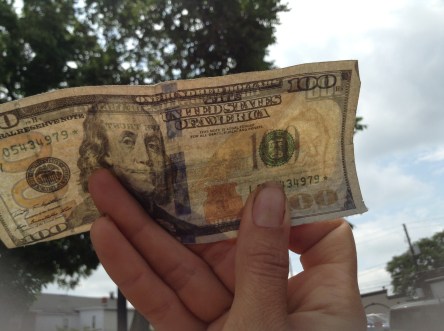
Recently I received an email from a market manager who told me that their market was hit for about $600 in counterfeit $100 dollar bills. I proceeded to get the word out to as many contacts as I have so other markets in the region would be aware. What I got back surprised me. I heard from managers and vendors throughout the mid-Atlantic and the Northeast that this has happened to their markets. So, what are we to do?

Markets are very busy places and we do our best to take care of the customer as fast as we can so how are we supposed to do that AND check the money they hand us to make sure the currency is legitimate? Farmers markets are also supposed to build community so there is also a level of trust that is broken when something like this occurs. How can we as a community use that trust to strengthen our markets and prevent these types of incidents from occurring?

The market manager who contacted me said that the counterfeit bills that the vendors received were bleached five dollar bills that were reprinted to look like one hundred dollar bills so the water marks were intact and they could pass the pen test so it was very difficult for a vendor to detect even if they were being vigilant. The U.S. Secret Service is the agency responsible for investigating counterfeit currency. The following is from the U.S. Secret Services’ website http://www.secretservice.gov on some things you can look for when receiving paper currency.

How To Detect Counterfeit Money

The public has a role in maintaining the integrity of U.S. currency. You can help guard against the threat from counterfeiters by becoming more familiar with United States currency.

Look at the money you receive. Compare a suspect note with a genuine note of the same denomination and series, paying attention to the quality of printing and paper characteristics. Look for differences, not similarities.

Portrait

kym_49
kym_48

The genuine portrait appears lifelike and stands out distinctly from the background. The counterfeit portrait is usually lifeless and flat. Details merge into the background which is often too dark or mottled.

Federal Reserve and Treasury Seals

On a genuine bill, the saw-tooth points of the Federal Reserve and Treasury seals are clear, distinct, and sharp. The counterfeit seals may have uneven, blunt, or broken saw-tooth points.


kym_51
kym_50

Border

The fine lines in the border of a genuine bill are clear and unbroken. On the counterfeit, the lines in the outer margin and scrollwork may be blurred and indistinct.


kym_53
kym_52

Genuine serial numbers have a distinctive style and are evenly spaced. The serial numbers are printed in the same ink color as the Treasury Seal. On a counterfeit, the serial numbers may differ in color or shade of ink from the Treasury seal. The numbers may not be uniformly spaced or aligned.

kym_55
kym_54

Paper

Genuine currency paper has tiny red and blue fibers embedded throughout.
Often counterfeiters try to simulate these fibers by printing tiny red and blue
lines on their paper. Close inspection reveals, however, that on the counterfeit note the lines are printed on the surface, not embedded in the paper. It is illegal to reproduce the distinctive paper used in the manufacturing of United States currency.

kym_57

kym_56

Since markets usually have a focus on community, perhaps we can have a discussion as a community on how we can prevent incidents like this from occurring. Some markets have local banks as sponsors. What role can they play in helping to protect the market? What about the local law enforcement? Can we train our volunteers to help vendors with checking the money they are receiving? What message can we send that lets anyone who comes to the market know that there is zero tolerance for this type of activity?

This is perhaps a larger problem that could be affecting the surrounding small businesses and not just the market so it will take more than just the managers and vendors to prevent these types of incidents.

billimage2

billimage1

Burt minus the bees

The NYT reminds us that the documentary about the founder of Burt’s Bees who lives a pretty simple life in Maine these days is available for
download.

“When a cadre of screaming fans in fake beards and bee costumes greet Burt at a Taiwan airport, it’s impossible not to marvel at his strange existence.” – Abby Garnett, Village Voice, Jun 3, 2014

“I’ve got 40 acres. And it’s good and sufficient and it takes good care of me. There’s no noise. There’s no children screaming. There’s no people getting up at 5 o’clock in the morning and trying to start their car and raising hell. Everybody has their own idea of what a good place to be is, and this is mine.”

NYT article