More ethnic, more niche and available in every neighborhood and supportive of farmers and producers:
10 New Orleans chefs share their culinary hopes for the 2014 New Orleans restaurant scene | NOLA.com.
More ethnic, more niche and available in every neighborhood and supportive of farmers and producers:
10 New Orleans chefs share their culinary hopes for the 2014 New Orleans restaurant scene | NOLA.com.
Seven hard facts about shared work
I excerpted this because of the many times that I hear market or food system organizers tell me they don’t have time to teach volunteers or to share work – that should be a red flag to anyone who wants to build their market or project past a lifespan of a few years. When a market is managed and governed entirely by one person and has not figured out how to welcome others into decision-making – or has yet to plan for the future – crisis begins to climb exponentially.
When I hear people complain about the fact that other people aren’t doing their share–about a spouse who isn’t pulling weight at home, or a colleague at work, or a sibling in a family–I want to launch into a disquisition about shared work.
From what I’ve observed, people have a very incorrect understanding about how shared work actually gets divvied up. Take note of these somewhat-painful facts:Fact 1: Work done by other people sounds easy. How hard can it be to take care of a newborn who sleeps twenty hours a day? How hard can it be to keep track of your billable hours? To travel for one night for business? To get a four-year-old ready for school? To return a few phone calls? To fill out some forms?
Of course, something like “perform open-heart surgery” sounds difficult, but to a very great degree, daily work by other people sounds easy—certainly easier that what we have to do.
This fact leads us to under-estimate how onerous a particular task is, when someone else does it, and that makes it easy to assume that we don’t need to help or provide support. Or even be grateful. For that reason, we don’t feel very obligated to share the burden. After all, how hard is it to change a light-bulb?Fact 2: When you’re doing a job that benefits other people, it’s easy to assume that they feel conscious of the fact that you’re doing this work—that they should feel grateful, and that they should and do feel guilty about not helping you.
But no! Often, the more reliably you perform a task, the less likely it is for someone to notice that you’re doing it, and to feel grateful, and to feel any impulse to help or to take a turn.
You think, “I’ve been making the first pot of coffee for this office for three months! When is someone going to do it?” In fact, the longer you make that coffee, the less likely it is that someone will do it.
If one person on a tandem bike is pedaling hard, the other person can take it easy. If you’re reliably doing a task, others will relax. They aren’t silently feeling more and more guilty for letting you shoulder the burden; they probably don’t even think about it. And after all, how hard is it to make a pot of coffee? (see Fact #1). Also, they begin to view this as your job (after all, you’ve been doing it reliably for all this time, in fact, you probably enjoy this job!), it’s not their job, so they don’t feel any burden to help.
Being taken for granted is an unpleasant but sincere form of praise. Ironically, the more reliable you are, and the less you complain, the more likely you are to be taken for granted.Fact 3: It’s hard to avoid “unconscious overclaiming.” In unconscious overclaiming, we unconsciously overestimate our contributions relative to others. This makes sense, because we’re far more aware of what we do than what other people do. Also, we tend to do the work that we value. I think holiday cards are important; my husband thinks that keeping the air-conditioning working is important.
Studies showed that when spouses estimated what percentage of housework each performed, the percentages added up to more than 120 percent. When business-school students estimated how much they’d contributed to a team effort, the total was 139 percent.
It’s easy to think “I’m the only one around here who bothers to…” or “Why do I always have to be the one who…?” but ignore all the tasks you don’t do. And maybe others don’t think that task is as important as you do (See Fact #5).Fact 4: Taking turns is easier than sharing. I read somewhere that young children have a lot of trouble “sharing” but find it easier to “take turns.” Sharing is pretty ambiguous; taking turns is clearer and serves the value of justice, which is very important to children.
I think this is just as true for adults. I have to admit, shared tasks often give me the urge to try to shirk. Maybe if I pretend not to notice that the dishwasher is ready to be emptied, my husband will do it! And often he does. Which bring us t0…
THE THREE MOST IMPORTANT FACTS ABOUT SHARED WORK:Fact 5: The person who cares the most will often end up doing a task. If you care more about a task being done, you’re more likely to end up doing it–and don’t expect other people to care as much as you do, just because something is important to you. It’s easy to make this mistake in marriage. You think it’s important to get the basement organized, and you expect your spouse to share the work, but your spouse thinks, “We never use the basement anyway, so why bother?” Just because something’s important to you doesn’t make it important to someone else, and people are less likely to share work they deem unimportant. At least not without a lot of nagging.
Fact 6. If you want someone else to do a task, DON’T DO IT YOURSELF. This sounds so obvious, but think about it. Really. Let it go. If you think you shouldn’t have to do it, don’t do it. Wait. Someone else is a lot more likely to do it if you don’t do it first. Note: this means that a task is most likely to be done by the person who cares most (see Fact #5). To repeat this point in other words, if you persist in doing particular work, it becomes more and more unlikely that someone else will do it.
Of course, you can’t always choose not to do something. Someone must get the kids ready for school. But many tasks are optional.Fact #7: If, when people do step up, you criticize their performance, you discourage them from doing that work in the future. If you want others to help, don’t carp from the sidelines. If you do, they feel justified in thinking, “Well, I can’t do it right anyway” or “Pat wants this to be done a particular way, and I don’t know how to do that, so Pat should do it.” The more important it is to you that tasks be performed your way, the more likely you are to be doing those tasks yourself. (Of course, some people use deliberate incompetence to shirk, which is so deeply annoying.)
And if you’d like to get this writer’s daily blog post by email, sign up here
“We could have done any number of things, a nice farmers’ market or a convenience store. But my background is in restaurants and so that was the base of my idea. I was trying to wrap my brain around what kind of restaurant could work and help the community.
I became more familiar with Braddock and all these beautiful things that already existed. For example, Braddock Farms, which is a subsidiary of Grow Pittsburgh, has been there for years. It’s this beautiful two-acre urban farm in a beautiful post-industrial backdrop [with] a beautiful award-winning apiary that makes delicious honey that I’ve used in all of my restaurants. We have chickens down there that are producing tons of eggs. We have a rooftop 1,000-square foot greenhouse that happened to come with the building [and] 4,000 square feet of a raised bed garden on the roof of the building. We have a convent that has been restored to a beautiful hostel, and we’re going to be able to use it for free housing for our staff and interns and students. All these things, it’s like they were there already.
I had experience doing volunteer work in the Summer with the Braddock Youth Project. There are all these young people who are passionate about food and farming and Braddock, but odds are that they wouldn’t be given the opportunity to pursue that after high school. So John and I started to put together this idea, well, how do we incorporate a culinary/farming training program? We work directly with Braddock Redux, which is the nonprofit that does job training in neighboring areas, so we would have people that are educators. All these resources exist already, so we just felt the last piece of the puzzle was a delivery system. And we felt that the best way to show all of these beautiful things to the world would be through a restaurant.”
A fascinating view of the internal life of a market community.
The FM rule discussion starts on the audio at 15:00 minutes into the recording:
Definition of local (100-mile limit discussion)
Definition of market vendor
Mission statement discussion
Competition discussion
Too many rules?
Radio Free Moscow is a nonprofit organization dedicated to the progressive values of peace, justice, democracy, human rights, multiculturalism, environmentalism, and freedom of expression.
Radio Free Moscow operates KRFP, a listener-supported community radio station serving Moscow, Idaho and surrounding areas. KRFP reflects Radio Free Moscow’s values by broadcasting news and opinions, civic affairs, diverse music and multi-cultural programming seldom heard from mainstream media outlets. KRFP strives to develop and disseminate programming that fosters our community’s ethical, social, and intellectual awareness while advocating education, the arts, and cultural diversity. KRFP nurtures our community’s capacity to think independently, skillfully, and critically.
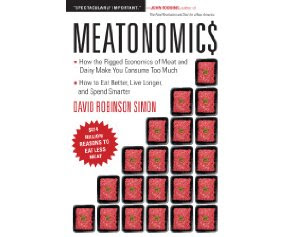
Meatonomics is the first book to add up the huge “externalized” costs that the animal food system imposes on taxpayers, animals and the environment, and it finds these costs total about $414 billion yearly. With yearly retail sales of around $250 billion, that means that for every $1 of product they sell, meat and dairy producers impose almost $2 in hidden costs on the rest of us. But if producers were forced to internalize these costs, a $4 Big Mac would cost about $11.
Therefore, the goal for food organizations cannot only be to spend the efforts on getting people to the healthy food, but shows the need to engage them more directly and through many types of interventions to change their behavior.
I love this thought from the article: A change in perception is not necessarily a change in behavior.
Lead author Dr Steven Cummins, Professor of Population Health at the London School of Hygiene & Tropical Medicine, said: “US policymakers have implemented policies and interventions that encourage the location of supermarkets and grocery stores to improve diet and reduce diet-related diseases such as obesity and diabetes. Such policies form a central part of many US government schemes such as Michelle Obama’s Lets Move Childhood Obesity programme, and are high on the policy agenda in many other nations. However we don’t know whether these kinds of policies are effective in improving diet.
“Though these interventions are plausible and well-meaning, this study suggests that they are only effective in taking us part of the way in changing dietary behaviour — in order to realise their full potential we need to better understand how to translate changes in perception to changes in behaviours.”
Sustainability is the balance of the positive and negative environmental, social and economic demands in any sector and across sectors. In the food work we do, regional systems have a better chance to address them together and yet we spend little time defining those demands. In that framework, local food systems by themselves can grow overly ‘muscular” and crowd out others nearby or focus on demand more than supply (or vice versa) or spend too much energy fighting to build systems for every process that could be shared instead.
In that important work, this blogger wrote a very good piece about the regional and sustainable approach to food that is worthwhile to share:
Those of us in rural areas – rich in agricultural resources – thus have an inescapable responsibility. As we do the necessary work of helping to overhaul the food system, we must consider what part we can play in feeding the populations of places like Boston, New York, and Philadelphia. While it is surely tempting (and so much simpler) to focus inwardly and exclusively on how to feed merely ourselves, that is not, in the end, the way to build a better food system. It is essential to be actively promoting and supporting our local farm economies – and, at the same, we need to thinking more broadly.
Resiliency
There’s another strong reason why we need to think regionally as well as locally, one that undermines the notion that it would even be possible for any one town or small state to securely depend on its own agricultural resources. It has to do with things like weather and pests – those unavoidable factors that make farming inevitably risky and unpredictable. Factors which also threaten to make farming even more unpredictable as a result of climate change.
(talk about needing more research like this!)
Using county-level data from the 2002 and 2007 U.S. Census of Agriculture, the team analyzed the link between direct farm sales — sales made directly from farmer to consumer — and total farm sales. When they examined the data on a national basis, they found a positive but not statistically significant relationship between the two. Goetz said that a different picture emerged when they looked at the data by region, as defined by the U.S. Bureau of Economic Analysis. In some regions, direct sales seemed to complement total farm sales. For example, in New England, a $1 increase from the 2002 level of direct farm sales was associated with a $5 increase in total farm sales. That same $1 increase was associated with a $9 increase in overall farm sales in the Mid-Atlantic states of Delaware, Maryland, New Jersey, New York and Pennsylvania. Yet, in other regions, local food sales appear to compete with total farm sales. In Southeastern U.S. counties, for example, direct sales were associated with a reduction in total farm sales. Next, to measure the impact of all agricultural sales on economic growth, the researchers used a statistical model to analyze how changes in farm sales per capita influenced changes in real personal income per capita — an indicator of economic growth. Again, the team performed this analysis using county-level data from 2002 to 2007.
Goetz said that by establishing that direct sales have a positive effect on total agricultural sales, which in turn have an effect on income growth, this study demonstrates that direct sales do indeed expand local economies at least in the Northeast U.S. He added that these results came as a bit of a surprise.
“When we set out to measure the economic impact of local food sales, we frankly didn’t expect to find one,” said Goetz. He explained that economists are generally skeptical that local sales can have impacts because such sales tend to recirculate money within a community rather than inject new money. “Injection of new money — money from outside of the community — is what many economic development practitioners think of as the fuel for economic growth. But to me, these findings provide quite robust evidence that even direct sales do have an effect on growth, in the Northeast U.S.”
The former president of Trader Joe’s, is determined to repurpose the perfectly edible produce slightly past its sell-by date that ends up in the trash. (That happens in part because people misinterpret the labels, according to a report out this week from Harvard and the Natural Resources Defense Council.) To tackle the problem, Rauch is opening a new market early next year in Dorchester, Mass., that will prepare and repackage the food at deeply discounted prices.
The project is called the Daily Table. Here’s what he shared with NPR’s Scott Simon, edited for brevity.
Simon: What gave you the idea?
Rauch: It’s the idea about how to bring affordable nutrition to the underserved in our cities. It basically tries to utilize this 40 percent of this food that is wasted. This is, to a large degree, either excess, overstocked, wholesome food that’s thrown out by grocers, etc. … at the end of the day because of the sell-by dates. Or [it’s from] growers that have product that’s nutritionally sound, perfectly good, but cosmetically blemished or not quite up for prime time. [So we] bring this food down into a retail environment where it can become affordable nutrition
.
Trader Joe's Ex-President To Turn Expired Food Into Cheap Meals : The Salt : NPR.
A surprisingly well done article, even though it springs from what I consider an overdone and less than useful premise that I’ve seen before: a reporter using SNAP for a week. However, this one is has decent information and connects this issue to some larger issues, partially thanks to Daniel Bowman Simon.
The average amount that a family on food stamps gets per month is $133. That is $133 for 93 meals. For three meals a day, $133 breaks down to less than $1.50 per meal.
Luckily, the New York City Department of Human Resources’ website has guides available for SNAP participants, including a one that explains how to “Cut the Junk” and another with recipes for healthy and cheap meals on it. (Most of these are bean/chili based….)
———————————————————————————————————————————–
Daniel Bowman Simon is deep into SNAP, which is the focal point of his research at New York University’s Food Studies program. And he is frustrated. Seated in the Food Studies program’s fifth-floor conference room, he ticks off a list of grievances relating to the SNAP program and the Farm Bill, as well as the media’s coverage of the issue — framed as a contest between farm subsidies and SNAP benefits….————————————————————————————————————————————-
My mom posed a simple question: “Sarah, does SNAP feed people?”
“Yes,” I responded, “and it’s actually really efficient.” It’s true: SNAP has less than a 4 percent error rate, according to Riley — and sometimes that error is because of people who received less money than they should have. The program also has very low rates of fraud. The USDA just released a report saying that only 2.77 percent of errors in the programwere in the form of overpayment, which includes fraudulent applications.
“Food is one of the most cost effective forms of prevention,” Sarah Franklin explains. Obesity, cognitive abilities, and heart disease are all linked to eating habits. “Making sure that people have access to food is, in my mind, one of the most important and no-brainer policies,” she says. “The food stamp program, even though it’s not the perfect program — to make cuts to that program is idiotic.”
What I Learned from a Week on Food Stamps: Paul Ryan Couldn’t Be Any More Wrong | Alternet.
Thanks to Sanjay for sharing this; I have followed VEGGI’s emergence and believe that their efforts are one of the best examples of entrepreneurial farming combined with technology solutions and will benefit many farmers, rural and urban alike. The VEGGI cooperative and cooperatives like it are one of the best ways that small lot farmers can truly become economically sustainable and avoid the burnout of a one-farmer endeavor and how urban initiatives can learn quickly enough to benefit the region.
A Koi-Fueled Nursery in New Orleans Yields Tasty Profits – Wired Science.
The Nature Conservancy is working to restore Half Moon Reef, an underwater oyster colony in the heart of Matagorda Bay, which is one of the most productive fisheries for blue crabs, oysters and shrimp in Texas.
The 45-acre Half Moon Reef will be the Conservancy’s first reef constructed from the ground up.
 Helping Farmers Markets Grow