Australian Food Sovereignty

Australian Food Sovereignty Alliance (AFSA) is a growing national voice representing the community at large. AFSA emerged with the Peoples Food Plan as a response to the Governments National Food Plan, which in their analysis showed “heavy bias towards corporate agribusiness, large-scale food manufacturing, big retailing interests and a flawed public consultation process”.

AFSA

News & Events | VEGGI Farmer’s Cooperative

This is a new Vietnamese-led growers initiative in New Orleans. I hope we begin to see more production cooperatives among farmers, especially urban and peri-urban farmers.

News & Events | VEGGI Farmer's Cooperative.

Ask away…

To follow up on Monday’s post on excellent questions NEVER to ask farmers at a market, here is a great site full of questions once SHOULD ask a farmer. I can envision these on a laminated card at the Welcome Booth or maybe on Facebook with a few listed weekly. Questions for farmers

Small-Scale Farmers Are Key To Economy

“…the report cites key studies, which show a positive relationship between agriculture and poverty reduction. For instance, one study has shown that for every 10 per cent increase in farm yields, there was a seven per cent reduction in poverty in Africa. In contrast, growth in manufacturing and services has not shown comparable impact on poverty.”

Small-Scale Farmers Are Key To Economy | The Star.

Four Questions You Should Never Ask at a Farmers Market | Civil Eats

I agree with 3 of the 4. I think it’s okay to ask if you can buy something early-the market should have a way to answer that question, and sometimes it’s allowed. And yes, sometimes stores do let customers in early.

I also think when someone asks about a farmer’s life (like when do you get up?) it is only to learn and to connect. If it doesn’t offend you, you can use the moment to teach other people about the life of a farmer. But dear shopper, do beware the grumpy (tired) farmer!

Four Questions You Should Never Ask at a Farmers Market | Civil Eats.

Vermont Law School Helps Farmers Markets and CSAs

Good overview of the new Center for Agriculture and Food Systems at Vermont Law School that Laurie Ristino is heading. I am honored to be part of one of their first grants to help markets, written in partnership with NOFA-VT. If the proposal is successful, legal resources will be written for markets and for CSAs over the next few years.

VT Law

As Cost of Importing Food Soars, Jamaica Turns to the Earth – NYTimes.com

…officials across the region say more young people are getting involved, partly because food prices have soared, but also because governments have promised that agriculture means steady work, and not just in the fields.

The Bahamas is building a gleaming food science university to emphasize agricultural best practices.

Haiti, which experienced food riots in 2008, recently broke ground on a series of silos for a “strategic food reserve,” while Jamaica is considering investments in juicing and food preservation start-ups.

“We have idle hands and arable land,” Mr. Clarke said. “We are trying to see how we can bring those two together.”

As Cost of Importing Food Soars, Jamaica Turns to the Earth – NYTimes.com.

Regulating the life out of community food systems

A link to an excellent opinion piece by Stacy Miller, project director at Farmers Market Coalition where the deep crisis of regulatory burden on small family farms is addressed. No question that the lack of clarity among cities, states and the federal government to write and administer common-sense regulation is one of the most important areas that all food system organizers and practioners need to work together to solve.

HuffPost piece

Fishing for answers

Kevin M. Bailey, a senior scientist at the Alaska Fisheries Science Center and affiliate professor at the University of Washington has written a detailed explanation of the economic, scientific and political underpinnings surrounding the Alaskan pollock in his new book, Billion Dollar Fish. This is the product that makes up much of the school cafeteria/fish stick/filet o’fish market and therefore its demise or success has a far-reaching impact on commercial fishing policies. The study of fishing systems is helpful to anyone that is thinking of growing food systems into complete systems. In studying fishing/harvesting, other subjects such as pollution from industries such as agriculture, game fishers, border issues and the aftermath of disasters must be considered even as most Western citizens have grown deeply unaware of their waterways with the advent of the highway and railroad systems.
Ocean communities are complex. The fates of species are braided with feedback systems, complicated interactions, and co-dependencies. We don’t understand much about marine fishes because our ability to observe what really goes on in the ocean is limited, and because the lives of fishes are so foreign to our own existence. An incomplete understanding is not a good foundation for engineering solutions. Yet in harvesting them, we try to manipulate the productivity of fish stocks by setting harvests levels as close to the bone as we can cut.

Billion Dollar Fish

111 Low-Cost or Free Online Tools for Nonprofits

This is an excellent list of tools of which many would be quite helpful for markets and other non-profit food system organizations.

I especially like
2, 3, 4, 14, 25, 29, 34, 44, 46, 50, 58, 71, 78, 84, 104, 110

111 Low-Cost or Free Online Tools for Nonprofits.

Cleaver & Co. New Orleans

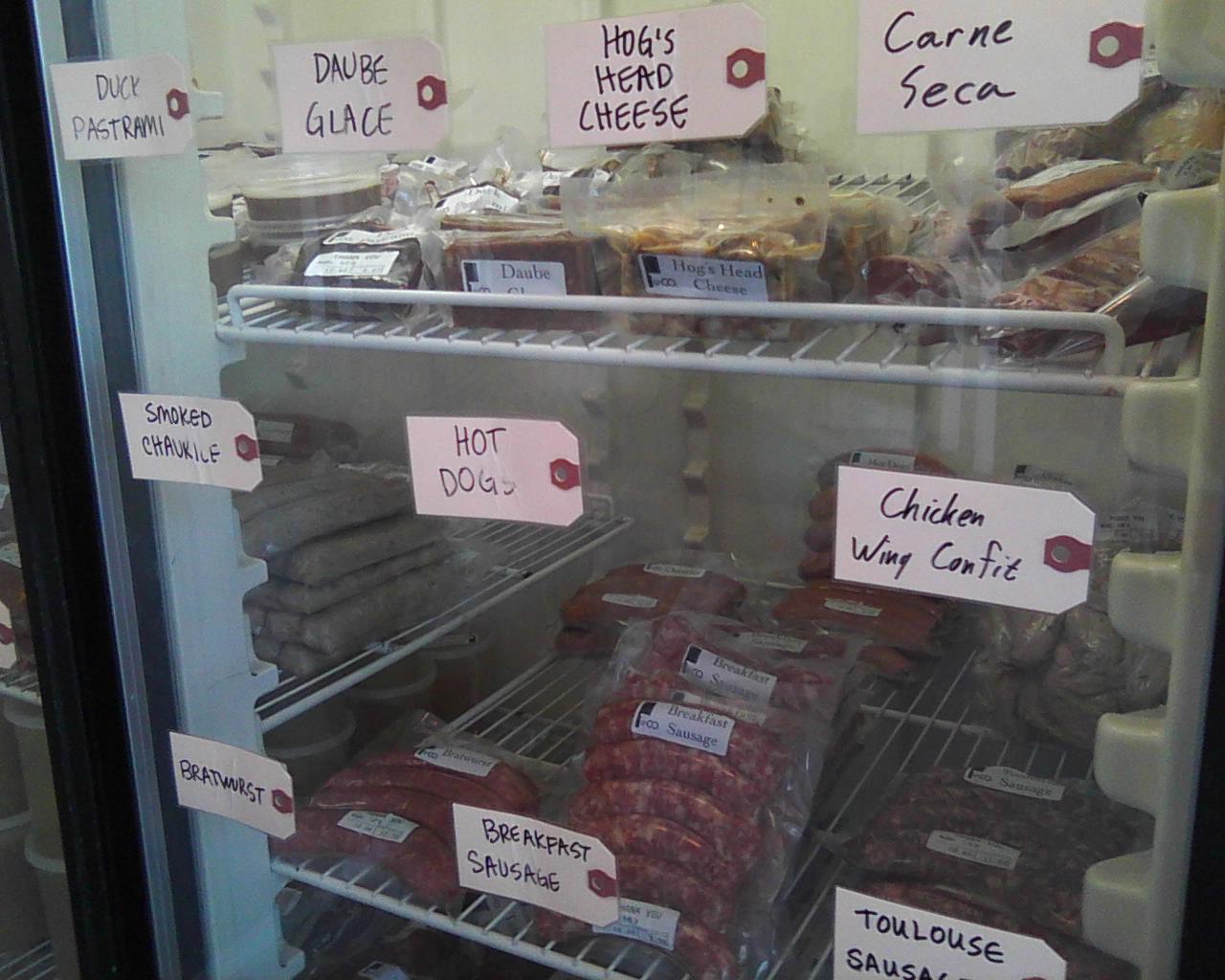
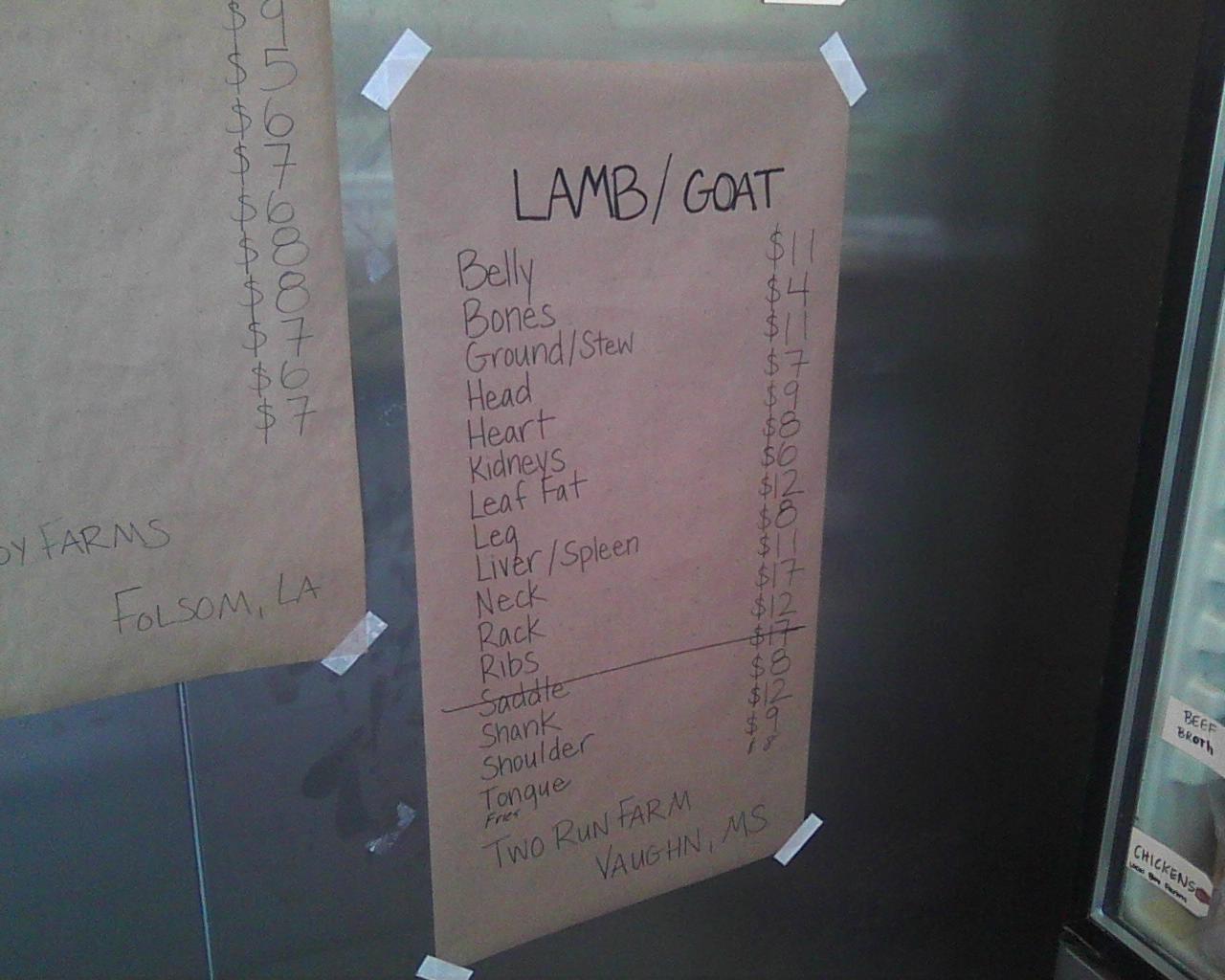
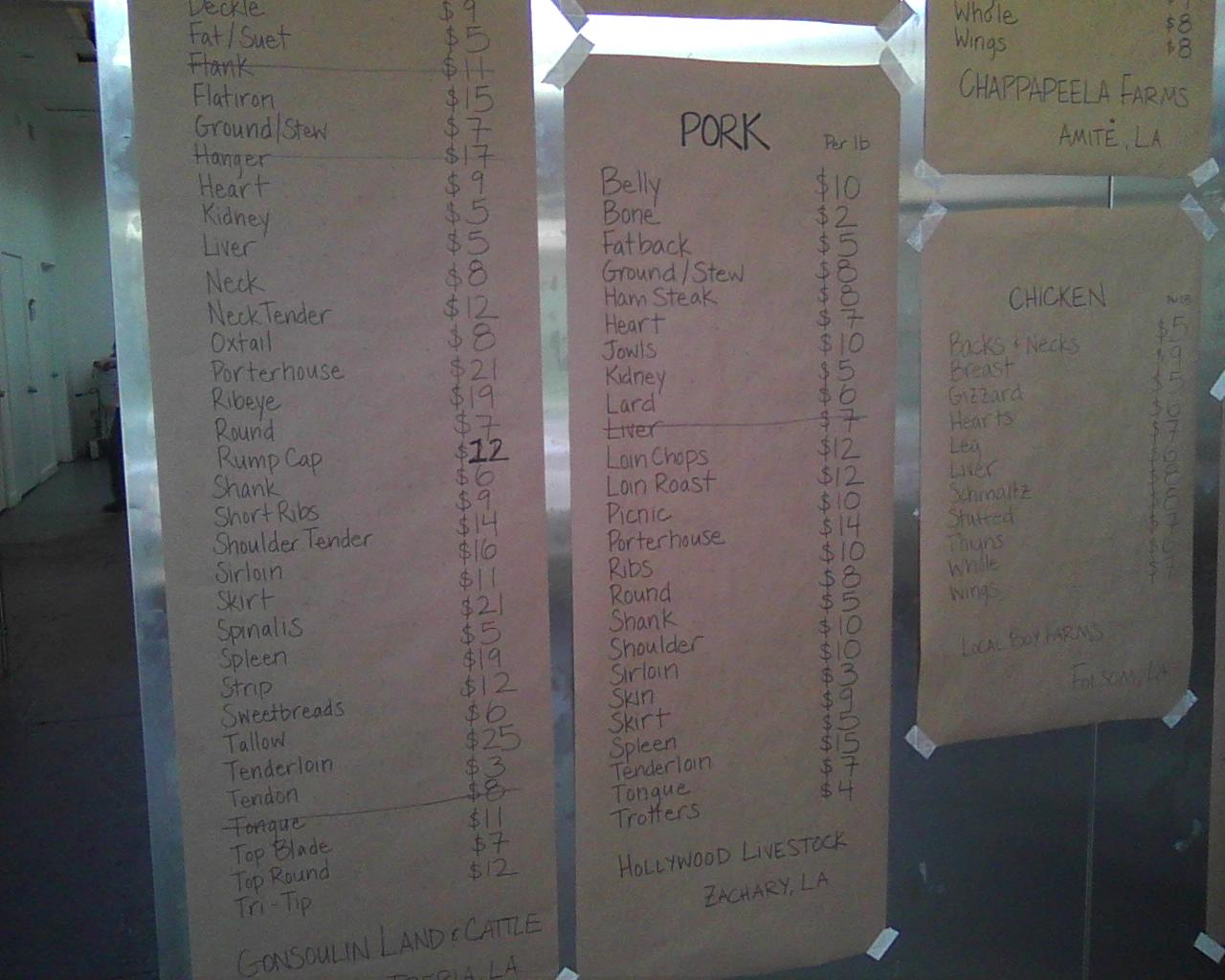
I just visited the newest member of the New Orleans localvore family, Cleaver & Co. a no-frills, full-service butcher shop. The posted educational information at this store is easily understood but when necessary, the staff is quite knowledgeable when it comes to more in-depth questions. It makes me think about how we communicate livestock issues and value within farmers markets; has the consumer education gone as deeply as it has for fruit and vegetable production? Should market managers explain the regulation and production issues in more detail than we have? Really, how much do market managers actually know about what unique issues these producers face, such as amount of land needed for grazing, treating animal illnesses naturally, finding healthy feed, selecting the right USDA processor when applicable and so on…


130803_0002

130803_0003

130803_0004 (1)

10 Surprising social media statistics that might make you rethink your social strategy – The Buffer Blog

here’s a sneak peek at one of those stats:
YouTube reaches more U.S. adults aged 18–34 than any cable network

10 Surprising social media statistics that might make you rethink your social strategy – The Buffer Blog.

Maryland Food System Map | Center for a Livable Future

This is one of my favorite food system sites . Wouldn’t it be great if each state and every regional projects collected and shared this type of visual data?

A screen shot of the Maryland Food Map circa July 2013.

A screen shot of the Maryland Food System Map circa July 2013.


Note from the organizers:

Map updates include expanded Nutrition Assistance data and updated points of interest for Maryland.
Nutrition Assistance – new and updated data about federal nutrition assistance programs.
SNAP usage by Zip Code
Schools with 50% or more children who are eligible for free and reduced cost meals
Afterschool Meal Program Sites
WIC office locations
NOTE: The following existing data layers have been moved to this category:
SNAP Participation by County
SNAP Retailers
WIC Retailers
Points of Interest – updated points of interest note changes in addresses and expand lists statewide.
Institutional sites in this list – schools and hospitals – will be expanded further this year, as we gather data and statistics about how these institutions are using local food. Here are the layers currently updated:
Hospitals
Public schools
Recreation centers
Senior centers

Maryland Food System Map | Center for a Livable Future.