Amazing presentation and exhortation at the 2012 BALLE conference from author and activist Maggie Anderson, author of “Our Black Year” a year long experiment in buying only from black-owned businesses. Her presentation was inspiring, troubling, uplifting, poignant and above all, a challenge to us “localists” to get past concepts and really place our buying power in the arena of a true power shift.
I cheered, cried and nodded throughout thinking of my own city of New Orleans and the tragedy of the lost African-American owned businesses and leaders that I have seen disappear from downtown since my childhood. Since Hurricane Katrina, that loss has been accelerated tremendously.
I heard her and committed to picking up the challenge in my own life, within the farmers market movement and on my neighborhood corridors.
Please read and listen to her amazing story and ideas so you can fashion your own plan to reduce African-American unemployment by shopping at and encouraging the number one employer of African-Americans – African-American owned businesses.
The obesity problem as a mathematical question
“The (obesity) epidemic was caused by the overproduction of food in the United States.”
http://www.nytimes.com/2012/05/15/science/a-mathematical-challenge-to-obesity.html?_r=2
Farmer Congressional testimony
I never thought I’d be testifying in front of Congress. But last week, there I was.
My name is Justin Doerr, and I am a beginning farmer from Nebraska and an Iraq War Veteran. When I got back from the service, I had the desire to farm but did not have the capital and resources to begin farming.
Last Thursday, I told Congress what I wanted for the Farm Bill: better beginning farmer programs so people like me can get started in agriculture. You can see my testimony here:
href=”http://agriculture.house.gov/pdf/hearings/Doerr120510.pdf”>http://agriculture.house.gov/pdf/hearings/Doerr120510.pdf
CSA benchmarks
As many of you know, I am conducting research for a national indicator matrix for food systems. (See FMC story on this blog from a few weeks ago for more info…) so I am very much looking forward to this webinar and encourage you to register and to pass the info along to farmers as well.
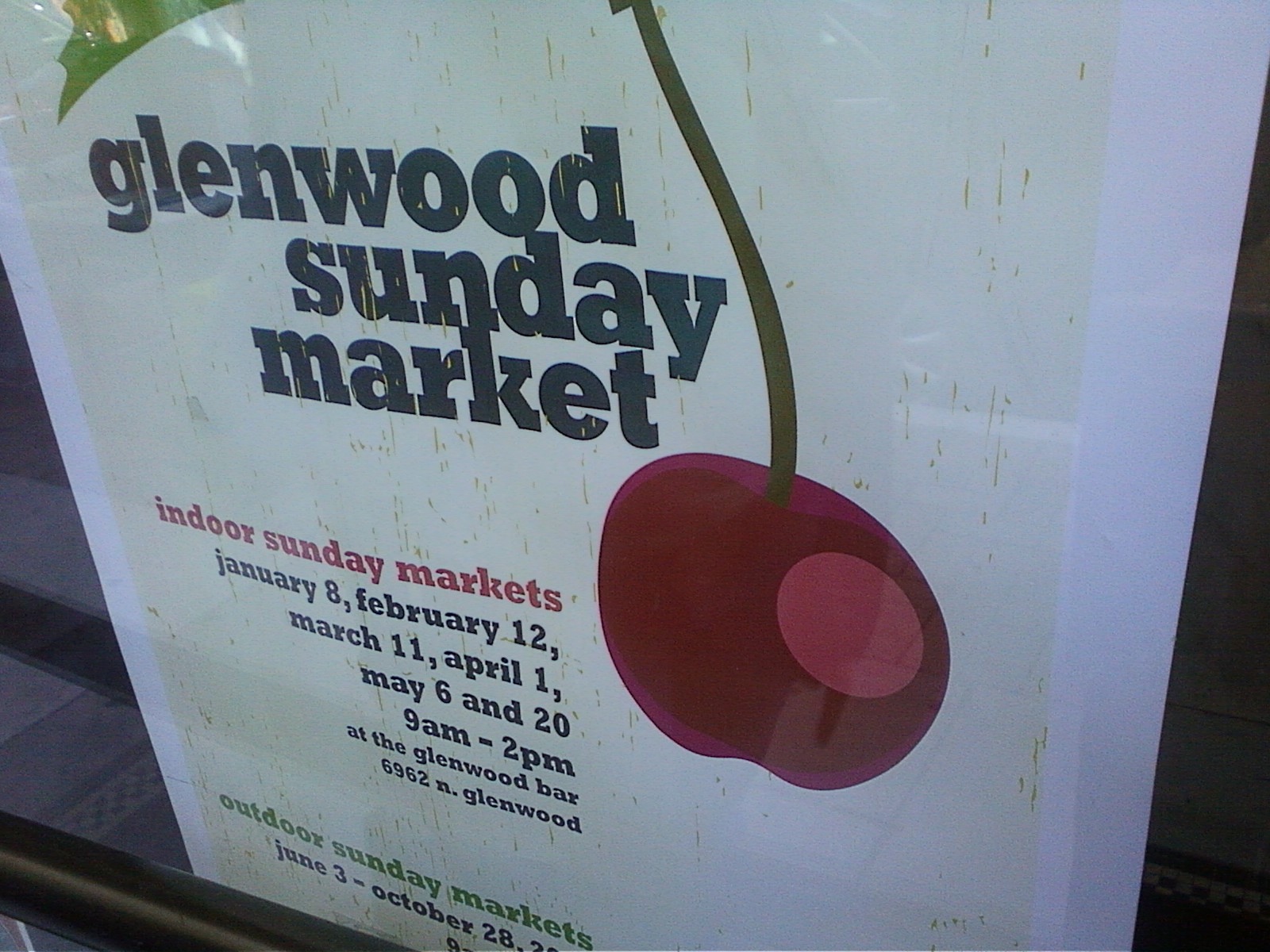
Chicago market location
I’d very much like to see this market in its full summer glory! The bricked block is where it’s held when outdoors… My friend who lives around the corner goes to it and enjoys it, but only goes to the outdoor summer market. Her reason? ” can’t get it together to make it to the indoor market, and I’m not sure I like it when markets are indoors…”
Huh.
Business Alliance for Local Living Economies Conference
I was fortunate enough to receive a Community Capital Sponsorship from RSF Social Finance for the annual conference that is being held in Grand Rapids Michigan this week. I am especially looking forward to the workshop on indicators for measuring local economies, as well as listening in on some of the case studies for funding entrepreneurial businesses.
If you have not heard of BALLE, it’s high time:
The Business Alliance for Local Living Economies, or BALLE, is North America’s fastest growing network of socially responsible businesses, comprised of over 80 community networks in 30 U.S. states and Canadian provinces representing over 22,000 independent business members across the U.S. and Canada.
BALLE believes that local, independent businesses are among our most potent change agents, uniquely prepared to take on the challenges of the twenty-first century with an agility, sense of place, and relationship-based approach others lack. They are more than employers and profit-makers; they are neighbors, community builders and the starting point for social innovation, aligning commerce with the common good and bringing transparency, accountability, and a caring human face to the marketplace.
BALLE’s mission is to catalyze, strengthen and connect networks of locally owned independent businesses dedicated to building strong Local Living Economies.
In late 2001, BALLE was officially launched with Laury and Judy as founding co-chairs and Michael Shuman and David Korten on the first board of advisors. Under Laury’s leadership, BALLE eventually spun off from SVN to become its own nonprofit organization, and held its first national conference in Portland, Oregon, in 2003. Since then BALLE has grown to include more than 80 other local business networks encompassing over 22,000 entrepreneurs in the US and Canada.
BALLE is a 501c3 non-profit organization.
First Giving May Webinar
Register for our May webinar:
It’s Electric! Spark Engagement with Virtual Participation
Thursday, May 17th, 2012
1pm to 2pm EST / 10am to 11am PST
It’s not always easy to get your motivated supporters together in one place at one time. But don’t let this discourage you from putting on a truly awesome event! FirstGiving’s Account Management team will walk you through how to turn potential no-shows for your event into active fundraisers by offering a virtual participant option.
We’re excited to share with you some noteworthy examples of nonprofits that have creatively set up virtual participation for their event. In addition we’ll warn you of common pitfalls some nonprofits have fallen into, and of course tackle your toughest fundraising questions.
Presented by FirstGiving’s Account Managers:
Jeff Love and Meg Savin
Register now
http://info.firstgiving.com/about-us/resource-library
A few of the questions we’ll address in this webinar are:
What is virtual participation?
When is it a good idea to set this up for my event on FirstGiving?
How do I best keep virtual participants engaged?
FirstGiving is dedicated to one purpose: empowering passionate nonprofit supporters to raise more money than they ever thought possible for the causes they care about.
Have a question? Visit our or call us: (877) 365-2949. Please add sender@firstgiving.com to your address book or safe sender list so our emails get to your inbox. This message was sent by FirstGiving, 34 Farnsworth Street, 3rd FloorBoston, MA 02110.
Only once per year – but boy, imagine that logistics checklist!
By the middle of summer when you market managers get tired of the pop up tents and the vendor grump factor when being asked to spread out or squeeze in to the summer market spaces, take a nice shady break, grab a limeade and watch this time-lapse movie of the New Orleans Jazz and Heritage Festival setting up in April of this year. Talk about a well-oiled machine (although wouldn’t it be funny if they had misplaced a tent and you watched one move 3 feet to the right in this? well, maybe not…)
When we talk about the skills of market management, we should seek out other sectors to compare each piece; obviously the festival logistical expertise is a great one to see how we stack up to this amazing work. How do we compare to this, do you think?
3 Ways to Tap Into Your Customers’ Network | Inc.com
As we hear about more markets opening and more markets staying open longer past summer seasons, we need to figure out who will support us past the early adopters that the original markets found. Honestly, when I hear talk of “cannabilization” of existing markets, I know there is some truth to this although I find the language overly dramatic and needlessly provocative. When I work with a new or an expanding market, I often ask them to describe the type of anchor vendors and first tier of customers they hope to attract, but few are able to do it with any detail. If you don’t know who you’re focusing on with your outreach and marketing, then you won’t know how to reach them.
Especially for new or newer markets, it is imperative to use the existing group that you do attract to find others. As we all know, money is tight and marketing is expensive. Add to that, almost every analysis of good marketing tells you that word of mouth is the most important way to find long lasting customers, which, of course, is exactly what we are all about. This article offers sensible ways to build trust with customers and really your vendors if you choose to see your vendors as your internal customer, which I hope you do.
Organic canteens: what remains of the pioneer spirit? – Metropolitics
French school cafeterias (or canteens) have started the long trek back to sustainable, healthy food. Unfortunately, this article makes the case that the government focused on organic over local thereby opening up all of the can of worms that entails: corporate organic first before local? using the same kitchen for non-organic production? education for the staff?
Organic canteens: what remains of the pioneer spirit? – Metropolitics.
Sourlands Trailer
Please keep your eyes and ears out for a new film called Sourlands by Jared Flesher, who also did “The Farmer and The Horse” another agricultural film many of us supported through Kickstarter.
I urge everyone to support this important movie, a documentary film starring food, energy, habitat, crazy weather, global climate change and — most important of all — the people these issues impact.
Senior Hunger in America 2010: An Annual Report
From the Meals on Wheels Research Foundation report:
14.85% of seniors, or more than 1 in 7, face the threat of hunger. This translates into 8.3 million seniors. In contrast, in Ziliak, et al. (2008) we reported that as of 2005 1 in 9 seniors faced the threat of hunger.
Those living in states in the South and Southwest, those who are racial or ethnic minorities, those with lower incomes, and those who are younger (ages 60-69) are most likely to be threatened by hunger.
Out of those seniors who face the threat of hunger, the majority have incomes above the poverty line and are white.
From 2001 to 2010, the number of seniors experiencing the threat of hunger has increased by 78%. Since the onset of the recession in 2007 to 2010, the number of seniors experiencing the threat of hunger has increased by 34%.
http://www.mowrf.org/The2010AnnualReport.pdf
Senior Hunger in America 2010: An Annual Report
Prepared for the Meals On Wheels Research Foundation, Inc.
May 3, 2012
Professor James P. Ziliak Professor Craig Gundersen University of Kentucky University of Illinois
Help Establish the Healthy Farms, Healthy People Coalition’s Priorities
• The Healthy Farms, Healthy People Coalition is setting its priorities and you can help determine what they will be. These immediate priorities will help to establish a framework for the coalition’s longer term agenda. Moving forward, they’ll be engaging with partners in a conversation about longer term priorities.
• The survey should take about 10-15 minutes.
• Please note that only one survey response is permitted per organization and that coalition members’ responses will be weighted more heavily than non-members. You will be given an opportunity to join the coalition at the end of the survey.
http://www.surveymonkey.com/s/HFHP_Survey_1
Join the Healthy Farms, Healthy People Coalition:
You can join the Coalition as an organization or an individual. Joining the Healthy Farms, Healthy People Coalition means that you or your organization is committed to fostering dialogue to improve understanding and identify joint priorities that serve both public health and agriculture. It does NOT mean that you or your organization will automatically be signed on to all actions taken by the Healthy Farms, Healthy People Coalition. It also does NOT mean you will necessarily share the Coalition’s top policy priorities. Members will be provided opportunities to sign on to each activity, letter, etc.
Join the Healthy Farms, Healthy People Coalition online at: http://hfhpcoalition.org/join/
About the Healthy Farms, Healthy People Coalition:
The Healthy Farms, Healthy People Coalition works for policy reform that promotes the health of all Americans while strengthening the economic and environmental viability of the food and agricultural sectors. HFHP focuses on policies that help ensure all Americans have access to a safe, affordable, and healthy diet. Healthy farms and healthy people are essential ingredients for a healthy economy.
Overarching goals:
To identify and articulate the common interests of the agriculture, health, equity, and environmental communities in food and farm policy debates.
To advocate for policies at all levels of government (local, state and federal) that support better nutrition for citizens, a healthier economy for rural communities, and a more resilient and secure farm sector, with justice throughout the food system.
To build a broader-based, more diverse movement, spanning rural and urban interests, to achieve the Coalition’s vision.
Contact Project Coordinator, Holly Calhoun, with any questions at hcalhoun@phi.org or (510) 547-1547.
Banana project at CCFM-NOLa
The Crescent City Farmers Market is currently working on a pilot program in partnership with the Louisiana Department of Agriculture & Forestry to get Louisiana-grown bananas in the hands of hungry shoppers. They’re still looking for a few growers to give this a try, but expect to find some willing farmers who agree to grow bananas that are more edible than the starchy plantains and bananas that we have around the city. Seriously, we can throw brown sugar and butter on anything and make it edible, but CCFM smartly wants to see peel and eat bananas for the seniors in FMNP season and so have received a grant to inspire growers to add bananas to their crop list.
Great idea from my home markets and my old employer.