Free Human-Centered Design Workshop Offered

IDEO.org is happy to announce the second iteration of Human-Centered Design for Social Innovation, a course that we’ve created in conjunction with Acumen. This seven-week course will get you started using the human-centered design process to create innovative, effective, and sustainable solutions for social change in your community. Last year, we had over 13,000 people sign up for this course. They formed over 4,200 design teams bringing human-centered design to 134 countries. Want to learn more? Watch this short video.

How does the course work? This course is designed with a group-guided learning structure. This means that in order to participate, you’ll need to form a team of between two and six people. Once you have your team, you’ll meet each week to learn the human-centered design process via the readings and workshop materials that we’ve created for you. Along the way, you’ll also tackle a social sector design challenge in your own community.

How much does the course cost? The course is free. 

When does the course start and how long does it last? The course begins on March 31, 2014 and is designed to be conducted over a minimum of seven weeks. However, you can also choose to do the course over a longer period of time if a different pace is right for your team.  

Do I need to be a designer to sign-up for the course? This course is open to all and does NOT require any prior design experience.

What if I’ve taken the course already? We’ve created a bonus chapter for those who want to scope their own design challenge. Even if you learned with us last summer, please consider furthering your knowledge of human-centered design by joining us again!

Who else is taking the course? You’ll join teams from around the world taking this course as part of the leadership classes offered by Acumen. Last year, many participants found it valuable to take the course with their coworkers and explore how human-centered design can add new perspectives to their work–whether it be applied to nonprofits, social enterprises, educational institutions, or international aid organizations. In addition, you’ll have the opportunity to share your learnings, ask questions, and get to know other course participants from around the world via an online Google+ community.

Interested in signing up? Register by March 30th at: http://plusacumen.org/courses/hcd-for-social-innovation/

More information? +Acumen course ambassadors are holding precourse Meetups in cities around the world. Attend a Meetup to learn more and to meet other human-centered designers interested in taking the course. More questions? Email HCDCourse@IDEO.org


The evolution of fresh food — Back to the land — or at least to the farmers’ market :: by Amy Halloran :: Culinate

A well done piece by a former farmers market manager and constant supporter of farms about the evolution of markets and healthy food alternatives.

The evolution of fresh food — Back to the land — or at least to the farmers' market :: by Amy Halloran :: Culinate.

Credit Card Payments Market Competition

Here is a link to an excerpt on the politics of credit card systems. It illuminates how startups companies wanting to provide services face difficulties, including this:

Two pieces in the chain are particularly vulnerable to disruption: the makers of the actual hardware — basically card readers and registers — that are used to physically accept card payments at stores, and the hundreds of vendors known as merchant service providers, or MSPs, which set businesses up to accept credit cards.

The entire article (unfortunately you must pay to get it) speaks to some of the issues we are facing with MobileMarket et al in expanding technology to lower capacity markets and farmers. It also shows the need for the food movement to embed knowledge on card and currency issues so that we stay ahead or at least on the curve of changes, rather than being pawns of the very small set of multi-national players in technology and card processing. If, like me, you accessed the entire article (or others like it) and want to have a conversation, I’m interested in talking about these issues in more depth. Feel free to contact me…

Credit Card Payments Market Competition 2 – Business Insider.

an excerpt from another article on the subject raises many of the same questions:

“…with the global roll-out of mobile payment services comes uncertainty for both banks and consumers, and this is evident in the lack of standardization in mobile payments technology. Financial institutions are facing a major dilemma. When planning mobile payment services, they need to select one of the available technologies in the hope that it will become the dominant standard, or they risk being left behind.”

On-Farm Slaughter May Be Legal, But It’s Complicated

H-515, the Agency of Agriculture, Food and Markets housekeeping bill, made it legal for farmers to facilitate on-farm slaughter, but not conduct it themselves. The limitations – and wording – of the rule are causing some frustration and confusion.

On-Farm Slaughter May Be Legal, But It's Complicated | Vermont Public Radio.

Audio of Moscow (Idaho) public meeting about farmers market rules

A fascinating view of the internal life of a market community.
The FM rule discussion starts on the audio at 15:00 minutes into the recording:

link to audio

Definition of local (100-mile limit discussion)

Definition of market vendor

Mission statement discussion

Competition discussion

Too many rules?

Radio Free Moscow is a nonprofit organization dedicated to the progressive values of peace, justice, democracy, human rights, multiculturalism, environmentalism, and freedom of expression.

Radio Free Moscow operates KRFP, a listener-supported community radio station serving Moscow, Idaho and surrounding areas. KRFP reflects Radio Free Moscow’s values by broadcasting news and opinions, civic affairs, diverse music and multi-cultural programming seldom heard from mainstream media outlets. KRFP strives to develop and disseminate programming that fosters our community’s ethical, social, and intellectual awareness while advocating education, the arts, and cultural diversity. KRFP nurtures our community’s capacity to think independently, skillfully, and critically.

Regional food sez Real Pickles

Sustainability is the balance of the positive and negative environmental, social and economic demands in any sector and across sectors. In the food work we do, regional systems have a better chance to address them together and yet we spend little time defining those demands. In that framework, local food systems by themselves can grow overly ‘muscular” and crowd out others nearby or focus on demand more than supply (or vice versa) or spend too much energy fighting to build systems for every process that could be shared instead.
In that important work, this blogger wrote a very good piece about the regional and sustainable approach to food that is worthwhile to share:

Those of us in rural areas – rich in agricultural resources – thus have an inescapable responsibility. As we do the necessary work of helping to overhaul the food system, we must consider what part we can play in feeding the populations of places like Boston, New York, and Philadelphia. While it is surely tempting (and so much simpler) to focus inwardly and exclusively on how to feed merely ourselves, that is not, in the end, the way to build a better food system. It is essential to be actively promoting and supporting our local farm economies – and, at the same, we need to thinking more broadly.

Resiliency
There’s another strong reason why we need to think regionally as well as locally, one that undermines the notion that it would even be possible for any one town or small state to securely depend on its own agricultural resources. It has to do with things like weather and pests – those unavoidable factors that make farming inevitably risky and unpredictable. Factors which also threaten to make farming even more unpredictable as a result of climate change.

Regional food

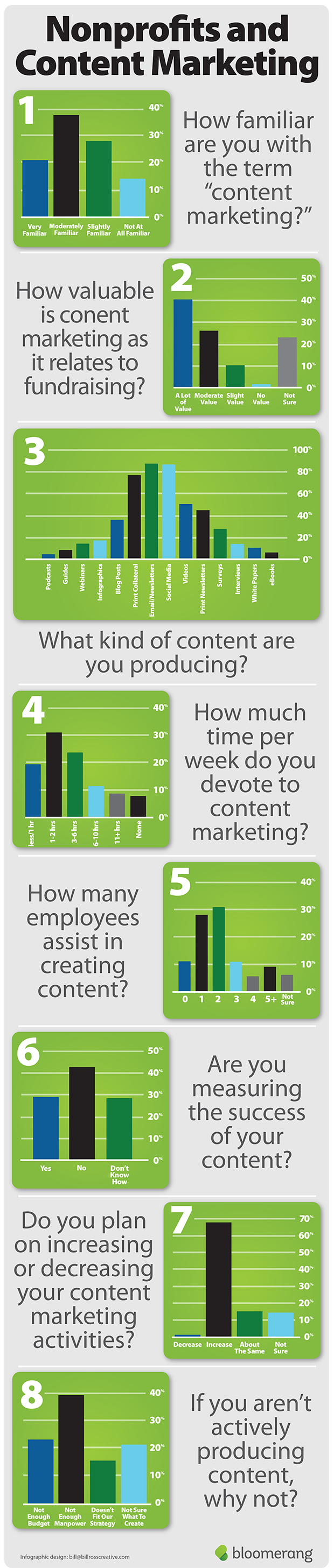
Non-profits and content marketing

bloomerang-ig4a

Chardbodies

from a recent Parks and Recreation, a comedy show set in small town Indiana. I happened to catch it when it aired (do we still say that-aired?) and enjoyed every small joke in it. Someone that writes for this show has to have a family member that runs a market.

Click to watch

Knight Foundation supports research for farmers markets

As a member of Farmers Market Coalition’s research team, I for one am very excited to receive this support from the Knight Foundation and their Prototype Fund. This pilot will allow FMC to listen to markets’ needs and ultimately fashion dynamic solutions to upload simple data (customer counts, number of new products offered, staff time dedicated to outreach for at-risk populations) to then see that data in an appealing info-graphic style for use with market partners as well as to see it aggregated on a national map with other markets data.
Please let me know if you have ideas or experience in data work in your market that may lend itself to iterations of this prototype and please look forward to more information throughout the year on this Farmers Market Metrics work happening at FMC.

http://www.knightfoundation.org/press-room/press-release/24-new-projects-will-go-idea-demo-funding-knight-f/

2014 resolution: Let’s work seriously on erasing the divide

As we move into another year of organizing around regional food and public health in the US, we are facing opposition that has become stronger and more agile at pointing out our weaknesses and adding barriers to those that we already have to erase. That opposition can be found in our towns, at the state legislature, in Congress and even among our fellow citizens who haven’t seen the benefits of healthy local food for themselves yet.

That opposition uses arguments of affordability without measuring that fairly against seasonality or production costs, adds up the energy to get food to local markets while ignoring the huge benefits of farming small plots sustainably, shrugs its shoulders at stories of small victories, pointing past them to large stores taking up space next to off ramps and asks isn’t bigger better for everyone?
Why the opposition to local producers offering their goods to their neighbors, their schools and stores? What would happen to the society as a whole if our projects were allowed to exist and to flourish alongside of the larger industrial system?
I would suggest that very little would change, at least at first. Later on-if we continue to grow our work-it may be another matter and this fear of later is at the core of the opposition. That fear has to do with the day that democratic systems become the norm and necessary information is in the hands of eaters, farmers and organizers. And so we need to address and keep on addressing the divide that keeps that from happening.

The truth that we all know is that there is already two systems-one for the top percent and another for the rest. Writer George Packer gave his framework for this very argument in an eloquent essay written in 2011 called “The Broken Contract.” Packer argues that the divide in America began to take hold in 1978 with the passage of new laws that allowed organized money to influence elected officials in ways not seen before.
Packer points out that the access to Congress meant that labor and owners were not sitting down and working together any longer. That large corporations stopped caring about being good citizens and of supporting the social institutions and turned their entire attention to buying access in Congress and growing their profits and systems beyond any normal levels.

“The surface of life has greatly improved, at least for educated, reasonably comfortable people—say, the top 20 percent, socioeconomically. Yet the deeper structures, the institutions that underpin a healthy democratic society, have fallen into a state of decadence. We have all the information in the universe at our fingertips, while our most basic problems go unsolved year after year: climate change, income inequality, wage stagnation, national debt, immigration, falling educational achievement, deteriorating infrastructure, declining news standards. All around, we see dazzling technological change, but no progress…
…We can upgrade our iPhones, but we can’t fix our roads and bridges. We invented broadband, but we can’t extend it to 35 percent of the public. We can get 300 television channels on the iPad, but in the past decade 20 newspapers closed down all their foreign bureaus. We have touch-screen voting machines, but last year just 40 percent of registered voters turned out, and our political system is more polarized, more choked with its own bile, than at any time since the Civil War.
…when did this start to happen? Any time frame has an element of arbitrariness, and also contains the beginning of a theory. Mine goes back to that shabby, forgettable year of 1978. It is surprising to say that in or around 1978, American life changed—and changed dramatically. It was, like this moment, a time of widespread pessimism—high inflation, high unemployment, high gas prices. And the country reacted to its sense of decline by moving away from the social arrangement that had been in place since the 1930s and 1940s.
What was that arrangement? It is sometimes called “the mixed economy”; the term I prefer is “middle-class democracy.” It was an unwritten social contract among labor, business, and government— between the elites and the masses. It guaranteed that the benefits of the economic growth following World War II were distributed more widely, and with more shared prosperity, than at any time in human history…

…The persistence of this trend toward greater inequality over the past 30 years suggests a kind of feedback loop that cannot be broken by the usual political means. The more wealth accumulates in a few hands at the top, the more influence and favor the well-connected rich acquire, which makes it easier for them and their political allies to cast off restraint without paying a social price. That, in turn, frees them up to amass more money, until cause and effect become impossible to distinguish. Nothing seems to slow this process down—not wars, not technology, not a recession, not a historic election.

The economic divide and the lack of information about it hurts our movement since many still see us as either too small or too elitist and so delays our work getting to more people that need it. I urge everyone to find a copy of this entire essay and share it and discuss it widely.
Nashville Farmers’ Market Gets New Director: Tasha Kennard, Veteran of Second Harvest | Bites | Nashville Scene

Nashville Farmers' Market Gets New Director: Tasha Kennard, Veteran of Second Harvest | Bites | Nashville Scene.

Market Benefit and Incentives PPT-Vermont 2013 – Helping Public Markets Grow

Since I’m back in Vermont for the 2014 Direct Marketing Conference, I decided to upload the Power Point from the 2013 Wholesome Wave convening that Erin Buckwalter of NOFA-VT and I gave about the 2013 Vermont Market Currency Report. I’ll add notes for each slide sometime in the next month or two but the data will still be helpful to many.

Market Benefit and Incentives PPT-Vermont 2013 – Helping Public Markets Grow.

Growing for Market

The link to the excellent Growing For Markets site. In the January 2014 issue, I have an article where I share the latest news on SNAP at farmers markets. GFM is a great magazine for news and tips for market farmers and organizers. You can subscribe at different levels for print or online (which can include their excellent archives) or you can simply purchase a single issue.

Growing For Market