This excellent essay by my friend Mary Rowe, Managing Director of the Municipal Art Society of New York, gives some excellent language for communities to consider and adopt when talking about their own recovery or just their own plans for a human-scaled future for their food system. Just replace “New Orleans” with farmers markets or food systems and see how well it adapts.
“In post-Katrina New Orleans, informal, improvised approaches became the new normal. Part of the fragility in New Orleans continues to be how to support a transition to more reliably funded and scaled approaches, while still protecting the vibrant and informal, and not stifling new approaches with the rules of formality. The process of building urban resilience, like the cities in which it is being cultivated, is an organic, dynamic one, dependent on the creativity and resourcefulness of the people that live it.
Author: D.W.
Make room for all of it.
Orion Magazine published a piece in this month’s issue by author Rowan Jacobsen that extols the virtues of the emerging food hub as the next welcome part of our movement.
Much of what is in this piece is spot on and well crafted to explain why the addition of local infrastructure and aggregation is quite necessary for many farmers and vital to the goal of building regional food systems. However, calling farmers markets “window dressing” as was done in this article shows an extremely abbreviated view of the role that grassroots, low-capital farmers markets play in this still-emerging food system.
When we talk about building more farms from an idea to full production, farmers markets are still the best place to give those new farmers the space and time to build their businesses while they watch their peers and learn from them, from shoppers and from other leaders that stop by. When attempting small amounts of new products that are not yet clear winners in the marketplace, where better to test those varieties but with diverse, ever-changing weekly populations such as those found in a market? When a local community wants to have healthier citizens, where else than a place that allows everyone to enter it just as they are and allows each participant time to get to their own version of local food awareness and civic engagement?
Achieving the moment where communities truly value local food production is a long strange trip and takes many seasons and a multitude of different organizing attempts to build even enough of those “early adopters” much less the early majority that will surely need to at least pass through tents on more than a few sunny days to begin to change their habits.
In case we have forgotten what the different market eras have done already:
The earliest markets that started in the 1970s brought small family growers and eager buyers together (mostly organized by farmers themselves) and did so using very little infrastructure or investment from outsiders. Many of those markets began because farmers were stymied by indirect buyers, even those buyers that worked on behalf of natural food stores and locally owned supermarkets. “Grow it to sell it” was a very powerful statement and maybe even a revolutionary one back then.
That era was followed by neighborhood leaders adding markets designed to invite a whole new group of community members (for example, senior citizens), and THAT was followed by small rural communities using farmers markets to revive their Main Streets and hold on to their towns.
Last but certainly not least, the public health community invited by markets to help bridge serious food access issues and pilot innovative programs has brought new energy to every market over the last decade and built partnerships that work tirelessly together in the halls of Congress and with other policymakers to show what local food can do, can accomplish where hospitals on wheels by themselves cannot. Each of these eras added an important piece to the food system movement and is still needed to curate it and don’t doubt it, future market eras will do more in areas not yet imagined. To paint the farmers market as “one size and one goal fits all” misses the continued evolution of this efficient and elegant mechanism.
To accomplish the big goals of behavior change for everyone (farmers, shoppers, policy makers etc), farmers markets have invited every food system idea into their midst, allowing never-ending tests in the only place that they were all really possible: the democratic town squares of food where personal yet collective transformation happens.
Can all farmers and buyers fit into markets? Of course not, nor were they meant to. But to speak anecdotally about sales at markets declining and there being “over saturation” when the entire community food system has reached (by most estimates) one to four percent of the population is shortsighted at best. Have sales declined for some farmers? Certainly. Maybe because serious infrastructure or rule changes were needed or maybe because markets needed some help along the way to manage their multiplying productions, help that mostly never came.
Let’s put it this way: the need for infrastructure is an argument that markets themselves have been making for a few decades, and in some cases, actually made happen for their farmers. It is not counter to the idea of the tented market in any way and when community infrastructure is added all producers will benefit. The need for capacity is also an argument that has been made by market organizers for decades; however, if it only comes at the sight of shiny new buildings and asking farmers to scale up-without eradicating the barriers that still exist for some of them-then has capacity help for them truly arrived?
The core truth is that the entire community food system remains immature. It is immature because it has not connected its networks and built collaborative communities of practice everywhere (using the terms of Meg Wheatley and Deb Frieze’s Emergence Theory)
All systems need appropriate stages of improvement to lift all in its rising tide. In order to work on economic, cultural and environmental levels, new leaders must be allowed to emerge and to connect. New ideas have to be allowed in alongside of those already present. Markets have needed help to make their case to newer and larger audiences for some time and see that food hubs can help make that happen. The business baseline of good food hubs is one that markets can learn from while sharing their community-building lessons in return.
Therefore, to style the farmers market field as a static anachronism is a dangerous idea to the health of the entire food system, without even recalling the very deep work done by its direct marketing sister-CSAs, which have certainly pushed forward the economic boundaries for intermediate farmers and allowed their infrastructure to grow.
Let me state it clearly: for farmers market communities, food hubs are welcome. (I wonder if the opposite is also true? And if not, why not?)
Food hubs will not replace the need for farmers markets in the case of many farmers and for many eaters; they will expand the idea for some of those farmers ready and willing to negotiate with wholesale concerns and most likely attract the farmers who were never deeply interested in retail sales or in introductory relationships with constantly changing buyers. The true hubs will stand alongside of markets and CSAs to share the responsibility of changing the way that all producers are valued. They will help encourage and expand needed investments and updates in food handling that do not ask small family farms to hand over their farm to large corporate interests.
The need to change the power structure and allow farmers to LEAD the negotiations over what price, product and types of appropriate growth that each farm needs is the goal for farmers markets, for CSAs and for food hubs too. With all respect to a favored author of mine, to separate us into what was and what is next is very wrong.
World’s first Bitcoin ATM goes live in Vancouver next week – Business – CBC News
The food system world needs to pay more attention to these digital currencies, like bitcoin. The time and effort it is taking to figure out which emerging technologies and systems of reimbursement and the corresponding risk levels will work for a market may very well be straining the small businesses of our movement. People like Jeff Cole in Massachusetts are piloting ideas such as “electronic token systems” and lucky for all of you, I wrote about this in my Vermont Market Currency Report found on page 28 in the conclusion of the report.
World's first Bitcoin ATM goes live in Vancouver next week – Business – CBC News.
The 25% shift
I am just finishing up a commentary for an online magazine in my original home of Cleveland, Ohio and to remember some details, I pulled out the Michael Shuman report “The 25% Shift: The Benefits of Food Localization for Northeast Ohio & How to Realize Them” that he and coauthors Brad Masi and Leslie Schaller completed for the Northeast Ohio food community and its municipal partners. I find it informative and ambitious.
From the summary:
The following study analyzes the impact of the 16-county Northeast Ohio (NEO) region moving a quarter of the way toward fully meeting local demand for food with local production. It suggests that this 25% shift could create 27,664 new jobs, providing work for about one in eight unemployed residents. It could increase annual regional output by $4.2 billion and expand state and local tax collections by $126 million. It could increase the food security of hundreds of thousands of people and reduce near-epidemic levels of obesity and Type-II diabetes. And it could significantly improve air and water quality, lower the region’s carbon footprint, attract tourists, boost local entrepreneurship, and enhance civic pride.
The more than 50 recommendations would be helpful for any food system to review:
Nashville’s beloved farmers market faces some tough rows to hoe | City Limits | Nashville Scene
This article is from the beginning of the year:
“The idea of bringing in a private company to run the operation comes less than a year after a review from Metro’s finance department that was critical of the market’s finances and management. Then-market director Jeff Themm stepped down from the role in June of last year, shortly after the review, and Nancy Whittemore, director of Metro General Services, has been serving as interim director ever since.
Comer says the market board has worked with General Services to address most of the issues brought up in the report, including better enforcement and compliance with civil service rules, and more thorough housekeeping and maintenance. She says they’re still working through the report, and part of that means looking at “all possible options” when it comes to making the market financially sustainable.”
I have not heard or seen any updates to this since this article and RFP were published.
6,000 lbs of food on 1/10th acre
Sharing farming details with market communities was the subject of a recent FMC webinar via by Washington State’s Colleen Donovan. That archived webinar can be viewed at http://farmersmarketcoalition.org/information-marketplace/.
This video also gives some very good information about growing food on very small acreage and could be embedded on farmers markets or farmers sites for community members to learn more about small lot farming.
▶ 6,000 lbs of food on 1/10th acre – Urban Farm – Urban Homestead – Growing Your Own Food – YouTube.
How to bring farmers markets to the urban poor – The Washington Post
I appreciate that this was written from a vendor point of view, since there’s not enough of that out there. Moreover, I think we need a national awareness campaign about how markets have begun to adeptly organize themselves around diverse shopping bases while also paying attention to the deep needs of their farmers and producers. That strategy makes them unique within the food system since markets have to constantly manage the social and human benefits along with the economic ones.
What strikes me as unsaid in this piece and in so many that I read is that time must be taken to explain to the users of markets about organizers using different strategies to achieve these goals, including selecting different vendor groups based on location, choosing locations either embedded deep within a targeted area or on the edge between multiple zip codes, while creating different sets of incentives to achieve those goals. As long as people think that markets see themselves as a one-type-fits-all, we will constantly struggle with our impacts when seeking support from folks like the USDA, city government and private funders. You can hear that struggle in the comments about “pricing” in this piece.
How to bring farmers markets to the urban poor – The Washington Post.
Mississippi Gulf Coast Farmer/Shopper Survey Project-2013/2014 – Helping Public Markets Grow
This is one of the surveys we are using with the shopper/farmer survey project along the Mississippi Gulf Coast. Sorry-only review copies are available at this point-all of the surveys will be published with the final report in 2014.
(Found on http://www.helpingpublicmarketsgrow.com under surveys/evaluation if link does not work.)
Getting milk to market requires a village- an Afghanistan village
“It’s a small thing, in light of Afghanistan’s many ailments. But what makes this dairy shop truly remarkable is that it is part of an operation that comprises all elements of Afghan society—communists, commanders, shopkeepers, everyday citizens, and yes, even the Taliban. That’s an incredibly rare thing in this war-torn country. But when it comes to fresh milk and butter, Afghans have found something worth not fighting over.”
Afghan milk story
How Should Local Food Get From Farm to Plate? | Health on GOOD
I did my best to advocate for the entire community food system in the comments.
How Should Local Food Get From Farm to Plate? | Health on GOOD.
Face Of Poverty Increasingly Suburban
Increasingly,suburbia must be considered when food system organizers consider locations for projects: Not only are we seeing an increase in the diversity of those living there but unfortunately also an increase in levels of poverty in suburbia:
From 2000 to 2012 Kneebone says, “The number of poor residents living in suburban communities in major metros grew by 65 percent. That was more than twice the pace of growth in the major cities that anchor those regions, and with that rapid change we actually passed a tipping point for the first time. There are now more poor residents in suburbs than in cities.”
The possibilities for markets to bring healthy food to more people increase if we pay attention to this shift and utilize not only our cities and rural communities for markets but suburbs too.
Face Of Poverty In New Orleans Increasingly Suburban | WWNO.
Problems with company that services SNAP EBT cards blamed for failures
“Several southeast Louisiana residents reported to WDSU that their SNAP EBT cards were not working Saturday…However, the department says there was a problem related to the company that maintains SNAP EBT card service for the state of Louisiana. They identified that company as Xerox.”
Also in MS:
MS EBT
(and of course, in more than a dozen more states)
What should be striking to markets is the reality that it takes a government shutdown for media to notice the problems with one of the three companies controlling 100% of the states SNAP sales.
Connecting Markets to Other Civic Activity
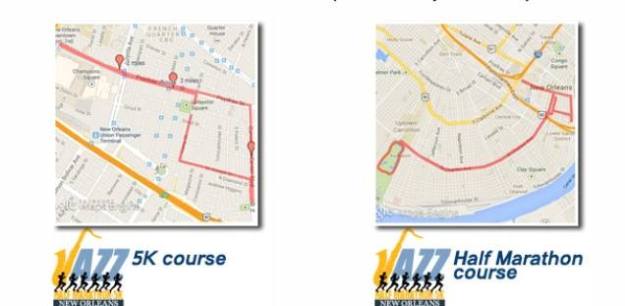
Take a look at the pic on the left-see the red square? Within that square, the 18-year old Crescent City Farmers Market sets up every Saturday from 8-12, rain or shine. I can personally attest to the traffic snarl this morning before 10 am on the streets around there, with most people unaware that their usual leisurely drive to this mostly Monday-Friday neighborhood would be upended by another superimposed civic activity, namely this race which has been run for only the last five years. No up-to-date information is shared with the market organization more than a day or two prior to this race being run (and that is only found through media sites posting it), which limits the market’s ability to tell its vendors or shoppers ahead of time about what to expect. Yet interestingly, the race supports an extremely worthy cause- The Children’s Hospital in New Orleans.
Since this race begins at 7 am (with fast runners, then slower runners and finally walkers) it’s over mostly by 10:30 am. Therefore, it might be sensible to move the start time of the market for just this week. The market does change its hours for the last Saturday of the Carnival Season, as much of that day’s activities are centered a few blocks away and so the market closes early to allow its vendors to make it out before the nearby streets are closed for hours of parades.
Or, it might be sensible for the race organizers to simply move the beginning of the race from the long street along the top of the course map that is Poydras and instead run it along the river over there on the right. Or maybe run it on Sundays. There may be other answers to this annual conundrum that should be discussed since there are other events that often impede traffic to this 4-hour market.
The main issue is that the race organizers, the city and the business district do nothing to accommodate the market at this point and ignore its very long and important economic, social and civic role. Why?
Why indeed. Certainly this market organization is adept at working with its city and neighborhoods; MarketUmbrella is a recognized leader in making the case for why farmers and markets are important. So why the cold shoulder when it comes to events?
The issue may very well be in its actual history. This market sits in this area partly because when the founders searched for the best location, this area was not yet a defined neighborhood. The founders have often shared the fact that they chose it for the first of their four (post Katrina, 3) weekly markets partly to not have neighborhood opposition back in those early days of the mid 1990s, when markets were much less understood and so they expected some pushback on a weekly event from other potential areas.
It may also be within the way that the organization has worked with its city-very cordially and with some transparency-but since all of the markets have always operated on private property, with some distance between them.
It may have nothing to do at all with the market’s willingness to work with the civic leaders, but an inability in the city to understand the importance of this weekly activity and to see its role as encouraging it to grow and to sustain itself.
My gut tells me it is a bit of all of these, but maybe a lot of the last. Well maybe its more than just my gut, since I served this market as Deputy Director for a number of years and then as its Marketshare Director. Here’s what I know.
Making the case for your market is a full time job and will be on the to-do list for as long as your market exists. New events will pop up in previously barren areas, new mayors and other leaders will decide to ask for parking fees on Saturdays, developers will build grocery stores and restaurants next to your market and assume that using your empty lot for parking is their right. How markets become “beloved institutions” in their community has something to do with how well they play with others. How they deal with external pressures also says a great deal about market organizations’ resilience and professionalism. The way that you can accomplish that goal is varied. You may create a feedback loop so as to activate your shopping base to be constantly making your case for you, or you may begin to work more closely with your elected officials over time to help them understand why they need you or you might simply move to another location that needs your market to anchor that area’s renaissance. In all these and more possible scenarios, the main actor should be the entity that runs the market since its the one that must handle situations like these in a way that allows sales to continue and mitigates the uncertainty for its community. By the way, I have written about markets and municipalities before here.
Food Day
Check out the “Big Easy Peel” event, a satsuma-peeling event starting at 11:30am on Oct. 24th at the Washington Artillery Park across from Jackson Square! Dr. DeSalvo, the health commissioner of New Orleans, will be there to speak and endorse Food Day. There’s more information about the event here: We’re looking to invite as many people as possible, so please spread the word!
