Fruits We’ ll Never Taste

My own original Slow Food chapter leader (and emerging radio personality) Poppy Tooker coined the phrase “Eat it To Save It” as a way to link human need for good food to awareness of environmental trends. There is no question that if Americans could see, smell and taste what we have lost just in the 20th century as far as foodstuffs, we would have farmers as senators, mayors and presidents once again.

the book, “Salmon Nation People, Fish, and Our Common Home” is a great example of one region’s attempt to clarify what needs to be saved. Put out by a great regional ngo, Ecotrust, Salmon Nation is worth having in your library.
This article is also a great way to think about “untasteable foods.”

Fruits We' ll Never Taste.

Eat healthy — your kids are watching

Good market newsletter article and as markets that have begun to reach out to families know, you need to involve both parent and child in the market.

Eat healthy — your kids are watching.

Farmers Market Inspiration Award

Why do farmers choose to sell at farmers markets? What does it take bring a harvest from farm to fork? What kinds of relationships do producers at farmers markets forge with one another and with their customers? What’s the most rewarding part of market day? This year, compelling and heartfelt answers to these questions could earn one farmers market producer a $1,000 award.

The Farmers Market Inspiration Award contest seeks essay submissions from June 16th through August 11th from farm producers who sell at farmers markets, telling a story that depicts concrete examples of farmers market impacts on a farm and the people with whom it connects. One grand prize award of $1,000 will be awarded for the winning entry, to be announced in September alongside top finishing markets in American Farmland Trust’s America’s Favorite Farmers Market Contest. The winning Farmers Market Inspiration essay will be published in Growing for Market in September 2012.

“Behind every one of the more than 50,000 farm stands at America’s farmers markets, there exists at least one inspiring story about a life changed, a business launched, a lesson learned, and a relationship formed,” says Stacy Miller of the Farmers Market Coalition. “It’s about time we let these stories come out, and share them with the general public.”

Essays are encouraged from a wide diversity of agricultural producers, and should focus on a story that reflects some specific outcomes/benefits from selling at farmers markets. In addition to telling a specific story no longer than 1,200 words, essays should be previously unpublished and include at least three pieces of measurable data that strengthen the story, for example, number of acres in production, number of crop varieties sold throughout the season, number of employees and/or family members supported by farmers market sales, or amount of pounds do you donate annually to social service agencies in the market community. Along with each entry, farmer-writers are asked to submit a photograph of themselves or a farm representative at their market stand to accompany the story.

Submissions will be judged by a team including staff and volunteers from the Farmers Market Coalition, Growing for Market, and American Farmland Trust.

Lynn Byczynski, the editor of Growing for Market, said: “I’m looking forward to reading what growers have to say about farmers markets. We know that, in general, farmers markets have been enormously beneficial to producers, consumers and communities. With this essay contest, we hope to hear the stories behind that success, the individual tales of triumph that have given the farmers market movement so much momentum.”

Up to five (5) honorable mention essayists will receive a complimentary one year membership in the Farmers Market Coalition and a one year print subscription to Growing for Market. All essays, both winning and non-winning, may also be published in Farmers Market Coalition print and electronic publications, and may also be published in partnering organization blogs, print publications, or FMC partner web sites.

Beginning June 16th,farmers will be encouraged to read the full parameters and submit their essays at http://www.farmersmarketcoalition.org. Thank you in advance for helping us spread the word about this opportunity among your market producers!

Sincerely,

Your friends at the Farmers Market Coalition

Morven Summer Institute studies farmers markets evaluation

Morven Summer Institute, University of Virgina

The University of Virginia has begun their latest set of summer courses at their Morven Summer Institute outside of Charlottesville. The Farmers Market Coalition has partnered with professors Tanya Denckla Cobb, Department of Urban & Environmental Planning and Paul Freedman, Department of Politics to present a 2-week course on farmers markets.

Farmers Markets and Applied Food Systems Research will explore the history of the modern farmers market movement, its purpose and discuss emerging evaluation techniques through guest lecturers such as Stacy Miller, Executive Director of FMC, Richard McCarthy, Executive Director of marketumbrella.org, Bernie Prince, FMC Board President and Co-Director of Fresh Farm, and yours truly, independent researcher and public market trainer. The students will also attempt some market-level research using the Indicator Matrix we are developing at FMC and marketumbrella.org’s SEED tool.
About Morven:
In 2001, philanthropist John W. Kluge gave an extraordinary gift of real estate to the University of Virginia Foundation for educational and charitable purpose. The 7,379-acre gift, valued in excess of $45 million, more than doubled the University’s land holdings. Located in southeastern Albemarle County, the properties comprised 11 farms and estates, including historic Morven Farm.

Building a matrix for measurement

I’m off to Charlottesville this a.m. to join in on the Morven Summer Institute at University of Virginia’s Farmers Market Evaluation course. Stacy Miller of FMC, Richard McCarthy of marketumbrella.org and Bernie Prince of Fresh Farm Markets and Board President of FMC will be joining me as lecturers this week. I, of course, will be talking about the Indicator Matrix and what to be aware of as far as market capacity to do measurement. The link below will take you to the story I wrote about this measurement approach last month.
I encourage any food system that is working on evaluation to take a look and to contact me if you have ideas or questions about the Indicator Matrix.

http://farmersmarketcoalition.org/building-a-matrix-for-market-measurement-an-update-on-fmcs-indicator-project

NSAC’s farm bill timeline (updated)

I rely on their farm bill information and encourage you to support their work.
The National Sustainable Agriculture Coalition (NSAC) is an alliance of grassroots organizations that advocates for federal policy reform to advance the sustainability of agriculture, food systems, natural resources, and rural communities.

Farm Bill Timeline

Fundraising

I just downloaded the free 2011 executive summary from GivingUSA that shows annual giving trends. What is noteworthy to me on this graph is the largest giver is, by far, individuals. I think I have an inkling of just how many markets spend their time raising money from foundations, but I wonder how many markets have figured out a way for individual market community members to be able to support their work?

Graph from GivingUSA’s 2011 national report

GivingUSA reports

No one likes to be ignored, ever.

We can use reports like this to know how to set expectations for our own markets and their warm brand of social cohesion. In addition, it’s another way for markets to use to explain their added worth to the community.

We Feel Hurt Even When Strangers Ignore Us, Study Shows

Another educational food production platform, if nothing else….

When I worked at marketumbrella.org, one of the many projects that I helped design and run was our White Boot Brigade, the roaming shrimper market for added seasonal seafood sales. Rouse’s Supermarkets was an early supporter of the WBB, and we genuinely enjoyed working with this Houma-based family company. Since they gamely took on being the main grocery store chain in our city (when Sav-A-Center decided that post-Katrina New Orleans wasn’t for them), I for one was very happy as I knew them and knew their stores. New Orleanians are VERY picky about their “markets” (as stores are often called) and yet, the Rouse family has mostly met their needs. As for buying locally, they do buy, they do support local entrepreneurs. Farmers have a harder time getting their produce in there, but value-added farmers market vendors seem to be doing well.
They just opened a store a few blocks from the flagship Saturday farmers market in downtown New Orleans, and I think it will help both the market and the store. That store is the subject of this excellent story on their new rooftop garden.

The only supermarket in downtown New Orleans is the first grocery in the country to develop an aeroponic urban farm on its roof.

What exactly is an aeroponic urban garden?

Think vertical instead of horizontal. The garden “towers” use water rather than soil, and allow plants to grow upward instead of outward. It was developed by a former Disney greenhouse manager, and is used at Disney properties, the Chicago O’Hare Airport Eco-Farm and on the Manhattan rooftop of Bell Book & Candle restaurant.

Rouse’s downtown

Farmer Congressional testimony

I never thought I’d be testifying in front of Congress. But last week, there I was.

My name is Justin Doerr, and I am a beginning farmer from Nebraska and an Iraq War Veteran. When I got back from the service, I had the desire to farm but did not have the capital and resources to begin farming.

Last Thursday, I told Congress what I wanted for the Farm Bill: better beginning farmer programs so people like me can get started in agriculture. You can see my testimony here:
href=”http://agriculture.house.gov/pdf/hearings/Doerr120510.pdf”>http://agriculture.house.gov/pdf/hearings/Doerr120510.pdf

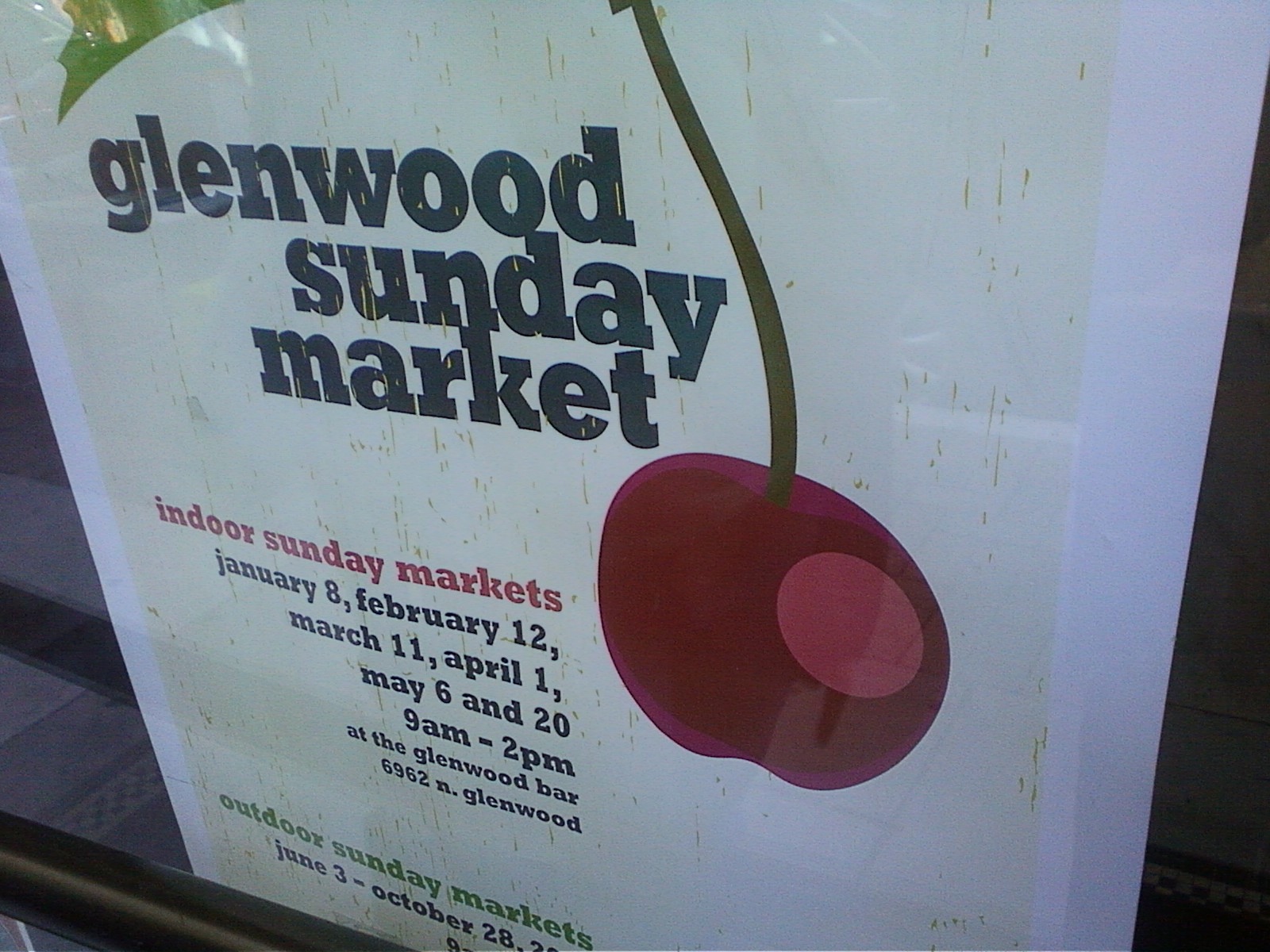
Chicago market location

I’d very much like to see this market in its full summer glory! The bricked block is where it’s held when outdoors… My friend who lives around the corner goes to it and enjoys it, but only goes to the outdoor summer market. Her reason? ” can’t get it together to make it to the indoor market, and I’m not sure I like it when markets are indoors…”

Huh.

20120516-195241.jpg

20120516-195259.jpg

First Giving May Webinar

Register for our May webinar:

It’s Electric! Spark Engagement with Virtual Participation

Thursday, May 17th, 2012
1pm to 2pm EST / 10am to 11am PST

It’s not always easy to get your motivated supporters together in one place at one time. But don’t let this discourage you from putting on a truly awesome event! FirstGiving’s Account Management team will walk you through how to turn potential no-shows for your event into active fundraisers by offering a virtual participant option.

We’re excited to share with you some noteworthy examples of nonprofits that have creatively set up virtual participation for their event. In addition we’ll warn you of common pitfalls some nonprofits have fallen into, and of course tackle your toughest fundraising questions.

Presented by FirstGiving’s Account Managers:
Jeff Love and Meg Savin

Register now

http://info.firstgiving.com/about-us/resource-library

A few of the questions we’ll address in this webinar are:

What is virtual participation?

When is it a good idea to set this up for my event on FirstGiving?

How do I best keep virtual participants engaged?

FirstGiving is dedicated to one purpose: empowering passionate nonprofit supporters to raise more money than they ever thought possible for the causes they care about.

Have a question? Visit our or call us: (877) 365-2949. Please add sender@firstgiving.com to your address book or safe sender list so our emails get to your inbox. This message was sent by FirstGiving, 34 Farnsworth Street, 3rd FloorBoston, MA 02110.