Erin O’Donnell: The Food Movement in 2012.

These end of the year pieces can be interesting and yet disheartening too. This one seems to have a social justice lens and as such, it may be slightly more focused on winning policy changes in the industrial ag sector over actual alternative system wins in 2012. However, I agree with most of her top 5.

Erin O'Donnell: The Food Movement in 2012: Our Top 5 Learnings.

34 States Shut out of Organic Farm Program by Congress and White House – NSAC

This is the kind of action alert that farmers and ranchers miss when there is no substantial statewide sustainable agricultural organization on which to rely. Again, to take it back to the market organizations-how can we help build the advocacy organizations for our farmers so they have access to programs to grow a better earth?

34 States Shut out of Organic Farm Program by Congress and White House – NSAC.

Intro to CNG Webinar – Certified Naturally Grown

Intro to CNG Webinar – Certified Naturally Grown.

DAWN Launches Rural Worker Cooperatives Assistance Program | Democracy at Work Network

I do think that one of the emerging trends that is coming to community food system work – especially markets – will be worker cooperatives. Take advantage of the excellent peer work that DAWN offers to learn more about this and to assist rural farmers and producers in your area.

DAWN Launches Rural Worker Cooperatives Assistance Program | Democracy at Work Network.

Group plans new Saturday market in Boise, splits from Capital City

Group plans new Saturday market in Boise, splits from Capital City | KTVB.COM Boise.

Cash incentives in NYC and Memphis explained

Ah incentives. This is a great interview with NYC Deputy Mayor Linda Gibbs about their cash incentive program. The Mexico model was the one that was explained to us in New Orleans back in 2006 (by the same public health researcher that is now working for NYC) and became the basis of the markets’ innovative work on the Gulf Coast which continues to this day. We understood (because of her training) that we were using cash as a short-term way to reduce significant barriers around open-air farmers markets, especially for low-income shoppers that face barriers such as lack of transportation, short market hours (that are often at odds with service workers schedules), the need to learn new shopping behavior, the perception of markets as elitist and so on.
To me, markets are in the business of incentivizing behavior change and we use many tools to that end: events, seating, music, children’s educational resources, support for farmers to grow their businesses and so on. Cash incentives are now well understood by public health activists and so were brought to our markets as an efficient way to do targeted outreach to at-risk communities. It’s not the answer to all of our market issues, but it has allowed us to regain our rightful place as the center of innovation in community food systems and to add some disciplined measurement strategies to our portfolio.

I really like how the NYC describes this in the interview; I like the analogy of the tax code as being a set of incentives as well.

The entire series Freakonomics is based on incentives as well. Check that out for a macro view of the subject.
Link to interview

Hot topics in cold Vermont…

Living in New Orleans used to mean that I had a mild winter (if any) to deal with each year and January was about celebrating Carnival from Twelfth Night up until Fat Tuesday (Mardi Gras). Now as a market consultant, I spend the winter traveling to conferences and meetings, oddly almost all held in the northern climes!
Even with my aversion to cold, I am excited to be returning to Vermont for my third visit with NOFA-VT, and the second time I will be attending their Direct Marketing Conference held in lovely South Royalton VT.

Beginning last fall, I started work with NOFA-VT and the Vermont Agency of Agriculture to study their card and token currency systems in the markets and comparing them to other states’ systems in view of the 2020 implementation of WIC to EBT cards – as well as the new technology that is swirling around like Square and the new upcoming Novo Dia Group smart phone app for cc/debit/food stamps. Also included in this research is the need to ascertain if these systems (which of course include incentives, FMNP coupons, WIC vouchers and in some states veggie prescriptions too) are working well at market level and how to measure them.

I have been calling on my colleagues across a dozen states and networks to hear their analysis which has been shared most generously. Now, I go to Vermont to gather some case studies from farmers and market managers to round out the raw data which then will need to be crammed into a manageable report for Vermont come early spring.

wish me luck.
And, email me or call me if you have data on a network or state level that you wish to share.

Vendor in Braintree, MA Refuses To Sell Pies To People On Food Stamps

here are my  questions:

1. Did the market sit with their vendors and explain the plan to add benefit program shoppers and is there a rule in this market (as there is in some markets) that all vendors must take the tokens (that have products that are able to be purchased with food stamps by law)?

2. . What if a vegetable farmer refused to take SNAP simply because of their own beliefs? How would a market handle that?


I’d love to hear some thoughts from markets and market vendors.

Vendor in Braintree, MA Refuses To Sell Pies To People On Food Stamps.

Welcome to the market

One of the 35 or so short films I did for MarketUmbrella a few years ago to show the resiliency and enterprise in our farmers, fishers and markets. This one was designed for new vendors to watch so that they could understand what “setting up” at the market meant.

All are available on YouTube.


SNAP Redemptions at Farmers Markets Exceed $11 Million in 2011

Last year, I posted the original graph that FMC and CFSC created to show food stamp (SNAP) redemption at markets since the 1990s.
This is the most updated published graph:

Farmers Market Coalition» Blog Archive » SNAP Redemptions at Farmers Markets Exceed $11 Million in 2011.

By the way, 2012 redemption was over 16 million. FMC will have an updated story this week or next.
Great job folks.

Cluster evaluation of incentives

The report from Fair Food Network, Market Umbrella, Roots of Change and Wholesome Wave offers some helpful data and analysis of the incentive programs used in farmers markets. All 4 of these organizations are involved with incentive campaigns at different levels and have begun to see the effects of the many campaigns that they have run. It is clear to me that cash incentives have been successful in reducing the early barriers for markets hoping to attract lower income shoppers. However,the ability of the market organizations to create and manage these campaigns remains a cause of concern in some networks and states.
I am curious as to how incentives could be used in more ways (two examples might be how to attract new vendors or thanking neighbors who live with the impact of the market ) and how other incentives besides a cash match could be developed.

See the report here. FYI- It is only opening on computers; it does not seem to open on tablets at this point.

healthyfoodincentives.org.

Is selling at a farmers market right for you?

The Dane County Farmers’ Market (yes the one held in Madison surrounding the beautiful state capital since 1972!) has had Larry Johnson as its manager for the past decade. Recently, he offered some tips for emerging vendors on market selection. I for one am always happy to see this sort of SWOT analysis so that those that are making their decision about where to invest their time and money are armed with some good perspective. Larry has been at it for a long time and offers some sound advice, among them ideas for how to know what a “good” market should have:
“… Not all farmers markets are created equal. A good market has a good organization (board or core group of volunteers and/or vendors) that lay the groundwork or rules for the vendors. Having a dedicated manager is also important, according to Johnson, for maintaining the quality of the market, by making sure rules are followed. Johnson said as manager of the Dane County Farmers’ Market, he’s very intentional about food safety, licenses and such. He even goes out to vendors’ farms to make sure they’re producing what they’re selling, in order to maintain “integrity of products.”
Important
I would recommend linking this article on your website or even printing some out for your market vendors.

http://www.agriview.com/news/crop/is-selling-at-a-farmers-market-right-for-you/article_e8782762-4a05-11e2-8180-0019bb2963f4.html

If you build it….

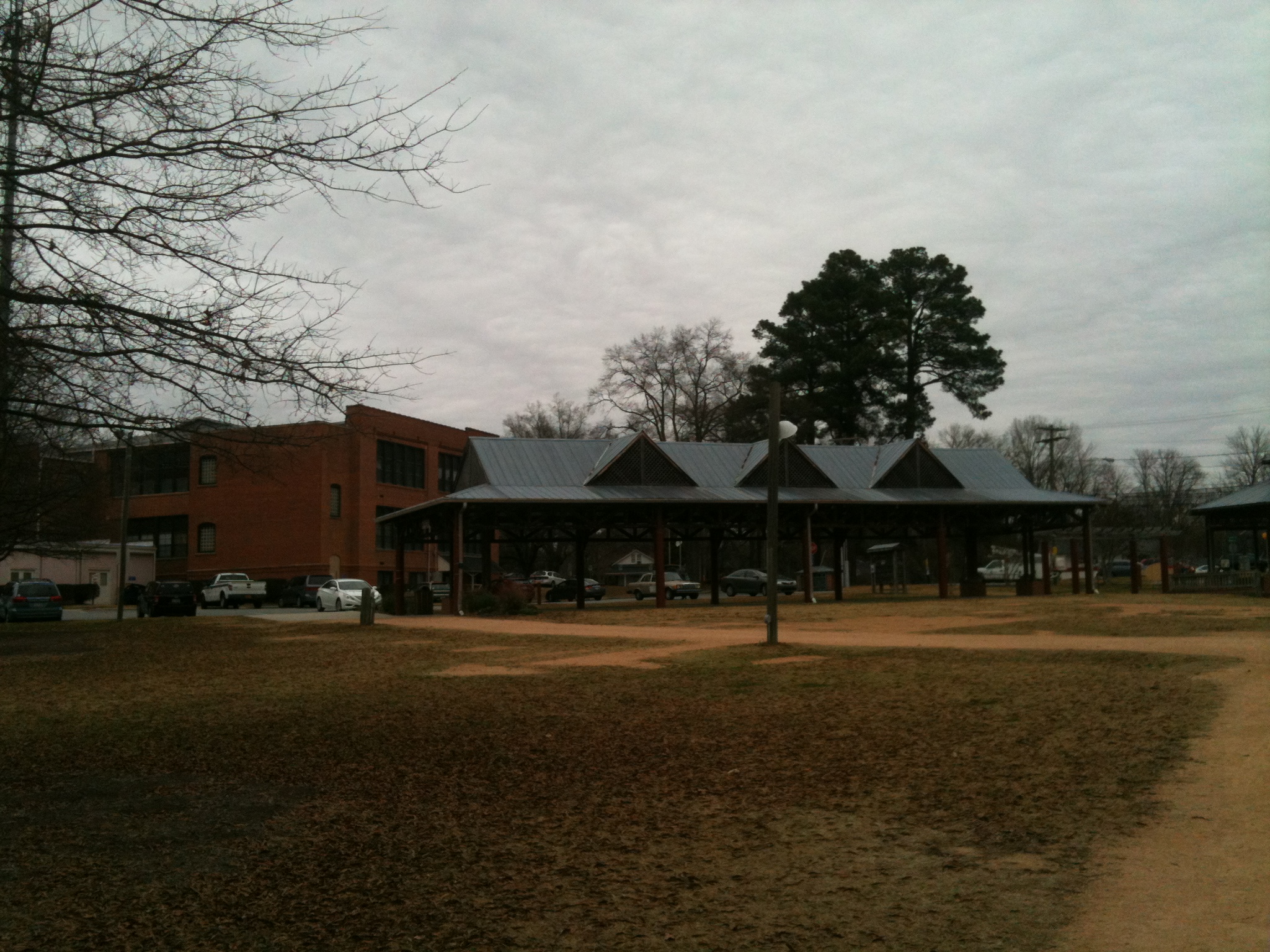
Carrboro North Carolina’s iconic farmers market has led the region in another way: In 1996, they secured a permanent location and an overhang over part of their market with electricity and drains available.Image

The Carrboro Farmers Markets is an incorporated vendor-run entity, operating twice a week in the summer and on Saturdays year-round. The Board is elected by their vendor membership and the board oversees the market staff and the market’s finances.

Recently, I asked Sarah Blacklin, Carrboro Market Manager to share some facts about their market history and structure:

1. When was the structure built? The structure secured funding from the General Assembly in 1993.  The structure was completed and built by 1996

2. Who paid for it and who maintains it? Paid for by G.A. (the Market worked with the Senator to secure that funding).  The Town of Carrboro Public Works maintains it since it’s used for other events all other times throughout the week.  Technically the Market just “rents” the space on Saturdays and Wednesdays.

3. How many vendors use the structure and how many are outside of it? (on average of course) On average, there are 32 spaces under shelter.  For Wednesdays, that’s 32 vendors and for Saturdays (since some have double spaces), that’s about 20 vendors. Out of the shelter, we’re looking at about 46.

4.  Can the vendors use the outlets for electricity? Are there drains? Some vendors have access to electricity. There are electric outlets at every other space, so some folks run an extension cord or don’t use it at all if it’s not close to them.  Yes, there are drains outside but there are some overall drainage issues in the outfield which is why we’re addressing these issues with a fundraiser project.

5.  Is it ever used for other events? Yes, it’s commonly used for other events.  The Town’s 4th of July and Halloween celebration, “Carrboro Day”, music festival, and anything in between, music festival, and anything in between.
Image

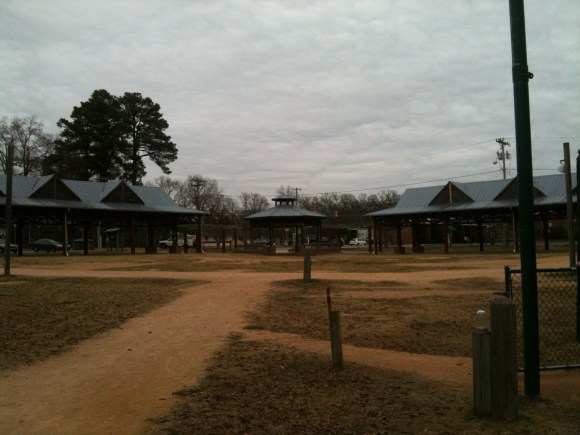
Carrboro's shed for storage and electricity.

Carrboro’s shed for storage and electricity.