As Farm to Plate movement blooms, Vermont food and farm jobs help drive economy

In January 2011, when the Farm to Plate Strategic Plan was released, an economic analysis indicated that with every five percent increase in food production in the state, 1,700 new jobs would be created. Goal #1 of the Farm to Plate Strategic Plan is to increase Vermonters’ local food consumption from five to ten percent over ten years.

As Farm to Plate movement blooms, Vermont food and farm jobs help drive economy – Burlington Sustainable Agriculture | Examiner.com.

On-Farm Slaughter May Be Legal, But It’s Complicated

H-515, the Agency of Agriculture, Food and Markets housekeeping bill, made it legal for farmers to facilitate on-farm slaughter, but not conduct it themselves. The limitations – and wording – of the rule are causing some frustration and confusion.

On-Farm Slaughter May Be Legal, But It's Complicated | Vermont Public Radio.

Regional food sez Real Pickles

Sustainability is the balance of the positive and negative environmental, social and economic demands in any sector and across sectors. In the food work we do, regional systems have a better chance to address them together and yet we spend little time defining those demands. In that framework, local food systems by themselves can grow overly ‘muscular” and crowd out others nearby or focus on demand more than supply (or vice versa) or spend too much energy fighting to build systems for every process that could be shared instead.
In that important work, this blogger wrote a very good piece about the regional and sustainable approach to food that is worthwhile to share:

Those of us in rural areas – rich in agricultural resources – thus have an inescapable responsibility. As we do the necessary work of helping to overhaul the food system, we must consider what part we can play in feeding the populations of places like Boston, New York, and Philadelphia. While it is surely tempting (and so much simpler) to focus inwardly and exclusively on how to feed merely ourselves, that is not, in the end, the way to build a better food system. It is essential to be actively promoting and supporting our local farm economies – and, at the same, we need to thinking more broadly.

Resiliency
There’s another strong reason why we need to think regionally as well as locally, one that undermines the notion that it would even be possible for any one town or small state to securely depend on its own agricultural resources. It has to do with things like weather and pests – those unavoidable factors that make farming inevitably risky and unpredictable. Factors which also threaten to make farming even more unpredictable as a result of climate change.

Regional food

FMC Supports the 2014 Farm Bill | Farmers Market Coalition

    link.

Class gap: Obesity declines in well-off kids, but climbs in the poor

In 2009 to 2010, 26 percent, or roughly 1 in 4 kids whose parents have at most a high school education, were obese, compared to 7 percent, or roughly 1 in 14, kids whose parents have at least a four-year college degree, according to Frederick. He cited data from the National Health and Nutrition Examination Surveys and the National Survey of Children’s Health.

link

2014 resolution: Let’s work seriously on erasing the divide

As we move into another year of organizing around regional food and public health in the US, we are facing opposition that has become stronger and more agile at pointing out our weaknesses and adding barriers to those that we already have to erase. That opposition can be found in our towns, at the state legislature, in Congress and even among our fellow citizens who haven’t seen the benefits of healthy local food for themselves yet.

That opposition uses arguments of affordability without measuring that fairly against seasonality or production costs, adds up the energy to get food to local markets while ignoring the huge benefits of farming small plots sustainably, shrugs its shoulders at stories of small victories, pointing past them to large stores taking up space next to off ramps and asks isn’t bigger better for everyone?
Why the opposition to local producers offering their goods to their neighbors, their schools and stores? What would happen to the society as a whole if our projects were allowed to exist and to flourish alongside of the larger industrial system?
I would suggest that very little would change, at least at first. Later on-if we continue to grow our work-it may be another matter and this fear of later is at the core of the opposition. That fear has to do with the day that democratic systems become the norm and necessary information is in the hands of eaters, farmers and organizers. And so we need to address and keep on addressing the divide that keeps that from happening.

The truth that we all know is that there is already two systems-one for the top percent and another for the rest. Writer George Packer gave his framework for this very argument in an eloquent essay written in 2011 called “The Broken Contract.” Packer argues that the divide in America began to take hold in 1978 with the passage of new laws that allowed organized money to influence elected officials in ways not seen before.
Packer points out that the access to Congress meant that labor and owners were not sitting down and working together any longer. That large corporations stopped caring about being good citizens and of supporting the social institutions and turned their entire attention to buying access in Congress and growing their profits and systems beyond any normal levels.

“The surface of life has greatly improved, at least for educated, reasonably comfortable people—say, the top 20 percent, socioeconomically. Yet the deeper structures, the institutions that underpin a healthy democratic society, have fallen into a state of decadence. We have all the information in the universe at our fingertips, while our most basic problems go unsolved year after year: climate change, income inequality, wage stagnation, national debt, immigration, falling educational achievement, deteriorating infrastructure, declining news standards. All around, we see dazzling technological change, but no progress…
…We can upgrade our iPhones, but we can’t fix our roads and bridges. We invented broadband, but we can’t extend it to 35 percent of the public. We can get 300 television channels on the iPad, but in the past decade 20 newspapers closed down all their foreign bureaus. We have touch-screen voting machines, but last year just 40 percent of registered voters turned out, and our political system is more polarized, more choked with its own bile, than at any time since the Civil War.
…when did this start to happen? Any time frame has an element of arbitrariness, and also contains the beginning of a theory. Mine goes back to that shabby, forgettable year of 1978. It is surprising to say that in or around 1978, American life changed—and changed dramatically. It was, like this moment, a time of widespread pessimism—high inflation, high unemployment, high gas prices. And the country reacted to its sense of decline by moving away from the social arrangement that had been in place since the 1930s and 1940s.
What was that arrangement? It is sometimes called “the mixed economy”; the term I prefer is “middle-class democracy.” It was an unwritten social contract among labor, business, and government— between the elites and the masses. It guaranteed that the benefits of the economic growth following World War II were distributed more widely, and with more shared prosperity, than at any time in human history…

…The persistence of this trend toward greater inequality over the past 30 years suggests a kind of feedback loop that cannot be broken by the usual political means. The more wealth accumulates in a few hands at the top, the more influence and favor the well-connected rich acquire, which makes it easier for them and their political allies to cast off restraint without paying a social price. That, in turn, frees them up to amass more money, until cause and effect become impossible to distinguish. Nothing seems to slow this process down—not wars, not technology, not a recession, not a historic election.

The economic divide and the lack of information about it hurts our movement since many still see us as either too small or too elitist and so delays our work getting to more people that need it. I urge everyone to find a copy of this entire essay and share it and discuss it widely.
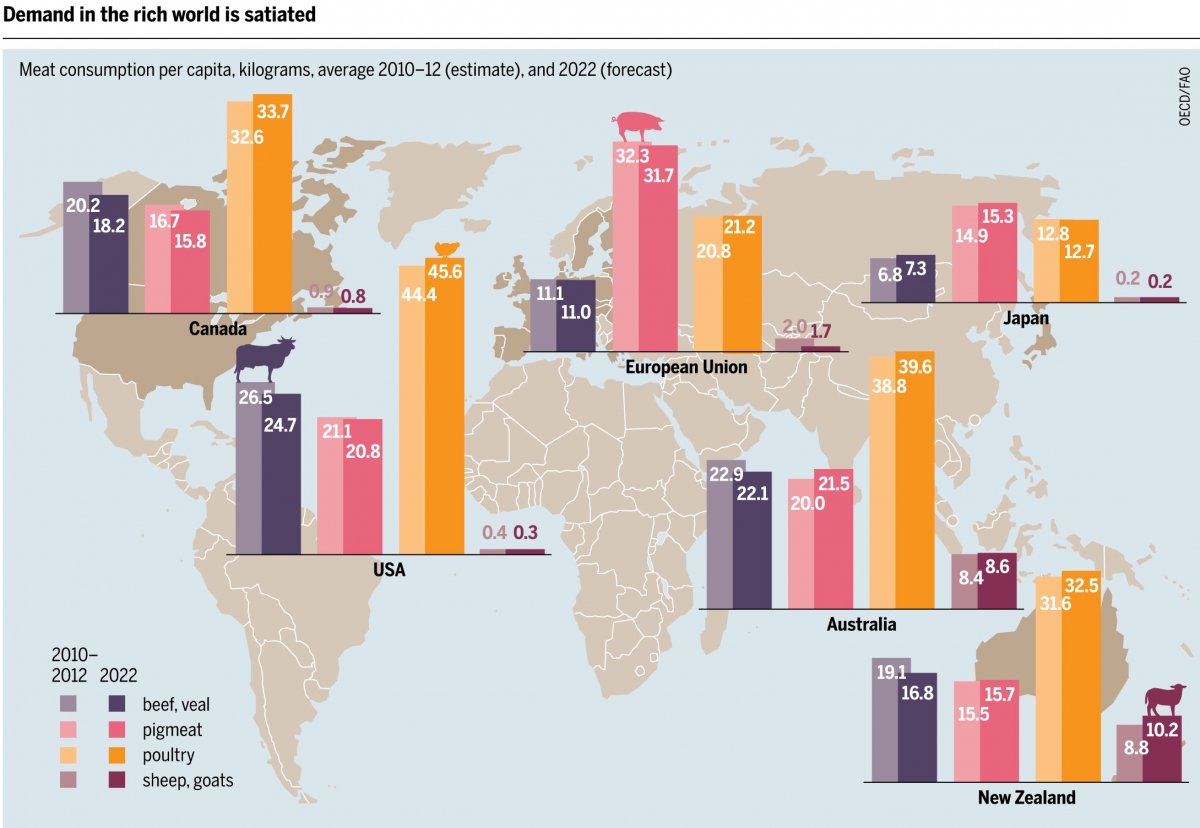
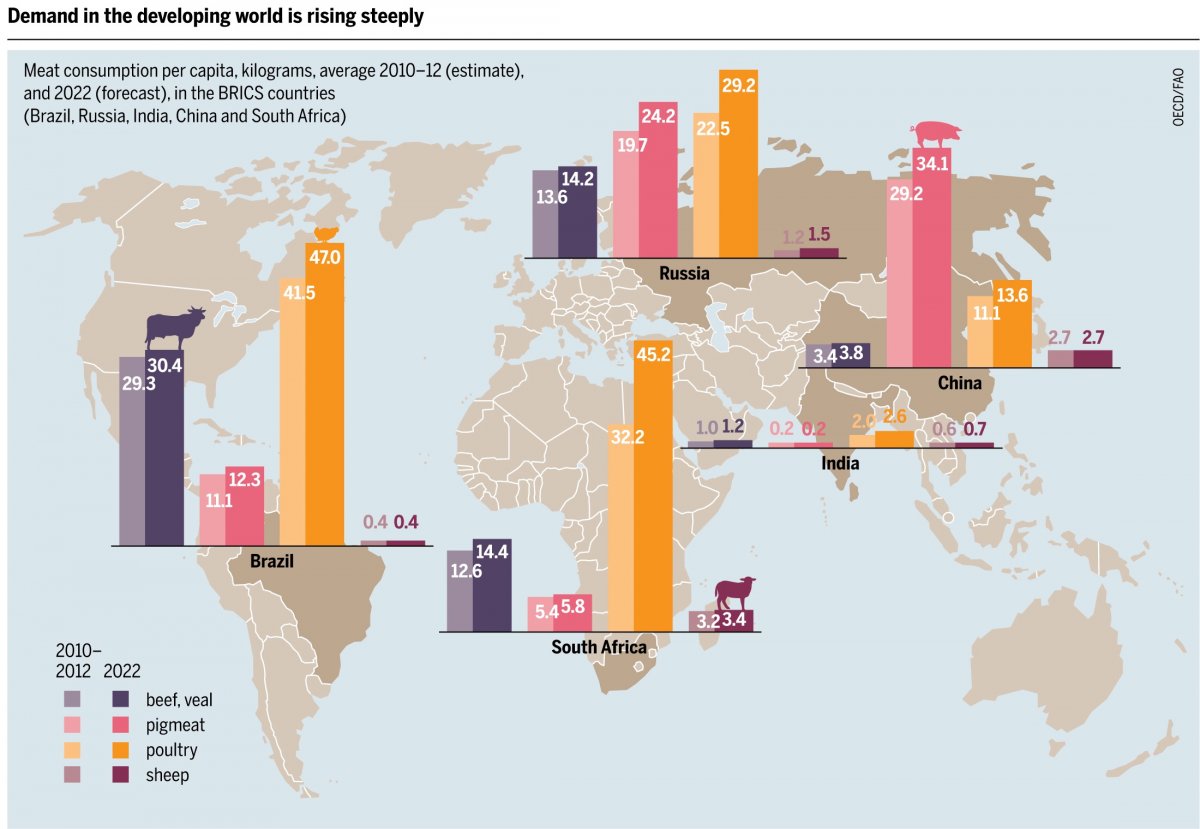
Meat atlas maps

meat 3meat 4meat 2meat 7

Link to atlas

Market Benefit and Incentives PPT-Vermont 2013 – Helping Public Markets Grow

Since I’m back in Vermont for the 2014 Direct Marketing Conference, I decided to upload the Power Point from the 2013 Wholesome Wave convening that Erin Buckwalter of NOFA-VT and I gave about the 2013 Vermont Market Currency Report. I’ll add notes for each slide sometime in the next month or two but the data will still be helpful to many.

Market Benefit and Incentives PPT-Vermont 2013 – Helping Public Markets Grow.

New Nationwide Study Shows SNAP Incentives at Farmers’ Markets Boost Healthy Eating, Support Farmers, and Grow Local Economies | Fair Food Network

From the conclusion:

A minority of funds went unused. Possible reasons for this gap include that tokens were lost, misplaced, or reserved for a future visit that did not occur. Regardless, a loss in purchasing power negatively affects the financial benefits provided by the incentive program, and means that SNAP participants have fewer funds to mitigate food insecurity. Future work should strive to better understand this problem in various communities and test innovative solutions to increase SNAP redemption rates. Additionally, further exploration will be helpful to determine what maximum amount of SNAP benefits
matched maximizes participation by SNAP customers. To better understand the health impacts on individuals who use SNAP incentives to purchase fresh produce, future research also should explore changes in consumption and other health behavior. Finally, examining the relationship between various implementation strategies and reported changes in consumers, vendors, and markets will help better identify promising practices for effective incentive programs. The cluster evaluation documented program innovations; influences of incentive programs on consumers, vendors, and markets; and lessons learned to inform a fragmented field of practice. The cluster program organizations are poised and ready to share what they are learning about effective program management, marketing, funding, capacity building, sustainability strategies, and achieving desired outcomes with fellow practitioners. After sharing program experiences, program implementation, and outcome data, and advancing ideas on how best to advance and implement solutions to food system issues of common concern through this cluster evaluation, the programs are exploring plans to launch an online “Learning Community” that would bring more program coherence to the field of practice and increase the field’s capacity to be more impactful.

New Nationwide Study Shows SNAP Incentives at Farmers’ Markets Boost Healthy Eating, Support Farmers, and Grow Local Economies | Fair Food Network.

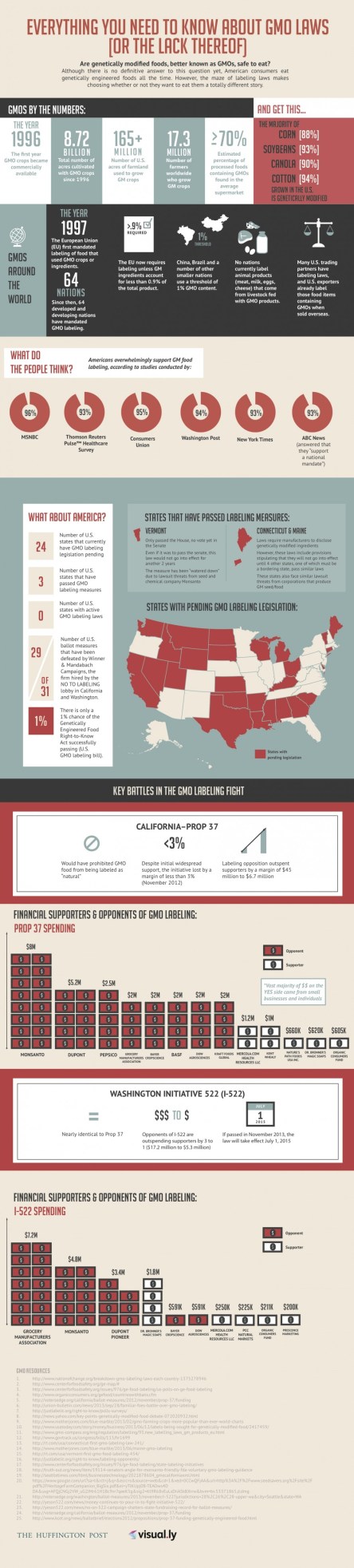
GMO Infographic from HuffPost

GMO Infographic from HuffPost

The 25% shift

I am just finishing up a commentary for an online magazine in my original home of Cleveland, Ohio and to remember some details, I pulled out the Michael Shuman report “The 25% Shift: The Benefits of Food Localization for Northeast Ohio & How to Realize Them” that he and coauthors Brad Masi and Leslie Schaller completed for the Northeast Ohio food community and its municipal partners. I find it informative and ambitious.

From the summary:
The following study analyzes the impact of the 16-county Northeast Ohio (NEO) region moving a quarter of the way toward fully meeting local demand for food with local production. It suggests that this 25% shift could create 27,664 new jobs, providing work for about one in eight unemployed residents. It could increase annual regional output by $4.2 billion and expand state and local tax collections by $126 million. It could increase the food security of hundreds of thousands of people and reduce near-epidemic levels of obesity and Type-II diabetes. And it could significantly improve air and water quality, lower the region’s carbon footprint, attract tourists, boost local entrepreneurship, and enhance civic pride.
The more than 50 recommendations would be helpful for any food system to review:

25% shift