Tom Spicer, the man who taught Dallas how to eat better, has died

Met him once and had a fascinating conversation on food and New Orleans and markets and restaurants and a few other topics. He was a true New Orleanian: engaging, voluble, opinionated and talented at a wide range of crafts.
People like this are necessary to those of us waging the often-solitary fight to build a sustainable food system piece by piece, person by person: they inspire and challenge us with their words and their actions. Thank you Spiceman. Tom Spicer, the man who taught Dallas how to eat better, has died | Dallas Morning News.

2009 Profile

an example of the type of comments left on Dallas sites upon news of his passing:
Tom Spicer meant more to me being in business than anyone. He was one of my first customers and he encouraged me from the very beginning. Tom gave me a list of my best accounts to this day! Tom was so passionate and fun to speak with , he started me off on my food journey in life and was essential in helping my company get started. Fennel and dill pollen spice would never be here today without Tom Spicer.

Has farm-to-table helped the actual farmer yet? – LA Times

The solution for rural economies and small-scale agriculture is not to DIY everything but to build a multifaceted, participatory food system of fully employed food producers, not hobbyists.

Great piece but make sure that you also read the comments attached to see how many people have either “campaign fatigue” about local food or are attached to that trope about how local food can’t feed the world. My comment on there attempts to address that.
Has farm-to-table helped the actual farmer yet? – LA Times.

Mo’ Money? No Problem.

IMG_1536

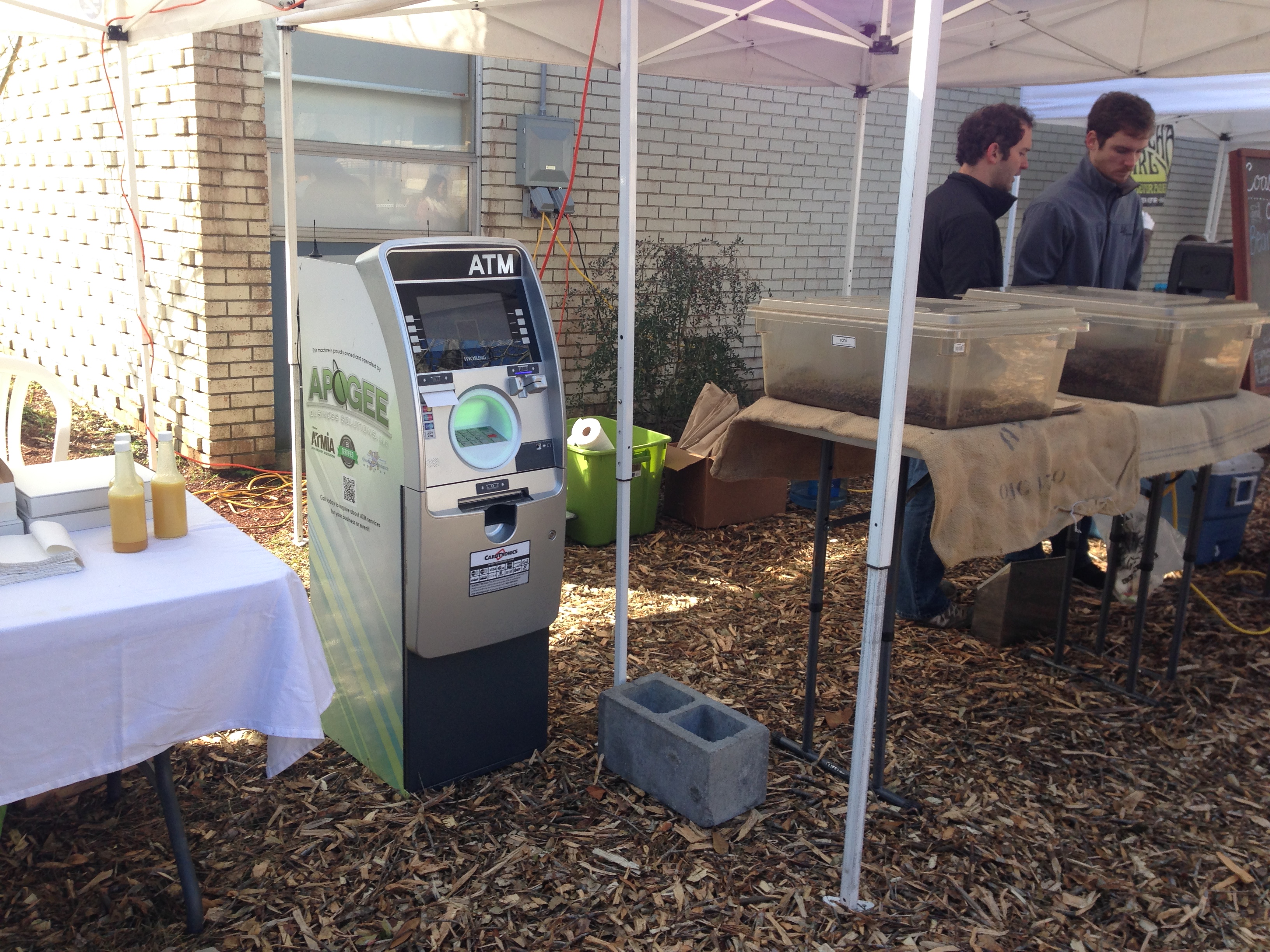
The picture is from my regular weekly, year-round Saturday market, founded in 1996 in the small town of Covington Louisiana, which is only 40 miles north of New Orleans but separated from it by Lake Pontchartrain and its 24 mile-long bridge.

The market is very ably run by sisters Jan and Ann, using very minimum staff hours but with enormous amounts of community buy-in. They have music scheduled every week, often have food trucks and during holidays have author signings or tasting events. The market has loads of seating, a permanent welcome structure with donated coffee and branded merchandise for sale. I tell you all of that to show how they balance the needs of the shoppers (by adding amenities that cannot be offered by the vendors) and the needs of their vendors (they keep the fees low by having less staff hours and carefully curate the products to showcase only high-quality regionally produced items), but also do their very best in their estimation to reduce their own wear and tear as staff.

To that end, they decided long ago to not participate in the same farmers market wireless machine/token system that we had in New Orleans; I had been the Deputy Director of that market organization and in 2006 or so had shared news of our emerging token and benefit program system with nearby markets in case they wanted to add the same; Covington told me then they didn’t see the need in their small town, even though they know and care about the large number of low-income people on benefit programs living nearby and do their best to offer a wide variety of price points and goods. I must confess that after our initial chat I was a bit disappointed by the lack of interest in expanding the reach, but soon realized this was an example of a particular type of market (rural niche) and the leadership was comfortable with the middle-class vibe they had certainly attracted. And I also realized a few years later that if they had been influenced by our complex system, it would have probably been a wrong move for the market at that time (more on that later.)

They knew, however, they at least needed the access for shoppers to get more cash and had asked the bank (a market sponsor) to have an ATM, and had also asked the municipality to add one (the market space is on city hall property), but couldn’t get anyone to move on the request. Finally, a 3rd party entrepreneur approached them to put one in and ta-daa, they finally have their ATM. It is moved in on Saturday morning and out again when the market is done, but the market will have a conversation soon with the mayor (a strong market supporter) about getting it there permanently. I was thrilled to see even that machine, as the nearest bank is blocks away and on far too many days I have grumpily got BACK in my truck to get more cash.

And in the days since those early rounds of proselytizing for (only) a centralized token/EBT/Debit system at every market, my own work has led me to the conclusion that instead there needs to be a suite of systems for markets to choose the appropriate version to process cards, rather than just the one system for everyone. Some markets can serve their shoppers with an ATM (some can own it, some can lease theirs and some can have a 3rd party offer the service like Covington), with some farmers having EBT/debit access on their own; some markets can use a phone-in system for EBT and have a Square on a smart phone at the market or farmer-level; some need the centralized system, but are figuring out electronic token systems; and yes, some do still need to bells and whistles of the centralized token system; and some markets need that system that is still developing, as technology continues to change to add more options for these systems.

What will help this multi-tiered system to happen is for markets to keep on sharing their ideas with each other and to gather data on why their system works for their community. That may be as simple as doing a regular Dot Survey/Bean Poll to ask shoppers about the interest in card use, or doing an annual economic survey like SEED, or asking their vendors on their annual renewal/application form about their use or projected use of card technology (you’d be surprised how many vendors already have Square or another version of it). And markets and vendors that do have the technology need to track the time and effort it takes to process cards and to build the entire system, which includes some outreach and marketing, and a significant amount of bookkeeping and share that information.

I keep gathering examples of innovation among markets and hope that sooner or later I (or other more able researchers) can be tasked with conducting in-depth research about those ideas to offer the market field a more comprehensive and dynamic view of all of the great ideas managed by our market systems. In the meantime, if you come to Covington your pajeon (warm Korean pancake) is on me; after all, I’ve got the cash.

FMC’s Free SNAP EBT Equipment Program is Open

As you may have heard, the United States Department of Agriculture (USDA) Food and Nutrition Service (FNS) partnered with the Farmers Market Coalition (FMC) to provide eligible farmers markets and direct marketing farmers with electronic benefit transfer (EBT) equipment necessary to process Supplemental Nutrition Assistance Program (SNAP) benefits.

WHAT


FMC will cover the costs of purchasing or renting SNAP EBT equipment and services (set-up costs, monthly service fees, and wireless fees) for up to three years. After their application has been approved, eligible farmers and farmers markets will choose their own SNAP EBT service provider from a list of participating companies. Transaction fees (for SNAP EBT, credit, and debit payments) will not be covered.

WHEN


The application period will open at 9:00am EST Tuesday, February 17th, 2015. This is a first-come, first-serve opportunity, which will be over when all the funds have been allocated. Don’t wait!

WHO


SNAP-authorized farmers markets and direct marketing farmers (who sell at one or more farmers markets) are eligible for funding if they became authorized before Nov. 18, 2011, AND fall into one of the following categories:

A. They do not currently possess functioning EBT equipment; OR

B. They currently possess functioning EBT equipment, but received
that equipment before May 2, 2012.

Wondering what qualifies as ‘not currently possessing functioning EBT equipment?

Markets and farmers do not currently possess functioning EBT equipment if:

They currently rely on manual/paper vouchers to accept SNAP,
They do not currently accept SNAP and have never possessed functioning SNAP EBT equipment, or
They do not currently accept SNAP because their EBT equipment is
:
Damaged beyond repair.
Non-operational because their SNAP EBT service provider no longer offers SNAP EBT processing in their state.
Stolen or lost.
For more information on the program, including frequently asked questions, an eligibility chart, background information and application instructions, visit them at farmersmarketcoalition.org/programs/freesnapebt
found here.

CSA FARMS CELEBRATE NATIONAL CSA SIGN-UP DAY FEBRUARY 28

(By the way, brilliant marketing idea to explain that this CSA “event” is scheduled on what has been the most popular CSA sign up day of the year in the past. What similar idea could the farmers market field adopt I wonder?)

PITTSBURGH, PA (February 23, 2015): Farms from around the country are celebrating National CSA Sign-Up Day on February 28. The day encourages food consumers to buy a share of their local farm’s harvest for the 2015 season, a buying model known as Community Supported Agriculture, or CSA.

CSA has become an important model to support local agriculture since it was introduced to the United States in the 1980s and since grown to over 6,000 farms across the country. To join a CSA, members buy a share of the harvest in the Winter and Spring and then get a box of local produce each week throughout the growing season.

“CSAs are the most authentic connection between a farmer and eater available. CSA members get the freshest, high quality, seasonal local produce, but they also get a direct connection to their farmer. This model is economically important to farmers, especially small and beginning farmers, because they can grow with confidence knowing that they have a market for their produce ahead of time.”, says Simon Huntley from Small Farm Central, a technology company that works with CSA farms across the country, and the creator of National CSA Sign-up Day.

February 28th was chosen as National CSA Sign-up Day because this day is the most popular day to sign up for CSA shares according to the 2014 CSA Farming Report. Buying a CSA share in late winter is important because farmers are making the capital investments for this year’s harvest now and the CSA model means they do not need to finance these costs with costly credit.

“The CSA model was what allowed me to start my own farm business at age 23. Without the sale of CSA shares, I would not have been able to buy seeds, potting soil, fertilizer, or anything else. Six years later, my business is still going strong, and it’s because of the CSA. Access to capital in the off-season; the meaningful connections between farmers and CSA members; the sense of ownership and pride members feel about their CSA farms–all these things add up to healthy farms, businesses, and communities. The CSA model is good for everybody,” says Laura Olive Sackton, owner of First Root Farm in Concord, Massachusetts.

For eaters looking to join a CSA, a searchable database of CSA farms is available at localharvest.org.

To learn more about National CSA Sign-Up Day and the CSA model, visit http://www.csasignupday.com.

For more information, please contact:

Small Farm Central
Simon Huntley
simon@smallfarmcentral.com
http://www.smallfarmcentral.com
412-567-3864

###

S.F. property owners to get tax break from creating urban farms

Under the new law, the five-year contract stays with the property even if it’s sold, but if an owner wants to get out of it they can pay back taxes and interest. San Francisco’s ordinance limits the tax savings of individual property owners to $25,000 per year; if the savings are higher, an official review is necessary. City officials in Sacramento, Fresno, San Jose and San Diego have expressed interest, but haven’t yet passed the necessary local legislation.

Los Angeles is close to doing that, and Clare Fox of the Los Angeles Food Policy Council estimates there are 8,600 parcels within Los Angeles city limits that qualify.

How nice to see so many benefits listed for growing food:
“It’s about food security and food access, but it’s also about transforming blighted vacant places that are prone to illegal dumping into community places,” she said.
“It’s a way to beautify the neighborhood and stabilize real estate values. Plus, there are the environmental benefits.”

S.F. property owners to get tax break from creating urban farms – SFGate.

Protestors rally in support of Golden Gate farmers market

FYI- this is Florida and not northern California..

A few issues that I would like more information about from this story: one, if the market and the county had communicated in the past and two, how many local people think that flea market goods have too much room at this market and if they agree that a farmers market should not contain those goods. I’m not advocating for flea market goods at markets (my own markets were very strict about any non-food goods) but whether it is true that flea market goods are taking up most of the space in this market and whether those flea market goods have a place in farmers markets should be up to the local community, which certainly includes the municipality in question, but doesn’t mean the commissioners should decide these issues alone. It is important to note that in many cases across the Americas, staple markets have a place in many communities and can be a very useful type of market for small rural communities or for immigrant communities.

Lastly, the rule to only allow open-air markets to operate only 28 days per year seems awfully restrictive. I wonder when that was passed in Florida and how many counties have that rule? And is it to restrict flea markets but ends up restricting farmers markets too? I do know from my pals in farmers markets in Florida that the use of the term farmers market is all over the place across the state; resellers use the term in normal practice and of course, in a state like Florida that has massive agricultural exports, small farms and direct marketing are not likely to be valued as highly as in other states. Of course, California does have a thriving farmers market system, but also has a very different political climate and history.

For all of these issues, this is why I advocate for formal rules that allow for constant transparency and clarity in market governance. Rules that explain why, when, how and for whom a market operates can help reduce these issues before they get to crisis stage. In addition, this is also why I hope Farmers Market Coalition and their partners are successful in building a simple and usable data collection system; If all markets could gather a few comparable metrics each year, these issues might be more easily diverted or at least, add facts to lessen a charged situation.

The controversy started when Collier County commissioner Tom Henning used the word “gypsy” to describe vendors at the Golden Gate Community Center market. Commissioner Henning wanted to protect a business that complained the farmers market shoppers were taking up his parking spots….
While county commission retracted their initial vote to shut the market down, their problems aren’t over.

County laws say open-air markets can only operate 28 days a year. But vendors at the farmers market want to stay open all year. A petition with 1,300 signatures will be presented at a county commission meeting on Tuesday.
this from another
Taylor said the county’s issue is that it’s not a farmer’s market, but more of a flea market and it appears to be disrupting local businesses.

Protestors rally in support of Golden Gate farmers market – NBC-2.com WBBH News for Fort Myers, Cape Coral & Naples, Florida.

Big data, little farmers markets Part 2: The minefield of analyzing Big Data

In the first installment of this series, I introduced the idea of Big Data, the Internet of things (IoT) and what social media has promised and what it has delivered. I promised some thoughts on analysis next. here goes:

•Big Data is partly defined by its resistance to analysis. The volume, velocity and variety of Big Data makes problems for easy collection and analysis. This story on the struggle among safe street advocates to find good data speaks to that issue.

•Big Data is probably more appealing to advertisers than to our often shadowy government at this point but still, we should keep an eye on both of them and their analysis/use of Big Data.

•Lastly, as put so well by the author of Dataclysm: Who We Are (When We Think No One is Looking), much of behavioral science research is based on WEIRD research: White, educated, industrialized, rich and democratic nation’s subjects. Big Data may help to offset that issue.

Markets already intersect with Big Data across many different sectors, such as health care, the public sector, agriculture and retail. So let’s think about how this could play out for markets:
What if a researcher used the total dollars spent at markets on SNAP and compared it to grocery store SNAP sales on a map, not adjusting for hours open or the number of goods or markets available or fixed costs to offer those goods? Or how about the decrease in certification for organic farmers among market vendors – What if that was just a graph showing the decrease year after year, without the analysis that many farmers stated that they feel they do not need certification while they sell directly to shoppers and are therefore able to explain their practices? What if those maps/graphs were what influenced policymakers?

Some scenarios to ponder:

    •Market A (which runs on Saturday morning downtown) is asked by its city to participate in a traffic planning project that will offer recommendations for car-free weekend days in the city center. The city will also review the requirement for parking lots in every new downtown development and possibly recalibrate where parking meters are located. To do this, the city will add driving strips to the areas around the market to count the auto traffic and will monitor the meters and parking lot uses over the weekend. The market is being asked for its farmers to track their driving for all trips to the city and ask shoppers to do Dot Surveys on their driving experiences to the market on the weekend. Public transportation use will be gathered by university students.

    •Market B is partnering with an agricultural organization and other environmental organizations to measure the level of knowledge and awareness about farming in the greater metropolitan area. For one summer month, the market and other organizations will ask their supporters and farmers to use the hashtag #Junefarminfo on social media to share any news about markets, farm visits, gardening data or any other seasonal agricultural news.

    •Market C is working with its Main Street stores to understand shopping patterns by gathering data on average sales for credit and debit users. The Chamber of Commerce will also set up observation stations at key intersections to capture visual data on visitor behavior.

    •Market D has a grant with a health care corporation to offer incentives and will ask those voucher users to track their personal health care stats and their purchase and consumption of fresh foods. The users will get digital tools such as cameras to record their meals, voice recorders to record their children’s opinions about the menus (to upload on an online log) with their health stats such as BP, exercise regimen. That data will be compared to the larger Census population.

In all of these cases, the data to be collected crosses sectors and systems, meaning that no one entity has all of the raw data at their disposal at all times. That boils down into Analysis Issue #1

In all of these cases, the data to be collected has many ways to be interpreted, based on which entity is interpreting the data. Analysis Issue #2

In most of these cases, the data collected requires some self-reporting. Analysis Issue #3

In some of these cases, privacy controls must be strictly managed and will affect how much analysis can be done. Analysis Issue #4

from the New York Times:
“The first thing to note is that although big data is very good at detecting correlations, especially subtle correlations that an analysis of smaller data sets might miss, it never tells us which correlations are meaningful (italics added). Analysis Issue #5

Check out this site for fun examples of how matching correlations doesn’t always add up to good conclusions.

The thing we should be able to agree on: all partners should be involved with the analysis and should receive access to the raw data. That means markets participating in just the data collection piece is not enough. They need to be involved in the analysis because if not, the context of markets will be lost.
Yet we know that just collecting the data is be a massive undertaking for low-capacity markets (even assume some funding is offered in all of these cases for the partners to staff the collection of the data), not even adding in the time and effort it takes to analyze it. What might help is to have some analysis prepared ahead of time and to prepare the market community for participation.
1. This means that every market association, or group of markets or markets themselves should keep information about each market’s history, size, structure and staffing in separate PDFs. This, by the way, is a resource that Farmers Market Coalition (for whom I am a consultant) is working on with one of their university partners, the University of Wisconsin to pilot for their AFRI Indicators for Impact project . Hopefully, the Market Profile will be available online for all markets to test in 2015- stay tuned!
2. Markets need to know the area’s current demographic and other relevant details. Check the census to know what the larger population’s stats are and make friends with real estate professionals to keep up on trends in the neighborhood.
3. Do a Dot Survey or Bean Poll a few times a year asking shoppers to tell you what zip code they live in, how they come to the market, things like that and keep track of that data. Maybe a big dry wipe calendar on the wall to add all data collected?
4. Market boards and advisors should keep any data already collected and the Profile information to be able to share it as needed in any meeting they happen to attend in their own professional lives.
5. When researchers do come to your market with an offer to help with data collection, be ready to ask for data you want. How about asking for focus group data so that a market can begin to build “persona profiles” of those who come to the market? Or ask for added analysis for numbers that you think might be important for the market: those who know me have heard my song about finding a way to track the number of return SNAP shoppers and how I think it that metric is so useful for markets and possibly even more useful than total SNAP dollars, in terms of analysis.

5. Encourage city or county public health agencies to offer a semi-annual breakfast for those entities that work on community interventions (like markets, health clinics, social service entities, university programs, youth outreach etc) to share news about what they are seeing in their field and to share any data informally. If meetings are impossible, then a regular email would work. In other words, stay in touch with other data collection efforts in your community.

I’ll end this post with some of the lovely words of Dataclysm author Christian Rudder who was talking about the Vietnam Memorial’s physical self versus its online database self:

“A web page can’t replace granite. It can’t replace friendship or love or family either. But what it can do – as a conduit for our shared experience – is help us understand ourselves and our lives. The era of data is here; we are now recorded. That, like all change is frightening, but between the gunmetal gray of the government and the hot pink of product offers we just can’t refuse, there is an open and ungarish way. To use data to know yet not manipulate, to explore but not to pry, to protect but not to smother, to see yet never expose, and, above all, to repay that priceless gift we bequeath to the world when we share our lives so that other lives may be better – and to fulfill for everyone that oldest of human hopes, from Gilgamesh to Ramses to today:that our names be remembered not only in stone but as part of memory itself.”
I think I’ll adopt that bit as my mantra.
Odds and ends from the Washington State Farmers Market Association meeting

View from the conference dining room

View from the conference dining room

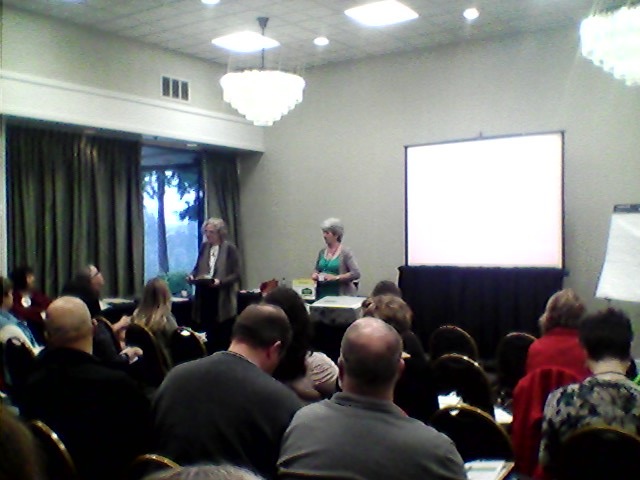
Just got back from a great farmers market association meeting in Olympia WA with what I hear was around 200 participants but seemed like double that with the ideas and networking flying around. Karen Kinney, WSFMA’s impressive Executive Director could be seen everywhere, adding content to their market bootcamp, introducing sessions, setting up table displays, and making time to chat with anyone who stopped her, like Farmers Market Coalition Executive Director Jen Cheek, or even a random consultant from New Orleans…
2015-02-08 19.27.40Jen and Karen

In many ways, Washington represents the apex of the U.S. market work right now because of the serious attention paid to building the capacity of market organizations themselves and their work on regional and national issues that benefit all markets and their communities. (California has to be exempted from any comparison as it is always is a decade or so ahead of the rest of us.)
I have found that meeting long time and full-time market professionals in Washington is not unusual, nor is finding stable and expansive market organizations across the state that offer their communities tons of resources and spend time to increase the connections between direct marketing producers and shoppers in their region. One of the indicators for the flagship market typology is the ability of the market to look “outward” and assist the larger food system or other market organizations. Flagship markets seem to abound in Washington.

There is no doubt that the WSFMA is considered one of the top (flagship?) associations in the country by most market advocates and partners with Massachusetts, Michigan, New Mexico, New York thought to be in that same tier too.
In recent years, the level of sharing that Michigan and Washington especially have done on programs such as Washington’s benefit program pilots/card technology research, its data collection and policy work and Michigan’s respected manager certification program really stand out. Pennsylvania’s PASA, although not specifically a market association, should be mentioned for its excellent service for markets in their very large state. I can also tell you that in all of my work with markets in any state, I go back to these folks time and time again for input or to ask them to share their analysis and they always deliver.
Many younger or all-volunteer associations are coming right behind in the level of resources or strategy they are offering in their state to increase market professionalism – some of the ones I am asked about regularly are Illinois, Maryland, Minnesota, Ohio, Oregon, Vermont and West Virginia. Sorry if I left any out, that was just off the top of my head…

The Vancouver Farmers Market gorgeous literature and materials on display

The Vancouver Farmers Market’s gorgeous literature and materials on display


The WSFMA market bootcamp run by WSFMA board member Ann Foster and WSFMA staff member Jennifer Brown,

The WSFMA market half-day bootcamp run by WSFMA board member Ann Foster and WSFMA staff member Jennifer Brown and assorted speakers.

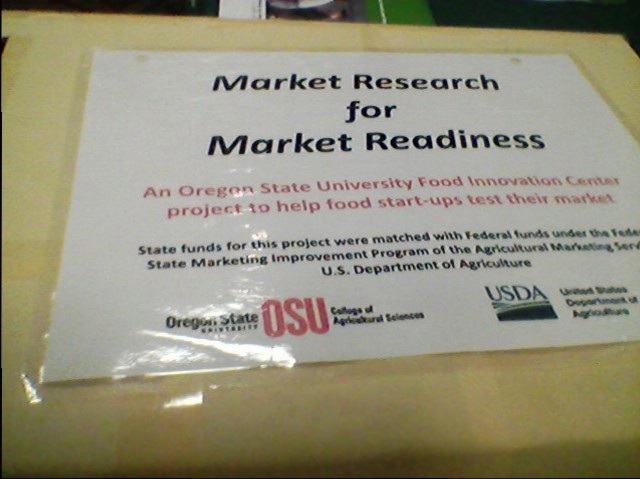
great display of a project to help start-ups test food products. They have a program at OSU to conduct surveys for producers and help them figure out the best products to get the best niche.

great display of a project to help start ups test food products. They have a program at OSU to conduct surveys for producers and help them figure out the products to get the best niche.

I saw a bunch of great resources, a few workshops and had dozens of conversations about some fascinating market projects.

Here are some:

The 2014 CSA Farming Report

List of Washington’s Top 10 most frequently purchased minimally processed F&V

Details on the pilot project for procurement of unprocessed f&v

WA Cottage Food Operations Permit

Loads of information on both MarketLink‘s new and improved services and FMC’s new replacement technology program. Amy Crone of MarketLink and Jen Cheek of FMC presented together and were ably assisted by Suzanne Briggs.

I also learned about the Moscow Idaho market, Gorge Grown’s interesting mobile market, discussed data collection with a trio of rural Oregon markets, and heard a RIVETING presentation by Washington State University Small Farms Coordinator Colleen Donovan. Colleen used her time to lead a spirited discussion with the entire room of farmers and market leaders about her survey data collected in Washington State on farm and market farmer characteristics. Donovan is an advisor to the Farmers Market Metrics work and did a great 2013 workshop for FMC that can be heard and seen on FMC’s YouTube channel. Check out her work; even though it is for Washington, her methods and analysis are vital for any and all markets to see. I left thinking (and saying): every state needs a Colleen Donovan.

So, now I’m back home with some time to experience our holidays here (Mardi Gras is Tuesday February 17 this year, and no, it’s probably not what you imagine it is…) and then to read all of those reports and keep on working inspired by the new connections and knowledge gained in Olympia.

Pine pollen powder-newest product at my farmers market

My regular sprout guy Sam has really stepped up his game with more sprouts, coconut chips (amazing snack) and soon, tree pollen. This is pine country and so the amount of pine pollen that can be gathered is tremendous; Sam tells me he bags the branches and shakes away….Pine pollen powder is the most concentrated whole food source of testosterone.. Maybe he’ll soon bring other pine products too.

images.duckduckgo
The opportunity for constant expansion of creative seasonality among local entrepreneurs is one of the reasons farmers markets remain crucial to local food systems. Go tell it on the mountain folks.

Are Farmers Market Sales Peaking? (Cuz NPR likes to say so)

Let me say first that I have only begun to read the report cited and that the authors have done some excellent research. The issue is really that outlets like NPR offer snappy headlines and a sound bite or two rather than the entire story. However, it is important that food system organizers communicate more data than that to their market community.

I’ll begin with one of the conclusions from the report:
• It is difficult to draw conclusions about the local economic impact of local foods systems because the existing literature has narrow geographic and market scope, making comparing studies complicated. Data necessary to conduct economic impact analyses are costly to obtain, and researchers have yet to agree on a standard way of accounting for the opportunity costs involved when local foods are produced and purchased or on a standard set of economic modeling assumptions. Many questions surrounding the economic impact of local foods remain unanswered and could be addressed by future research (e.g., Are local food systems good for the rural economy? Might the economic benefits of expanding local food systems be unevenly distributed?)
(The authors do mention that case studies are helpful in local food system research because of the chance for context, but warn that makes generalities difficult.)

here are some other facts from the report:

Farms selling local food through DTC marketing channels were more likely to remain in business over 2007-12 than all farms not using DTC marketing channels, according to census of agriculture data.


•The significance of local food sales totaling an estimated $6.1 billion in 2012.

For organizers (markets, CSAs, farm stands) the takeaway is clear:

1. We need to collect data and work with those researchers that also want to collect it to paint a more nuanced story of the positive impacts of these channels than were able to be included in the report. Those are not limited to: new product testing, constant cycles of introduction for eaters and producers, the opportunity for attempting small (often risky) pilots for increasing access, educational resources for youth, urban/rural connections and more.

2. That data has to be on the multiple impacts of markets, not just on direct sales. Do farmers meet other buyers (intermediate) at the market? Are other outlets dependent on the market for pick up of their goods? Is it a important way for family members to start working for the farm? What about access to shoppers using benefit program dollars-is this an area of new customer sales that DTC farmers have captured almost entirely (and influenced recent national policy?)

3. A dip in the number of new markets opening or DTC sales flattening for a time (if that is indeed the case) may mean something quite different than the implicit assertion that consumers and farmers are choosing other outlets. Factors may include weather issues, or regulatory pressures (see the fee hike suggested by King County in this story as an example) or farmers unable or unwilling to separate sales outlets when reporting data.

4. An example of how market organizers could help researchers is by gathering anecdotal info for future studies to see if DTC farmers choose autonomy and non-economic benefits over higher incomes as was suggested in the report:

The lower total household income suggests that farmers with direct sales may have had less favorable off-farm income opportunities. If true, this could provide them with an incentive to remain in business even if they have less ability or opportunity to expand production.
Higher survival rates and slower growth for those with direct sales might also be explained by different attitudes toward farm versus nonfarm work. Researchers have found evidence that nonpecuniary benefits from self-employment explain why small business owners remain in business despite earning less income (Hamilton, 2000). There is also evidence that the non-pecuniary benefits to farming (e.g., greater autonomy, independence, and lifestyle factors) are substantial (Key and Roberts, 2009). It is possible that farmers who sell directly to consumers derive greater nonpecuniary benefits from their work—perhaps they enjoy interacting with their customers. This would provide a greater incentive for them to remain in business even with lower business expansion possibilities.

    Positive impacts

•The economic benefits of farmers’ markets may also extend beyond multiplier effects, which measure short-term impacts. Lev et al. (2003), for example, found that businesses near farmers’ markets reported higher sales on market days. Not only were these additional sales found to directly support the businesses themselves, but they also generated extra tax revenue for the communities in which the markets were located. Brown (2002) found some evidence that farmers’ markets increase property values in the market district.

•Additionally, farmers’ markets can function as business incubators by providing the infrastructure necessary to build skills and gain business experience (Feenstra et al., 2003; Gillespie et al., 2007). Regular interactions can “generate and circulate knowledge that vendors might use to develop new products and creative ways of marketing them” (Hinrichs et al., 2004: 32-33). Feenstra et al. (2003), for example, explored New York, Iowa, and California farmers’ market contributions to the development of vendors’ capacity as entrepreneurs and found that 66 percent of vendors expanded an existing product line, 50 percent added a new product category, and 40 percent made new business contacts. Sales income may be less important than the skills and business experience developed through participation in farmers’ markets (Brown et al., 2007).

Direct marketing was also associated with higher survival rates among beginning farmers (columns 3 and 4, table 5). On average, beginning farmers who marketed directly to consumers had a 54.3-percent survival rate, compared to 47.4 percent for those who marketed their goods through traditional channels.
What is it about DTC sales that seem to enhance farmers’ chances of maintaining positive sales? One advantage might stem from the fact that, for a given level of sales, farmers with direct marketing purchased less machinery and land than did those with traditional marketing. According to the 2012 Census of Agriculture data, farmers who marketed directly owned $20.82 worth of machinery per dollar of sales, compared to $31.10 for those who marketed through conventional channels. Farmers selling directly to consumers also owned less land: $240 worth of land per dollar of sales, compared to $309 per dollar of sales for other farmers. Because they did not need to purchase as much machinery and land to achieve a certain level of sales, farmers with direct sales did not need to leverage as much of their wealth to obtain financing. This is confirmed by the census data, which show that farmers with direct sales had annual interest payments of only $7.85 per $1,000 of owned assets, compared to $10.55 for those with no direct sales. A lower debt-to-asset ratio should indicate a better ability to repay loans and has been shown to reduce the risk of small business failure (Tveteras and Eide, 2000; Strotmann, 2007; Fotopoulos and Louri, 2000).


Are Farmers Market Sales Peaking? That Might Be Good For Farmers : The Salt : NPR.

the actual USDA report

Spreading the Gospel of Food Preservation Across the U.S. – NYTimes.com

Hey market folks-why not get this lady to your market in 2015?

It’s the 40-foot mobile office of Tara Whitsitt, 29, a nomadic evangelist for fermented foods who is camping out in Queens for the winter.

A soft-spoken Texas native who refers to her cross-country travels as Fermentation on Wheels, Ms. Whitsitt has spent the past 18 months motoring around the United States in the bus, a former Michigan State Police vehicle outfitted with a kitchen and a wood stove and laden with five-gallon jugs of mint-lemon balm wine, jars of radish-turmeric sauerkraut and plenty of sourdough starter. Ms. Whitsitt earns a living largely by holding workshops in which she teaches old-fashioned methods of food preservation.

Spreading the Gospel of Food Preservation Across the U.S. – NYTimes.com.

The Difference Choosing Ugly Vegetables Can Make – CityLab

If “grow it to sell it” was the revolutionary idea in farmers markets during the 1970s-1990, and “healthy food for everyone” was the call to arms for the last 25 years, then “use it all” has to be the next big idea for food system organizers. Keeping food out of the waste stream by encouraging use of the ugly food items is such a simple and elegant idea that it may very well finally connect the entrepreneurial to the environmental in food organizing.

Actually, it supports a corresponding and extraordinary idea that my pal Poppy Tooker created over a decade ago for her New Orleans/Gator region Slow Food work: “eat it to save it.”

(check out the previous post too, about the Farmer Foodshare project in North Carolina which addresses getting good food out of the garbage bin and to more eaters.)

The Difference Choosing Ugly Vegetables Can Make – CityLab.

Open source gleaning model helps NC market farmers address hunger issues

I had the great pleasure to become acquainted in 2012 with this innovative program that is closely linked to the North Carolina farmers markets and individual farmers to get food flowing to more people- but this model made sure that it was NOT at the expense of farmers businesses. Their Donation Stations allows customers to buy an extra share to donate to those in need and also allowed farmers credit for any donations that they made. Their wholesale work to get more agencies to buy regional food is also extremely important.

Open source model helps NC solve hunger problem | opensource.com.