These infographics should spark some ideas among vendors and among shoppers:
Author: DW
Hall of Fame Market Leaders start their “farewell tour” year
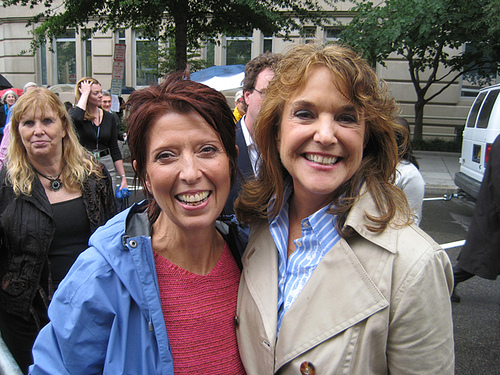
Back when I began working at Market Umbrella, our founder, Richard McCarthy gave me the names of a few people that he held in high esteem on market issues that I might check in with regularly. Interestingly, many of these folks led the “town square” phase of markets that Market Umbrella belongs with as well (eras that some of you have heard me talk about over the years.) Some of those names include:
Donita Anderson North Union Farmers Market, Cleveland OH
Chris Curtis, Seattle Neighborhood Farmers Markets, Seattle WA
Pam Roy (Farm to Table New Mexico)
Greenmarket NYC (many, many staff on that list. back then, Gabrielle Langholtz and Kelly Verel nee Williams, now of PPS, come to mind.)
NY leaders Diane Eggert and Bob Lewis
Massachusetts leader Jeff Cole
and two he always spoke of with great affection: Bernie Prince and Ann Yonkers at Fresh Farm in DC. I met Ann first at a Dallas TX farmers market meeting where we were both invited to speak. Ann was (and is) a woman of great style and well-formed opinions and those qualities along with her belief in markets and food systems led the energy in that room and, I am sure many others. Every time I came to DC, she and Bernie took the time out of their incredibly busy schedules to sit and talk with me. I remember once driving around MD and DC with Ann as she generously showed me her markets and we talked of mobile markets, organic farming and market logistics for most of the afternoon. In many ways, she always reminded me of Richard-both lead with their charisma and their strength of character but can also discourse on dozens of subjects easily. You leave their presence with clarity of purpose and gratitude to have leaders like this around.
On to Bernie…I didn’t know her as well in those early days, but then I began to talk more with her when she joined the Farmers Market Coalition board (and ultimately led it as its President) during its transition from its founding board and then the transition from its founding Executive Director through its present days of more staff and more advocacy. Slowly, I realized that she was a indefatigable worker and a champion strategist who would always take the time to share what she knew with her peers when asked. Whenever I visited her markets, she was picking up trash or chalking a kids game on the ground or most of the time, introducing people to a vendor through a very detailed and empathetic outline of their business history, both in and out of the market. Then, we’d often have a chat about plans she and Ann had to add markets or to raise funds or to build capacity and I’d leave sort of stunned by what they had and would continue to accomplish. I have had the privilege of hearing Bernie present more than a few times over the years and have always enjoyed basking in her energy and passion during the talk and then watching her afterwards with the newer market leaders who crowd around her, soaking up her advice and support. Her warmth and her great joy are so part of her regular personality that as soon as I just hear her voice, my mood is elevated.
As for FMC, I know how much she has personally given in time and talent and I always appreciated her constant support of the staff and the board. In my estimation, FMC owes its survival to two people more than any other: Stacy Miller and Bernie Prince, and their deep affection and respect for each other made that survival possible and set the tone for FMC as a whole. The story linked below promises that Bernie may very well stay on at FMC, which I fervently hope happens. (FYI-Sharon Yeago, Liz Comiskey and Jen O’Brien Cheek are sitting very close behind those two in credit due at FMC….)
Ann and Bernie have done so much with the food system and farmers markets in DC, Maryland and Virginia that (as I wrote on FMC’s Facebook page) it cannot be properly calculated. I will leave it to their peers at Fresh Farm and I assume civic and food leaders across the area who will take the time to honor them. I hope all of you will have the chance to meet these two giants before they hand over their market bell(s) and to thank them for all that they have given to us and will give to us in their next leadership role in our food and farming system.
What the Frack? Beginning Farmers’ Energy and Pollution Dilemma – Hobby Farms
An important post for markets to share with their farmers.
What the Frack? Beginning Farmers’ Energy and Pollution Dilemma – Hobby Farms.
Steep farmers market permit increases fought by market community
“The proposed increase for 2015 was submitted by the Department of Environmental Health Services (EHS) at Public Health – Seattle and King County to the Board of Health back in September in 2014.
Costs for market coordinators will rise from $502 to $1,162 and individual vendor costs will rise from $281 to $400 per market.
According to the King County Health Services website, the fees have not changed since 2012 and they no longer cover the cost of providing the regulatory and educational services that “protect the public’s health.”
The Board of Health is currently determining what the new fees will be through the use of the following determination: fee = hourly rate x time. The hourly rate refers to the cost per hour for doing plan reviews, inspections, processing permit applications in addition to supervision and department and county overhead. Time references the time each activity takes for each permit category which EHS tracks in actual time spent. “For some permit categories, the proposed fees are much higher for this reason,” writes EHS on the King County Health Services website.
(January 2015 Update. Information gathered from within the market community):
King County Council told Public Health to give their fee structure a rethink, and the Board of Health postponed voting on the proposed fee hikes until their January meeting, at least. In the meantime, markets and vendors are being advised to renew their permits under existing fee rates now for 2015, to sidestep any potential fee hikes.The public and local media has been extremely supportive.
UPDATE The board of health’s fee subcommittee proposed Thursday, Jan. 15, farmers market and temporary event fees remain flat this year to allow the inspection program to be redesigned to include less services to bring the cost down while maintaining adequate food safety. The board is expected to vote on this proposal in February…
The Fundraising Summit
Attend The Fundraising Summit from Anywhere. Free.
Five days of free online seminars delivered by the world’s top fundraising professionals.
Join your peers from around the world for five days of insight, instruction and inspiration from the world’s best speakers. Learn new ways to tackle your most pressing problems. Learn best practices from the best in national and international fundraising. (Plus, get paid for referring customers to The Fundraising Summit.) Sessions are free, but only for 24 hours. Register today. Learn how the Summit works, and get answers to your questions, by reading our Frequently Asked Questions.
The Fundraising Summit.
Call for Papers for 2015 Farm to Table International Symposium

Call for Papers
Farm to Table International (F2Ti), a three-day, multi-track symposium on the policy and practice of food and drink, is currently accepting papers for its 3rd annual program, taking place August 8-10, 2015 at the New Orleans Ernest N. Morial Convention Center. F2Ti features the brightest thought leaders and leading practitioners in the burgeoning farm-to-table movement. F2Ti explores the cultivation, distribution, and consumption of food and drink sourced locally to globally. It takes place in tandem with the Louisiana Restaurant Association’s Annual Foodservice & Hospitality EXPO, an event attracting food and beverage professionals from across the country.
This year’s theme, “A Feast for the Senses,” spotlights the sensual aspects of food and drink at every stage of the agricultural-culinary cycle. Topics will include, but are not limited to, best practices in urban farming, bringing products to market, sourcing locally, enhancing sustainability, and the latest trends and developments in the industry, including food science, security, and safety.
Proposals for educational sessions should correspond to the current theme, “A Feast for the Senses,” and should be designed to fit one of the following educational tracks:
• Crop to Cup (Brewing, Distilling, Vinting, plus non-alcoholic beverages)
• Farming and Production
• Food and Beverage Journalism and Media
• Farm to School
• Food Innovation (Science, Technology, Trends, etc.)
Interested presenters should refer to the conference website at www.F2T-int.com for additional information regarding submission requirements as well as the consideration and selection process.
The deadline for submitting presentations for review is February 20, 2015. Presentations for the F2Ti program will be selected by the Farm to Table International Executive Advisory Council.
F2Ti is produced by the New Orleans Ernest N. Morial Convention Center in partnership with the SoFAB Institute and the LSU AgCenter.
Christmas markets and department store windows: an example of distractive trade – Metropolitics
Just read a fascinating post from one of my favorite European urban spaces sites, Metropolitique, on the use of social activities and cultural visuals at holiday time in shopowners “retailtainment” events. I had some random thoughts that relate to markets and placemaking to share after reading it:
The writers make the point that even in this day of e-commerce, these physical “distractions” at holiday time are meaningful to so many. I remember my trips to downtown Cleveland to share my list with Santa and to see the decorations around Public Square in the 1960s. You can see some of my hometown holiday memories in the movie “A Christmas Story” which filmed there, although I was never shoved down the slide by an angry Santa like Ralphie.

Interestingly, within the iconic Cleveland department store Higbees that is shown in the movie, there was a “Twigbee” shop that was a child-sized tent/area of low-priced goods to “shop” for parents and siblings but it was really more of a way to create some shopping entertainment for kids so the parents could sneak away and shop for gifts. I almost recreated Twigbees within the fair trade holiday market we ran in New Orleans for 5 years, “Festivus, the Holiday Market for the Rest of Us” but never got around to designing that before ending it in 2007.
Actually, Festivus was a great example of this retailtainment idea, as we had many non-shopping activities including the “Airing of the Grievances” and the “Trade a Skill” corner.
—————————-
here’s an excerpt from the post:
To attract consumers by offering a distraction, department stores have not only established the Santa Claus parade, they also used their windows like theater scenes to create stories with dolls, mannequins and any decor around a theme. Similarly, small traders, often together in an association, decorate their windows while funding in part the decoration of the neighborhood. They also go up promotional operations, resulting in a more or less long-term the busy downtown district. The cities themselves seek to take advantage of this festive time when installing or touting their Christmas markets.
my thoughts:
The best example of the holiday retailtainment in the US these days is most likely the Macy’s Thanksgiving parade in NYC, but almost all cities use decorations along main streets and in their shopping areas to draw people in and the benefits are likely significant to the shops and probably for the cities themselves as residents rate their satisfaction partially based on these quality of life events.
Certainly among market types, “boutique/niche” markets have trader territories and could benefit from deeper linkages to the shops and heritage sites around them. I could see Santa runs starting from December markets or holiday decoration craft corners at markets and so on…
——————————-
Additionally in this piece, I appreciated the definition of the Main Street versus the European square. In many cases, farmers markets in the US were set up to resemble those European squares and in others, to retain more of the characteristics of a Main Street:
The main street in North America is emblematic of the city: it is a foundation, but it also has a high social and cultural force since it is often perceived as the street along which would meet each new wave of immigrants. Indeed, while European cities were built around squares, North American cities were built along the main street, the axes of peri-central neighborhoods still largely identified as ethnic neighborhoods, leading to it.
———————-
Finally, this is an important detailed definition to consider for boutique/niche markets or even flagship markets to consider:
*Traders territories are more or less widespread territorial units consist of trade places: shopping centers together under one roof shopping malls, recreational activities and a fairly wide range of restoration; central areas of cities, with the natural unit defines a course combining heritage and shopping – department stores are connected by a footpath winding through the shopping areas, along which are highlighted remarkable facades of long-established stores. Traders territories and form a symbolic system by referring to cultural references (architecture, urban planning, etc.) and serve as spatial cues, social and cultural. In the case of distractive territories, architecture and the use of heritage references , cinematographic or bookish must foster with clients more or less extensive the entertainment sensation . They are meaningful to consumers attending, for the staging of the place, sometimes the dramatization of the site and product mix allowing everyone (resident, visitor, tourist) to know that he is indeed in a space dedicated to the valuation of a territory, an event, a lifestyle.
Happy Holidays everyone.
Still time to register for the Southern Sustainable Agriculture Working Group meeting in Mobile AL, January 14 – 17 2015
 Early bird registration for the Southern Sustainable Agriculture Working Group is still open for a little bit longer (2 more days) through December 21st. Register online, or download a registration form and get it postmarked no later than Dec 21st for the lowest conference rates. They accept, via mail, checks made payable to Southern SAWG. They accept, via mail and online, VISA, Master Card, American Express and Discover credit cards. Pre-registration continues through midnight on January 7th. After that, registration will be on location in Mobile.
I will be leading two workshops and also moderating an open discussion (information exchange) this year. Find me here:
Information Exchange:
Friday, 10:45 a.m. – Noon
Using EBT, “Double Coupon” and Other Programs at Farmers Markets – Does your market employ the EBT, FMNP, Food Insecurity Nutrition Incentive Program (FINIP) or WIC programs? Do you have a double coupon incentive program for SNAP, WIC or SFNMP? Discuss technology issues and share best practices for implementing these programs at markets.
Workshops:
Saturday, 10:30 a.m. – 12:00 noon
Why Farmers Markets? Learn to Communicate Their Value to Your Community – Making the case for farmers markets to farmers, shoppers and community leaders is crucial for continued community support, yet most markets struggle with this task. Learn how to capture and communicate meaningful measures of your market’s success. Using exercises and worksheets from the Farmers Market Metrics project, this session will give you practical examples of simple and effective data collection techniques that you can use for your market. Darlene Wolnik, Helping Public Markets Grow (LA) and Sarah Blacklin, NC Choices (NC).
Saturday 3:30-5:00 pm
Farmers Markets as Business Incubators: How Market Managers Can Help Improve Their Vendors’ Businesses – Increasingly competitive market outlets for local food means that the top farmers often jump from market to market. This session will offer practical strategies for market managers and board members on identifying and understanding their anchor vendors and their needs, as well as addressing the challenges of retaining new vendors. Darlene Wolnik, Helping Public Markets Grow (LA) and Sarah Blacklin, NC Choices (NC).
2015 Conference Program — Southern Sustainable Agriculture Working Group.
Early Adopters Are Great, But They Aren’t Most Customers
Here is an extremely important area for market leaders and vendors to consider: Those lovely early adopters to our markets were a small, unique set and so attracting the next 97% will require some different tools and strategies. Often, I hear market vendors mildly complaining about the type of shopper the market currently has, bemoaning their lack of knowledge about the market and products, which certainly can be frustrating. It often seems to be a case of expecting their shoppers to always resemble those early adopters which they simply will not. However, it doesn’t mean that the newbies can’t become as dedicated and as passionate about buying regional goods from local producers. It just means that everyone needs to pitch in and help identify the characteristics of the shoppers that are coming now and share that knowledge with their vendors. Are vendors still putting up signs with the name and location of their farm? Are all prices posted? Do they welcome new faces and take the time to answer the same question for the hundredth or thousandth time? How about you? Do you welcome shoppers? Step in and answer a question for a vendor when he or she is busy and a customer is standing uncertainly to the side?
(Even this article is focused more on technology startups, but few of the details are useful for grassroots organizations as well.)
Entrepreneur article
104 Fascinating Social Media and Marketing Statistics for 2014 (and 2015)
some of the ones that caught my eye for food organizers:
There are 76 million millennials (born between 1981 and 2000) in the U.S. — 27% of the total population.
63% of millennials say they stay updated on brands through social networks; 51% say social opinions influence their purchase decisions; and 46% “count on social media” when buying online.
37% of marketers say blogs are the most valuable content type for marketing.
Pinterest grabs 41% of the e-commerce traffic compared to Facebook’s 37%. Food is the top category of content on Pinterest with 57% of its user base sharing food-related content
“Interesting content” is one of the top three reasons people follow brands on social media.
17% of marketers plan to increase podcasting efforts this year.
47% of Americans say Facebook is their #1 influencer of purchases.
70% of marketers used Facebook to gain new customers.
104 Fascinating Social Media and Marketing Statistics for 2014 (and 2015).
Sow-it-Forward-Program

A screen shot of the introductory slide.
Check out this 3-4 minute slide show that makes a great case for supporting Kitchen Gardeners International’s work:
Sow-it-Forward-Program.
Please pass along the slideshow to those that benefit from it and take a look at their site while you’re at it.
Food Safety Modernization Act (FSMA) | Farmers Market Coalition
Some extremely important advocacy has been done by NSAC and FMC on the need for more edits to the FSMA in order for family farms and small business producers to be able to survive and thrive. Their recommendations include needed edits to the rules for farmers markets to be able to manage risk and yet to be allowed to encourage innovation to happen. Please read their updates and analysis on the FSMA and get your comments in by December 15.
Food Safety Modernization Act (FSMA) | Farmers Market Coalition.
Food Systems for Healthy Places
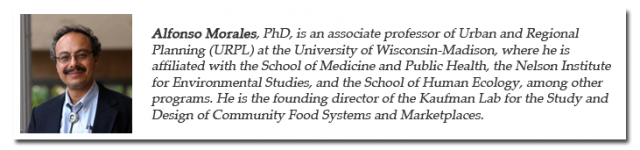
Great post by Dr. Morales on some of his current project work, including his perspective on the Indicators for Impacts AFRI-funded project that we both are working on through 2016.
Food Systems for Healthy Places | BEPHC | Georgia Institute of Technology | Atlanta, GA.
Echoing Green Fellowship
Successful applicants not only present an innovative way of addressing social issues, but also explain why they as individuals have what it takes to succeed. Echoing Green is not a grant-making organization. We are a fellowship program because we believe in the importance of the individual social entrepreneur as well as his/her project. As such, we look at both the applicant and the applicant’s idea.
A successful applicant to the Echoing Green Fellowship not only presents an innovative way of addressing a social issue but also explains why they have what it takes to create change. Download our Selection Criteria Guide and visit echoinggreen.org/apply to learn more about what we look for when we review applications.
Remember, the 2015 Echoing Green Fellowship application opens on Tuesday, December 2, 2014! Make sure you’re ready: download our Short Answer Question Help Guide to start preparing your answers now.
 Helping Farmers Markets Grow