FMC’s Free SNAP EBT Equipment Program is Open

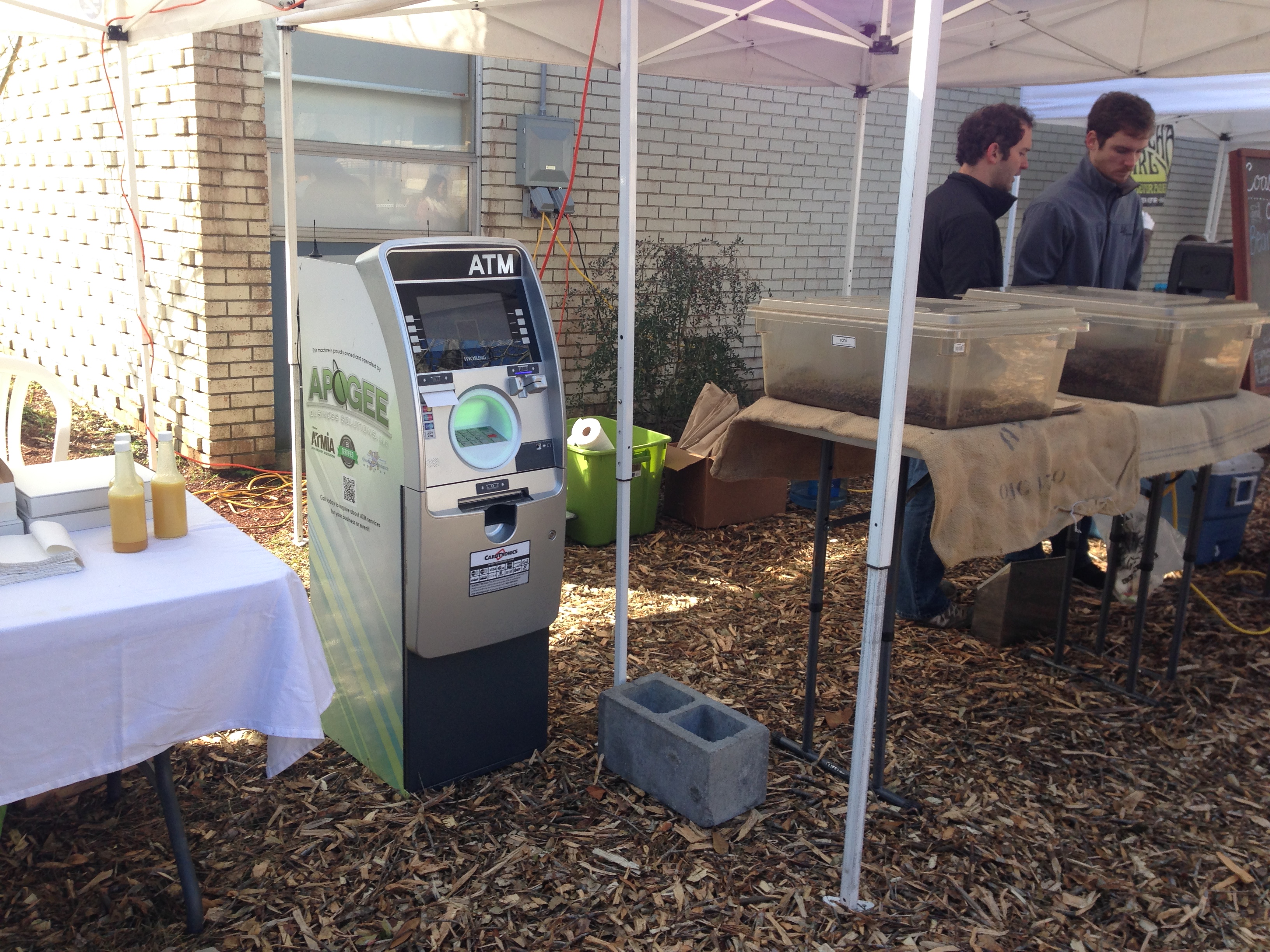
As you may have heard, the United States Department of Agriculture (USDA) Food and Nutrition Service (FNS) partnered with the Farmers Market Coalition (FMC) to provide eligible farmers markets and direct marketing farmers with electronic benefit transfer (EBT) equipment necessary to process Supplemental Nutrition Assistance Program (SNAP) benefits.

WHAT


FMC will cover the costs of purchasing or renting SNAP EBT equipment and services (set-up costs, monthly service fees, and wireless fees) for up to three years. After their application has been approved, eligible farmers and farmers markets will choose their own SNAP EBT service provider from a list of participating companies. Transaction fees (for SNAP EBT, credit, and debit payments) will not be covered.

WHEN


The application period will open at 9:00am EST Tuesday, February 17th, 2015. This is a first-come, first-serve opportunity, which will be over when all the funds have been allocated. Don’t wait!

WHO


SNAP-authorized farmers markets and direct marketing farmers (who sell at one or more farmers markets) are eligible for funding if they became authorized before Nov. 18, 2011, AND fall into one of the following categories:

A. They do not currently possess functioning EBT equipment; OR

B. They currently possess functioning EBT equipment, but received
that equipment before May 2, 2012.

Wondering what qualifies as ‘not currently possessing functioning EBT equipment?

Markets and farmers do not currently possess functioning EBT equipment if:

They currently rely on manual/paper vouchers to accept SNAP,
They do not currently accept SNAP and have never possessed functioning SNAP EBT equipment, or
They do not currently accept SNAP because their EBT equipment is
:
Damaged beyond repair.
Non-operational because their SNAP EBT service provider no longer offers SNAP EBT processing in their state.
Stolen or lost.
For more information on the program, including frequently asked questions, an eligibility chart, background information and application instructions, visit them at farmersmarketcoalition.org/programs/freesnapebt
found here.

CSA FARMS CELEBRATE NATIONAL CSA SIGN-UP DAY FEBRUARY 28

(By the way, brilliant marketing idea to explain that this CSA “event” is scheduled on what has been the most popular CSA sign up day of the year in the past. What similar idea could the farmers market field adopt I wonder?)

PITTSBURGH, PA (February 23, 2015): Farms from around the country are celebrating National CSA Sign-Up Day on February 28. The day encourages food consumers to buy a share of their local farm’s harvest for the 2015 season, a buying model known as Community Supported Agriculture, or CSA.

CSA has become an important model to support local agriculture since it was introduced to the United States in the 1980s and since grown to over 6,000 farms across the country. To join a CSA, members buy a share of the harvest in the Winter and Spring and then get a box of local produce each week throughout the growing season.

“CSAs are the most authentic connection between a farmer and eater available. CSA members get the freshest, high quality, seasonal local produce, but they also get a direct connection to their farmer. This model is economically important to farmers, especially small and beginning farmers, because they can grow with confidence knowing that they have a market for their produce ahead of time.”, says Simon Huntley from Small Farm Central, a technology company that works with CSA farms across the country, and the creator of National CSA Sign-up Day.

February 28th was chosen as National CSA Sign-up Day because this day is the most popular day to sign up for CSA shares according to the 2014 CSA Farming Report. Buying a CSA share in late winter is important because farmers are making the capital investments for this year’s harvest now and the CSA model means they do not need to finance these costs with costly credit.

“The CSA model was what allowed me to start my own farm business at age 23. Without the sale of CSA shares, I would not have been able to buy seeds, potting soil, fertilizer, or anything else. Six years later, my business is still going strong, and it’s because of the CSA. Access to capital in the off-season; the meaningful connections between farmers and CSA members; the sense of ownership and pride members feel about their CSA farms–all these things add up to healthy farms, businesses, and communities. The CSA model is good for everybody,” says Laura Olive Sackton, owner of First Root Farm in Concord, Massachusetts.

For eaters looking to join a CSA, a searchable database of CSA farms is available at localharvest.org.

To learn more about National CSA Sign-Up Day and the CSA model, visit http://www.csasignupday.com.

For more information, please contact:

Small Farm Central
Simon Huntley
simon@smallfarmcentral.com
http://www.smallfarmcentral.com
412-567-3864

###

S.F. property owners to get tax break from creating urban farms

Under the new law, the five-year contract stays with the property even if it’s sold, but if an owner wants to get out of it they can pay back taxes and interest. San Francisco’s ordinance limits the tax savings of individual property owners to $25,000 per year; if the savings are higher, an official review is necessary. City officials in Sacramento, Fresno, San Jose and San Diego have expressed interest, but haven’t yet passed the necessary local legislation.

Los Angeles is close to doing that, and Clare Fox of the Los Angeles Food Policy Council estimates there are 8,600 parcels within Los Angeles city limits that qualify.

How nice to see so many benefits listed for growing food:
“It’s about food security and food access, but it’s also about transforming blighted vacant places that are prone to illegal dumping into community places,” she said.
“It’s a way to beautify the neighborhood and stabilize real estate values. Plus, there are the environmental benefits.”

S.F. property owners to get tax break from creating urban farms – SFGate.

Protestors rally in support of Golden Gate farmers market

FYI- this is Florida and not northern California..

A few issues that I would like more information about from this story: one, if the market and the county had communicated in the past and two, how many local people think that flea market goods have too much room at this market and if they agree that a farmers market should not contain those goods. I’m not advocating for flea market goods at markets (my own markets were very strict about any non-food goods) but whether it is true that flea market goods are taking up most of the space in this market and whether those flea market goods have a place in farmers markets should be up to the local community, which certainly includes the municipality in question, but doesn’t mean the commissioners should decide these issues alone. It is important to note that in many cases across the Americas, staple markets have a place in many communities and can be a very useful type of market for small rural communities or for immigrant communities.

Lastly, the rule to only allow open-air markets to operate only 28 days per year seems awfully restrictive. I wonder when that was passed in Florida and how many counties have that rule? And is it to restrict flea markets but ends up restricting farmers markets too? I do know from my pals in farmers markets in Florida that the use of the term farmers market is all over the place across the state; resellers use the term in normal practice and of course, in a state like Florida that has massive agricultural exports, small farms and direct marketing are not likely to be valued as highly as in other states. Of course, California does have a thriving farmers market system, but also has a very different political climate and history.

For all of these issues, this is why I advocate for formal rules that allow for constant transparency and clarity in market governance. Rules that explain why, when, how and for whom a market operates can help reduce these issues before they get to crisis stage. In addition, this is also why I hope Farmers Market Coalition and their partners are successful in building a simple and usable data collection system; If all markets could gather a few comparable metrics each year, these issues might be more easily diverted or at least, add facts to lessen a charged situation.

The controversy started when Collier County commissioner Tom Henning used the word “gypsy” to describe vendors at the Golden Gate Community Center market. Commissioner Henning wanted to protect a business that complained the farmers market shoppers were taking up his parking spots….
While county commission retracted their initial vote to shut the market down, their problems aren’t over.

County laws say open-air markets can only operate 28 days a year. But vendors at the farmers market want to stay open all year. A petition with 1,300 signatures will be presented at a county commission meeting on Tuesday.
this from another
Taylor said the county’s issue is that it’s not a farmer’s market, but more of a flea market and it appears to be disrupting local businesses.

Protestors rally in support of Golden Gate farmers market – NBC-2.com WBBH News for Fort Myers, Cape Coral & Naples, Florida.

Odds and ends from the Washington State Farmers Market Association meeting

View from the conference dining room

View from the conference dining room

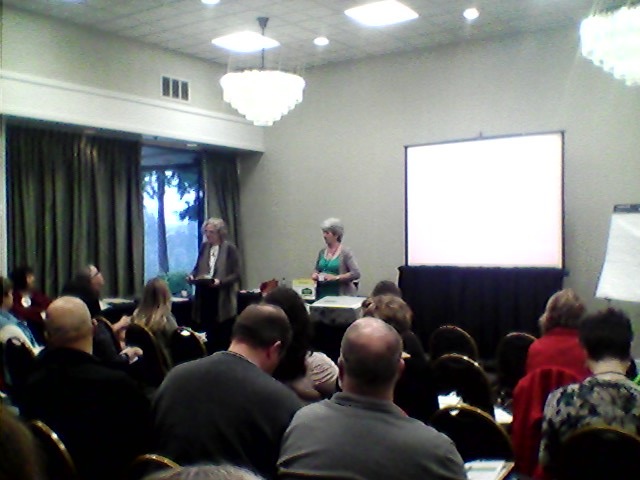
Just got back from a great farmers market association meeting in Olympia WA with what I hear was around 200 participants but seemed like double that with the ideas and networking flying around. Karen Kinney, WSFMA’s impressive Executive Director could be seen everywhere, adding content to their market bootcamp, introducing sessions, setting up table displays, and making time to chat with anyone who stopped her, like Farmers Market Coalition Executive Director Jen Cheek, or even a random consultant from New Orleans…
2015-02-08 19.27.40Jen and Karen

In many ways, Washington represents the apex of the U.S. market work right now because of the serious attention paid to building the capacity of market organizations themselves and their work on regional and national issues that benefit all markets and their communities. (California has to be exempted from any comparison as it is always is a decade or so ahead of the rest of us.)
I have found that meeting long time and full-time market professionals in Washington is not unusual, nor is finding stable and expansive market organizations across the state that offer their communities tons of resources and spend time to increase the connections between direct marketing producers and shoppers in their region. One of the indicators for the flagship market typology is the ability of the market to look “outward” and assist the larger food system or other market organizations. Flagship markets seem to abound in Washington.

There is no doubt that the WSFMA is considered one of the top (flagship?) associations in the country by most market advocates and partners with Massachusetts, Michigan, New Mexico, New York thought to be in that same tier too.
In recent years, the level of sharing that Michigan and Washington especially have done on programs such as Washington’s benefit program pilots/card technology research, its data collection and policy work and Michigan’s respected manager certification program really stand out. Pennsylvania’s PASA, although not specifically a market association, should be mentioned for its excellent service for markets in their very large state. I can also tell you that in all of my work with markets in any state, I go back to these folks time and time again for input or to ask them to share their analysis and they always deliver.
Many younger or all-volunteer associations are coming right behind in the level of resources or strategy they are offering in their state to increase market professionalism – some of the ones I am asked about regularly are Illinois, Maryland, Minnesota, Ohio, Oregon, Vermont and West Virginia. Sorry if I left any out, that was just off the top of my head…

The Vancouver Farmers Market gorgeous literature and materials on display

The Vancouver Farmers Market’s gorgeous literature and materials on display


The WSFMA market bootcamp run by WSFMA board member Ann Foster and WSFMA staff member Jennifer Brown,

The WSFMA market half-day bootcamp run by WSFMA board member Ann Foster and WSFMA staff member Jennifer Brown and assorted speakers.

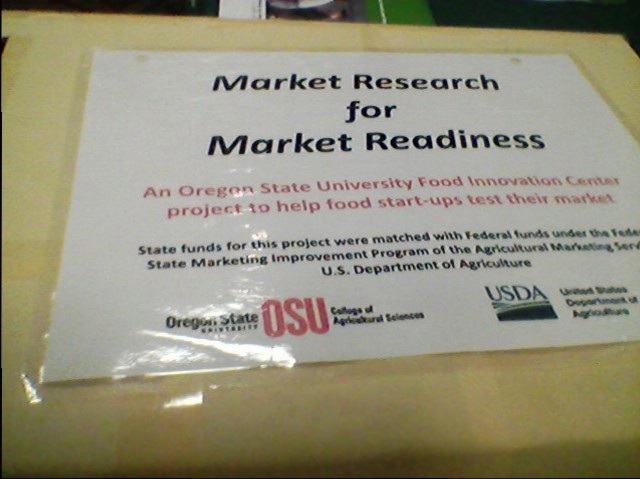
great display of a project to help start-ups test food products. They have a program at OSU to conduct surveys for producers and help them figure out the best products to get the best niche.

great display of a project to help start ups test food products. They have a program at OSU to conduct surveys for producers and help them figure out the products to get the best niche.

I saw a bunch of great resources, a few workshops and had dozens of conversations about some fascinating market projects.

Here are some:

The 2014 CSA Farming Report

List of Washington’s Top 10 most frequently purchased minimally processed F&V

Details on the pilot project for procurement of unprocessed f&v

WA Cottage Food Operations Permit

Loads of information on both MarketLink‘s new and improved services and FMC’s new replacement technology program. Amy Crone of MarketLink and Jen Cheek of FMC presented together and were ably assisted by Suzanne Briggs.

I also learned about the Moscow Idaho market, Gorge Grown’s interesting mobile market, discussed data collection with a trio of rural Oregon markets, and heard a RIVETING presentation by Washington State University Small Farms Coordinator Colleen Donovan. Colleen used her time to lead a spirited discussion with the entire room of farmers and market leaders about her survey data collected in Washington State on farm and market farmer characteristics. Donovan is an advisor to the Farmers Market Metrics work and did a great 2013 workshop for FMC that can be heard and seen on FMC’s YouTube channel. Check out her work; even though it is for Washington, her methods and analysis are vital for any and all markets to see. I left thinking (and saying): every state needs a Colleen Donovan.

So, now I’m back home with some time to experience our holidays here (Mardi Gras is Tuesday February 17 this year, and no, it’s probably not what you imagine it is…) and then to read all of those reports and keep on working inspired by the new connections and knowledge gained in Olympia.

Pine pollen powder-newest product at my farmers market

My regular sprout guy Sam has really stepped up his game with more sprouts, coconut chips (amazing snack) and soon, tree pollen. This is pine country and so the amount of pine pollen that can be gathered is tremendous; Sam tells me he bags the branches and shakes away….Pine pollen powder is the most concentrated whole food source of testosterone.. Maybe he’ll soon bring other pine products too.

images.duckduckgo
The opportunity for constant expansion of creative seasonality among local entrepreneurs is one of the reasons farmers markets remain crucial to local food systems. Go tell it on the mountain folks.

Are Farmers Market Sales Peaking? (Cuz NPR likes to say so)

Let me say first that I have only begun to read the report cited and that the authors have done some excellent research. The issue is really that outlets like NPR offer snappy headlines and a sound bite or two rather than the entire story. However, it is important that food system organizers communicate more data than that to their market community.

I’ll begin with one of the conclusions from the report:
• It is difficult to draw conclusions about the local economic impact of local foods systems because the existing literature has narrow geographic and market scope, making comparing studies complicated. Data necessary to conduct economic impact analyses are costly to obtain, and researchers have yet to agree on a standard way of accounting for the opportunity costs involved when local foods are produced and purchased or on a standard set of economic modeling assumptions. Many questions surrounding the economic impact of local foods remain unanswered and could be addressed by future research (e.g., Are local food systems good for the rural economy? Might the economic benefits of expanding local food systems be unevenly distributed?)
(The authors do mention that case studies are helpful in local food system research because of the chance for context, but warn that makes generalities difficult.)

here are some other facts from the report:

Farms selling local food through DTC marketing channels were more likely to remain in business over 2007-12 than all farms not using DTC marketing channels, according to census of agriculture data.


•The significance of local food sales totaling an estimated $6.1 billion in 2012.

For organizers (markets, CSAs, farm stands) the takeaway is clear:

1. We need to collect data and work with those researchers that also want to collect it to paint a more nuanced story of the positive impacts of these channels than were able to be included in the report. Those are not limited to: new product testing, constant cycles of introduction for eaters and producers, the opportunity for attempting small (often risky) pilots for increasing access, educational resources for youth, urban/rural connections and more.

2. That data has to be on the multiple impacts of markets, not just on direct sales. Do farmers meet other buyers (intermediate) at the market? Are other outlets dependent on the market for pick up of their goods? Is it a important way for family members to start working for the farm? What about access to shoppers using benefit program dollars-is this an area of new customer sales that DTC farmers have captured almost entirely (and influenced recent national policy?)

3. A dip in the number of new markets opening or DTC sales flattening for a time (if that is indeed the case) may mean something quite different than the implicit assertion that consumers and farmers are choosing other outlets. Factors may include weather issues, or regulatory pressures (see the fee hike suggested by King County in this story as an example) or farmers unable or unwilling to separate sales outlets when reporting data.

4. An example of how market organizers could help researchers is by gathering anecdotal info for future studies to see if DTC farmers choose autonomy and non-economic benefits over higher incomes as was suggested in the report:

The lower total household income suggests that farmers with direct sales may have had less favorable off-farm income opportunities. If true, this could provide them with an incentive to remain in business even if they have less ability or opportunity to expand production.
Higher survival rates and slower growth for those with direct sales might also be explained by different attitudes toward farm versus nonfarm work. Researchers have found evidence that nonpecuniary benefits from self-employment explain why small business owners remain in business despite earning less income (Hamilton, 2000). There is also evidence that the non-pecuniary benefits to farming (e.g., greater autonomy, independence, and lifestyle factors) are substantial (Key and Roberts, 2009). It is possible that farmers who sell directly to consumers derive greater nonpecuniary benefits from their work—perhaps they enjoy interacting with their customers. This would provide a greater incentive for them to remain in business even with lower business expansion possibilities.

    Positive impacts

•The economic benefits of farmers’ markets may also extend beyond multiplier effects, which measure short-term impacts. Lev et al. (2003), for example, found that businesses near farmers’ markets reported higher sales on market days. Not only were these additional sales found to directly support the businesses themselves, but they also generated extra tax revenue for the communities in which the markets were located. Brown (2002) found some evidence that farmers’ markets increase property values in the market district.

•Additionally, farmers’ markets can function as business incubators by providing the infrastructure necessary to build skills and gain business experience (Feenstra et al., 2003; Gillespie et al., 2007). Regular interactions can “generate and circulate knowledge that vendors might use to develop new products and creative ways of marketing them” (Hinrichs et al., 2004: 32-33). Feenstra et al. (2003), for example, explored New York, Iowa, and California farmers’ market contributions to the development of vendors’ capacity as entrepreneurs and found that 66 percent of vendors expanded an existing product line, 50 percent added a new product category, and 40 percent made new business contacts. Sales income may be less important than the skills and business experience developed through participation in farmers’ markets (Brown et al., 2007).

Direct marketing was also associated with higher survival rates among beginning farmers (columns 3 and 4, table 5). On average, beginning farmers who marketed directly to consumers had a 54.3-percent survival rate, compared to 47.4 percent for those who marketed their goods through traditional channels.
What is it about DTC sales that seem to enhance farmers’ chances of maintaining positive sales? One advantage might stem from the fact that, for a given level of sales, farmers with direct marketing purchased less machinery and land than did those with traditional marketing. According to the 2012 Census of Agriculture data, farmers who marketed directly owned $20.82 worth of machinery per dollar of sales, compared to $31.10 for those who marketed through conventional channels. Farmers selling directly to consumers also owned less land: $240 worth of land per dollar of sales, compared to $309 per dollar of sales for other farmers. Because they did not need to purchase as much machinery and land to achieve a certain level of sales, farmers with direct sales did not need to leverage as much of their wealth to obtain financing. This is confirmed by the census data, which show that farmers with direct sales had annual interest payments of only $7.85 per $1,000 of owned assets, compared to $10.55 for those with no direct sales. A lower debt-to-asset ratio should indicate a better ability to repay loans and has been shown to reduce the risk of small business failure (Tveteras and Eide, 2000; Strotmann, 2007; Fotopoulos and Louri, 2000).


Are Farmers Market Sales Peaking? That Might Be Good For Farmers : The Salt : NPR.

the actual USDA report

Spreading the Gospel of Food Preservation Across the U.S. – NYTimes.com

Hey market folks-why not get this lady to your market in 2015?

It’s the 40-foot mobile office of Tara Whitsitt, 29, a nomadic evangelist for fermented foods who is camping out in Queens for the winter.

A soft-spoken Texas native who refers to her cross-country travels as Fermentation on Wheels, Ms. Whitsitt has spent the past 18 months motoring around the United States in the bus, a former Michigan State Police vehicle outfitted with a kitchen and a wood stove and laden with five-gallon jugs of mint-lemon balm wine, jars of radish-turmeric sauerkraut and plenty of sourdough starter. Ms. Whitsitt earns a living largely by holding workshops in which she teaches old-fashioned methods of food preservation.

Spreading the Gospel of Food Preservation Across the U.S. – NYTimes.com.

The Difference Choosing Ugly Vegetables Can Make – CityLab

If “grow it to sell it” was the revolutionary idea in farmers markets during the 1970s-1990, and “healthy food for everyone” was the call to arms for the last 25 years, then “use it all” has to be the next big idea for food system organizers. Keeping food out of the waste stream by encouraging use of the ugly food items is such a simple and elegant idea that it may very well finally connect the entrepreneurial to the environmental in food organizing.

Actually, it supports a corresponding and extraordinary idea that my pal Poppy Tooker created over a decade ago for her New Orleans/Gator region Slow Food work: “eat it to save it.”

(check out the previous post too, about the Farmer Foodshare project in North Carolina which addresses getting good food out of the garbage bin and to more eaters.)

The Difference Choosing Ugly Vegetables Can Make – CityLab.

Open source gleaning model helps NC market farmers address hunger issues

I had the great pleasure to become acquainted in 2012 with this innovative program that is closely linked to the North Carolina farmers markets and individual farmers to get food flowing to more people- but this model made sure that it was NOT at the expense of farmers businesses. Their Donation Stations allows customers to buy an extra share to donate to those in need and also allowed farmers credit for any donations that they made. Their wholesale work to get more agencies to buy regional food is also extremely important.

Open source model helps NC solve hunger problem | opensource.com.

Crescent City Farmers Market | 2015 Lenten Louisiana Seafood CSF

New Orleans, of course, has a Community Supported Fisheries program at their markets which is a byproduct of the White Boot Brigades that the organization ran pre and post Katrina to help fishermen sell more catch at the height of season. We (we because I was staff back then) first heard about CSF programs from (if memory serves) the Los Angeles chef Mary Sue Milliken at a Share Our Strength Rebuilding New Orleans discussion at the French Market in 2006. And, of course, the New Orleans CSF program runs through Lent-so clever.Crescent City Farmers Market | 2015 Lenten Louisiana Seafood CSF.

Millennials’ hunger for fresh foods eats into food giants’ profits

Wojchik said he gravitates to the coolers and produce displays on the supermarket’s periphery, not the center aisles. “My wife has actually said to me, ‘Don’t shop in the center of the store, most of the healthy stuff is on the perimeter.’ ”

The fresh produce boom has even hurt sales of frozen vegetables, including General Mills’ Green Giant offerings, analysts say.

The frozen category is still a big one, and it’s not declining significantly, said General Mills’ Harmening. Still, he said, “people are going more to fresh.”

A report by analyst Howard showed that fresh produce was one of only three supermarket food categories — out of 13 surveyed — that registered an increase in consumer consumption over the past five years.

“It seems that we have recently hit some sort of tipping point, whereby demand for heavily processed foods is tapering off, while demand for healthier and simpler products is picking up,” according to Howard
Millennials' hunger for fresh foods eats into food giants' profits | Star Tribune.

Farmers Market Metrics Vendor Metrics Released

Farmers Market Impact Metrics Released for First Season of Testing
Research project addresses the need for consistent measurement of farmers market impacts nationwide.

Researchers at the University of Wisconsin-Madison and the national nonprofit, the Farmers Market Coalition (FMC) released metrics this week that will allow markets and their partners to gather data on vendor and customer activities. The data will assist market organizers in constructing targeted marketing and advocacy plans and will offer farmers and other producers specific information on building their business goals.
The project is funded by the USDA’s Agriculture, Food, and Research Initiative (AFRI) and will allow nine markets across the U.S. to test data collection and reporting techniques in 2015 and 2016. The project team gathered known metrics used over the last decade in farmers markets and food system research and prioritized those that could be easily gathered by the market community itself. The metrics were grouped into one or more of four types of benefit they provide:
economic (i.e. sales or job creation), ecological (land stewardship), social (new relationships) and human (skills gained or knowledge transferred).
The research project’s principal investigator Alfonso Morales, Assistant Professor at University of Wisconsin-Madison said, “We believe that it is vital that grassroots markets have the tools and embedded skills to gather data on behavior for their own needs, not only on shopper activity but also on the small businesses that depend on these markets for their family’s income.”
From the list of 90 metrics identified, the team focused its initial efforts into refining 38 of those metrics for immediate use by the nine pilot markets chosen for the project. Participating markets selected those metrics that are most useful to their current work and will begin to gather data in late spring 2015. The data will be analyzed by the project team and final reports shared with the markets later in the year. The team will conduct another round of data collection at the same pilot
markets in 2016.
The first round of metrics sent to the markets focus on collecting vendor data through questions embedded into vendor applications or through direct surveys or observation at market of vendors. Later rounds of metrics will allow visitor data to be collected using the same methods, while future metrics are likely to focus on the “placemaking” skills of the market and the internal workings of the organization running the market.
Vendor metrics for this project include acres in production for markets, distance traveled from production to market, sales data, and the number of women-owned businesses. Jen Cheek, Executive Director of Farmers Market Coalition affirmed, “Many markets are not sure what to collect and when; others already collect some of this data but are unsure of how to use it once collected. These measurement projects that FMC is taking on with the University of Wisconsin will offer shared language and common-sense guidelines for reporting, while allowing markets and
their vendors the freedom to define what success means to their market and community.”
Find the vendor metrics here and a template letter for vendors here and a glossary of terms and vendor tree here.
#
The Farmers Market Coalition (FMC) is a 501(c)(3) nonprofit dedicated to strengthening farmers markets for the benefit of farmers, consumers, and communities. For more information about the Farmers Market Coalition, including Farmers Market Metrics please visit their website at http://www.farmersmarketcoalition.org.

Recognizing Workers in the Food System panel at #FoodTankSummit

Moderator: Diane Brady, Bloomberg, @dianebrady, @Bloomberg

Baldemar Velasquez, Farm Labor Organizing Committee, @SupportFLOC

Jose Oliva, Food Chain Workers Alliance, @foodandlabor, @foodchainworker

Melissa Perry, The George Washington University (GWU), @GWTweets

Mia Dell, United Food and Commercial Workers, @UFCW

Jeremiah Lowery, ROC United DC, @jeremiahlowery1, @ROCDC

Patty Lovera, Food & Water Watch, @foodandwater

Great panel at The Food Tank Summit held in DC and via live stream. The day started with Saru Jayaraman, Restaurant Opportunities Centers (ROC) United (“Is it corporations or is it people?), and then Liz Shuler, National AFL-CIO (there should be “no separation between good food and good jobs) both who gave great 10-minute speeches on the need for food system organizers to join with the worker rights movements in the food industry. Notes below

Berry pickers story to begin the panel from Baldemar Velasquez:
6 am without breakfast mosquitos everywhere, swamp-like conditions and within 15 minutes, you are soaked up to your knees with bites everywhere. Being told “faster faster” by crew leaders constantly.
That berry you have in your hand (or fridge) connects you to that worker.

Jose Oliva:
Grow more of of our own food-great. But we can’t grow it all, the global food system is not going to go away by wishing it away. We do need to build a system to grow more of our own food, but we need to address the corporations that are making the exploitation of human beings and destroying the environment. Food system is addressing the issues of health and environment, but what about the labor? That is why Food Chain Workers Alliance was begun.
They have a certification initiative: HEAL Health Environment Agriculture And Labor

Melissa Perry:
Many years studying the effects of pesticides on farm labor, started with Vermont farmers. Data exists mostly on small family farms, since farmworkers are not studied very often. Meatpacking can be changed to much safer; it just needs the will, attention and funding.

Mia Dell
Represent 1.3 million workers
Had been a bit cynical about how rarely meat production worker safety is on the minds of local food advocates or farm advocates. Has since seen advocates rising up for worker safety around line speed waiver for poultry inspection.

Jeremiah Lowery
Be aware: Cafeteria workers being laid off on this campus by their corporate company
Building a massive movement in DC. Anti-GMO marches are going on yet they have not contacted worker movement organizers in DC. Let’s engage across silos.

Patty Lovera
Not representing workers, but we are in that coalition of poultry inspection rule change that Mia talked about. Making a ruckus about that issue did make a difference.
Lobbyists are writing the rules-don’t give more opportunity for these big players to get bigger. Merger Monday: seemed every Monday food companies announced merger which reduces choice and they control more of the decision making.
Fight trade agreements-we can make a difference in our local and state governments-Deregulation means companies that we can’t reach, attacking US rules on workers rights and health regulations.

(Panelists) What should we do?

•Work together on supply chain agreements (tomato campaign at Campbell Soup)
•Tobacco (and other specialty crops) workers in North Carolina-40,000 workers are fighting for right to organize.FLOC website
•Collective bargaining agreements are not just about conditions and wages; its an opening for all of us to have better food.
•Work on procurement policies everywhere. Los Angeles using HEAL metrics. Chicago and NYC are working on that, other cities are talking about this idea.
•Fund public health research along with worker health and safety research.
•Make it less convenient for consumers to ignore chemicals in food and gaps in worker safety.
•Know about products that are produced by prisoners and child slave labor: asian shrimp, cashews are two examples of use of slaves and prisoners for production- we know what products are produced this way, let’s share that.
•Cities need funding for more food policy councils which then need a component on labor, homeless, women’s rights etc.
•Diners Guides-ROC has one (print or app) to let consumers know which restaurants treat their workers well.
•We’re doing it wrong at the government level-The effects of the food companies are not being studied and laws on the books enforced well or at all. Telling the Walmarts of the world-“You’re too damn big”
Consumers cannot be the enforcer of the laws- we’re lied to too often.
Q&A piece (these are some of the answers from panel, questions not recorded)
•Lots of reports that show that higher wages will not result in higher food prices. Check out one: Dime a Day-Food service study on minimum wage and others.
•Protein consumption reports show that protein consumption has leveled out. So can we start to make changes to make that protein safer?
•We can find other ways to get protein besides meat (as it is not the best way for humans to get protein)
•Pesticides may be sprayed at lower levels on GMO crops which may protect farmworkers- but the pesticide is inserted into the seed itself which means comparable issues in eater’s health and the environment.
•Regulatory framework is controlled by the GMO companies that sell the product. Remember, biotech companies started as pesticide companies-the regulatory world is not equipped to handle current or rising scientific claims.
EFI Equitable Food Initiative-migrant workers and consumer protection joining to certify labor intensive products. Costco is signing on to this certification, still in pilot stage.