MarketLink is available

As readers of this blog know, troubling issues remain with the adoption of wireless technology and appropriate systems for accepting cards at markets, whether at a central terminal or through individual terminals. This pot of money is welcome but may also create a divide for those states and networks that need some time and resources to study the efficacy of existing programs before expanding them anymore. In any case, I sincerely hope that this program will be about assisting networks to solve some of those problems and not just about expanding the number of machines available.

MarketLinkTM is a program of the National Association of Farmers Market Nutrition Programs (NAFMNP) launched in 2013 to connect farmers, markets, and consumers through technology. The United States Department of Agriculture (USDA) set a goal to increase the acceptance of the Supplemental Nutrition Assistance Program (SNAP, formerly known as Food Stamps) at farmers markets nationwide, and awarded a contract to NAFMNP to work towards this end.

MarketLink | Connecting farmers, markets & consumers through technology.

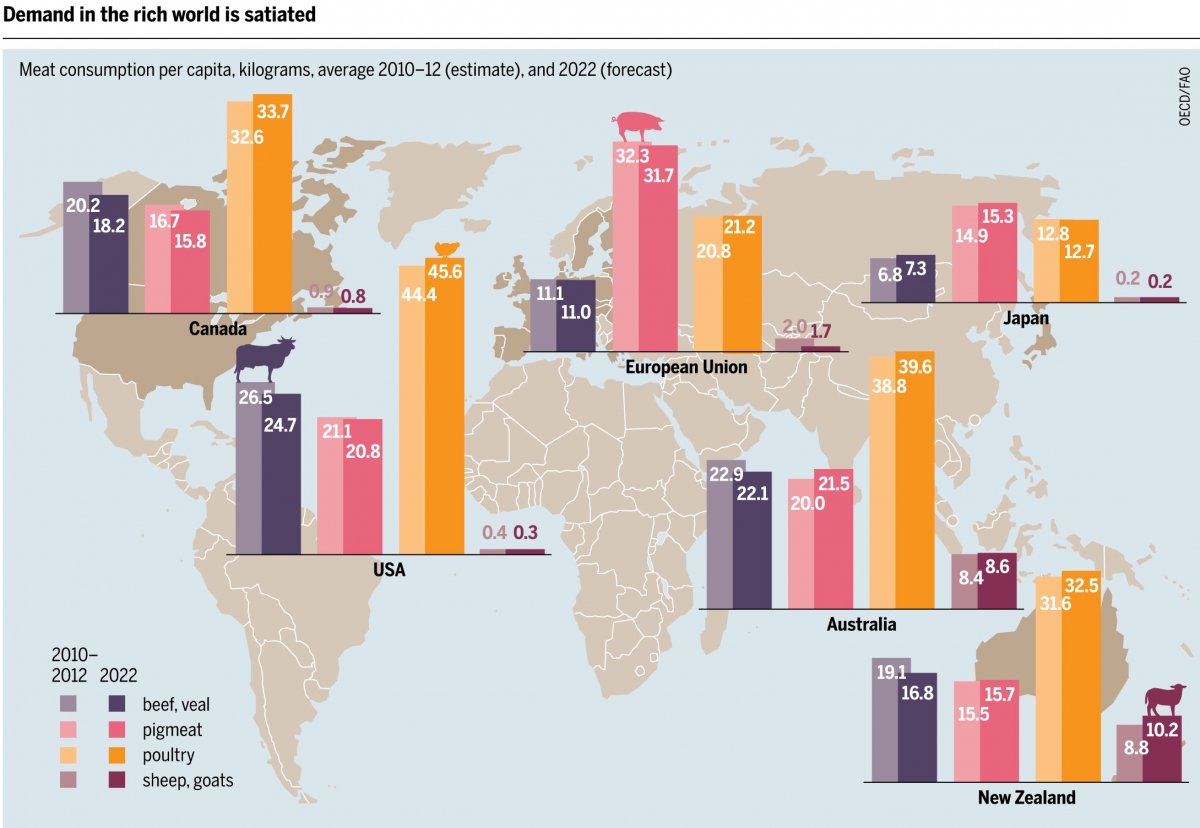
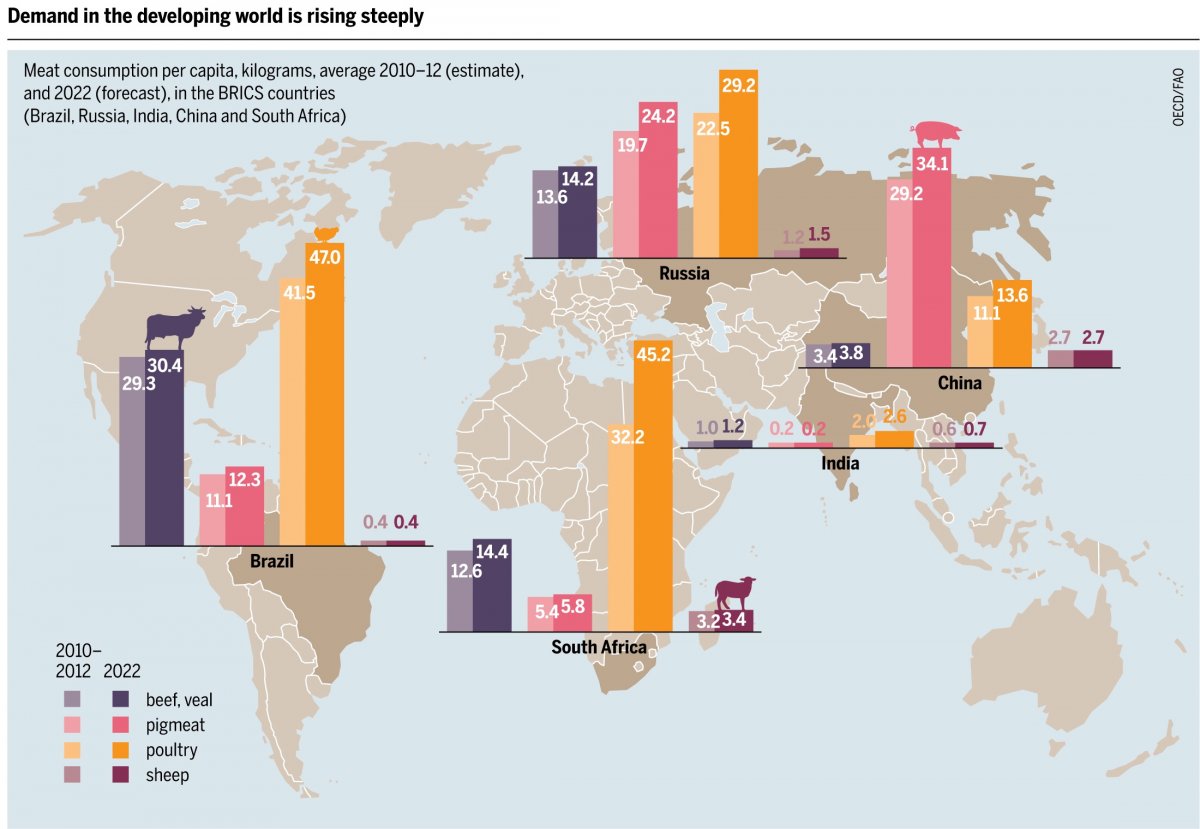
Meat atlas maps

meat 3meat 4meat 2meat 7

Link to atlas

Nashville Farmers’ Market Gets New Director: Tasha Kennard, Veteran of Second Harvest | Bites | Nashville Scene

Nashville Farmers' Market Gets New Director: Tasha Kennard, Veteran of Second Harvest | Bites | Nashville Scene.

Market Benefit and Incentives PPT-Vermont 2013 – Helping Public Markets Grow

Since I’m back in Vermont for the 2014 Direct Marketing Conference, I decided to upload the Power Point from the 2013 Wholesome Wave convening that Erin Buckwalter of NOFA-VT and I gave about the 2013 Vermont Market Currency Report. I’ll add notes for each slide sometime in the next month or two but the data will still be helpful to many.

Market Benefit and Incentives PPT-Vermont 2013 – Helping Public Markets Grow.

Growing for Market

The link to the excellent Growing For Markets site. In the January 2014 issue, I have an article where I share the latest news on SNAP at farmers markets. GFM is a great magazine for news and tips for market farmers and organizers. You can subscribe at different levels for print or online (which can include their excellent archives) or you can simply purchase a single issue.

Growing For Market

New Nationwide Study Shows SNAP Incentives at Farmers’ Markets Boost Healthy Eating, Support Farmers, and Grow Local Economies | Fair Food Network

From the conclusion:

A minority of funds went unused. Possible reasons for this gap include that tokens were lost, misplaced, or reserved for a future visit that did not occur. Regardless, a loss in purchasing power negatively affects the financial benefits provided by the incentive program, and means that SNAP participants have fewer funds to mitigate food insecurity. Future work should strive to better understand this problem in various communities and test innovative solutions to increase SNAP redemption rates. Additionally, further exploration will be helpful to determine what maximum amount of SNAP benefits
matched maximizes participation by SNAP customers. To better understand the health impacts on individuals who use SNAP incentives to purchase fresh produce, future research also should explore changes in consumption and other health behavior. Finally, examining the relationship between various implementation strategies and reported changes in consumers, vendors, and markets will help better identify promising practices for effective incentive programs. The cluster evaluation documented program innovations; influences of incentive programs on consumers, vendors, and markets; and lessons learned to inform a fragmented field of practice. The cluster program organizations are poised and ready to share what they are learning about effective program management, marketing, funding, capacity building, sustainability strategies, and achieving desired outcomes with fellow practitioners. After sharing program experiences, program implementation, and outcome data, and advancing ideas on how best to advance and implement solutions to food system issues of common concern through this cluster evaluation, the programs are exploring plans to launch an online “Learning Community” that would bring more program coherence to the field of practice and increase the field’s capacity to be more impactful.

New Nationwide Study Shows SNAP Incentives at Farmers’ Markets Boost Healthy Eating, Support Farmers, and Grow Local Economies | Fair Food Network.

SSAWG

SSAWG

SSAWG conference coming up

The Idea Village Launches “Food Challenge” for New Orleans Entrepreneurs

The Idea Village announces that New Orleans-based entrepreneurs Creole Crackers, Feed Me Eat Pretty, Garden District Bloody Marys, NOLA Pie Guy (DBA Sugah), and Taryn’s Crab Cakes Factory have been selected to participate in its inaugural New Orleans Food Challenge. The Food Challenge, a pilot program which will take place during the 2014 Entrepreneur Season, is an effort to boost entrepreneurial activity in the food and beverage industry, in partnership with Reily Foods and Rouses Markets.

“Each year, The Idea Village hosts a variety of Strategic Challenges in an effort to elevate key local industries and strengthen partnerships across the entrepreneurial community,” said Tim Williamson, Co-founder and CEO of The Idea Village. “New to the Challenge lineup this year, the Food Challenge will mirror other successful vertical challenges, including Water and Education, providing access to unbelievable networks and strategic business consulting.”

“When it comes to innovation within the food and beverage industry, New Orleans has a longstanding competitive advantage,” said David Darragh, CEO of Reily Foods Company and Chairman of The Idea Village Board of Directors. “The Food Challenge will help us sustain this reputation by identifying and supporting some of the industry’s emerging businesses.”

“Rouses is one of the largest independent grocers in the United States and we are fully committed to supporting local farmers, fisherman, and food entrepreneurs.” said Allison Rouse, Rouses Markets. “The Food Challenge aligns perfectly with our buy local focus and we are a proud supporter of this initiative.”

The Food Challenge will be led by Idea Village Entrepreneurs-in-Residence Lisa Lloyd and J. Anthony Miguez, who have a combined 30+ years of experience working with early stage companies. Lisa and J. will provide customized coaching and manage the program’s mentor and advisor networks in order to accelerate the growth of participating companies.

Mentors include: Billy Bosch (Iconic), Erik Frank (Your Nutrition Delivered), Sal LaMartina (Cordina), and Lovey Wakefield (NOLAcajun.com). Advisors include: David Darragh (Reily Foods Company), John Elstrott (Whole Foods), Ti Martin (Commander’s Palace), Marcy Nathan (Advertising and PR), Allison Rouse (Rouses Markets), Robbie Vitrano (Naked Pizza), and Sandy Whann (Leidenheimer Baking Company).

During this nine-week program, entrepreneurs will receive over 40 hours of strategic consulting across customer development, risk mitigation, product validation, and business model optimization, along with the opportunity to network with other emerging local food ventures and local industry authorities. The program will culminate in a ‘Demo Day’ on December 17th, when two entrepreneurs will be selected to present during the 6th annual New Orleans Entrepreneur Week (NOEW), March 22-28, 2014, the culmination of The Idea Village’s annual Entrepreneur Season.

To learn more about The Idea Village, The Idea Village’s 2014 Entrepreneur Season, and the inaugural New Orleans Food Challenge, visit http://www.ideavillage.org.
How the Bitcoin protocol actually works and what that means for us

Complementary currencies fascinate me and recently, the crypto currency bitcoin especially. Its an example of a decentralized example designed to reduce  inflation (although maybe not deflation) and the need to have a central authority. I agree with many that the bitcoin seems unlikely to be a replacement for fiat currency (government-decreed legal currency) and I also agree with the concern over the ultimate role of this currency that has a limit to how much can be “mined.” Still, important to remember that gold has very close to the same values and limits and has flourished as a protection against only using a national currency.

The reason why this should be so important to food system organizers-especially to direct marketing outlets-is that many of these outlets are operating what is essentially a debiting system with tokens,  yet doing it without the robust and transparent nature of a currency system, or without a fair and openly discussed exchange rate that asks everyone possible to share the costs. In other words, we have built systems that allow people to begin to depend on the market to supply a debiting system so as not to have to stop and get cash before coming to market, or from vendors from having their own machine and costs, yet are not extending the reach of that system to find ways to pay and find support for it. What seems to be the goal for most involved is to dream of the day that we can hand these systems off to the farmers to run themselves. I would say that for many reasons this is unlikely in any near future as these systems will remain unwieldy to manage.
Those reasons for the delay or impossibility of the vendor hand off happening include (but are not limited to):
-the lack of easy-to-manage back office systems
-the wide variations of card fees and systems needed to swipe cards
-the costs for each vendor to purchase and maintain these systems. Add to that the very nature of pop up markets without access to good wifi or mobile phone signals, the low number of transactions per vendor and complication of a high number of customer transactions on any one day with many small businesses that will confuse and alert card processors.
To me, what comes first is solving these problems and extending this system’s reach to savings and loans pilots. What about allowing restaurants that source locally to accept the tokens during slow months? Or working with banks to help provide some accounting or backing? What about establishing micro loans to encourage more people to use this as a sticky currency working through a local food system? The Berkshares system in Great Barrington area is an uniquely designed currency that is experimenting with these ideas and more and has added hundreds of outlets at which their currency can be used; it is surely one that should be studied closely by our field, if nothing else.
There are examples of different token pilots at markets, such as MarketUmbrella’s Crescent Fund and Massachusetts’ pilot of electronic wallet (an example here of an electronic wallet) but these pilots are still so limited and information is not widely available. I would love to see some deep analysis of the impact of these systems and some prototyping of entire systems, especially with the emergence of these popular electronic currency such as bitcoins and vibrant complementary currencies such as the Berkshares.

How the Bitcoin protocol actually works | DDI.

Overstock says they’ll take Bitcoin

Grazing with goats in the Crescent City

Goats for grazing is a super idea for the many open, untended sites we have in New Orleans and throughout the U.S. This is a simple fundraising idea for an New Orleans entrepreneur that wants to use goats to graze public and private green space. She has already been contracted to use goats on a park in the city (Brechtel Park) starting in 2014 and needs support to get her business prepared for the work ahead.
I see she also sees this as public art, which I’d have to hear more about to understand I guess, but the goat grazing is by itself an idea that I can certainly support. Maybe you can too?

YHerd?

…To comment further on the public art point, I’d rather this be seen chiefly as a serious farming and open space issue that helps urban people see that livestock can safely serve many roles in the larger natural survival loop, even in our ordered urban environment.

“Where Farmers Markets and CSAs Fall Short” An interview with Mary Berry

Be forewarned-if you know me, you are going to hear and see excerpts from this link many, many times in the future. An articulate and necessary interview with Mary Berry of the Berry Center (yes, daughter of our agrarian apostle* Wendell Berry) on the shortcomings (or pitfalls if you prefer) of our good food work so far. I think all of her points are spot on and all have potential actions to take to push forward.
In These Times

*Don’t worry-The term “apostle” is used here in the Classical Greek context of messenger. No idle idolatry intended.

Economic Opportunity Is Lowest In the Republican Bible Belt, Major Study Finds | Alternet

I suspected as much, based on the struggle that our community food systems here still have in front of them to reach any decent economic plateau. And, of course, this is another easy way to track where large swaths of institutional racism are still at work.

Economic Opportunity Is Lowest In the Republican Bible Belt, Major Study Finds | Alternet.