Helping Farmers Markets Grow

Skip to content
  • About

civic engagement

Can Public Health Unite the Good Food Movement? | Civil Eats

Although this is a vital article on the breadth of the problems and issues that face the fight for the farm bill, I hesitate to wrap the entire alternative food and farming movement inside of a crisis, even one that is so monumental like public health.
In my mind, our work is powered by the most diverse set of ideas and goals captured by the simple exchange of food regionally grown, caught or made by hand. Rural, peri-urban and urban uses of land, water issues, transportation systems, safeguarding import-replacing production, creation and preservation of public space and stewardship of private land for farming and social activities, anti-hunger campaigns, appropriate technology, hands-on education for children, democratic distribution, encouraging multi-generational understanding, fighting corporate control of food, unique approaches to wealth creation, celebrating current culture and reviving food history, job creation, worker rights, immigrant issues, disaster mitigation, attacking institutional and individual racism, supporting personal health goals, sharing intellectual ideas without need of institutions to shepherd it, expanding civic activity, ….
In other words, remember that we are pirate ships and not an armada.
Original piece on the pirate ship metaphor here

I know that many will say that all or most of the items above can be encapsulated within public health, but to me, the diversity of how each of us approach this is our greatest strength.

I agree with Michael on the end goal, but I prefer to say it like this: we sail alone, but need to anchor together at times like this for this historic farm bill fight. So, when some  or most of these good ideas can be brought into a single campaign by folks like the public health sector, we need to welcome them and maybe even let them lead for a while.

Can Public Health Unite the Good Food Movement? | Civil Eats.

Share this:

  • Email a link to a friend (Opens in new window) Email
  • Print (Opens in new window) Print
  • Share on Reddit (Opens in new window) Reddit
  • Share on Facebook (Opens in new window) Facebook
  • Share on X (Opens in new window) X
  • Share on Pinterest (Opens in new window) Pinterest
  • Share on LinkedIn (Opens in new window) LinkedIn
  • Share on Tumblr (Opens in new window) Tumblr
Like Loading...
0 CommentsLeave a comment
09/09/2013
D.W.
articles, civic engagement, Congress, disaster planning, diversity/racial justice, economic development issues, environmental issues, fair trade, farmers markets, farmers/farming information, fishers, food policy, food safety/rules and regs at markets, food sovereignty, governments, immigrant issues, national food system work, public health, racial equity, school food, seniors, SNAP
farmers markets

Dallas and Durham: why are markets and farmers a threat?

An excellent piece on cities that are unsure of how to handle the explosion in the number of farmers markets, and by extension, small-scaled agriculture within city limits. There may be some correlation between cities that still operate markets themselves and how restrictive their rules are for other markets, but I’d hazard a guess that it has more to do with how they handle small business and open space as a whole. And how they view their relationship to the entire region.

In any case, it shows the need for markets and for all food organizers to realize early on that policy work is an essential part of their work. And for more legal and municipal templates for markets to be written and shared across the US. Lastly, and maybe most importantly, the need to gather information on a market’s economic, social, intellectual and natural benefits to be able to make the case to cities about the positive impact of markets.

“Dallas is one city that has historically owned its own farmers’ market,” Sarah Perry, founder of White Rock Local Market, writes in an email. “This is important because it makes Dallas’ interests in ‘farmers’ markets’ a bit different than other cities.”

At first, residents at private markets believed that as long as they kept sites clean and orderly, they had no reason to think they were doing anything wrong. That held true for a while, but once officials realized that some of these markets were a going concern, they started hassling market organizers about permits. Dallas had no provision for a farmers’ market permit, however, and general “special events” permits were expensive and required police presence.

…
Another issue in Durham is minimum parking requirements. For smaller farmers, there’s only a requirement if the farmer wishes to set up any sort of permanent structure from which to sell their goods. In that case, they need to have at least one parking space. Which, more often than not, is going to require a curb cut, an expense most small farmers can’t afford.

http://nextcity.org/daily/entry/whos-afraid-of-the-city-farmer

Share this:

  • Email a link to a friend (Opens in new window) Email
  • Print (Opens in new window) Print
  • Share on Reddit (Opens in new window) Reddit
  • Share on Facebook (Opens in new window) Facebook
  • Share on X (Opens in new window) X
  • Share on Pinterest (Opens in new window) Pinterest
  • Share on LinkedIn (Opens in new window) LinkedIn
  • Share on Tumblr (Opens in new window) Tumblr
Like Loading...
0 CommentsLeave a comment
09/09/2013
D.W.
articles, civic engagement, community gardens, economic development issues, environmental issues, evaluation, farmers markets, farmers/farming information, governments, Main Street, market vendors, Typology of markets
Dallas farmers markets, Durham farmers markets, farmers, farmers markets, regulation for farmers

Notes from Farmers Markets In Low-Income Communities webinar

Farmers markets in low-income communities webinar August 29, 2013

Speaker 1: Mukethe Kawinzi, Project Coordinator, The Food Trust

Farmers markets are an effective means to bring fresh and healthy means to under served neighborhoods.
TFT operate 25 markets and support more.
Most important criteria in establishing markets in low-income areas:
1. Strategic site selection
Intersecting criteria: high traffic area, low access to fresh fruits and veg,
2. Community Partners
Wide selection of types, help with logistical and demographic support. Help with marketing.
3. Food Assistance Programs
Critical to success of FMs; half of farmers sales at times are benefit dollars
Their Huntington Park Farmers Market ( with 1 farmer) is a good example of organizing to ensure community involvement.
TFT surveys their shoppers every year and monitor sales, both in benefit sales and other sales.

Speaker 2:
Oren Hesterman – Fair Food Network

Double Up Food Bucks: Monetary incentive strategy
Purpose of DUFB is to demonstrate the feasibility and effectiveness of incentives, while supporting farmers and inform policy.
2009 Detroit first project was called Mobucks (Motown Bucks)
5 FMs, including Eastern Market
26,000 SNAP and 10,600 in MoBucks, Year one
Year 2 expanded beyond Detroit, changed the name to DUFB
Short FFN YouTube video about program available on FFN YouTube channel
In 2013: DUFB serving 100 FMs in MI and Northern OH
2012: Reached almost 2 million dollars in SNAP and DUFB sales at those markets
Good evaluation is key: check out the DUFB website
80% SNAP shoppers are buying more varieties
1200 farmers statewide participating: 83% are making more money because of the DUFB
FFN, MU, WW and RoC released a cluster analysis of incentives in 2013.

Speaker #3: Jen O’Brien FMC

SNAP: 16.6 million spent at FMs in 2011. But only .O2 % of SNAP sales
Only 3500 of 8000 FMs are SNAP authorized in 2012
2 main goals in regards to FMs:
That those with SNAP access are maximizing their program
Closing the gap: more markets need to be authorized
SNAP is not the only goal for a market in a low income community: market characteristics are often diverse when serving low income communities
Many funding opportunities for markets to expand access through USDA grants (as long as the Farm Bill is passed!)
Much innovative work has been done with FMPP funding ( see FMC report) and with specialty crop grants at state level. (Low income veterans are the subject of a specialty crop project in Bridgeport Connecticut)

Share this:

  • Email a link to a friend (Opens in new window) Email
  • Print (Opens in new window) Print
  • Share on Reddit (Opens in new window) Reddit
  • Share on Facebook (Opens in new window) Facebook
  • Share on X (Opens in new window) X
  • Share on Pinterest (Opens in new window) Pinterest
  • Share on LinkedIn (Opens in new window) LinkedIn
  • Share on Tumblr (Opens in new window) Tumblr
Like Loading...
0 CommentsLeave a comment
08/29/2013
D.W.
case studies/research, civic engagement, economic development issues, evaluation, farmers markets, farmers/farming information, FMC, food policy, food stamps (SNAP), incentives, national food system work, SNAP, Typology of markets
farmers markets

How Sprawl Makes Fighting Childhood Obesity So Much Harder – Kaid Benfield – The Atlantic Cities

How Sprawl Makes Fighting Childhood Obesity So Much Harder

In rapidly suburbanizing Loudoun County, Virginia, west of Washington, D.C., parents are up in arms about a substantial cutback in school bus service. According to an article written by Michael Alison Chandler and published in yesterday’s Washington Post, about 4,000 students who used to ride school buses will be expected to find another way to class in the coming school year. We need to reduce the budget, say county officials.

School sprawl has been part of the pattern, too, with large campuses placed at a distance from most students and their families. Check out the locations of three Loudoun County schools on the satellite map above: they have all been placed on former farmland just beyond the reach of sprawling new subdivisions. And please don’t think I’m picking on Loudoun County; this is the case all over suburban America.

For all sorts of reasons, we’d be better off without this growth pattern at all but, since it exists, school bus service is essential, particularly for working parents. (It is also more environmentally efficient than parents’ taking kids to school in separate vehicles.) As recently as the 1970s, a majority of school kids walked or biked to school. Today, almost entirely because of sprawl, fewer than 15 percent do.

How Sprawl Makes Fighting Childhood Obesity So Much Harder – Kaid Benfield – The Atlantic Cities.

Share this:

  • Email a link to a friend (Opens in new window) Email
  • Print (Opens in new window) Print
  • Share on Reddit (Opens in new window) Reddit
  • Share on Facebook (Opens in new window) Facebook
  • Share on X (Opens in new window) X
  • Share on Pinterest (Opens in new window) Pinterest
  • Share on LinkedIn (Opens in new window) LinkedIn
  • Share on Tumblr (Opens in new window) Tumblr
Like Loading...
0 CommentsLeave a comment
08/26/2013
D.W.
civic engagement, farmers markets, farmers/farming information, other sectors, public health
farmers markets

How to Whole Measure

As my readers know, I’m sort of obsessed with researching evaluation techniques and indicators to find ways to replicate successful farm and food enterprises.
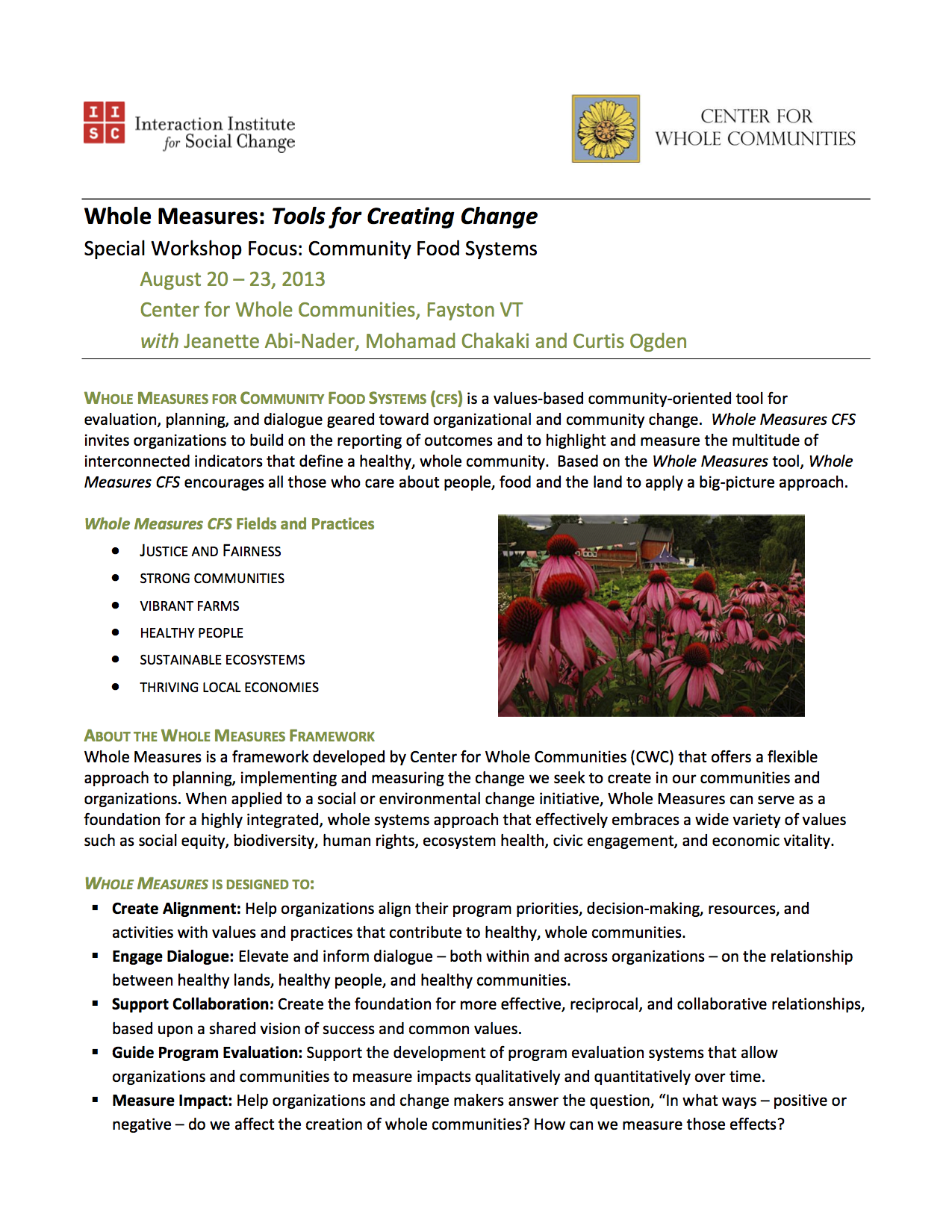
Whole Measures is one of the grandaddies of food system measures and should be considered especially when anyone is building multi-stakeholder evaluation. Whole Measures takes a long view of success, looking at system change and multiple impacts. I urge people to take a look at it especially if you have a chance to actually take a workshop from evaluation and training expert Jeanette Abi-Nader.

Whole Measures 2013 Flyer. Food Systems
Screen Shot 2013-07-16 at 6.56.49 PM

Share this:

  • Email a link to a friend (Opens in new window) Email
  • Print (Opens in new window) Print
  • Share on Reddit (Opens in new window) Reddit
  • Share on Facebook (Opens in new window) Facebook
  • Share on X (Opens in new window) X
  • Share on Pinterest (Opens in new window) Pinterest
  • Share on LinkedIn (Opens in new window) LinkedIn
  • Share on Tumblr (Opens in new window) Tumblr
Like Loading...
0 CommentsLeave a comment
07/18/2013
D.W.
civic engagement, diversity/racial justice, economic development issues, environmental issues, evaluation, farmers/farming information
Whole Measures

Public Health Potential of Farmers’ Markets on Medical Center Campuses: A Case Study From Penn State Milton S. Hershey Medical Center [American Journal of Public Health]

This is one of the most detailed research papers about the campus market, which is another type of market to consider. Describing market types is an ongoing research project of mine (and others) and some of the most common market types can be found on my website by clicking here.

Insurance News – Public Health Potential of Farmers' Markets on Medical Center Campuses: A Case Study From Penn State Milton S. Hershey Medical Center [American Journal of Public Health].

Share this:

  • Email a link to a friend (Opens in new window) Email
  • Print (Opens in new window) Print
  • Share on Reddit (Opens in new window) Reddit
  • Share on Facebook (Opens in new window) Facebook
  • Share on X (Opens in new window) X
  • Share on Pinterest (Opens in new window) Pinterest
  • Share on LinkedIn (Opens in new window) LinkedIn
  • Share on Tumblr (Opens in new window) Tumblr
Like Loading...
0 CommentsLeave a comment
06/20/2013
D.W.
articles, civic engagement, farmers markets, Typology of markets
Campus market, Hershey PA

Job opening: Food Policy and Program Manager- New Orleans LA

FOOD POLICY AND PROGRAM MANAGER

Background Information
The role of the Food Policy and Program Manager is situated within the larger Propeller Social Venture Accelerator program with a focus on food systems and land use. The two primary goals within the Propeller Food Systems sector are: 1) Providing access to healthy, affordable food to disadvantaged residents and communities in New Orleans, and 2) Equitable economic development for food-related entrepreneurs in New Orleans and the surrounding region.

Job Opportunities · Propeller.

(scroll down the page to find this listing)

Share this:

  • Email a link to a friend (Opens in new window) Email
  • Print (Opens in new window) Print
  • Share on Reddit (Opens in new window) Reddit
  • Share on Facebook (Opens in new window) Facebook
  • Share on X (Opens in new window) X
  • Share on Pinterest (Opens in new window) Pinterest
  • Share on LinkedIn (Opens in new window) LinkedIn
  • Share on Tumblr (Opens in new window) Tumblr
Like Loading...
0 CommentsLeave a comment
06/13/2013
D.W.
civic engagement, economic development issues, entrepreneurs, Farm To School, farmers markets, farmers/farming information, job posting, New Orleans food

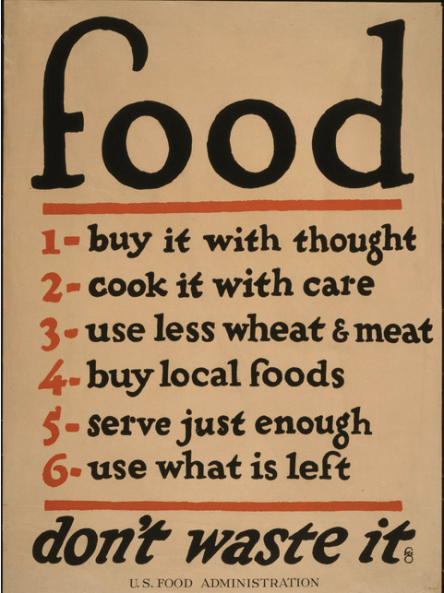
WW II poster

WW II poster

Share this:

  • Email a link to a friend (Opens in new window) Email
  • Print (Opens in new window) Print
  • Share on Reddit (Opens in new window) Reddit
  • Share on Facebook (Opens in new window) Facebook
  • Share on X (Opens in new window) X
  • Share on Pinterest (Opens in new window) Pinterest
  • Share on LinkedIn (Opens in new window) LinkedIn
  • Share on Tumblr (Opens in new window) Tumblr
Like Loading...
0 CommentsLeave a comment
05/20/2013
D.W.
civic engagement, community gardens, Congress, food history
WW2 food posters

WW II Victory Garden poster

Why not adapt this style for current farmers market initiatives?

WW 2 Victory Garden poster

WW 2 Victory Garden poster

Share this:

  • Email a link to a friend (Opens in new window) Email
  • Print (Opens in new window) Print
  • Share on Reddit (Opens in new window) Reddit
  • Share on Facebook (Opens in new window) Facebook
  • Share on X (Opens in new window) X
  • Share on Pinterest (Opens in new window) Pinterest
  • Share on LinkedIn (Opens in new window) LinkedIn
  • Share on Tumblr (Opens in new window) Tumblr
Like Loading...
0 CommentsLeave a comment
05/20/2013
D.W.
civic engagement, community gardens, food history
victory gardens, WW2 food posters

UC Berkeley Occupy Farm is plowed under by police but already replants

By Judith Scherr and Doug Oakley

ALBANY — About 50 Occupy the Farm activists returned to a piece of land Monday evening to replant vegetables plowed under earlier in the day after UC Berkeley police arrested four protesters.
At the same time, a group of Albany residents opposed to the Occupy group brought a contingent of their own to the parcel along San Pablo Avenue.
“We want a grocery store here,” said Sylvia Paull, one of the anti-Occupy protesters. “We spent five years working with UC and Albany trying to get one here.”
The Occupy group said it would return next weekend to tend to the most recent crop it planted Monday evening.
“We’re not giving up on this land,” said Occupy spokeswoman and UC Berkeley student Lesley Haddock. “It’s one of the best pieces of farmland in the East Bay and UC wants to make it a corporate development. We don’t want development.”

http://m.ktvu.com/news/news/crime-law/police-raid-albany-occupy-farm-compound/nXpxj/

Share this:

  • Email a link to a friend (Opens in new window) Email
  • Print (Opens in new window) Print
  • Share on Reddit (Opens in new window) Reddit
  • Share on Facebook (Opens in new window) Facebook
  • Share on X (Opens in new window) X
  • Share on Pinterest (Opens in new window) Pinterest
  • Share on LinkedIn (Opens in new window) LinkedIn
  • Share on Tumblr (Opens in new window) Tumblr
Like Loading...
0 CommentsLeave a comment
05/16/2013
D.W.
articles, civic engagement, economic development issues, environmental issues, farmers/farming information, food policy, national food system work, place, University/college initiatives
California, Occupy movement

A book recommendation for evaluation geeks (like me)

Accounting For Social Value
When organizations use social accounting practices, they are able to measure their performance in terms of benefits accrued to key stakeholders such as their communities, human resources, and those investing in the organization. This innovative change in accounting can lead to a fundamentally different perspective on the value of an organization. Through case studies of organizations that have implemented social accounting in the United States, Canada, India, and Scotland, Accounting for Social Value provides a unique perspective for understanding key issues in this growing field.

Link to the book.

Share this:

  • Email a link to a friend (Opens in new window) Email
  • Print (Opens in new window) Print
  • Share on Reddit (Opens in new window) Reddit
  • Share on Facebook (Opens in new window) Facebook
  • Share on X (Opens in new window) X
  • Share on Pinterest (Opens in new window) Pinterest
  • Share on LinkedIn (Opens in new window) LinkedIn
  • Share on Tumblr (Opens in new window) Tumblr
Like Loading...
0 CommentsLeave a comment
05/13/2013
D.W.
books, Canada, case studies/research, civic engagement, economic development issues, environmental issues, farmers markets, farmers/farming information
Accounting

Jenga Mwendo

Jenga is the founder of Backyard Gardeners Network in Lower 9th Ward, raw food entrepreneur and in this video, is talking about her excellent work in the lower 9th ward section of New Orleans. Jenga’s garden will be on my Slow Food tour May 18th. If you believe in community food systems at their most collective and grassroots level, you may want to check her work out more and support her efforts:

BGN

This is one of my favorite pieces about New Orleans, written by Jenga as a response to a unworthy story by NYT about lower 9:
Jenga’s response to NYT

Share this:

  • Email a link to a friend (Opens in new window) Email
  • Print (Opens in new window) Print
  • Share on Reddit (Opens in new window) Reddit
  • Share on Facebook (Opens in new window) Facebook
  • Share on X (Opens in new window) X
  • Share on Pinterest (Opens in new window) Pinterest
  • Share on LinkedIn (Opens in new window) LinkedIn
  • Share on Tumblr (Opens in new window) Tumblr
Like Loading...
0 CommentsLeave a comment
05/09/2013
D.W.
civic engagement, community gardens, economic development issues, entrepreneurs, environmental issues, farmers/farming information, food insecurity, local food, New Orleans food, public markets, racial equity, social cohesion
Jenga Mwendo

5 of the top 10 Ingredients of a Local Economy

From BALLE, one of my favorite local economy organizations:

And The Pioneers That are Leading the Way – Part 1
As we are preparing for our annual 2013 BALLE conference in June, I am reminded of one of the main reasons people are drawn to BALLE: to learn how to create a strong and vibrant local economy in their own communities. Knowing that not all of you will make it to Buffalo in June, and as I reviewed our incredible list of speakers and conference agenda, I was inspired to share this list of key ingredients in hopes that it will inspire you, even in some small way, towards action in your community.

Because there are SO many juicy things to share with you – and because we know your free reading time is precious – we’re breaking this down into two parts. And for those that will be joining us for #2013BALLE Conference in Buffalo, we’ve highlighted some of the incredible pioneers who will be speaking on these subjects at our upcoming conference.

Here are five ingredients of thriving local economies. (Hint: the next five might arrive on Monday for you…)

To grow, process and distribute healthy nutritious and affordable food:
We need to know the people that grow and make our food and to have systems in place to get fresh, affordable food into underserved areas. When we support a localized food system, we keep our dollars in the local economy and lessen our dependency on external food sources that can be damaging to both people and our environment.

James Johnson-Piett, Urbane Development: Vision speaker
Nikki Henderson, People’s Grocery: Vision speaker
Sarita Role Schaffer, Viva Farms: Rethinking Investment

To unleash the talents and creativity of the whole community:
We’re not okay unless we’re all okay. Job access, skills training, business ownership and cooperative models serve so many purposes. They build community wealth and keep money circulating locally; they empower people through personal ownership; and they harness the collective energy of the entire community and channel it towards a greater good.
Mark Brand, Save on Meats: Vision speaker
India Pierce Lee, Cleveland Foundation and the Evergreen Cooperatives: Vision speaker
Gar Alperovitz, The Democracy Collaborative: Community Ownership Revolution

To make things again:
We need to bring back local manufacturing and to be able to meet some of our needs locally. If we start using regional resources – local people, local businesses, local products – to meet our regional needs, we support all the people that contribute to our vibrant, local economy.
Kate Sofis, SFMade: Local is the New Global
Mike Pearson, Union Packaging: Vision speaker
Michael Peck, Mondragon: Local is the New Global

To use new technologies to connect people:
Central to a vibrant local economy is having strong relationships with each other, and new technologies are creating more opportunities to get connected. We can connect makers and growers with buyers and with each other. People can now share spare bedrooms, services and yard tools at the click of a button. Technology will never replace personal relationships, but it’s a wonderful way to get introduced.
Matt Stinchcomb, Etsy: Pardon the Disruption
Benzi Ronen, Farmigo: Pardon the Disruption

To foster an ethos of generosity:
At the center of everything, we need to create communities that want the best for each other. Developing personal relationships and establishing trust is one of the most important elements of a vibrant, local economy, and leading with generosity can be powerful way to start.
Otto Scharmer, Presencing Institute: Integrated Capital & Connections
Judy Wicks, Author, White Dog Café: Vision speaker & Entrepreneurs in Love
Nipun Mehta, Service Space: Vision speaker

In the words of our Executive Director, Michelle Long, “There is a new economy emerging – one that will gradually displace our destructive and failing economy with a system that supports the health, prosperity and happiness of all people, and that regenerates the vital ecosystem upon which our economy depends. The Annual BALLE Conference is the place where we stitch together the pioneering leaders, ideas and local economies. Together, remarkably creative entrepreneurs are building real prosperity from the ground up.”

– Jill Epner, BALLE

Register for their 2013 conference here:
BALLE
Share this:

  • Email a link to a friend (Opens in new window) Email
  • Print (Opens in new window) Print
  • Share on Reddit (Opens in new window) Reddit
  • Share on Facebook (Opens in new window) Facebook
  • Share on X (Opens in new window) X
  • Share on Pinterest (Opens in new window) Pinterest
  • Share on LinkedIn (Opens in new window) LinkedIn
  • Share on Tumblr (Opens in new window) Tumblr
Like Loading...
1 CommentLeave a comment
04/22/2013
D.W.
civic engagement, economic development issues, environmental issues, food insecurity, food policy, Main Street
BALLE, James Johnson-Piett

“Growing your own food is like printing your own money…”

Vision is necessary for change.
TED

Share this:

  • Email a link to a friend (Opens in new window) Email
  • Print (Opens in new window) Print
  • Share on Reddit (Opens in new window) Reddit
  • Share on Facebook (Opens in new window) Facebook
  • Share on X (Opens in new window) X
  • Share on Pinterest (Opens in new window) Pinterest
  • Share on LinkedIn (Opens in new window) LinkedIn
  • Share on Tumblr (Opens in new window) Tumblr
Like Loading...
0 CommentsLeave a comment
03/22/2013
D.W.
civic engagement, community gardens, environmental issues, evaluation
Los Angeles, TED

Post navigation

Older posts
Newer posts

Search this blog

Tags

alternative food systems BALLE big data book reviews California Canada CCFM chefs Chicago Cleveland climate change conferences cooperatives cottage food laws Covington Crescent City Farmers Market Detroit EBT evaluation farm bill farmers Farmers market Farmers Market Coalition Farmers Market Metrics farmers markets farming farm to table FMC FMC Farmers Market Metrics FMPP FNS Food food hubs food systems food system work Food Tank healthy food incentives La Via Campesina local food local food systems Los Angeles Louisiana markets Market Umbrella market vendors Mississippi New Orleans NOFA-VT North Carolina NSAC NYT Ohio Oregon oysters Poppy Tooker Power of Produce (POP) PPS Richard McCarthy Slow Food SNAP social capital social media SSAWG St. Joseph's Day Stacy Miller sustainability technology Toronto USDA Vermont Wallace Center webinars wendell berry Wolnik webinars

Enter your email address to subscribe to this blog and receive notifications of new posts by email.

Join 598 other subscribers

Helping Public Markets Grow 2011-2021

Independent Researcher and Analyst list of contracts (In November 2019 began full-time role as FMC’s Program Director)

•AMS TA project: Mentor for national technical assistance project for current FMLFPP grantees led by the Northeast Regional Center for Rural Development at Penn State University.
•Brooklyn NYC: Assisted BDPHO with developing farmers market technical assistance programs.
•Report on BDPHO’s 5-year market capacity project.
•Farmers Market Coalition Senior Research Associate for Farmers Market Metrics project creation (2015-)

• Farmers Market Coalition’s Senior Advisor, focusing on technical assistance for markets and networks (2015-)
•Illinois: Worked with ILFMA on evaluation plan for integration and upgrade of statewide fms and DTC information on integrated platforms.
•Louisiana: Assisted students at Southeastern University in Hammond with food system research and farmers market strategy.
•Louisiana: Assisted ReFresh Market and Garden with evaluation plan (2017)
•Louisiana: Working with Ruston Farmers Market on outreach strategy for new location

• Helping to craft resources and training for 2019 Fresh Central Certified Institute for Central Louisiana markets and producers with CLEDA.

•Louisiana: Organized first statewide farmers market conference for LSU Ag Center archives found at: lafarmersmarkets dot blogspot dot com

•Maine: Researched farmers market job descriptions found at www.helpingpublicmarketsgrow.com

• Mississippi: Providing research and analysis for City of Hernando MS 3-year project to grow flagship market

•Mississippi: Assisted Gulf Coast markets with FMPP project on analyzing access to markets for Gulfport resident and farmers. 2014 Local Food Awareness Report for Gulfport MS, found at www.helpingpublicmarketsgrow.com

•Vermont: Providing analysis and resource development for NOFA-VT’s annual data on farmers markets.

•Supporting markets creating their Legacy Binders
•Vermont: Researched and wrote report on SNAP, FMNP technology and policy answers for VT farmers markets in collaboration with NOFA-VT and VAAFM, 2013 Vermont Market Currency Feasibility Report found at www.helpingpublicmarketsgrow.com
•Vermont: Working with Vermont Law School on legal resources for farmers and market organizations.

•Vermont: Assisting with 3 year project to build capacity for direct marketing farmers and outlets through DIY data collection and use.

Wallace Center: Moderator of FSLN, advisory to the 2020 NGFN Conference to be held in New Orleans in March of 2020

•Why Hunger: Created online toolkit for grassroots communities.

Feel free to contact me at my name at gmail dot com if I might be able to help your market or business.
Thanks
Dar Wolnik

Posts by category

Create a free website or blog at WordPress.com.
Helping Farmers Markets Grow
Create a free website or blog at WordPress.com.
Privacy & Cookies: This site uses cookies. By continuing to use this website, you agree to their use.
To find out more, including how to control cookies, see here: Cookie Policy
  • Subscribe Subscribed
    • Helping Farmers Markets Grow
    • Join 246 other subscribers
    • Already have a WordPress.com account? Log in now.
    • Helping Farmers Markets Grow
    • Subscribe Subscribed
    • Sign up
    • Log in
    • Report this content
    • View site in Reader
    • Manage subscriptions
    • Collapse this bar
 

Loading Comments...
 

You must be logged in to post a comment.

    %d