FMC’s SNAP EBT Equipment Program is Open

The United States Department of Agriculture (USDA) Food and Nutrition Service (FNS) has partnered with the Farmers Market Coalition (FMC) to provide eligible farmers markets and direct marketing farmers with electronic benefit transfer (EBT) equipment necessary to process Supplemental Nutrition Assistance Program (SNAP) benefits.

WHAT


FMC will cover the costs of purchasing or renting SNAP EBT equipment and services (set-up costs, monthly service fees, and wireless fees) for up to three years. After their application has been approved, eligible farmers and farmers markets will choose their own SNAP EBT service provider from a list of participating companies. Transaction fees (for SNAP EBT, credit, and debit payments) will not be covered.

WHEN

The application is now open. This is a first-come, first-serve opportunity, which will be over when all the funds have been allocated.

WHO

SNAP-authorized farmers markets and direct marketing farmers (who sell at one or more farmers markets) are eligible for funding if they became authorized before Nov. 18, 2011, AND fall into one of the following categories:

They do not currently possess functioning EBT equipment;
OR They currently possess functioning EBT equipment, but received that equipment before May 2, 2012.
Wondering what qualifies as ‘not currently possessing functioning EBT equipment?’ Markets and farmers do not currently possess functioning EBT equipment if:

They currently rely on manual/paper vouchers to accept SNAP,
They do not currently accept SNAP and have never possessed functioning SNAP EBT equipment,
-OR-

They do not currently accept SNAP because their EBT equipment is
:

Damaged beyond repair.
Non-operational because their SNAP EBT service provider no longer offers SNAP EBT processing in their state.
Stolen or lost.
For more information on the program, including frequently asked questions, an eligibility chart, background information and application instructions, visit HERE.

After Winter, Spring showing in DC and VT

UPCOMING SCREENINGS

WASHINGTON, DC

Special Event Screening (w/ Q&A)
Mon, May 4, 2015 – 8pm
Avalon Theatre, 5612 Connecticut Avenue Northwest, Washington DC 20015

The screening will be followed by a discussion with the filmmaker. The event will be a partial fundraiser for the National Family Farm Coalition, and is presented in partnership with the Alliance Française of Washington, the Institut Français, and the Goethe-Institut as a part of their “Forging the Future” series.

BURLINGTON, VT

Vermont Premiere (w/ Q&A & reception)
Wed, May 6, 2015 – 7pm
Merrill’s Roxy Cinema, 222 College Street, Burlington VT 05401

The screening will be followed by a discussion with the filmmaker and a reception sponsored by City Market. The event will be a partial fundraiser for the Northeast Organic Farmers Association-Vermont.

To purchase DVDs or to inquire about a screening copy, click here.

After Winter, Spring – Synopsis.

Big Data and Little Farmers Markets, Part 3

I used these examples in Part 2 of this series, but wanted to use them again for this post. To review:

Market A (which runs on Saturday morning downtown) is asked by its city to participate in a traffic planning project that will offer recommendations for car-free weekend days in the city center. The city will also review the requirement for parking lots in every new downtown development and possibly recalibrate where parking meters are located. To do this, the city will add driving strips to the areas around the market to count the cars and will monitor the meters and parking lot uses over the weekend. The market is being asked for its farmers to track their driving for all trips to the city and ask shoppers to do Dot Surveys on their driving experiences to the market on the weekend. Public transportation use will be gathered by university students.

Market B is partnering with an agricultural organization and other environmental organizations to measure the level of knowledge and awareness about farming in the greater metropolitan area. For one summer month, the market and other organizations will ask their supporters and farmers to use the hashtag #Junefarminfo on social media to share any news about markets, farm visits, gardening data or any other seasonal agricultural news.

Market C is working with its Main Street stores to understand shopping patterns by gathering data on average sales for credit and debit users. The Chamber of Commerce will also set up observation stations at key intersections to monitor Main Street shopper behavior such as where they congregate.

Market D has a grant with a health care corporation to offer incentives and will ask those voucher users to track their personal health care stats and their purchase and consumption of fresh foods. The users will get digital tools such as cameras to record their meals, voice recorders to record their children’s opinions about the menus (to upload on an online log) with their health stats such as BP, exercise regimen. That data will be compared to the larger Census population.

So all those ideas show how markets and their partners might be able to begin to use the world of Big Data. In those examples, one can see how the market benefits from having data that is (mostly) collected without a lot of work on the market’s part and yet is useful for them and for the larger community that the market also serves.

However, one of the best ways that markets can benefit from Big Data is slightly closer to home and even more useful to the stability and growth of the market itself. That is: to analyze and map the networks that markets foster and maintain, which is also known as network theory.
Network theory is a relatively new science that rose to prominence in the 1980s and 1990s and is about exploring and defining the relationships that a person or a community has and how, through their influence, their behavior is altered. What’s especially exciting about this work is that it combines many disciplines from mathematics to economics to social sciences.

A social network perspective can mean that data about relationships between the individuals can be as useful as the data about individuals themselves. Some people talk about this work in terms of strong ties and weak ties. Strong ties are the close relationships that we use with greater frequency and offer support and weak ties are those acquaintances who offer new information and connect us to other networks. The key is that in order to really understand a network, it is important to analyze the behavior of any member of the network in relation to other members action. This has a lot to do with incentives, which is obviously something markets have a lot of interest in.

From the book Networks, Crowds, and Markets: Reasoning about a Highly Connected World. By David Easley and Jon Kleinberg. Cambridge University Press, 2010. Complete preprint on-line at http://www.cs.cornell.edu/home/kleinber/networks-book/

From the book Networks, Crowds, and Markets: Reasoning about a Highly Connected World.
By David Easley and Jon Kleinberg. Cambridge University Press, 2010.
Complete preprint on-line at http://www.cs.cornell.edu/home/kleinber/networks-book/

From the foodsystemsnetwork.org website

From the foodsystemsnetwork.org website

network analysis

network analysis

I could go on and on about different theories and updates and critiques on these ideas, but the point to make here is this is science that is so very useful to the type of networks that food systems are propagating. Almost all of the work that farmers markets do rely on network theory without directly ascribing to it.

Think about a typical market day: a market could map each vendors booth to understand what people come to each table, using Dot Surveys or intercept surveys. That data could assist the vendor and the market. The market will benefit in knowing which are the anchor vendors of the market, which vendors constantly attract new shoppers, which vendors share shoppers etc. The market could also find out who among their shoppers bring information and ideas into the market and who carrries them out to the larger world from the market. All of this data would be mapped visually and would allow the market to be strategic with its efforts, connecting the appropriate type of shoppers to the vendors, expanding the product list for the shoppers likely to purchase new goods and so on.

Network theory would be quite beneficial to markets in their work to expand the reach to benefit program users and in the use of incentives. Since these market pilots began around 2005/2006, it has been a struggle to understand how to create a regular, return user of markets among those who have many barriers to adding this style of health and civic engagement. Those early markets created campaigns designed to offer the multiple and unique benefits of markets as a reason for benefit program shoppers to spend their few dollars there. Those markets also worked to reduce the barriers whenever possible by working with agencies on providing shuttles, offering activities for children while shopping, and adding non-traditional hours and locations for markets. Those efforts in New York, Arizona, California, Maryland, Massachusetts and Louisiana (among others) were positive but the early results were very small, attracting only a few of the shoppers desired. When the outcomes were analyzed by those organizations, it seemed that a few issues were cropping up again and again:
1. The agency that distributed the news of these market programs didn’t understand markets or did not have a relationship of trust with their clients that encouraged introduction of new ideas or acceptance of advice in changing their habits.
2. The market itself was not ready to welcome new benefit program shoppers- too few items were available or the market was not always welcoming to new shoppers who required extra steps and new payment systems.
3. Targeting the right group of “early adopters” among the large benefit program shopping base was impossible to decipher.
4. Some barriers remained and were too large for markets alone to address (lack of transportation or distance for example).
4. Finding the time for staff to do all of that work.

Over time, markets did their best to address these concerns, which has led to the expansion of these systems into every state and a combined impact in the millions for SNAP purchases at markets alone. The cash incentives assisted a great deal, especially with #2 and #4. However, this work would be made so much easier and the impact so much larger if network theory was applied.
Consider:
Market A is going to add a centralized card processing system and has funds to offer a cash incentive. But how to spend it? And how to prepare the market for the program?

If the market joined forces with a public health agency and a social science research team from a nearby university, it might begin by mapping the networks in that market to understand the strong and weak ties it contains as well as the structural holes in its network. It might find out that its vendors attract few new shoppers regularly or that the market’s staff is not connected to many outside actors in the larger network, thereby reducing the chance for information to flow.
It might also see that younger shoppers are not coming to the market and therefore conclude that focusing its efforts on attracting older benefit program shoppers (especially at first) might be a strategic move. If the market has a great many low-income shoppers using FMNP coupons already, the mapping of those shoppers may offer much data about how the market supports benefit program shoppers already and how it might expand with an audience already at market
The public health agency might do the same mapping for the agencies that are meant to offer the news of the market’s program. That mapping might find certain agencies or centers are better at introducing new ideas or have a population that is aligned already with the market’s demographic and therefore likely to feel welcomed.

As for incentives, what markets and their partners routinely tell me is more money is not always the answer. Not knowing what is expected from the use of the incentives or how to reach the best audience for that incentive is exhausting them or at least, puzzling them.
If markets knew their networks and knew where the holes were, they could use their incentive dollars much more efficiently and run their markets without burning out their staff or partners.
They might offer different incentives for their different locations, based on the barriers or offerings for each location. (They may also offer incentives to their vendors to test out new crops.)
If connectors are seen in large numbers in a market, then a “bring a friend” incentive might be offered, or if the mapping shows a large number of families entering the system in that area, then an incentive for a family level shopping experience may be useful.
One of the most important hypotheses that markets should use in their incentive strategy is how can they create a regular shopper through the use of the incentive. Of course, it is not the only hypothesis for a market; a large flagship market might identify their role as introducing new shoppers to their markets every month and use their funds to do just that. But for many markets with limited staff and small populations in and around the market, a never-ending cycle of new shoppers coming in for a few months and then not returning may not be the most efficient way to spend those dollars or their time. So this is also where network theory could be helpful.
By asking those using their EBT card to tell in detail where and how they heard about the program and by also tracking the number of visits they have after their introduction, we could begin to see which introductions work the best. Or by asking a small group of new EBT shoppers to be members of a long-term shopping focus group to track what happens during their visit (how many vendors they purchase from and how long they stay) and after (see Market D example at the top), we could learn about what EBT shoppers in that area value in their market experience. We may also find out that the market has few long-term return shoppers from the EBT population or we may find out that connectors become easy to spot and therefore they can be rewarded when sharing information on the market’s behalf.
In all of these cases, it will be easier for the staff to know what to do and when to do it if they understand their networks both in and around the market.
And of course, mapping the larger food systems around the markets’ systems would be exciting and could move policy issues to action sooner and allow funding to be increased for initiatives to fill the holes found.

However markets do it, what seems necessary is to know specifically who is using markets and how and why they decided to begin to use them and to whom those folks are connected. Network theory can be the best and widest use of the world of Big Data, especially to accomplish what Farmers Market Coalition has set as their call to action: that markets are for everyone.

Some reading, if you are interested:

http://www.foodsystemnetworks.org

http://gladwell.com/the-tipping-point

Click to access networks-book-ch03.pdf

Click to access 827.full.pdf

Click to access kadushin.pdf

Reclaiming, Relocalizing, Reconnecting: The Power of Taking Back Local Food Systems

A rare Wednesday post on the 45th anniversary of Earth Day.
A new report by Friends of the Earth Europe looks at five examples of European communities successfully taking on the challenge of creating new systems that honor wise stewardship, local wealth and health and civic engagement. Its an inspiring report; share it widely.

.

ALDI Is A Growing Menace To America’s Grocery Retailers – Forbes

It’s always good to know what the grocery store sector is worried about. By the way, Trader Joes is part of the same company.

‘ALDI has accidentally reinvented pantry stocking in America by subversively eliminating the variable brand and the shopper marketing that goes along with it. They have also eliminated the variable of price, for there are no price comparisons in a store with only one offering in every category. They have made it radically simpler, cognitively, to execute a shopping trip. No thinking about brands, BOGOs, deals, price comps, coupons, sudden endcap promotions or in-aisle shopper marketing. The trip is also super-fast, because the stores are only about 18-20,000 square feet.’

ALDI Is A Growing Menace To America’s Grocery Retailers – Forbes.

Square Reveals A Reader For Chip Payment Cards

If any of your vendors or your markets have not begun to upgrade debit/cc card processor to be emv compliant, do remember that as of October 2015, if any breaches happen, the merchant will be liable, NOT the card processor if the merchant is still using old machines without the chip and pin tech or as the card companies and feds’ legalese has it stated: “the liability for card-present fraud will shift to whichever party is the least EMV-compliant in a fraudulent transaction.” Here is how Square is updating their machines…

A badge, a gun and a box of oatmeal | Minnesota Public Radio News

hmmm, maybe this will lead to expanding farmers market incentives coupons for police or EMT to carry with them to hand out when they see fit? Adding locations and specific instructions on the coupon face as to how to use them?
A badge, a gun and a box of oatmeal | Minnesota Public Radio News.

Farmers Market Jobs in Berkeley

The Ecology Center, a 45-year-old nonprofit located in west Berkeley, is seeking a Farmers’ Market Program Manager and a Farmers’ Markets Access & Equity Program Coordinator.

The Farmers’ Market Program Manager works under the supervision of the Food and Farming Program Director to oversee all Ecology Center Farmers’ Markets activities. The Farmers’ Market Program Manager is responsible for overseeing all market operations as well as directly managing the Tuesday and Saturday Farmers’ Markets. This is a full-time position with a Tuesday through Saturday work week which involves approximately 19 hours at market and 21 hours in the office every week.

The Farmers’ Markets Access & Equity (FMAE) Program Coordinator works to establish, implement, promote, and incentivize Federal Assistance Benefit use at farmers’ markets and other direct marketing outlets statewide. The goal of the program is to create greater healthy food choices for low-income and underserved populations and drive additional customers/income to farmers at farmers’ markets.

For more information, and to download an application for employment, please visit: http://ecologycenter.org/jobs/

Crossroads Community Food Network video

Great video from Crossroads Community Food Network, which runs the wonderful Crossroads Farmers Market in Takoma Park Maryland. It produced by the daughter of one of their board members as a Spanish project for high school.

Just shows what kind of smart and inclusive outreach can be done by community members when they are encouraged.

Farmers and Food Hubs: NFGN webinar April 16

Growers’ Experiences Selling  Crops Through Food Hubs

Thursday, April 16
3:30 – 4:45pm ET (12:30 – 1:45 PT)

Free! Register Now

What is it like to sell to or through a food hub? What are the benefits … and what is not so good? Learn directly from seasoned farmers!

We have assembled farmers representing a wide variety of experiences – different geographies (CA, MT, MI, and MA), different sizes (from 8 to 400 ac.), different products (vegetables, animals, and mixed) … who sell into different kinds of food hubs (non-profit, for profit, growers co-op) asking different services from them (simple transport, sell-through, and selling to the hub).

Each of these farms has different reasons to work with their local food hub. What works for them? What doesn’t work so well? How do they choose what to sell through the hub? We’ve asked these farmers to share their unedited experiences and advice with their fellow farmers across the country who might now be considering a relationship with a food hub.

Learn how they chose to start selling to the hub, why, what the hub demands of them, what they get in return, how they are managing risks, and how their business’ bottom line has been affected.

Considering selling through a hub? Learn from the experience of your peers. Advise farmers? Enrich the service you can provide.

Reserve your spot – click here

Mississippi: the last stop of the spring season

The thing about being a market consultant is it has a very specific schedule each year: the spring is packed with calls and invitations to conferences and workshops. Lots of discussion about grant opportunities and best practices.
The summer is spent at at the desk, writing or researching on behalf of those who hire us.
The fall starts to bring more travel, usually more for large-scale (non-market) conferences as well as a scramble for assistance on projects that got sidelined or tangled over the summer.
The winter is when the big ideas are usually discussed, with colleagues asking for an ear or agreeing to read something. Some of those big ideas roll right into spring grant-writing season and the year begins again.
This year my spring travel started in Alabama, then to Oregon and Washington, March in Vermont, two spots in Illinois and this last spring trip was in the Magnolia State, right in my own backyard.
I live part of the time about 40 or so miles from the Mississippi line and of course, as a past manager of a set of markets in the biggest city in the region, I had farmers from Mississippi and from Alabama that came to vend, so I am quite familiar with what is happening there and have some ideas as to what could happen there.
When I was asked to speak again this year by MS Department of Agriculture and Commerce (MDAC), I said yes immediately. Partly because I like the folks at MDAC and partly because in order to have a real food system in my place, it must be regionally organized (which means MS too of course) and we are far from that reality. And of course, because as a national market advocate, I need to see and talk to as many markets as I can. Let me say that MDAC does an amazing job supporting every actor in the food system and any criticism I give about the lack of support should not be construed as being directed at MDAC. They do more with less than most other states I know. And that MDAC is a state agency devoted to the many, not the few; market organizers and community food system initiative leaders need their own champions too.

MDAC asked me to talk about EBT outreach and about measuring markets for whatever number of the 70 or so markets listed in the state showed up. I agreed, even though I knew that the EBT outreach was probably a little too forward of what the group needed, based on the answers to the survey we sent out.
The MS markets are a strange and wonderful hybrid-they have no independent state association of markets, which is typical of most the other Southern states.
The state does have an emerging sustainable ag network, thanks to some local people (Daniel Doyle for one) and the Wallace Center which offered early funding to create the entity.
The state has offered both farmers and markets free SNAP-only machines for the last few years, predating the new FNS marketlink.org farmer terminal system. Many of you know that I am not a fan of these systems being handed off to farmers quite yet, so I do view these hybrid systems with a jaundiced eye.
Some of their markets have a closer relationship to Main Street initiatives than many other states’s markets which means that they are included in larger municipal ideas of revitalization, which can be good and bad for a market. The Main Street movement is more viable in rural communities, using its energy on facade or street improvements and some event planning. So what I find among MS managers are great event planners and city/civic leaders, with a genuine interest in assisting their vendors, but with few ideas how to do just that. The newest trend there is for public health partnerships (of course) with funding increasing there tremendously since MS is usually at the lowest rung of most health stats, with Louisiana constantly battling it for last place. Even so, since many of the markets are quite entrepreneurial and “downtown-focused,” these public health partnerships have not yet found their sweet spot.

And since most of these markets are operating with such low capacity, and no one is advocating for them full-time, they have very little data on what they do well and little experience in analyzing how they did something well. EBT and FMNP for instance-what do they want from these programs? How do markets of 5 to 20 vendors build in capacity to offer a robust benefit program system without any resources or support? Interestingly, a workshop with information about market link and on becoming a SNAP retailer was held in a room at the other end of the center for MS farmers at the exact same time as the managers were in this room. I wish this had not been the case for many reasons, but most of all I have not found that creating silos of information within a system very useful.
As we were in the room, we heard about the successful FINI proposals, one of which is substantial and will involve MS markets. There was excitement, but there was also trepidation among the market organizers. Most of them do not run central EBT systems and so have very little contact with their benefit program shoppers and almost no idea where to find these folks or how to get them to come to their markets.
Adding cash incentives is great, but there has to also be money to build the systems at market and state level to change perceptions of local food and to lift the existing barriers or that money will just act as it was pushed through a sieve.
As I stood inside and outside after my talks, I was peppered with questions, most of which showed the lack of support these markets have:
Where do I find these USDA grants?
How do I get FMNP coupons at my market?
What amount should I raise for an incentive and how should I use it?
Who offers funds for staffing a market?
What is market link?
How do I get funds to advertise?

How do I get more local goods to more people as an organizer?
The agency directors (that serve benefit program shoppers) won’t even talk to me about my market- what should I do?

How can I measure my economic impact?

and this round of questions didn’t even bring up the whole set of issues present everywhere- how do get enough farmers and producers doing well enough to keep this system moving forward? How do we do this with other initiatives breathing down our neck, competing for funding and attention?

The number of new faces at this meeting is similar to many of the other states that I visit regularly and is an indication that we have yet to find a way to offer professional jobs as market managers, instead using the typical revolving door of entry-level work that exhausts producers and means that initiatives never fully engage or sustain; markets are full of pilots but few have moved those pilots to replicable programs with funding streams, experienced staff and policy changes arising from those lessons.
The beautiful thing is that the willingness and enthusiasm among these organizers is always high, even with the many closed doors and the lack of support available to them.
So, I finish my spring conference travel right where I started it: with markets feeling the pressures from partners to offer new programs, with internal communities asking for sustainable growth, with organizers managing this work while they are paid not at all or paid a pittance or doing the equivalent of 2-3 peoples workload. But I also finish it having heard loads of great ideas from organizers and with stories of successful pilots from the last few years that will be expanded or tested again.
So let’s hope that this year that we can move the dial a little bit over the summer and fall with a successful market season and then together can start to build the system we need come winter and spring.

Porch at the auditorium for the mkt meeting at the MS Ag and Forestry Museum

Porch at the auditorium for the mkt meeting at the MS Ag and Forestry Museum

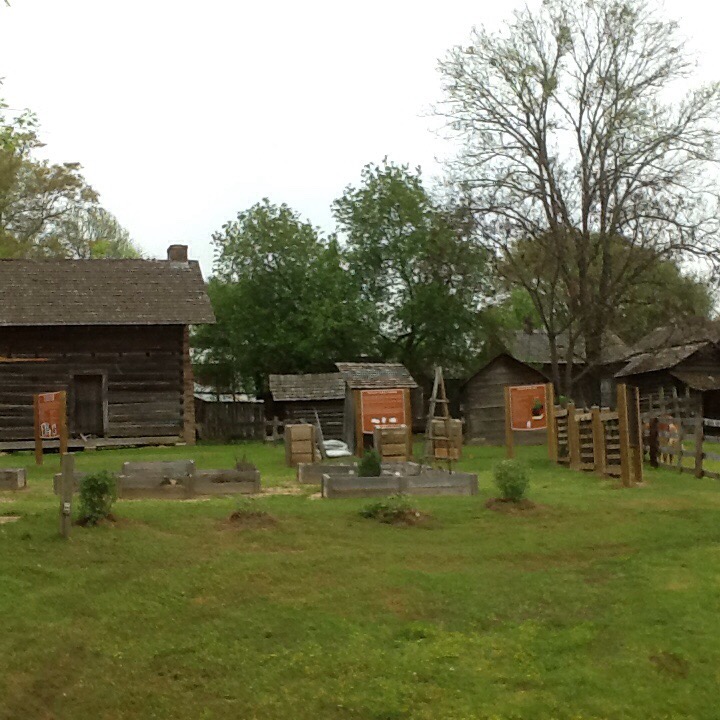
View of MS Sustainable Ag Network's Victory Garden demonstration at the MS Ag Museum

View of MS Sustainable Ag Network’s Victory Garden demonstration at the MS Ag Museum

FINI programs funded for FY 2015/2016

Congratulations!

USDA is funding projects in 26 states for up to 4 years, using funds from FY2014 and FY2015. USDA will issue a separate request for applications in FY16, and in subsequent years. Fiscal year 2014 and 2015 awards are:

Pilot projects (up to $100,000, not to exceed 1 year):

Yolo County Department of Employment and Social Services, Woodland, Calif., $100,000
Heritage Ranch, Inc., Honaunau, Hawaii, $100,000
Backyard Harvest, Inc., Moscow, Idaho, $10,695
City of Aurora, Aurora, Ill., $30,000
Forsyth Farmers’ Market, Inc., Savannah, Ga., $50,000
Blue Grass Community Foundation, Lexington, Ky., $47,250
Lower Phalen Creek Project, Saint Paul, Minn., $45,230
Vermont Farm-to-School, Inc., Newport, V.T., $93,750
New Mexico Farmers Marketing Association, Santa Fe, N.M., $99,999
Santa Fe Community Foundation, Santa Fe, N.M., $100,000
Guilford County Department of Health and Human Services, Greensboro, N.C., $99,987
Chester County Food Bank, Exton, Pa., $76,543
Nurture Nature Center, Easton, Pa., $56,918
Rodale Institute, Kutztown, Pa., $46,442
Rhode Island Public Health Institute, Providence, R.I., $100,000
San Antonio Food Bank, San Antonio, Texas, $100,000
Multi-year community-based projects (up to $500,000, not to exceed 4 years):

Mandela Marketplace, Inc., Oakland, Calif., $422,500
Market Umbrella, New Orleans, La., $378,326
Maine Farmland Trust, Belfast, Maine, $249,816
Farmers Market Fund, Portland, Ore., $499,172
The Food Trust, Philadelphia, Pa., $500,000
Utahns Against Hunger, Salt Lake City, Utah, $247,038
Opportunity Council, Bellingham, Wash., $301,658
Multi-year large-scale projects ($500,000 or greater, not to exceed 4 years):

Ecology Center, Berkeley, Calif., $3,704,287
Wholesome Wave Foundation Charitable Ventures, Inc., Bridgeport, Conn., $3,775,700
AARP Foundation, Washington, D.C., $3,306,224
Florida Certified Organic Growers and Consumers, Gainesville, Fla., $1,937,179
Massachusetts Department of Transitional Assistance, Boston, Mass., $3,401,384
Fair Food Network, Ann Arbor, Mich., $5,171,779
International Rescue Committee, Inc., New York, N.Y., $564,231
Washington State Department of Health, Tumwater, Wash., $5,859,307
Descriptions of the funded projects are available on the NIFA website.

Vermont and Illinois market meetings

Sometimes work travel can be lonely. Saying goodbye to family and friends (especially when it’s 80 degrees at home and 15 at your destination), waiting at airports for hours, being at hotels on weekends. In my travels, I see and talk to plenty of people out there who live in the spaces from airport to hotel and back and spend most of their time in dry meetings in some nondescript building. I however, get to go hang out with warm and engaged market practioners who are interested in what a visitor is doing there. How gratifying it is when you bring up a market subject and eyes light up with recognition and excitement. Or that new market manager you spend some time with at lunch has great ideas and plans and you are able to say-“wow, you have an excellent plan, I think this is absolutely going to work” and they convey gratitude which is lovely but unnecessary. Or that you get to reconnect with market advocates you met on a previous trip and laugh, talk and maybe make a friend.
This month I did that in 2 states- Vermont and Illinois. Both are states that I have been invited to previously and was very honored to be invited back again.
In Vermont, I traveled to the conference with a market leader who I admire and can bat ideas back and forth on a wide-ranging set of topics. Once on the Vermont Law School’s beautiful campus in South Royalton, I get to see many peers again who catch me up and share news. The host organization, NOFA-VT is an honorable elder organization that has true leadership and camaraderie and those qualities are shared by those who comes to their events. Everyone shows up for them, from the Agency of Ag to the state benefit program leaders and a whole bunch of assorted activists. Vermont is so focused and collaborative on building their sustainable place that it feels important to keep reminding them how far forward in the vanguard that they are and how we are all watching their work closely for replication.
Adding to that, colleagues from previous years have become friends and take good care of me and make sure I have fun and good food: this trip, Libby was on call for me.
After those few days in Vermont, I hopped over to Illinois, first to Chicago and them to Springfield for the Illinois Farmers Market Association meetings (IFMA). This association has ramped up their activities very quickly, partnering on multiple trainings, analysis, policy work and pilots in every corner of this big state. I was able to drive from Chicago to Springfield with the state’s mother hen of markets, IFMA’s energetic and multi-tasking Executive Director Pat Stieren along with a fellow baseball pal with a wise agricultural/entrepreneurial mind, IFMA board member and Local Food Systems/Small Farms Educator at University of Illinois Extension, Deborah Cavanaugh-Grant. THAT conversation was global in its range and so very entertaining.
The board of the IFMA is one of the most hands-on that I have worked with, no doubt. Washington state’s market meeting seemed this year to have about the same level of participation and leadership from their board, and I am sure that other states that I have not been to recently will email me to tell me how great their board is too, but in Illinois I saw so much integrated activity for markets across all of the disciplines the board represents that I will hold them up this year as a beacon of volunteerism and professionalism.

Illinois also had an impressive amount of partners at both of their meetings, from USDA staff to technology solution providers to regional academic and NGO stakeholders. They are very interested in evaluation for markets and so asked many questions about the Farmers Market Metrics projects being piloted at FMC. I do think that when a state reaches for common sense and multiple ways to measure what is being done at markets, that those states are really ready to boost market capacity. It is no secret that one of my goals as a consultant is to build a professional set of market managers across the nation, well-paid and able to stay in place to pilot new ideas that keep their markets at the center of their food system. Obviously without a way to show how they increase benefits across many types of capital, markets will continue to use all of their energy and strategic thinking time on just the lengthy day-to-day to-dos every market has and as a result, will never grow their markets to sustainability or increase their own leadership.
It was probably not a coincidence that both of these states (and others) have started to create more peer-to-peer discussion opportunities at these meetings, which of course, will lead to more leadership development and embedded practioner problem-solving. I look forward in future years to those discussions being recorded or notes uploaded for other markets to learn from and action items identified to complete.
What both states struggle with at these meetings is how to assist the new markets (and sometimes the even newer organizers who aren’t even sure that a market is what they will do) who tend to show up in large numbers to these events, while still keeping the experienced markets attending. It may be time to create separate tracks for new and experienced managers for half a day and then bring them together at lunch, or to ask more of the experienced managers to design and lead more workshops in the morning and then allow them to meet with their peers in the afternoon. I’d also love to see one or two states pilot a one-on-one training system with a mentor market and a newer one at these conferences, offering 2-3 hour sessions with checklists and worksheets to be completed at the end by the trainee.
In any case, it was a marvelous week of market talk and ideas being offered and expanded, and I look forward to many more of these meetings and a return to two of my favorite market states.

Good information picked up in VT and IL

Good information picked up in VT and IL

IFMA discussion group

IFMA discussion group


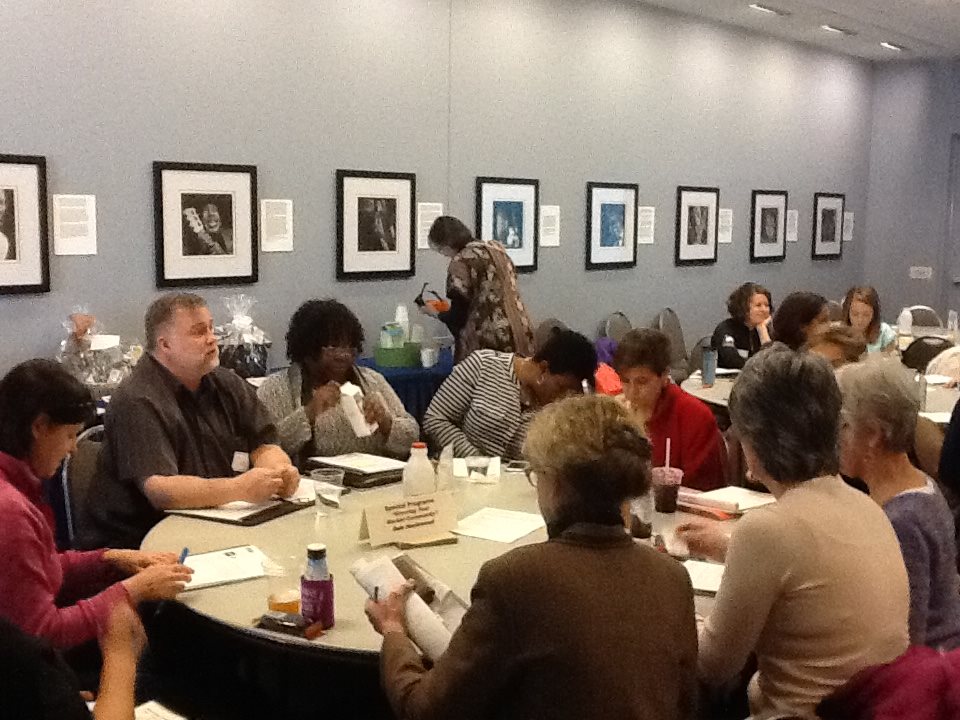
Vermont Roundtable

Vermont Roundtable

Grant season has begun

USDA announces grants

I wish everyone good luck with their proposals and hope that my readers know if I can be of assistance to markets to strategize their proposals or to help to embed metrics for evaluation, feel free to email me.

This report that Farmers Market Coalition did with Market Umbrella in 2013 may be very useful for markets to review to see what other markets have done with their funding and to extract grant writing language used successfully by other markets and food systems.

Also, I am linking the report that I assisted the Real Food Gulf Coast folks with last year. They wanted to collect some simple data on how eaters and producers perceive markets (both those that use markets and don’t use them); the recommendations and marketing strategies will be piloted this year in Mississippi.

Please don’t be afraid to attempt a small grant if you have an idea to build capacity for a market or many markets. The assortment of grant opportunities is wider than ever before and can be the difference between struggling to stay relevant and moving a local food system to the next level.
AND please create an account on grants.gov sooner rather than later; this is the site you use for any federal grant so it takes a step from your later work when uploading a proposal as it takes some time to be approved for an account on grants dot gov.