Americans Prefer Their Solutions Locally Sourced – CityLab

This study may be useful for an economic impact study grant or to research this data in your community. And I might suggest that the bolded sentence in the second paragraph could be used as a way to show farmers markets impact already.

Forty-seven percent of people surveyed said that buying from local and small businesses has the greatest impact on improving life in one’s local area, while 29 percent cited voting in local elections as key, and 20 percent favored volunteering for community organizations. And 53 percent of those surveyed said that their personal resources, like time and money, gave them more ability to make an impact in their local areas. That feeling was particularly strong among people age 39 and younger, according to the polling data.

If Americans prefer grassroots action, then they also see the climate for homegrown solutions improving in small ways: Forty-one percent of people surveyed said that average people had more influence now than they did 10 years ago in bringing about changes in their local areas. Interestingly, women of all ages felt like they had more influence now over local issues than men, of all ages, felt like they had.

Americans Prefer Their Solutions Locally Sourced – CityLab.

St. Joseph’s Day-New Orleans style (March 19)

I thought I would share some pictures uploaded by our recently retired newspaper food editor Judy Walker (seen in one picture in the hat with altar host, Subil Prosper) of her visits to St. Joseph’s Day altars around town. There are also pics of Mardi Gras Indians -taken by local photographer Roy Guste- as St. Joseph’s Day is also a public day for showing off their beadwork and parading.

The holiday is one of my favorites as it is a true New Orleans experience and involves food, superstition (or faith depending on how you look at it),  “visiting” and tradition. Really, this is an extra-extraordinary day among many extraordinary days in New Orleans. The farmers market itself has hosted beautiful altars in years past, courtesy of food maven, media star, and Slow Food founder Poppy Tooker. Each item on the altar has meaning, some to honor different saints or the Trinity or local or family traditions.

Fava Beans
The fava bean was the main food that kept families in Sicily alive during the drought. Italians would carry this “lucky bean” with them for good fortune. If you pick up a dried bean from an altar on this day, you will receive good luck all year.

(I carry one in my wallet.)
Fish
The 12 fish represent the 12 apostles.
Breads Shaped into Symbols
Several breads are made that represent both Jesus and St. Joseph. The symbols include ladders, hammers, nails, saws, lilies, and a staff for St. Joseph; and crosses, palms and wreaths (for the crown of thorns) for Jesus.
Olive Oil and Wine
These serve as a reminder of the many vineyards and orchards in Sicily.
The altar is broken up on St. Joseph’s day and food and donations are then distributed to the poor.

March 19th marks the Catholic celebration of St. Josephs Day where Catholic New Orleanians construct elaborate altars in honor of this saint. The tradition, commemorating the relief St. Joseph provided during a famine in Sicily, began in the late 1800’s when Sicilian immigrants settled in New Orleans. Altars are found at local New Orleans churches, especially those with strong Italian roots, but they are also constructed in private homes, halls, Italian restaurants, and public spaces in different communities throughout the city. If you happen to see a fresh green branch over a local’s doorway, it means you’re invited to participate in the altar ceremony and to share the food.

11012839_10204180055916576_8945360241617603885_o

10560279_10204180068036879_7961606005508740920_o

10551672_10204180068116881_4664508284392355640_o

11049462_10204180075557067_8350118677762870682_o

11050202_10204180078717146_4797496216301078140_o

11079560_10204180060516691_6211015693237136837_o

11053110_10204180060556692_2618619971169178936_o

11054815_10204180060636694_8581993614339307653_o

I’ve also heard raves from friends about this altar.

New Orleans had a large influx of Sicilians in the 19th century who celebrate their patron saint but it is also an important day for the Mardi Gras Indians for more obscure reasons. The Indians activities defy easy description as do their amazing handmade regalia, stitched by the wearers themselves on many a night after getting off their day job. The Indians’s traditions can be viewed at the Backstreet Cultural Museum in Treme and if you are lucky to be in New Orleans on Fat Tuesday and around St. Joseph’s Day or on the Sunday before, you can view these amazing artists on the streets of New Orleans.

this excerpt gives one explanation:

St. Joseph’s Night with the Wild Indians is not an experience to be taken lightly in any measure. It’s the living manifestation of an age-old ritual, preserved and practiced by the descendants of the African slaves, which goes back to the perambulating societies of West Africa and their call-and-response chants, the secret societies of masked warriors which are common to both African and native American cultures, and the unsanctioned moonlight ceremonies conducted by African slaves under pain of death on the plantations of the American South.


photo by Roy Guste

photo by Roy Guste

Joyce Montana (Widow of Big Chief Tootie Montana) and son Darryl Montana. photo by Roy Guste

Joyce Montana (Widow of Big Chief Tootie Montana) and son Darryl Montana. Photo by Roy Guste


Another detractor and another clear need for better data and reporting

The article found here

For those of you who have read my “Big Data, Little Farmers Markets” blog posts linked here, and the Farmers Market Metrics pilots many of us have worked on, you know this is the kind of media that concerns me. I will fully agree that farmers markets have limits to their ability in carrying food equity on their shoulders, although I am not sure that markets ever promised that.

The findings extracted for this article lack necessary context and since the original academic article is behind a paywall, many are left to wonder how closely this piece extrapolated the best ideas from the study. However, I won’t be surprised if this small study did say exactly what has been used here, but I’d hope it made allowances for the small scope of the research and the lack of comparable metrics between community food systems and the industrial retail sector.

Farmers’ markets offered 26.4 fewer fresh produce items, on average, than stores.
Compared to stores, items sold at farmers’ markets were more expensive on average, “even for more commonplace and ‘conventional’ produce.”
Fully 32.8 percent of what farmers’ markets offered was not fresh produce at all, but refined or processed products such as jams, pies, cakes, and cookies.

As those of us know that are working constantly to expand the reach of good food, there has never been a belief among those that run markets that our role was to replace stores, especially the small stores and bodegas likely to be present in many of the boroughs of NYC. Instead, the lever of markets is meant to offer alternatives AND to influence traditional retail by changing everyone’s goals to include health and wealth measures that benefit regional producers, all eaters and the natural world around us.
As far as being more expensive, one might wonder if that the study did not compare the same quality of goods; these price comparisons often compare older produce with less shelf life to just-picked and carefully raised regional goods. I have bought much lettuce this year from a few of my neighboring markets that lasted 3-4 weeks in my refrigerator, which I have never been able to match with the conventional trucked-in produce seen in my lovely little stores that I frequent for many of the staples I need. Additionally, the price comparisons I have conducted or have seen have shown most market goods to be competitively priced or cheaper in season, so this study may need a larger data set or maybe a longer study period.
Generally speaking, refined or processed foods available from cottage producers at a market are markedly different from what is seen in the list of ingredients in most items on a grocery store shelf. Using fruit or vegetable seconds for fresh fruit spread or salsa is common among market vendors and extends the use of regional goods. And of course, balancing one’s diet means allowing for a treat on the table after that good dinner and may actually lead to less junk food later.

And finally, the article does not even consider the positive impacts found in markets for regional producers or neighborhood entrepreneurs; that omission in these type of articles is always a warning to me that we are reading an author who has spent little or no time quantifying the needs of the entire community being served in the market. If you require proof of the need to show the multiple impacts of farmers markets, the author’s curt conclusion should make that need clear:

Sure, they’re a great place to mingle. But as to whether they are a net nutritional plus for the neighborhood, the answer appears to be: Not so much.

(someone needs to introduce this guy to the idea of social determinants of health.)

Even so, as mentioned in those Big Data and FMM posts (a new Big Data post is coming soon), even these weak arguments are still based on data and analysis which means WE need to do a better job as well. It’s high time that we started to publish regular reports from the front lines of farmers markets, CSAs and other food and civic projects that use our own good data to show the impact that we are making everywhere rather than just keep rebutting these viral pieces that offer incomplete or inaccurate snapshots.

Tyler Ortego’s Big Idea is fighting coastal erosion with oysters

1) Food and environment should be linked more often.
2) I think my region will become ground central for innovation on coastal reclamation.
The work along the Gulf Coast to deal with the loss of habitat because of climate change and natural resource depletion could very well become a beacon for other coastal communities. I can tell you that we are here (at the intersection of the busiest set of ports in the Western Hemisphere by the way) and we will remain here as long as we can to find ways to mitigate the loss of land and food.

Some time take a look at the wetlands map of the coast of North America and estimate how much undeveloped land remains in the South that can be the start of reclaiming food and place.
Tyler Ortego's Big Idea is fighting coastal erosion with oysters | NOLA.com.

Growing populations and development along the coasts increase the vulnerability of coastal ecosystems to sea level rise. Development can change the amount of sediment delivered to coastal areas, worsen erosion, and remove or damage wetlands. For example, coastal Louisiana lost 1,900 square miles of wetlands in recent decades due to human alterations of the Mississippi River’s sediment system and oil and water extraction that has caused land to sink. As a result of these changes, wetlands do not receive enough sediment to keep up with the rising seas and no longer function as natural buffers to flooding. Rising sea levels could also increase the salinity of ground water and push salt water further upstream. This salinity may make water undrinkable without desalination, and harms aquatic plants and animals that cannot tolerate increased salinity. In the mid-Atlantic region, sea level rise is making estuaries more salty, threatening aquatic plants and animals that are sensitive to salinity.

We Eat Our Veggies — When We’re Eating Out

If we want to change our diets, maybe we need to think about why the food we buy at the store has so much sugar and so few vegetables. The committee recommended we eat more meals at home, but while that will get us more fruit and less sodium, it’s not going to increase our vegetable intake unless we change our habits.

We Eat Our Veggies — When We’re Eating Out | FiveThirtyEight.

Tom Spicer, the man who taught Dallas how to eat better, has died

Met him once and had a fascinating conversation on food and New Orleans and markets and restaurants and a few other topics. He was a true New Orleanian: engaging, voluble, opinionated and talented at a wide range of crafts.
People like this are necessary to those of us waging the often-solitary fight to build a sustainable food system piece by piece, person by person: they inspire and challenge us with their words and their actions. Thank you Spiceman. Tom Spicer, the man who taught Dallas how to eat better, has died | Dallas Morning News.

2009 Profile

an example of the type of comments left on Dallas sites upon news of his passing:
Tom Spicer meant more to me being in business than anyone. He was one of my first customers and he encouraged me from the very beginning. Tom gave me a list of my best accounts to this day! Tom was so passionate and fun to speak with , he started me off on my food journey in life and was essential in helping my company get started. Fennel and dill pollen spice would never be here today without Tom Spicer.

Has farm-to-table helped the actual farmer yet? – LA Times

The solution for rural economies and small-scale agriculture is not to DIY everything but to build a multifaceted, participatory food system of fully employed food producers, not hobbyists.

Great piece but make sure that you also read the comments attached to see how many people have either “campaign fatigue” about local food or are attached to that trope about how local food can’t feed the world. My comment on there attempts to address that.
Has farm-to-table helped the actual farmer yet? – LA Times.

Mo’ Money? No Problem.

IMG_1536

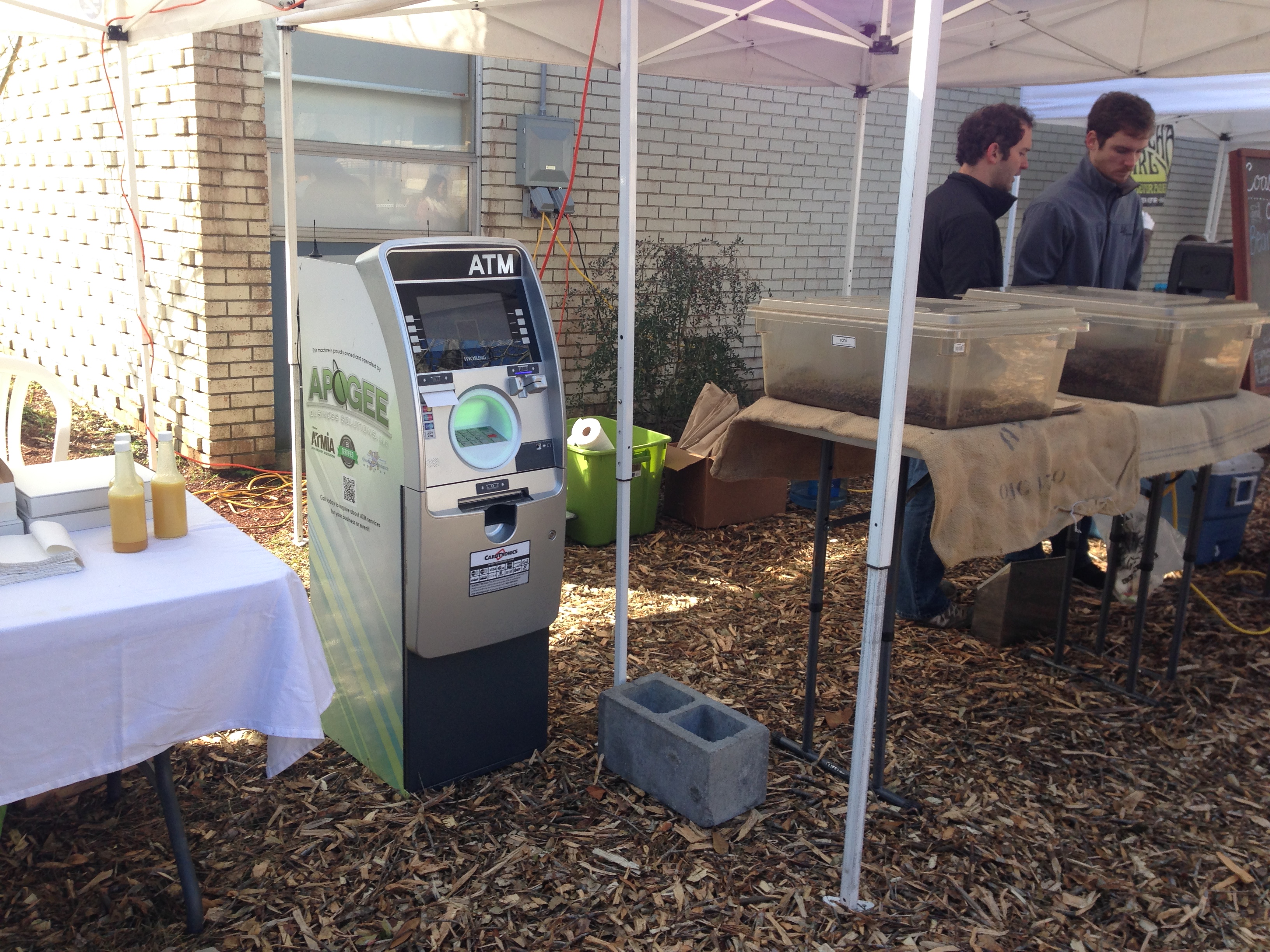
The picture is from my regular weekly, year-round Saturday market, founded in 1996 in the small town of Covington Louisiana, which is only 40 miles north of New Orleans but separated from it by Lake Pontchartrain and its 24 mile-long bridge.

The market is very ably run by sisters Jan and Ann, using very minimum staff hours but with enormous amounts of community buy-in. They have music scheduled every week, often have food trucks and during holidays have author signings or tasting events. The market has loads of seating, a permanent welcome structure with donated coffee and branded merchandise for sale. I tell you all of that to show how they balance the needs of the shoppers (by adding amenities that cannot be offered by the vendors) and the needs of their vendors (they keep the fees low by having less staff hours and carefully curate the products to showcase only high-quality regionally produced items), but also do their very best in their estimation to reduce their own wear and tear as staff.

To that end, they decided long ago to not participate in the same farmers market wireless machine/token system that we had in New Orleans; I had been the Deputy Director of that market organization and in 2006 or so had shared news of our emerging token and benefit program system with nearby markets in case they wanted to add the same; Covington told me then they didn’t see the need in their small town, even though they know and care about the large number of low-income people on benefit programs living nearby and do their best to offer a wide variety of price points and goods. I must confess that after our initial chat I was a bit disappointed by the lack of interest in expanding the reach, but soon realized this was an example of a particular type of market (rural niche) and the leadership was comfortable with the middle-class vibe they had certainly attracted. And I also realized a few years later that if they had been influenced by our complex system, it would have probably been a wrong move for the market at that time (more on that later.)

They knew, however, they at least needed the access for shoppers to get more cash and had asked the bank (a market sponsor) to have an ATM, and had also asked the municipality to add one (the market space is on city hall property), but couldn’t get anyone to move on the request. Finally, a 3rd party entrepreneur approached them to put one in and ta-daa, they finally have their ATM. It is moved in on Saturday morning and out again when the market is done, but the market will have a conversation soon with the mayor (a strong market supporter) about getting it there permanently. I was thrilled to see even that machine, as the nearest bank is blocks away and on far too many days I have grumpily got BACK in my truck to get more cash.

And in the days since those early rounds of proselytizing for (only) a centralized token/EBT/Debit system at every market, my own work has led me to the conclusion that instead there needs to be a suite of systems for markets to choose the appropriate version to process cards, rather than just the one system for everyone. Some markets can serve their shoppers with an ATM (some can own it, some can lease theirs and some can have a 3rd party offer the service like Covington), with some farmers having EBT/debit access on their own; some markets can use a phone-in system for EBT and have a Square on a smart phone at the market or farmer-level; some need the centralized system, but are figuring out electronic token systems; and yes, some do still need to bells and whistles of the centralized token system; and some markets need that system that is still developing, as technology continues to change to add more options for these systems.

What will help this multi-tiered system to happen is for markets to keep on sharing their ideas with each other and to gather data on why their system works for their community. That may be as simple as doing a regular Dot Survey/Bean Poll to ask shoppers about the interest in card use, or doing an annual economic survey like SEED, or asking their vendors on their annual renewal/application form about their use or projected use of card technology (you’d be surprised how many vendors already have Square or another version of it). And markets and vendors that do have the technology need to track the time and effort it takes to process cards and to build the entire system, which includes some outreach and marketing, and a significant amount of bookkeeping and share that information.

I keep gathering examples of innovation among markets and hope that sooner or later I (or other more able researchers) can be tasked with conducting in-depth research about those ideas to offer the market field a more comprehensive and dynamic view of all of the great ideas managed by our market systems. In the meantime, if you come to Covington your pajeon (warm Korean pancake) is on me; after all, I’ve got the cash.

FMC’s Free SNAP EBT Equipment Program is Open

As you may have heard, the United States Department of Agriculture (USDA) Food and Nutrition Service (FNS) partnered with the Farmers Market Coalition (FMC) to provide eligible farmers markets and direct marketing farmers with electronic benefit transfer (EBT) equipment necessary to process Supplemental Nutrition Assistance Program (SNAP) benefits.

WHAT


FMC will cover the costs of purchasing or renting SNAP EBT equipment and services (set-up costs, monthly service fees, and wireless fees) for up to three years. After their application has been approved, eligible farmers and farmers markets will choose their own SNAP EBT service provider from a list of participating companies. Transaction fees (for SNAP EBT, credit, and debit payments) will not be covered.

WHEN


The application period will open at 9:00am EST Tuesday, February 17th, 2015. This is a first-come, first-serve opportunity, which will be over when all the funds have been allocated. Don’t wait!

WHO


SNAP-authorized farmers markets and direct marketing farmers (who sell at one or more farmers markets) are eligible for funding if they became authorized before Nov. 18, 2011, AND fall into one of the following categories:

A. They do not currently possess functioning EBT equipment; OR

B. They currently possess functioning EBT equipment, but received
that equipment before May 2, 2012.

Wondering what qualifies as ‘not currently possessing functioning EBT equipment?

Markets and farmers do not currently possess functioning EBT equipment if:

They currently rely on manual/paper vouchers to accept SNAP,
They do not currently accept SNAP and have never possessed functioning SNAP EBT equipment, or
They do not currently accept SNAP because their EBT equipment is
:
Damaged beyond repair.
Non-operational because their SNAP EBT service provider no longer offers SNAP EBT processing in their state.
Stolen or lost.
For more information on the program, including frequently asked questions, an eligibility chart, background information and application instructions, visit them at farmersmarketcoalition.org/programs/freesnapebt
found here.

CSA FARMS CELEBRATE NATIONAL CSA SIGN-UP DAY FEBRUARY 28

(By the way, brilliant marketing idea to explain that this CSA “event” is scheduled on what has been the most popular CSA sign up day of the year in the past. What similar idea could the farmers market field adopt I wonder?)

PITTSBURGH, PA (February 23, 2015): Farms from around the country are celebrating National CSA Sign-Up Day on February 28. The day encourages food consumers to buy a share of their local farm’s harvest for the 2015 season, a buying model known as Community Supported Agriculture, or CSA.

CSA has become an important model to support local agriculture since it was introduced to the United States in the 1980s and since grown to over 6,000 farms across the country. To join a CSA, members buy a share of the harvest in the Winter and Spring and then get a box of local produce each week throughout the growing season.

“CSAs are the most authentic connection between a farmer and eater available. CSA members get the freshest, high quality, seasonal local produce, but they also get a direct connection to their farmer. This model is economically important to farmers, especially small and beginning farmers, because they can grow with confidence knowing that they have a market for their produce ahead of time.”, says Simon Huntley from Small Farm Central, a technology company that works with CSA farms across the country, and the creator of National CSA Sign-up Day.

February 28th was chosen as National CSA Sign-up Day because this day is the most popular day to sign up for CSA shares according to the 2014 CSA Farming Report. Buying a CSA share in late winter is important because farmers are making the capital investments for this year’s harvest now and the CSA model means they do not need to finance these costs with costly credit.

“The CSA model was what allowed me to start my own farm business at age 23. Without the sale of CSA shares, I would not have been able to buy seeds, potting soil, fertilizer, or anything else. Six years later, my business is still going strong, and it’s because of the CSA. Access to capital in the off-season; the meaningful connections between farmers and CSA members; the sense of ownership and pride members feel about their CSA farms–all these things add up to healthy farms, businesses, and communities. The CSA model is good for everybody,” says Laura Olive Sackton, owner of First Root Farm in Concord, Massachusetts.

For eaters looking to join a CSA, a searchable database of CSA farms is available at localharvest.org.

To learn more about National CSA Sign-Up Day and the CSA model, visit http://www.csasignupday.com.

For more information, please contact:

Small Farm Central
Simon Huntley
simon@smallfarmcentral.com
http://www.smallfarmcentral.com
412-567-3864

###

S.F. property owners to get tax break from creating urban farms

Under the new law, the five-year contract stays with the property even if it’s sold, but if an owner wants to get out of it they can pay back taxes and interest. San Francisco’s ordinance limits the tax savings of individual property owners to $25,000 per year; if the savings are higher, an official review is necessary. City officials in Sacramento, Fresno, San Jose and San Diego have expressed interest, but haven’t yet passed the necessary local legislation.

Los Angeles is close to doing that, and Clare Fox of the Los Angeles Food Policy Council estimates there are 8,600 parcels within Los Angeles city limits that qualify.

How nice to see so many benefits listed for growing food:
“It’s about food security and food access, but it’s also about transforming blighted vacant places that are prone to illegal dumping into community places,” she said.
“It’s a way to beautify the neighborhood and stabilize real estate values. Plus, there are the environmental benefits.”

S.F. property owners to get tax break from creating urban farms – SFGate.

Protestors rally in support of Golden Gate farmers market

FYI- this is Florida and not northern California..

A few issues that I would like more information about from this story: one, if the market and the county had communicated in the past and two, how many local people think that flea market goods have too much room at this market and if they agree that a farmers market should not contain those goods. I’m not advocating for flea market goods at markets (my own markets were very strict about any non-food goods) but whether it is true that flea market goods are taking up most of the space in this market and whether those flea market goods have a place in farmers markets should be up to the local community, which certainly includes the municipality in question, but doesn’t mean the commissioners should decide these issues alone. It is important to note that in many cases across the Americas, staple markets have a place in many communities and can be a very useful type of market for small rural communities or for immigrant communities.

Lastly, the rule to only allow open-air markets to operate only 28 days per year seems awfully restrictive. I wonder when that was passed in Florida and how many counties have that rule? And is it to restrict flea markets but ends up restricting farmers markets too? I do know from my pals in farmers markets in Florida that the use of the term farmers market is all over the place across the state; resellers use the term in normal practice and of course, in a state like Florida that has massive agricultural exports, small farms and direct marketing are not likely to be valued as highly as in other states. Of course, California does have a thriving farmers market system, but also has a very different political climate and history.

For all of these issues, this is why I advocate for formal rules that allow for constant transparency and clarity in market governance. Rules that explain why, when, how and for whom a market operates can help reduce these issues before they get to crisis stage. In addition, this is also why I hope Farmers Market Coalition and their partners are successful in building a simple and usable data collection system; If all markets could gather a few comparable metrics each year, these issues might be more easily diverted or at least, add facts to lessen a charged situation.

The controversy started when Collier County commissioner Tom Henning used the word “gypsy” to describe vendors at the Golden Gate Community Center market. Commissioner Henning wanted to protect a business that complained the farmers market shoppers were taking up his parking spots….
While county commission retracted their initial vote to shut the market down, their problems aren’t over.

County laws say open-air markets can only operate 28 days a year. But vendors at the farmers market want to stay open all year. A petition with 1,300 signatures will be presented at a county commission meeting on Tuesday.
this from another
Taylor said the county’s issue is that it’s not a farmer’s market, but more of a flea market and it appears to be disrupting local businesses.

Protestors rally in support of Golden Gate farmers market – NBC-2.com WBBH News for Fort Myers, Cape Coral & Naples, Florida.

Big data, little farmers markets Part 2: The minefield of analyzing Big Data

In the first installment of this series, I introduced the idea of Big Data, the Internet of things (IoT) and what social media has promised and what it has delivered. I promised some thoughts on analysis next. here goes:

•Big Data is partly defined by its resistance to analysis. The volume, velocity and variety of Big Data makes problems for easy collection and analysis. This story on the struggle among safe street advocates to find good data speaks to that issue.

•Big Data is probably more appealing to advertisers than to our often shadowy government at this point but still, we should keep an eye on both of them and their analysis/use of Big Data.

•Lastly, as put so well by the author of Dataclysm: Who We Are (When We Think No One is Looking), much of behavioral science research is based on WEIRD research: White, educated, industrialized, rich and democratic nation’s subjects. Big Data may help to offset that issue.

Markets already intersect with Big Data across many different sectors, such as health care, the public sector, agriculture and retail. So let’s think about how this could play out for markets:
What if a researcher used the total dollars spent at markets on SNAP and compared it to grocery store SNAP sales on a map, not adjusting for hours open or the number of goods or markets available or fixed costs to offer those goods? Or how about the decrease in certification for organic farmers among market vendors – What if that was just a graph showing the decrease year after year, without the analysis that many farmers stated that they feel they do not need certification while they sell directly to shoppers and are therefore able to explain their practices? What if those maps/graphs were what influenced policymakers?

Some scenarios to ponder:

    •Market A (which runs on Saturday morning downtown) is asked by its city to participate in a traffic planning project that will offer recommendations for car-free weekend days in the city center. The city will also review the requirement for parking lots in every new downtown development and possibly recalibrate where parking meters are located. To do this, the city will add driving strips to the areas around the market to count the auto traffic and will monitor the meters and parking lot uses over the weekend. The market is being asked for its farmers to track their driving for all trips to the city and ask shoppers to do Dot Surveys on their driving experiences to the market on the weekend. Public transportation use will be gathered by university students.

    •Market B is partnering with an agricultural organization and other environmental organizations to measure the level of knowledge and awareness about farming in the greater metropolitan area. For one summer month, the market and other organizations will ask their supporters and farmers to use the hashtag #Junefarminfo on social media to share any news about markets, farm visits, gardening data or any other seasonal agricultural news.

    •Market C is working with its Main Street stores to understand shopping patterns by gathering data on average sales for credit and debit users. The Chamber of Commerce will also set up observation stations at key intersections to capture visual data on visitor behavior.

    •Market D has a grant with a health care corporation to offer incentives and will ask those voucher users to track their personal health care stats and their purchase and consumption of fresh foods. The users will get digital tools such as cameras to record their meals, voice recorders to record their children’s opinions about the menus (to upload on an online log) with their health stats such as BP, exercise regimen. That data will be compared to the larger Census population.

In all of these cases, the data to be collected crosses sectors and systems, meaning that no one entity has all of the raw data at their disposal at all times. That boils down into Analysis Issue #1

In all of these cases, the data to be collected has many ways to be interpreted, based on which entity is interpreting the data. Analysis Issue #2

In most of these cases, the data collected requires some self-reporting. Analysis Issue #3

In some of these cases, privacy controls must be strictly managed and will affect how much analysis can be done. Analysis Issue #4

from the New York Times:
“The first thing to note is that although big data is very good at detecting correlations, especially subtle correlations that an analysis of smaller data sets might miss, it never tells us which correlations are meaningful (italics added). Analysis Issue #5

Check out this site for fun examples of how matching correlations doesn’t always add up to good conclusions.

The thing we should be able to agree on: all partners should be involved with the analysis and should receive access to the raw data. That means markets participating in just the data collection piece is not enough. They need to be involved in the analysis because if not, the context of markets will be lost.
Yet we know that just collecting the data is be a massive undertaking for low-capacity markets (even assume some funding is offered in all of these cases for the partners to staff the collection of the data), not even adding in the time and effort it takes to analyze it. What might help is to have some analysis prepared ahead of time and to prepare the market community for participation.
1. This means that every market association, or group of markets or markets themselves should keep information about each market’s history, size, structure and staffing in separate PDFs. This, by the way, is a resource that Farmers Market Coalition (for whom I am a consultant) is working on with one of their university partners, the University of Wisconsin to pilot for their AFRI Indicators for Impact project . Hopefully, the Market Profile will be available online for all markets to test in 2015- stay tuned!
2. Markets need to know the area’s current demographic and other relevant details. Check the census to know what the larger population’s stats are and make friends with real estate professionals to keep up on trends in the neighborhood.
3. Do a Dot Survey or Bean Poll a few times a year asking shoppers to tell you what zip code they live in, how they come to the market, things like that and keep track of that data. Maybe a big dry wipe calendar on the wall to add all data collected?
4. Market boards and advisors should keep any data already collected and the Profile information to be able to share it as needed in any meeting they happen to attend in their own professional lives.
5. When researchers do come to your market with an offer to help with data collection, be ready to ask for data you want. How about asking for focus group data so that a market can begin to build “persona profiles” of those who come to the market? Or ask for added analysis for numbers that you think might be important for the market: those who know me have heard my song about finding a way to track the number of return SNAP shoppers and how I think it that metric is so useful for markets and possibly even more useful than total SNAP dollars, in terms of analysis.

5. Encourage city or county public health agencies to offer a semi-annual breakfast for those entities that work on community interventions (like markets, health clinics, social service entities, university programs, youth outreach etc) to share news about what they are seeing in their field and to share any data informally. If meetings are impossible, then a regular email would work. In other words, stay in touch with other data collection efforts in your community.

I’ll end this post with some of the lovely words of Dataclysm author Christian Rudder who was talking about the Vietnam Memorial’s physical self versus its online database self:

“A web page can’t replace granite. It can’t replace friendship or love or family either. But what it can do – as a conduit for our shared experience – is help us understand ourselves and our lives. The era of data is here; we are now recorded. That, like all change is frightening, but between the gunmetal gray of the government and the hot pink of product offers we just can’t refuse, there is an open and ungarish way. To use data to know yet not manipulate, to explore but not to pry, to protect but not to smother, to see yet never expose, and, above all, to repay that priceless gift we bequeath to the world when we share our lives so that other lives may be better – and to fulfill for everyone that oldest of human hopes, from Gilgamesh to Ramses to today:that our names be remembered not only in stone but as part of memory itself.”
I think I’ll adopt that bit as my mantra.


Odds and ends from the Washington State Farmers Market Association meeting

View from the conference dining room

View from the conference dining room

Just got back from a great farmers market association meeting in Olympia WA with what I hear was around 200 participants but seemed like double that with the ideas and networking flying around. Karen Kinney, WSFMA’s impressive Executive Director could be seen everywhere, adding content to their market bootcamp, introducing sessions, setting up table displays, and making time to chat with anyone who stopped her, like Farmers Market Coalition Executive Director Jen Cheek, or even a random consultant from New Orleans…
2015-02-08 19.27.40Jen and Karen

In many ways, Washington represents the apex of the U.S. market work right now because of the serious attention paid to building the capacity of market organizations themselves and their work on regional and national issues that benefit all markets and their communities. (California has to be exempted from any comparison as it is always is a decade or so ahead of the rest of us.)
I have found that meeting long time and full-time market professionals in Washington is not unusual, nor is finding stable and expansive market organizations across the state that offer their communities tons of resources and spend time to increase the connections between direct marketing producers and shoppers in their region. One of the indicators for the flagship market typology is the ability of the market to look “outward” and assist the larger food system or other market organizations. Flagship markets seem to abound in Washington.

There is no doubt that the WSFMA is considered one of the top (flagship?) associations in the country by most market advocates and partners with Massachusetts, Michigan, New Mexico, New York thought to be in that same tier too.
In recent years, the level of sharing that Michigan and Washington especially have done on programs such as Washington’s benefit program pilots/card technology research, its data collection and policy work and Michigan’s respected manager certification program really stand out. Pennsylvania’s PASA, although not specifically a market association, should be mentioned for its excellent service for markets in their very large state. I can also tell you that in all of my work with markets in any state, I go back to these folks time and time again for input or to ask them to share their analysis and they always deliver.
Many younger or all-volunteer associations are coming right behind in the level of resources or strategy they are offering in their state to increase market professionalism – some of the ones I am asked about regularly are Illinois, Maryland, Minnesota, Ohio, Oregon, Vermont and West Virginia. Sorry if I left any out, that was just off the top of my head…

The Vancouver Farmers Market gorgeous literature and materials on display

The Vancouver Farmers Market’s gorgeous literature and materials on display


The WSFMA market bootcamp run by WSFMA board member Ann Foster and WSFMA staff member Jennifer Brown,

The WSFMA market half-day bootcamp run by WSFMA board member Ann Foster and WSFMA staff member Jennifer Brown and assorted speakers.

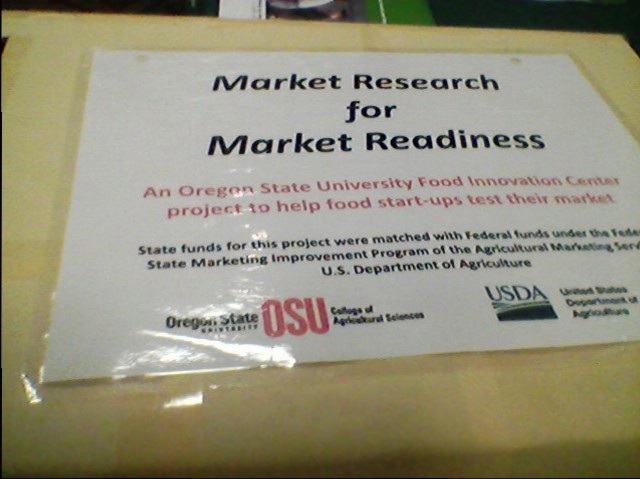
great display of a project to help start-ups test food products. They have a program at OSU to conduct surveys for producers and help them figure out the best products to get the best niche.

great display of a project to help start ups test food products. They have a program at OSU to conduct surveys for producers and help them figure out the products to get the best niche.

I saw a bunch of great resources, a few workshops and had dozens of conversations about some fascinating market projects.

Here are some:

The 2014 CSA Farming Report

List of Washington’s Top 10 most frequently purchased minimally processed F&V

Details on the pilot project for procurement of unprocessed f&v

WA Cottage Food Operations Permit

Loads of information on both MarketLink‘s new and improved services and FMC’s new replacement technology program. Amy Crone of MarketLink and Jen Cheek of FMC presented together and were ably assisted by Suzanne Briggs.

I also learned about the Moscow Idaho market, Gorge Grown’s interesting mobile market, discussed data collection with a trio of rural Oregon markets, and heard a RIVETING presentation by Washington State University Small Farms Coordinator Colleen Donovan. Colleen used her time to lead a spirited discussion with the entire room of farmers and market leaders about her survey data collected in Washington State on farm and market farmer characteristics. Donovan is an advisor to the Farmers Market Metrics work and did a great 2013 workshop for FMC that can be heard and seen on FMC’s YouTube channel. Check out her work; even though it is for Washington, her methods and analysis are vital for any and all markets to see. I left thinking (and saying): every state needs a Colleen Donovan.

So, now I’m back home with some time to experience our holidays here (Mardi Gras is Tuesday February 17 this year, and no, it’s probably not what you imagine it is…) and then to read all of those reports and keep on working inspired by the new connections and knowledge gained in Olympia.