Let’s be clear: Independent Contractor or Employee?

One of the projects on which I will be working (TBA soon) may help to address some of the employment issues that I see within food systems, especially markets. Here is one of those issues, how markets employ their market staff.
This is from the IRS website:

“You are not an independent contractor if you perform services that can be controlled by an employer (what will be done and how it will be done). This applies even if you are given freedom of action. What matters is that the employer has the legal right to control the details of how the services are performed.”
——————————–
The decision is based on three areas:

Behavioral: Does the company control or have the right to control what the worker does and how the worker does his or her job?
Financial: Are the business aspects of the worker’s job controlled by the payer? (these include things like how worker is paid, whether expenses are reimbursed, who provides tools/supplies, etc.)
Type of Relationship: Are there written contracts or employee type benefits (i.e. pension plan, insurance, vacation pay, etc.)? Will the relationship continue and is the work performed a key aspect of the business?

Independent Contractor (Self-Employed) or Employee?.

Eating seven or more portions of fruit and vegetables a day reduces your risk of death by 42 percent — ScienceDaily

Eating seven or more portions of fruit and vegetables a day reduces your risk of death by 42 percent — ScienceDaily.

CFA study of direct sales and agritourism shows some ups and downs

From FoodTank: “On-farm enterprises that focused their business plans on local communities were labeled community-focused agriculture (CFA). This included farms that sell their produce directly to consumers and generate farm income through agritourism. According to the report, only 6.2 percent of all farms deal in direct sales, and around one percent report income from agritourism (all study figures are based on USDA statistics from 2007, the most recent year available).

Studying CFA influence on a national and county-by-county level, researchers found some surprising results. In New England and Mideast counties, regions with well-developed urban centers in proximity to CFA, direct sales increases were associated with increases in total farm sales, as well as personal income growth. Agritourism, on the other hand, was found to have a negative effect on total farm sales.

In the Southeast, increases in direct sales were associated with overall reductions in total farm sales. However, the reverse was true for the effect of agritourism on total farm sales, which was found to be positive in this region and in the Great Lakes.”

“Linkages Between Community-Focused Agriculture, Farm Sales, and Regional Growth”
Economic Development Quarterly 0891242413506610, first published on October 18, 2013

The Crunchy Cities Index – Support Farmers Markets

This is an exciting piece on the explosion of farmers markets, but I must confess that based on my own knowledge, I find the data to be less than precise. The USDA list of markets is not checked for accuracy and as it is up to market organizers to list and to de-list their own markets, most estimations believe that the list is far from accurate, even though the USDA does everything within its (limited) time to make it right. Even the definition of what can be listed as a market is loose; this may seem like nitpicking (after all more “markets” is good news isn’t it?) but since we know how the capacity of markets remains low partly because of low support among funders and policy makers, the lack of clarity may hurt chances to expand well-managed farmers markets or public markets that support local entrepreneurs.
What is also true is that many retail operations masquerade as farmers markets without directly supporting farmers or managing those involved in direct sales; regular operation, transparent governance and some direct sales for regional producers should at least be the minimum to being listed on this list. Don’t get me wrong; I like the idea of auxiliary and ancillary food initiatives that get regional food into more communities being listed somewhere and to be tied to efforts at flagship or sister market organizations, but we should get better at describing each of them with their own type so we can allow more to flourish.

The Crunchy Cities Index – Buy Local by I Support Farmers Markets.

You Get What You Measure

I look forward to this measurement workshop, which I plan on attending. It is open to the public and the cost is very reasonable, so anyone in the Baltimore area might want to join or look at their other opportunities. I am currently involved in a few evaluation projects, at implementation (market) level and at the creation level-at least one with the Farmers Market Coalition. I hope to announce another of those projects soon on this blog (meaning as soon as the funder is ready to announce!). In the meantime, I hope many of you saw the announcement we made about the FMC/Knight Foundation Farmers Market Metrics Prototype project which is rolling merrily along:

Knight Foundation Prototype Grant

Yellow WoodYou Get What You Measure

The Agrarian Standard | Wendell Berry

Recently, I was working on a piece for The Nature of Cities blog, and wanted to re-read something that Wendell Berry had said about the agrarian culture; I found the 2002 Orion Magazine essay in which he reflects on the 25th year of publication of The Unsettling of America. I think the paragraph below is enormously descriptive of the tension that those of us involved in creating an alternative agrarian world work and live in:
To the corporate and political and academic servants of global industrialism, the small family farm and the small farming community are not known, not imaginable, and therefore unthinkable, except as damaging stereotypes. The people of “the cutting edge” in science, business, education, and politics have no patience with the local love, local loyalty, and local knowledge that make people truly native to their places and therefore good caretakers of their places. This is why one of the primary principles in industrialism has always been to get the worker away from home. From the beginning it has been destructive of home employment and home economies. The economic function of the household has been increasingly the consumption of purchased goods. Under industrialism, the farm too has become increasingly consumptive, and farms fail as the costs of consumption overpower the income from production.

The Agrarian Standard | Wendell Berry | Orion Magazine.

Innovation through your people

Read a recent article on innovation, and I think the point about how to keep innovation alive, even with departing staff (or board) is crucial for market and food organizations to think about.

“Organizations really need to reexamine their management attitudes and practices within a new and more sophisticated framework of innovation. It is important that everyone actively seek out and support the human agents of innovation through, not only the best practices of good management, but also creative initiatives aimed toward innovation at all levels of the business. Assuming a degree of mutual trust and respect has been properly developed, when good people get ready to leave, organizations need to step up their efforts to maintain some sort of ongoing relationship.

A much broader, more human-centered framework for innovation may take on many forms, but could include a range of opportunities to have departing talent on the hook as speakers or mentors within a group. There should also be incentives to build joint ventures with the most entrepreneurial of the bunch, including seed money for new enterprises that feed into market niches of the organization’s endeavors.”

And if you missed this free workshop offer in an earlier post, here it is again:

https://darlenewolnik.com/2014/03/10/free-human-centered-design-workshop-offered/

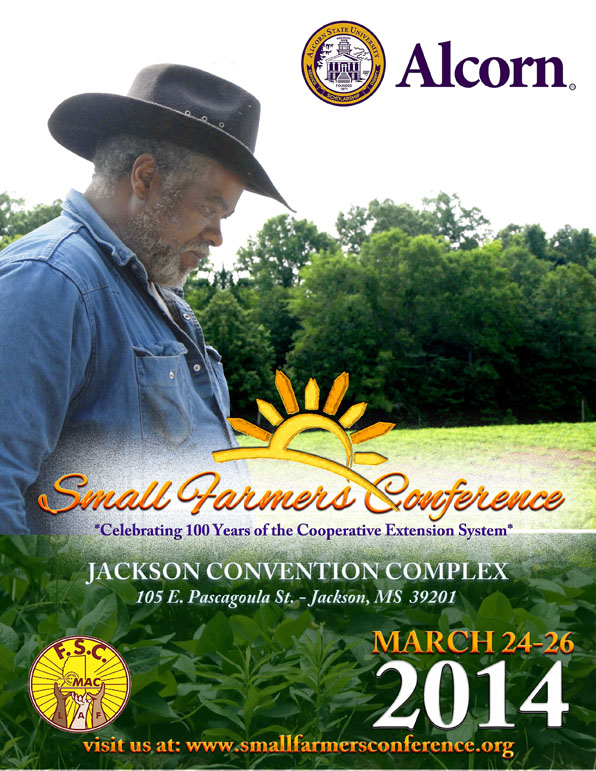
2014 Small Farmers Conference in Jackson MS

The 23rd annual Alcorn State University Extension Program (ASUEP) Small Farmers Conference, slated for March 24-26, 2014, will be held at the Jackson Convention Complex, 105 E. Pascagoula St., Jackson, Miss.
“Using Smarter Innovations to Strengthen Agriculture” is this year’s conference theme. The event is co-sponsored by ASUEP and the Mississippi Association of Cooperatives (MAC).
2014 SFC Web Registration

The evolution of fresh food — Back to the land — or at least to the farmers’ market :: by Amy Halloran :: Culinate

A well done piece by a former farmers market manager and constant supporter of farms about the evolution of markets and healthy food alternatives.

The evolution of fresh food — Back to the land — or at least to the farmers' market :: by Amy Halloran :: Culinate.

As Farm to Plate movement blooms, Vermont food and farm jobs help drive economy

In January 2011, when the Farm to Plate Strategic Plan was released, an economic analysis indicated that with every five percent increase in food production in the state, 1,700 new jobs would be created. Goal #1 of the Farm to Plate Strategic Plan is to increase Vermonters’ local food consumption from five to ten percent over ten years.

As Farm to Plate movement blooms, Vermont food and farm jobs help drive economy – Burlington Sustainable Agriculture | Examiner.com.