News & Events | VEGGI Farmer’s Cooperative

This is a new Vietnamese-led growers initiative in New Orleans. I hope we begin to see more production cooperatives among farmers, especially urban and peri-urban farmers.

News & Events | VEGGI Farmer's Cooperative.

Ask away…

To follow up on Monday’s post on excellent questions NEVER to ask farmers at a market, here is a great site full of questions once SHOULD ask a farmer. I can envision these on a laminated card at the Welcome Booth or maybe on Facebook with a few listed weekly. Questions for farmers

Four Questions You Should Never Ask at a Farmers Market | Civil Eats

I agree with 3 of the 4. I think it’s okay to ask if you can buy something early-the market should have a way to answer that question, and sometimes it’s allowed. And yes, sometimes stores do let customers in early.

I also think when someone asks about a farmer’s life (like when do you get up?) it is only to learn and to connect. If it doesn’t offend you, you can use the moment to teach other people about the life of a farmer. But dear shopper, do beware the grumpy (tired) farmer!

Four Questions You Should Never Ask at a Farmers Market | Civil Eats.

Vermont Law School Helps Farmers Markets and CSAs

Good overview of the new Center for Agriculture and Food Systems at Vermont Law School that Laurie Ristino is heading. I am honored to be part of one of their first grants to help markets, written in partnership with NOFA-VT. If the proposal is successful, legal resources will be written for markets and for CSAs over the next few years.

VT Law

Regulating the life out of community food systems

A link to an excellent opinion piece by Stacy Miller, project director at Farmers Market Coalition where the deep crisis of regulatory burden on small family farms is addressed. No question that the lack of clarity among cities, states and the federal government to write and administer common-sense regulation is one of the most important areas that all food system organizers and practioners need to work together to solve.

HuffPost piece

Cleaver & Co. New Orleans

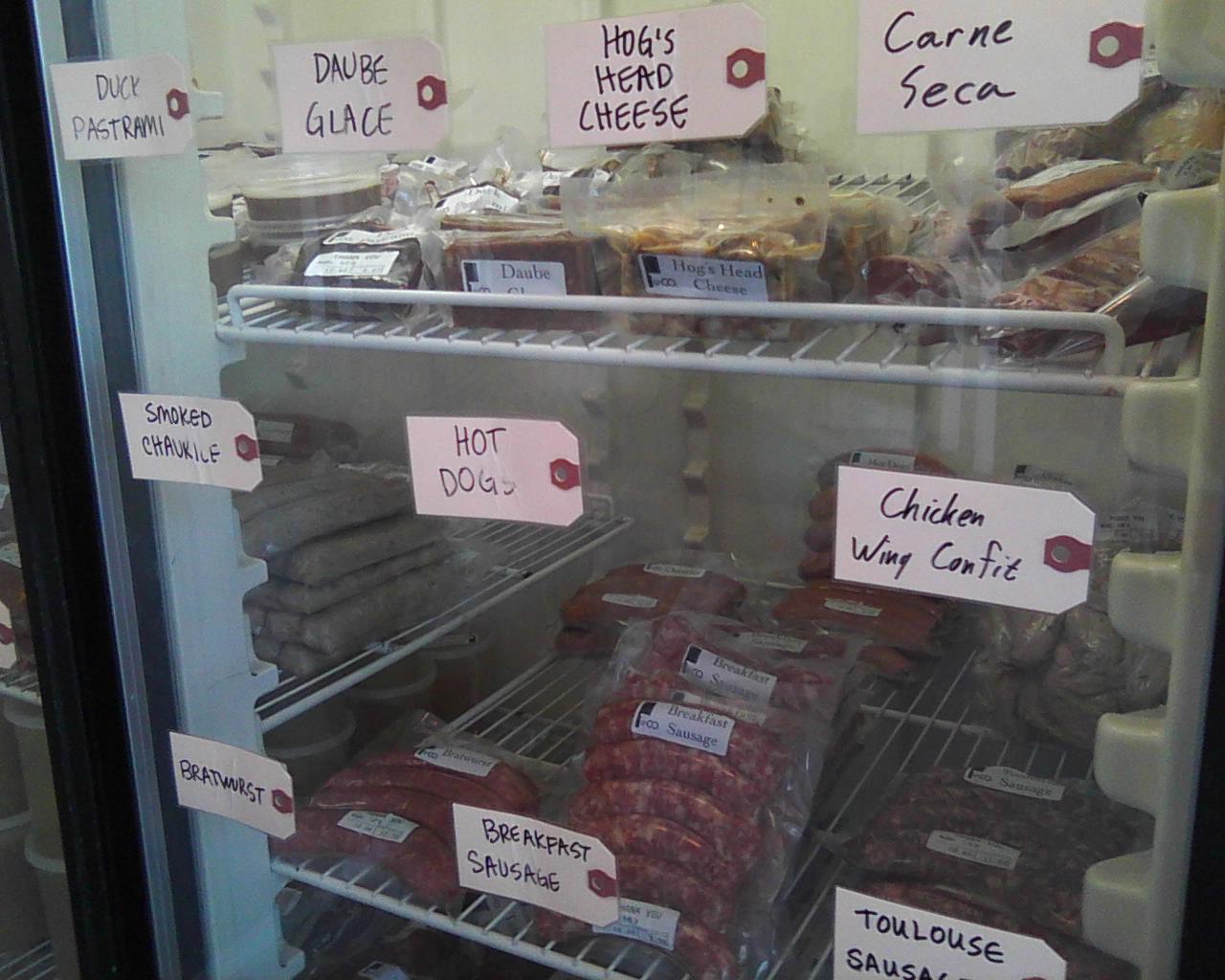
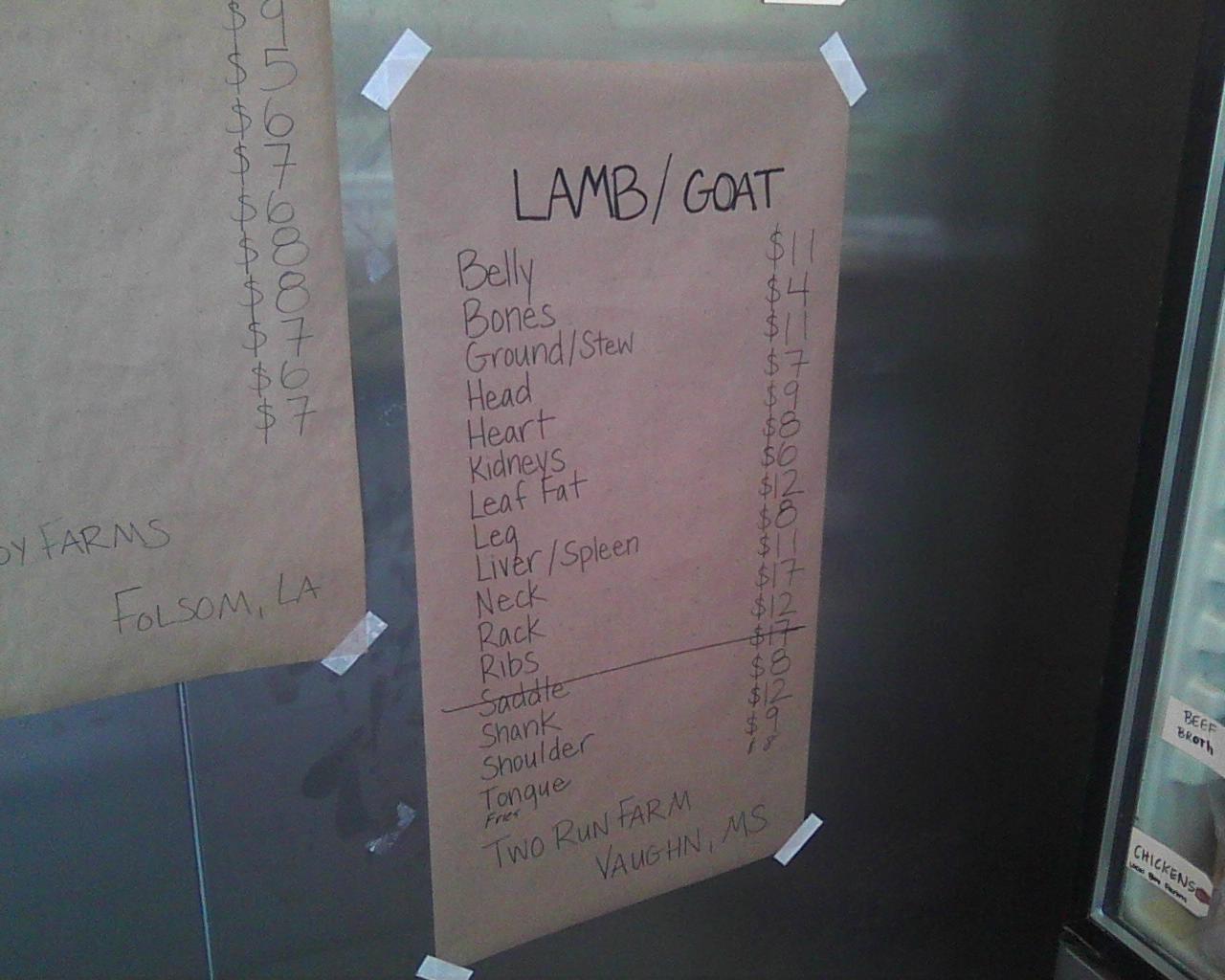
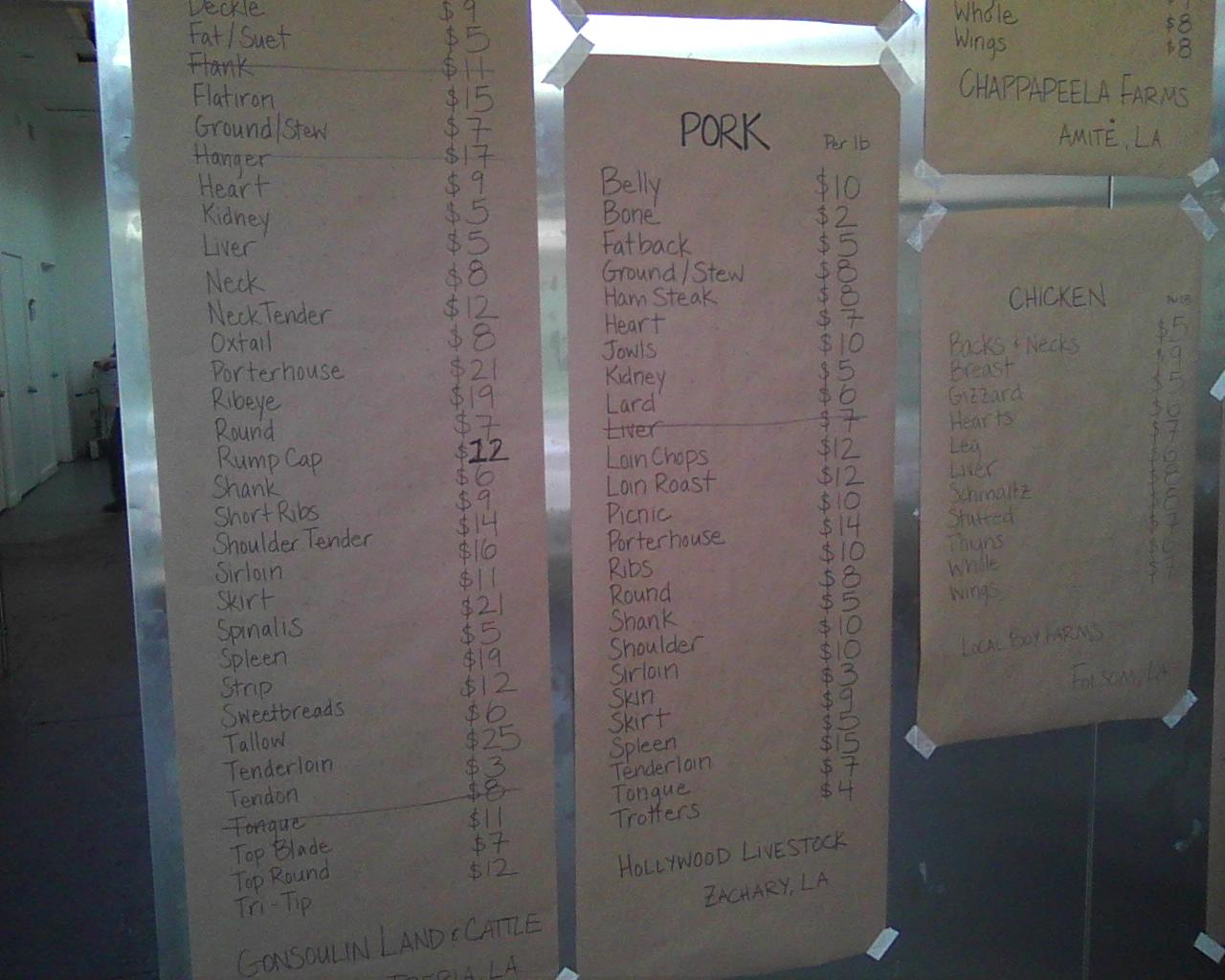
I just visited the newest member of the New Orleans localvore family, Cleaver & Co. a no-frills, full-service butcher shop. The posted educational information at this store is easily understood but when necessary, the staff is quite knowledgeable when it comes to more in-depth questions. It makes me think about how we communicate livestock issues and value within farmers markets; has the consumer education gone as deeply as it has for fruit and vegetable production? Should market managers explain the regulation and production issues in more detail than we have? Really, how much do market managers actually know about what unique issues these producers face, such as amount of land needed for grazing, treating animal illnesses naturally, finding healthy feed, selecting the right USDA processor when applicable and so on…


130803_0002

130803_0003

130803_0004 (1)

Maryland Food System Map | Center for a Livable Future

This is one of my favorite food system sites . Wouldn’t it be great if each state and every regional projects collected and shared this type of visual data?

A screen shot of the Maryland Food Map circa July 2013.

A screen shot of the Maryland Food System Map circa July 2013.


Note from the organizers:

Map updates include expanded Nutrition Assistance data and updated points of interest for Maryland.
Nutrition Assistance – new and updated data about federal nutrition assistance programs.
SNAP usage by Zip Code
Schools with 50% or more children who are eligible for free and reduced cost meals
Afterschool Meal Program Sites
WIC office locations
NOTE: The following existing data layers have been moved to this category:
SNAP Participation by County
SNAP Retailers
WIC Retailers
Points of Interest – updated points of interest note changes in addresses and expand lists statewide.
Institutional sites in this list – schools and hospitals – will be expanded further this year, as we gather data and statistics about how these institutions are using local food. Here are the layers currently updated:
Hospitals
Public schools
Recreation centers
Senior centers

Maryland Food System Map | Center for a Livable Future.

Celebrate Farmers Market Week with FMC

Farmers Market Coalition

It’s officially NATIONAL FARMERS MARKET WEEK. Use hashtag ‪#‎FarmMktWeek‬ to share your markets’ happenings, and use ‪#‎FMCFUN‬ and ‪#‎FMCCookingDemo‬ to take part in FMC’s Instagram Challenges this week.

How Fracking Affects Your Farmers Market

“As fracking expands into areas that are home to some of the most productive farmland in the world, questions need to be raised regarding the long-term safety for the agricultural industry.”

Read more: http://www.care2.com/greenliving/how-fracking-affects-your-farmers-market.html#ixzz2b0f0EWi3

How Fracking Affects Your Farmer's Market | Care2 Healthy Living.

As some of you know, I believe that the era of mission-driven farmers markets has just begun and that how we view our work needs to expand to help the farmers and buyers that we work with. In that mindset, we should begin to examine the idea of public markets entirely devoted to restaurant/grocer (then wholesale) sales of local goods, curated with the same intention and mission by those of us that currently manage retail farmers markets.
In order to do that, we should learn from wholesale terminals such as this one in Canada. I found a couple of things within this article about the Ontario Terminal fascinating. My notes are in italics.

In less than 40 seconds, DiLiso has placed his order: cabbage, cipollini onions, bean sprouts and bok choy. Na enters the data on a hand-held digital device then, with a mutual nod, moves on to another client, leaving DiLiso to gather up his vegetables.
That’s how deals are done at The Ontario Food Terminal, the giant U-shaped building on 16 hectares off the Queensway in west Toronto: friendly, no-nonsense, fast.

(Notice the ability to enter sales on a hand held device?)

———————————–

DiLiso and his small crew criss-cross the market to find sellers they trust who have the best deals on vegetables.
“It’s all about relationships,” DiLiso says.

(I dunno- it sounds like it is as much about price?)

Ontario Terminal story

“Familiar Strangers”

Supporting (and understanding) strong and weak ties is a fascinating part of the work that markets do to build food systems. This story expands into another area: “familiar strangers” or people that we see on a regular basis in our daily lives. Markets obviously figure into this type of research.
What I have learned from sociologists is that strong ties are those kinship relationships that you turn to for support. Weak ties offer support through their number and through the diversity of acquaintances that can offer advice and connections, and of course, that can grow into strong ties. This change happens in community settings like markets.
The public health sector is one that relies deeply on markets work with both and with familiar strangers. The word of mouth work to encourage citizens in low-income and adverse areas to begin market shopping is based on this science. Additionally, working to encourage families and children to market as well as the work with farmers is about understanding their networks and how to add to them. Studying these ties might also be potential funding opportunities for market networks. The more that we know about how people connect to each other, the better we run markets.

“Unlike other social networks, where people interact within a circle of friends and acquaintances, we show
an often-ignored type of social link: weak, passive and indirectly enabled by daily encounters. As a result of
deep-rooted individual behavior patterns, our results also present the collective regularity of people with their recurring encounters as evidence, explaining the familiar strangers” phenomenon in daily life.”

Now We Can Actually Count and Track the 'Familiar Strangers' in Our Lives – Eric Jaffe – The Atlantic Cities.

Why are consumers less likely to buy a product when it’s the only option?

How does the range of choices affect sales at a market? Talking with a vendor at a market last week, he mentioned that his sales have actually risen even though another vendor has joined the market with very similar items; he was dumbfounded that their sales had actually gone up. This may be the explanation that they need to understand:

“Giving consumers only one option increases their desire to search for more options. As a result, they might reject a product they would otherwise purchase.”

Market organizers always need to be carefully calibrating the levels of products because restricting sales too much may actually reduce the lone seller’s profits and too much of one item can certainly dilute those sales too much.

Study

Ben and Jerry’s Foundation accepting new applicants for their Social Change Program

Another great foundation to work your magic on, folks….
Purpose: The Grassroots Organizing for Social Change Program supports non-profit grassroots, constituent-led organizations across the country that are using direct action, grassroots community-organizing strategies to accomplish their goals. We consider proposals that are aligned with the Foundation’s broad interests in social justice, environmental justice and sustainable food systems. Although we appreciate the value of direct service programs in meeting individual and family needs, we do not fund such programs.

Process: The process starts with the Letter of Interest (LOI). We fund organizations with budgets of $500,000 or less. Grant awards are up to $20,000 for a one-year period.

We have three funding cycles per year: two for new applicants and one for Renewals.

The next deadline for new applicants is September 13th, 2013 for consideration in our 1st Quarter 2014 grant cycle.

What We Do | Ben and Jerry's Foundation.