Report Season is upon us

I visualize many of you working long hours this week gathering data to finish end of year reports-as your faithful food system friend who is also working close to her candle on reports, I salute you.
Maybe we need grant report songs to keep us focused and get us in the mood of writing them just like holiday songs?
(Jingle Bells tune)
grant reports, grant reports
writing all the way
oh what fun it is to think
of ways to explain and say.

However, it does put me on the road of thinking about evaluation and ways to share information. We all know about qualitative and quantitative measurement, but let’s dig even deeper if we can, when we can. What was the transformation that came from our work? Is there a way to illustrate success with a picture or a snippet of an audio interview? Maybe a field plowed and ready for planting? A quote from a new shopper or a farmer who learned a new skill?

Recently, I ran across these evaluation pages from Community Food Centres Canada which are quite simple, engaging and yet useful. Here’s one:

Community Action

Take a look at how they describe evaluation too:
Evaluation page

Anchor vendor presentation

This is a presentation that I have done for markets about seeking anchor vendors. It is a little clunky to view in this format.. There is another piece to this that I took off (for the sake of making this clear and simple) about searching for the anchor vendor primary shoppers group by group. That piece focuses on markets taking the time to understand their anchor vendors and then finding shoppers for those vendors and then attracting the vendor’s primary shopping groups in small clusters through different marketing outlets.

Slide11

Saxapahaw: Gatorade next to Kombucha

What a treat I had yesterday. Sarah of the Carrboro Farmers Market has been patiently squiring me around the area, meeting to meeting, meal to meal. Hopefully, all of you have made it to this area of North Carolina and had some of their amazing food, centered by the pork, chicken -well, all meat- that they love and know how to cook in so many interesting ways.
Yesterday, Sarah took me a few miles out of Carrboro to a little town called Saxapahaw (pronounced sax-paw the Carrboro native says) for lunch and for a quick meeting. That meeting easily became an afternoon, because of the fascinating Saxapahaw General Store.
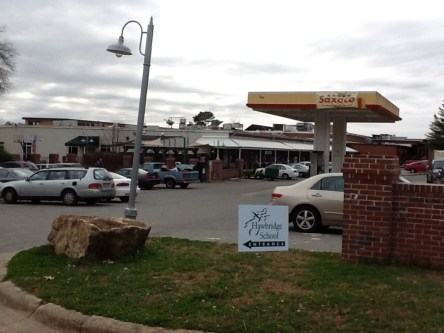
20121212-081229.jpg

Here is what their website says about their beginnings:

The Saxapahaw General Store as it now exists began in June 2008 when Jeff Barney, butcher and self-taught cook, and Cameron Ratliff, teacher and self-taught biscuit maker, worked with former owner Mac Jordan to begin a new life for the convenience store and gas station that had served the community for several years. They imagined a spot where a village could gather for refreshments, meals, and basic home provisions, run by folks whose varied backgrounds have each taught them they can influence their world by collaborating with their neighbors. They hoped to serve the residents of Saxapahaw with a range of products that could allow everyone to feel welcome. They decided to become stewards of local foods, good wine and beer, nutritious snacks, and eco-conscious dry goods.

What I saw was a business model that looked right. Once I met the dynamo farmer Suzanne, I became even more sure. Suzanne took us across the street to the pastures after our lunch
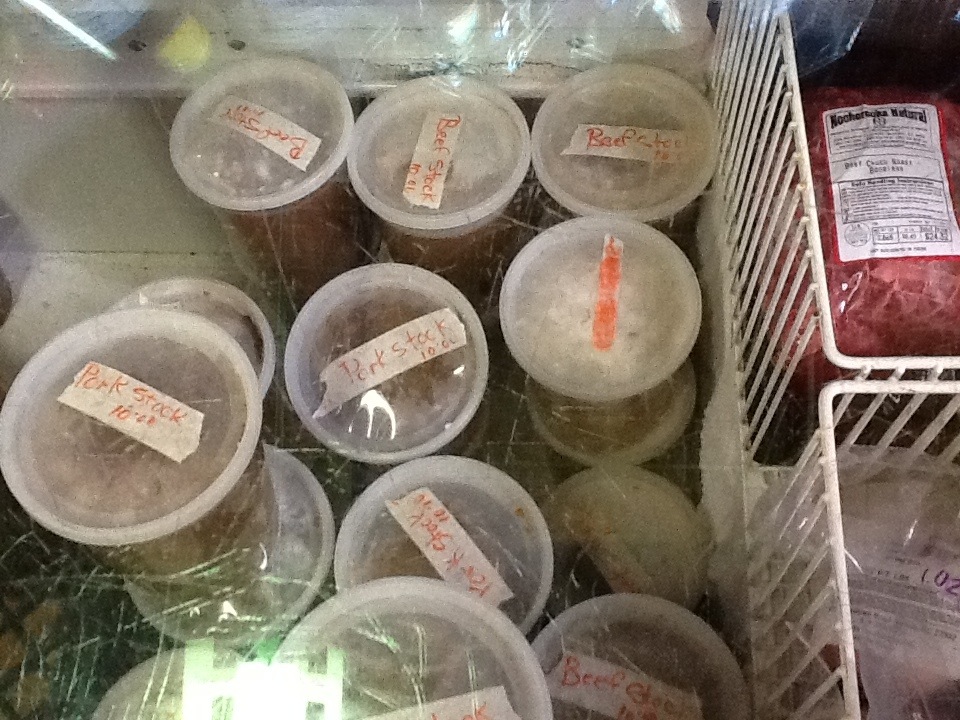
(the picture below shows what is available for lunch-all of the meat is local and much of the produce too)
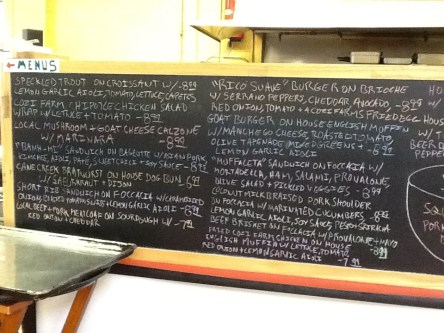
20121213-051100.jpg

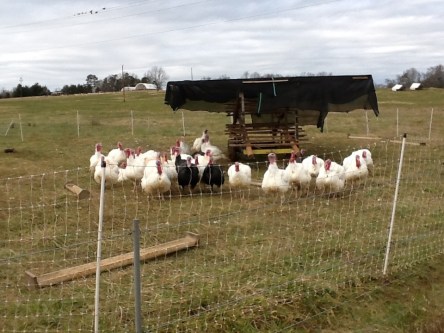
The turkeys were the last of the year, with these destined for ground turkey in the next week or so.
Much of the poultry production is done herself alongside Saxapahaw neighbors and coworkers; the humane treatment of her animals at the end of their lives is so important to this farmer that she told us she would not use many of the processing plants available to her. And that if that was the only way that they could be processed that she wouldn’t raise animals for food.
20121212-081024.jpg
She pointed out the ducks that they had only begun to raise for food and the vegetable garden, also beginning. At this point, the store is buying from the very talented growers that surround the area thanks to the Carrboro Farmers Market and its younger sister markets, but the emporia is going to grow some of its own produce across the street. The composting is carefully monitored before being shared with their animals, so as to not waste any of the precious produce.

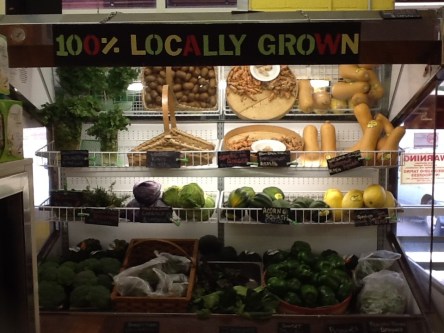
The store is set up to roam and shop after one has put their order in at the counter. Coca-cola products are lined up near pure ginger root drinks, homemade baked goods and local preserves near the small candy area. Hunting gear and motor oil can also be picked up as well along with some biodiesel or gas for your truck.

The store is both a throwback and a nod to the future. Suzanne talked extensively about the ongoing need for more equipment as well as sharing individual stories of the staff and their talents. Throughout our time there, people of varying ages and backgrounds came and went, bought food, drink and dry goods.
As public health and regional planners look for store models that can offer dignity and inclusion to food producers as an encouragement to sell there (just as the farmers market world has done) this store should become a Mecca. Using around 1500 square feet to offer as many culturally appropriate items as possible (Suzanne dreams of the day she can put out her gizzards and turkey necks next to the stock already offered) and real food choices next to convenience items still necessary to the real world, the Saxapahaw General Store is a food organizer’s dream come true.

20121212-081115.jpg

20121212-081751.jpg

20121212-084526.jpg

Dirty white gold -Monsanto’s Suicide Economy

Carrboro, here I come

I’m off this morning to visit with my wonderful colleagues in North Carolina. Sarah Blacklin of the Carrboro Farmers Market has invited me to interrupt her very busy work schedule to talk about evaluation, federal benefit programs and (maybe) assisting in convening the North Carolina markets so that they can share more fully and learn from each other’s excellent examples.
I originally went to Carrboro in 2006 when Sheila (the then market manager) invited me to take part in their Katrina gumbo fundraiser which was to benefit my own New Orleans farmers markets. It was such a great idea. They asked 5 restaurants to make their own version of gumbo and then sold each for 1 hour at a time at the market. Sold out or not, they went to the next one at the top of the hour with much fanfare (they ripped off the previous name and uncovered the upcoming with great cheers.) Of course, they almost all sold out and people hung around to get their favorites, not knowing which hour each would be sold. They raised over 6000.00 for my markets and vendors!
The market had over 5500 shoppers that day (not an unusual number for this excellent market) and their support was so genuine and warm that I have always considered the Carrboro Farmers Market (CFM) to be the sister market to Crescent City Farmers Market (CCFM) and whenever I can go and see their excellent work and the nearby Durham Farmers Market market, I go.

I am very lucky to be working with so many state and national leaders – I am honored to be asked to help them figure things out for their markets – but I will always save some of my time for those individual market leaders who inspire me with their own local vision and joie de vivre.

Rural Co-ops Show the Way to Urban Job Growth – Politics – Utne Reader

Recently, I have worked with US Federation of Worker Cooperatives as a way to further my efforts as a trainer for markets and food systems. Thankfully, the USF0W is willing to share skills and resources from their excellent DAWN network with other sectors. Worker cooperatives differ from marketing cooperatives in that their very definition is about workers being involved in the decision-making in their workplaces. Marketing cooperatives are often a loose confederation of separately owned businesses marketing products or services together. Both types exists within the market movement, and both types need to be understood better so they can be encouraged more.
The article below talks about rural co-ops and their effect on urban job growth. Effective language and one finds some practical language for markets interested in using co-op techniques to encourage real growth, just as urban communities have done by learning from their rural neighbors.

Rural Co-ops Show the Way to Urban Job Growth – Politics – Utne Reader.

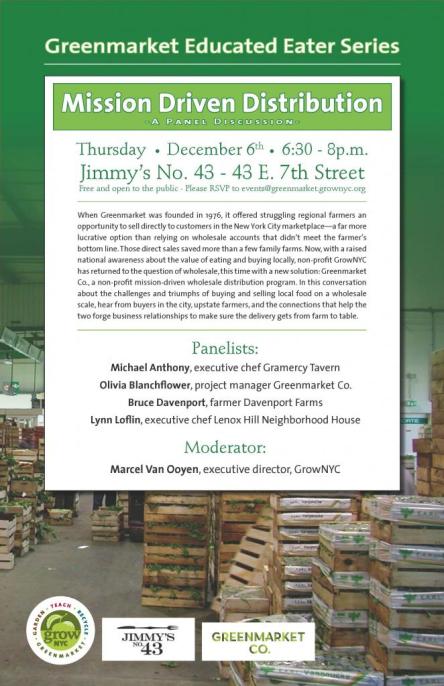
Greenmarket Co.

If I was around, I'd go....

If I was around, I’d go….

WorldPay wants to join the farmers market movement

Novo Dia Group partners with WorldPay to offer complete payment solution to Farmers Market community

The Mobile Market+ and AprivaPay solution enables farmers markets to accept credit, debit, and electronic benefit cards (EBT), making fresh, nutritious, local produce accessible to families receiving food assistance all on single device.

Austin, TX – November 5, 2012 -Novo Dia Group, Inc., a software development firm specialized in the health and human services industry, today announced an agreement with WorldPay Inc. that will allow its Mobile Market+ product to be available to Farmers Markets and small retailers nationwide beginning early 2013. A combined offering of AprivaPay and Mobile Market+ will offer merchants the most complete payment coverage available. Now on a single device, merchants will be allowed to process Credit, Debit, and all EBT transactions. In addition to a combined offering, NDG and WorldPay have agreed to service merchants seeking EBT only services. Pricing for the combination and EBT only solution is expected in early December, and will offer a flexible combination of connectivity, device, and services.
“We’re pleased to partner with Novo Dia to bring a full service smartphone offering to Farmer’s Markets and non-traditional retailers nationwide. We believe the combination of NDG’s innovation and our best of breed processing capabilities brings a full service solution to a market that is quickly expanding, and also serves a vital role in the retail community.” Steve Eyring director of sales WorldPay

The Mobile Market+ application, which was recently recognized as a finalist in the Verizon Innovation Awards, is a solution specifically developed to service merchants seeking a mobile POS solution or ones with no access to phone lines, networks or electricity. The handheld device is battery operated and communicates wirelessly via Wi-Fi or the cellular network. The Mobile Market+ application is approved by Apple and USDA. Approved vendors can download the app directly from the App Store.

Novo Dia Group is a full-service software development and consulting firm based in Austin, Texas. It specializes in the Health and Human Services industry with focus on processing benefit delivery systems for the Women, Infants and Children (WIC) program, the Supplemental Nutrition Assistance Program (SNAP) and debit transactions.

Please visit http://www.novodiagroup.com for more information.

PR Contacts:
Josh Wiles, Novo Dia Group, Inc T: 512-371-4134, mail to: josh@novodiagroup.com
Steve Eyring, WorldPay T: 801-302-9924, mail to: steve.eyring@worldpay.us

If children lose contact with nature they won’t fight for it

Good language in here for project proposals that involve taking student groups to farms and gardens. That the number of children involved in creative outdoor activities fell so quickly is shocking and can be addressed by activities that markets organize. Also, how access to nature can be a creative stimulant for later learning could also be the basis of your project for your targeted market day activities.

The remarkable collapse of children’s engagement with nature – which is even faster than the collapse of the natural world – is recorded in Richard Louv’s book Last Child in the Woods, and in a report published recently by the National Trust. Since the 1970s the area in which children may roam without supervision has decreased by almost 90%. In one generation the proportion of children regularly playing in wild places in the UK has fallen from more than half to fewer than one in 10. In the US, in just six years (1997-2003) children with particular outdoor hobbies fell by half. Eleven- to 15-year-olds in Britain now spend, on average, half their waking day in front of a screen.

In her famous essay the Ecology of Imagination in Childhood, Edith Cobb proposed that contact with nature stimulates creativity. Reviewing the biographies of 300 “geniuses”, she exposed a common theme: intense experiences of the natural world in the middle age of childhood (between five and 12). Animals and plants, she contended, are among “the figures of speech in the rhetoric of play … which the genius in particular of later life seems to recall”.

Studies in several nations show that children’s games are more creative in green places than in concrete playgrounds. Natural spaces encourage fantasy and roleplay, reasoning and observation. The social standing of children there depends less on physical dominance, more on inventiveness and language skills. Perhaps forcing children to study so much, rather than running wild in the woods and fields, is counter-productive.

UTNE Altwire – If children lose contact with nature they won't fight for it.

Growing For Markets article on Toronto’s World Crop Project

I heard about this wonderful collaboration when I was there in April working with the Greenbelt Farmers’ Market Network. I decided to do an article to share it with the U.S., so where better than Growing For Markets? You’ll need a subscription to get full access, but you’ll thank me for this magazine if you do….

MY GFM article on World Crops

Growing gardens

I am fascinated by the evolving role of urban ag in the community food system movement. It certainly has changed since its splashy beginnings in the 1980s and 1990s but what this story in the Sunday’s NYT points out is what I have also noticed: the belief that a large number of urban citizens want to grow their own food – and grow it every year – is not proven. I think the successful versions found anywhere are to scale and appropriate for the climate and demographic nearby. This might mean gardeners have a fallow season or maybe even a full year to recover and plan for the next planting or use their land for fruit trees. Here in New Orleans, we have a year-round growing culture with the most brutal weather in the summer: therefore, the idea of cover crops and soil solarization should be encouraged during June-September which gives people time to think and prepare for the fall planting.

The article quotes John Ameroso, who they interestingly call the “Johnny Appleseed of NY gardens” as someone who has that evolving view, he:

espouses more of what he calls an “urban agriculture” model: a food garden with a dedicated farmers’ market or a C.S.A. These amenities make stakeholders out of neighbors who may not like dirt under their nails and rural farmers who drive in every weekend.

“The urban-agriculture ones are flourishing,” he said. “There’s a lot of excitement. They’re active eight days a week.” But “community gardens, as such, where people come in to take care of their own boxes — those are not flourishing.”

It’s almost a cliché to point out that this new green model seems to have attracted tillers with a different skin tone. “Back then,” Mr. Ameroso said of his earlier career, “when we worked in Bronx or Bed-Stuy, it was mostly communities of color. Now when we talk about the urban agriculture stuff, it’s white people in their 30s.”

Production is the purpose of commercial agriculture and even for a community garden, it should be the goal. That production could be for a single home, or for donation or for income, but in every case a plan to produce food or plants should be required each year for every community garden space.

NYT growing growers


Here is a link to the excellent 5 Boroughs work to outline inclusive evaluation and strategic planning for projects.