Helping Farmers Markets Grow

Skip to content
  • About

BIPOC Leaders

2025

Finishing up 2024 work this weekend, to then preparation for supporting organizers amid the bookends of community and chaos in 2025.

But do not expect a deep dive in this post about what may happen in the national political arena around food and farming- at least not yet. Still time to consider plans, still time to replenish….

But in the meantime, here is what I have been saying in the past few months to market organizers that I am in contact with:

Leave blame and shame to other arenas.

Markets need to be centered as places of belonging and connection.

New Orleans LA Crescent City Farmers Market
December 2024

Focus on big goals of system change by asking the market organization to consider:

How is the market moving the dial on farmland preservation? How is that work measured?

How is the market including marginalized people of color in its work- and not just as consumers, but as producers, as advisors, as mentors?

What about rural (if the entity is overtly urban focused), or urban (if overtly rural)?

What would that add to your work and to your market?

Does your team and community know the history of subjugation and of centering whiteness in your area?

Does your team and community even know the recent history of market culture (1970-) in your area? Why these markets were founded? Who founded them? How is the market still honoring that history and still intentional in its design?

What external pressures are limiting your work, and who and what processes might help you change those?

What internal structures are limiting your work, and who and what new processes might help you change those?

How are you preparing for interruptions to farming or markets, whether through civic or climate instability?

What is the big idea for your market that you would like to tackle in 2025?

What keeps getting moved off the to-do list every year?

How can we include more people in our work lives, to bring new voices into the work, but also to make sure we are being held accountable and supported.

Can the urge to wait for “perfect” be ignored in favor of what is possible and practical?

I am already asking myself all of these.

How about you?
Share this:

  • Email a link to a friend (Opens in new window) Email
  • Print (Opens in new window) Print
  • Share on Reddit (Opens in new window) Reddit
  • Share on Facebook (Opens in new window) Facebook
  • Share on X (Opens in new window) X
  • Share on Pinterest (Opens in new window) Pinterest
  • Share on LinkedIn (Opens in new window) LinkedIn
  • Share on Tumblr (Opens in new window) Tumblr
Like Loading...
0 CommentsLeave a comment
12/29/2024
DW
BIPOC Leaders, civic engagement, disaster planning, diversity/racial justice, ecological capital, farm bill, farmers markets, farmers/farming information, food history, human capital, immigrant issues, Main Street, market vendors, national food system work, New Orleans food, Organic movement, public health, public markets, racial equity, regional food, resiliency, social capital, social cohesion, technology, Typology of markets
alternative food systems, cooperatives, evaluation, farmers, farmers markets, food system work, local food systems, social capital, sustainability

Education through the 1619 Project

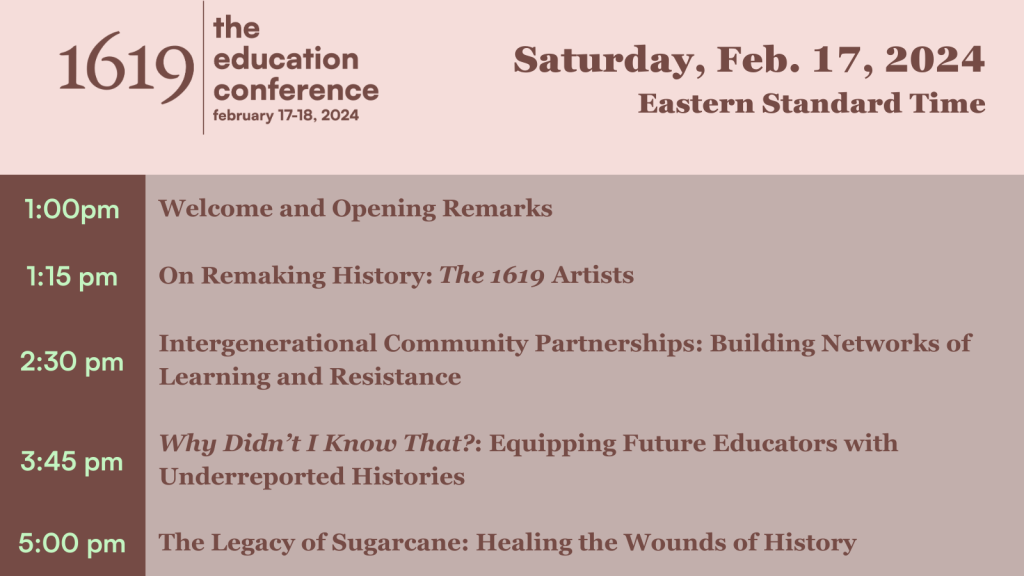
This was an extraordinary set of panels, with the final hour sharing the current difficult situation for a Louisiana black family farm. Learn more and support this farm: http://www.provostfarmllc.com

Highly recommend the educational resources supplied by the Pulitzer Center in association with The 1619 Project. If we want to lead a new system of farming through our work, we need to envelop these experiences and lessons into our governance and business models.

https://pulitzercenter.org/sites/default/files/2024-02/1619%20Education%20Conference%20Audience%20Guide%20%282024%29_%20Day%201%20.pdf

Share this:

  • Email a link to a friend (Opens in new window) Email
  • Print (Opens in new window) Print
  • Share on Reddit (Opens in new window) Reddit
  • Share on Facebook (Opens in new window) Facebook
  • Share on X (Opens in new window) X
  • Share on Pinterest (Opens in new window) Pinterest
  • Share on LinkedIn (Opens in new window) LinkedIn
  • Share on Tumblr (Opens in new window) Tumblr
Like Loading...
0 CommentsLeave a comment
02/17/2024
DW
BIPOC Leaders, civic engagement, diversity/racial justice, entrepreneurs, farmers markets, food apartheid, market vendors, New Orleans food, racial equity
farmers markets, Louisiana, ProvostFarm, USDA

What I am reading

I have a goal to write each week here; I hope this is helpful for all of you.

Wanted to share my current reading list in the hopes that it may spark a discussion of what you are reading:

The Brinkley book has been fascinating, not only because I’ve been a huge fan of Rachel Carson since the 1980s (who I believe has never received her due for exponentially increasing awareness of environmental extinctions and illness’ connections to unchecked pesticide use) but also because this author has a talent for creating a compelling story around the leaders of the environmental movement which is spurring my thinking around my farmers market book currently in draft form.

This Rome travel book is because I will be joining many of my fellow market peers and attending the World Farmers Market Coalition meeting in May.

Graeber’s incredible analysis into how direct action groups collect and organize is another keeper of his for me from this late great writer.

https://www.goodreads.com/book/show/2543048.Direct_Action

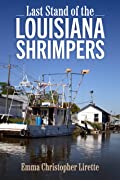
This book about my home state and one of its fishing community is a new one for my bookshelf after I saw and heard its thoughtful author at a recent literary festival in New Orleans. As someone who has worked closely with a few commercial fishers and so try to keep an ear and eye out to be always learning more about their future, I am expecting this to give me great insight on what that community is facing in our current political, ecological and cultural “spend-down” time.

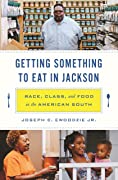
Jackson MS is a place that doesn’t get enough notice nor enough support from its state nor the feds for the challenges they face or enough credit for the innovative work happening there from many including from Cooperation Jackson. Also, anytime I can read in detail about food access within one community, I find it offers many lessons I can use in many places.

39.103118 -84.512020

Share this:

  • Email a link to a friend (Opens in new window) Email
  • Print (Opens in new window) Print
  • Share on Reddit (Opens in new window) Reddit
  • Share on Facebook (Opens in new window) Facebook
  • Share on X (Opens in new window) X
  • Share on Pinterest (Opens in new window) Pinterest
  • Share on LinkedIn (Opens in new window) LinkedIn
  • Share on Tumblr (Opens in new window) Tumblr
Like Loading...
0 CommentsLeave a comment
04/03/2023
DW
BIPOC Leaders, books, civic engagement, climate change, cooperatives, disaster planning, diversity/racial justice, EBT, ecological capital, environmental issues, evaluation, farmers markets, FMC, food deserts, food history, food policy, food stamps (SNAP), global organizing, human capital, incentives, Louisiana, metrics, New Orleans food, PPS, public health, public markets, regional food, social capital, social determinants, Typology of markets, Where's Dar now?

1619 and (Food) Justice

On August 20, 1619, a ship carrying about 20 enslaved Africans arrived in Point Comfort, a coastal port in the British colony of Virginia. 

If you have somehow missed the rollout of the New York Times 1619 project, I hope you will find time to get a printed copy, listen to the podcasts, or find  another way to catch up. This project – groundbreaking, truth-telling, and comprehensive – is a tremendously collaborative endeavor, created and led by brilliant journalist Nikole-Hannah Jones that offers a wide base of knowledge about America’s entanglement with enslavement, and how our systems have been designed to continue to subjugate people, using the construct of race. The other great point made across the essays, the photos, the podcasts, and more is how deeply felt the patriotism is among black Americans who continue to patiently reach out to their compatriots to try to explain what must be fixed.


Nikole-Hannah Jones:

At 43, I am part of the first generation of black Americans in the history of the United States to be born into a society in which black people had full rights of citizenship. Black people suffered under slavery for 250 years; we have been legally “free” for just 50. Yet in that briefest of spans, despite continuing to face rampant discrimination, and despite there never having been a genuine effort to redress the wrongs of slavery and the century of racial apartheid that followed, black Americans have made astounding progress, not only for ourselves but also for all Americans. 

(This statement’s profundity made me slowly draw in my breath:)

What if America understood, finally, in this 400th year, that we have never been the problem but the solution?


The reason this is featured on my public market blog is that our work is really about equity and requires an investigation of the systems that underpin food, farming, and sovereignty.  If the sum of what we accomplish are lovely little pilots and projects that don’t interfere with the dominant system, then we are doomed to irrelevance. But I do have the belief that our work will have results that ultimately change what is broken in food and agriculture by focusing on local control and civic inclusion made real and long lasting by having a reckoning with the past to build the new. One reason I have that belief is the ongoing work and the leadership of black justice organizers willing to address the systemic issues in our work. Examples abound: including Cooperation Jackson, to Detroit Black Community Food Security Network’s decades of work, to Karen Washington’s refusal of the term food deserts:

What I would rather say instead of “food desert” is “food apartheid,” because “food apartheid” looks at the whole food system, along with race, geography, faith, and economics. You say “food apartheid” and you get to the root cause of some of the problems around the food system. It brings in hunger and poverty. It brings us to the more important question: What are some of the social inequalities that you see, and what are you doing to erase some of the injustices?

Or Dr. Raja’s concise assessment of the problem:

 Who actually owns the means of production? Who owns the business? Who controls the wages in grocery stores? We can describe the physical absence of retail stores in the best possible way, but that’s still a partial analysis of the structural problem that we face. My concern is not just that the term [food desert] doesn’t fully capture what is in the food retail environment, but that it doesn’t tackle the question of agency at all.

More leaders inspiring words here

What is vital about the 1619 Project is that even as its writers and artists educate on the unrelenting degradations visited upon generations of people of color, that same group is also firm in its belief that solutions are possible. That this rising tide of systemic analysis and activism can lift every boat, especially  if white allies do not allow those others who are deeply invested in white supremacy to submerge it this time too.

1619 Project


Share this:

  • Email a link to a friend (Opens in new window) Email
  • Print (Opens in new window) Print
  • Share on Reddit (Opens in new window) Reddit
  • Share on Facebook (Opens in new window) Facebook
  • Share on X (Opens in new window) X
  • Share on Pinterest (Opens in new window) Pinterest
  • Share on LinkedIn (Opens in new window) LinkedIn
  • Share on Tumblr (Opens in new window) Tumblr
Like Loading...
0 CommentsLeave a comment
09/07/2019
DW
BIPOC Leaders, civic engagement, diversity/racial justice, farmers markets

Search this blog

Tags

alternative food systems BALLE big data book reviews California Canada CCFM chefs Chicago Cleveland climate change conferences cooperatives cottage food laws Covington Crescent City Farmers Market Detroit EBT evaluation farm bill farmers Farmers market Farmers Market Coalition Farmers Market Metrics farmers markets farming farm to table FMC FMC Farmers Market Metrics FMPP FNS Food food hubs food systems food system work Food Tank healthy food incentives La Via Campesina local food local food systems Los Angeles Louisiana markets Market Umbrella market vendors Mississippi New Orleans NOFA-VT North Carolina NSAC NYT Ohio Oregon oysters Poppy Tooker Power of Produce (POP) PPS Richard McCarthy Slow Food SNAP social capital social media SSAWG St. Joseph's Day Stacy Miller sustainability technology Toronto USDA Vermont Wallace Center webinars wendell berry Wolnik webinars

Enter your email address to subscribe to this blog and receive notifications of new posts by email.

Join 587 other subscribers

Helping Public Markets Grow 2011-2021

Independent Researcher and Analyst list of contracts (In November 2019 began full-time role as FMC’s Program Director)

•AMS TA project: Mentor for national technical assistance project for current FMLFPP grantees led by the Northeast Regional Center for Rural Development at Penn State University.
•Brooklyn NYC: Assisted BDPHO with developing farmers market technical assistance programs.
•Report on BDPHO’s 5-year market capacity project.
•Farmers Market Coalition Senior Research Associate for Farmers Market Metrics project creation (2015-)

• Farmers Market Coalition’s Senior Advisor, focusing on technical assistance for markets and networks (2015-)
•Illinois: Worked with ILFMA on evaluation plan for integration and upgrade of statewide fms and DTC information on integrated platforms.
•Louisiana: Assisted students at Southeastern University in Hammond with food system research and farmers market strategy.
•Louisiana: Assisted ReFresh Market and Garden with evaluation plan (2017)
•Louisiana: Working with Ruston Farmers Market on outreach strategy for new location

• Helping to craft resources and training for 2019 Fresh Central Certified Institute for Central Louisiana markets and producers with CLEDA.

•Louisiana: Organized first statewide farmers market conference for LSU Ag Center archives found at: lafarmersmarkets dot blogspot dot com

•Maine: Researched farmers market job descriptions found at www.helpingpublicmarketsgrow.com

• Mississippi: Providing research and analysis for City of Hernando MS 3-year project to grow flagship market

•Mississippi: Assisted Gulf Coast markets with FMPP project on analyzing access to markets for Gulfport resident and farmers. 2014 Local Food Awareness Report for Gulfport MS, found at www.helpingpublicmarketsgrow.com

•Vermont: Providing analysis and resource development for NOFA-VT’s annual data on farmers markets.

•Supporting markets creating their Legacy Binders
•Vermont: Researched and wrote report on SNAP, FMNP technology and policy answers for VT farmers markets in collaboration with NOFA-VT and VAAFM, 2013 Vermont Market Currency Feasibility Report found at www.helpingpublicmarketsgrow.com
•Vermont: Working with Vermont Law School on legal resources for farmers and market organizations.

•Vermont: Assisting with 3 year project to build capacity for direct marketing farmers and outlets through DIY data collection and use.

Wallace Center: Moderator of FSLN, advisory to the 2020 NGFN Conference to be held in New Orleans in March of 2020

•Why Hunger: Created online toolkit for grassroots communities.

Feel free to contact me at my name at gmail dot com if I might be able to help your market or business.
Thanks
Dar Wolnik

Posts by category

Blog at WordPress.com.
  • Subscribe Subscribed
    • Helping Farmers Markets Grow
    • Join 235 other subscribers
    • Already have a WordPress.com account? Log in now.
    • Helping Farmers Markets Grow
    • Subscribe Subscribed
    • Sign up
    • Log in
    • Report this content
    • View site in Reader
    • Manage subscriptions
    • Collapse this bar
Loading Comments...

You must be logged in to post a comment.

%d